• Skip to primary navigation
  • Skip to main content
  • Skip to primary sidebar

Carnegie Museum of Natural History

One of the Four Carnegie Museums of Pittsburgh

  • Visit
    • Buy Tickets
    • Visitor Information
    • Exhibitions
    • Events
    • Dining at the Museum
    • Celebrate at the Museum
    • Powdermill Nature Reserve
    • Event Venue Rental
  • Learn
    • Field Trips
    • Educator Information
    • Programs at the Museum
    • Bring the Museum to You
    • Guided Programs FAQ
    • Programs Online
    • Climate and Rural Systems Partnership
  • Research
    • Scientific Sections
    • Science Stories
    • Science Videos
    • Senior Science & Research Staff
    • Museum Library
    • Science Seminars
    • Scientific Publications
    • Specimen and Artifact Identification
  • About
    • Mission & Commitments
    • Directors Team
    • Museum History
  • Tickets
  • Give
  • Shop

new species

September 18, 2019 by wpengine

Is It a New Species? Wish They All Could Be California Snails

Discovering a new species is exciting but determining whether it’s a new species can take some doing.
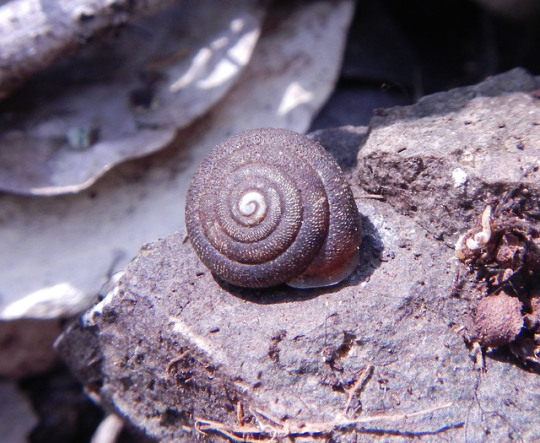
photo of possible new Trilobopsis species snail
Fig. 1. Trilobopsis species from Santa Cruz Island. Note scale-like hairs on shell. Diameter approximately 8 mm (1/3 inch). (Photo by T. Pearce)

During our project on land snails in the California Borderlands, team member Jeff Nekola discovered a population of the land snail genus Trilobopsis on Santa Cruz Island (Fig. 1). That genus does not occur on any other California Channel Islands; in fact, the closest known mainland locality for that genus is 335 km (210 mi) north in the Salinas Area. We recognize that conditions on the northern Channel Islands tend to be cooler than the adjacent mainland, due to the California Current, and some other typically northern plant and animal taxa (or close relatives) also occur surprisingly far south on the northern islands. The Santa Cruz Island population of Trilobopsis represents a serious range extension to the south for the genus (Fig. 2). Is it merely a range extension of a known species, or could it be a new species?
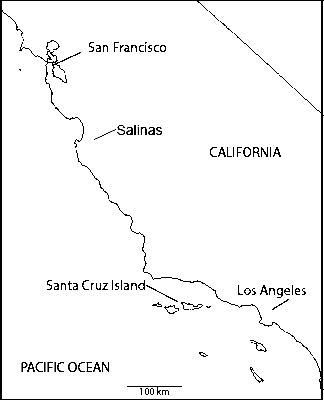
Fig. 2. Trilobopsis on Santa Cruz Island are 335 km south of the nearest other population near Salinas.

Peculiarities about the distribution of Trilobopsis on Santa Cruz Island make us wonder if it is a long-established native species or a recent introduction from the mainland. Its localized occurrence on Santa Cruz Island spans only a couple of hectares (a few acres) near an area where humans have been active over the past century or so. Small ranges, near human activity, often hint that a population was introduced. In contrast, if the snail had been on the island for thousands of years, we would expect it to have spread to other parts of the island that have suitable habitat.

Fortunately, team member Barry Roth is an expert on Trilobopsis. He is a very careful worker, scrutinizing shell features and internal soft-part anatomy before drawing conclusions. His impression is that the Santa Cruz snail is different from any described species. The next question could be, to what mainland form is it most closely related?

These days, DNA can supplement evidence from shell and internal anatomy features to help elucidate relationships. To get DNA, we usually need live-caught individuals. While museum collections contain libraries of snail shells, and sometimes soft parts, rarely do they contain all the species needed, or fresh enough DNA for the comparison. So, it was time for a field trip.

In August 2019, team member Charles Drost organized an expedition to northern California to seek live specimens of Trilobopsis species for DNA. Jeff had annotated numerous maps with known locations, compiled from some of my past field work (when I was a student at Berkeley in the mid-1980s) and extensive field work by Barry. Fortunately, despite the normal late summer drought conditions, we were able to find living specimens of Trilobopsis at nearly all the target sites we visited.
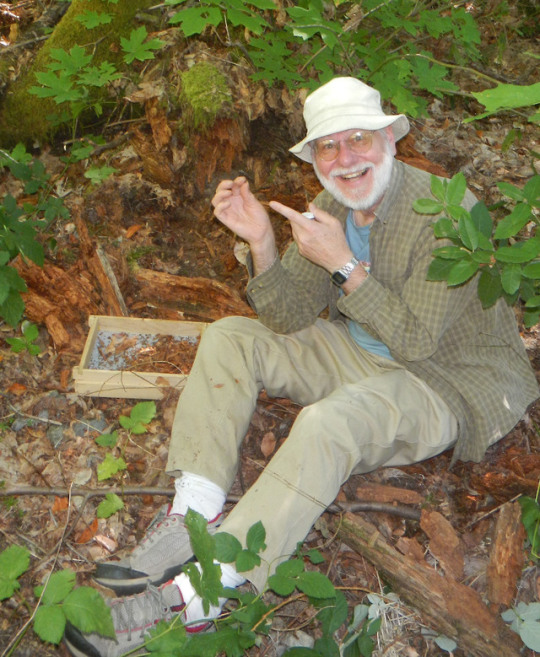
Fig. 3. Charles showed me where to find live Trilobopsis snails in a log. (Photo by C. Drost)

We were struck by the differing habitats of some populations. We think of typical Trilobopsis species living in talus rock piles (as does the one on Santa Cruz Island), but we found some populations living in leaf litter, and one population we found was living inside of rotting logs (Figs. 3-4).
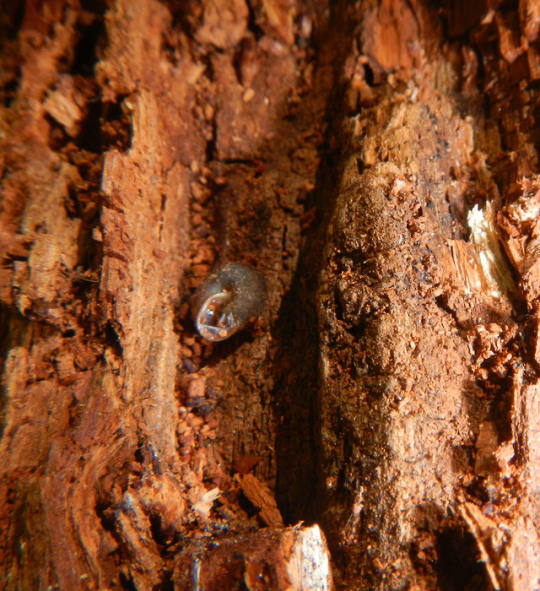
Fig. 4. Living Trilobopsis in a cavity in rotting log. (Photo by C. Drost)

One likely side benefit of this research will be a revision of the genus; there might be more species of Trilobopsis than currently recognized, or there might be fewer species than currently recognized if some forms simply look different by growing in different environments.

We await results of the DNA comparisons, so we can learn which mainland populations are most closely related to the Santa Cruz Trilobopsis. Gotta love those California snails.

Timothy A. Pearce, PhD, is the head of the mollusks section at Carnegie Museum of Natural History. Museum employees are encouraged to blog about their unique experiences and knowledge gained from working at the museum.
Filed Under: Blog Tagged With: mollusks, new species, Section of Mollusks, Tim Pearce

April 21, 2016 by wpengine

Carnegie Museum Scientist Discovers New Species of Frog

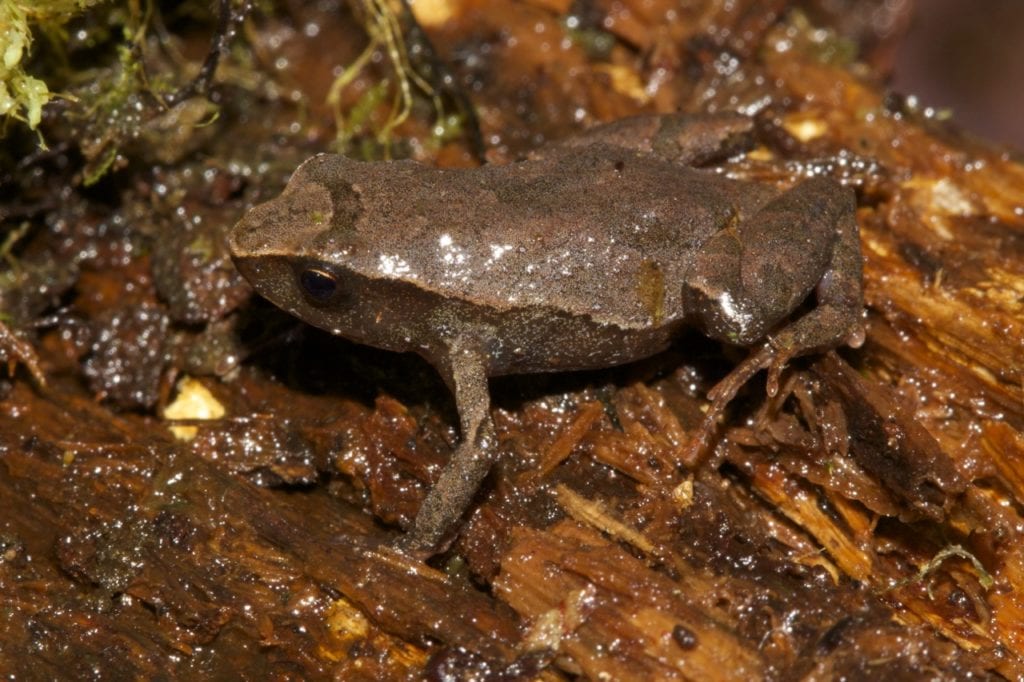
Pristimantis iiap frog
Discovering a new species is no easy undertaking in 2016.

Dr. José Padial and a team of scientists had to venture deep into the Amazonian rainforest where they trod through dense bamboo and the dark of night to discover a new species of frog that was unknown to science until now.

Padial, the Carnegie Museum of Natural History assistant curator of amphibians and reptiles, led the team of scientists into the Peruvian back country in 2014, where they identified a new species of frog – Pristimantis iiap. The frog was named and described in the February 2016 Annals of the Carnegie Museum of Natural History.

The team found and identified a species of frog in the lowland forests of the Peruvian Amazon calling after dark along the bamboo dominated forests of the Sepahua River, a small tributary of the Urubamba River.

Pristimantis iiap, was named after the Instituto de Investigaciones de la Amazonia Peruana (Peruvian Amazon Research Institute or IIAP) for its role in biodiversity research and conservation.

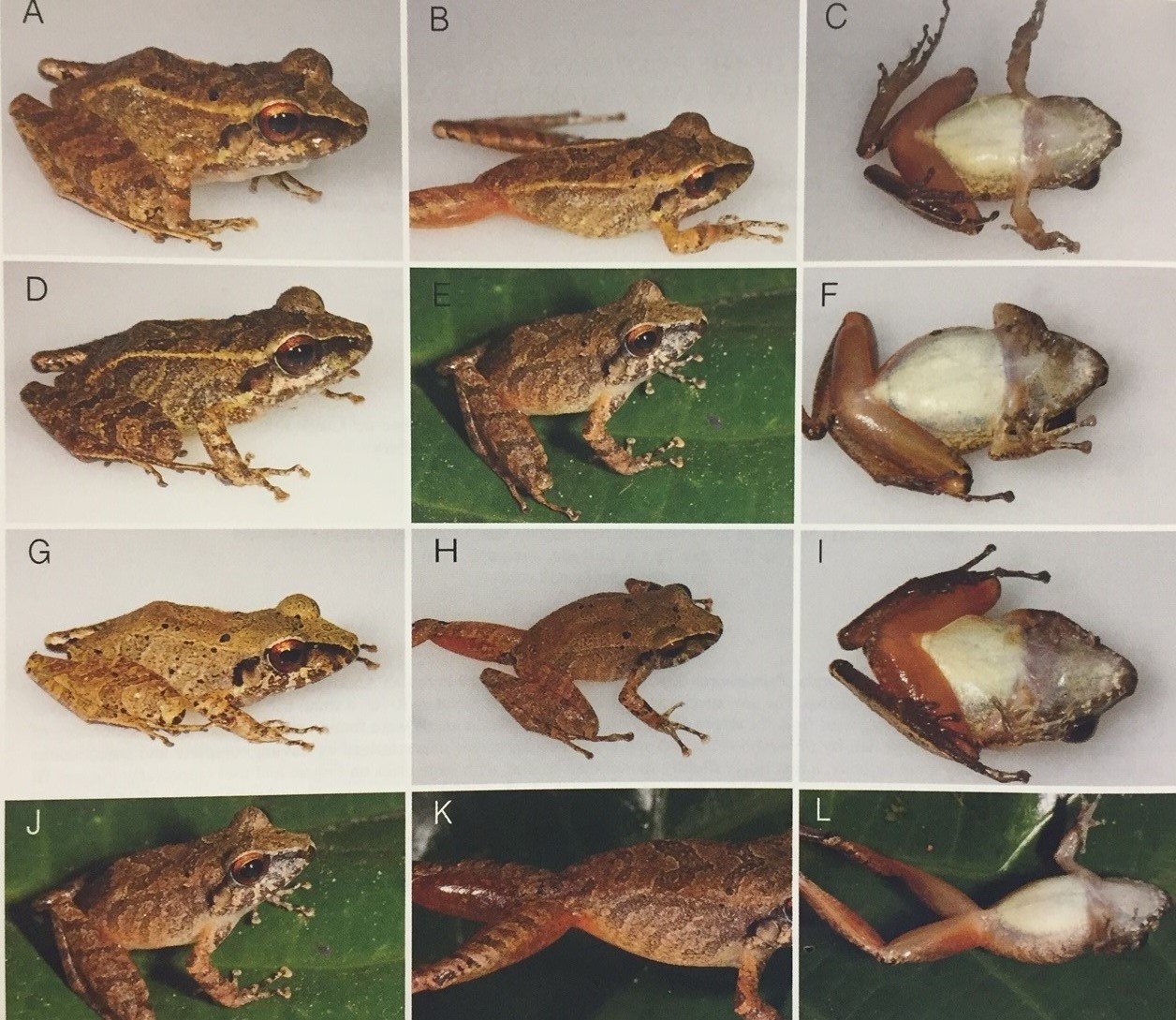
Pristimantis iiap belongs to the Pristimantis conspicillatus species group, a group that has a broad distribution in northern South America across a diversity of habitats that include the Amazonian forests, Andean hills, the dry forests of the Cerrado, and the Mata Atlantica of eastern Brazil. Analyses of its mating call and anatomical traits provided evidence of the distinctiveness of this new species.

The 2014 trip was part of a series of expeditions in the Fitzcarrald Arch in southeastern Peru, one of the least explored areas of the Amazon basin. Little is known about the herpetofauna there, but this expedition and other recent explorations have discovered that there are more reptiles and lizards in that area than was previously thought. Several other new species are still being described, so stay tuned for more fascinating discoveries!

José Padial is the William and Ingrid Rea Assistant Curator of Herpetology at Carnegie Museum of Natural History. He most recently traveled to the remote Vilcabamba mountains of Peru in the pursuit of biodiversity research. Read more at www.tumblr.com/blog/expeditions-carnegiemnh.

Filed Under: Blog Tagged With: discovery, herpetology, new species

March 1, 2016 by wpengine

Discoverers Expedition Vilcabamba 2016: Herps

An individual of diminutive frog (ca. 1.5 cm) in the genus Noblella, which includes some of the smallest known vertebrates. (Photo Giussepe Gagliardi).
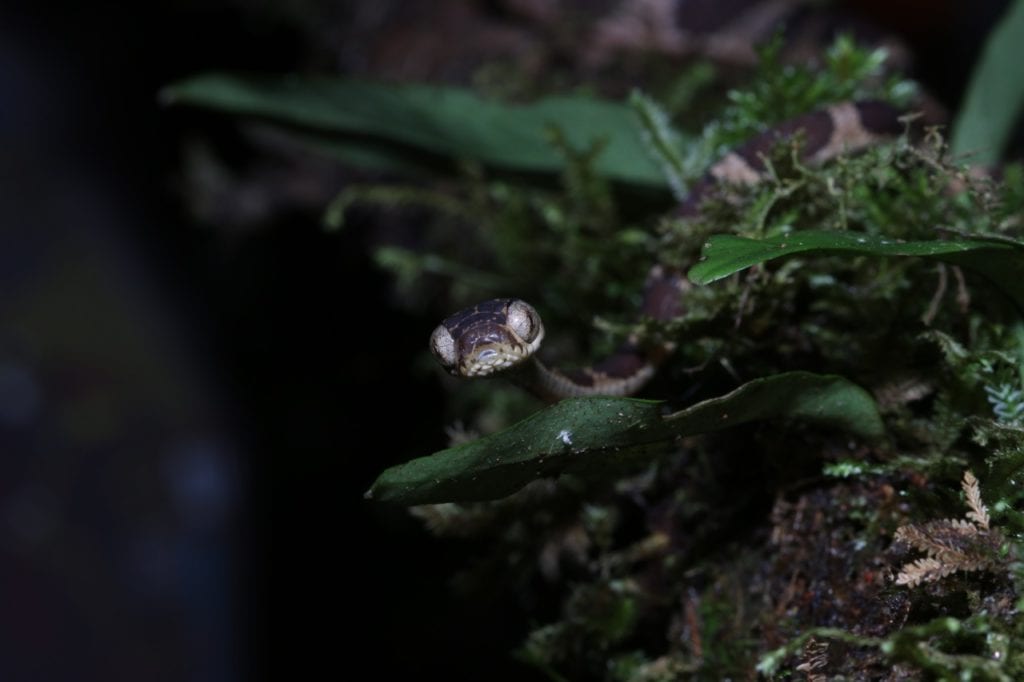
Imantodes cenchoa, an specimen found at ca. 2,000 m, an unusual elevation for this species. (Photo Giussepe Gagliardi).
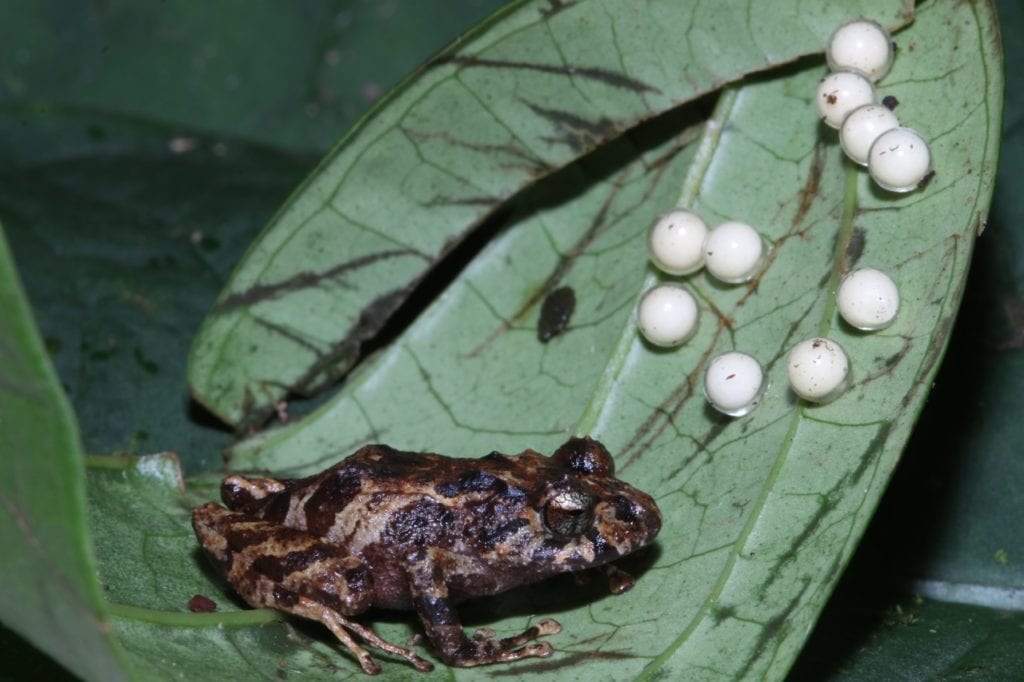
A female of a new species of Pristimantis with her eggs. Species of Pristimantis, as other terraranas, are direct developers, which means that they undergo development without a a free larval (tadpole) stage. (Photo Giussepe Gagliardi).
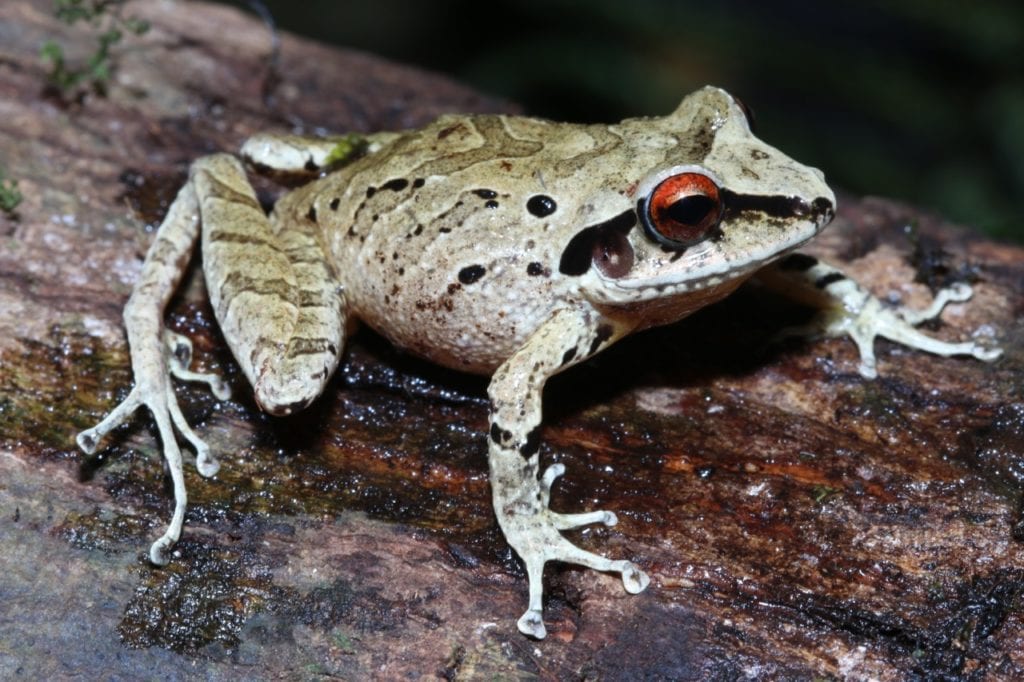
A male of another new species of Pristimantis inhabiting cloud forests above ca. 2,500 m. (Photo Santiago Castroviejo).

José Padial and his team of researchers are traveling in the remote Vilcabamba mountains of Peru in the pursuit of biodiversity research. He blogs and sends photos as often as possible capturing his expedition along the way


Filed Under: Blog Tagged With: biodiversity, frogs, new species, research

February 28, 2016 by wpengine

Discoverers Expedition Vilcabamba 2016: Herps

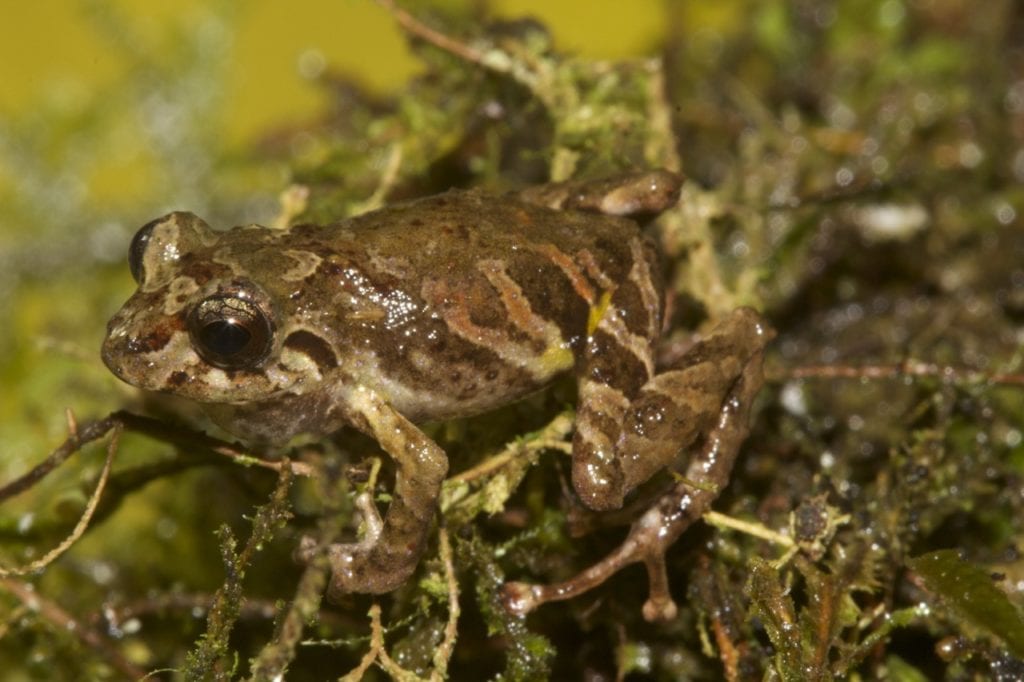
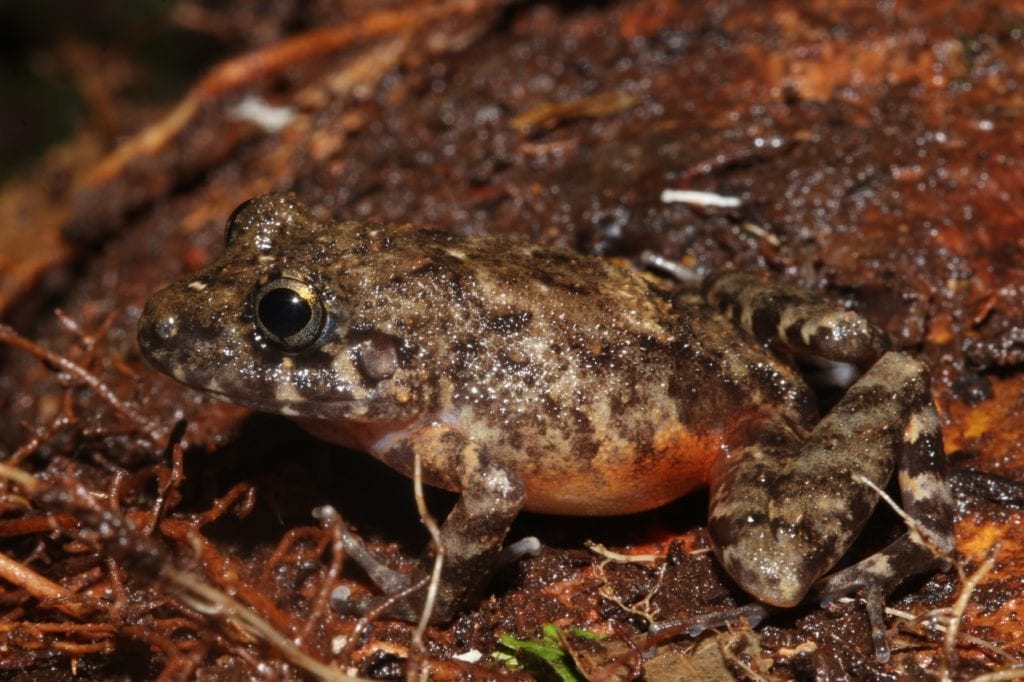
A new species of Pristimantis from the cloud forests of Vilcabamba. (Photo Giussepe Gagliardi).
A new species of Oreobates that inhabits the forest of Vilcabamba at above ca. 2,500 m (ca. 8,200 ft.). (Photo Giussepe Gagliardi).
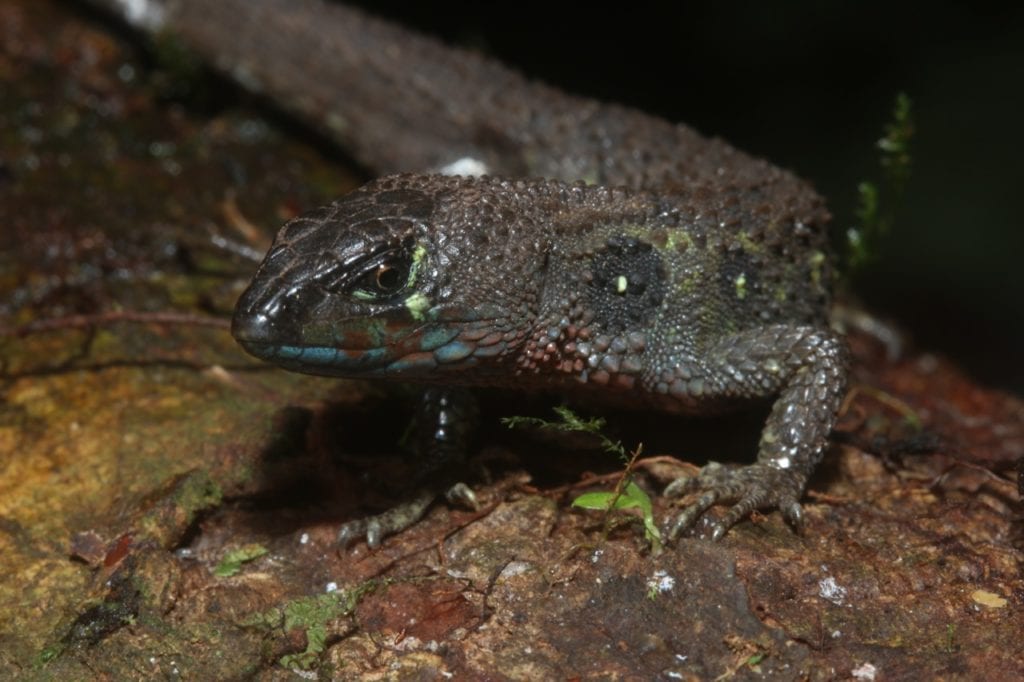
A male of Potamites montanus, a beautiful aquatic lizard that was recently discovered from an area near Vilcabamba at low elevations. (Photo Giussepe Gagliardi).
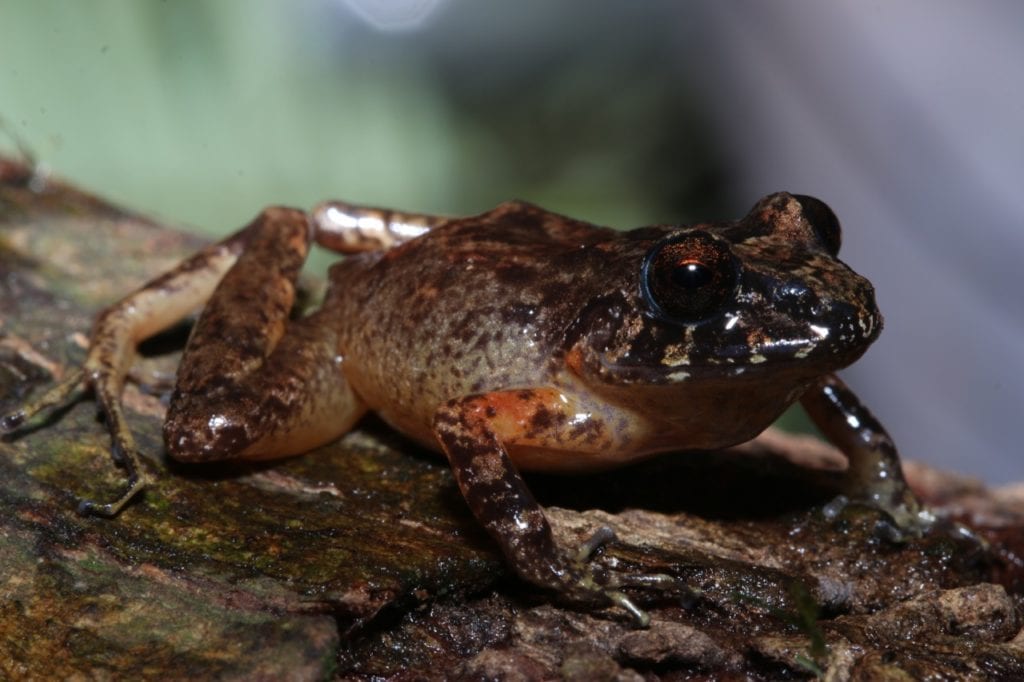
Oreobates lehri, a species discovered and named by Padial, Chaparro and others and so far only known for Vilcabamba. (Photo Giussepe Gagliardi).

We may have found at least 10 new species of amphibians and reptiles; however, pertinent comparisons with museums specimens and detailed analyses of the anatomy, mating call, and or DNA, will be required to analyze species diversity using collected samples. In no other expedition have we found so many new species.

José Padial and his team of researchers are traveling in the remote Vilcabamba mountains of Peru in the pursuit of biodiversity research. He blogs and sends photos as often as possible capturing his expedition along the way

Filed Under: Blog Tagged With: amphibian, biodiversity, fieldwork, frogs, new species, reptiles

sidebar

About

  • Mission & Commitments
  • Directors Team
  • Museum History

Get Involved

  • Volunteer
  • Membership
  • Carnegie Discoverers
  • Donate
  • Employment
  • Events

Bring a Group

  • Groups of 10 or More
  • Birthday Parties at the Museum
  • Field Trips

Powdermill

  • Powdermill Nature Reserve
  • Powdermill Field Trips
  • Powdermill Staff
  • Research at Powdermill

More Information

  • Image Permission Requests
  • Science Stories
  • Accessibility
  • Shopping Cart
  • Contact
  • Visitor Policies
One of the Four Carnegie Museums | © Carnegie Institute | Privacy Policy | Terms of Use | Accessibility
Rad works here logo