• Skip to primary navigation
  • Skip to main content
  • Skip to primary sidebar

Carnegie Museum of Natural History

One of the Four Carnegie Museums of Pittsburgh

  • Visit
    • Buy Tickets
    • Visitor Information
    • Exhibitions
    • Events
    • Dining at the Museum
    • Celebrate at the Museum
    • Powdermill Nature Reserve
    • Event Venue Rental
    • Gift Cards
  • Learn
    • Field Trips
    • Educator Information
    • Programs at the Museum
    • Bring the Museum to You
    • Guided Programs FAQ
    • Programs Online
    • Climate and Rural Systems Partnership
  • Research
    • Scientific Sections
    • Science Stories
    • Science Videos
    • Senior Science & Research Staff
    • Museum Library
    • Science Seminars
    • Scientific Publications
    • Specimen and Artifact Identification
  • About
    • Mission & Commitments
    • Directors Team
    • Museum History
  • Tickets
  • Give
  • Shop

Blogs about Pittsburgh

Carnegie Museum of Natural History is in Pittsburgh, Pennsylvania. Many of the museum's collection specimens are from the local area, including our Botany, Invertebrate Paleontology, and Herpetology specimens. Our collections and our community often influence our work, whether that includes researching climate change, air pollution improvements from the closing of steel mills in the city, or invasive species.

October 17, 2016 by wpengine

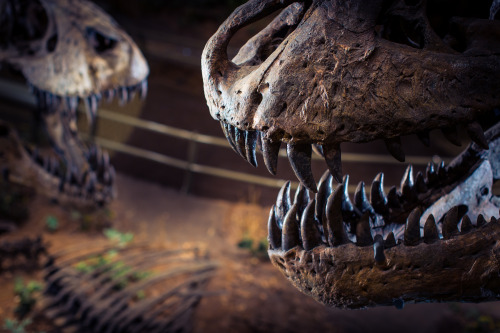
T-Rex teeth in Dinosaurs in their Time

T-rex teeth

T-Rex teeth in Dinosaurs in their Time at Carnegie Museum of Natural History in Pittsburgh.

 (Photo by Josh Franzos)
Filed Under: Blog Tagged With: dinos, dinosaurs, dinosaurs in their time, Pittsburgh, t-rex

October 12, 2016 by wpengine

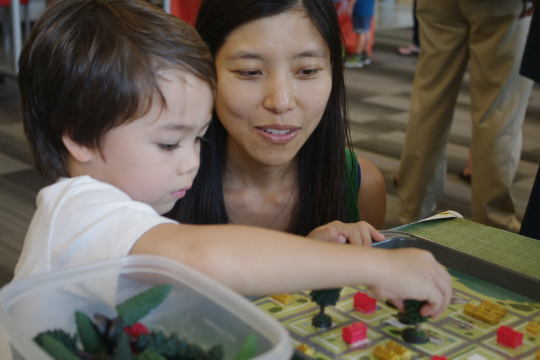
CUSP Exhibits on display at Pitt

mom and child using an educational kit
Participants engage in an activity at CUSP, coordinated locally by Carnegie Museum of Natural History.

by Laurie Giarratani

How will you use science, technology, and community to improve lives and shape the future?  Join the Climate and Urban Systems Partnership (CUSP), along with innovators from across the country, to test ideas with hands-on experiments and demonstrations in the exhibit hall of the White House Frontiers conference – open to the public from 10 a.m. – 11 a.m. on Thursday, October 13 at Alumni Hall at the University of Pittsburgh.

CUSP is a national project, funded by the National Science Foundation, coordinated locally by Carnegie Museum of Natural History, that aims at changing climate conversations in urban settings. More info about CUSP at http://www.cuspproject.org.

Climate and Urban Systems Partnership (CUSP)

Laurie Giarratani is the Director of Education at Carnegie Museum of Natural History.
Filed Under: Blog Tagged With: climate change, museums, Pittsburgh

October 9, 2016 by wpengine

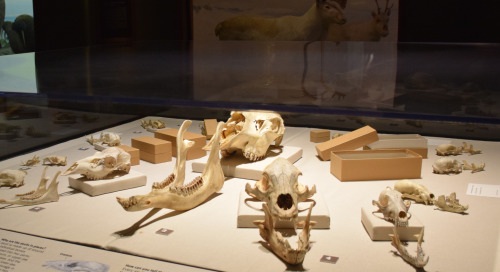
Craniums and mandibles

Skull bones on display
Craniums and mandibles of various mammals on display in the Hall of North American Wildlife.
Filed Under: Blog Tagged With: Hall of North American Wildlife, mammals, Pittsburgh

October 8, 2016 by wpengine

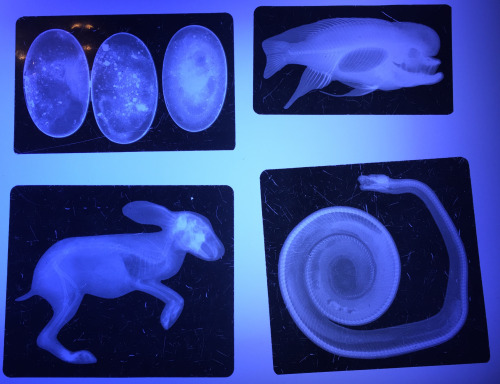
X-rays at Discovery Basecamp

X-rays of a rabbit, snake, and fish
Visitors can examine all different types of x-rays at Discovery Basecamp, our new permanent, interactive gallery that invites visitors to take part in hands-on learning.
Filed Under: Blog Tagged With: discovery, eggs, fish, nature, Pittsburgh

October 3, 2016 by wpengine

5 Surprising Conservation Facts

cleaning a panda diorama

by Kathleen Bodenlos

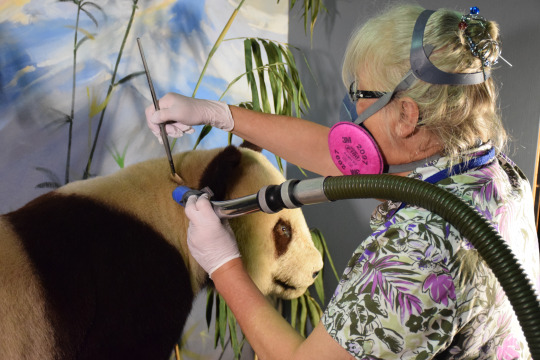
Gretchen Anderson is a conservator at Carnegie Museum of Natural History. She is restoring a panda diorama that will be prominently placed in our newly renovated gift shop. (Stay tuned for more on the gift shop in the next few weeks).

Here are 5 surprising things about conservation of a diorama.
1. Less is more: Use as few chemicals as possible
  • Soot sponges, water, and vacuums are the top
    choices in lieu of harsh chemicals. Water is one of the most powerful solvents!
  • Gretchen begins with a fan brush and a HEPA (high-efficiency particulate air filter) vacuum to remove as much dust and arsenic traces as possible.
  • She is wearing a protective face mask and gloves to protect herself from any arsenic that might be stirred up.
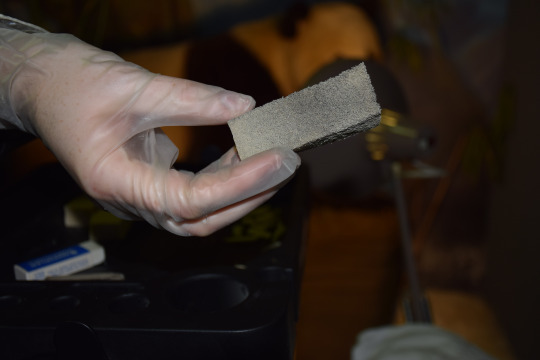
  • Soot sponges are a rubber sponge designed to absorb soot and are used dry. Another handy tool is a makeup sponge. A make-up sponge is used when just a little tiny bit of water is needed to move the dirt.
  • Particulate dust (dust, dirt and soot) is extremely damaging to museum collections. It is best to remove it.
sponge covered in dust

2. Some conservationists also do a little restoration on paint
  •  When in doubt go lighter to match a color
  • Think impressionism and mottle with several colors if possible. A good example is the natural colors on a rock.
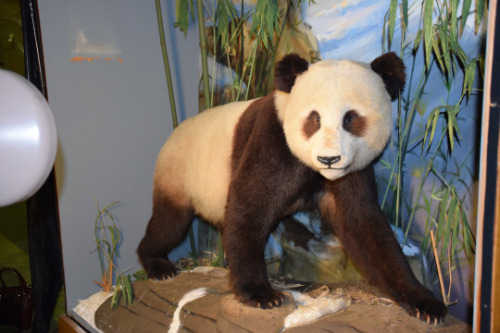
restored panda diorama

3. Move ‘em up and head ’em out—RAWHIDE!

  • For many older dioramas, the skin of the animal is literally a raw hide. They are often treated with arsenic to keep the hide from becoming infested with insects and being eaten/damaged
  • Mercury, and other pesticides were also used to prevent insect attack on some museum collections.
  • A sealed exhibit case helps to keep the diorama safe from damage. Dust and insects are kept out. If there are any pesticides inside the case these are kept in – protecting the public.
  • Plant material
    ·  Not all of it is fake. Some of the actual plant materials are painted to make them look alive
    ·  Even a non-expert can discern what is fake and what is real upon close examination
  •  Save money—use less
    ·  When washing clothes the soap is to keep dirt from settling back on clothes
    ·  Agitation and water are the real cleaner
    ·  Use 1/3 less soap and your clothes will be clean
    and you will ensure that all the soap is removed which will help protect your
    skin

Kathleen Bodenlos is the Director of Marketing at Carnegie Museum of Natural History. Museum employees are encouraged to write about their unique experiences.

Filed Under: Blog Tagged With: behind the scenes, Collection Care and Conservation, conservation, diorama, gift shop, Gretchen Anderson, museums, Pittsburgh

October 1, 2016 by wpengine

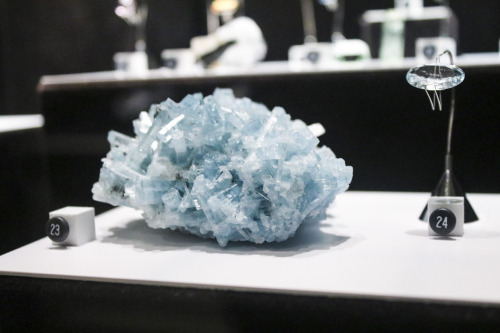
Aquamarine on display

Aquamarine on display at Carnegie Museum of Natural History in Pittsburgh.
(Photo by Hayley Pontia)


Filed Under: Blog Tagged With: gems, minerals, Pittsburgh

  • « Go to Previous Page
  • Page 1
  • Interim pages omitted …
  • Page 5
  • Page 6
  • Page 7
  • Page 8
  • Page 9
  • Interim pages omitted …
  • Page 18
  • Go to Next Page »

sidebar

About

  • Mission & Commitments
  • Directors Team
  • Museum History

Get Involved

  • Volunteer
  • Membership
  • Carnegie Discoverers
  • Donate
  • Employment
  • Events

Bring a Group

  • Groups of 10 or More
  • Birthday Parties at the Museum
  • Field Trips

Powdermill

  • Powdermill Nature Reserve
  • Powdermill Field Trips
  • Powdermill Staff
  • Research at Powdermill

More Information

  • Image Permission Requests
  • Science Stories
  • Accessibility
  • Shopping Cart
  • Contact
  • Visitor Policies
Stay in the loop! Sign up for our newsletter(s).
One of the Four Carnegie Museums | © Carnegie Institute | Privacy Policy | Terms of Use | Accessibility
Rad works here logo