• Skip to primary navigation
  • Skip to main content
  • Skip to primary sidebar

Carnegie Museum of Natural History

One of the Four Carnegie Museums of Pittsburgh

  • Visit
    • Buy Tickets
    • Visitor Information
    • Exhibitions
    • Events
    • Dining at the Museum
    • Celebrate at the Museum
    • Powdermill Nature Reserve
    • Event Venue Rental
  • Learn
    • Field Trips
    • Educator Information
    • Programs at the Museum
    • Bring the Museum to You
    • Guided Programs FAQ
    • Programs Online
    • Climate and Rural Systems Partnership
  • Research
    • Scientific Sections
    • Science Stories
    • Science Videos
    • Senior Science & Research Staff
    • Museum Library
    • Science Seminars
    • Scientific Publications
    • Specimen and Artifact Identification
  • About
    • Mission & Commitments
    • Directors Team
    • Museum History
  • Tickets
  • Give
  • Shop

Polar World

February 1, 2019 by wpengine

Arctic Message

By Patrick McShea

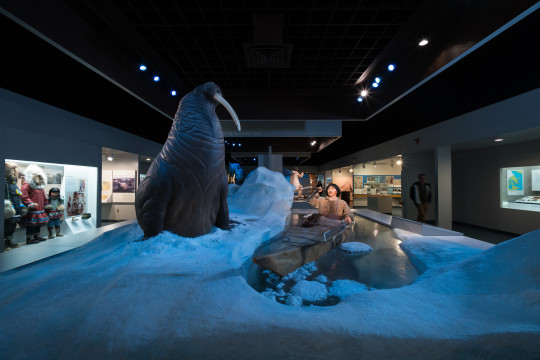
Polar World exhibition with animals and man in boat
Polar World at Carnegie Museum of Natural History. Photo credit: Josh Franzos

What happens in the Arctic effects all of us. The frozen seas of the northern hemisphere’s remotest territory influence the circulation patterns of ocean currents and air masses that support temperate climate conditions for land masses far to the south.

The urgent need for broader understanding of this sea ice-dependent system recently drew four dozen researchers and educators to the University of Rhode Island for a National Science Foundation -sponsored workshop titled ARISE, for Arctic Researchers and Informal Science Education.

The three-day program was designed to address two explicit goals – broadening the impact of Arctic research findings and increasing the informal science community’s engagement with Arctic scientists.

Paired sessions assured that big ideas were anchored to specific ongoing research. A formal review of proposed Polar Literacy Principles, for example, was followed by small discussion groups in which researchers explained their own observations of diminished sea ice or disrupted food webs. As an educator representing CMNH’s exhibit hall about Arctic life and extensive scientific collections from the region, I was an eager participant in every session.
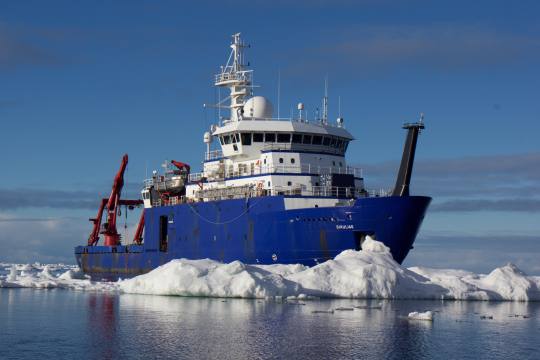
Ship in icy waters
Research ship Sikuliaq. Photo credit: Mark Teckenbrock

Existing National Science Foundation resources were the focus of several presentations. Profiled assets ranged from the digital archive known as the Arctic Data Center to a floating mobile research platform, the 261-foot blue-hulled ice capable research vessel Sikuliaq, which is operated by the University of Alaska Fairbanks.

I did more listening than talking, learning directly from scientists about research projects that included the study of thousand- year-old clay-lined food storage pits along hard-to-reach stretches of Alaskan coast, and a “citizen science” berry survey by middle school students in remote villages that will document climate driven vegetation changes on the tundra.
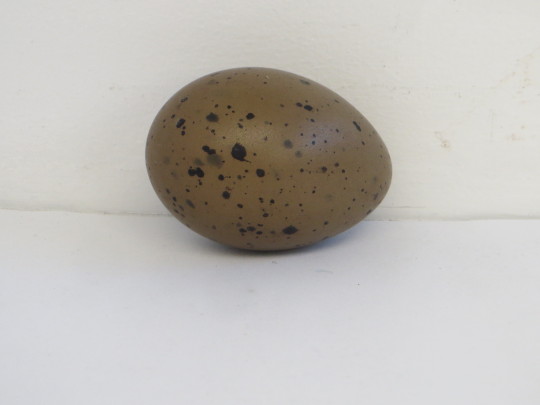
Arctic loon egg
Arctic loon egg.

When discussion opportunities arose, I shared two items I carried with me each day, the preserved hollow egg of an Arctic Loon, and a copy of Barry Lopez’s now 32-year-old masterpiece, Arctic Dreams. The three-inch long egg, a dark mustard brown with chocolate-colored flecks, bore in tiny handwritten script a collection date of 6/19/24. This 94-year-old specimen, part of the museum’s teaching collection, and sturdy enough to be carefully passed hand-to-hand, served to represent and draw attention to the museum’s own Arctic archive, the portion of preserved plants, animals, minerals, artifacts, and fossils in the museum’s scientific collections that have Arctic origins.
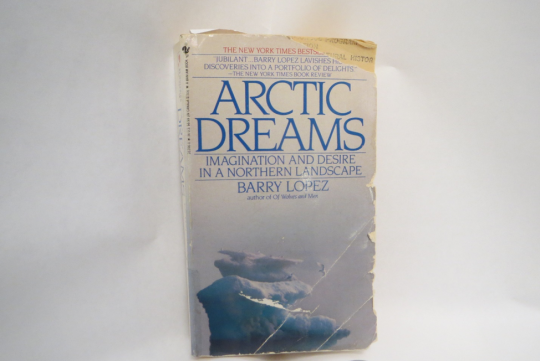
Arctic Dreams book

Arctic Dreams, which bears the subtitle, Imagination and Desire in a Northern Landscape, is a poetic 372-page chronical of Lopez’s immersion in historical Arctic exploration accounts and his own travels in the region with Arctic indigenous people, biologists, oceanographers, geologists, and oil drilling crews. The work contains repeated alarm calls about threats to the region’s delicately balanced ecosystems, but on the occasions when I passed the paperback to a workshop colleague it was to note particularly eloquent passages about narwhals, snowy owls, or muskox.

The book also provided appropriate reading material to pass flight delays on my way home from the workshop. In the crowded confines of a Reagan National Airport terminal, I re-read a section that helped me better understand my conversations with Arctic researchers.

At the close of a Chapter titled “The Country of The Mind,” Lopez recounts conversations with paleontologists Mary Dawson and Robert West during a shared plane ride between remote Canadian Arctic islands. When Dawson, then Curator of Vertebrate Paleontology at Carnegie Museum of Natural History and now curator emeritus, leaves Lopez with letters to mail at one of the plane’s later stops, the packet spurs thoughts about how we share information. Lopez wrote:

I rode for hours with the letters on the seat beside me. I thought about the great desire among friends and colleagues and travelers who meet on the road, to share what they know, what they have seen and imagined. Not to have a shared understanding, but to share what one has come to understand. In such an atmosphere of mutual regard, in which each can roll out his or her maps with no fear of contradiction, of suspicion, or theft, it is possible to imagine the long, graceful strides of human history.

The ARISE Workshop, I realized, fostered such map unrolling by creating a forum where scientists shared what they had come to understand about the state of our planet’s northern reaches. The way their messages are received and acted upon will undoubtedly influence future strides of human history.

Patrick McShea works in the Education and Visitor Experience department of Carnegie Museum of Natural History. Museum employees are encouraged to blog about their unique experiences and knowledge gained from working at the museum.
Filed Under: Blog Tagged With: arctic, Barry Lopez, Education, Mary Dawson, Pat McShea, Patrick McShea, Polar World, Robert West

December 18, 2018 by wpengine

Are Santa’s Reindeer Real Mammals?

by Suzanne B. McLaren

Yes! Reindeer are real mammals. In fact, reindeer are the same species as caribou (Rangifer tarandus). The species is widespread throughout northern parts of the Northern Hemisphere. In North America, the wild subspecies are called “caribou.” In Eurasia, both wild and domesticated animals are called reindeer.

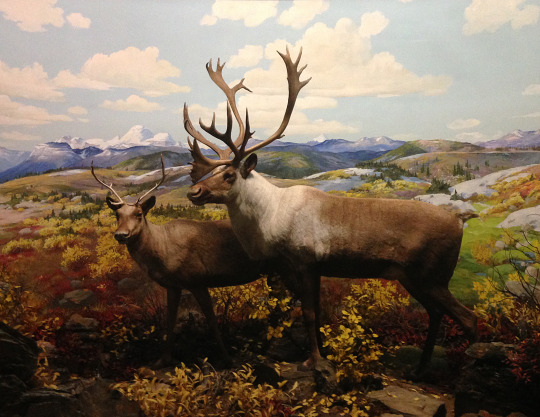
The First Nations People of Canada have depended upon caribou in the same way that tribes of the North American plains depended upon the bison – for meat, and as a source of clothing and various household goods cleverly derived from the animal’s bones, tendons, horns, and fur. However, there was never an attempt to domesticate the animals in North America. In parts of Eurasia, people began to domesticate reindeer about 2,000 years ago. The domesticated animals have evolved to be shorter and stockier than the wild animals. North American subspecies of caribou by contrast, are about as large an elk. There are several subspecies found in Canada, such as the barren-ground caribou living in the tundra, which is known to migrate as much as 800 miles from one seasonal feeding ground to another. At Carnegie Museum of Natural History, visitors can observe the barren-ground caribou and the mountain caribou in dioramas that show their natural habitats in the Hall of North American Wildlife. There is additional information about caribou in Polar World: Wykoff Hall of Arctic Life.

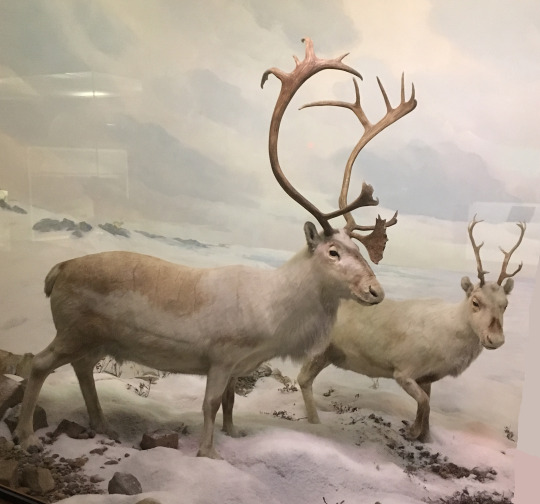
Barren-ground caribou in snow diorama
Barren-ground caribou in snow, Hall of North American Wildlife
Mountain caribou diorama
Mountain caribou, Hall of North American Wildlife

The domesticated reindeer of Eurasia are herded by people living in Arctic regions. These reindeer provide food, clothing, and even shelter for the people with whom their lives are intertwined. Clement Moore’s famous story, ‘Twas the Night Before Christmas’ was written in 1837 at a time when the people of Lapland, in northern Finland, would have been using reindeer to draw large sleighs or sledges, just as other people might use horses.

Unlike other members of the deer family, both male and female caribou and/or reindeer have antlers during part of the year. Large bucks begin developing antlers in March. The antlers of adult males may reach lengths of three to four feet and will be dropped by early November. Young males develop much smaller racks, which are occasionally retained as long as the following February. The antlers of adult females are of similar size to those of young males. A doe will begin to develop her antlers in June and carry them until the following April or May. Timing of antler loss in females usually coincides with the birth of their young. Based on this timing, it is clear that Santa’s reindeer must either be young males or adult females rather than adult males, because the larger males do not have antlers by Christmas time!

Reindeer can move at different speeds from the most common slow trot to a rapid gallop that can reach speeds of up to forty-nine miles per hour over short bursts. A unique characteristic of this animal is a clicking sound that is made by tendons moving over bones in the feet. They are excellent swimmers but have never been known to fly.

Suzanne B. McLaren is the Collection Manager in the Section of Mammals at Carnegie Museum of Natural History. She lives on the Northside with her husband Andy. Museum employees are encouraged to share their unique experiences from working at the museum.

Related Content

A Perfect Mineral for the Christmas Season

A Deeper Look at Dioramas

Snow White Bird Search

Carnegie Museum of Natural History Blog Citation Information

Blog author: McLaren, Suzanne B.
Publication date: December 18, 2018

Share this post!

  • Share on Twitter Share on Twitter
  • Share on Facebook Share on Facebook
  • Share on Pinterest Share on Pinterest
  • Share on LinkedIn Share on LinkedIn
  • Share on Reddit Share on Reddit
  • Share via Email Share via Email

Filed Under: Blog Tagged With: Christmas, Hall of North American Wildlife, mammals, Polar World, Sue McLaren

October 23, 2017 by wpengine

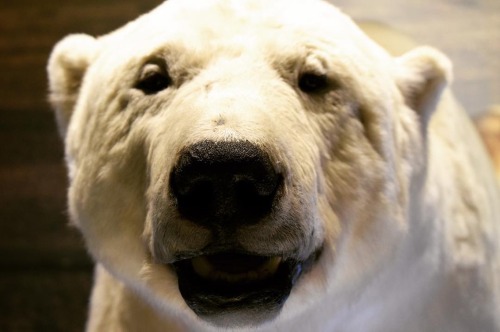
Face to face with a polar bear

Come face to face with a polar bear in Polar World: Wyckoff Hall of Arctic Life at Carnegie Museum of Natural History. 

Come face to face with a polar bear in Polar World: Wyckoff Hall of Arctic Life at Carnegie Museum of Natural History.

Filed Under: Blog Tagged With: Polar World, Wyckoff Hall of Arctic Life

October 5, 2017 by wpengine

What’s This?

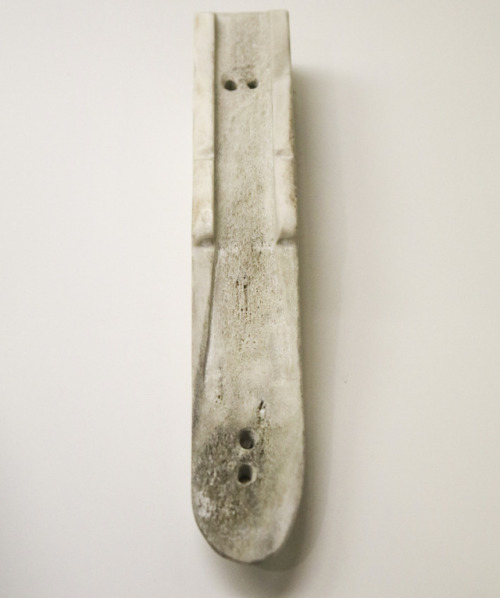
long white sled shoe

What’s This: a spoon, a tongue depressor or a sled shoe?

Sled shoes were made of bone or ivory and pegged to the bottom of wooden sled runners in order to protect them on rough ice or gravel. This reconstruction can be found in Polar World: Wycoff Hall of Arctic Life.

(Photo by Hayley Pontia)

Filed Under: Blog Tagged With: Polar World

October 5, 2017 by wpengine

Arctic animals

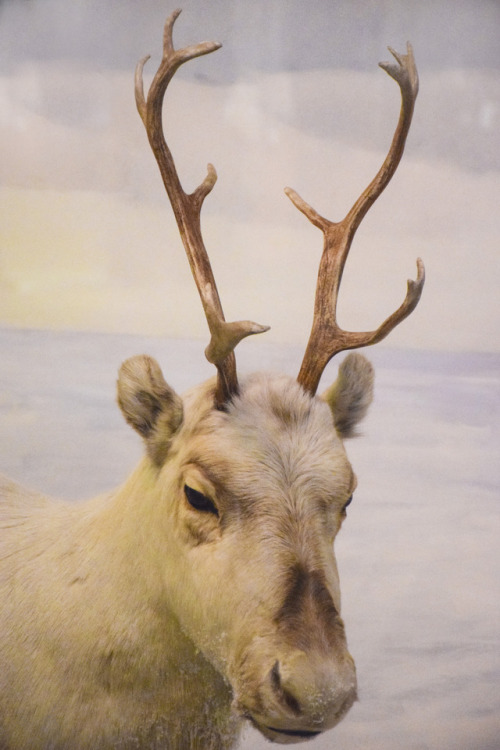
Caribou with fur changing from yellow to white

Arctic animals, such as the caribou, exhibit dramatic seasonal color changes in fur that help them blend with their natural surroundings. In this diorama, the caribou adapts to a white, winter environment.

(photo by Hayley Pontia)

Filed Under: Blog Tagged With: arctic, mammals, Polar World

August 18, 2017 by wpengine

The Atlantic walrus

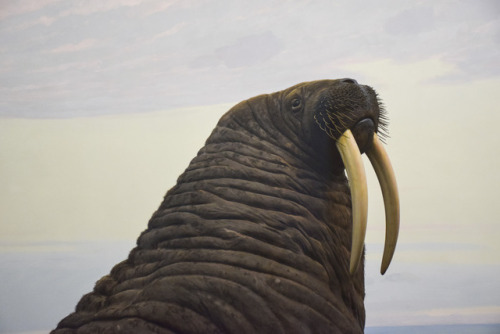
Atlantic walrus on display in Polar World
The Atlantic walrus is ideally adapted to feed on shellfish that abound in frigid northern seas with the help of its 400 coarse whiskers, used to probe mud in search of prey.

(photo by Hayley Pontia)

Filed Under: Blog Tagged With: Polar World

  • Page 1
  • Page 2
  • Go to Next Page »

sidebar

About

  • Mission & Commitments
  • Directors Team
  • Museum History

Get Involved

  • Volunteer
  • Membership
  • Carnegie Discoverers
  • Donate
  • Employment
  • Events

Bring a Group

  • Groups of 10 or More
  • Birthday Parties at the Museum
  • Field Trips

Powdermill

  • Powdermill Nature Reserve
  • Powdermill Field Trips
  • Powdermill Staff
  • Research at Powdermill

More Information

  • Image Permission Requests
  • Science Stories
  • Accessibility
  • Shopping Cart
  • Contact
  • Visitor Policies
One of the Four Carnegie Museums | © Carnegie Institute | Privacy Policy | Terms of Use | Accessibility
Rad works here logo