• Skip to primary navigation
  • Skip to main content
  • Skip to primary sidebar

Carnegie Museum of Natural History

One of the Four Carnegie Museums of Pittsburgh

  • Visit
    • Buy Tickets
    • Visitor Information
    • Exhibitions
    • Events
    • Dining at the Museum
    • Celebrate at the Museum
    • Powdermill Nature Reserve
    • Event Venue Rental
    • Gift Cards
  • Learn
    • Field Trips
    • Educator Information
    • Programs at the Museum
    • Bring the Museum to You
    • Guided Programs FAQ
    • Programs Online
    • Climate and Rural Systems Partnership
  • Research
    • Scientific Sections
    • Science Stories
    • Science Videos
    • Senior Science & Research Staff
    • Museum Library
    • Science Seminars
    • Scientific Publications
    • Specimen and Artifact Identification
  • About
    • Mission & Commitments
    • Directors Team
    • Museum History
  • Tickets
  • Give
  • Shop

Christmas

December 1, 2023 by Erin Southerland

Birds in “Twelve Days of Christmas”: a Museum Search

by Patrick McShea

The Twelve Days of Christmas

When a traditional song about Christmas gifts reaches young ears, the centuries-old lyrics naturally prompt questions. If you’ve been on the receiving end of inquiries such as “What’s a partridge?”, a museum visit can provide identity information for the abundance of birds mentioned in the “Twelve Days of Christmas.”

Although the birds cited below aren’t precise matches for European species of the song, locating these feathered references can renew your own appreciation for what might be an overly familiar tune. 

Inspiration and informational reference for the re-interpretation of several exhibits comes from a 2018 American Ornithological Society blog post by Bob Montgomerie, an evolutionary biologist at Queens University in Kingston, Ontario. Dr. Montgomerie’s post is titled “Three French Hens.”

A Partridge in a Pear Tree
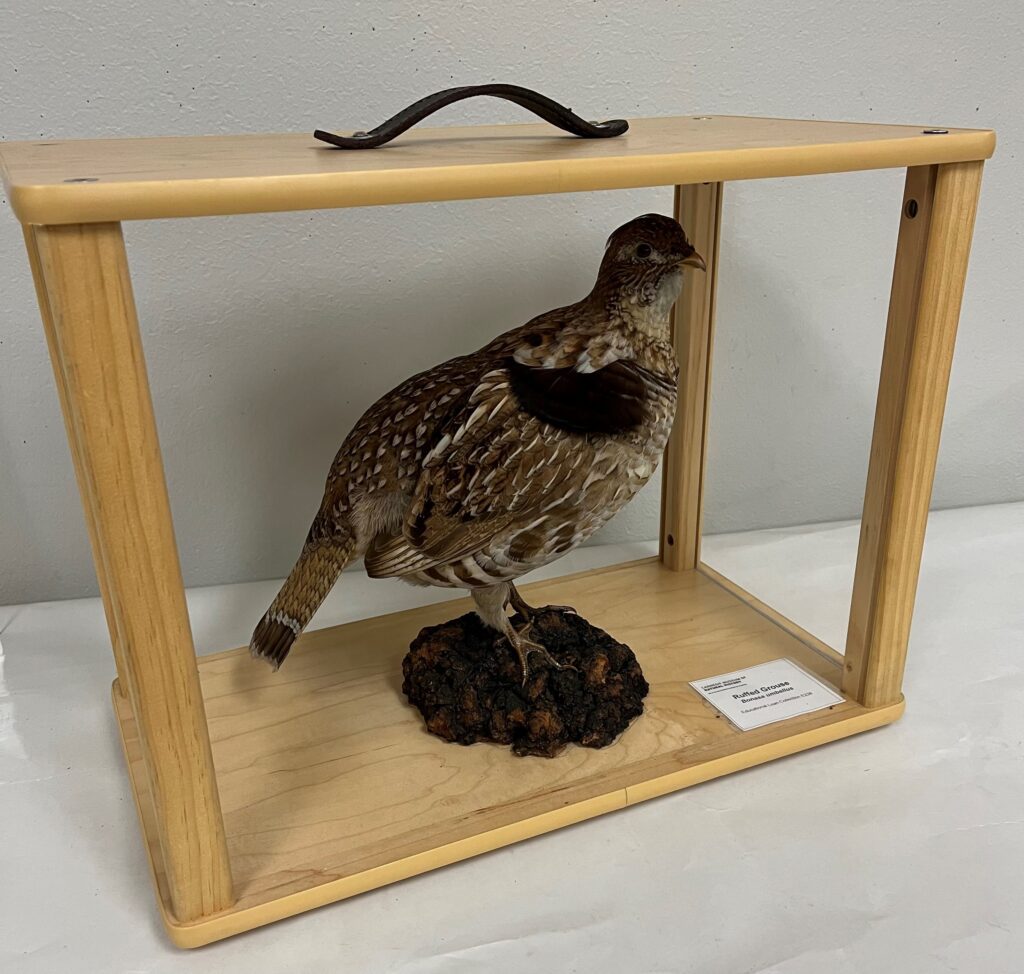
Ruffed Grouse taxidermy mount in Discovery Basecamp.

In Pennsylvania, the Ruffed Grouse has reigned as state bird since 1931. The species’ collective value to Pennsylvania residents includes the gamebird’s historic importance as a food source and its current role as the focus of much upland sport hunting. The bird referenced in the song might well have been the Red-legged Partridge, a European species known to science as Alectoris rufa, however, the Ruffed Grouse is a decent substitute because the bird, which is known to perch in trees occasionally, is routinely called “partridge” in Maine and other portions of the northeast.

Two Turtle Doves 
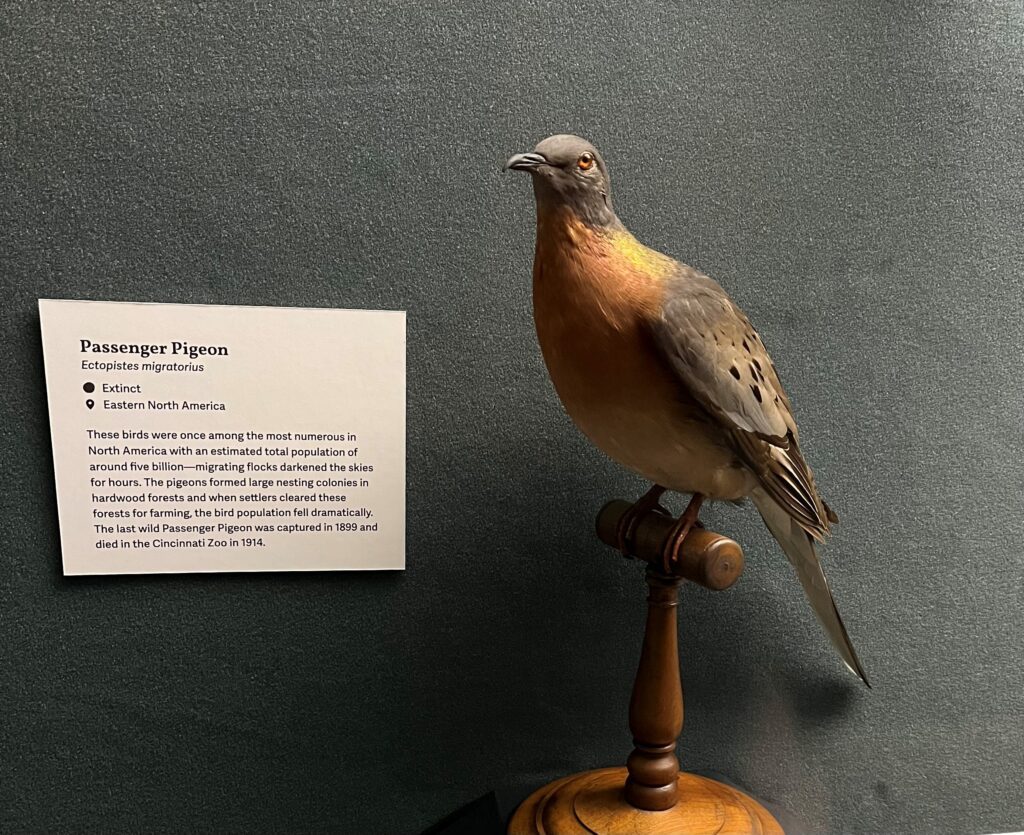
Passenger Pigeon taxidermy mount in Bird Hall

The European Turtle Dove, Streptopelia turtur, is a member of the bird family of doves and pigeons known as Columbidae. Generally, the smaller species in the family are called doves, and the larger species ae called pigeons. The Passenger Pigeon is the most notable family member on display at the museum. 

Passenger Pigeons were once so abundant in eastern North America that flocks darkened the skies for hours when the birds migrated to access seasonal feeding areas and nesting sites. 

Sustainable use of the birds by humans did not continue into the 19th Century. By mid-century, Passenger Pigeons became an unregulated commodity in the rapidly expanding American economy, with the country’s growing railroad network and parallel telegraph system providing unprecedented means for sharing word of flock locations, transporting hunters to those sites, and shipping harvested birds to distant markets.

Three French Hens

The song reference is to a specific breed of domestic chicken. There are no domestic chickens on display in the museum, but the species is usually well-represented in the food selections offered within the building’s dining areas. Some scientists have speculated that our current reliance on domestic chickens as a global source of protein for human consumption might someday leave deposits of chicken bones as an identifying mark of the Anthropocene, a proposed name for the current geologic age, viewed as the period during which human activity has been the dominant influence on climate and the environment.

Four Calling Birds
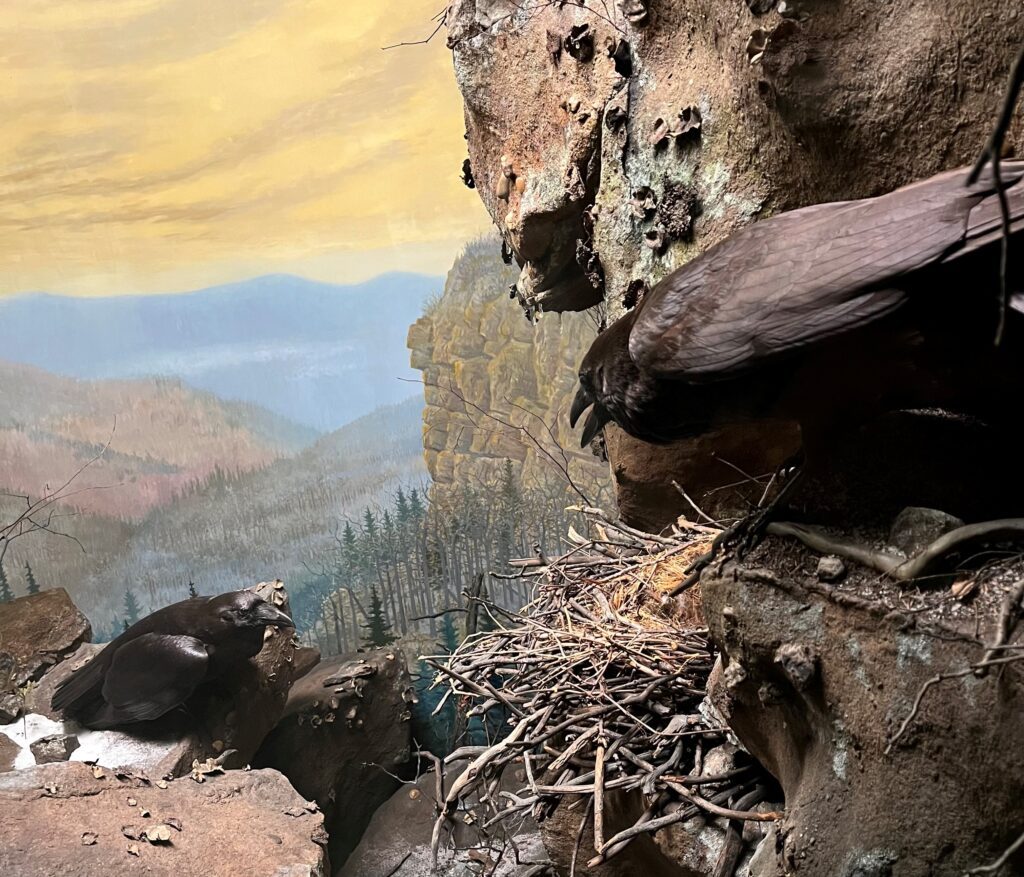
Northern Raven taxidermy mount in a diorama of its habitat

If we use the cited author’s research finding, (The original ‘colly bird’ was the Eurasian Blackbird (Turdus merula) as ‘colly’ meant ‘black’ as in ‘coaly,’ and is why border collies bear that name.) the Northern Ravens in an Art of the Diorama display can fill this slot. Another candidate is the American Crow, a species frequently observed passing over the museum building at dusk during winter evenings, heading to local roosts in scattered flocks that number in the thousands. Ornithologists explain the birds’ collective behavior as taking advantage of a “heat island effect,” a base temperature in a city that is five or more degrees warmer than the surrounding countryside. 

Five Golden Rings
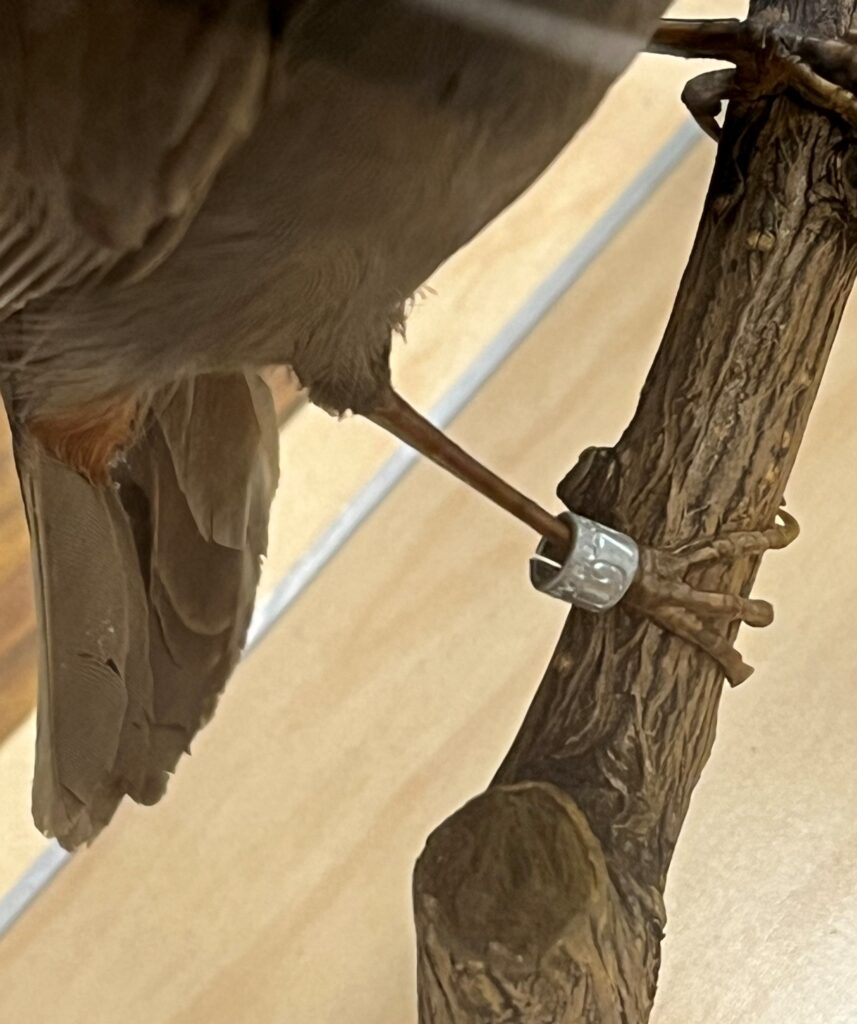
Close-up of a bird band on bird taxidermy mount

“Five golden rings” might also have a bird connection. Dr. Montgomerie’s post mentions both Gold Finches and Ring-necked Pheasants as possible references, but the museum’s long history of bird banding at Powdermill Nature Reserve, the location of Powdermill Avian Research Center (PARC), allows a different approach. Bird banding is a research practice that involves capturing wild birds, marking them with numbered leg bands, and releasing them unharmed. In some parts of the world this centuries’ old effort to verify bird movements through recovered birds is called “ringing.” It is admittedly a stretch between gold rings and aluminum bands, but for a close look at the latter, check the tabletops in Discovery Basecamp for an encased taxidermy mount of a Gray Catbird bearing one of the lightweight markers on its right leg.

Six Geese A-laying
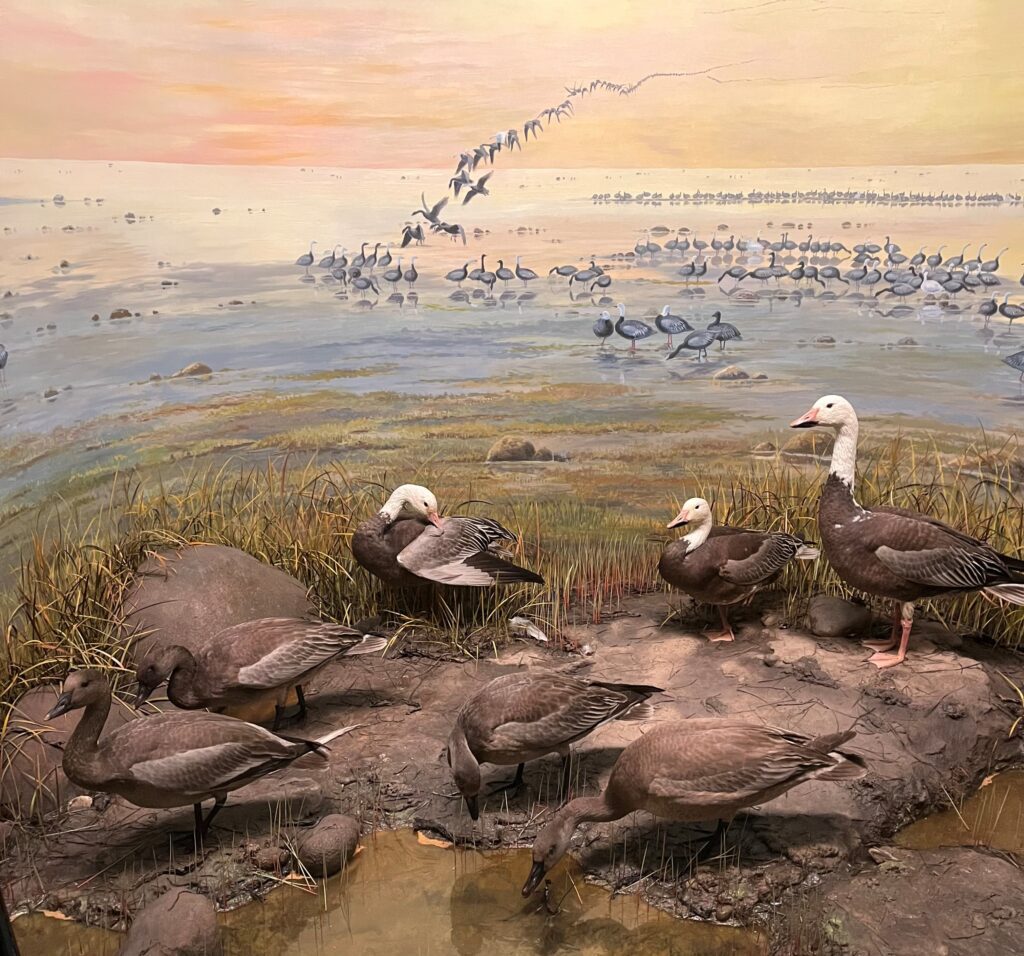
goose taxidermy mounts in a museum diorama

Although the lyric refers to a domestic variety, a scene focused on an enormous gathering of a wild species in The Art of the Diorama demonstrates the eventual outcome of “geese a-laying” – more geese. Here Blue Geese, a variety of Snow Geese with dark plumage, are shown gathering near James Bay in preparation for a continent-crossing migration. The dark-headed geese in the foreground are young of the year, the most recent product of “Snow Geese a-laying.”

Seven Swans A-swimming
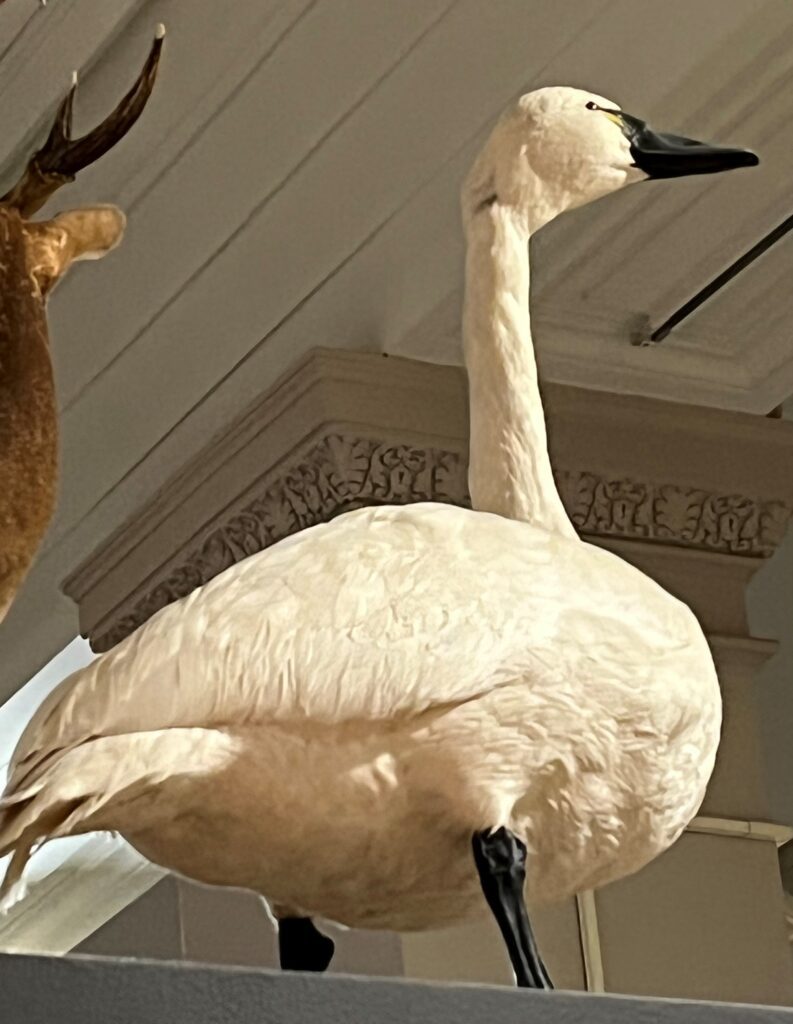
taxidermy mount of a tundra swan

A lone Tundra Swan watches over Discovery Basecamp from a high perch. Thousands of these birds fly, rather than swim, across Pennsylvania spring and fall during seasonal migrations between Arctic nesting grounds and wintering territory along the Chesapeake Bay. Their fall passage over western Pennsylvania, announced by flock calls some people describe as “like the baying of distant hounds,” generally occurs between mid-November and early December.

Patrick McShea is an Educator at Carnegie Museum of Natural History.

Related Content

Collected On Christmas Eve 1883: Mistletoe

2022 Rector Christmas Bird Count Results

A Perfect Mineral for the Christmas Season

Carnegie Museum of Natural History Blog Citation Information

Blog author: McShea, Patrick
Publication date: December 1, 2023

Share this post!

  • Share on Twitter Share on Twitter
  • Share on Facebook Share on Facebook
  • Share on Pinterest Share on Pinterest
  • Share on LinkedIn Share on LinkedIn
  • Share on Reddit Share on Reddit
  • Share via Email Share via Email

Filed Under: Blog Tagged With: Birds, Christmas, Education, Holidays, Pat McShea, Science News

December 18, 2018 by wpengine

Are Santa’s Reindeer Real Mammals?

by Suzanne B. McLaren

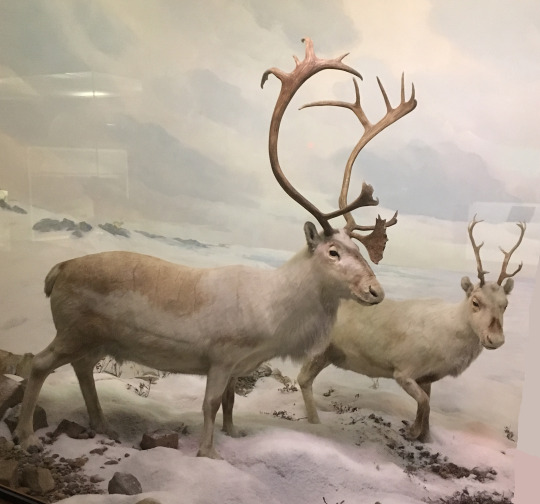
Yes! Reindeer are real mammals. In fact, reindeer are the same species as caribou (Rangifer tarandus). The species is widespread throughout northern parts of the Northern Hemisphere. In North America, the wild subspecies are called “caribou.” In Eurasia, both wild and domesticated animals are called reindeer.

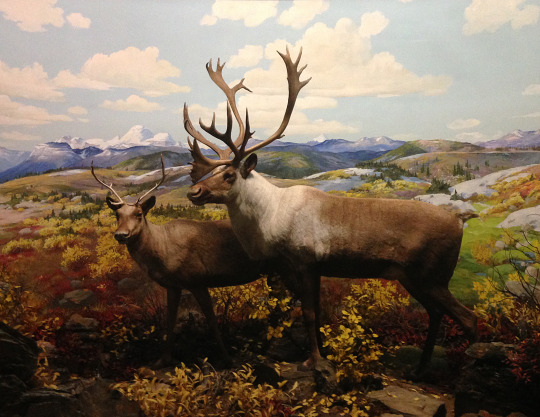
The First Nations People of Canada have depended upon caribou in the same way that tribes of the North American plains depended upon the bison – for meat, and as a source of clothing and various household goods cleverly derived from the animal’s bones, tendons, horns, and fur. However, there was never an attempt to domesticate the animals in North America. In parts of Eurasia, people began to domesticate reindeer about 2,000 years ago. The domesticated animals have evolved to be shorter and stockier than the wild animals. North American subspecies of caribou by contrast, are about as large an elk. There are several subspecies found in Canada, such as the barren-ground caribou living in the tundra, which is known to migrate as much as 800 miles from one seasonal feeding ground to another. At Carnegie Museum of Natural History, visitors can observe the barren-ground caribou and the mountain caribou in dioramas that show their natural habitats in the Hall of North American Wildlife. There is additional information about caribou in Polar World: Wykoff Hall of Arctic Life.

Barren-ground caribou in snow diorama
Barren-ground caribou in snow, Hall of North American Wildlife
Mountain caribou diorama
Mountain caribou, Hall of North American Wildlife

The domesticated reindeer of Eurasia are herded by people living in Arctic regions. These reindeer provide food, clothing, and even shelter for the people with whom their lives are intertwined. Clement Moore’s famous story, ‘Twas the Night Before Christmas’ was written in 1837 at a time when the people of Lapland, in northern Finland, would have been using reindeer to draw large sleighs or sledges, just as other people might use horses.

Unlike other members of the deer family, both male and female caribou and/or reindeer have antlers during part of the year. Large bucks begin developing antlers in March. The antlers of adult males may reach lengths of three to four feet and will be dropped by early November. Young males develop much smaller racks, which are occasionally retained as long as the following February. The antlers of adult females are of similar size to those of young males. A doe will begin to develop her antlers in June and carry them until the following April or May. Timing of antler loss in females usually coincides with the birth of their young. Based on this timing, it is clear that Santa’s reindeer must either be young males or adult females rather than adult males, because the larger males do not have antlers by Christmas time!

Reindeer can move at different speeds from the most common slow trot to a rapid gallop that can reach speeds of up to forty-nine miles per hour over short bursts. A unique characteristic of this animal is a clicking sound that is made by tendons moving over bones in the feet. They are excellent swimmers but have never been known to fly.

Suzanne B. McLaren is the Collection Manager in the Section of Mammals at Carnegie Museum of Natural History. She lives on the Northside with her husband Andy. Museum employees are encouraged to share their unique experiences from working at the museum.

Related Content

A Perfect Mineral for the Christmas Season

A Deeper Look at Dioramas

Snow White Bird Search

Carnegie Museum of Natural History Blog Citation Information

Blog author: McLaren, Suzanne B.
Publication date: December 18, 2018

Share this post!

  • Share on Twitter Share on Twitter
  • Share on Facebook Share on Facebook
  • Share on Pinterest Share on Pinterest
  • Share on LinkedIn Share on LinkedIn
  • Share on Reddit Share on Reddit
  • Share via Email Share via Email

Filed Under: Blog Tagged With: Christmas, Hall of North American Wildlife, mammals, Polar World, Sue McLaren

December 10, 2018 by wpengine

Peppermint: A Hybrid Herb for the Holidays

by Mason Heberling
gingerbread man cookie and candy canes

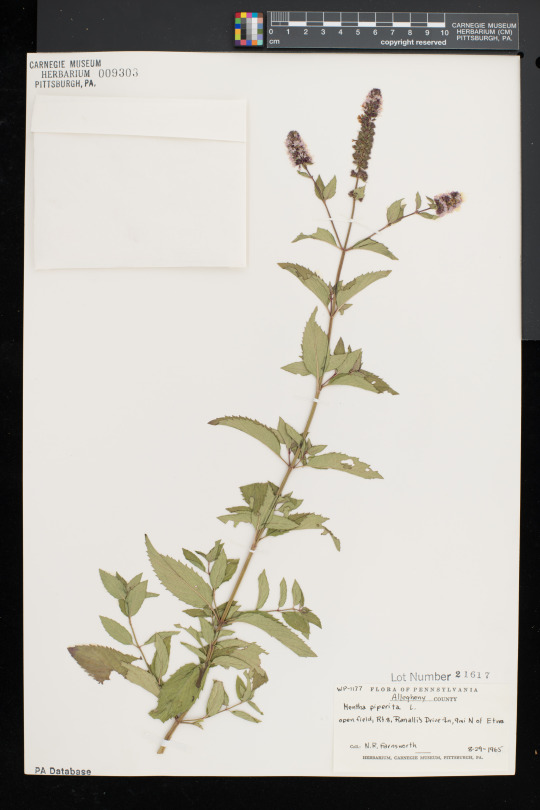
When in candy cane form, it is easy to forget where the flavor came from.  Peppermint (Mentha x piperita) is actually a hybrid between two other mint species, water mint (Mentha aquatica) and spearmint (Mentha spicata).  It is commonly grown for food as well as for use as a medicinal herb.  It is also well known to escape garden settings and spread aggressively.  Like other mints, this species is in the plant family Lamiaceae, which includes many strongly scented kitchen herbs.  Members of the mint family are well recognized by their unique flowers and characteristically square stems.

peppermint specimen

This peppermint specimen was collected on August 29, 1965 by Norman R. Farnsworth in an open field at Ranalli’s Drive-In, eight miles north of Etna off Route 8, outside of Pittsburgh, PA.

Farnsworth (1930-2011) received his PhD from the University of Pittsburgh, where he researched medicinal plants.  He was an influential professor and researcher in the field of pharmacognosy (study of medicinal drugs derived from plants).  He was a founding member of the American Society of Pharmacognosy.

The Carnegie Museum herbarium includes 1,108 specimens collected by Farnsworth.  Each specimen is recognizable, with an envelope attached to each sheet that includes a typed description of the results of chemical screenings he did on the specimen.

Check back for more! Botanists at the Carnegie Museum of Natural History share digital specimens from the herbarium on dates they were collected. They have embarked on a three-year project to digitize nearly 190,000 plant specimens collected in the region, making images and other data publicly available online. This effort is part of the Mid-Atlantic Megalopolis Project (mamdigitization.org), a network of thirteen herbaria spanning the densely populated urban corridor from Washington, D.C. to New York City to achieve a greater understanding of our urban areas, including the unique industrial and environmental history of the greater Pittsburgh region. This project is made possible by the National Science Foundation under grant no. 1801022.  

This specimen image is publicly available.

Mason Heberling is Assistant Curator of Botany at Carnegie Museum of Natural History. Museum employees are encouraged to blog about their unique experiences and knowledge gained from working at the museum.

Related Content

Collected on Christmas Eve 1883: Mistletoe

Indiana, Pennsylvania: Christmas Tree Capital of the World

Collected on This Day in 1934: European larch

Carnegie Museum of Natural History Blog Citation Information

Blog author: Heberling, Mason
Publication date: December 10, 2018

Share this post!

  • Share on Twitter Share on Twitter
  • Share on Facebook Share on Facebook
  • Share on Pinterest Share on Pinterest
  • Share on LinkedIn Share on LinkedIn
  • Share on Reddit Share on Reddit
  • Share via Email Share via Email

Filed Under: Blog Tagged With: Botany, Christmas, collected on this day, Mason Heberling, plants

sidebar

About

  • Mission & Commitments
  • Directors Team
  • Museum History

Get Involved

  • Volunteer
  • Membership
  • Carnegie Discoverers
  • Donate
  • Employment
  • Events

Bring a Group

  • Groups of 10 or More
  • Birthday Parties at the Museum
  • Field Trips

Powdermill

  • Powdermill Nature Reserve
  • Powdermill Field Trips
  • Powdermill Staff
  • Research at Powdermill

More Information

  • Image Permission Requests
  • Science Stories
  • Accessibility
  • Shopping Cart
  • Contact
  • Visitor Policies
One of the Four Carnegie Museums | © Carnegie Institute | Privacy Policy | Terms of Use | Accessibility
Rad works here logo