• Skip to primary navigation
  • Skip to main content
  • Skip to primary sidebar

Carnegie Museum of Natural History

One of the Four Carnegie Museums of Pittsburgh

  • Visit
    • Buy Tickets
    • Visitor Information
    • Exhibitions
    • Events
    • Dining at the Museum
    • Celebrate at the Museum
    • Powdermill Nature Reserve
    • Event Venue Rental
  • Learn
    • Field Trips
    • Educator Information
    • Programs at the Museum
    • Bring the Museum to You
    • Guided Programs FAQ
    • Programs Online
    • Climate and Rural Systems Partnership
  • Research
    • Scientific Sections
    • Science Stories
    • Science Videos
    • Senior Science & Research Staff
    • Museum Library
    • Science Seminars
    • Scientific Publications
    • Specimen and Artifact Identification
  • About
    • Mission & Commitments
    • Directors Team
    • Museum History
  • Tickets
  • Give
  • Shop

Blogs from Powdermill Nature Reserve

Powdermill Nature Reserve is Carnegie Museum of Natural History’s environmental research center. Located 55 miles southeast of Pittsburgh in Rector, Pennsylvania, Powdermill is a field station and laboratory where researchers do long-term studies of natural populations in western Pennsylvania. In addition to being positioned for Appalachian-specific studies in ornithology, ecology, invertebrate zoology, and botany, Powdermill is a great place to spend a fun-filled day outdoors with the family.

July 14, 2020 by wpengine

How to catch 311 amphibians in 10 days

Step 1: Deploy pitfall traps across Powdermill Nature Reserve

Step 2: Get out of the way and let nature do the rest

Over the course of 10 days in June of this year, I captured 311 amphibians of 12 different species. Every day, rain or shine, I spent over four hours checking 132 pitfall traps and several more hours identifying, measuring, and weighing the day’s amphibian haul. I did a rinse and repeat of this cycle for 10 days straight. Why would anyone do all of this for what Carl Linnaeus, the father of modern taxonomy, once described as “vile animals” with “a foul odor” (Wahlgren, 2011)? Although this sentiment might still ring true for some people today, I did this because amphibians are in serious trouble—more than 30% of species are facing extinction. The threats to amphibians range from habitat losses to disease epidemics, but these are merely symptoms of the underlying cause: unnatural changes brought about by the Anthropocene. Human-induced alterations to nature are irrevocably modifying biodiversity so rapidly that species we learned about in grade school are now extinct and, if we view amphibians as sentinel organisms, then the worst is yet to come.

The Powdermill Nature Reserve is a protected site in Pennsylvania’s Allegheny Mountains where, since 1956—the year it was established by a forward-thinking herpetologist— the property has functioned in a similar way as forests did before human settlement swept across the region. In the early 1980s, scientists at the Carnegie Museum of Natural History studied the amphibian community at the Powdermill Nature Reserve and, serendipitously, established the empirical baseline necessary to study how environmental changes have affected amphibian biodiversity in the Alleghenies (Meshaka, 2009).
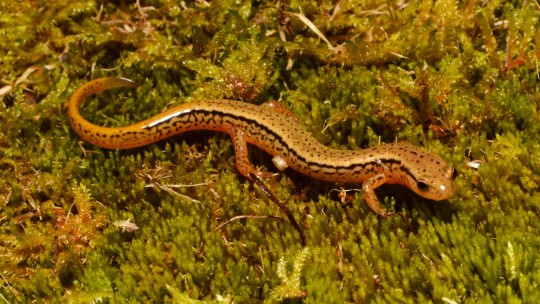
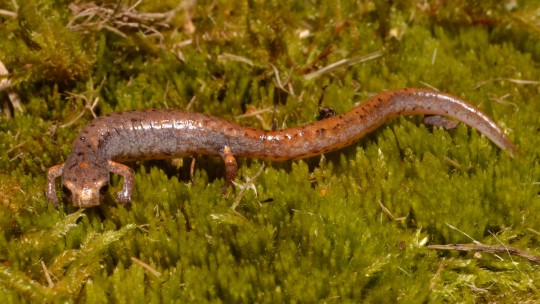
close up photo fo orange salamander with black stripes

Examining the results of amphibian trapping during two long ago Junes offers insight into the reserve’s value. In June 1982, 78 traps captured 262 amphibians of 11 species. In June 1983, 54 traps captured 174 amphibians of 11 species. While the species richness has not changed much since the 1980s, there has been species turnover and shifts in abundance, with some species becoming more common in the community. The Two-lined Salamander (Eurycea bislineata), for example, went from 0 captures in June of 1982 and 1983 to 7 captures this June. In terms of standardized trap nights in June (i.e., the number of traps multiplied the number of days opened), a combined rate of 0.11 amphibians per trap was detected across the two years in the 1980s, compared to a rate of 0.24 amphibians per trap this year. What could the ecological scenario be that has led to such an apparent increase in the amphibian capture rate over this 40-year period? Could trophic cascades be involved? Perhaps the protection of habitats in 1956 helped forest regeneration, and this change led to improved stream health and greater water retention later into the season via increased canopy cover. By providing better habitat and more resources for the streamside invertebrates that makeup the main prey base of forest-dwelling amphibians, such a transformed system might benefit amphibian communities indirectly. It’s also possible that some entirely different mechanism produced this result.
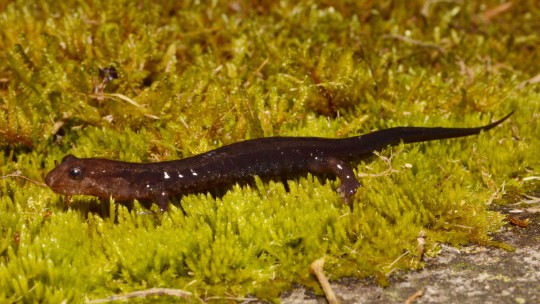
photo of Allegheny Dusky Salamander

The species that dominated captures historically and today was the Allegheny Dusky Salamander (Desmognathus ochrophaeus), which went from 0.048 individuals per trap in June from the 1980s to a slightly increased rate this June of 0.052 individuals per trap. Interestingly, the average body size of female Allegheny Dusky Salamanders has not changed over the 40-year study period, suggesting stability in morphology despite other studies reporting salamander species either shrinking (Caruso et al., 2014) or growing (McCarthy et al., 2017) in response to warmer temperatures brought about by recent climate change. Without the founding of the Powdermill Nature Reserve and the herculean efforts of historical and modern scientists from the Carnegie Museum of Natural History, we would not be able to understand the extent that humans have impacted biodiversity, let alone the data needed to solve mysteries of the modern world.
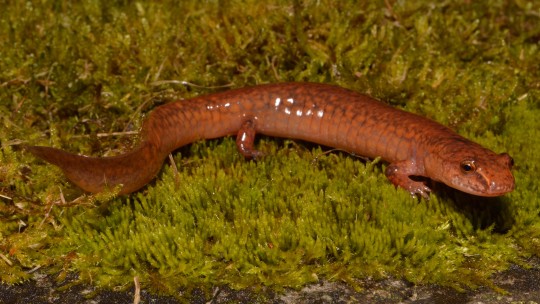
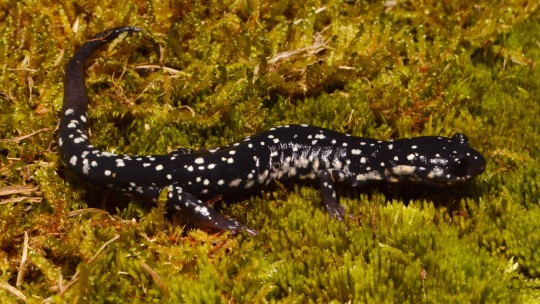
photo of spring salamander
photo of black salamander with white spots
photo of four-toed salamander

So, when I look at a Spring Salamander (Gyrinophilus porphyriticus) or a Slimy Salamander (Plethodon glutinosis) or a Four-toed Salamander (Hemidactylus scutatum) from the Powdermill Nature Reserve, I don’t see Linnaeus’s “terrible animal” with a “ghastly color”, rather, I see profound resiliency in the face of tremendous pressure, and the power that natural history collections and protected areas hold for improving our relationship with biodiversity.

Daniel F. Hughes is the Rea Post-doctoral Fellow in the Herpetology Section at Carnegie Museum of Natural History. Museum employees are encouraged to blog about their unique experiences and knowledge gained from working at the museum.

References:

Caruso, N.M., Sears, M.W., Adams, D.C. and Lips, K.R., 2014. Widespread rapid reductions in body size of adult salamanders in response to climate change. Global Change Biology, 20: 1751–1759.

Meshaka, Jr., W.E., 2009. The terrestrial ecology of an Allegheny amphibian community: Implications for land management. The Maryland Naturalist, 50: 30–56.

McCarthy, T., Masson, P., Thieme, A., Leimgruber, P. and Gratwicke, B., 2017. The relationship between climate and adult body size in redback salamanders (Plethodon cinereus). Geo: Geography and Environment, 4: e00031.

Wahlgren, R., 2011. Carl Linnaeus and the Amphibia. Bibliotheca Herpetologica, 9: 5–37.

Related Content

What is an Amphibian Party?

The Search for the Near Threatened Green Salamander, Aneides Aeneus
What’s in the Rivers?

Filed Under: Blog Tagged With: Daniel Hughes, herpetology, Museum from Home, Powdermill, Powdermill Nature Reserve, Science News

July 13, 2020 by wpengine

The Molecular Lab at Powdermill

scientist using a syringe and test tube

The Molecular Lab at Powdermill is a great resource because it allows us to analyze samples in-house from field studies being conducted on the reserve.

Currently, we are extracting and amplifying insect DNA from Chimney Swift feces in order to determine the dietary composition of these declining aerial insectivores. We are also screening swabs taken from amphibians and reptiles surveyed across the reserve for the presence of pathogens such as chytrid fungus, which is decimating amphibian populations across the globe.

Another ongoing lab effort involves devising a protocol for the detection of gill lice DNA from trout stream water samples. Gill lice are parasites that attach themselves to the gills of trout. This protocol would allow us to detect the presence of the parasite from a sample of water alone, without having to catch and examine the trout directly.

Andrea Kautz is a Research Entomologist at Carnegie Museum of Natural History’s Powdermill Nature Reserve. Museum employees are encouraged to blog about their unique experiences and knowledge gained from working at the museum.

Related Content

Relevance and the Spirit of Research at Powdermill

From Metes and Bounds to GPS

What is a Caterpillar Database?

Filed Under: Blog Tagged With: Andrea Kautz, Museum from Home, Powdermill Nature Reserve

July 13, 2020 by wpengine

Relevance and the Spirit of Research at Powdermill

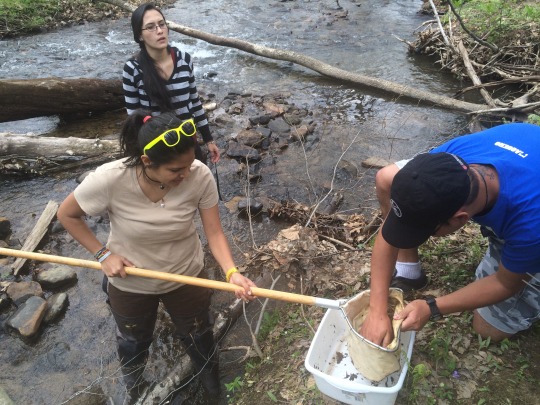
three people collecting specimens from a stream

When people think of scientists doing research, they tend to think of a laboratory with microscopes, technical machinery, exotic chemicals, and a person in a white coat doing “experiments” to invent a miraculous new compound, or maybe cure a disease. We have a technical laboratory with microscopes, machines, and chemicals at Powdermill, and we enjoy that kind of work. In reality, most of our research is done outside, with living plants and animals in the field. Usually we are in muddy boots, and we are more likely to be wearing rain gear and backpacks than white coats.

Our research comes in several flavors. Because we own the land, we can invest in long-term studies that require strong continuity. Examples of this would be our studies of birds that migrate in spring and autumn along the Appalachian ridges, traversing routes from the Caribbean and South America to Pennsylvania, Canada, and the Arctic. Since these studies were initiated in 1961, we have compiled the longest continuous data set of this type for any American research institute.  Another example would be our forest succession research, initiated in 2012, and intended to last several decades. These long-term studies are not likely to be undertaken by the college professor who must show results promptly for promotion and tenure, so it is important that places like Powdermill commit to them.

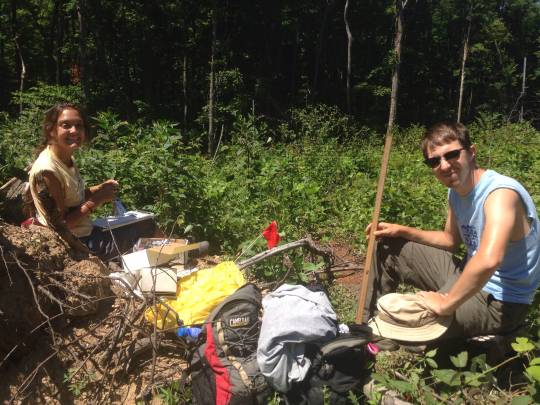
two people doing field research in the woods

On the flip side, we support student researchers to use Powdermill for their projects that have to be completed in a short time, between one summer and three years, depending on whether the research is for a senior thesis or a PhD. Together, the students embrace many topics across the entire diversity of biological systems: What do trout eat? How effective are birds at dispersing seeds? The work of the long-term studies can be thought of as composing a careful symphony, where student projects represent the catchy tunes coming from a dance club: each centered on a good riff, immediate and focused; then another tune, and another. Both the symphony and the dance band are important to our scientific culture, and together they demonstrate the relevance of the nature reserve.

Field stations necessarily focus on topics that occur on their landscape. Most of our work has a strong relevance to Pennsylvania in particular, but also to Appalachia and eastern North America in general. Sometimes our work in Pennsylvania connects us to a much broader audience, as the migrating birds that spend the winter in South America do. We often host researchers from other countries who view Powdermill as an exotic locale. Every year we host a series of workshops to train the next generation of scientists, and every year we have far more applicants than spaces. In the last decade, an award-winning program that sponsors Latin American guests (so that the actual cost of the program is not a barrier to applicants) has trained about 120 scientists from 10 nations who came to Powdermill to learn our research techniques. When they return to their home countries to resume their scientific careers, some of our Powdermill culture goes with them.

The visitor traffic through Powdermill presents a learning opportunity for us. Getting to know our visitors sometimes introduces us to new methods or entirely new fields of research.  We expand our research interests and capacity, too.

A pleasing and unique aspect of a research career at a field station is being in tune with the pulse of the natural world. You care about when it rained last, how cold it was the previous night, and why you have seen so many porcupines this year. The late freeze hurt the beeches and spice bush, but the maples and oaks are okay. Observing a small wildflower where you did not see it last year is like finding a gemstone. Training your eye to notice when certain plants bloom or when certain animals appear becomes rewarding, like playing a favorite game. We expect hummingbirds to arrive from Mexico on April 30. On May 1, they appear at our feeders. All of these observations make each day an experience with its own reward and mystery. And being connected to the natural world makes you feel very much alive.

John Wenzel is the Director at Powdermill Nature Reserve, Carnegie Museum of Natural History’s environmental research center. Museum employees are encouraged to blog about their unique experiences and knowledge gained from working at the museum.

Related Content

What is a Pitfall Trap?

Bird Banding with a Crew of One

Mystery Spit

Filed Under: Blog Tagged With: John Wenzel, Museum from Home, Powdermill Nature Reserve, Science News

July 13, 2020 by wpengine

Bird Banding with a Crew of One

This year, spring migration was different. Cold weather early in the season (one night during peak migration saw a low of 23 degrees and was accompanied by snow) seemed to delay the arrival of many species. The paucity of insects resulting from the low temperatures seemed to drive many birds like Baltimore Orioles to find food at feeders, which delighted socially distancing observers. Then, when warm winds from the south brought the bulk of migrants north, there were a few days of really great birding until those birds either settled into local breeding territories or continued to trickle north.

One gauge of “really great birding” is seeing more than 20 species of warblers in one day, and this eye-pleasing event happened at Powdermill more than once this spring!

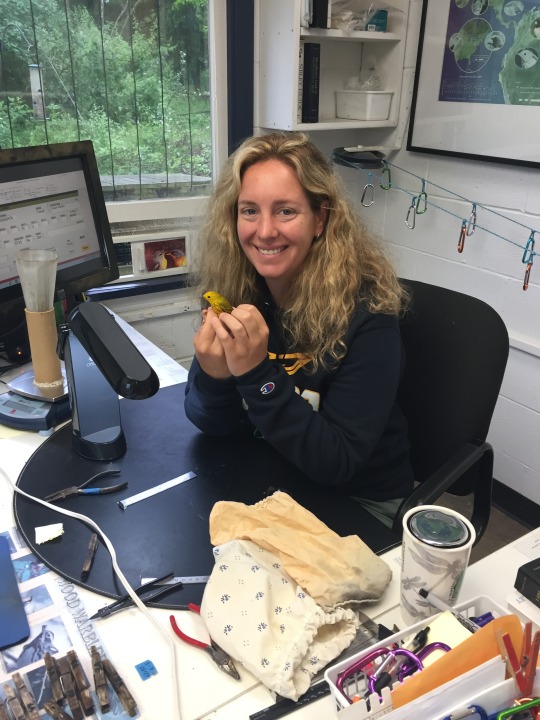
woman in an office holding a bird

Just as spring migration was a bit different for the birds, it was quite different for those who study birds. Across the continent, field seasons were cancelled and research projects redesigned or postponed due to the Covid-19 pandemic. For the first time in nearly 60 years, Powdermill’s bird banding program was unable to be run as normal. A banding operation of this magnitude requires many staff and volunteers working as a team to safely and efficiently extract, band, and process birds each day. Because bird banders’ priorities place bird safety and well-being along with human health ahead of dataset continuity, the difficult decision was made to cancel the banding season.

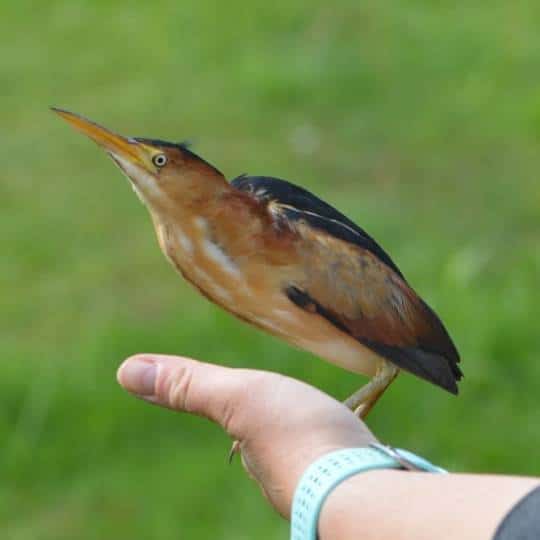
bird sitting on an open hand

Despite the pandemic, there were many bright spots this spring. Although a lot of research was put on hold, projects that could be run solo or by people in the same germ pool were given approval to proceed. As part of my dissertation work, I conducted a research project that is a collaboration between Powdermill and the University of Toledo to investigate the distance migratory songbirds fly between stopover locations. This project uses a novel method, sampling subcutaneous fat deposits to infer the geographic location of previous stopover areas using the data generated by stable-hydrogen isotope analysis. This first phase of the larger project was a success: I sampled 39 individuals of two species! I had mixed emotions about operating the mist nets at Powdermill alone. It was certainly lonely, but it was also peaceful and rewarding. Because the focus was on banding only a few study species, I released all other birds that I caught at the net. This meant that there were a few extra moments to marvel at the beauty of spring birds in their fresh and brightly colored breeding plumage, and to reflect on the incredible migratory journeys these relatively tiny birds make each year. There were even a few surprises in the nets, including a Prairie Warbler that stayed in the Powdermill banding area for a few weeks, and Powdermill’ s fifth ever capture of a Least Bittern, a secretive marsh bird that many yearn to see! Despite the pandemic and shutdown, spring banding with a crew of one was successful and productive.

Annie Lindsay is the Bird Banding Program Manager at Carnegie Museum of Natural History’s Powdermill Nature Reserve. Museum employees are encouraged to blog about their unique experiences and knowledge gained from working at the museum.

Related Content

Field Guides: An Introduction

Bird Proof Glass Installed at Carnegie Museum of Art and Natural History

Powdermill at a Glance

Carnegie Museum of Natural History Blog Citation Information

Blog author: Lindsay, Annie
Publication date: July 13, 2020

Share this post!

  • Share on Twitter Share on Twitter
  • Share on Facebook Share on Facebook
  • Share on Pinterest Share on Pinterest
  • Share on LinkedIn Share on LinkedIn
  • Share on Reddit Share on Reddit
  • Share via Email Share via Email

Filed Under: Blog Tagged With: Annie Lindsay, bird banding, Hall of Birds, Museum from Home, Powdermill Nature Reserve, Science News, Section of Birds

July 2, 2020 by wpengine

Powdermill at a Glance

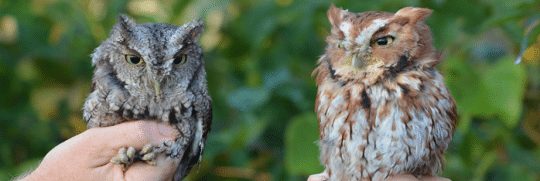
gray owl and brown owl

Facilities: Comprising 2,200 acres with various habitats typical of central Appalachia, Powdermill Nature Reserve is one of the larger private experiment stations in the USA. We maintain 20 buildings including the Nature Center (12,800 sq. ft), a state-of-the-art DNA laboratory, and eight fully furnished buildings for overnight guests, totaling about 40 beds and featuring campus wide Wi-Fi. For material, mechanical, and motorized support, we have a carpentry shop, barns and garages, two pickup trucks, passenger car, two-person ATV with dump bed, tractor, and mini backhoe. Our ample technical gear includes laptop computers, GPS devices, and two helicopter-type drones with cameras and spectral sensors.

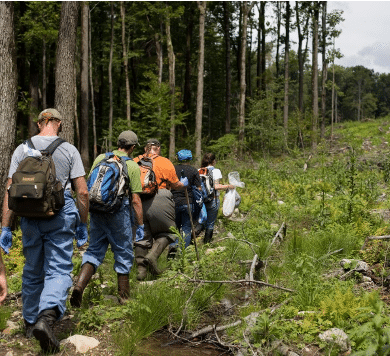
five people walking along a trail in a wooded area

Staff: The number of employees varies with grant funding. Presently, we have 15 year-round staff and up to 12 seasonal staff. These are (full time) Director John Wenzel; Operations Coordinator MaryAnn Perkins; maintenance workers Bobby Ankney, Rick Paesano, and Ryan Carter; educators Lauren Horner and Sara Klingensmith; scientists at Powdermill are Luke DeGroote, Annie Lindsay, Mary Shidel, James Whitacre, and Andrea Kautz; scientists stationed in Oakland are Chase Mendenhall, Jonathan Rice, and Mallory Sarver. Seasonal (temporary) staff include about two for avian research in spring and three in autumn, four or five summer camp instructors, and usually two summer assistants in other programs.

Visitors: About 5,000 people visit Powdermill per year, of which 600-700 are school groups, some of which get transportation grants from us to pay for bussing. We host about 2,000 person-nights in our lodging by visiting researchers and students, primarily from May to September.

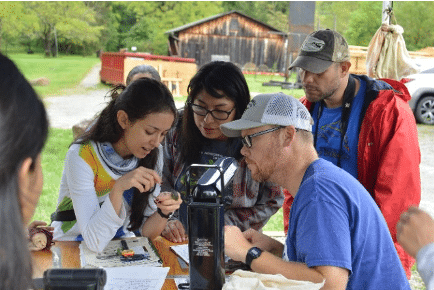
students with teacher looking at small animals

Education: Our free public programs include “Storytime And More” every first Sunday of the month. Every second Sunday (fall, winter, and spring) a “Science And Nature” lecture for adults is offered concurrently with “Nature Explorers” for children. Every third Wednesday, we host “Nature At Night,” nighttime nature walks or films. Themed, seasonal special events attract approximately 100 visitors. In 2019, these events were “Cicada-Palooza” and “Pollinator Festival.” Children’s summer camps support about 110 enrollments every year. For researchers, we host professional workshops that offer advanced technical training. In 2019, 100 people participated in seven such programs, the most notable of which was our award-winning Latin American graduate-level training, now in its ninth year. Our gardens are home to more than 200 species of native plants in their typical environment, and our web site provides information to gardeners for growing about 120 of these featured plants.

Public profile: The Powdermill Facebook page, which has 3,950 followers, reached 450,000 users and engaged 58,000 of them in 2019. We have a separate website for anyone interested in following our avian research programs closely, and that website logged 45,000 visits by 21,146 visitors in 2019. We appeared in popular media outlets nine times in 2019, including twice in National Geographic. A number of scientific datasets are made available through web tools we created, including the definitive resource for tracking unconventional (hydro-fractured) gas wells in PA, a water quality data set of 1.3 million specimens from nearly 7,000 surface water locations across PA, an interactive gigapixel digital teaching collection for identifying aquatic macroinvertebrates, and a tool to explore the data compiled in a vegetation survey of Powdermill.

Scientific productivity and roles: Our staff members are annually featured in approximately 20 presentations at scientific society meetings. The staff also serve regularly as Councilors, Associate Editors, Board members, etc., of professional societies in their fields, currently collectively holding 22 such offices. Powdermill as a research site is prominent. In the last three years, 32 papers in journals were published by our staff, or other scientists who conducted their research at Powdermill or used publicly archived Powdermill data. Using Google Scholar to assess significance, Powdermill publications earn an H index of 25, meaning that Powdermill’s importance as an engine of research is comparable to a Full Professor at a major university. Our main research threads include biology of migratory birds (for which we are known historically, and still provide international leadership), Geographical Information Services, pollination and aquatic entomology, and forest plant ecology. We enjoy close partnerships with more than 40 scientists and institutions that share our research goals and efforts.

Extramural funding: Our funding sources in the last three years include grants and contracts from National Science Foundation, Richard King Mellon Foundation, Colcom Foundation, Laurel Foundation, US Fish and Wildlife Foundation, PA Wildlife Resource Conservation program, American Bird Conservancy Foundation, and Western Pennsylvania Conservancy. These proposals are conceived, initiated, and largely written by Powdermill staff, with strong support from Advancement and Community Engagement, and total more than $2,000,000. We currently have about $3,000,000 in proposals under review.

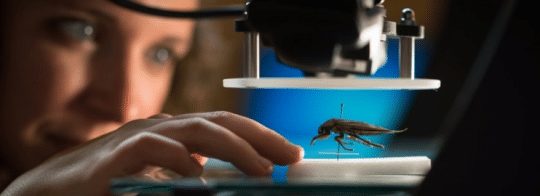
woman looking at a bug under a microscope

John Wenzel is the Director at Powdermill Nature Reserve, Carnegie Museum of Natural History’s environmental research center. Museum employees are encouraged to blog about their unique experiences and knowledge gained from working at the museum.

NOTE: Information about educational programming and visitors refers to activity before the COVID-19 pandemic. Visit Powdermill’s website for information about visiting and programs in 2020. 

Related Content

What is Bird Banding? 

Ask a Scientist: What are Murder Hornets? 

Many Ways to be a Forest Wildflower

Filed Under: Blog Tagged With: John Wenzel, Museum from Home, Powdermill Nature Reserve

June 30, 2020 by wpengine

Fourth of July and the Firefly

drawing of firefly that says World Firefly Day July 4-5, 2020

Although many fireworks shows are cancelled this Fourth of July, this is a great opportunity to get out over the holiday weekend and enjoy nature’s very own light show during World Firefly Day, on July 4th and 5th!

Fireflies, AKA lightning bugs, are neither flies nor bugs. They are actually a type of beetle with soft wings and the ability to bioluminesce (light up).

There’s a good chance you will see (or have already started seeing) firefly light displays this summer. There are six genera of fireflies that you are likely to encounter in Pennsylvania. Three are diurnal and don’t light up as adults (Ellychnia, Pyropyga, and Lucidota). Their light organs are absent or reduced in the adult stage. The remaining three genera are nocturnal and use light displays as adults. One is Pyractomena, which is a spring-active firefly that has already finished displaying for the year. That leaves Photinus and Photuris as the hosts of nature’s fireworks this Fourth of July. If you pay close attention to the flash patterns you’re seeing in your yard or get a chance to see one up close, you’ll probably be able to tell which one it is!

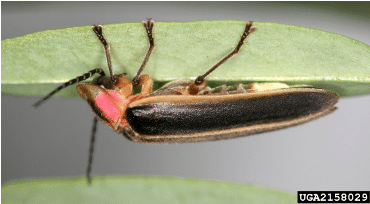
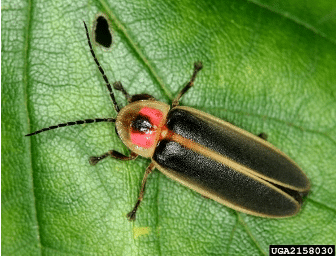
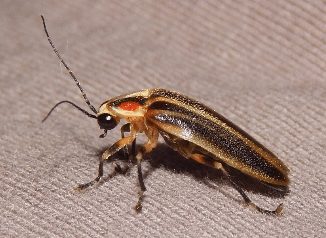
Photinus fireflies (top) are flattened in appearance and their heads are usually concealed from above, whereas Photuris fireflies (bottom) are hump-backed and you can often see their heads from above.

firefly under a leaf
firefly on a leaf during the day
Creative Commons © David Cappaert, Bugwood.org
firefly on gray fabric
Photo credit: Andrea Kautz

Flash patterns vary by species, as do the timing and location of the display. Some species display low to the ground, while others display high in trees. Some are active at dusk, and others after dark. The most common firefly in the eastern U.S. is Photinus pyralis which has a lazy J-shaped flash pattern. Other flash patterns you may have seen are single or multiple rapid blinks. The displays you see are male fireflies advertising to females, who respond inconspicuously with their own flash pattern from a lower perched position. Some “femme fatales” in the genus Photuris will actually hunt by flashing in response to males of other species to lure them in, and then eat them!

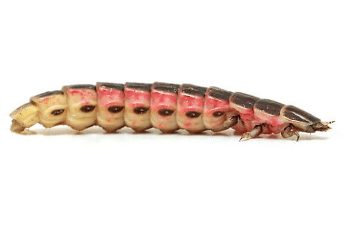
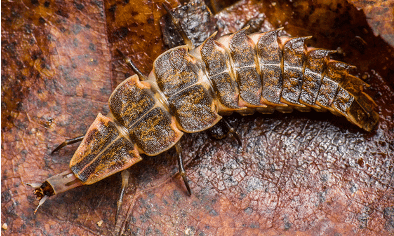
Speaking of hunting, firefly larvae (below) are predators that live in moist soils, feeding on slugs and snails, which is a great method of pest control! Adults of some species are predators, but others drink nectar from flowers or simply do not eat at all.

firefly larva
Creative Commons © 2019 Ken Childs
firefly larva
Creative Commons © 2012 Derek Hauffe

The light-producing behavior has its origins in the larvae, which use the glow as a warning to predators that they are toxic. Other animals use bright colors to achieve this, but this wouldn’t be effective for nocturnal species in darkness. Adult fireflies light up to warn predators, but also to communicate with members of their own species, specifically potential mates. The distress signal is different from the mating signal, which you may notice if you capture a firefly in your hand and it starts to blink repeatedly.

We hope you get a chance to celebrate both the Fourth of July and World Firefly Day this year by witnessing some natural firework displays in your own back yard! We encourage you to share your experiences on the Fireflyers International Network Facebook page.

Andrea Kautz is a Research Entomologist at Carnegie Museum of Natural History’s Powdermill Nature Reserve. Museum employees are encouraged to blog about their unique experiences and knowledge gained from working at the museum.

Related Content

What are Murder Hornets?

Eastern Garter Snake Encounter

The World of Bee Vomit

Filed Under: Blog Tagged With: Andrea Kautz, entomology, Museum from Home, Powdermill Nature Reserve, Science News

  • « Go to Previous Page
  • Page 1
  • Interim pages omitted …
  • Page 5
  • Page 6
  • Page 7
  • Page 8
  • Page 9
  • Interim pages omitted …
  • Page 17
  • Go to Next Page »

sidebar

About

  • Mission & Commitments
  • Directors Team
  • Museum History

Get Involved

  • Volunteer
  • Membership
  • Carnegie Discoverers
  • Donate
  • Employment
  • Events

Bring a Group

  • Groups of 10 or More
  • Birthday Parties at the Museum
  • Field Trips

Powdermill

  • Powdermill Nature Reserve
  • Powdermill Field Trips
  • Powdermill Staff
  • Research at Powdermill

More Information

  • Image Permission Requests
  • Science Stories
  • Accessibility
  • Shopping Cart
  • Contact
  • Visitor Policies
One of the Four Carnegie Museums | © Carnegie Institute | Privacy Policy | Terms of Use | Accessibility
Rad works here logo