• Skip to primary navigation
  • Skip to main content
  • Skip to primary sidebar

Carnegie Museum of Natural History

One of the Four Carnegie Museums of Pittsburgh

  • Visit
    • Buy Tickets
    • Visitor Information
    • Exhibitions
    • Events
    • Dining at the Museum
    • Celebrate at the Museum
    • Powdermill Nature Reserve
    • Event Venue Rental
  • Learn
    • Field Trips
    • Educator Information
    • Programs at the Museum
    • Bring the Museum to You
    • Guided Programs FAQ
    • Programs Online
    • Climate and Rural Systems Partnership
  • Research
    • Scientific Sections
    • Science Stories
    • Science Videos
    • Senior Science & Research Staff
    • Museum Library
    • Science Seminars
    • Scientific Publications
    • Specimen and Artifact Identification
  • About
    • Mission & Commitments
    • Directors Team
    • Museum History
  • Tickets
  • Give
  • Shop

Sara Klingensmith

June 10, 2022 by Erin Southerland

“Moldly” Exploring Fungal Functions

by Sara Klingensmith

Fungi, a vast group neither animal nor plant, comprise a diversity of organisms ranging from microscopic, unicellular yeasts and molds to enormous, hardened brackets, to jiggly, gelatinous structures, to classic cap and stem mushrooms, to “what on Earth is THAT?” The enormity of variation in shapes, sizes, and colors is astounding. While some fungal forms may resemble plants in appearance, all fungi lack structures associated with photosynthesis—they are more closely related to animals than they are to plants. Fungi even share a compound called chitin, which is found in their cell walls, with arthropods. Some taxonomists place them in a grouping called Opisthokont, a position closer to animals in a complex tree of relationships. Fungi are ubiquitous, found in a variety of ecosystems and even inside living organisms—what are they doing? 

Decomposition and Nutrient Recycling

Saprotrophic fungi are the clean-up crew! Unlike plants that harness energy from sunlight, fungi extend hyphae, or filamentous tube-like structures into their source of nourishment. Collectively, hyphae are referred to as mycelium (mushroom “roots”), which form the main, life-sustaining part of the fungus. These hyphae secrete enzymes that help break down the rotting wood, leaves, and other organic debris, liberating nutrients that are not readily accessible to other life forms. These hard-to-reach nutrients are often locked up in lignin and cellulose—tough compounds that comprise wood and plant cell walls. Often, a single rotting log will support a variety of saprotrophic fungi participating in successional stages of decomposition. This continued release of nutrients helps sustain many generations of organisms within an ecosystem and prevents the establishment of ever-expanding debris piles.   
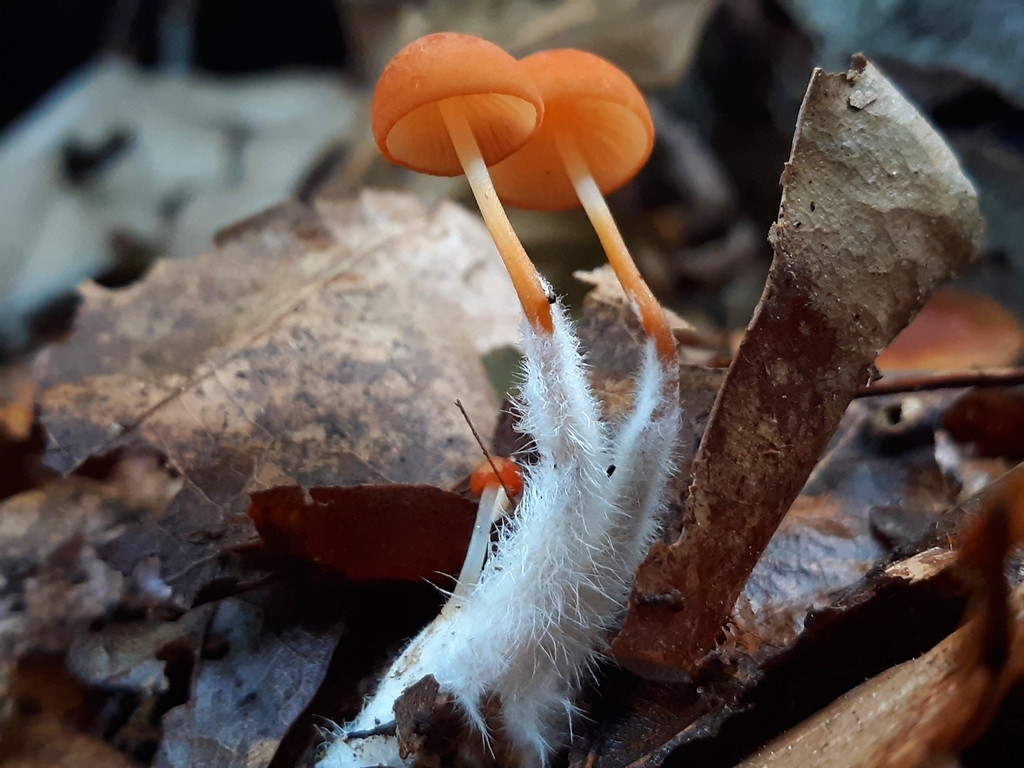
Marasmius sulivantii decomposing leaf litter

Pathogens & Parasites

These particular ecological niches often receive a bad reputation because of associations with reduced crop yields, the death of favorite landscaping plants, and even cases of athlete’s foot and ringworm. In the broader scope, native pathogens and parasites are a fundamental component of the complex balance of life and death. They help prevent organisms from exceeding carrying capacity, a service essential to successional ecosystem processes and the establishment of stable populations. Some fungal tree pathogens are even responsible for shaping habitats by creating hollow cavities and tree falls.

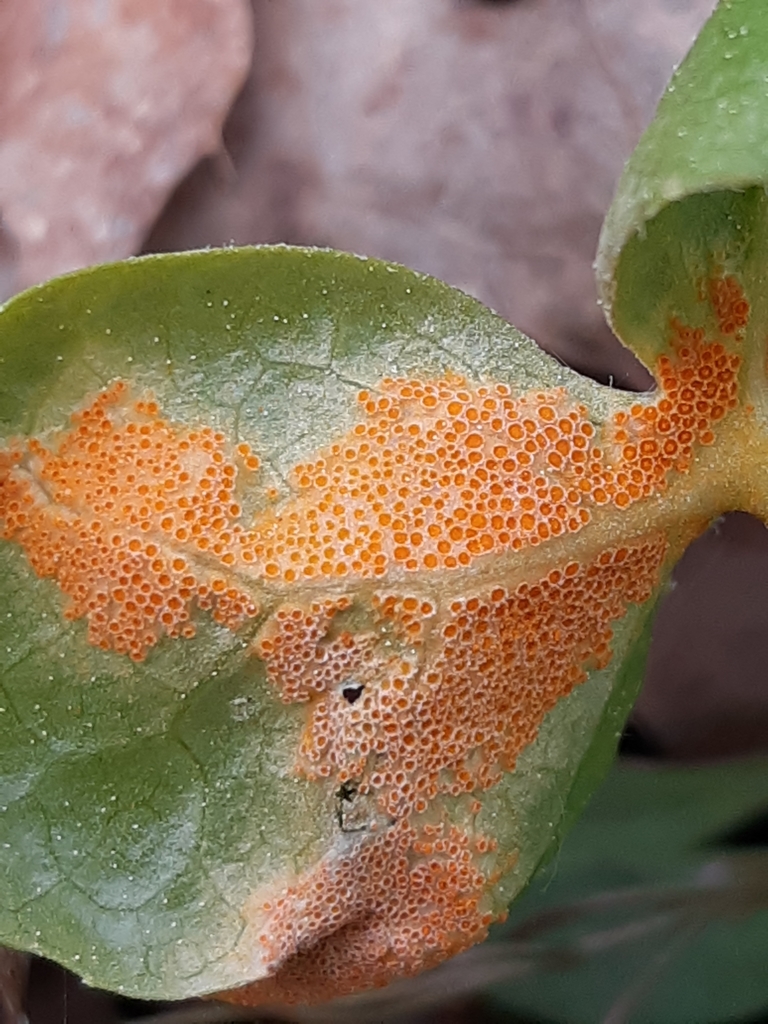
Fungal pathogens in plants are frequently host-specific and some are restricted to infecting certain areas of the host. For example, mossy maple polypore (Rigidporus populinus), which causes white rot in living tree tissues, is usually found on maples and oaks, whereas mayapple rust (Puccinia podophylli) only infects mayapples. Some fungi parasitize a wide range of insect species and even other fungi.  Some of these species are currently being studied and implemented as biological controls against insect and fungal agricultural pests and detrimental forest pathogens.
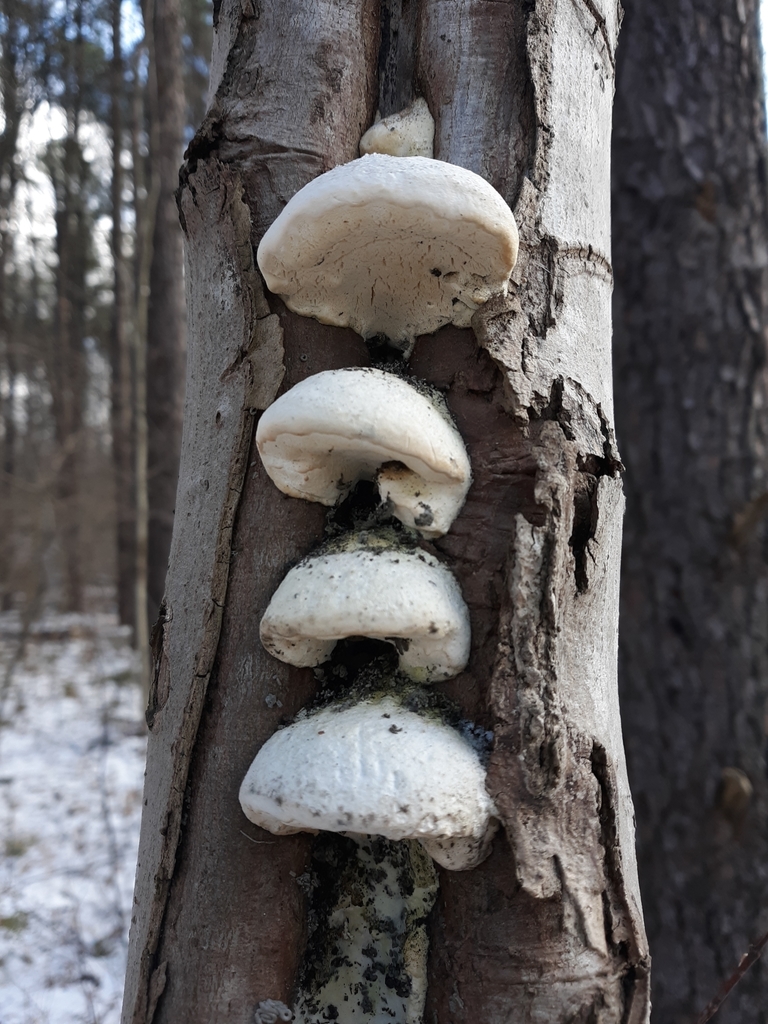
Mossy maple polypore
Mayapple rust

Cordyceps sp. provide some of the more charismatic encounters with parasitic fungi-insect relationships here in Pennsylvania. Scarlet caterpillar club (Cordyceps militaris) only targets pupating butterflies and moths. After it infects the host, the mycelium empties the host of nutrients and then forms the species’ distinctive fruit. A common forest mushroom, oak-loving gymnopus (Gymnopus dyrophillus) can be found with tumor-like growths caused by fungal parasite Collybia clouds (Syzygospora mycetophila). 
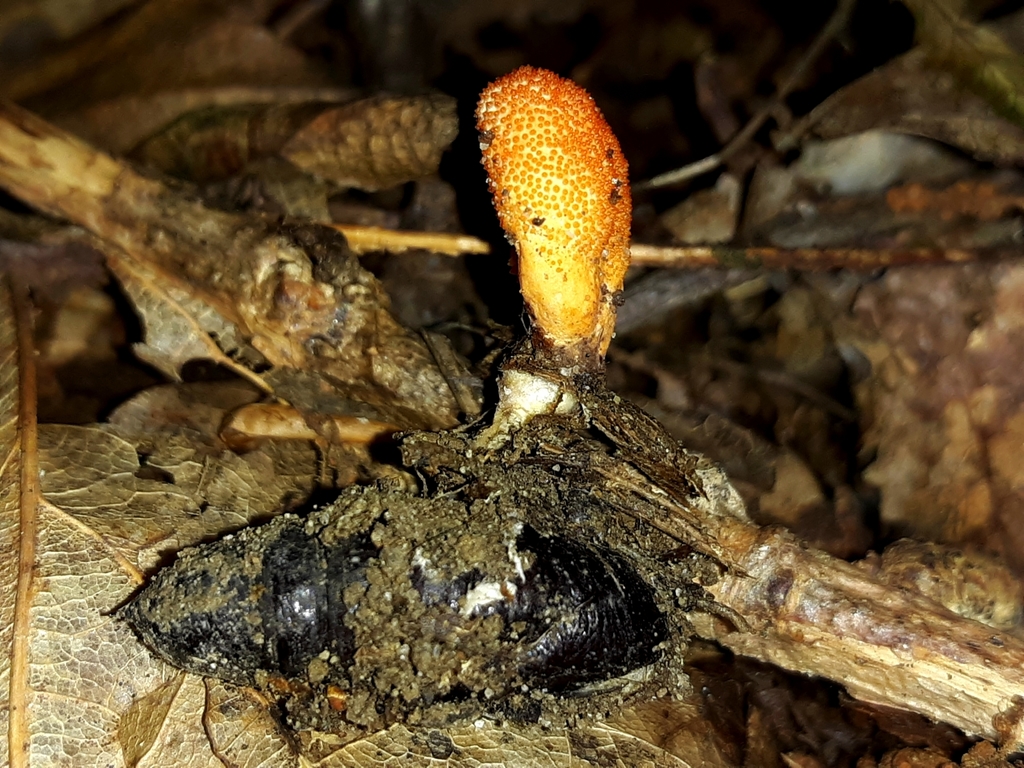
Scarlet caterpillar club
Collybia clouds

In some cases, it is not clear who is parasitizing who. For example, aborted entoloma (Entoloma arbortivum) was once thought to be another victim of honey mushroom (Amellaria sp.) parasitism. Amellaria sp. can parasitize a variety of trees and shrubs, spreading through large areas of forest like one titan organism. However, a 2001 study of the “aborted” fruitbodies, or carpophoroids, suggests that the entoloma is parasitizing the honey mushroom, and thus may be considered as a potential biological control for Amellaria sp.  
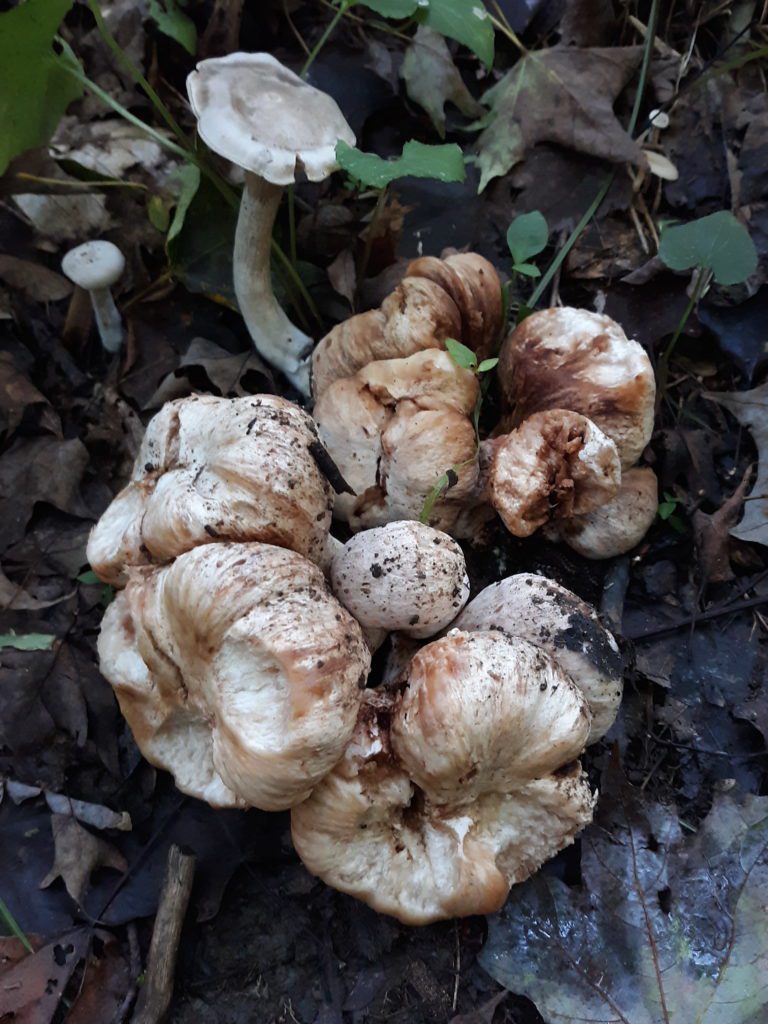
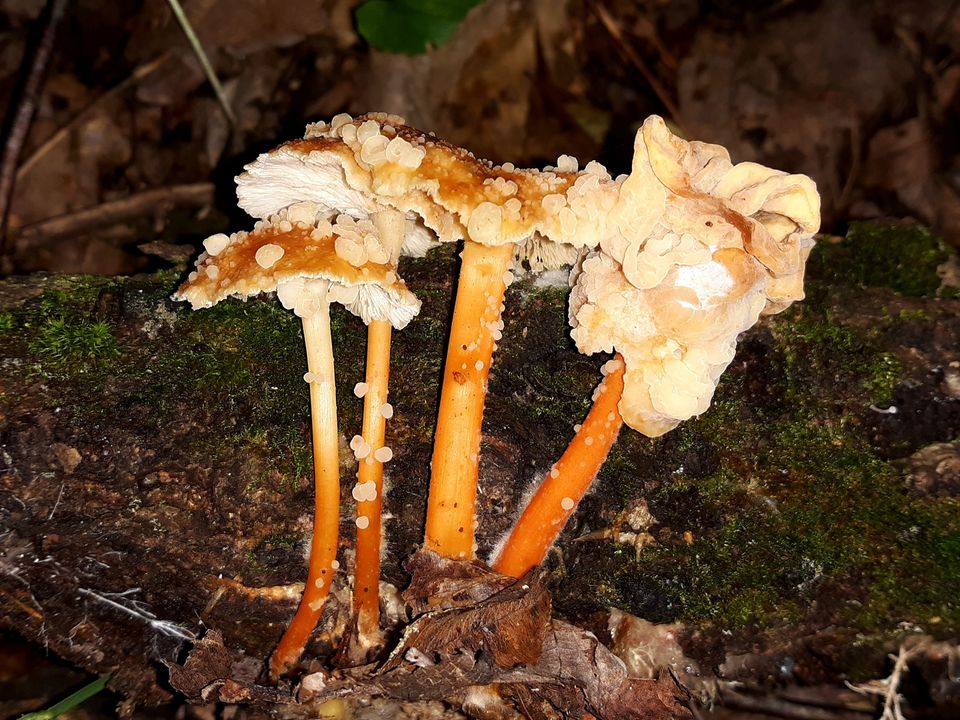
Aborted entoloma

Symbiotic Relationships & Carbon Sinks

“When algae met fungus, they took a ‘lichen’ to each other.” That’s how the story goes. Lichens are composite organisms consisting of a partnership between a fungus and an algae or cyanobacteria. The fungi provide protection, and the photobiont (algae or cyanobacteria) provides the sugars obtained from photosynthesis. Certain species of lichen can be regarded as air quality bio-monitors because of their sensitivity to air pollution.

Roughly 80-90% of plants need mycorrhizal fungi partners to survive. Some mycorrhizal fungi may form sheathes around plant roots (ectomychorrhizal fungi) or live in the plant roots (endomychorrhizal or arbuscular fungi), and some form special relationships with particular plant groups. In exchange for plant-produced carbon, in the form of sugars known as photosynthates, these symbionts break down and gather up minerals and nutrients that would otherwise be locked up in the soil. Furthermore, mycorrhizal fungi are capable of transferring carbon from one tree to another. They can even help plants communicate, provide “parental care” to saplings, or sabotage competitors. Scientists refer to this phenomenon as the “Wood Wide Web.” Additionally, these vast, dense fungal networks help store carbon in the soil in the forms of mycelial necromass and ever-expanding active mycelium. Both forms stitch the soil together, making it more resistant to erosion. 
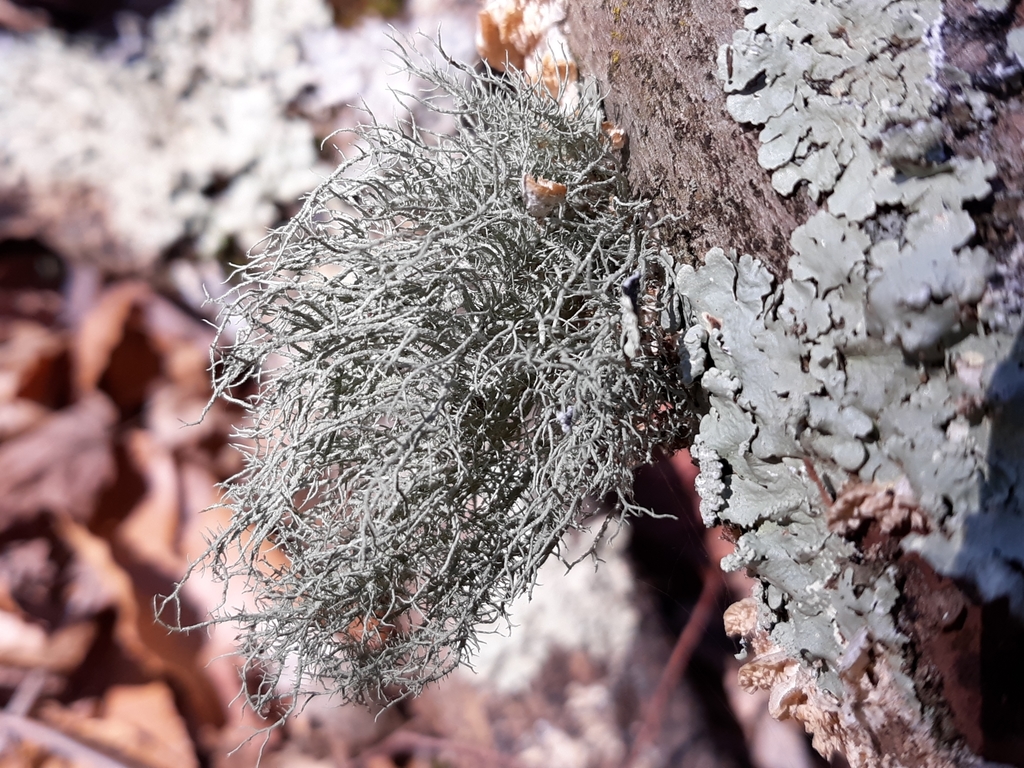
Beard lichen
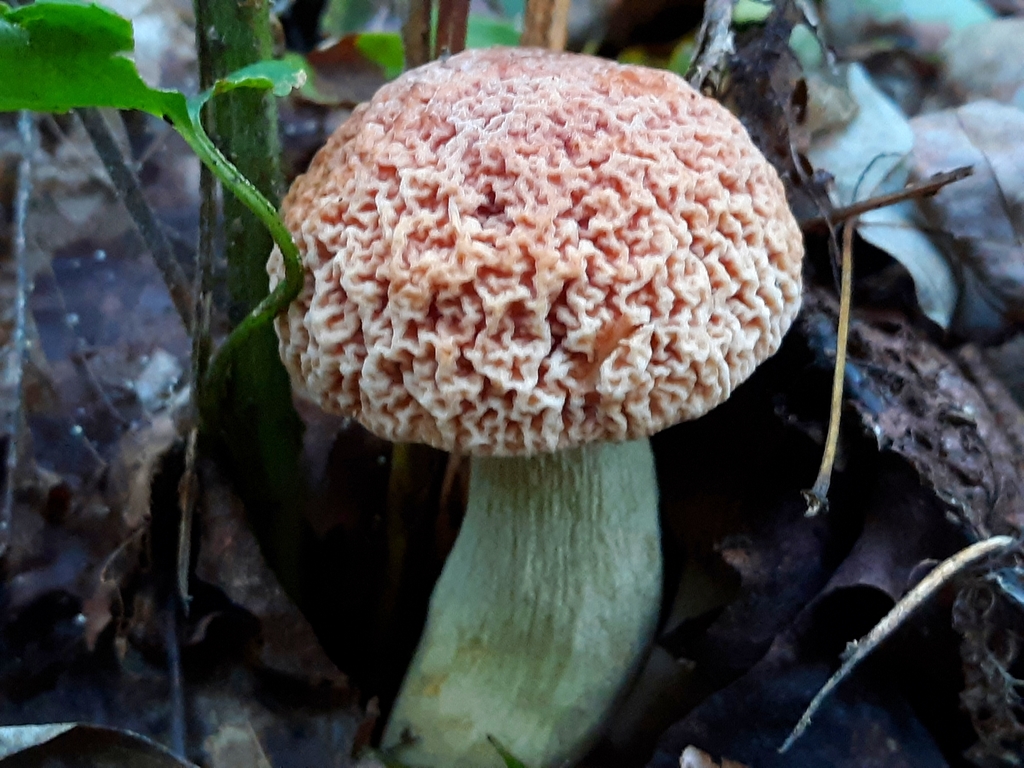
Corrugated bolete

Food Web Links

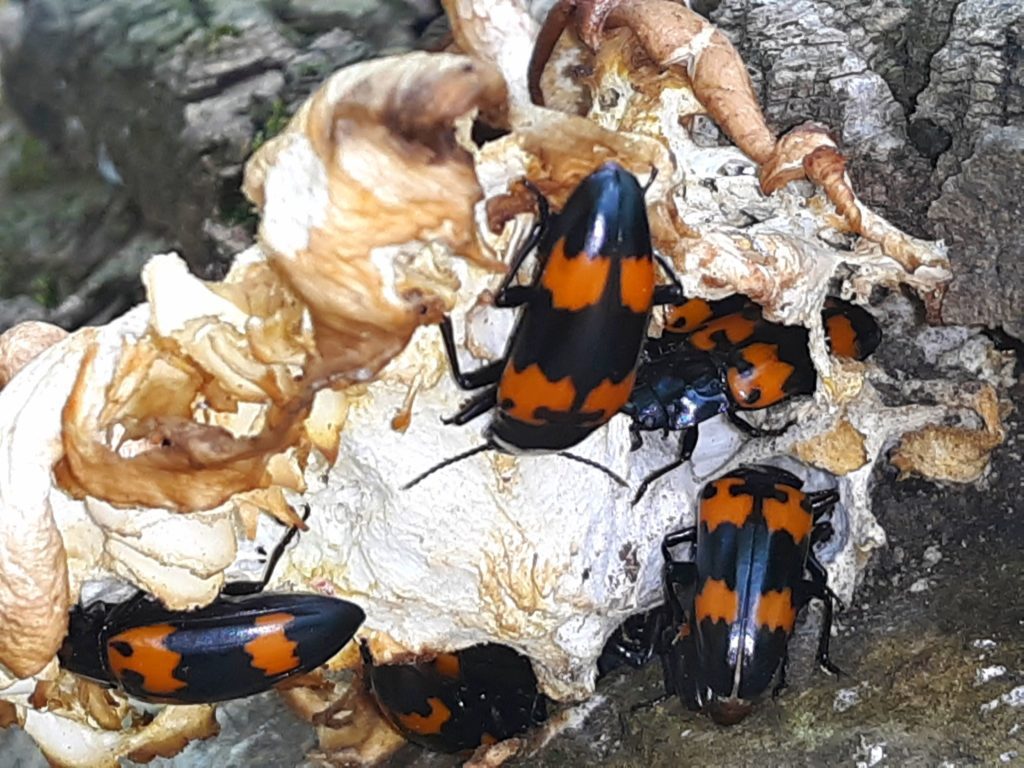
Fungi serve as food for many species of wildlife. Insects and other arthropods rely on many species of fungi for food. Pleasing fungus beetles are aptly named for their reliance on fungi as a prominent food source. Some fungi feeders may even retain toxins from their meals of poisonous fungi species to help with their own protection from predators.  

Many of our favorite foods and life-saving medicine would not be possible without fungi. When we bake bread, we need yeast to make the dough rise. Many fermented foods require a fungal agent, and to combat bacterial infections, we rely on penicillin derived from Penicilium notatum – a species of mold. 

To turn the tables, certain fungi species are predatory! Oyster mushrooms (Pleurotus sp.) are considered saprotrophs with a sinister side. They have toxic, sticky mycelium that traps and paralyzes nematodes. Once the nematode is trapped, hyphae penetrate and dissolve the organism. This predatory strategy helps the mushroom acquire nitrogen in nutrient poor substrates. 
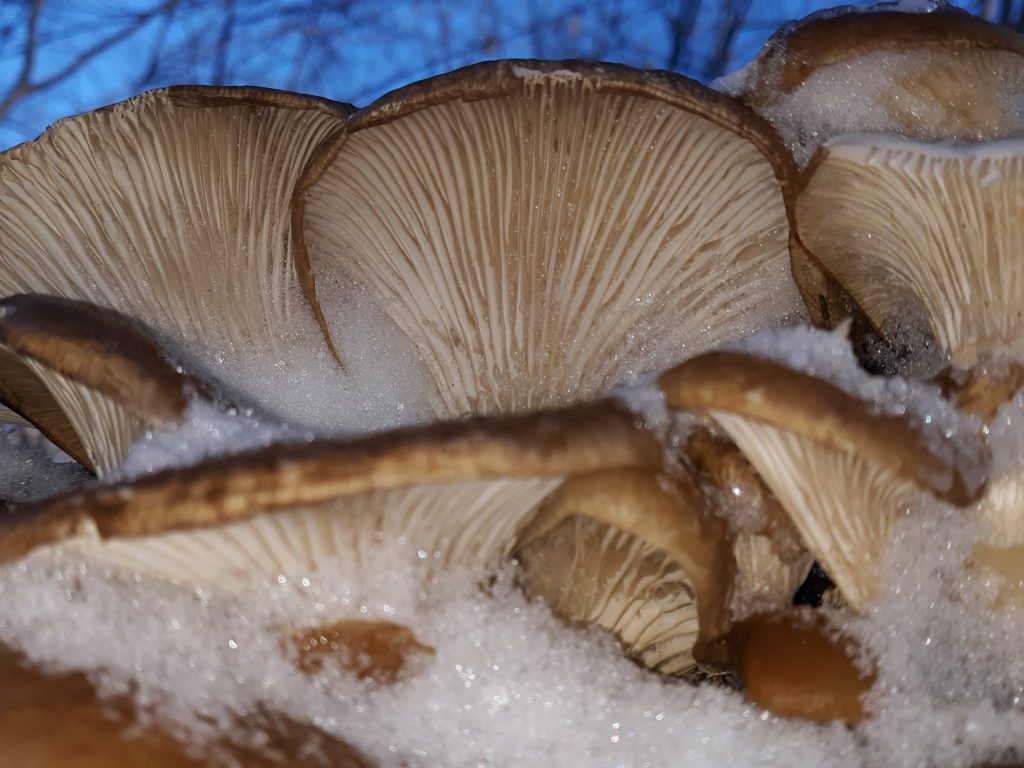
Oyster mushrooms
Pleasing fungus beetles

Fungi are far too complex for every relationship to be even mentioned here. Although fungi have long been overlooked in terms of conservation, they are gaining attention. The Society for the Protection of Underground Networks (SPUN) is working on mapping mycorrhizal networks in an effort to support underground biodiversity and draw attention to the role these fungi play in supporting healthy ecosystems and mitigating climate change. At Powdermill Nature Reserve, an iNaturalist project collects fungi, lichen, and slime photo observations from community participants to help document biodiversity: Fungi of Powdermill Nature Reserve · iNaturalist.  From fine dining to influencing entire ecosystems, fungi are essential to life.

Sara Klingensmith is an Environmental Educator and Naturalist at Powdermill Nature Reserve, Carnegie Museum of Natural History’s environmental research center.

Sources

Arora, D. (1986). Mushrooms Demystified: a comprehensive guide to the fleshy fungi. Berkeley (California): Ten Speed Press.

Binion, D. (2008). Macrofungi associated with oaks of Eastern North America. Morgantown: West Virginia University Press.

Czederpiltz, D. L. L., Volk, T. J., & Burdsall, H. H. (2001). Field observations and inoculation experiments to determine the nature of the carpophoroids associated with Entoloma abortivum and Armillaria. Mycologia, 93(5), 841–851. https://doi.org/10.1080/00275514.2001.12063219

Lee CH, Chang HW, Yang CT, Wali N, Shie JJ, Hsueh YP. Sensory cilia as the Achilles heel of nematodes when attacked by carnivorous mushrooms. Proc Natl Acad Sci U S A. 2020 Mar 17;117(11):6014-6022. doi: 10.1073/pnas.1918473117. Epub 2020 Mar 2. PMID: 32123065; PMCID: PMC7084146.

Society for the Protection of Underground Networks, SPUN

Tree of Life Web Project, Eukaryotes (tolweb.org)

Related Content

Fungi Make Minerals and Clean Polluted Water Along the Way

“Mush-room” For Exploration

A Lot To Be Fascinated By In the Herbarium

Carnegie Museum of Natural History Blog Citation Information

Blog author: Klingensmith, Sara
Publication date: June 10, 2022
Share this post!

  • Share on Twitter Share on Twitter
  • Share on Facebook Share on Facebook
  • Share on Pinterest Share on Pinterest
  • Share on LinkedIn Share on LinkedIn
  • Share on Reddit Share on Reddit
  • Share via Email Share via Email

Filed Under: Blog Tagged With: Powdermill Nature Reserve, Sara Klingensmith

January 21, 2022 by Erin Southerland

“Mush-room” for Exploration

by Sara Klingensmith

Mushrooms are becoming popular! Visitors to Powdermill Nature Reserve often bring photos of colorful mushrooms in hopes of learning the identity of each. On nature hikes, the appearance of eccentric mushrooms such as viscid violet cort (Cortinarius iodes), stinky squid (Pseudocolus fusiformis), and some of the color-changing boletes (family Boletaceae) expand perspectives of what exists in nature. People are beginning to pay more attention to these understudied organisms and discovering that fungi do more than decompose. Fungi assist in many ecological processes such as symbiotic partnerships, carbon storage, primary colonization, and parasitism.

How Do We Know When and Where to Find Mushrooms?

Across this vast Kingdom of organisms, only some fungi deploy the charismatic spore-bearing structures we casually call mushrooms when certain environmental conditions are met. Scientifically speaking, these recognizable structures are termed macrofungi (visible sporocarps or fruitbodies). Among the various groupings of fungi, two produce macrofungi we are likely to notice during nature walks: Basidiomycota (external spore production or “club fungi”) and Ascomycota (internal spore production or “sac fungi”). 

A mushroom is only the reproductive structure of a fungus. For many species, spores produced within hymenophores (reproductive structures such as gills or pores) are released through an active process called ballistospory. Wind, rain, and animals may help further spore dispersal. The bulk of a fungus lies in the root-like mycelial network within a nourishing substrate (its food). Leaf litter, soil, plants, scat, and even other fungi are all different types of substrates for fungi. 

Determining when we will see the most mushrooms erupting from their substrates is challenging because there are multitudes of factors influencing fungal communities. Like many organisms, certain species will thrive better in certain habitats and elevations. Some fungi are tied to their host’s health, phenology, and life stage, which may also be influenced by forest management practices and climate change. Because fungi are fundamentally interwoven with their environment, these organisms undergo succession along with whole forest communities, and even on a single growth substrate. 

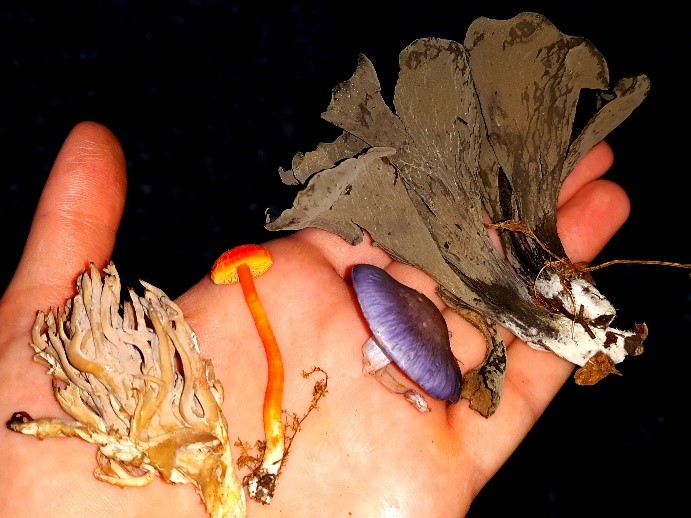
four different mushrooms held in a hand
Examples of Basidiomycete mushrooms; left to right: coral-shaped fungi (probable families: Clavulinaceae and Gomphaceae), waxy cap (Hygrocybe sp.), viscid violet cort (Cortinarius iodes), and Eastern black trumpet (Craterellus fallax)
collage of three different mushrooms
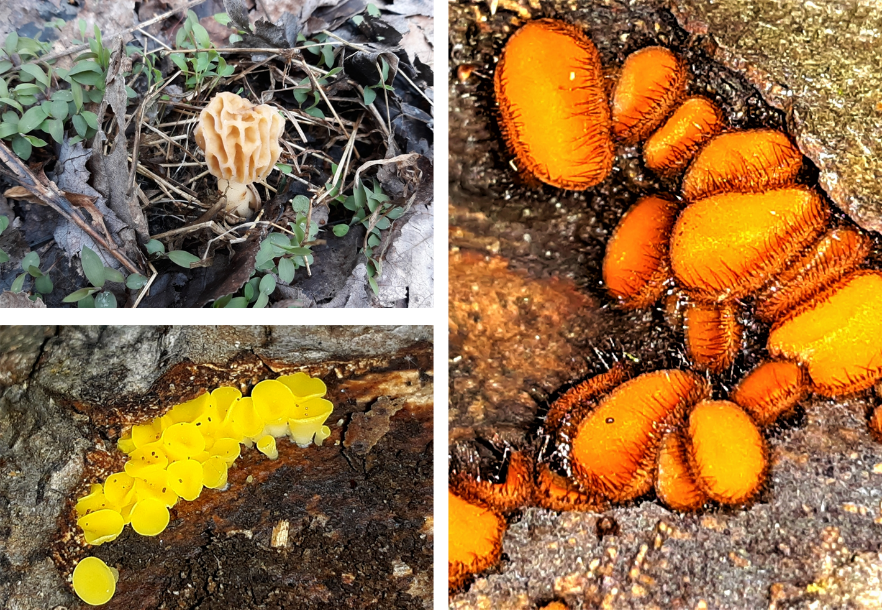
Examples of Ascomycete mushrooms; top left: morel (Morchella sp.), bottom left: yellow fairy cups (Calycina citrina), and right: eyelash cups (Scutellinia sp.).

Through general observations, we have determined certain species have seasonal fruiting periods. Experienced foragers learn from experience when to search for morels, and we’ve likewise learned when to expect the fruiting of many other fungi species. Some fruitbodies are ephemeral, whereas others produce mushrooms that may persist on trees for years. While the presence of mycelium is generally linked to the appearance of mushrooms, some studies have observed an uncoupling of factors equating abundant mycelium with high sporocarp production. These findings apply particularly to fungi that form symbiotic relationships with plants—the ectomycorrhizal fungi (symbiotic macrofungi)!  This fungal phenomenon has been observed in a few ectomycorrhizal species. For example, research that examined the relationship between mycelial and sporocarp abundance of Boletus edulis, also known as the king bolete, found no correlation between sporocarp production and distribution and the abundance of below-ground mycelium. This means some species of mycorrhizal fungi can appear abundant above ground, but lack a robust underground network expected to support such a high sporocarp population. Therefore, aboveground species richness may not reflect mycelial productivity for some species.

Current research suggests that soil moisture and temperature highly influence the appearance of mushrooms. For example, a dry spell may reduce sporocarp production by 50% in pine forests, yet the mycelial networks presumably continue their cryptic business below the soil surface. Research in the Mediterranean region suggests that precipitation is a limiting factor for sporocarp production for both mycorrhizal and saprotrophic fungi; however, more research is needed to examine these factors in different regions and habitats. 

While fungi lack the mechanisms to use photosynthesis, light plays a role in growing mushrooms. Many fungi species show phototropic responses by growing towards light sources, with certain species failing to produce mushrooms in the absence of light. 

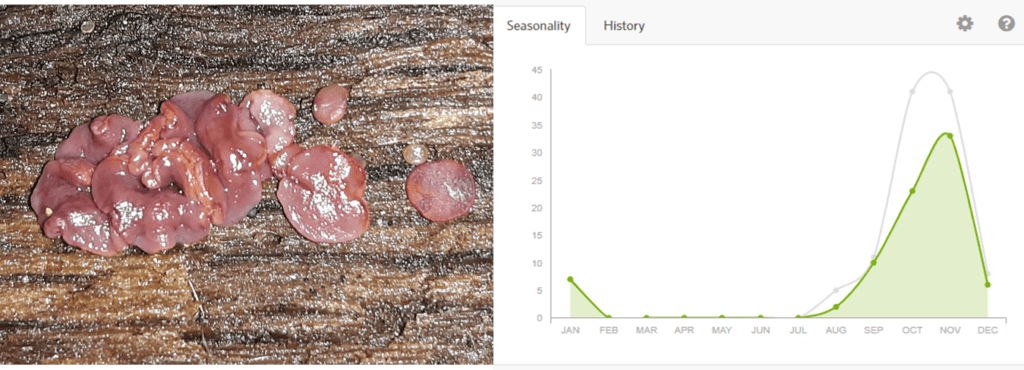
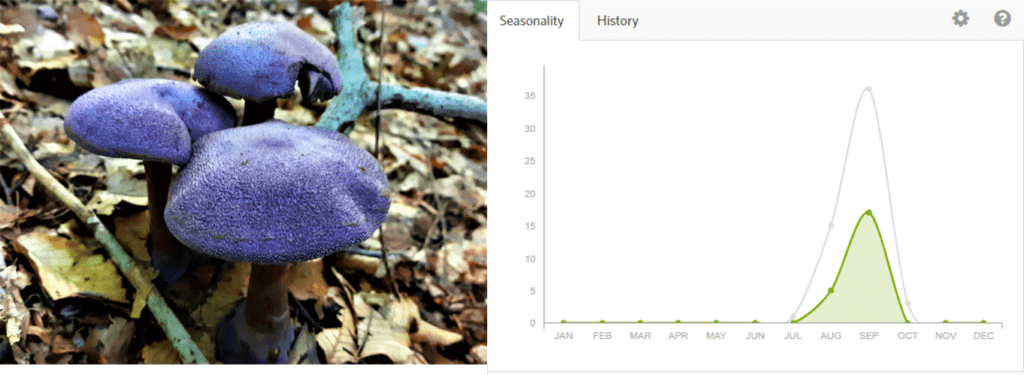
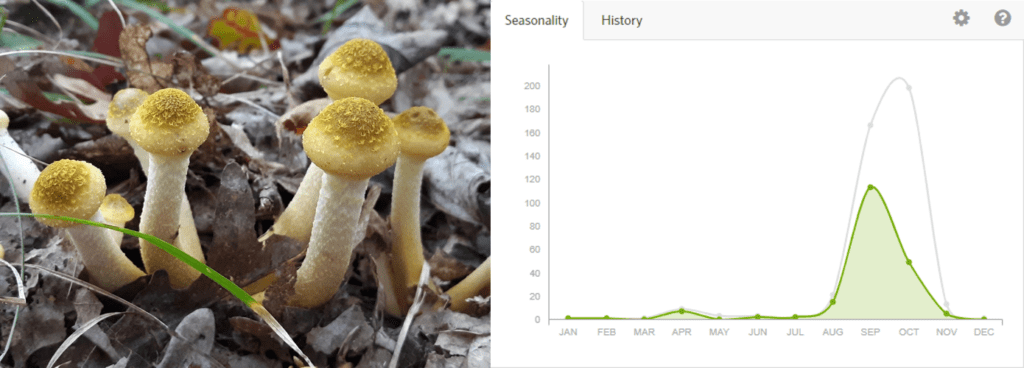
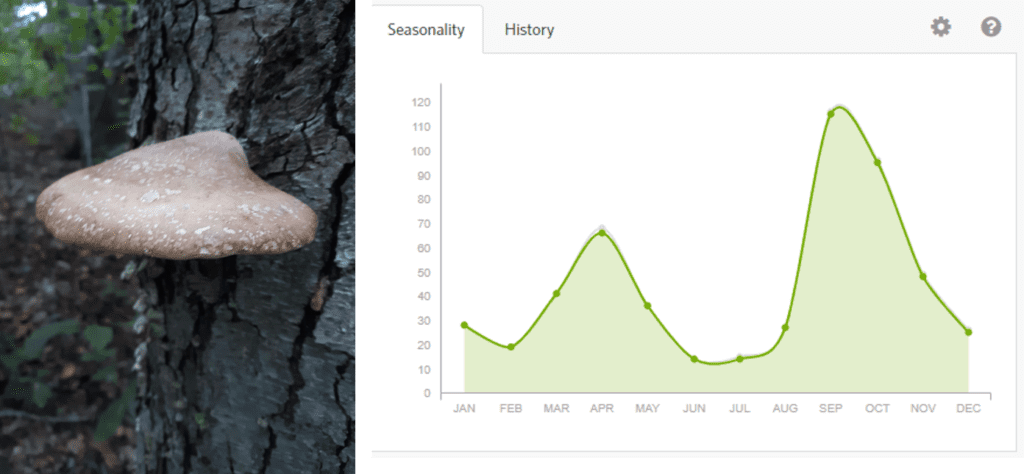
While the appearance of mushrooms can be seasonal and highly variable, searching after a good rainy period might improve your chances of finding some fantastic fungi! Listed below are a handful of species found at Powdermill, along with simple charts of their seasonal observation trends obtained from iNaturalist, a free online site and app promoting community science. Thanks to participating community members, these graphs reflect observation frequencies across seasons in the state of Pennsylvania. The green line represents research grade observations, meaning more than two-thirds of the identifiers agree on the identification. The gray line represents verifiable observations that have yet to attain research grade status. Because observations are on-going, these graphs may change as more data accumulates. 

purple jelly disk mushrooms and graph showing seasonality
Purple jellydisk (Ascocoryne sarcoides) – saprotrophic fungi that are typically found on decaying hardwoods.
violet webcap mushrooms and graph showing seasonality
Violet webcap (Cortinarius violaceus) – mycorrhizal fungi found in beech and oak forests.
honey mushrooms and graph showing seasonality
Honey mushroom (Armillaria mellea) – parasitic/saprotrophic fungi found in oak dominated forests.


birch polypore and graph showing seasonality
Birch polypore (Fomitopsis betulina) – parasitic/saprotrophic fungi commonly associated with birch trees.  

Sara Klingensmith is an Environmental Educator and Naturalist at Powdermill Nature Reserve. Museum employees are encouraged to blog about their unique experiences and knowledge gained from working at the museum.

Sources

Alday, J., Martínez de Aragón, J., de-Miguel, S. et al. Mushroom biomass and diversity are driven by different spatio-temporal scales along Mediterranean elevation gradients. Sci Rep 7, 45824 (2017). https://doi.org/10.1038/srep45824

Binion, E. Denise, et al. Macrofungi Associated With Oaks of Eastern North America, West Virginia University Press, 2008. 

Ekblad, A. et al. The production and turnover of extrametrical mycelium of ectomycorrhizal fungi in forest soils: role in carbon cycling. Plant Soil (2013) 366: 1-27. 

De la Varga, Herminia & Águeda, Beatriz & Martínez-Peña, Fernando & Parladé, Javier & Pera, Joan. Quantification of extraradical soil mycelium and ectomycorrhizas of Boletus edulis in a Scots pine forest with variable sporocarp productivity. Mycorrhiza. 22. 59-68. (2011) 10.1007/s00572-011-0382-2.

De la Varga, H., Águeda, B., Martínez-Peña, F. et al. Quantification of extraradical soil mycelium and ectomycorrhizas of Boletus edulis in a Scots pine forest with variable sporocarp productivity. Mycorrhiza 22, 59–68 (2012). https://doi.org/10.1007/s00572-011-0382-2

De la Varga, H., Águeda, B., Ágreda, T. et al. Seasonal dynamics of Boletus edulis and Lactarius deliciosus extraradical mycelium in pine forests of central Spain. Mycorrhiza 23, 391–402 (2013). https://doi.org/10.1007/s00572-013-0481-3

Štursová M, Kohout P, Human ZR, Baldrian P. Production of Fungal Mycelia in a Temperate Coniferous Forest Shows Distinct Seasonal Patterns. Journal of Fungi. 2020; 6(4):190. https://doi.org/10.3390/jof6040190

iNatualist.org

MushroomExpert.com

Lodge, D. J. et al. Terrestrial and Lignicolous Macrofungi. 2004. 10.1016/B978-012509551-8/50011-8.

Related Content

Fungi Make Minerals and Clean Polluted Water Along the Way

Photogenic Fungi

What Does Climate Change Mean for Western PA Farmers?

Carnegie Museum of Natural History Blog Citation Information

Blog author: Klingensmith, Sara
Publication date: January 21, 2022

Share this post!

  • Share on Twitter Share on Twitter
  • Share on Facebook Share on Facebook
  • Share on Pinterest Share on Pinterest
  • Share on LinkedIn Share on LinkedIn
  • Share on Reddit Share on Reddit
  • Share via Email Share via Email

Filed Under: Visitor Info Tagged With: Carnegie Museum of Natural History, Powdermill Nature Reserve, Sara Klingensmith, We Are Nature 2

July 20, 2020 by wpengine

A Bumble’s Blog and Bumble “Weee” Catapult Craft

Wander outside in the spring and summer and I bet you will bump into a busy bumble bee bumbling among the wildflowers. Bumble bees (Bombus sp.) are rather rotund, fuzzy bees usually with black and yellow-orange stripes. Unlike the famous honey bee that hails from Europe and Asia, most bumble bee species are native to our area. Bumble bees have small underground colonies with a loose social system, compared to that of a honey bee. While bumble bees produce honey, it is in small quantities and certainly not enough to share on an industrial scale. Still, these fuzzy bumbles play an important role as pollinators of local wildflower populations and are even adapted to pollinate certain flowers!

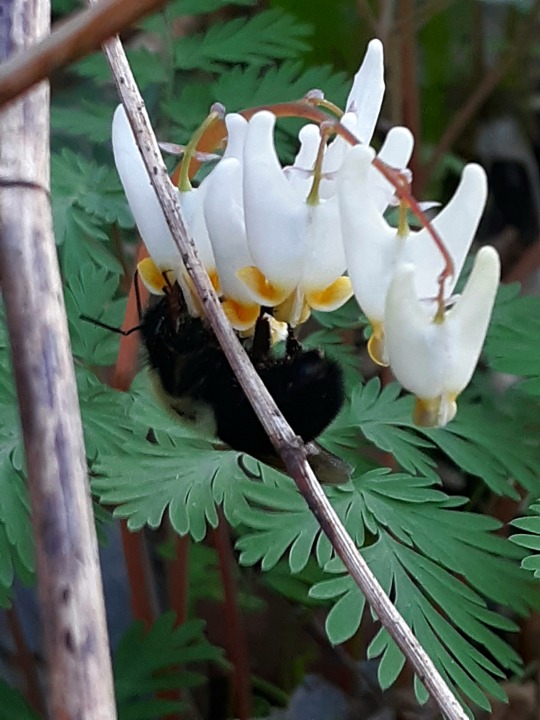
photo of Dutchman's breeches flower

This fashionable bumble bee is trying to squeeze into a little pair of white breeches! Duchman’s breeches (Dicentra cucullaria) to be exact. A bumble bee’s proboscis (tongue) is long enough to reach the nectaries within the nectary spurs or “pant leg” and the bee is strong enough to push open the flower petals to collect pollen.

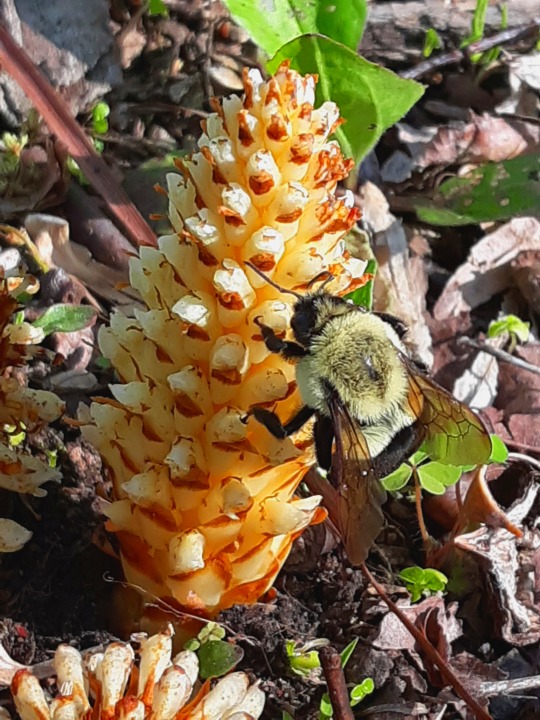
bumblebee on squawroot

This bumble bee is sipping nectar from squawroot (Conopholis americana). Bumble bees and flies are the typical visitors of this parasitic plant! Fun fact: bumble bees “buzz” pollenate, which means they vibrate their bodies, effectively knocking pollen down into the flowers they visit.

Upon observing the flight of a bumble bee, I have noticed that while they are strong flyers, they are not the most graceful. Sometimes they miss their mark and land on a chunk of moss instead of the flower. However, they just take that moment to rest their wings before firing up their little motor and buzzing off into, hopefully, the next flower. Their rather clunky flight pattern gave me an idea for a fun activity to help young children learn about pollinators (and sneak in a STEM activity): The Bumble “Weee” Catapult! See below for assembly instructions:

Materials

      3 pipe cleaners

      Paper

      Pen or pencil

      Coloring supplies

      Scissors

      Recycled egg carton

      Recycled plastic spoon

      4-5 large Rubber bands

Let’s dismiss the idea of launching real bumble bees and begin building the bee puppet 😉. Pick 3 different colors of pipe cleaner. Feel free to go with traditional bee colors or mix it up!

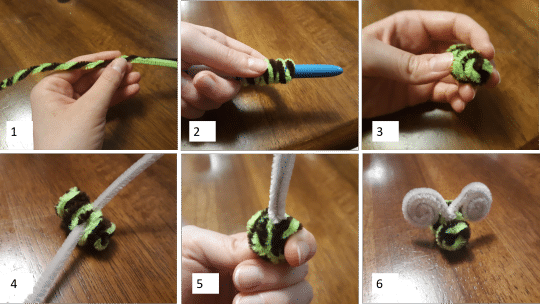
1.     For the body, twist together two pipe cleaners.

2.     Wrap the twisted pipe cleaners tightly around a pen or pencil and slide it off.

3.     Tuck the loose ends inward and tighten up the coils on the end you would call the head.

4.     For the wings, shorten the remaining pipe cleaner by 1/3, then loop it under one of the coils of the bee’s body.

5.     Adjust the pipe cleaner for equal length on either side and twist at the base.

6.     Roll in the loose ends to finish forming your wings, thus completing the bumble bee.

step by step photos of creating a bee from pipe cleaners

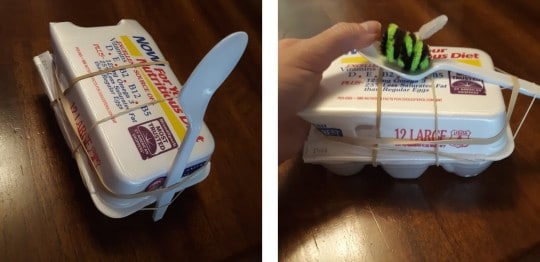
Next, build the catapult to help your bee puppet fly. The catapult consists of half of an egg carton, 4-5 rubber bands, and a recycled spoon. Tension energy is generated when the spoon is pulled back. The arm stores that energy as potential energy. Upon release, that potential energy is transferred to the object as kinetic energy, moving the object away from the arm. Pictured is the simplest catapult design with rubber bands holding the spoon, or arm of the catapult, in place. Feel free to design something more elaborate!

photo of catapult made from egg carton, plastic spoon, and rubber bands

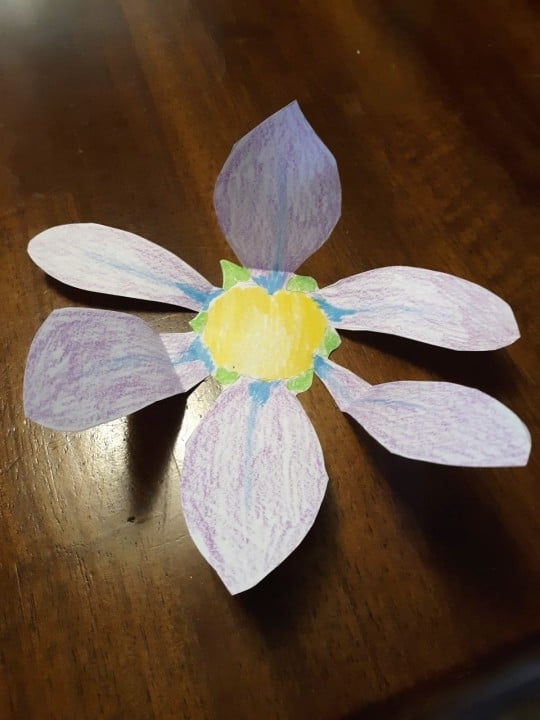
Finally, the bumble bee needs a flower to land in! Draw a flower of your choice on a piece of paper and color it in. Many bees are able to see UV light, which means they are able see colors and patterns invisible to the human naked eye. Some flowers have nectar guides that really stand out to bees, so feel free to draw some nectar guides, or lines that point to the center on your flower targets to help guide your bumble bee!

photo of paper flower

Feel free to create as many flowers as you like and propel your little bumble bee into as many flowers as you can. Happy pollinating!

Sara Klingensmith an educator at Powdermill Nature Reserve, Carnegie Museum of Natural History’s environmental research center. Museum employees are encouraged to blog about their unique experiences and knowledge gained from working at the museum.

Related Content

Jumping Spiders with Sebastian

Pittsburgh Dinosaur Driving Tour

Photogenic Fungi

Filed Under: Blog Tagged With: activities, Crafts, Museum from Home, Nature 360, Nature Lab, Powdermill, Powdermill Nature Reserve, Sara Klingensmith

sidebar

About

  • Mission & Commitments
  • Directors Team
  • Museum History

Get Involved

  • Volunteer
  • Membership
  • Carnegie Discoverers
  • Donate
  • Employment
  • Events

Bring a Group

  • Groups of 10 or More
  • Birthday Parties at the Museum
  • Field Trips

Powdermill

  • Powdermill Nature Reserve
  • Powdermill Field Trips
  • Powdermill Staff
  • Research at Powdermill

More Information

  • Image Permission Requests
  • Science Stories
  • Accessibility
  • Shopping Cart
  • Contact
  • Visitor Policies
One of the Four Carnegie Museums | © Carnegie Institute | Privacy Policy | Terms of Use | Accessibility
Rad works here logo