• Skip to primary navigation
  • Skip to main content
  • Skip to primary sidebar

Carnegie Museum of Natural History

One of the Four Carnegie Museums of Pittsburgh

  • Visit
    • Buy Tickets
    • Visitor Information
    • Exhibitions
    • Events
    • Dining at the Museum
    • Celebrate at the Museum
    • Powdermill Nature Reserve
    • Event Venue Rental
    • Gift Cards
  • Learn
    • Field Trips
    • Educator Information
    • Programs at the Museum
    • Bring the Museum to You
    • Guided Programs FAQ
    • Programs Online
    • Climate and Rural Systems Partnership
  • Research
    • Scientific Sections
    • Science Stories
    • Science Videos
    • Senior Science & Research Staff
    • Museum Library
    • Science Seminars
    • Scientific Publications
    • Specimen and Artifact Identification
  • About
    • Mission & Commitments
    • Directors Team
    • Museum History
  • Tickets
  • Give
  • Shop

Stephen Rogers

February 22, 2017 by wpengine

Alcohol House Improvements

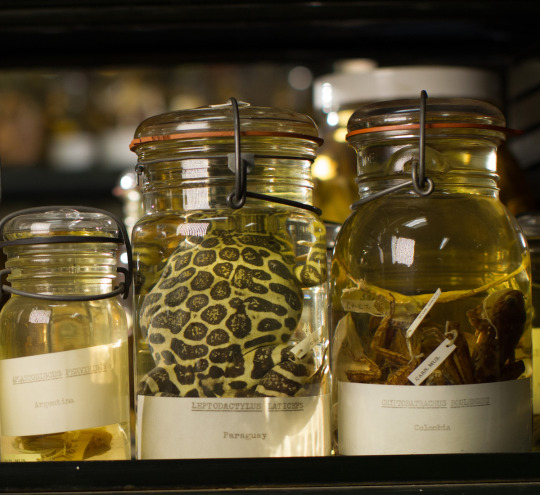
Reptile specimens in jars

by Kaylin Martin

Tucked away under the public galleries of Carnegie Museum of Natural History are thousands of glass jars containing decades of collecting efforts. This collection space, known as the Alcohol House, is the ninth largest herpetology collection in the United States and the most complete collection of Pennsylvanian amphibians and reptiles in existence. The Alcohol House is named for the 70% ethanol alcohol that collection managers use to preserve specimens and prevent
degradation and the formation of bacteria.

The importance of this collection prompted the museum to find funding to improve collection preservation and facilitate public interaction. The Alcohol House secured a three-year grant from the National Science Foundation to hire a full time curatorial assistant, Kaylin Martin, to coordinate efforts to revamp the storage facilities.

The grant will enable Collection Manager Stephen Rogers and Kaylin to purchase new equipment, such as jars, gaskets, tanks, photography equipment, shelving inserts, and specialized cabinets, to update the storage facilities.
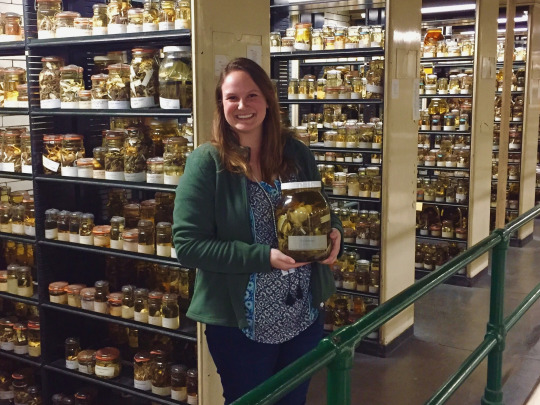
Collections Assistant Kaylin Martin.

During this revamp, they will streamline the database that contains specimen records, reorganize the facility based on updated taxonomy, and tackle the project of digitizing holotype and paratype specimens. The public web interface iDigBio hosts 170,000+ specimen records for public use and research.

The goal is to link the most important specimen records with images. Digitizing the collection makes it accessible to researchers around the world in a few short clicks without the need to travel to Pittsburgh.

Renovations are also under way to make the Alcohol House accessible to the public for guided tours. An accompanying exhibit is being planned for the museum’s public galleries, as well as an introductory exhibit to herpetology at the start of
the planned guided tours. Keep an eye out for the grand opening of these in the near future!

How can you contribute? Carnegie Museum of Natural History is always in need of volunteers to help maintain the wet specimen collection and catalog and update the database. Volunteers are invaluable assets to any museum collection in order to prevent degradation and mobilize data for researchers on a public interface.

If you are interested in helping to maintain this collection for future generations, please contact Kaylin Martin at martink@carnegiemnh.org


Kaylin Martin is a curatorial assistant in the Section of Herpetology. She blogs about the collection in Carnegie Museum of Natural History’s historic Alcohol House, which is home to thousands of fluid-preserved specimens.
Filed Under: Blog Tagged With: herpetology, Stephen Rogers

June 24, 2016 by wpengine

The Taxidermists’ Table

taxidermist's table with bird specimens and old publications

By Steve Rogers

The National Taxidermists Association met at Seven Springs in early June 2016 and Carnegie Museum of Natural History Collection Manager Stephen Rogers was invited to give a seminar on the early history of taxidermy in the United States.

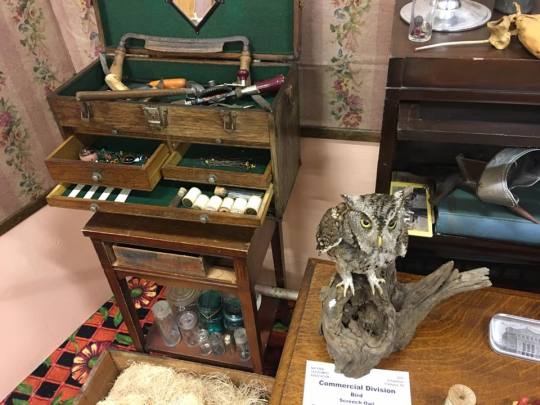
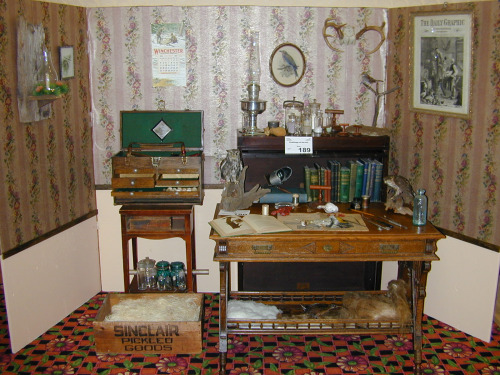
On a whim he decided to create a piece for the competition held at this meeting. Since he is an historical taxidermy buff and collects old publications, tools, as well as antique furniture, he created a taxidermists’ work table as it may have been circa 1898.

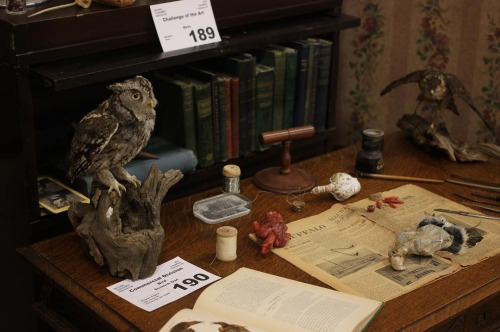
The table held a skinned out flicker made to look fresh (coated with glycerin), a faux carcass and bits of flesh made of wax, a hand-wrapped artificial body which would have been put inside the skin, a book on the Birds of Pennsylvania opened to a hand-colored plate on flickers, and then eyes and tools that might be used in the process.

recreated taxidermists’ work table as it may have looked in 1898

Behind the table was a re-created room with antique looking wallpaper with various decorations on the wall, deer antlers, an 1898 poster of a Winchester calendar, and a framed 1873 newspaper with a woodcut depicting a taxidermist and an ornithologist.

Assorted other birds, a tool chest with period tools, and supplies to mount birds (excelsior, tow, cotton, glass eyes of different sorts, etc.) were also present. A library of 15 taxidermist and naturalist books published between 1874 and 1898 were in a lawyer’s glass-front bookshelf alongside a Stereoviewer with a handful of stereophotographs depicting taxidermy.

Glass jars containing what appeared to various noxious chemicals were set on top of the bookshelf. A number of people asked about the green chemical in one jar. Was it arsenic? – No, just some powdered lime Jell-O.

taxidermied owl on a table

The public as well as the taxidermists who attended the convention were able to vote for pieces in the competition. The exhibit won ‘People Choice – Original Art’. But more importantly, it gave people and appreciation for history and reference for those that came before.

Steve Rogers is a collections manager at Carnegie Museum of Natural History. Museum employees are encouraged to blog about their unique experiences and knowledge gained from working at the museum. 

Carnegie Museum of Natural History Blog Citation Information

Blog author: Steve Rogers
Publication date: June 24, 2016

Share this post!

  • Share on Twitter Share on Twitter
  • Share on Facebook Share on Facebook
  • Share on Pinterest Share on Pinterest
  • Share on LinkedIn Share on LinkedIn
  • Share on Reddit Share on Reddit
  • Share via Email Share via Email

Filed Under: Blog Tagged With: museums, Pittsburgh, Stephen Rogers, taxidermy

May 27, 2016 by wpengine

100-year-old Postcard: The Original Social Media

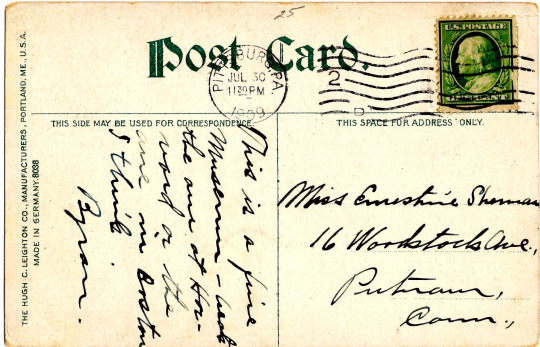
Postcard with handwritten address and message in fancy script
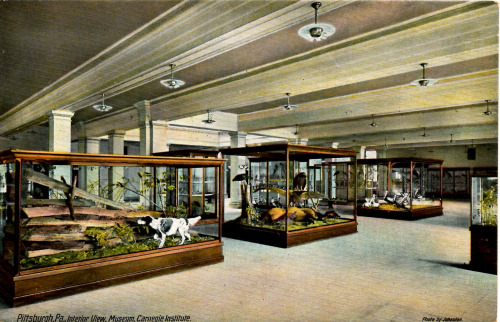
Historic Hall CMNH

How did word get around about Carnegie Museum of Natural History before Facebook, Twitter, and Snapchat?
Postcards of course!

Steve Rogers, our collection manager of Section of Birds and Section of Amphibians and Reptiles, purchased a classic Carnegie Museum postcard that’s more than 100 years old on eBay years ago, and recently scanned and shared it in preparation for a talk he’ll give at the National Taxidermists Association meeting in Seven Springs next month.

The front of the postcard shows dioramas that include an old Count Noble exhibit that was sent to Kentucky about 15 years ago, the condor case with the elk, and the pelican case which was dismantled around 2000.

The back of the card reads…

This is a fine Museum – beats the one at Harvard or the one in Boston I think, Brian”

It is postmarked 1909, not long after we expanded the museum from the original Carnegie Institute.

Maybe our Tumblr and Facebook posts will be rediscovered 100 years from now. Either way, we’re always excited to share cool pieces of Carnegie history!

Filed Under: Blog Tagged With: bird hall, diorama, Pittsburgh, Stephen Rogers, taxidermy

  • « Go to Previous Page
  • Page 1
  • Page 2

sidebar

About

  • Mission & Commitments
  • Directors Team
  • Museum History

Get Involved

  • Volunteer
  • Membership
  • Carnegie Discoverers
  • Donate
  • Employment
  • Events

Bring a Group

  • Groups of 10 or More
  • Birthday Parties at the Museum
  • Field Trips

Powdermill

  • Powdermill Nature Reserve
  • Powdermill Field Trips
  • Powdermill Staff
  • Research at Powdermill

More Information

  • Image Permission Requests
  • Science Stories
  • Accessibility
  • Shopping Cart
  • Contact
  • Visitor Policies
One of the Four Carnegie Museums | © Carnegie Institute | Privacy Policy | Terms of Use | Accessibility
Rad works here logo