• Skip to primary navigation
  • Skip to main content
  • Skip to primary sidebar

Carnegie Museum of Natural History

One of the Four Carnegie Museums of Pittsburgh

  • Visit
    • Buy Tickets
    • Visitor Information
    • Exhibitions
    • Events
    • Dining at the Museum
    • Celebrate at the Museum
    • Powdermill Nature Reserve
    • Event Venue Rental
  • Learn
    • Field Trips
    • Educator Information
    • Programs at the Museum
    • Bring the Museum to You
    • Guided Programs FAQ
    • Programs Online
    • Climate and Rural Systems Partnership
  • Research
    • Scientific Sections
    • Science Stories
    • Science Videos
    • Senior Science & Research Staff
    • Museum Library
    • Science Seminars
    • Scientific Publications
    • Specimen and Artifact Identification
  • About
    • Mission & Commitments
    • Directors Team
    • Museum History
  • Tickets
  • Give
  • Shop

We Are Nature 2

March 25, 2022 by Erin Southerland

For the Love of Dead Plants

by Koa Reitz

Reposted from Plant Love Stories.

One of my earliest memories as a child is my friend finding a big leaf when we were at the park, and me bursting into tears because I wasn’t the one who found it. Fall was my favorite season because as I walked around, there were plenty of things for me to pick up! I was absolutely captivated by the leaves that fell off of the trees, and would pick up as many as I could. I don’t remember why I was so attached to these leaves–the dead part of the plants around me–but I would always end up with a stack of leaves when I got home.

I think a big part of my obsession with collecting leaves was their colors. But sometimes I would find a particularly big leaf and, as a small child, I was absolutely dumbfounded at the leaf bigger than my head. I had to have them. When I brought the leaves home however, I never kept them, they would sit outside for a while until they would eventually blow away or decompose in the yard. This wasn’t exactly an issue for my young self, as object permanence had yet to fully develop. And there were always more leaves to find!
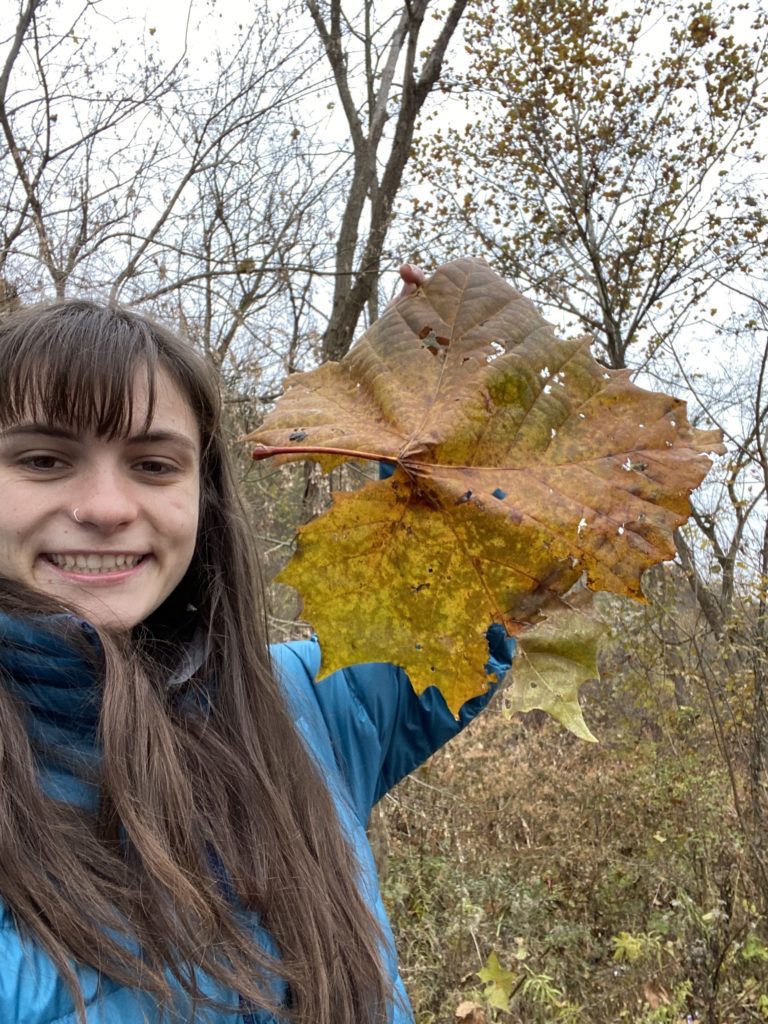
Person holding a leaf the size of their head.
The author can still find leaves larger than her head! Here, American sycamore (Platanus occidentalis)

As I grew up, I became less and less invested in picking up all of the leaves I saw. I think eventually I saw so many that it was hard to find a new color combination I had yet to see, so leaf searching had lost its allure. I would still stop to look at the leaves when there was a particularly vibrant red, or an exciting combination of green, yellow, and orange all in the same leaf, but I left the leaf where it stood. No more collecting for me.

Until recently, I had no reason to think that collecting plants could have any purpose, scientific or otherwise. Contrary to my thinking, there is a vast and important process of collecting and storing plants, of all kinds, to be used for reference and scientific research. Herbaria are collections of preserved plants dating as far back as hundreds of years ago. These specimens can be used for a variety of things including taxonomic classifications (scientific naming systems), DNA sequencing, and phenological observations. Phenology is the study of the time when certain things in the life cycle of a plant happen. For example, phenology can look at the time in a flowering plant’s life that it begins growing new leaves, when it grows flowers, when it develops its fruit, or when leaves turn colors in the Fall. Phenological data from herbaria have been used to look into the past in ways that wouldn’t be possible without a collection of old, dead, plants. A group of scientists at Boston University used herbarium specimens to determine that a warmer climate led to earlier flowering times. This conclusion has various implications including evidence that a warming planet has concrete impacts on the natural environment and changes how we look at climate science overall. It is important to look to the past if we’re going to make informed decisions about the future, and herbaria are full of accessible and valuable information that can help develop scientific claims of all different kinds. 
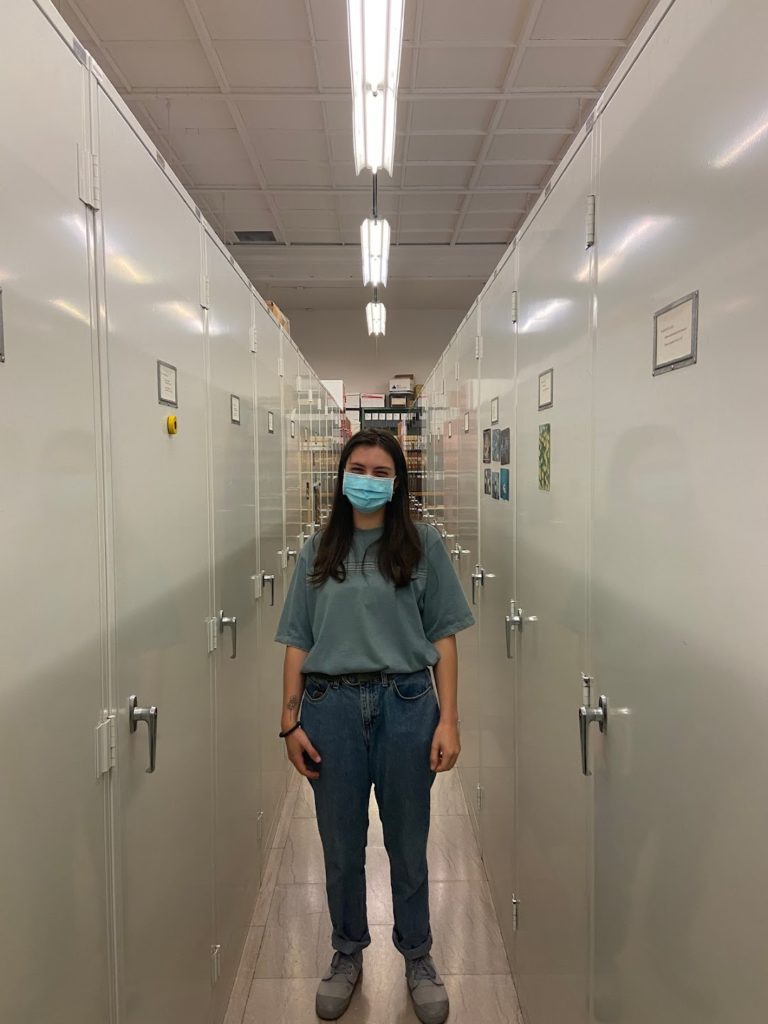
Person standing between metal cabinets.
The author stands among the botanical collections at the Carnegie Museum of Natural History’s herbarium in Pittsburgh, PA.

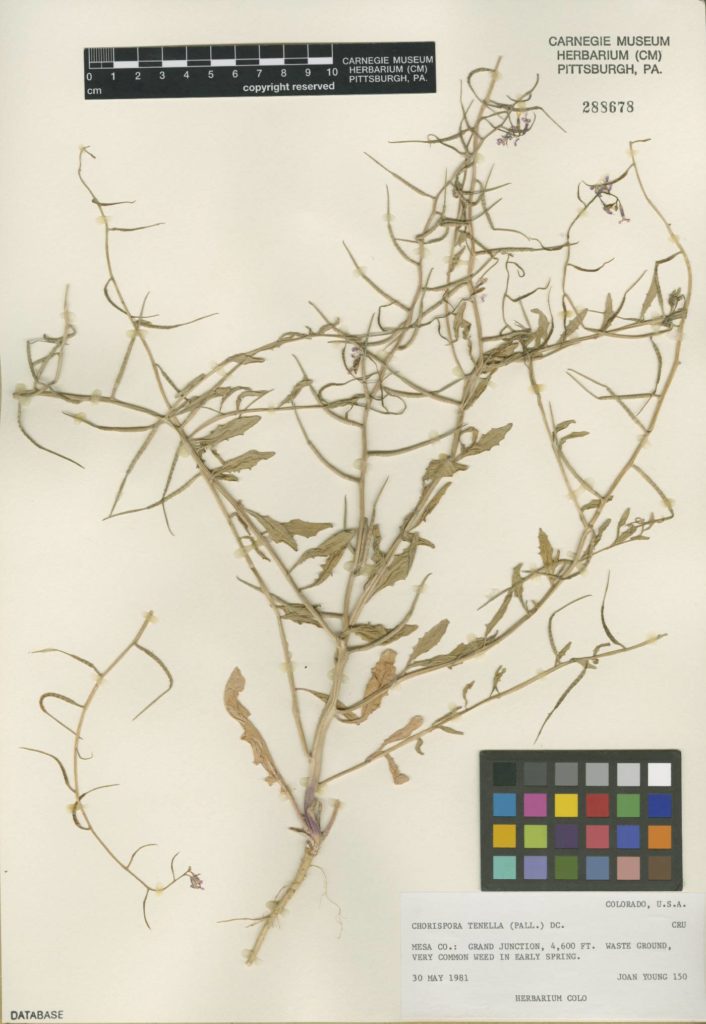
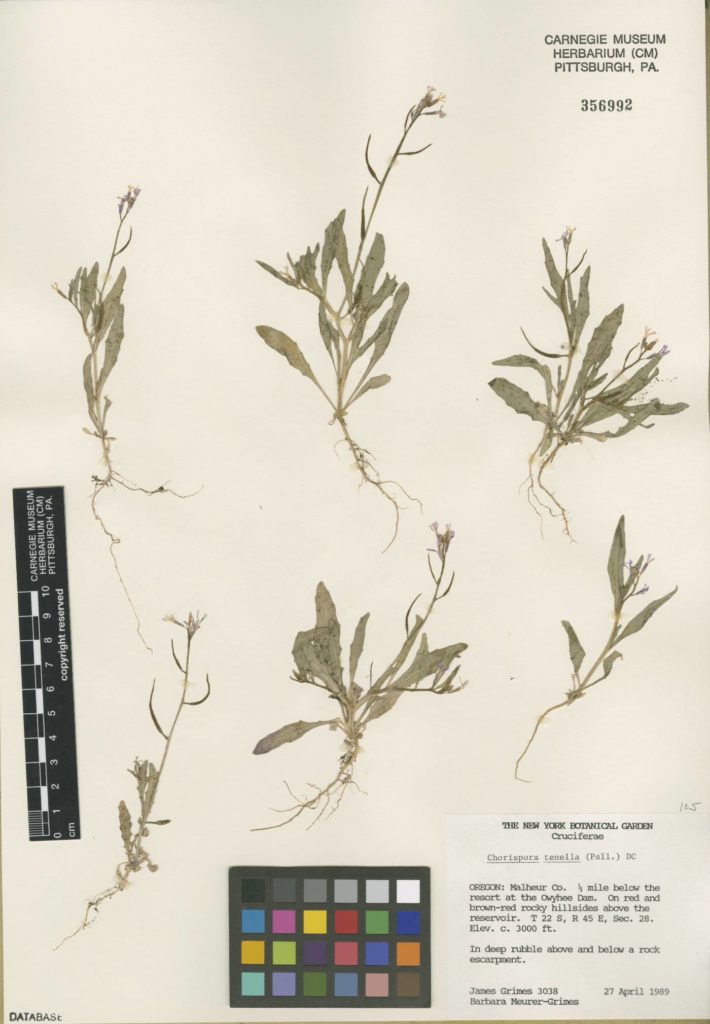
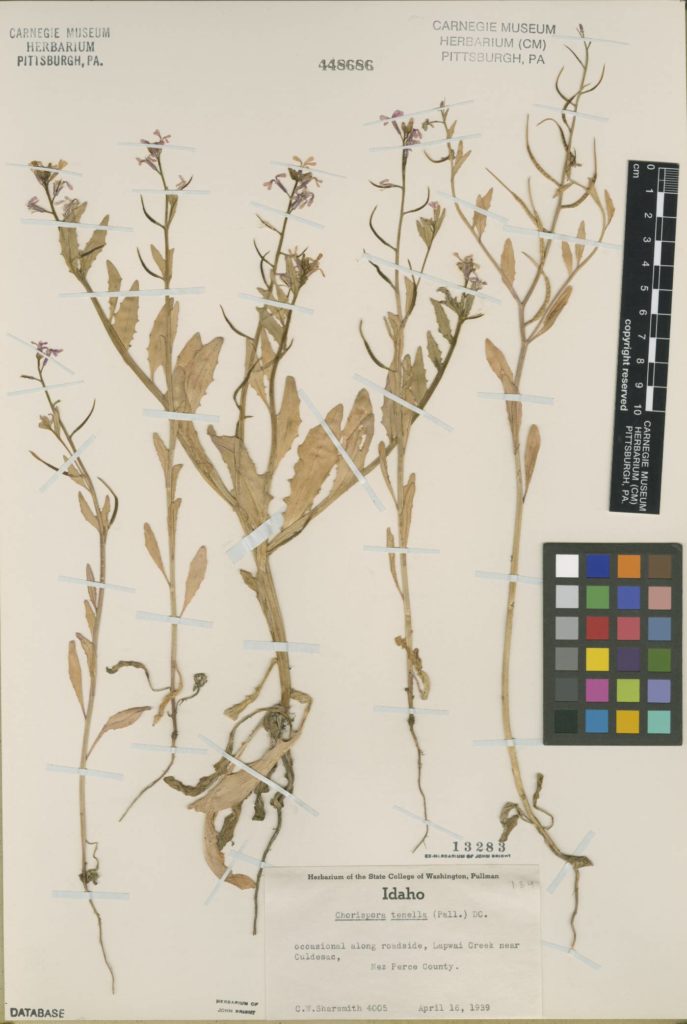
I am particularly interested in Herbaria because of my work in the Carnegie Museum of Natural History’s Herbarium. It was compelling to me to work with scads of cabinets full of dead plant specimens. Currently, I am working on a project where I look at digitized Chorispora tenella (purple mustard) specimens in the Carnegie Museum Herbarium, and herbaria from all over the US. Chorispora tenella is a plant that is invasive in parts of the Western US, and we are looking to see how the phenology has changed over the course of its invasion. There are endless questions about the timing of flowering or the spatial differences in flower or fruit number, just to name a few. I think I started to form a relationship with the plants, as I look at image after image and count the number of flower buds, flowers, and fruits, just as I had formed a relationship with the fallen leaves when I was young. 
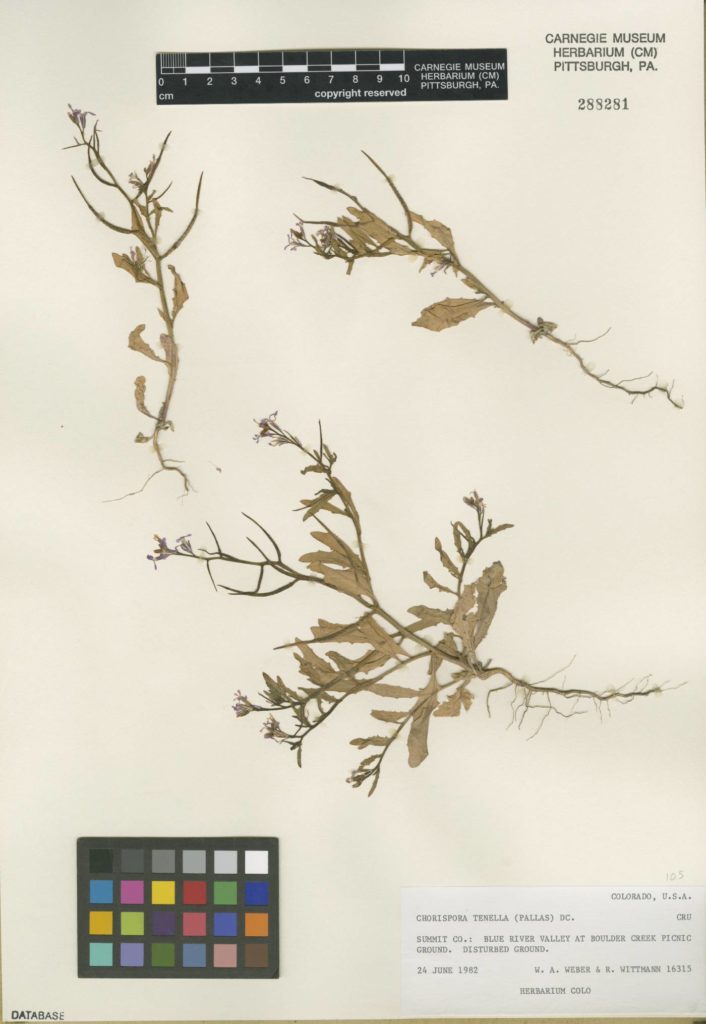
Above: purple mustard (Chorispora tenella ) botanical specimens stored at the Carnegie Museum of Natural History.**

There’s so much to learn from these seemingly simple and still specimens. When I do this work, it brings me back to when I was a child and had the (not so permanent) leaf collections of my own. I think there was a part of me as a child that wished to observe what I gathered further, but I had no method or resources to preserve my collections. Now, with herbaria, there’s access to thousands of species of plants that span all over the world. They open up countless lines of study and things to learn and explore, all from dead plants in cabinets. I even find myself collecting and questioning things again, renewing my sense of exploration. And I still make time to find leaves bigger than my head. 

Koa Reitz is an undergraduate student studying Ecology and Evolution at the University of Pittsburgh, and a research intern at the Carnegie Museum of Natural History. Museum employees, interns, and volunteers are encouraged to blog about their unique experiences and knowledge gained from working at the museum.

** To learn more about these natural history specimens, you can visit the Mid-Atlantic Herbaria Consortium. Specimens are as follows (left to right): CM356992 collected in 1989 in Oregon; CM448686 collected in 1939 in Idaho; CM288678 collected in 1981 in Colorado; and CM288281 collected in 1982 in Colorado.

Related Content

Collected On This Day in 1951: Bittersweet

Collected On This Day in 1934: European larch

Sharing Shipping Space with Amphibians and Reptiles

Carnegie Museum of Natural History Blog Citation Information

Blog author: Reitz, Koa
Publication date: March 25, 2022
Share this post!

  • Share on Twitter Share on Twitter
  • Share on Facebook Share on Facebook
  • Share on Pinterest Share on Pinterest
  • Share on LinkedIn Share on LinkedIn
  • Share on Reddit Share on Reddit
  • Share via Email Share via Email

Filed Under: Blog Tagged With: Botany, Koa Reitz, We Are Nature 2

March 2, 2022 by Erin Southerland

Antarctica and the Anthropocene: Novel Species to the Polar South and Their Ecological Impact

by Nicholas Sauer

For better or worse, humans have left an impact on every corner of the globe, and Antarctica is no exception. One of the ways humans have altered Antarctica’s unique environment is by unintentionally introducing new plant and animal species to the continent. The presence on the continent of human-introduced novel species can be interpreted as a mark of the Anthropocene, a term scientists use for the recent decades during which human activities have created environmental impacts great enough to constitute distinct geological and earth system change, and a new era in the Earth’s history. While most novel species do not survive Antarctica’s polar elements, a few do. As of 2021, there were eleven known novel invertebrate species, including insects and mollusks, thriving on the more hospitable coastal areas of Antarctica. For context, there are 163 species of bivalves, 568 species of gastropods, and three species of insects that currently make the continent home. Of the three insect species, only the midge B. antarctica, flightless and measuring under a centimeter long, is native to Antarctica. Novel species while not always intrinsically dangerous to their new homes and neighbors, have the potential to change their adopted ecosystems in profound and unforeseen ways.

Antarctica

Eretmoptera murphyi – a novel midge to Antarctica changes nutrient cycling

One of the most fascinating of Antarctica’s human-introduced invertebrate species is the midge Eretmoptera murphyi, that has made Signy Island, Antarctica home since the 1960s. This species of midge inadvertently made its way to the polar South as a stowaway on a scientific expedition focused on plant transplantation. The insects found Signy Island well-suited for colonization: they have no predators there, can survive “ice entrapment,” continue to respire when in water, and produce larvae unfazed by freezing temperatures. The fact that the species is parthenogenetic—that is, reproduces without fertilization—also eases its survival. Each new generation emerges from the soil and melting ice over the course of the summer season and then disperses on the wind, expanding the species’ range. Today the density of some E. murphyi populations on Signy exceed that of any other insect population on the island. 

Furthermore, the midge discovered an excellent food source in the island’s abundant peat deposits. E. murphyi consumes the peat and then excretes it as nitrogen-rich soil. In the area that the midge occupies, the amount of nitrogen in the soil matches what a scientist could expect to find in soil surrounding a seal colony. The novel midge’s excretion of nitrogen is “opening nutrient cycling bottlenecks” on the island says Jesamine Bartlett, a scientist studying E. murphyi on Signy. Bartlett compares the species to an earthworm regarding its creation of nutrient-rich soil. However, per Bartlett, the island has never before hosted a creature that performed such a role to her knowledge. It remains to be seen just how this heightened level of nitrogen in the soil—which acts as a fertilizer—could alter the abundance of the island’s plant populations, particularly that of mosses, hair grass, and pearlwort. In addition to its potential effect on Signy’s flora, scientists caution that E. murphyi could eventually outcompete and displace the island’s pre-existing insect populations, particularly that of B. antarctica, Antarctica’s only endemic insect species and one that can only reproduce via fertilization. Because it is parthenogenetic and reproduces more easily, scientists are curious to see if the novel midge E. murphyi could one day prove heartier than the native species, and what the presence of the novel midge means for Signy Island’s biodiversity in the long-term.

How Are Novel Species Introduced to Antarctica?

Species such as E. murphyi spread into new territories traveling with humans, often via the laces and tread of shoes, acting as literal living components of our footprint. Seeds of non-native plants hitch a ride to new habitats on human travelers’ clothes. In fact, each tourist unknowingly brings on average an estimated nine seeds with them to Antarctica according to Stephen Chown of Stellenbosch University in South Africa. In 2010 there were approximately 40,000 tourists who visited the continent. That’s potentially 360,000 novel seeds introduced to Antarctica in just one year, though most will not successfully establish themselves. According to a study led by researchers from Monash University in Australia, only sixteen percent of Important Bird Areas in Antarctica are found in regions “negligibly impacted” by humans. These scholars and conservationists argue that the image of Antarctica as “remote” is unhelpful and obscures the profound impact humans have on its coastal regions, regions that contain the continent’s greatest biodiversity. The goal of the team’s research is to encourage Antarctic Treaty nations to take concrete steps to further protect Antarctica’s natural environment and wildlife. As a landmass not under the jurisdiction of any one nation, Antarctica’s ecological protection hinges on global cooperation.

More than ever before, maintaining Antarctica’s unique ecosystems—safeguarding the continent’s biosecurity—is of paramount importance. The scientific community and the ecotourism industry are making efforts to adhere stringently to the Antarctic Treaty, the Antarctic Conservation Act, and Antarctic Science and Tourism Conservation Act, international agreements in place to protect the continent’s delicate ecology and facilitate ethical research and tourism. Per these agreements, travelers to Antarctica are prohibited from bringing seeds, plants, or animals including insects onto the continent. Travelers are also barred from bringing probiotics and SCOBY (symbiotic culture of bacteria and yeast), a key ingredient of kombucha and yogurt. Both products contain “biologically viable organisms”—bacteria—that could have an adverse effect on the Antarctic environment if left uncontrolled. Under the Antarctic treaties, cargo en route to Antarctica  must be thoroughly inspected and sanitized before being shipped and unloaded. Customs inspectors from treaty-member nations are on the lookout for rotting fruits and vegetables, food scraps, spores, mold, soil, living animals, and signs of living animals like wasps’ nests, and a vast array of other “biosecurity risk material.” The United States’ Antarctic Program Participant Guide asks that prospective researchers make sure that “there are no seeds or other plant parts caught in Velcro, no mud on boots, and no grass inside cuffs.” Even the smallest of novel organic materials onboard ship or onboard a traveler’s sleeve have the potential to impact Antarctica’s isolated environment. 

Antarctica in the Anthropocene 

In the profoundly interconnected world of the Anthropocene, people have introduced many novel species to Antarctica, be they mollusks attached to a ship’s hull, seeds stuck to a scientist’s parka, or midges clinging to a hiking boot or plant specimen. Novel species cause direct changes to the local ecology, and the impacts may be getting more dire, as the continent is also being altered by human-caused global climate change. Already Antarctica is warming five times as fast as the global average, and its ice sheets are melting  (with grim consequences to the coastal regions everywhere as sea levels rise). Global climate change can only be solved through people and nations working collaboratively to reduce dependence on fossil fuels. And in the meantime in Antarctica, as we travel deeper into the twenty-first century, the scientific community and governments around the world are learning to be more mindful of the human impact on Earth’s southernmost continent and searching for ways—such as better biosecurity—to keep Antarctica’s unique ecology as intact and resilient as possible.

Nicholas Sauer is a Gallery Experience Presenter in CMNH’s Life Long Learning Department. Museum staff, volunteers, and interns are encouraged to blog about their unique experiences and knowledge gained from working at the museum. 

References

“Antarctica.” National Geographic. 2021. <https://www.nationalgeographic.org/encyclopedia/antarctica/>.

“Antarctica more widely impacted by humans than previously thought.” Sciencedaily.com. 17 July 2020. <https://www.sciencedaily.com/releases/2020/07/200717120155.htm>.

Bartlett, Jesamine, et al. “An insect invasion of Antarctica: the past, present and future distribution of Eretmoptera murphyi (Diptera, Chironomidae) on Signy Island.” Insect      Conservation and Diversity, vol. 13, January 2020. <https://onlinelibrary.wiley.com/doi/full/10.1111/icad.12389>. 

Garcia, Sierra. “Antarctica Is Warming. Are Invasive Species on the Way?” Jstor.org. 28 June 2021. <https://daily.jstor.org/antarctica-is-warming-are-invasive-species-on-the-way/>.

Lucibella, Michael. “Insects in the Extreme: What the Genes of Antarctica’s Tough Little Midge             Can Tell Us.” The Antarctic Sun. 29 June 2020. <https://antarcticsun.usap.gov/science/4427/>.

Perkins, Sid. “Antarctica Threatened by Alien Seed Invasion.” Wired.com. 3 March 2012. <https://www.wired.com/2012/03/antarctica-plant-seeds/>.

Scharping, Nathaniel. “Even Antarctica has Invasive Species.” Discovermagazine.com. 19 Dec. 2018. <https://www.discovermagazine.com/environment/even-antarctica-has-invasive-species>.

Sexton, Chrissy. “Non-Native Insect Species Become a Major Threat in Antarctica.” Earth.com. 19 Dec. 2018. <https://www.earth.com/news/non-native-insect-species-antarctica/>.

Shukla, Priya. “Tourists are Bringing Invasive Species to Antarctica.” Forbes.com. 27 Dec. 2021. < https://www.forbes.com/sites/priyashukla/2021/12/27/tourists-are-bringing-invasive-species-to-antarctica/?sh=1244b66f3bc8>.

Solly, Meilan. “How Antarctica’s Only Native Insect Survives the Freezing Temperatures.” Smithsonian Magazine. 10 Sept. 2019. <https://www.smithsonianmag.com/smart- news/how-antarcticas-only-insect-resident-survives-freezing-temperatures-180973087/>.

“33 Antarctic Species We Love and Must Protect: Part 1.” Pew Charitable Trusts. 16 Sept. 2014. <https://www.pewtrusts.org/en/research-and-analysis/fact-sheets/2014/09/counting-          downtoccamlr#:~:text=Antarctic%20mollusks,new%20species%20have%20been%20dis         covered.>.

“United States Antarctic Program Participant Guide: 2018-2020 Edition.” National Science Foundation. June 2018. < https://www.usap.gov/USAPgov/travelAndDeployment/documents/ParticipantGuide_2018-20.pdf>.

“What is Biosecurity?” Australian Antarctic Program. 14 July 2020. <https://www.antarctica.gov.au/antarctic-operations/travel-and-logistics/cargo-and-      freight/biosecurity-measures/what-is-biosecurity/>.

“What is Biosecurity Risk Material (BRM)?” Australian Antarctic Program. 14 July 2020.<https://www.antarctica.gov.au/antarctic-operations/travel-and-logistics/cargo-and-          freight/biosecurity-measures/biosecurity-risk-material/>.

Related Content

Pittsburgh’s Moths Reflect Human Impact of Industry

Climate Change Never Takes a Holiday: The Phenomenon of the Pizzly Bear

Magnificent Frigatebirds: The Flying Pirates of the Caribbean

Carnegie Museum of Natural History Blog Citation Information

Blog author: Sauer, Nicholas
Publication date: March 2, 2022

Share this post!

  • Share on Twitter Share on Twitter
  • Share on Facebook Share on Facebook
  • Share on Pinterest Share on Pinterest
  • Share on LinkedIn Share on LinkedIn
  • Share on Reddit Share on Reddit
  • Share via Email Share via Email

Filed Under: Blog Tagged With: Nicholas Sauer, We Are Nature 2

February 22, 2022 by Erin Southerland

Fall 2021 Lights Out Pittsburgh Overview

by Jon Rice
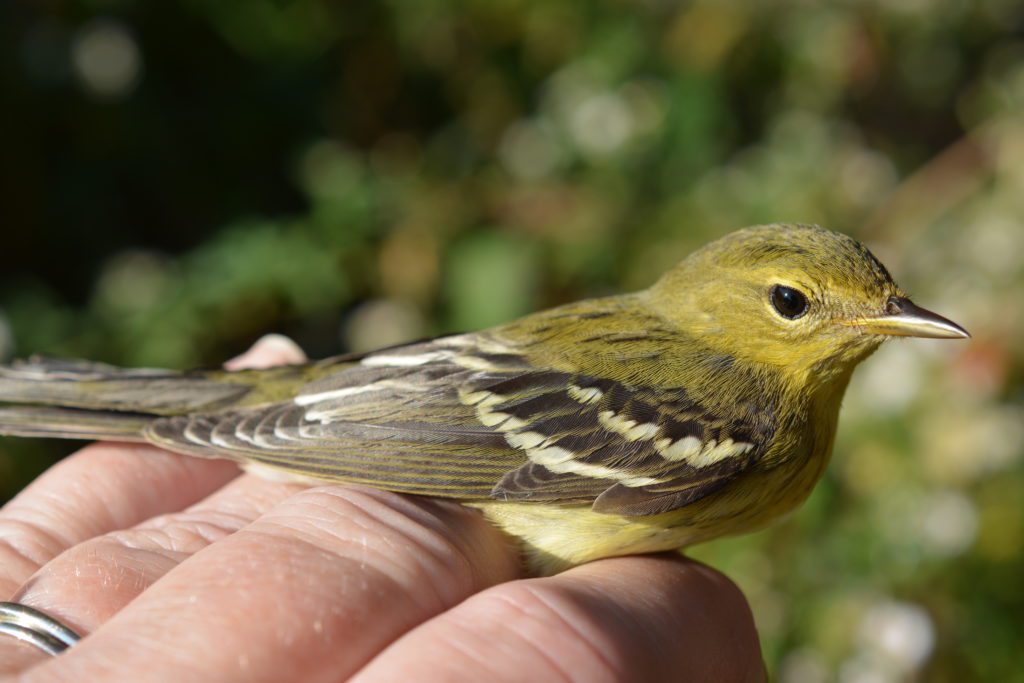
Yellow bird held in a hand outdoors.

Why Lights Out Pittsburgh?

Over the past eight years, scientists from Powdermill Nature Reserve have conducted research in Downtown Pittsburgh, working with the generous help of the public to determine where and when birds collide with windows and other building surfaces. During this time, we have determined what building parameters make the structures deadlier to birds. Meanwhile, at Powdermill Nature Reserve, research on avian perception of glass has identified and tested products that can deter birds from colliding with windows. Outside of these research efforts, one major factor related to window collisions demands more attention – light pollution.

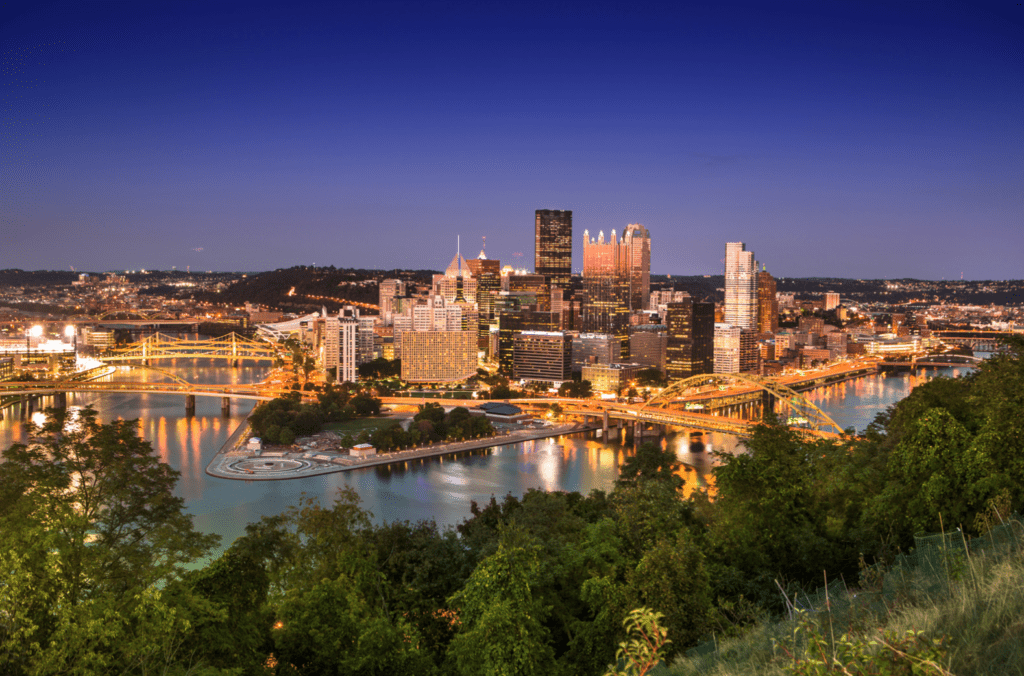
Pittsburgh skyline at night with lights on.

As birds migrate at night, using the moon and stars to navigate, they can become disoriented by light pollution coming from the ground surface below them. The source is often large cities, but urban sprawl and suburban areas can be just as detrimental. Disoriented birds are drawn out of the sky into these areas, often ending their migratory flight for the night, when otherwise they would continue flying. It’s at this stage, when migrating birds are close to the ground and moving among buildings, that a large percentage of window collisions occur.

Dark Sky Ordinances and Lights Out Pittsburgh

Many cities around the world have begun developing dark sky ordinances to reduce light pollution for multiple reasons, including public health, improved potential for astronomical observations, and wildlife conservation. The City of Pittsburgh created such an ordinance in August of 2021. At the same time, Carnegie Museum of Natural History was approached by the National Aviary at Pittsburgh and the Building Owners and Managers Association (BOMA) with a proposal to start a local Lights Out initiative.  A program modeled after existing ones in Philadelphia and several Ohio cities was developed with the input and aid of BOMA, whose participation ensured representation for the owners and managers of some of the city’s largest buildings.

Pittsburgh skyline with lights off during Lights Out Pittsburgh.

Skyscrapers aren’t the only buildings participating in the program. Residential homes, apartment buildings, and other low-rise buildings are also encouraged to participate in the Lights Out initiative. To participate, all one must do is turn out unnecessary external lights from midnight to 6:00 a.m. between March 15 and May 31, then again between September 1 and November 15. These weeks-long intervals are the peak spring and fall avian migration periods.

Fall 2021 Lights Out Results

In the first week of our Fall 2021 Lights Out campaign, 18 buildings signed up. Five were residential homes in the area, and 13 were large commercial buildings in Downtown Pittsburgh, including Point Park University, BNY Mellon Center and Client Service Center, and several PNC Downtown properties. Over the next month an additional 35 participants joined. In total, 73 buildings began participating in the fall migration period, and we are hopeful participation will grow in the upcoming spring season from March 15 to May 31.

To learn more about how you can get involved or participate in Lights Out Pittsburgh visit our website birdsafepgh.org or email us at birdsafepgh@gmail.com.

Jon Rice is the Urban Bird Conservation Coordinator at Carnegie Museum of Natural History’s Powdermill Nature Reserve. Museum employees are encouraged to blog about their unique experiences and knowledge gained from working at the museum.

Related Content

Bird Safe Glass Installed at Carnegie Museums

60 Years, One Bird at a Time

World Pangolin Day: February 19, 2022

Carnegie Museum of Natural History Blog Citation Information

Blog author: Rice, Jon
Publication date: February 22, 2022

Share this post!

  • Share on Twitter Share on Twitter
  • Share on Facebook Share on Facebook
  • Share on Pinterest Share on Pinterest
  • Share on LinkedIn Share on LinkedIn
  • Share on Reddit Share on Reddit
  • Share via Email Share via Email

Filed Under: Blog Tagged With: Birds, birdsafe pittsburgh, Carnegie Museum of Natural History, Jon Rice, Powdermill Nature Reserve, Science News, We Are Nature 2

February 18, 2022 by Erin Southerland

World Pangolin Day: February 19, 2022

by Dr. John Wible

The third Saturday in February is celebrated as World Pangolin Day, a day to raise awareness of this endangered mammal. Pangolins, scaly anteaters, are heavily illegally trafficked for the bogus medicinal powers given to their scales, which are made of keratin, the same material that makes our semi-rigid fingernails. 

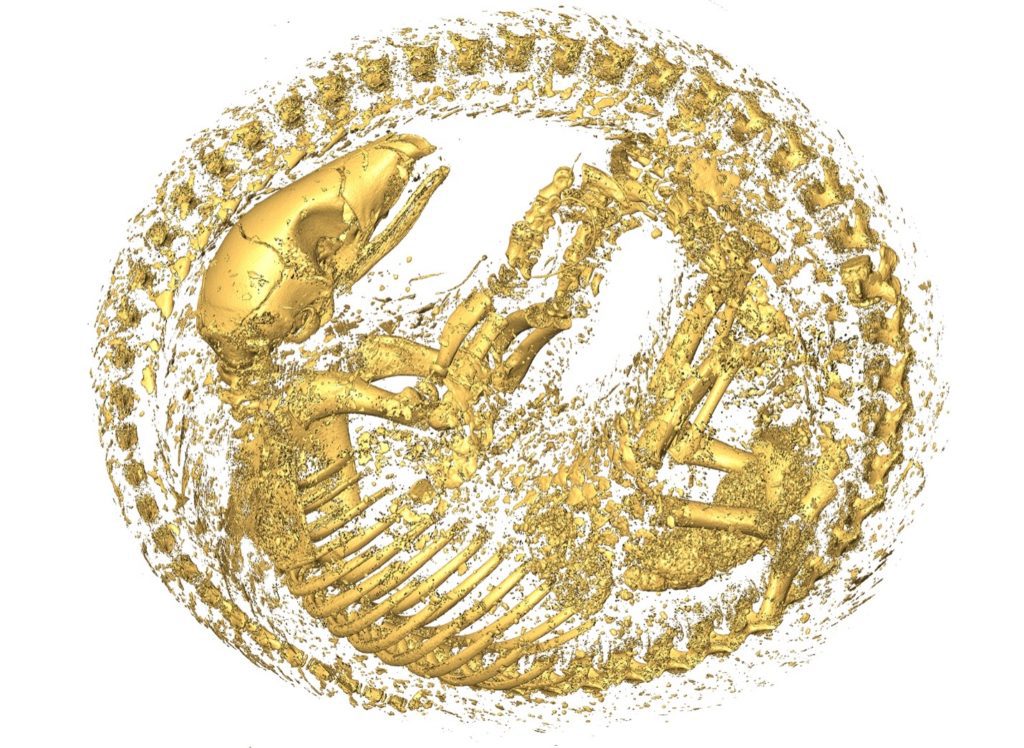
CT scan of a pangolin curled up in a ball.
From CT scan of Phataginus tricuspis, Yale Peabody Museum of Natural History 014708; https://www.morphosource.org/concern/parent/000S26328/media/000091605

This image is from a CT scan of a preserved specimen from Cameroon in West Africa of the white-bellied pangolin, Phataginus tricuspis, from the Yale Peabody Museum of Natural History. There are eight species of pangolins, four in Africa and four in Asia. Some are dedicated tree dwellers, like the white-bellied pangolin; some are dedicated ground dwellers; and some are a mixture of the two. The existence of all eight species is threatened by some human actions.

The pose of this specimen is one that all living pangolins can readily replicate, rolling up into a ball as a defensive posture. The word pangolin itself is Malay for “roller.” With no teeth, the creature’s rolling posture and scales are its best defenses. Rolling is made possible in part by the aggregate mobility at the articulations between the individual bones of its backbone or vertebral column. And pangolins have a lot of these bones. The human body has 32 to 35 vertebrae, divided into regions: seven cervical, 12 thoracic, five lumbar, five sacral, and three to five tiny caudal vertebrae making the coccyx. And we know how mobile our bodies are! At 72 vertebrae, the white-bellied pangolin is double our count: seven cervical, 12 thoracic, eight lumbar, two sacral, and a whopping 43 caudal vertebrae. The black-bellied or long-tailed pangolin, Phataginus tetradactyla, has even more bones in its tail at 49!

For more about what you can do, visit WorldPangolinDay.org. 

John Wible is the curator of the Section of Mammals at Carnegie Museum of Natural History. Museum employees are encouraged to blog about their unique experiences and knowledge gained from working at the museum.

Related Content

Groundhog as Archaeologist

Humans and Nature: Pangolins

E is for Echidna

Carnegie Museum of Natural History Blog Citation Information

Blog author: Wible, John
Publication date: February 18, 2022

Share this post!

  • Share on Twitter Share on Twitter
  • Share on Facebook Share on Facebook
  • Share on Pinterest Share on Pinterest
  • Share on LinkedIn Share on LinkedIn
  • Share on Reddit Share on Reddit
  • Share via Email Share via Email

Filed Under: Blog Tagged With: Carnegie Museum of Natural History, John Wible, mammals, Science News, We Are Nature 2

February 9, 2022 by Erin Southerland

Climate Change Myth Busting at the Museum

by Dr. Bonnie McGill

If you’ve visited the museum recently you may have noticed some new orange labels throughout the exhibit halls. These are part of an innovative visitor experience titled, We Are Nature: A New Natural History. I helped write the label you’ll find in Benedum Hall of Geology next to the oil and coal specimens. Its six-word headline reads “Burning fossil fuels causes climate change”. 

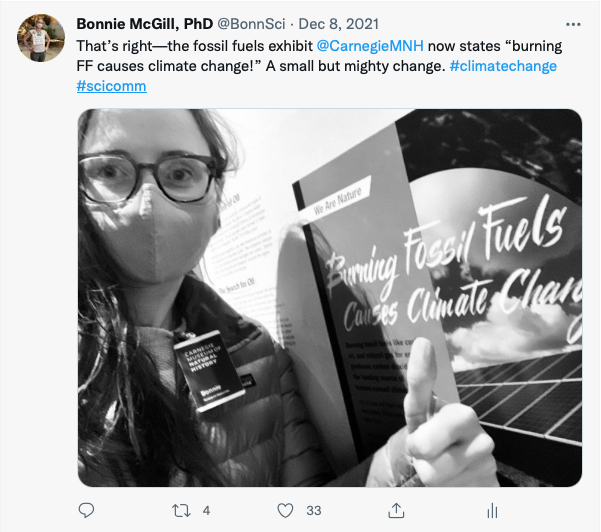
Tweet includes a selfie photo of the author in front of the new label. The tweet reads “That’s right—the fossil fuels exhibit @CarnegieMNH now states ‘Burning FF causes climate change’! A small but mighty change. #climatechange #scicomm” My twitter handle is @BonnSci and the museum is @CarnegieMNH.
Screenshot of a tweet I sent in December. 

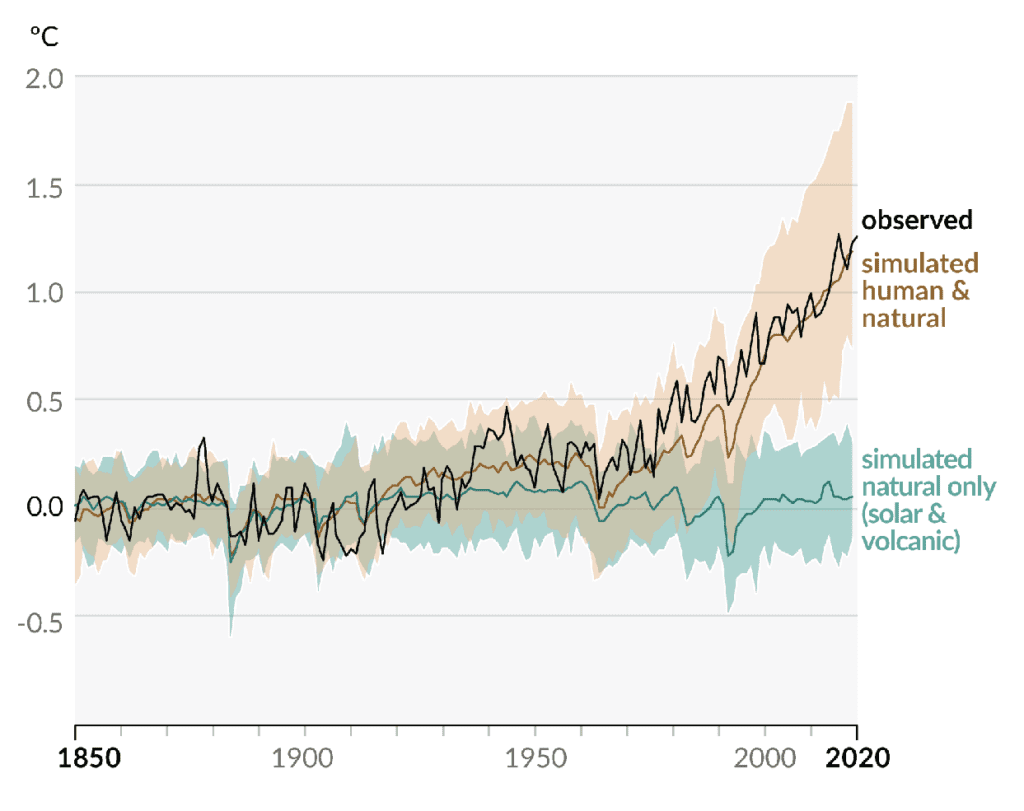
This is an important exhibit update. When looking at a big chunk of coal, it’s hard to not think about climate change. Fossil fuel combustion is the leading cause of climate change. For example, from 2010-2019, burning fossil fuels (coal, oil, natural gas) accounted for 81-91% of total human-caused CO2 emissions (IPCC AR6 WGI 2021 ch 5 p 6). Over that same time period the measured global average temperature was 1.6-2.2 oF (0.9-1.2 oC) warmer than the pre-industrial global average temperature. This increase cannot be explained by natural processes (such as changes in solar irradiance or volcanoes), which actually decreased the temperature by 0.2 oF (0.1oC), according to the Intergovernmental Panel on Climate Change (IPCC) (IPCC AR6 WGI 2021 ch 3 p4).

While the museum has understood the science of anthropogenic climate change for many years, adding these new labels explicitly linking fossil fuels to climate change has created opportunities for new discussion and questions about what scientists know and what they don’t know. To help address these questions, the CMNH Natural History Interpreters have been working with the Climate and Rural Systems Partnership (CRSP) to bolster their climate conversation skills and climate science knowledge. One tool we at CRSP have developed with our regional network of community partners is a climate change myth busting resource that breaks down some of the most commonly repeated myths about climate change. 

Let me show you how the climate change myth busting resource works. For example, here is one myth we hear a lot:

“The climate has always changed, therefore this is natural.”

The guide provides three types of information to address the myth:

1. The science bottom line

Yes, the climate has always changed. This time it’s different. It’s more rapid than past changes and it can only be explained by human activity. 

2. The science in more detail (not a script, simply background information)

Past climate changes were dominated by naturally occurring cyclical changes in the Earth’s orbit and axis. Volcanoes and asteroid impacts have also changed the chemistry of the atmosphere and, thus, Earth’s temperature in the past. These forces continue to have effects. Today natural forces contribute a -0.2 oF effect on modern day global warming, which cannot explain the warming observed today. Human activities contribute a net increase of 1.4-2.3 oF. This means humans are having a 7- to 11-fold greater impact on global temperature than non-human forces of nature.

Scientists have 99.999% certainty that current climate change is human-caused. As the IPCC says “its unequivocal”. One of the strongest lines of evidence comes from comparing observed (past) global average temperatures with projections from climate models for the same time period. Only the climate models that include heat-trapping gas emissions from human activities match the observed temperatures (see plot below). Climate models that include only natural forces of climate change do not match observed changes in global temperature. 

Line graph of degrees C -0.5 to 2.0 on the vertical axis vs. year 1850-2020 on the horizontal axis. The lines stay near zero until about 1960 when the black (observed temperature) and brown (simulated temperature driven by humans and natural factors) move upward to about 1.5 degrees in 2020. The green line (simulated natural factors only) stays near zero and does not match the observed line.
Change in global surface temperature (annual average) as observed (in black) and simulated using human & natural (brown) and only natural (green) factors (both 1850-2020). Source: Intergovernmental Panel on Climate Change (IPCC) Working Group 1 (WG1) Sixth Assessment Report (AR6) Summary for Policymakers. https://www.ipcc.ch/report/ar6/wg1/#SPM

Additionally, fossil fuels are the only source of carbon (representing millions of years of plant-stored carbon) large enough to explain the observed increase in atmospheric CO2. The carbon isotopes in the CO2 match the carbon isotopes of fossil fuels. 

3. Ideas for moving the conversation toward solutions

Recognize that the person engaging in conversation seems to agree that the climate IS changing–shared agreement is vitally important.

It’s true the Earth’s climate has always changed—our planet has had ice ages and Hothouse periods caused by natural changes in the Earth’s orbit and axis, changes in solar irradiance, and volcanoes. This time it’s different. Natural cycles, solar energy, and volcanoes alone are not enough to explain the increase in atmospheric CO2 concentrations and Earth’s temperature. Human emissions of greenhouse gases, primarily from the burning of fossil fuels, do explain the increase in CO2 and temperature.

Knowing it is human-caused means it can be human-solved! It is important that we’re on the same page about the cause of climate change, so that we can develop effective solutions. For example, you could say, “Perhaps you might be interested in learning more about climate solutions, many of which improve other conditions too like our health?” For solutions to talk about see Project Drawdown. Transitioning to renewable energy will benefit air and water quality and human health.

Climate change information added to galleries, and training staff on climate science and techniques for talking about it in friendly ways, are just a few examples of how the scientists, educators, and exhibitions team are working together at CMNH to explore Anthropocene topics like climate change. We want to engage museum visitors and work with our regional communities to have productive climate conversations, open discussions that are oriented toward climate solutions and a positive future. Because at the end of the day that is what really matters. 

May 2022 update: Here is the completed myth busting resource, “Breaking up with climate myths with climate fact flip cards.” 

We also recommend this resource from our partner the Climate Advocacy Lab for learning more about having relational climate conversations.

Bonnie McGill, Ph.D. is a science communication fellow for the Climate and Rural Systems Partnership and based in the Anthropocene Studies Section at Carnegie Museum of Natural History. Museum staff, volunteers, and interns are encouraged to blog about their unique experiences and knowledge gained from working at the museum.

Related Content

What Does Climate Change Mean for Western PA Farmers?

Understanding Fossil Fuels Through Carnegie Museums Exhibits

Guiding a Local Focus on Climate Education

Carnegie Museum of Natural History Blog Citation Information

Blog author: McGill, Bonnie
Publication date: February 10, 2022

Share this post!

  • Share on Twitter Share on Twitter
  • Share on Facebook Share on Facebook
  • Share on Pinterest Share on Pinterest
  • Share on LinkedIn Share on LinkedIn
  • Share on Reddit Share on Reddit
  • Share via Email Share via Email

Filed Under: Blog Tagged With: Benedum Hall of Geology, Bonnie McGill, Carnegie Museum of Natural History, CRSP, We Are Nature 2

January 21, 2022 by Erin Southerland

“Mush-room” for Exploration

by Sara Klingensmith

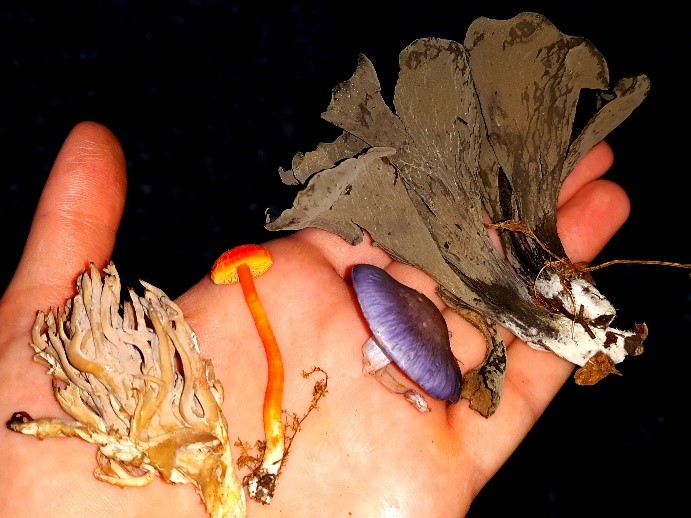
Mushrooms are becoming popular! Visitors to Powdermill Nature Reserve often bring photos of colorful mushrooms in hopes of learning the identity of each. On nature hikes, the appearance of eccentric mushrooms such as viscid violet cort (Cortinarius iodes), stinky squid (Pseudocolus fusiformis), and some of the color-changing boletes (family Boletaceae) expand perspectives of what exists in nature. People are beginning to pay more attention to these understudied organisms and discovering that fungi do more than decompose. Fungi assist in many ecological processes such as symbiotic partnerships, carbon storage, primary colonization, and parasitism.

How Do We Know When and Where to Find Mushrooms?

Across this vast Kingdom of organisms, only some fungi deploy the charismatic spore-bearing structures we casually call mushrooms when certain environmental conditions are met. Scientifically speaking, these recognizable structures are termed macrofungi (visible sporocarps or fruitbodies). Among the various groupings of fungi, two produce macrofungi we are likely to notice during nature walks: Basidiomycota (external spore production or “club fungi”) and Ascomycota (internal spore production or “sac fungi”). 

A mushroom is only the reproductive structure of a fungus. For many species, spores produced within hymenophores (reproductive structures such as gills or pores) are released through an active process called ballistospory. Wind, rain, and animals may help further spore dispersal. The bulk of a fungus lies in the root-like mycelial network within a nourishing substrate (its food). Leaf litter, soil, plants, scat, and even other fungi are all different types of substrates for fungi. 

Determining when we will see the most mushrooms erupting from their substrates is challenging because there are multitudes of factors influencing fungal communities. Like many organisms, certain species will thrive better in certain habitats and elevations. Some fungi are tied to their host’s health, phenology, and life stage, which may also be influenced by forest management practices and climate change. Because fungi are fundamentally interwoven with their environment, these organisms undergo succession along with whole forest communities, and even on a single growth substrate. 

four different mushrooms held in a hand
Examples of Basidiomycete mushrooms; left to right: coral-shaped fungi (probable families: Clavulinaceae and Gomphaceae), waxy cap (Hygrocybe sp.), viscid violet cort (Cortinarius iodes), and Eastern black trumpet (Craterellus fallax)
collage of three different mushrooms
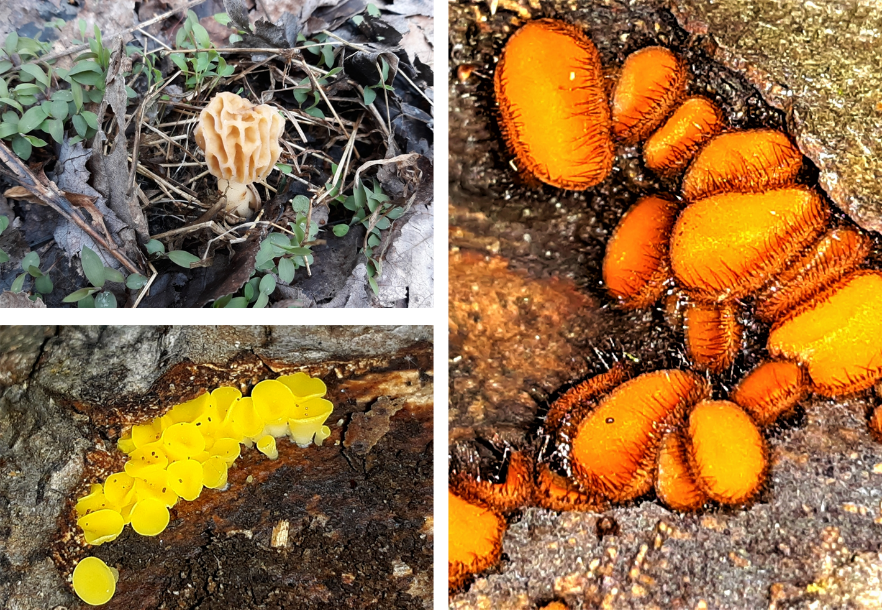
Examples of Ascomycete mushrooms; top left: morel (Morchella sp.), bottom left: yellow fairy cups (Calycina citrina), and right: eyelash cups (Scutellinia sp.).

Through general observations, we have determined certain species have seasonal fruiting periods. Experienced foragers learn from experience when to search for morels, and we’ve likewise learned when to expect the fruiting of many other fungi species. Some fruitbodies are ephemeral, whereas others produce mushrooms that may persist on trees for years. While the presence of mycelium is generally linked to the appearance of mushrooms, some studies have observed an uncoupling of factors equating abundant mycelium with high sporocarp production. These findings apply particularly to fungi that form symbiotic relationships with plants—the ectomycorrhizal fungi (symbiotic macrofungi)!  This fungal phenomenon has been observed in a few ectomycorrhizal species. For example, research that examined the relationship between mycelial and sporocarp abundance of Boletus edulis, also known as the king bolete, found no correlation between sporocarp production and distribution and the abundance of below-ground mycelium. This means some species of mycorrhizal fungi can appear abundant above ground, but lack a robust underground network expected to support such a high sporocarp population. Therefore, aboveground species richness may not reflect mycelial productivity for some species.

Current research suggests that soil moisture and temperature highly influence the appearance of mushrooms. For example, a dry spell may reduce sporocarp production by 50% in pine forests, yet the mycelial networks presumably continue their cryptic business below the soil surface. Research in the Mediterranean region suggests that precipitation is a limiting factor for sporocarp production for both mycorrhizal and saprotrophic fungi; however, more research is needed to examine these factors in different regions and habitats. 

While fungi lack the mechanisms to use photosynthesis, light plays a role in growing mushrooms. Many fungi species show phototropic responses by growing towards light sources, with certain species failing to produce mushrooms in the absence of light. 

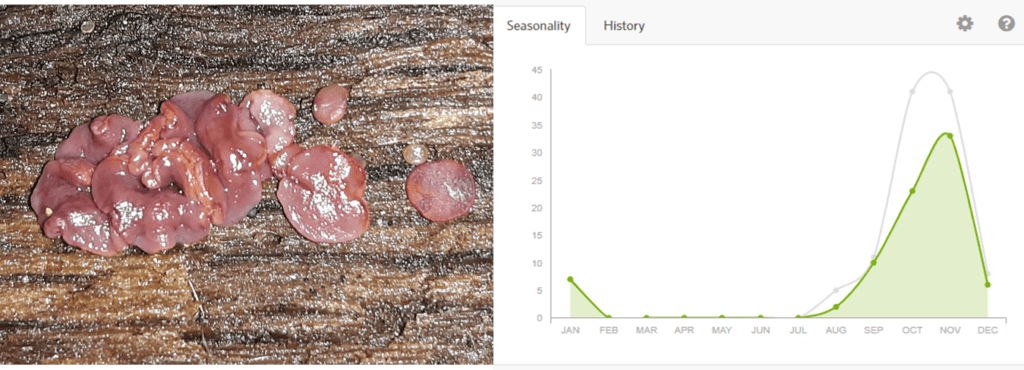
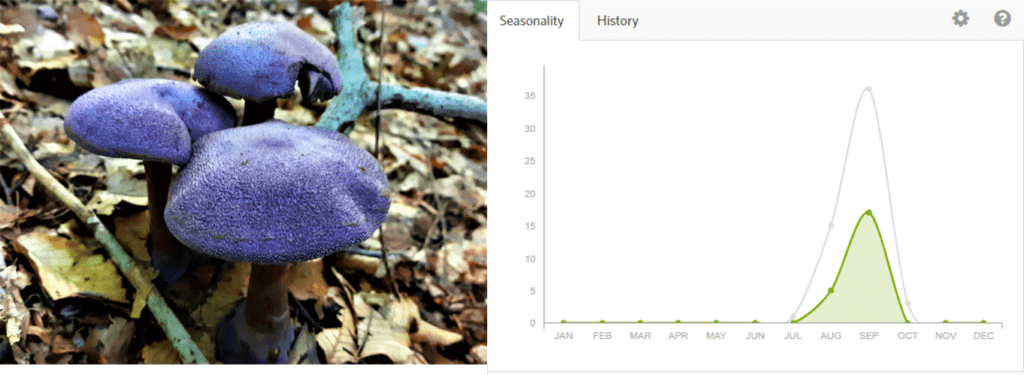
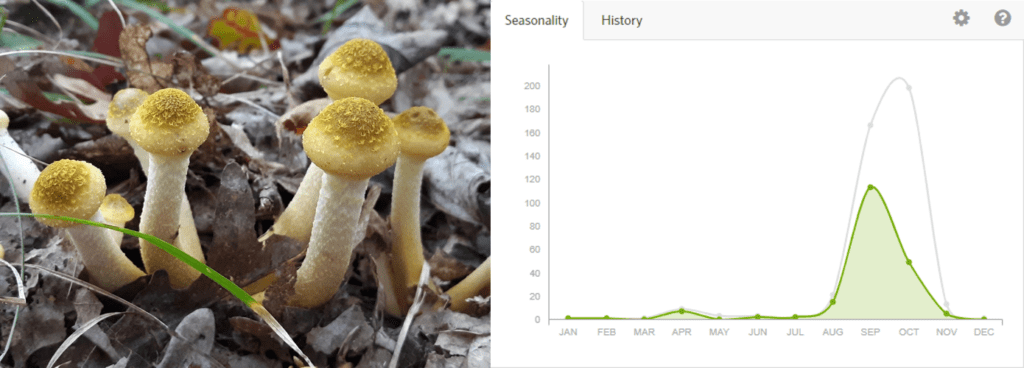
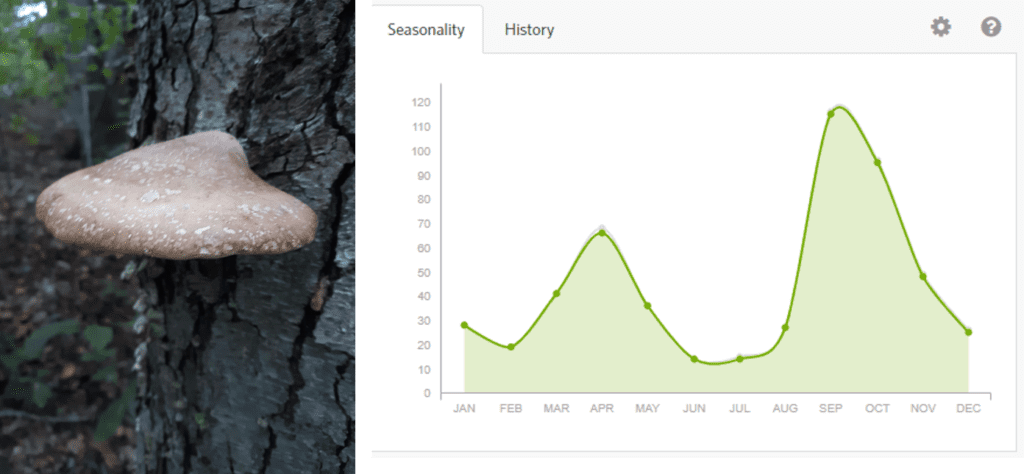
While the appearance of mushrooms can be seasonal and highly variable, searching after a good rainy period might improve your chances of finding some fantastic fungi! Listed below are a handful of species found at Powdermill, along with simple charts of their seasonal observation trends obtained from iNaturalist, a free online site and app promoting community science. Thanks to participating community members, these graphs reflect observation frequencies across seasons in the state of Pennsylvania. The green line represents research grade observations, meaning more than two-thirds of the identifiers agree on the identification. The gray line represents verifiable observations that have yet to attain research grade status. Because observations are on-going, these graphs may change as more data accumulates. 

purple jelly disk mushrooms and graph showing seasonality
Purple jellydisk (Ascocoryne sarcoides) – saprotrophic fungi that are typically found on decaying hardwoods.
violet webcap mushrooms and graph showing seasonality
Violet webcap (Cortinarius violaceus) – mycorrhizal fungi found in beech and oak forests.
honey mushrooms and graph showing seasonality
Honey mushroom (Armillaria mellea) – parasitic/saprotrophic fungi found in oak dominated forests.


birch polypore and graph showing seasonality
Birch polypore (Fomitopsis betulina) – parasitic/saprotrophic fungi commonly associated with birch trees.  

Sara Klingensmith is an Environmental Educator and Naturalist at Powdermill Nature Reserve. Museum employees are encouraged to blog about their unique experiences and knowledge gained from working at the museum.

Sources

Alday, J., Martínez de Aragón, J., de-Miguel, S. et al. Mushroom biomass and diversity are driven by different spatio-temporal scales along Mediterranean elevation gradients. Sci Rep 7, 45824 (2017). https://doi.org/10.1038/srep45824

Binion, E. Denise, et al. Macrofungi Associated With Oaks of Eastern North America, West Virginia University Press, 2008. 

Ekblad, A. et al. The production and turnover of extrametrical mycelium of ectomycorrhizal fungi in forest soils: role in carbon cycling. Plant Soil (2013) 366: 1-27. 

De la Varga, Herminia & Águeda, Beatriz & Martínez-Peña, Fernando & Parladé, Javier & Pera, Joan. Quantification of extraradical soil mycelium and ectomycorrhizas of Boletus edulis in a Scots pine forest with variable sporocarp productivity. Mycorrhiza. 22. 59-68. (2011) 10.1007/s00572-011-0382-2.

De la Varga, H., Águeda, B., Martínez-Peña, F. et al. Quantification of extraradical soil mycelium and ectomycorrhizas of Boletus edulis in a Scots pine forest with variable sporocarp productivity. Mycorrhiza 22, 59–68 (2012). https://doi.org/10.1007/s00572-011-0382-2

De la Varga, H., Águeda, B., Ágreda, T. et al. Seasonal dynamics of Boletus edulis and Lactarius deliciosus extraradical mycelium in pine forests of central Spain. Mycorrhiza 23, 391–402 (2013). https://doi.org/10.1007/s00572-013-0481-3

Štursová M, Kohout P, Human ZR, Baldrian P. Production of Fungal Mycelia in a Temperate Coniferous Forest Shows Distinct Seasonal Patterns. Journal of Fungi. 2020; 6(4):190. https://doi.org/10.3390/jof6040190

iNatualist.org

MushroomExpert.com

Lodge, D. J. et al. Terrestrial and Lignicolous Macrofungi. 2004. 10.1016/B978-012509551-8/50011-8.

Related Content

Fungi Make Minerals and Clean Polluted Water Along the Way

Photogenic Fungi

What Does Climate Change Mean for Western PA Farmers?

Carnegie Museum of Natural History Blog Citation Information

Blog author: Klingensmith, Sara
Publication date: January 21, 2022

Share this post!

  • Share on Twitter Share on Twitter
  • Share on Facebook Share on Facebook
  • Share on Pinterest Share on Pinterest
  • Share on LinkedIn Share on LinkedIn
  • Share on Reddit Share on Reddit
  • Share via Email Share via Email

Filed Under: Visitor Info Tagged With: Carnegie Museum of Natural History, Powdermill Nature Reserve, Sara Klingensmith, We Are Nature 2

  • « Go to Previous Page
  • Page 1
  • Page 2
  • Page 3
  • Page 4
  • Interim pages omitted …
  • Page 6
  • Go to Next Page »

sidebar

About

  • Mission & Commitments
  • Directors Team
  • Museum History

Get Involved

  • Volunteer
  • Membership
  • Carnegie Discoverers
  • Donate
  • Employment
  • Events

Bring a Group

  • Groups of 10 or More
  • Birthday Parties at the Museum
  • Field Trips

Powdermill

  • Powdermill Nature Reserve
  • Powdermill Field Trips
  • Powdermill Staff
  • Research at Powdermill

More Information

  • Image Permission Requests
  • Science Stories
  • Accessibility
  • Shopping Cart
  • Contact
  • Visitor Policies
One of the Four Carnegie Museums | © Carnegie Institute | Privacy Policy | Terms of Use | Accessibility
Rad works here logo