• Skip to primary navigation
  • Skip to main content
  • Skip to primary sidebar

Carnegie Museum of Natural History

One of the Four Carnegie Museums of Pittsburgh

  • Visit
    • Buy Tickets
    • Visitor Information
    • Exhibitions
    • Events
    • Dining at the Museum
    • Celebrate at the Museum
    • Powdermill Nature Reserve
    • Event Venue Rental
  • Learn
    • Field Trips
    • Educator Information
    • Programs at the Museum
    • Bring the Museum to You
    • Guided Programs FAQ
    • Programs Online
    • Climate and Rural Systems Partnership
  • Research
    • Scientific Sections
    • Science Stories
    • Science Videos
    • Senior Science & Research Staff
    • Museum Library
    • Science Seminars
    • Scientific Publications
    • Specimen and Artifact Identification
  • About
    • Mission & Commitments
    • Directors Team
    • Museum History
  • Tickets
  • Give
  • Shop

water

September 13, 2018 by wpengine

Wet Weekend!

by Joylette Portlock

I had the chance to visit Powdermill Nature Reserve over the weekend. Yes, this past weekend, the one where it rained for three days almost continuously across a multi-state area. I took my kids with me, and we had a blast; after all, “rain is a grown-up problem.”* I have to say, the woods always feel so alive to me during/right after a hard rain. The world feels full of promise and power. As we watched Powdermill Run, swollen and wild, churning, cutting a new path through the woods after floods this summer, I thought of the power of water, to nourish, to sweep clean, and to cause damage.
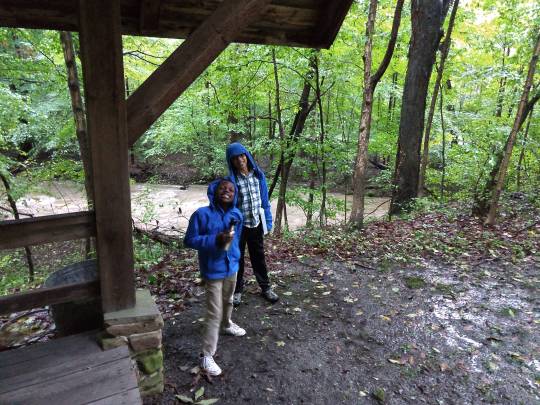
kids in the rain

And, because being a grownup requires other grownup thoughts, I thought of the water in my basement, and considered, again, the costly prospect of installing a French drain around the house.

If you’re feeling like there seems to be more water than ever before, you’re not wrong. Climate change, one of the most significant challenges of the Anthropocene, is shifting the way water moves around the planet. It is resulting in more precipitation in places and at times where we don’t need it; a global phenomenon that is felt locally.

KDKA reported that this past Sunday in Pittsburgh was the second wettest day ever recorded in the area and we’ve already passed the yearly average rainfall. In other words, every drop from this point out in 2018 puts us closer to an annual “wettest ever” status, too.

Our downpour this weekend is part of a trend. Since the 1950s, the amount of water falling during heavy downpours in this part of the U.S. has increased by 71%, per the 2014 National Climate Assessment, and that’s an increase that is definitely more than the natural variation:
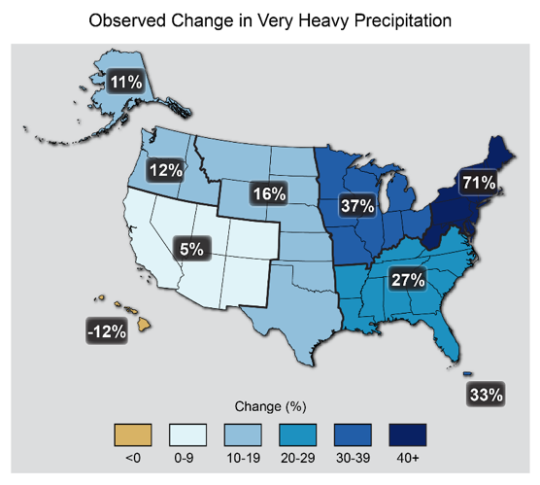
The map shows percent increases in the amount of precipitation falling in very heavy events (defined as the heaviest 1% of all daily events) from 1958 to 2012 for each region of the continental United States; Adapted from: Global Climate Change Impacts in the United States.

This may come as a surprise – we usually talk about global warming in terms of heat waves and hurricanes – but climate scientists have known about these precipitation effects, which have a big impact even in non-coastal areas, for some time. It’s a big deal for flooding risk (and in areas like Pittsburgh, with a combined sewer-stormwater system, for water quality).

wow gif with LeVar Burton

In other words, it’s not just my basement at risk.

However, the forecast doesn’t have to be gloomy. Also from the National Climate Assessment: our actions right now make a difference, globally and locally. These maps show the projected difference in annual springtime precipitation, by 2090, if we take steps to dramatically reduce our impact on our climate now vs. if we don’t:
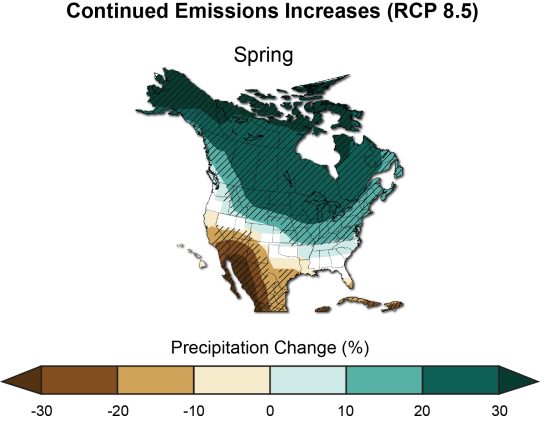
Springtime in 2090, Business as usual
Kenneth E. Kunkel, Cooperative Institute for Climate and Satellites – NC
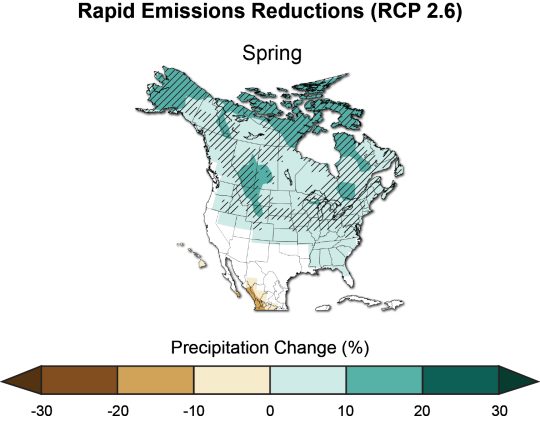
 

Springtime in 2090, with changes
Kenneth E. Kunkel, Cooperative Institute for Climate and Satellites – NC

Grown-up problems, indeed. Playing in the rain can be very fun. And the world is full of promise and power. But perhaps Powdermill Run isn’t the only thing that requires a new path forward.

*Said to me by a summer camp counselor at the Pittsburgh Zoo and Aquarium in 2017 when I dropped my son off for camp on a rainy day.

Joylette Portlock, Ph.D., is associate director of science and research at Carnegie Museum of Natural History. She is also executive director of Communitopia, a nonprofit focused on climate change communication, and holds many other roles in the community. Museum employees are encouraged to blog about their unique experiences and knowledge gained from working at the museum.

From the National Climate Assessment website:

The National Climate Assessment summarizes the impacts of climate change on the United States, now and in the future.

A team of more than 300 experts guided by a 60-member Federal Advisory Committee produced the report, which was extensively reviewed by the public and experts, including federal agencies and a panel of the National Academy of Sciences.
Filed Under: Blog Tagged With: Anthropocene, climate change, Powdermill, Powdermill Nature Reserve, water

February 6, 2017 by wpengine

Purifying Water with Plants

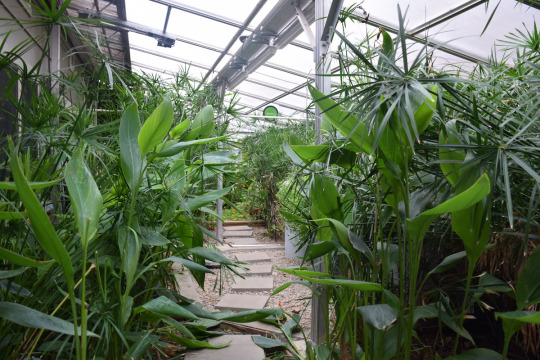
leafy plants in a greenhouse
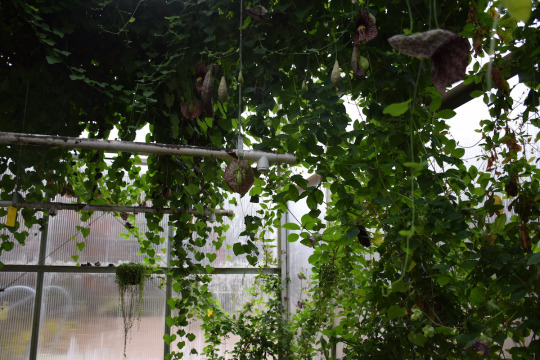
orchids hanging in a greenhouse
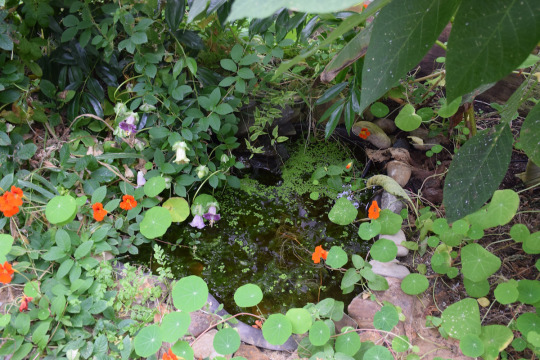
water-purifying plants growing around a pond

Inside the Marsh Machine. 

As the days get darker and colder in western Pennsylvania, there’s still a lot of green at Powdermill Nature Center.

The Marsh Machine at Powdermill uses soil and living plants in an on-site greenhouse to purify waste water from the center’s drains and toilets all year round without the use of chemicals.

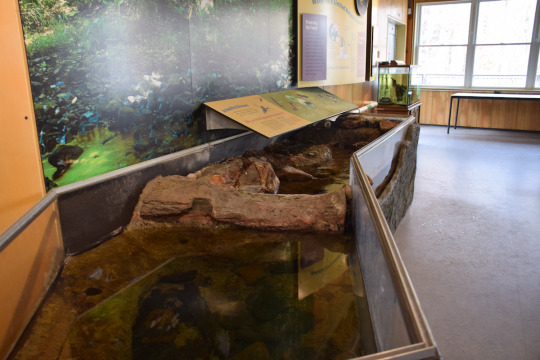
Water purified by the beneficial bacteria in the plants and soil of the greenhouse is put to use in a living stream exhibit, where the water is pure enough that organisms can thrive in it just as they would in Powerdermill Run, a nearby stream.

Re-using property treated waste water (for purposes other than drinking) can greatly conserve supplies of fresh water, which are often limited.

Take a break from the winter by stepping into the living forest of the Marsh Machine, and learn all about freshwater conservation at Powermill Nature Reserve in Rector, PA.

Powdermill’s indoor stream exhibit.


Filed Under: Blog Tagged With: Powdermill, Powdermill Nature Reserve, water

February 6, 2017 by wpengine

Identifying Macroinvertebrates

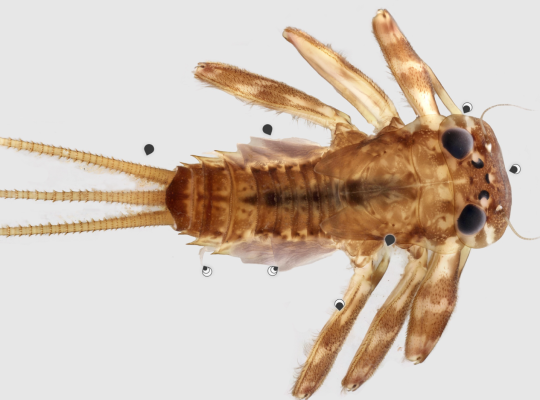
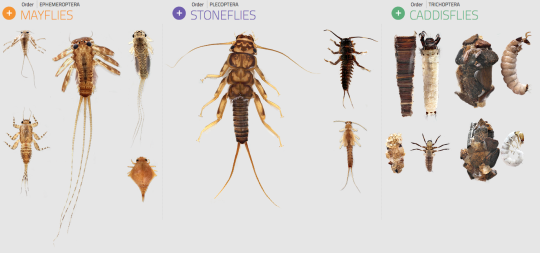
detailed hi-resolution image of a mayfly

Did you know that macroinvertebrates are great indicators of stream quality?

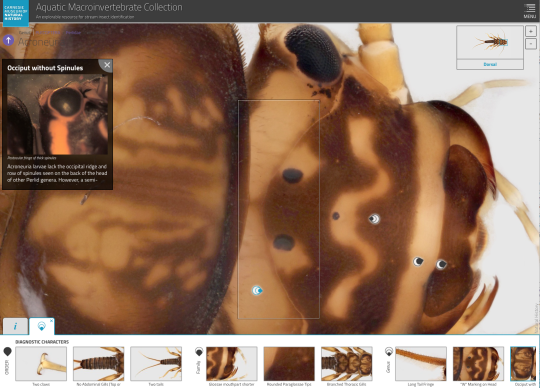
Identify and learn about these tiny creatures using our online Aquatic Macroinvertebrate Collection resource, which was funded by the National Science Foundation and done in collaboration with Carnegie Mellon University and the University of Pittsburgh.

Zoom in, and explore amazingly detailed pictures of macroinvertebrates like the mayfly above to discover more about invertebrates living in your backyard!

Learn more at http://www.macroinvertebrates.org


screenshot from macroinvertebrates.org
different categories of macroinvertebrates including stoneflies and mayflies

Filed Under: Blog Tagged With: pennsylvania, water

May 18, 2016 by wpengine

Flow to Pittsburgh

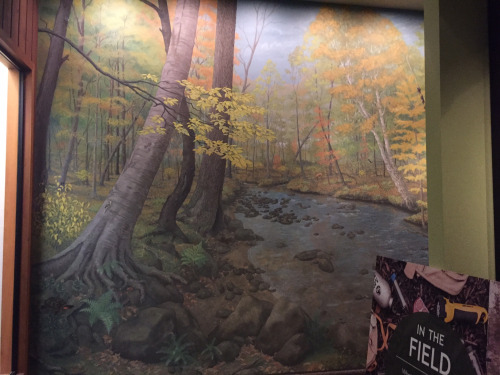
mural of a stream

by Patrick McShea

The scene in a new mural on the second floor of Carnegie Museum of Natural History is a fall morning at Powdermill Nature Reserve, the museum’s field research station which is located some 55 miles southeast of Pittsburgh.

The view is upstream along Powdermill Run, just below the place where the stream absorbs the flow of a tributary known as White Oak Run. These waters, gathered from a portion the western slope of Laurel Ridge, eventually flow through Pittsburgh. Their path to the city, a vertical descent of some 650 feet via the meanders of Loyalhanna Creek, the Kiskiminitas, and Allegheny River, is nearly twice the length of the highway route.

As a vital element of the forested landscape, the stream provides a focal point for considering the diverse life forms supported on Powdermill Nature Reserve’s 2,200 acres.

The artists who created the mural paid careful attention to vegetation, depicting specific trees, shrubs, and grasses. They also populated the scene with a variety of creatures. The closer you study the mural the more living details you’ll notice.

See how many plants and animals you can locate and identify, then make plans to visit Powdermill Nature Reserve at any season of the year.

Curious about Powdermill? Visit on June 4 for the annual public day!

Patrick McShea works in the Education and Visitor Experience department of Carnegie Museum of Natural History. Museum employees are encouraged to blog about their unique experiences and knowledge gained from working at the museum.

Filed Under: Blog Tagged With: conservation, nature, Patrick McShea, Pittsburgh, Powdermill, water

February 27, 2016 by wpengine

Discoverers Expedition Vilcabamba 2016

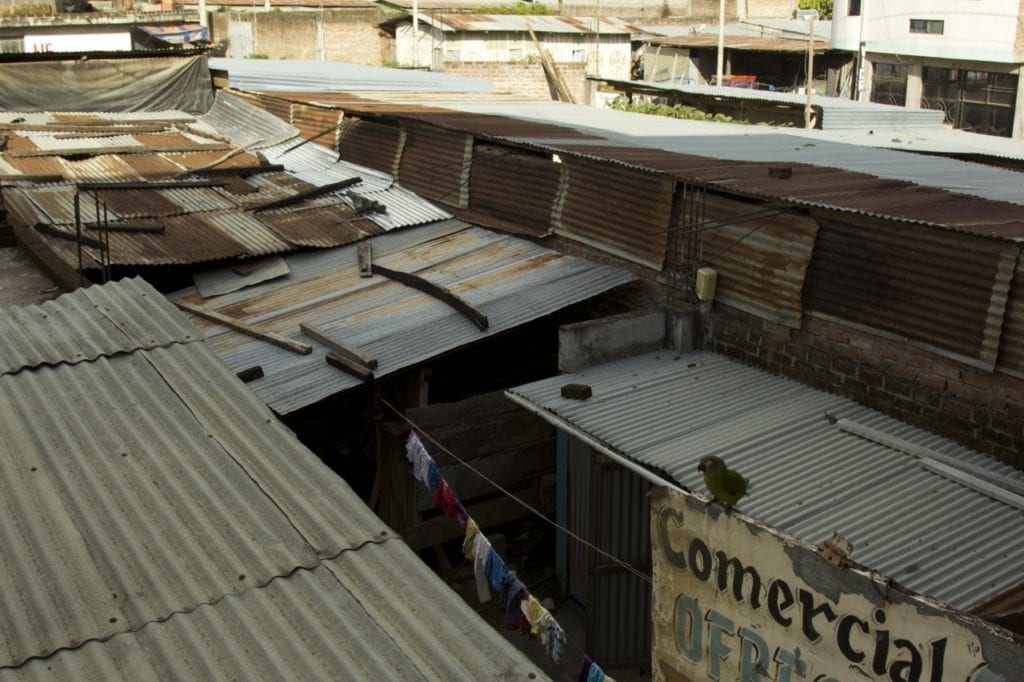
A view of the neighborhood from our hotel room in Pichari. (Photo Maira Duarte).
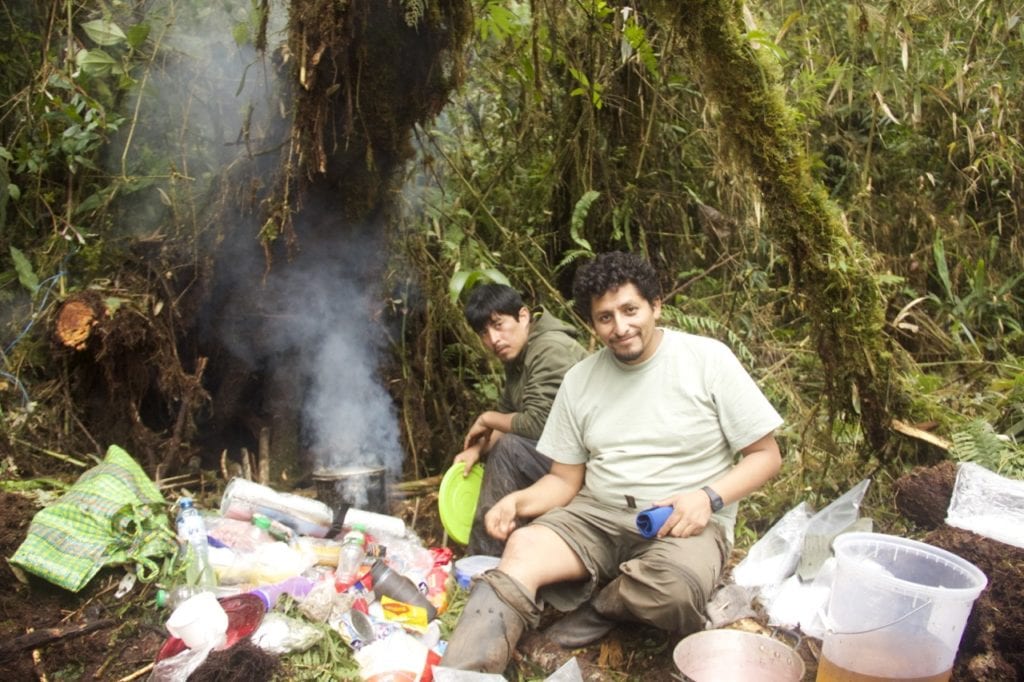
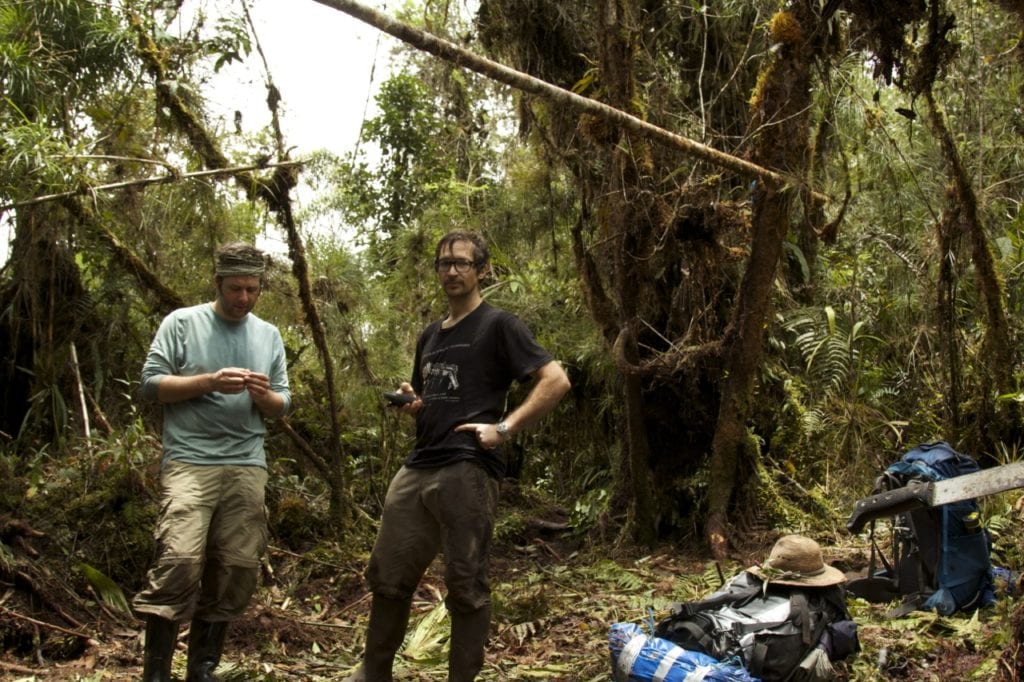
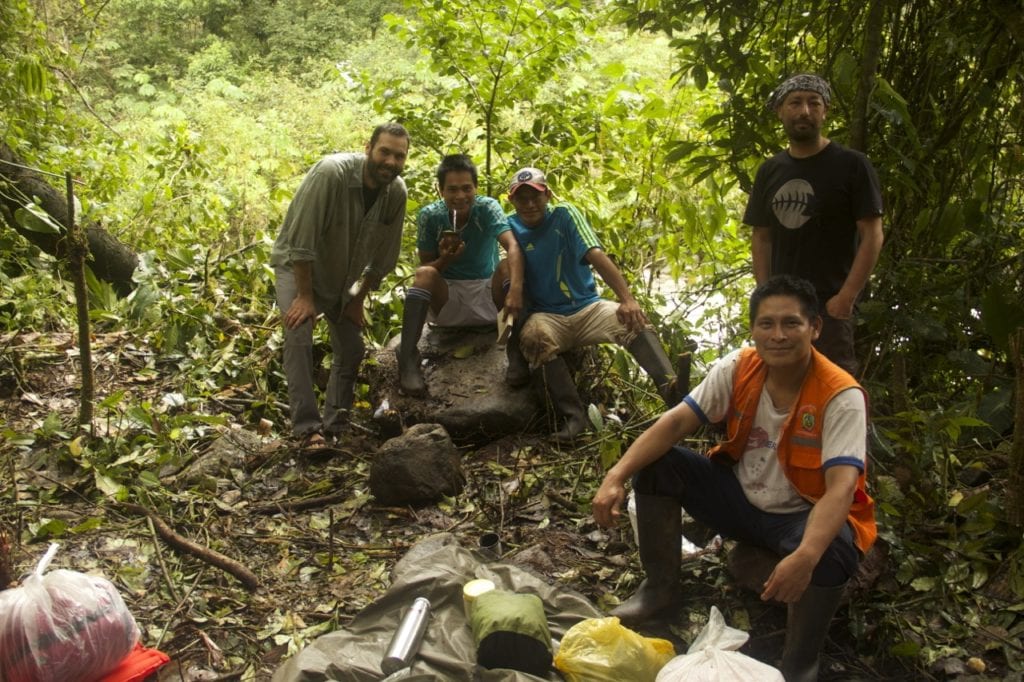
Herpetologists Roberto Gutiérrez and Victor Vargas organizing food and lighting the camp fire at Camp 4 (2760 m, 9,055 ft). (Photo Santiago Castroviejo).
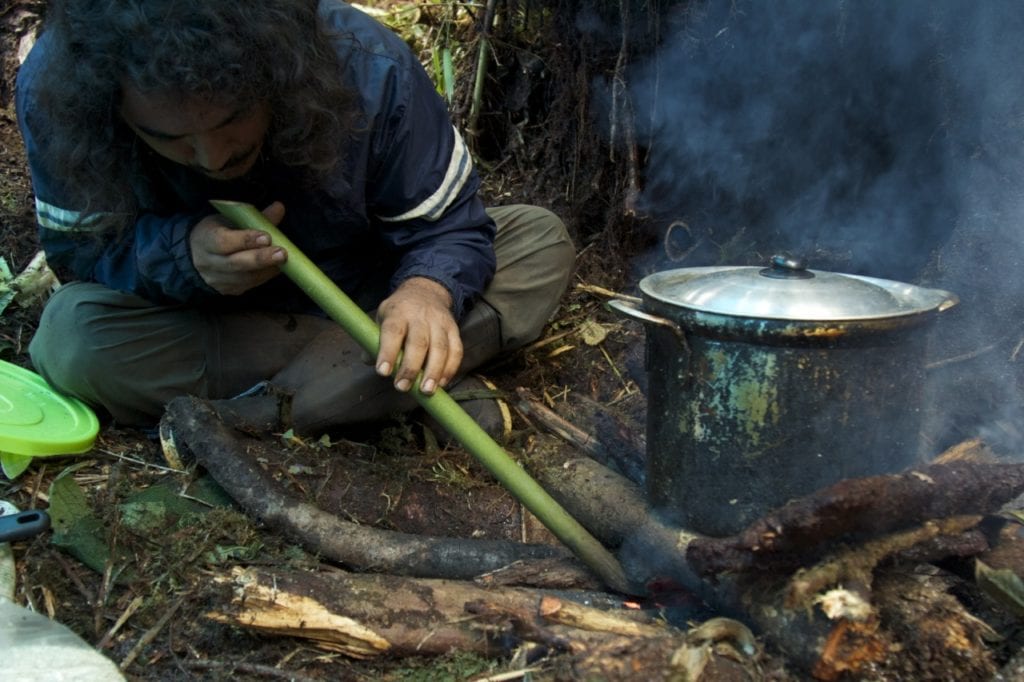
The hyper-humid conditions at Camp 4 (2760 m, 9,055 ft) make lightning a fire a difficult task. Here, Giussepe Gagliardi tries a traditional technique consisting in blowing through a bamboo cane. (Photo Santiago Castroviejo).
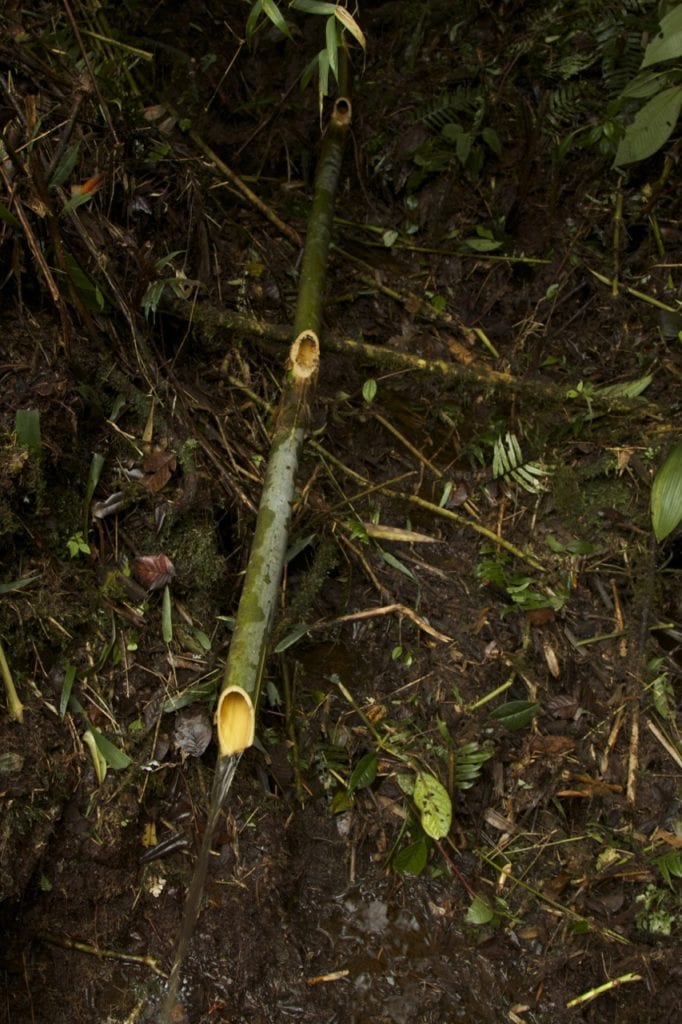
A luxury, our water source at Camp 4, just a few meters away from our tents and kitchen. (Photo Maira Duarte).
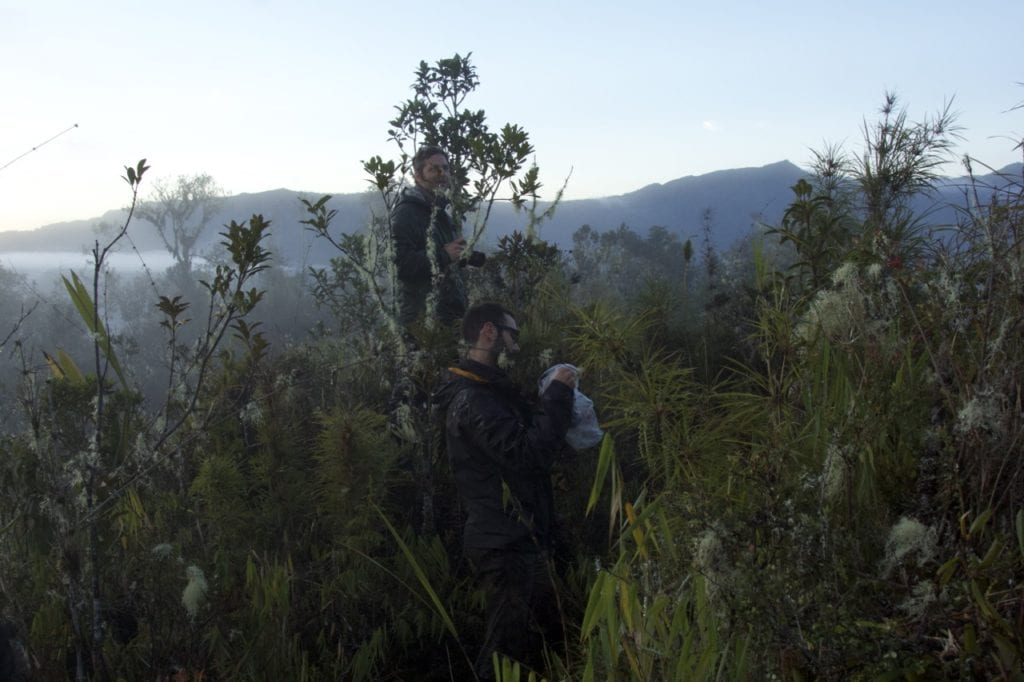
Journalist Andy Isaacson and herpetologists Dr. Santiago Castroviejo taking pictures from the ridge during one rare moment when the sky was clear. (Photo José Padial).
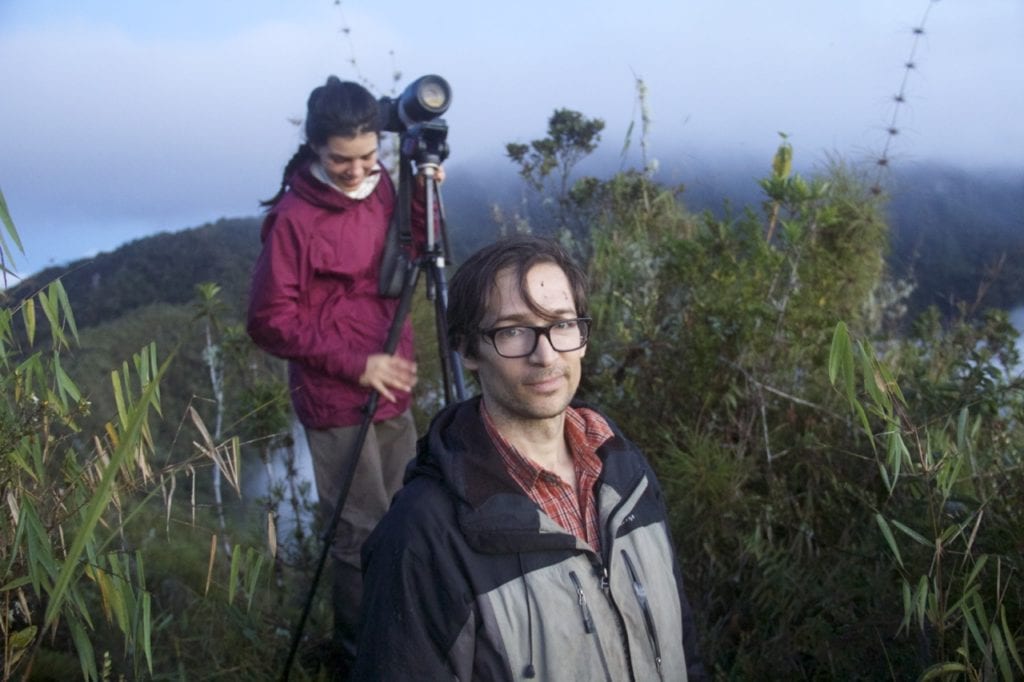
José Padial and Maira Duarte filming and taking pictures on the ridge at 2,850 m (ca. 9,300 ft). (Photo Santiago Castroviejo).
Journalist Andy Isaacson and José Padial on their descent from Camp 4 to Camp 1 on Friday Feb. 19th. (Photo Maira Duarte).
Good mood at Camp 1, after hiking down for nine hours. (Photo Giussepe Gagliardi).
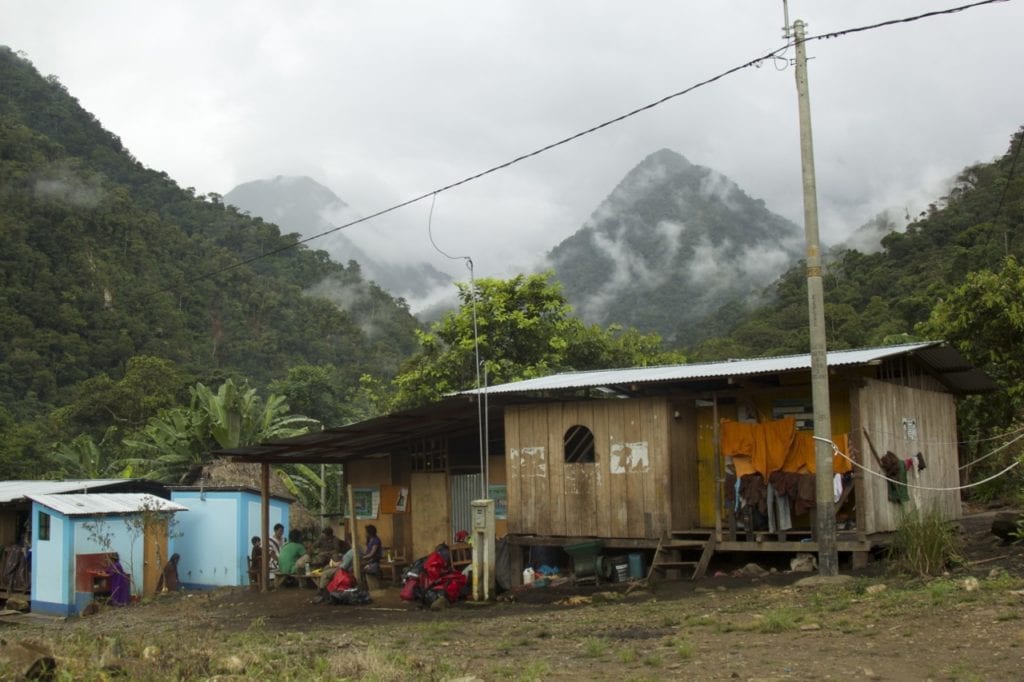
The Ashaninka community of Marontuari, the last outpost before reaching Pichari, with the ridge we descended, covered in clouds, on the background (the one on the left). (Photo Maira Duarte).
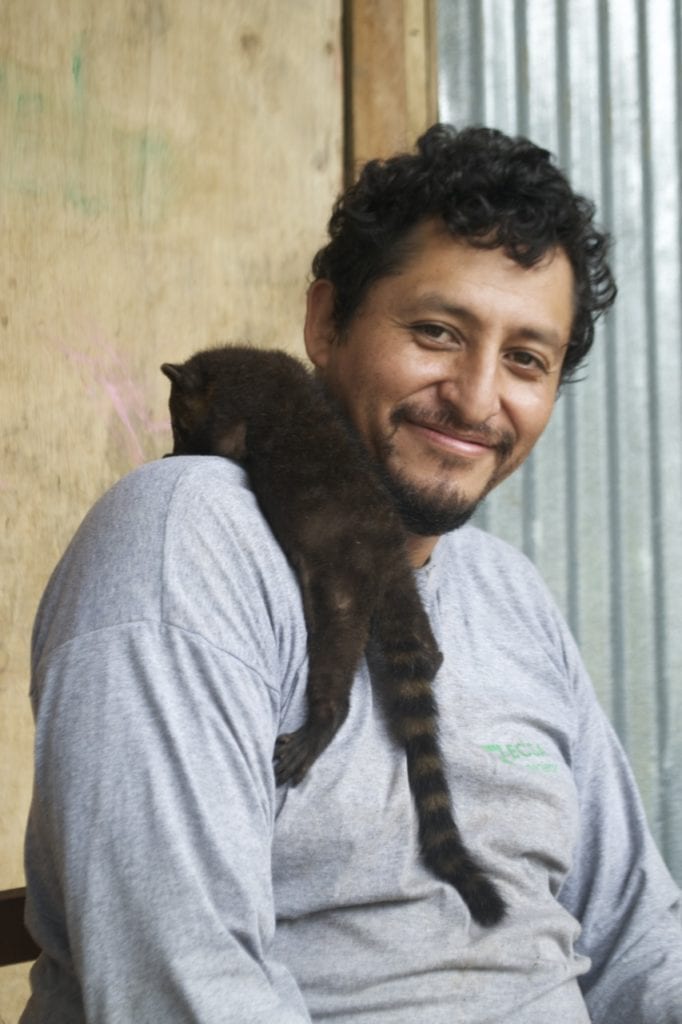
At Marontuari, Roberto Gutierrez plays with a baby coati. (Photo Santiago Castroviejo).

José Padial and his team of researchers are traveling in the remote Vilcabamba mountains of Peru in the pursuit of biodiversity research. He blogs and sends photos as often as possible capturing his expedition along the way.


Filed Under: Blog Tagged With: expedition, research, water

sidebar

About

  • Mission & Commitments
  • Directors Team
  • Museum History

Get Involved

  • Volunteer
  • Membership
  • Carnegie Discoverers
  • Donate
  • Employment
  • Events

Bring a Group

  • Groups of 10 or More
  • Birthday Parties at the Museum
  • Field Trips

Powdermill

  • Powdermill Nature Reserve
  • Powdermill Field Trips
  • Powdermill Staff
  • Research at Powdermill

More Information

  • Image Permission Requests
  • Science Stories
  • Accessibility
  • Shopping Cart
  • Contact
  • Visitor Policies
One of the Four Carnegie Museums | © Carnegie Institute | Privacy Policy | Terms of Use | Accessibility
Rad works here logo