• Skip to primary navigation
  • Skip to main content
  • Skip to primary sidebar

Carnegie Museum of Natural History

One of the Four Carnegie Museums of Pittsburgh

  • Visit
    • Buy Tickets
    • Visitor Information
    • Exhibitions
    • Events
    • Dining at the Museum
    • Celebrate at the Museum
    • Powdermill Nature Reserve
    • Event Venue Rental
    • Gift Cards
  • Learn
    • Field Trips
    • Educator Information
    • Programs at the Museum
    • Bring the Museum to You
    • Guided Programs FAQ
    • Programs Online
    • Climate and Rural Systems Partnership
  • Research
    • Scientific Sections
    • Science Stories
    • Science Videos
    • Senior Science & Research Staff
    • Museum Library
    • Science Seminars
    • Scientific Publications
    • Specimen and Artifact Identification
  • About
    • Mission & Commitments
    • Directors Team
    • Museum History
  • Tickets
  • Give
  • Shop

January 10, 2023 by

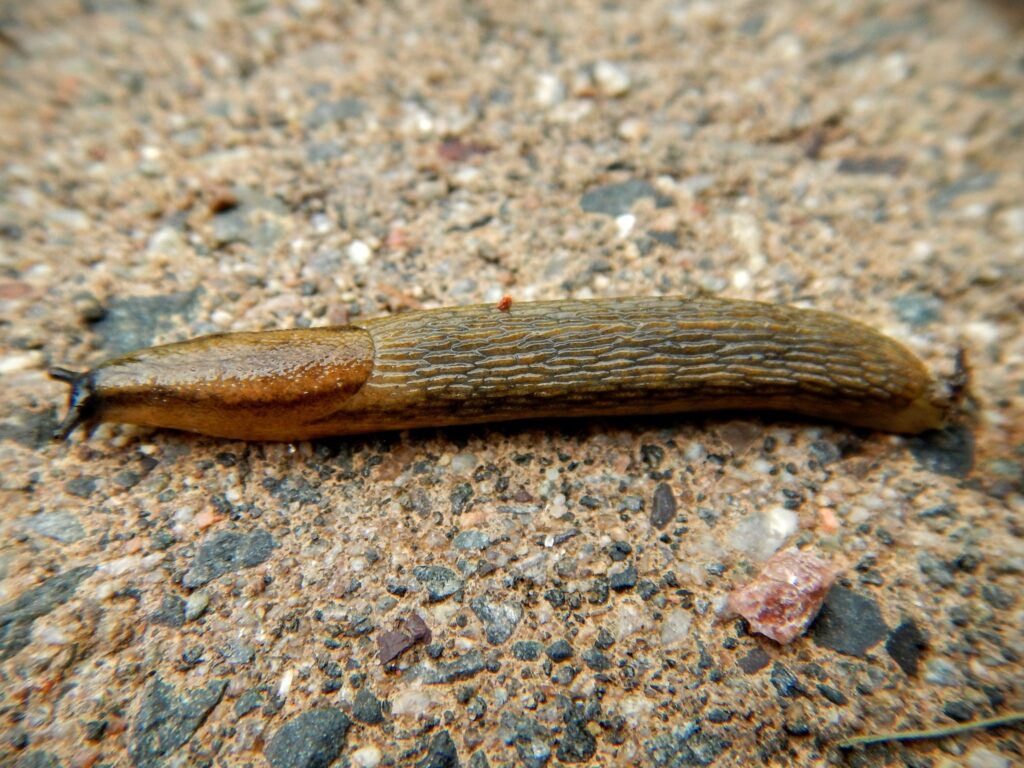
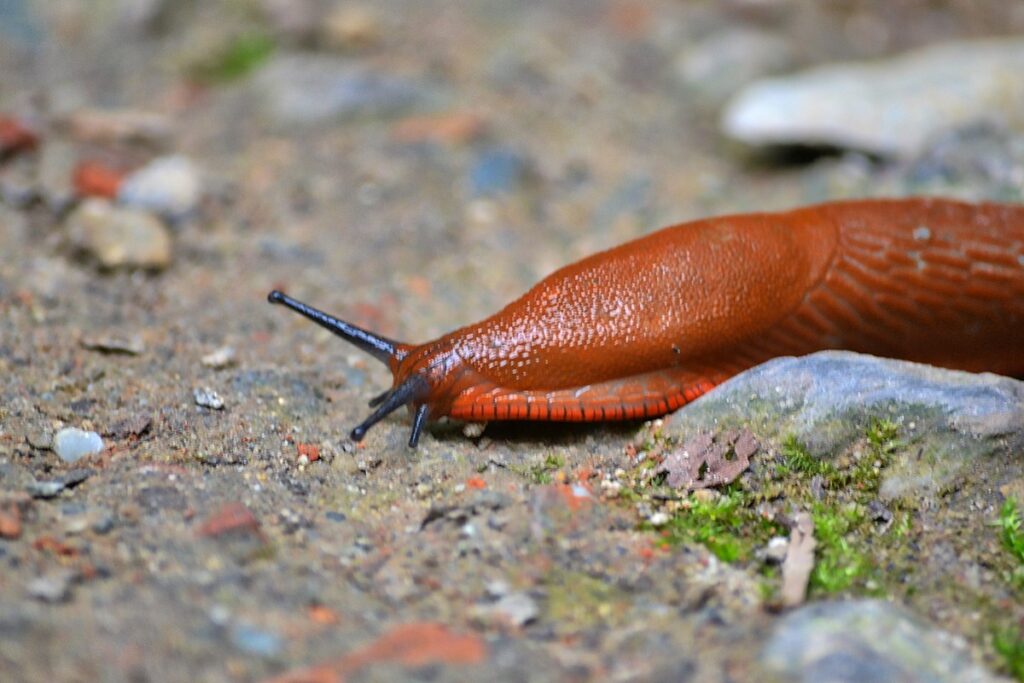
Arion rufus

Close up profile view of head and mantle of chocolate arion, where foot fringe is very defined

Image Usage Information

  • Chindea Ciprian Emil
  • CC BY-NC 4.0 DEED
  • Additional information about this specimen

Family: Arionidae

Common name: Chocolate Arion

Discovery: Linnaeus, 1758

Non-native

Identification

Length: up to 150 mm

Arion rufus is a large Arion very similar in appearance to A. ater, of which it has been considered a subspecies historically. The body color of A. rufus ranges from orange to black. Its foot fringe is always somewhat orange and is crossed by dark transverse lines (Noble, 1992). The skin tubercles are large and the pneumostome prominent. The sticky body mucus may be clear or yellow. Its sole is gray.

Juveniles occasionally have longitudinal bands similar to those of other species of Arion. (Quick, 1960; Kerney & Cameron, 1979). Internally, the atrial ligula is much larger, wider, and less symmetrical than that of A. ater (Noble, 1992).

When disturbed by a potential enemy, A. rufus may contract into a hemisphere and rock from side to side (Quick, 1960).

Ecology

The ecology of A. ater is shared by A. rufus. These slugs occupy lowland forests, hedges, gardens, roadsides, wastelands, and bogs, up to 1800 m in altitude (Quick, 1960; Kerney & Cameron, 1979). They mainly shelter on living plants, with some occupying bare soil, dead plants, or fallen logs (Cameron, 1978). They are omnivores that feed on dead and live plants, fungus, dead animals, and feces (Graham, 1955; Chatfield, 1976). They can be significant plant pests (Grimm et al., 2009).

Reproduction occurs throughout the year (Grimm et al., 2009), and slugs lay up to 150 eggs per clutch (Quick 1960). Individuals may live one or two years (Grimm et al., 2009).

Taxonomy

The original published name was Limax rufus.

Distribution

Arion rufus is a European species that was introduced to the western US, a few locations in the eastern US, and southwest Canada. Museum locality records for the northeast US include Delaware (New Castle Co.), Maine (Somerset Co.), and Pennsylvania (Butler, Centre, and Washington Counties). In North America, all slugs in the Arion ater/rufus group were considered A. ater until recently (Grimm et al. 2009), so earlier records should be subject to confirmation.

Conservation

NatureServe Global Rank: G4, G5, Apparently secure.

Author: Megan Paustian
Publication date: 6/2017

January 10, 2023 by

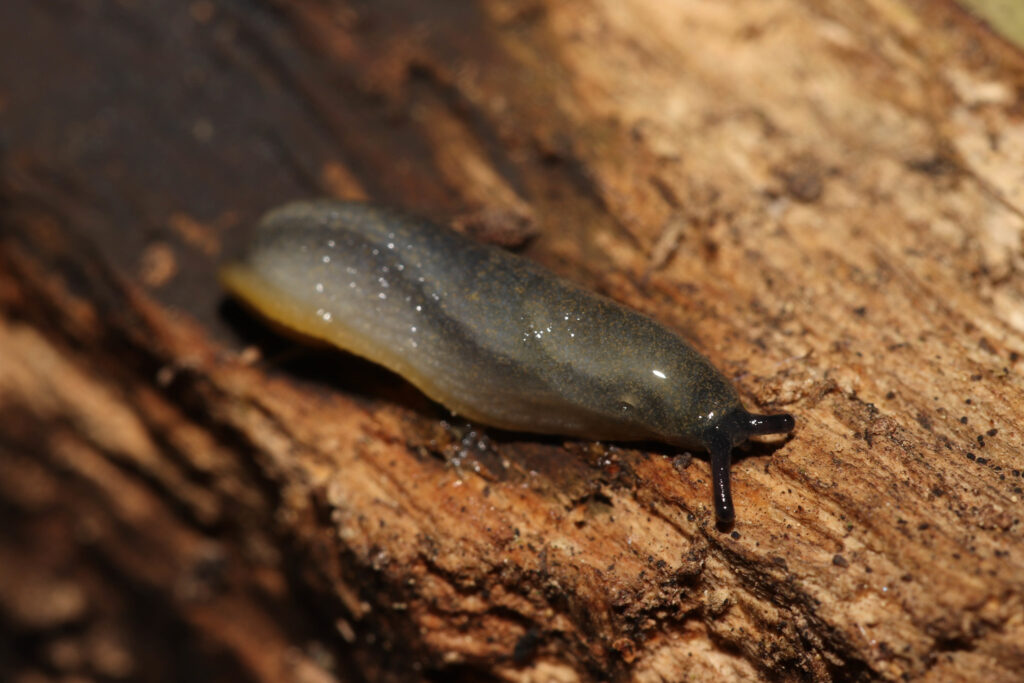
Arion intermedius

superior view of hedgehog arion highlighting contracted, pointed-looking tubercles

Image Usage Information

  • Rob C. H. M. Oudejans
  • CC BY-NC 4.0 DEED
  • Additional information about this specimen

Family: Arionidae

Common name: Hedgehog Arion

Discovery: Normand, 1852

Introduced species

Identification

Length: ≈20 mm

This small light-colored slug is called a hedgehog because when it contracts its dorsal tubercles look as if they are pointed, though they are soft and “jelly-like” (Pilsbry, 1948; Kerney & Cameron, 1979). It is also distinct for its lemon-yellow sole and slime. It may be gray to yellow or white dorsally, and may be banded on each side. There may be dark dots upon the anterior foot fringe. As others of its family, it has a mantle that covers the forward part of its upper surface.

Ecology

Arion intermedius is introduced from Europe, and in eastern North America is scattered in developed habitats such as yards and farms, but may also be found in regenerated woods and wetlands. It favors somewhat more acid habitats than its congeners (Kerney & Cameron, 1979). In the Northeast it appears to reproduce through the summer and fall, and overwinters as eggs or immature (Chichester & Getz, 1973). One to two dozen eggs are deposited in litter and under logs, and hatch in three weeks.

Taxonomy

Synonyms for Arion intermedius are A. minimus and Limax intermedius.

Distribution

In North America, Arion intermedius is reported from widely-scattered locations including eastern Canada, New York, Idaho, and Hawaii (NatureServe, 2013). In Virginia it has been found in two counties in the northeast and northwest, but is probably underreported.

Conservation

NatureServe Global Rank: G5

Author: Ken Hotopp
Publication date: 1/2013

January 10, 2023 by

Arion hortensis

superior view of garden arion, highlighting tubercules on keel

Image Usage Information

  • Karen Yukich
  • CC BY-NC 4.0 DEED
  • Additional information about this specimen
profile view of garden arion, with view of yellowish foot below dark band of body

Image Usage Information

  • Stephen Kolomyjec
  • CC BY-NC 4.0 DEED
  • Additional information about this specimen

Family: Arionidae

Common name: Garden Arion

Discovery: Férussac, 1819

Non-native

Identification

Length: 25-40 mm

Arion hortensis is gray or brown to black above, with a poorly-defined dark band on each side (Kerney & Cameron, 1979). It has a yellow, orange, or reddish sole, and a yellow or orange mucus color (which colors the sole). It lacks the small dark vertical stripes often seen on the foot fringe of Arion subfuscus, and is smaller when adult. As others of its family, it has a mantle that covers the forward part of its upper surface. This slug is not a single species, but represents three similar-looking animals.

Ecology

Arion hortensis is introduced from Europe, and in eastern North America is widespread in developed environments such as yards, nurseries, and farmland, where it can be a pest. In the Northeast, adult animals appear in spring and fall, suggesting two cohorts each year (Chichester & Getz, 1973). Up to three dozen eggs are deposited in leaf litter and hatch in four weeks.

Taxonomy

Arion hortensis as reported in the past (and often today) is actually complex of three cryptic species – A. hortensis, A. distinctus Mabille, 1868, and A. owneii Davies, 1979 (Davies, 1979). The latter two species are not reported from Virginia, as yet.

There are no synonyms for Arion hortensis.

Distribution

In eastern North America, Arion hortensis is distributed from Canada to the upper Midwest and south to the Mid-Atlantic states (NatureServe, 2013). It is also found on the West Coast and interior West. In Virginia this animal is reported from some western counties.

Conservation

NatureServe Global Rank: G5

Author: Ken Hotopp
Publication date: 1/2013

January 10, 2023 by

Arion fasciatus

profile view of orange-banded arion where left side of body, including dark longitudinal bands, is visible

Image Usage Information

  • Joe Walewski
  • CC BY-NC 4.0 DEED
  • Additional information about this specimen

Family: Arionidae

Common name: Orange-banded Arion

Discovery: Nilsson, 1823

Non-native

Identification

Length: 40-50 mm

Arion fasciatus has a gray dorsum with paler sides that become white toward the foot fringe. Dark longitudinal bands, underlined by yellow stripes, are on the sides of its body and mantle. There is a keel formed by larger tubercles along its dorsal mid-line. Its sole is an opaque gray-white, and its body mucus is clear. The body is bell-shaped in cross-section (Quick, 1960; Kerney & Cameron, 1979).

A. circumscriptus and A. silvaticus are similar to A. fasciatus, but they are smaller, do not have yellow stripes, and have a wider oviduct internally. (However, note that coloration is an unreliable character because it is affected by diet (Jordaens et al., 2001).) Additional reproductive characters also distinguish the three species (see Grimm et al. 2009). A. subfuscus are similar to A. fasciatus but have orange-yellow body mucus and a different internal anatomy (Kerney & Cameron, 1979).

Ecology

The slug occupies habitat such as gardens, parks, wastelands, fields, cemeteries, the environs of buildings, and garbage dumps (Kerney & Cameron, 1979; Wiktor, 1996). It does not spread far into undisturbed habitat (Chichester & Getz, 1969). Shelter includes leaf litter, moss, and the underside of logs and rocks (Quick 1960). It can be a pest species of croplands and gardens (Grimm et al., 2009). In the late spring to fall, slugs lay clutches of up to 30 eggs (Quick, 1960).

Taxonomy

Synonyms are Limax fasciatus and Arion nilssoni.

Distribution

This European species has been introduced to much of the northeast and midwestern US and to southeast Canada, with additional records in the west and California. In the northeast US, A. fasciatus’ range spans from Maine to Maryland and West Virginia. (Note that museum records may incorrectly classify A. silvaticus and A. circumscriptus under A. fasciatus [Grimm et al., 2009].)

Conservation

NatureServe Global Rank: G5, Apparently secure.

Author: Megan Paustian
Publication date: 6/2017

January 10, 2023 by

Arion distinctus

profile view of darkface arion with visible, dark latitudinal stripes
superior view of darkface arion where latidudinal stripes are visible

Image Usage Information

  • mgreilhuber
  • CC BY-NC 4.0 DEED
  • Additional information about this specimen

Family: Arionidae

Common name: Darkface Arion

Discovery: Mabille, 1868

Non-native

Identification

Length: up to 35 mm

Arion distinctus has a black-blue body and blue-black to grey tentacles and head.  Latitudinal stripes are set fairly low on the body, are clearly delimited on the top edge and blurred on the bottom edge, are convergent at their ends, and sometimes dip or break at the pneumostome (Davies, 1979; Wiktor, 1996). The sides below the bands are a similar color to the top (McDonnell et al., 2009).

Arion hortensis, A. distinctus, and A. owenii are a species complex that was originally recognized and divided by Davies (1977, 1979). A distinctus has blue-black to gray tentacles and head, rather than the reddish ones of A. hortensis, and the bands on its mantle are lower and convergent rather than divergent. Internal differences (spermatophore and genitalic features) are described in Davies (1977) and in Backeljau & Van Beeck (1986).

Ecology

The species tends to be synanthropic (Wiktor, 1996), occupying roadsides, gardens, wastelands, and floodplains. It takes shelter in wet places under living and dead plants (Grimm et al., 2009). It is a pest of root crops and gardens (South, 1992).

In the UK, individuals reach maturity in the fall and mainly mate in the spring and summer. They lay 50-70 eggs per cluster (Davies, 1979).

Taxonomy

References to A. hortensis and A. distinctus prior to 1978, when Davies revised the species complex (1977, 1979), should be regarded with caution (Wiktor, 1996).

Distribution

This European species was introduced to the west coast and mid-Atlantic US and to southwest and southeast Canada. It is recorded from Delaware (Newcastle Co.), Pennsylvania (Allegheny and Centre Counties), and West Virginia (Kanawha and Mercer Counties). 

Conservation

NatureServe Global Rank: G5, Apparently secure.

Author: Megan Paustian
Publication date: 6/2017

January 10, 2023 by

Ambigolimax valentianus

Image Usage Information

  • Guilherme Ramos
  • CC BY-NC 4.0 DEED
  • Additional information about this specimen

Image Usage Information

  • grinnin
  • CC BY-NC 4.0 DEED
  • Additional information about this specimen

Family: Limacidae

Common name: Threeband Gardenslug, Valencia Slug

Discovery: Férussac, 1821

Non-native

Identification

Length: 60 mm 

Ambigolimax valentianus is yellow-gray with a dark head. A dark longitudinal band is on either side of its body and mantle, and there is a light stripe down its mid-dorsum. The bands and mid-dorsal lines lie near to each other on the tail. The dark stripes form a “lyre” shape on the mantle, with additional markings possibly present. The tail has a short keel toward its point, and the sole is 3-part and pale. The slug’s body is covered in clear mucus (Quick, 1960; Wiktor et al., 2000).

This slug is very similar to Lehmannia marginata, but A. valentianus has a lighter yellowish body, and the dark bands are closer together. Internally, the penial flagellum is longer and not pointed, and the bursa copulatrix is more ovate rather than pear-shaped (Quick, 1960).

Ecology

A. valentianus is a synanthropic slug that has been introduced to disturbed habitats worldwide, including urban landscapes, gardens, and greenhouses (Chichester & Getz, 1969). Individuals take shelter in compost heaps, under fallen logs, and stones in moist, shady locations with plenty of vegetation (Herbert, 1997; Wiktor et al., 2000). They may huddle together in groups when at rest (South, 1992).

The species feeds on plants and on algae growing on rocks and trees.  They may be pests of flowers grown in greenhouses (South, 1992).    

Taxonomy

Synonyms include Limax valentianus, Lehmannia valentiana, Limax poirieri, and Deroceras (Agriolimax) bilineatus.

Distribution

This Mediterranean slug may be found in the west coast, Midwest, and mid-Atlantic US states and in southwest and south-central Canada. In the northeast US, this species has been found in urban areas spanning Massachusetts to Virginia. (Note that older North American literature often incorrectly identified A. valentianus as Lehmannia marginata (Grimm et al., 2009).)

Conservation

NatureServe Global Rank: G5, Apparently secure.

  • « Go to Previous Page
  • Page 1
  • Interim pages omitted …
  • Page 43
  • Page 44
  • Page 45
  • Page 46
  • Page 47
  • Interim pages omitted …
  • Page 53
  • Go to Next Page »

sidebar

About

  • Mission & Commitments
  • Directors Team
  • Museum History

Get Involved

  • Volunteer
  • Membership
  • Carnegie Discoverers
  • Donate
  • Employment
  • Events

Bring a Group

  • Groups of 10 or More
  • Birthday Parties at the Museum
  • Field Trips

Powdermill

  • Powdermill Nature Reserve
  • Powdermill Field Trips
  • Powdermill Staff
  • Research at Powdermill

More Information

  • Image Permission Requests
  • Science Stories
  • Accessibility
  • Shopping Cart
  • Contact
  • Visitor Policies
One of the Four Carnegie Museums | © Carnegie Institute | Privacy Policy | Terms of Use | Accessibility
Rad works here logo