• Skip to primary navigation
  • Skip to main content
  • Skip to primary sidebar

Carnegie Museum of Natural History

One of the Four Carnegie Museums of Pittsburgh

  • Visit
    • Buy Tickets
    • Visitor Information
    • Exhibitions
    • Events
    • Dining at the Museum
    • Celebrate at the Museum
    • Powdermill Nature Reserve
    • Event Venue Rental
  • Learn
    • Field Trips
    • Educator Information
    • Programs at the Museum
    • Bring the Museum to You
    • Guided Programs FAQ
    • Programs Online
    • Climate and Rural Systems Partnership
  • Research
    • Scientific Sections
    • Science Stories
    • Science Videos
    • Senior Science & Research Staff
    • Museum Library
    • Science Seminars
    • Scientific Publications
    • Specimen and Artifact Identification
  • About
    • Mission & Commitments
    • Directors Team
    • Museum History
  • Tickets
  • Give
  • Shop

Blogs about the Anthropocene

Scientists use fossils and other traces to understand how the planet changed over time. In the past these changes were caused by forces like volcanic eruptions and shifts in oceans currents. Now there’s a new force of nature shaping the planet: humans. The effects on air, land, and water are significant enough that scientists propose we are a new geological time – the Anthropocene – or age of Humans.

These blogs are about the many facets of human impact on the Earth, documenting this new age.

December 13, 2023 by Erin Southerland

A Three Rivers Waterkeeper Biocube

As frontline defenders for water protection in Pittsburgh and Southwestern Pennsylvania, staff of Three Rivers Waterkeeper patrol and monitor for pollution in our waterways by using high quality monitoring and sampling technologies to collect water samples. Our work contributes to the enormous efforts by watershed organizations to monitor water quality data in our region.
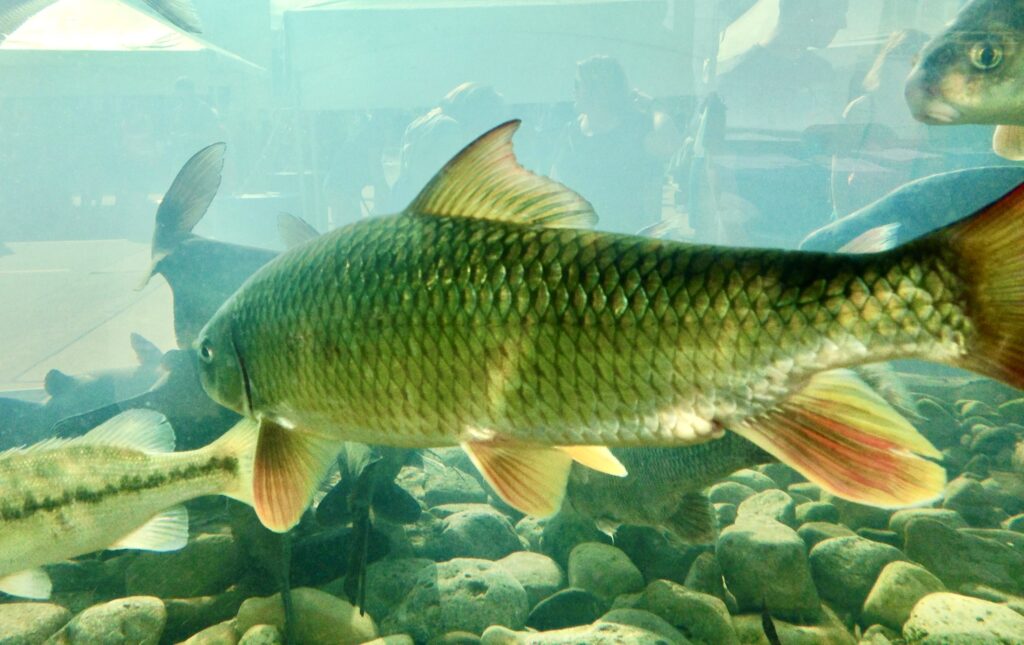
A river redhorse might be a finned visitor to a temporarily submerged Three Rivers Waterkeeper biocube. The presence of this species, pictured here in a display tank setup by the Ohio River Valley Water Sanitation Commission, is evidence of a healthy river system.

Wildlife observations occur so regularly in our work that the thought experiment about where best to place and monitor a biocube creates a dilemma. Over the modern history of our region, mass industrialization polluted our waterways, and our rivers became devoid of aquatic life. Fortunately, with the implementation of the 1972 Clean Water Act and subsequent clean water laws at the local, state, and federal levels, community organizations have been able to hold polluters accountable. As a result, we have seen wildlife come back to our rivers – including our national bird, the Bald Eagle. On or along the Allegheny River alone, the US Forest Service has documented rich species diversity, including over 50 mammals, 200 birds, 25 amphibians, 20 reptiles, 80 fishes, and 25 freshwater mussels. 
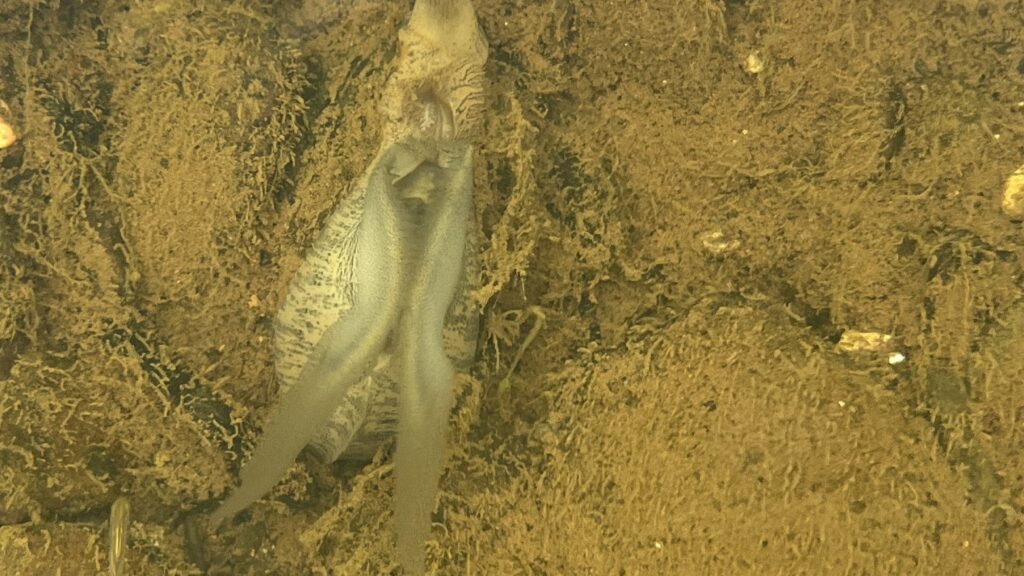
Visible in this picture of the freshwater mussel known as the plain pocketbook (Lampsilis cardium) is the fleshy lure the shelled creature relies upon to attract fish close enough to be showered with a cloud of tiny parasitic larvae. The larvae attach to fish gills for several weeks before dropping off as fully formed miniature mussels.

We settled on a type of location rather than a specific one, the deltas formed by local tributary streams as the enter one of the three rivers referenced in our organization’s name. During the cycle of a full year on one of these patches of water-shaped land, a biocube might be fully submerged during some weeks, and shaded by riparian vegetation during other times. A list of likely plants and animals found temporarily within the cube’s bounds might very well include:
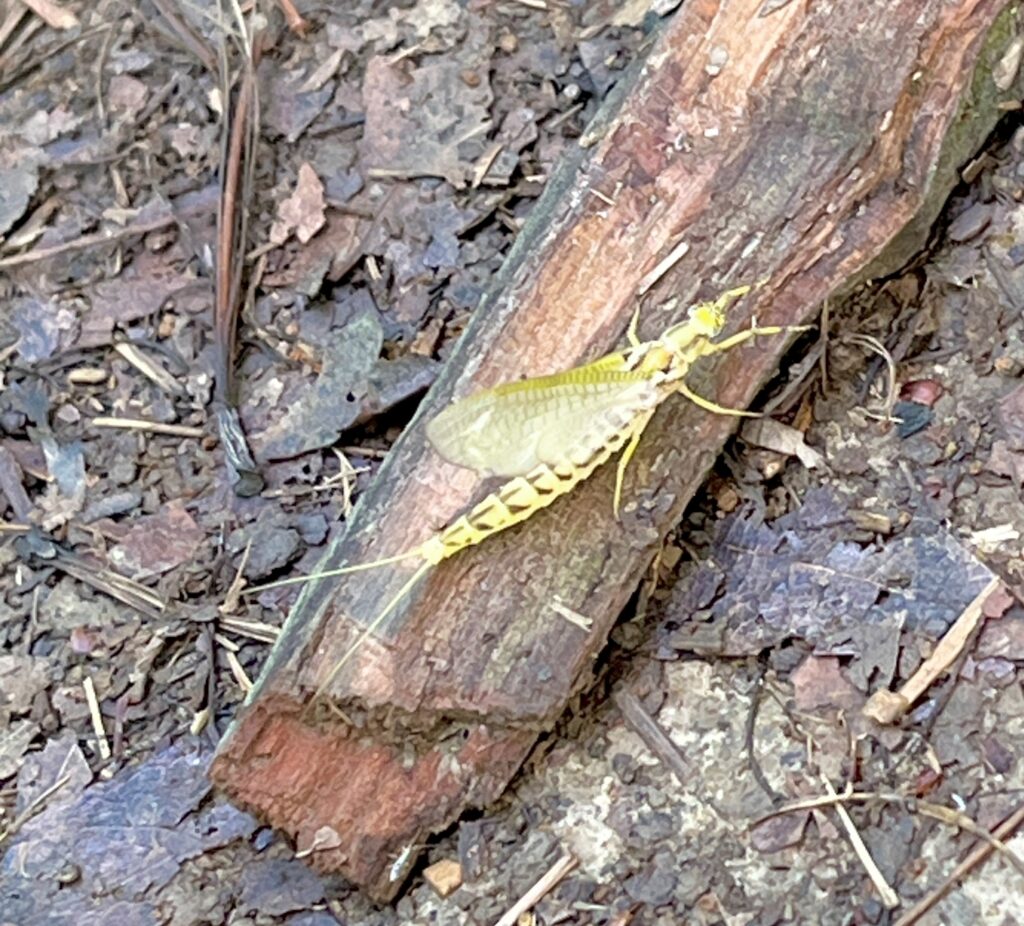
This giant mayfly (Hexagenia limbate) resting on a section of Allegheny River shoreline will have a brief breeding life of just a few days. Much of its earlier life as an aquatic nymph was spent burrowing in river bottom mud.
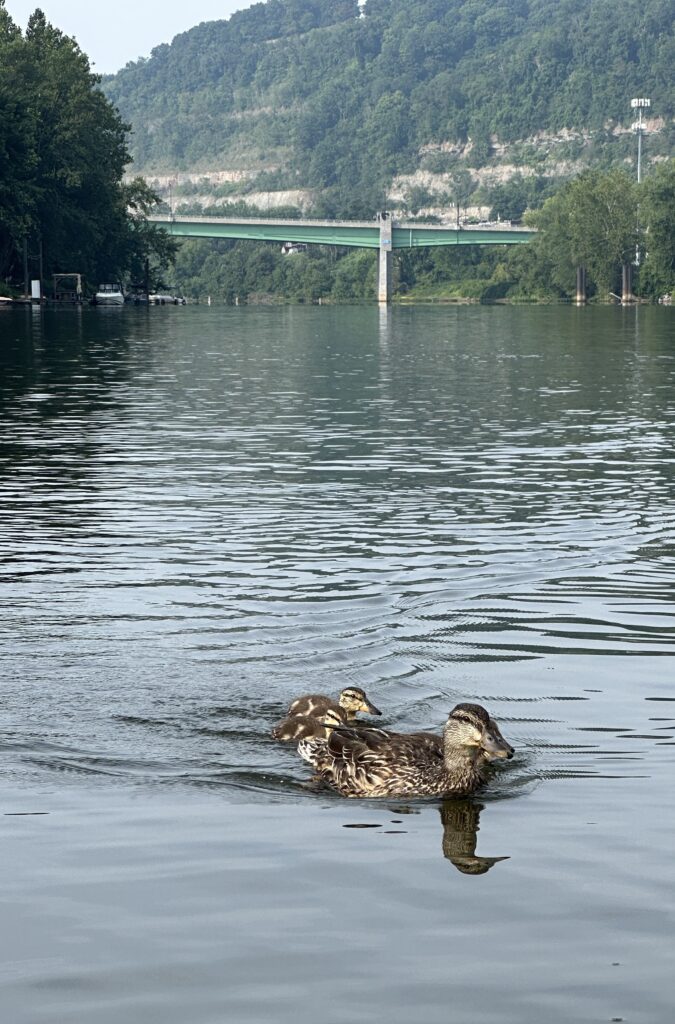
A Mallard hen and ducklings here represent the range of birds, including Great Blue Herons, Bald Eagles, Spotted Sandpipers, and of course other waterfowl species, who might investigate the space within a well-placed stream delta biocube during their routine feeding forays.
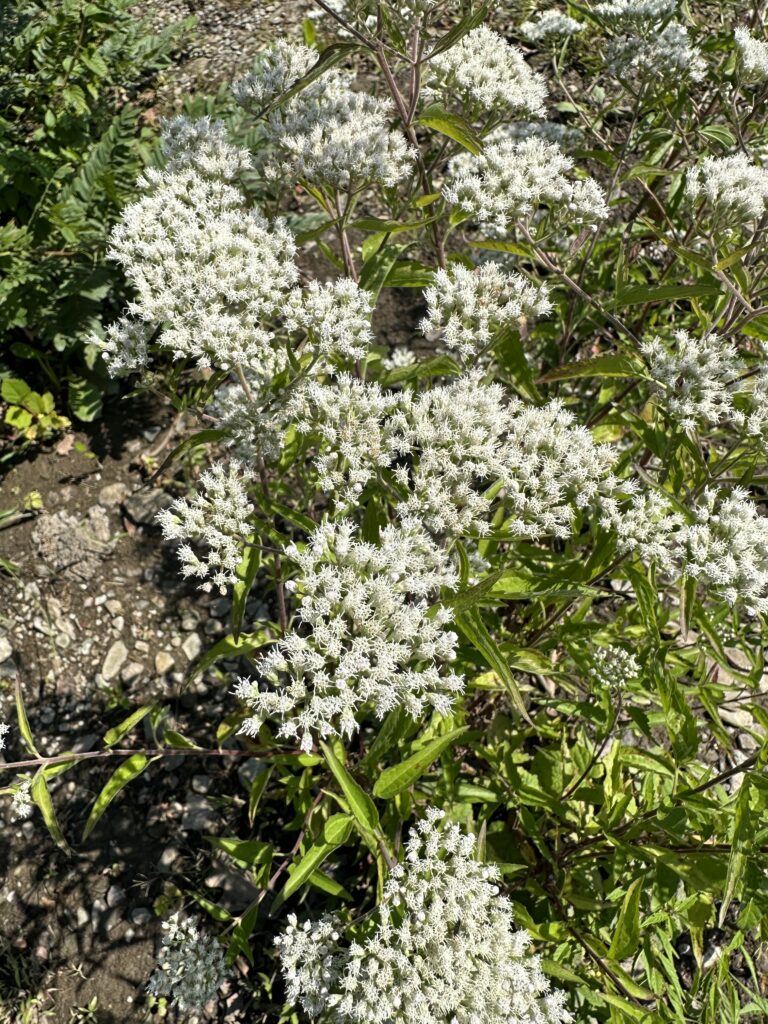
Late boneset (Eupatorium serotinum) is a native Pennsylvania plant that loves growing close to bodies of water in wet soil.  The plant, pictured here on a stream delta along the Ohio River near Conway, blooms late in the summer and into the fall, providing pollen and nectar at a time when there are few options for species that need it.
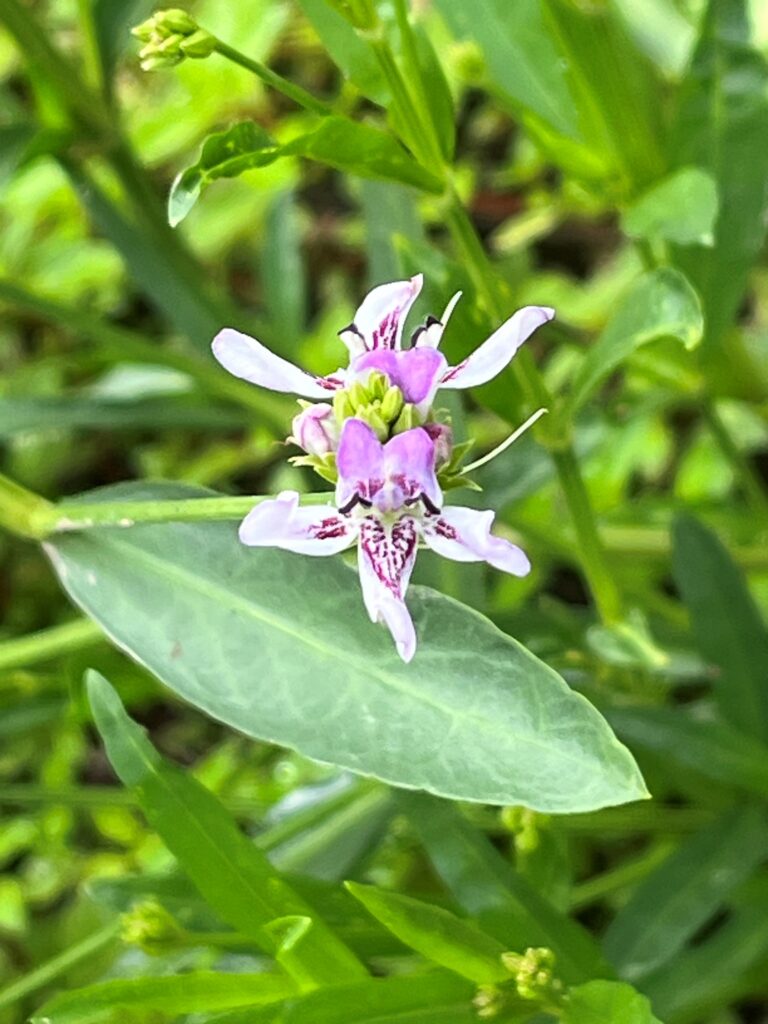
The temporary submergence of stream deltas by rising river waters does not hinder Water Willow (Justicia americanus). The early-summer blooming plant is well adapted to fluctuating water levels, and the network of its root system helps to minimize riverbank erosion.

Related Content

A Tree Pittsburgh Biocube

Life in One Cubic Foot

Naturally Pittsburgh: Big Rivers and Steep Wooded Slopes

Carnegie Museum of Natural History Blog Citation Information

Blog author: Three Rivers Waterkeeper; Carnegie Museum of Natural History
Publication date: December 13, 2023

Share this post!

  • Share on Twitter Share on Twitter
  • Share on Facebook Share on Facebook
  • Share on Pinterest Share on Pinterest
  • Share on LinkedIn Share on LinkedIn
  • Share on Reddit Share on Reddit
  • Share via Email Share via Email

Filed Under: Blog Tagged With: Anthropocene, Education, Exhibits, life in one cubic foot, Pittsburgh

September 7, 2023 by Erin Southerland

We Get Questions: Climate Change, Hope, and Action

by Patrick McShea
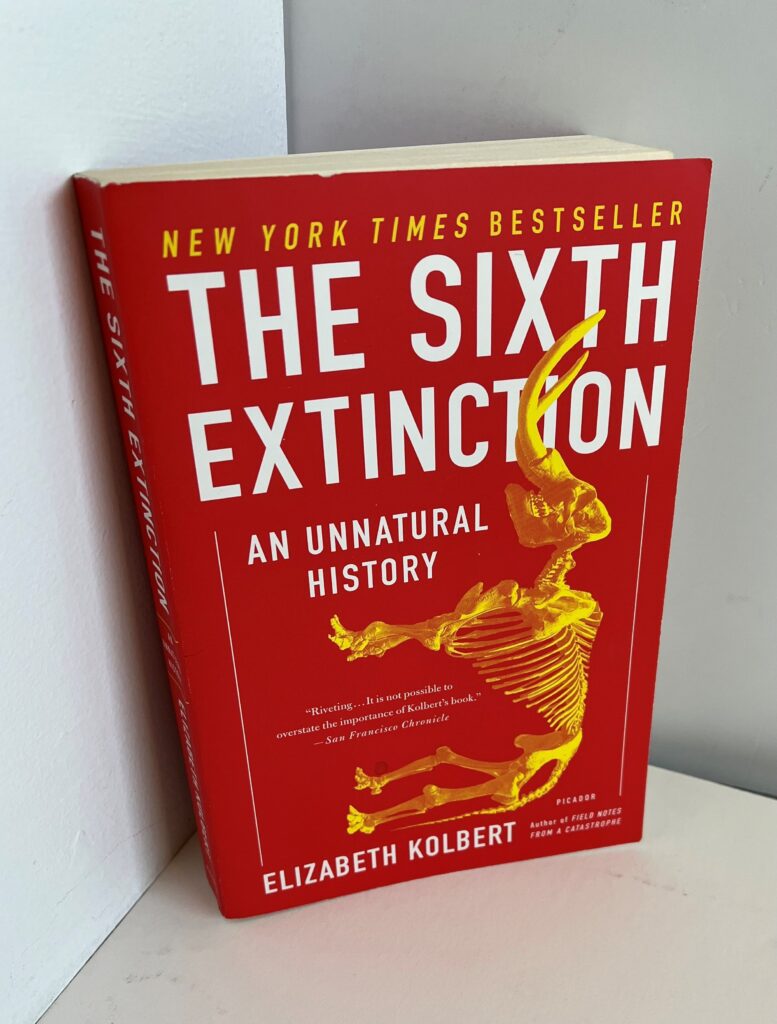
a paperback copy of the book "The Sixth Extinction"

“Tell me what gives you hope?” The student’s question during a high school environmental science class in March left me scrambling to deliver a clear and honest answer. “Tell me,” she added for emphasis, “because I really want to know.”

Ten students had just listened to me explain the cascade of negative effects associated with the increasing acidification of ocean waters. The frightful phenomenon is on a scale proportional to and correlated with the climate altering changes in Earth’s atmosphere. My presentation was a summary of a single chapter in The Sixth Extinction, science writer Elizabeth Kolbert’s landmark 2014 book exploring warning signs of a coming human-induced extinction event as destructive as the five previous episodes documented in the fossil record.

In “The Sea Around Us,” a chapter whose title pays homage Rachel Carson’s best-selling 1951 book by that name, Kolbert frames her ocean report with an explanation of a vital large-scale chemical interaction:

Ocean covers seventy percent of the earth’s surface, and everywhere that water and air come into contact there’s an exchange. Gases from the atmosphere get absorbed by the ocean and gases dissolved in the ocean are released into the atmosphere. When the two are in equilibrium, roughly the same quantities are being dissolved as are being released. Change the atmosphere’s composition, as we have done, and the exchange becomes lopsided: more carbon dioxide enters the water than comes back out. 

Much of the chapter consists of Kolbert’s account of her visit with scientists studying marine life in a bay of the Tyrrhenian Sea where water chemistry has long been impacted by carbon dioxide-rich discharges from submerged volcanic vents. The narrative helped the students understand how researchers use models to make predictions, and that ecological models are not always computer simulations. In a summary of acidification impacts in the study area, Kolbert notes limpet shells bearing “deep lesions through which their owner’s putty-colored bodies can be seen.” Perhaps my sharing of this type of graphic detail spurred the student’s urgent question about hope.

My answer, which lacked quotable coherence, involved trees. Speaking directly to the questioning student, but addressing the entire class, I explained how for more than a decade my New Year’s resolution has been simply to learn more about trees, and that months earlier a New York Times profile of renowned medical biochemist and botanist Diana Beresford-Kroeger had been particularly instructive. Her endorsement of global forest restoration to mitigate the effects of climate change is clear, and some of her research has identified biochemical connections between forests and the sea.

Although I’m not certain my answer alleviated the student’s concerns, I’ll lead with trees if the question of hope comes up again. However, because of a subsequent encounter with another student’s direct question, my answer will also include a human element. 

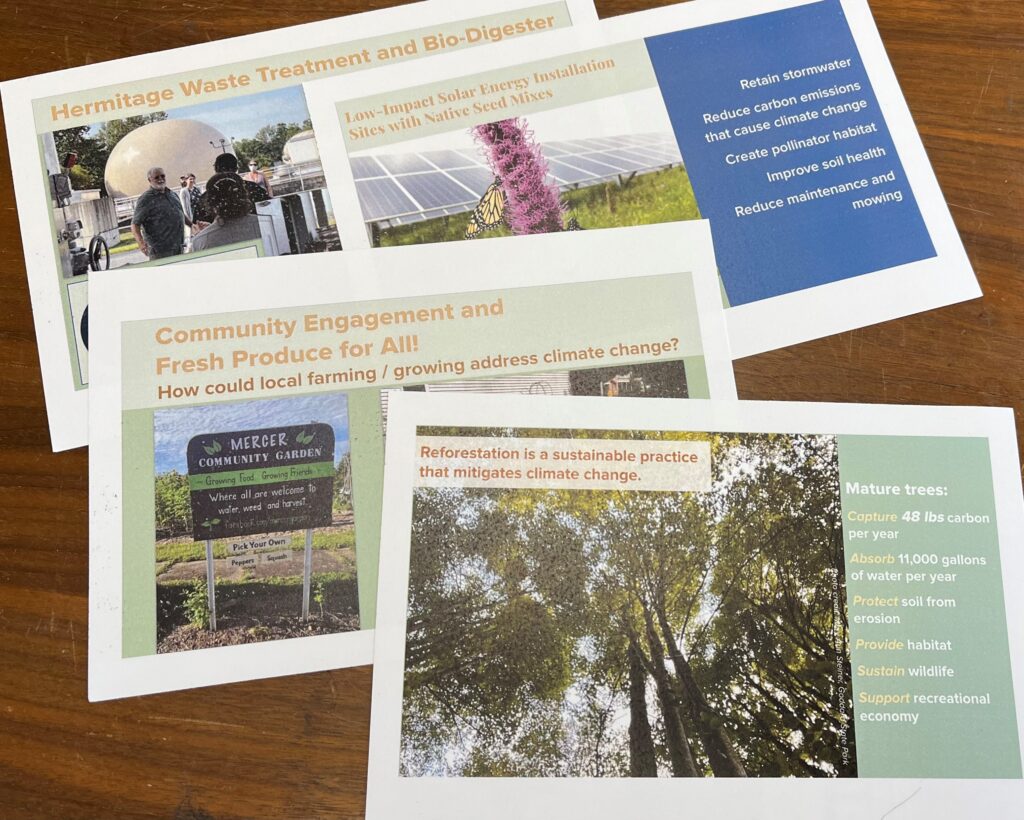
CRSP Project Climate Cards are designed as discussion prompts.

In early April, in collaboration with staff of the Mercer County Conservation District, I was one of two museum educators who spent a morning at that organization’s Munnell Run Farm headquarters assisting teams of local high school students in building climate change background knowledge as preparation for competition in the state-wide Envirothon. As encouragement for full participation in discussions, we relied upon colorful issues-focused information cards that were co-developed with partner organizations during the Climate and Rural Systems Partnership project. The climate cards were effective tools, but in one session a student with deep interest in climate change issues used a direct question to announce her enthusiasm for short cutting the process: “What should I do? I’m sold on all this, so tell me, as a high school student, right now, this month, this year, what should I be doing?”

I advised her to become as well informed as possible about climate change issues so she could better recognize solutions and mitigation efforts, and more effectively represent herself, her school, her family, and her community at relevant hearings or other public meetings. What I couldn’t articulate was that her engaged stance was something I could later point to as a sign of hope. 

Carnegie Museum of Pittsburgh offers free membership for teens. For additional information please visit the teen membership info page.

Patrick McShea is an educator at Carnegie Museum of Natural History.

Related Content

Hummingbird Lessons

Wolverine: Status Check for a Tournament Champion

Building Birding Skills

Carnegie Museum of Natural History Blog Citation Information

Blog author: McShea, Patrick
Publication date: September 7, 2023

Share this post!

  • Share on Twitter Share on Twitter
  • Share on Facebook Share on Facebook
  • Share on Pinterest Share on Pinterest
  • Share on LinkedIn Share on LinkedIn
  • Share on Reddit Share on Reddit
  • Share via Email Share via Email

Filed Under: Blog Tagged With: Anthropocene, CRSP, Pat McShea

September 6, 2023 by Erin Southerland

Do No Harm: Dealing with Spotted Lanternflies

by Jonathan Rice

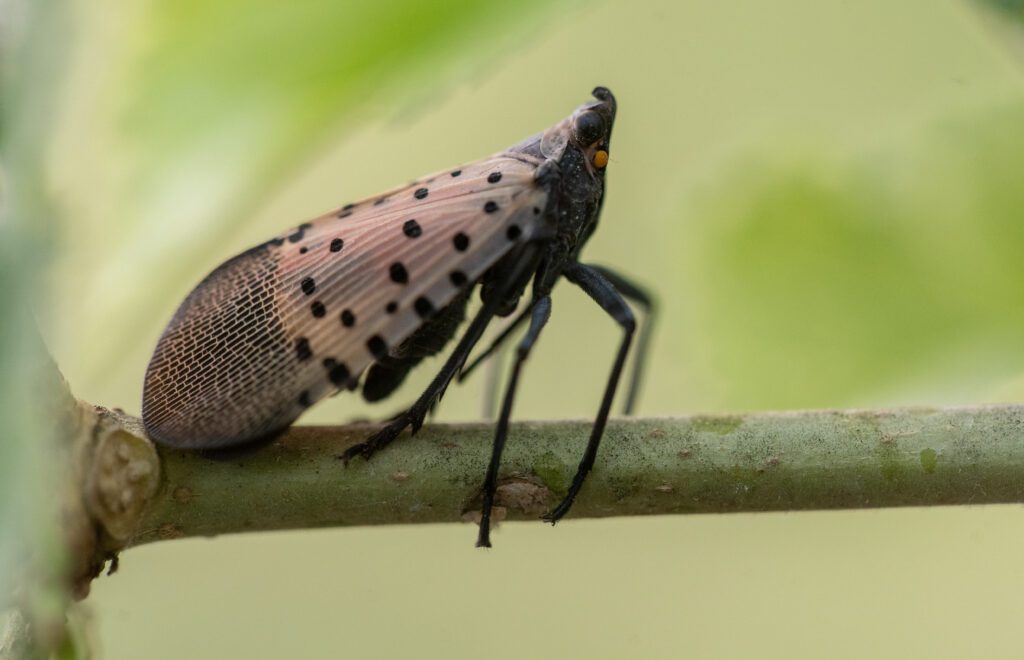
Spotted lanternflies are a “true bug,” cousins of the cicada and stink bug. Unlike our native bug species, these invasive bugs feed on a very wide variety of plants and don’t have enough native predators or parasites to keep their population in check. Their favorite food is tree-of-heaven (Ailanthus altissima), which is already widespread in our area. This means their population is exploding, and Pittsburghers are looking for ways to get rid of them. 

adult spotted lanternfly

There’s no special pesticide that targets the lanternflies. However, we can outsmart them. 

Spotted lanternflies display a unique behavior of climbing up tree trunks (or any other vertical surface), falling to the ground, and climbing up again. This is repeated many times throughout each stage of their life cycle.  By using this behavior to our advantage, we can trap spotted lanternflies. The best currently used traps include circle traps and oviposition traps, which corral the lanternflies so they can be contained and destroyed. You can make circle traps as a DIY project, or you can order them premade. 

Sticky traps: to stick or not to stick?

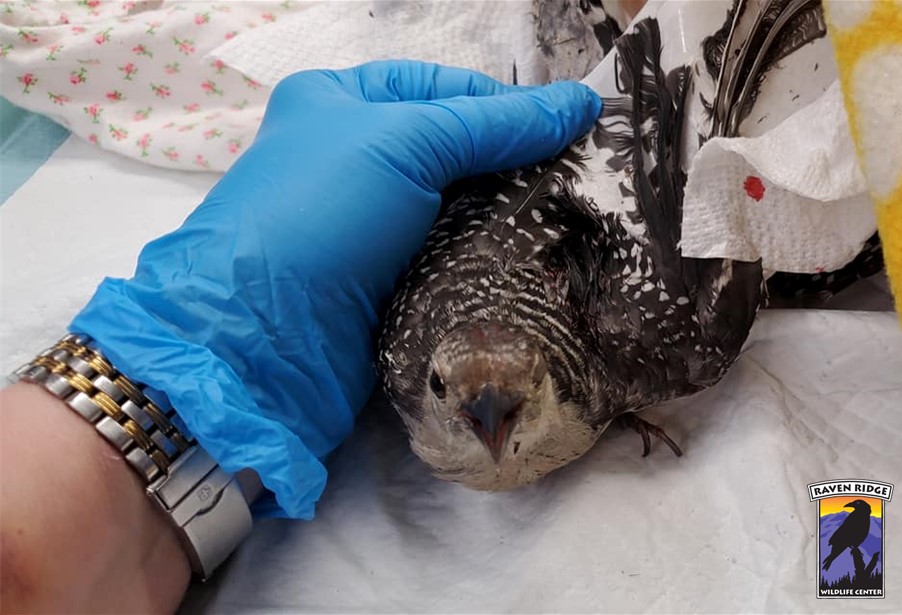
Although sticky traps (tape, sticky sheets, and glue traps) have been suggested in the past for spotted lanternfly control and are currently used by some landowners, these are extremely dangerous for birds. Sticky traps can kill many species of local birds that forage on tree trunks, including woodpeckers, nuthatches, and wrens. After the birds are stuck to the trap it becomes impossible for them to free themselves and they will die a slow and miserable death.

Woodpecker being treated for injuries from a sticky trap. Credit: Raven Ridge Wildlife Center.

If you find a live bird or mammal stuck to a lanternfly sticky trap, do not try to remove the bird yourself. Cover any remaining sticky areas on the trap with plastic wrap to reduce double sticking the bird (or yourself), remove the entire trap from the tree, and take it to the nearest wildlife rehabilitation center. If you must use a sticky trap, ensure it is covered with a wire mesh (hardware cloth or similar) to prevent anything larger than a lanternfly from touching it. Check sticky traps at least once a day to ensure no birds or mammals have been caught. 

Jonathan Rice is Urban Bird Conservation Coordinator at Powdermill Nature Reserve, Carnegie Museum of Natural History’s environmental research center.

Related Stories

Tracking Migratory Flight in the Northeast

A Summer Internship at Powdermill

Can’t Choose Just One: Asking an Entomologist to Name Their Favorite Native Species

Carnegie Museum of Natural History Blog Citation Information

Blog author: Rice, Jonathan
Publication date: September 6, 2023

Share this post!

  • Share on Twitter Share on Twitter
  • Share on Facebook Share on Facebook
  • Share on Pinterest Share on Pinterest
  • Share on LinkedIn Share on LinkedIn
  • Share on Reddit Share on Reddit
  • Share via Email Share via Email

Filed Under: Blog Tagged With: Anthropocene, Birds, Invertebrate Zoology, Jon Rice, liocf, Powdermill Nature Reserve, Science News

June 7, 2023 by Noelle Swart

Carnegie Museum of Natural History Presents Chirp, Chitter, Caw: Surrounded by Birdsong

This summer, Carnegie Museum of Natural History invites visitors of all ages to experience the audio exhibition Chirp, Chitter, Caw: Surrounded by Birdsong, created in partnership with artists Chris Hoff and Sam Harnett, founders of The World According to Sound. The new visitor experience runs July 1 through September 4, 2023, in the museum’s iconic Bird Hall and adjoining R.P. Simmons Family Gallery. It is free with museum admission.

Stylized banner that reads "Chirp, Chitter, Caw! Surrounded by Birdsong" Above the words there are speech bubbles with musical notes and various lines. On the right there's a woodpecker taxidermy mount.

Visitors can relax in a listening lounge, mimic unusual bird calls, and stroll down Bird Hall to hear sonic snapshots created by Hoff and Harnett. Featured sounds include the low rumble of the Southern Cassowary, the mimicry of the Superb Lyrebird, and the rhythmic knocks of the Pileated Woodpecker. The experience tunes audiences into the world of birdsong to discover the beauty and complexity of avian communication that surrounds us.

“We were so excited when Chris and Sam approached us about bringing this experience to Pittsburgh,” said Sarah Crawford, the museum’s Director of Exhibitions and Design. “Our audiences love Bird Hall and are always eager for bird programming, whether they’re exploring our displays, following the research and bird banding at our Powdermill Avian Research Center in the Laurel Highlands, or demonstrating their familiarity and passion for the region’s birds on social media. I can’t wait for them to experience the incredible artistry of Chris and Sam. The museum’s birds will never look—or sound—the same.”

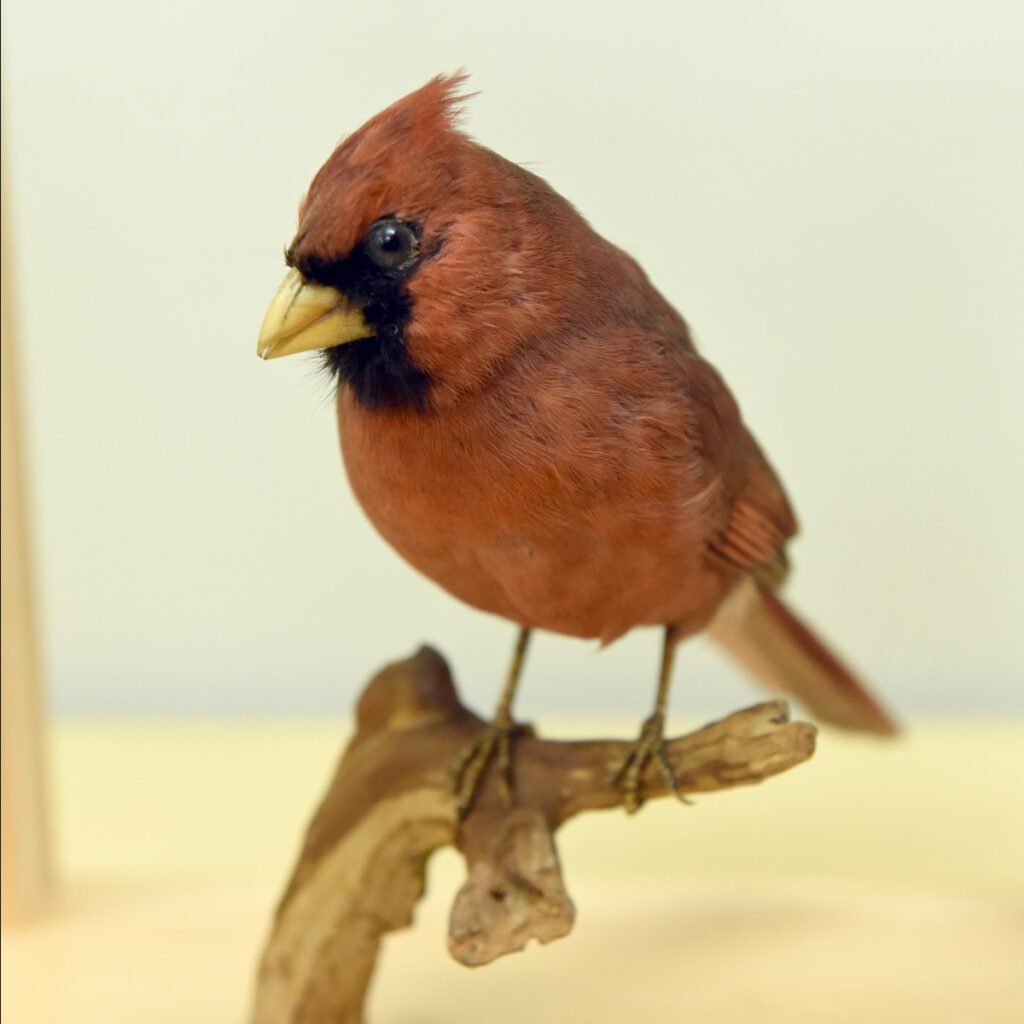
Northern Cardinal taxidermy mount
Northern Cardinal at Carnegie Museum of Natural History. Photo by Matt Unger. 

The exhibition is free with museum admission and runs until September 4, 2023. General museum admission costs $25 for adults, $20 for adults 65 and older, $15 for children aged 3-18 or students with valid student IDs, and $12 after 3 p.m. on weekdays. Admission is free for members and children aged 2 and younger. More information is available at CarnegieMNH.org.

Filed Under: Press Release Tagged With: Anthropocene, Anthropocene Section, Anthropocene Studies, Nicole Heller

April 10, 2023 by Erin Southerland

Researchers Call for New Conservation Paradigm that Embraces Positive Contributions of Land Stewardship

In a new study published by the journal Nature Sustainability, researchers call for a revised conservation paradigm that recognizes human and natural systems as inextricably intertwined and co-evolving and acknowledges the potentially positive roles that people play in generating ecosystem health through land stewardship. The researchers—representing Carnegie Museum of Natural History, Stanford University, and the Santa Cruz Mountains Stewardship Network—argue that revised conservation and sustainability science paradigms are integral to adapting to climate change and other anthropogenic stresses. Current frameworks—while recognizing the damaging impacts of society on nature and the positive contributions of nature to people’s wellbeing—gloss over people’s positive contributions to nature. This ignores the variability, complexity, and mutually constitutive states of culture, society, and ecologies. The researchers collaborated with the Santa Cruz Mountains Stewardship Network (SCMSN), located in a biodiversity “hot spot” and urban population center, as a case study assessment that incorporates land stewardship alongside other ecosystem health metrics and illuminates the challenges and opportunities for similar frameworks. 
 
Historically, people lose access to land when it is set aside for conservation, ceasing land stewardship altogether due to the assumption that human activities can only diminish the biodiversity and health of wildlands. Recently, a return to diverse forms of stewardship—including using fire, harvesting timber, raising animals, and cultivating local food—has earned attention because of the benefits to managing ecosystem health in the face anthropogenic stresses, like invasive species and climate change. For example, in California, low-intensity grazing is useful for reducing invasive plants, while Indigenous cultural burning and restoration forestry are important tools for reducing the impacts of large, severe fires that are increasing with climate change. The researchers concede that challenges lie in identifying appropriate metrics to express stewardship geospatially and study its effects. Land stewardship is relationship-based, place-based, and dynamic. It is not easily classified, mapped, or quantified, and often occurs on private lands or in private contexts that are hard to study. Understanding and embracing the social-ecological complexities of land stewardship will prove critical for the future of conservation science.
 
“The threat and urgency of climate change and biodiversity loss is real, and as a society, we are not going to solve these problems without transformational shifts in our thinking and doing in all fields of practice.” said Dr. Nicole Heller, lead author and Associate Curator of Anthropocene Studies at Carnegie Museum of Natural History.  “For too long, conservation science has promoted a worldview that eschews people from nature, ignoring valuable knowledge and mutually beneficial relationships people have with land and other species. This injustice has especially been the case with Indigenous populations and others with long cultural histories of stewardship in a specific place. The emerging paradigm shift, recognizing the value of land stewardship to ecosystem health, raises many interdisciplinary research questions and indicates an opportunity for more investment in caring for land stewards and land stewardship as part of protecting Nature. Re-thinking people and their possibility to be in good relationships with the land could be a game changer for sustainability.”
 
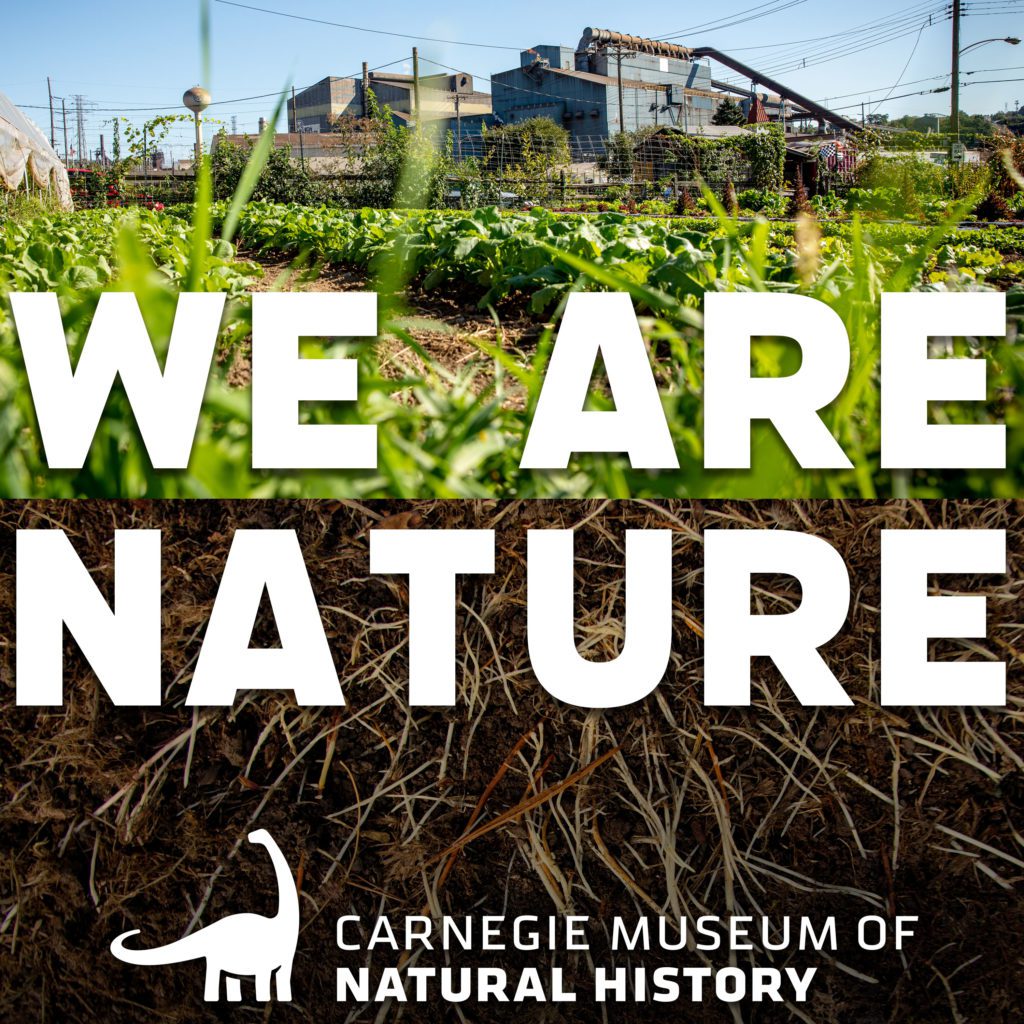
The study reflects one of Carnegie Museum of Natural History’s strategic commitments: to align research and programming around the “We Are Nature” concept, recognizing that humans are an inextricable part of nature—a powerful yet fragile relationship that has evolved over thousands of years.  The museum debuted the We Are Nature podcast in 2022—the first season of which focused on local and regional climate action, including land stewardship—as a follow-up and companion to We Are Nature visitor experiences in the museum in 2017 and 2021. 
 
In addition to Dr. Heller, the paper’s authors include Dr. Kelly McManus Chauvin, Jasper Ridge Biological Preserve and Department of Biology, Stanford University; Dylan Skybrook, Santa Cruz Mountains Stewardship Network; and Dr. Anthony Barnosky, Jasper Ridge Biological Preserve, Stanford University and Department of Integrative Biology, University of California, Berkley. Additional information about the study and SCMSN, including a conversation with the researchers, is available at Stanford News. 

Filed Under: Press Release Tagged With: Anthropocene, Anthropocene Section, Anthropocene Studies, climate change, Nicole Heller

November 1, 2022 by Erin Southerland

Carnegie Museum of Natural History Launches New “We Are Nature” Podcast Series, Exploring Natural Histories and Livable Futures

Series Introduces Listeners to Climate Action Conversations and Strategies in Southwestern Pennsylvania

Featuring Interviews with Radiolab’s Jad Abumrad and US House Candidate Summer Lee

Hosted and Produced by Pittsburgh-Based Artist and Filmmaker Michael Pisano

cover art for the We Are Nature podcast

Carnegie Museum of Natural History (CMNH) announces the launch of its new podcast series, We Are Nature, with the first episodes available now. The new series, comprised of 11 regular episodes and several bonus episodes, features 30 interviews with museum researchers, organizers, policy makers, farmers, and science communicators about climate action in Southwestern Pennsylvania. The goal of the series is to share how humans can create–and are already working towards–a livable, just, and joyous future. 

The series is created, produced, and hosted by Pittsburgh-based filmmaker and environmental educator Michael Pisano. Science communicator and former CMNH program manager Taiji Nelson joins as co-host and co-producer. Field reporters Di-ay Battad, David Kelley, and Jamen Thurmond round out the production crew. 

The first episode, entitled “This Is an Emergency, Not an Apocalypse,” featuring interviews with Radiolab creator Jad Abumrad and CMNH Curator of Anthropocene Studies Dr. Nicole Heller, is available now along with a bonus episode, “We Can Fix This,” delving into effective climate change communication strategies. The second episode, “Steel City,” featuring an interview with US House of Representatives Candidate Summer Lee, will be available on November 4.  

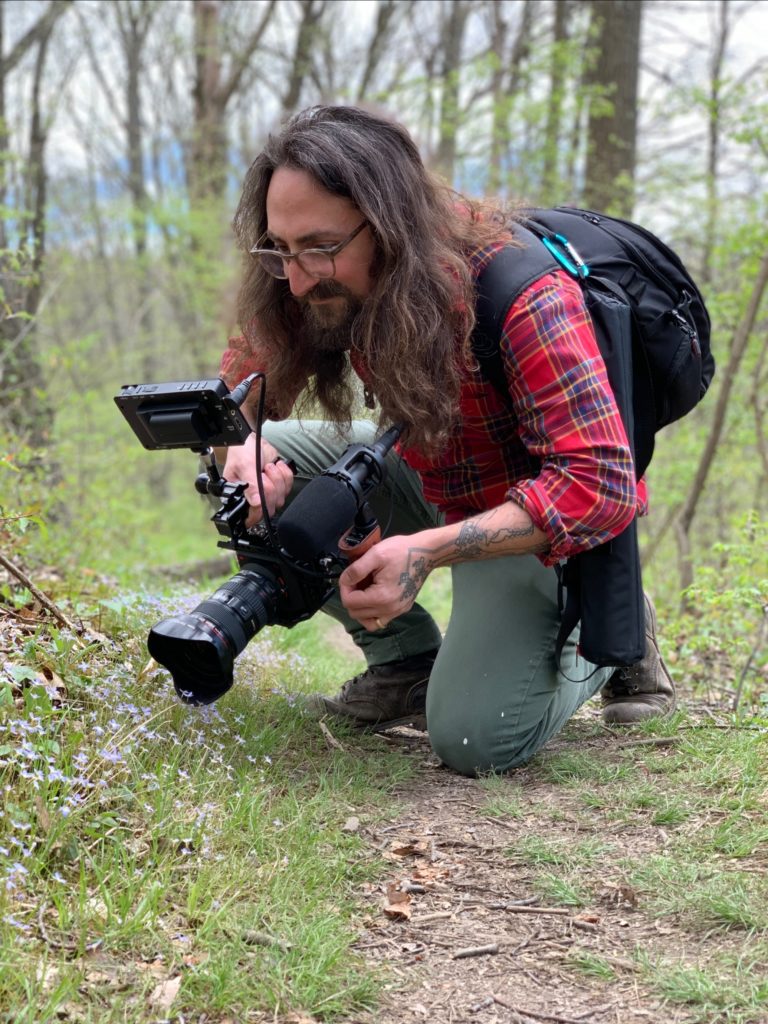
person crouched down outdoors holding a camera
Host and Producer Michael Pisano
person posing for a photo with a bicycle
Producer and Co-Host Taiji Nelson

“These stories show many diverse ways people are working together on the frontlines of climate change mitigation, adaptation, and justice,” said Pisano. “You’ll hear from people who grow our food, protect our greenspaces, and fight polluting industries. For me, their stories are a vital reminder that we aren’t doomed, and that getting involved with local issues like air quality is connected to making a difference globally.”
 
All episodes will be available at https://carnegiemnh.org/learn/we-are-nature-podcast/ and on Apple Podcasts, Amazon Music, Spotify, and Stitcher. The podcast We Are Nature follows CMNH’s successful A Is for Anthropocene podcast series and builds upon the museum’s We Are Nature exhibition series. 
 
About the Hosts and Contributors
 
Host Michael Pisano’s first career aspiration was to be a dinosaur. Thirty-five-ish years later, he makes films about sustainability and solidarity. He also makes fantasy games about collaboration in the face of doom. Michael fell in love with Pennsylvania’s forests as an undergrad at Carnegie Mellon and has called Pittsburgh home for nearly 20 years since. In We Are Nature, his experiences as a teacher, documentary filmmaker, and climate justice organizer meet his passions for ecology and natural history; as a host, Michael works to draw connections between science, history, ethics, and a livable future.
www.pisanofilms.com
 
Producer and Co-host Taiji Nelson studies Learning Sciences and Human Development at the University of Washington (Seattle), but lived in Pittsburgh from 2006-2022 and grew up in the Allegheny National Forest. He is passionate about developing ways to promote solidarity between the environmental movement and other justice movements, and facilitating learning environments that help people answer big questions about taking action toward climate justice.

Filed Under: Press Release Tagged With: Anthropocene, climate change, Michael Pisano, podcast, Science News, Taiji Nelson, We Are Nature, We Are Nature 2

  • Page 1
  • Page 2
  • Page 3
  • Interim pages omitted …
  • Page 16
  • Go to Next Page »

sidebar

About

  • Mission & Commitments
  • Directors Team
  • Museum History

Get Involved

  • Volunteer
  • Membership
  • Carnegie Discoverers
  • Donate
  • Employment
  • Events

Bring a Group

  • Groups of 10 or More
  • Birthday Parties at the Museum
  • Field Trips

Powdermill

  • Powdermill Nature Reserve
  • Powdermill Field Trips
  • Powdermill Staff
  • Research at Powdermill

More Information

  • Image Permission Requests
  • Science Stories
  • Accessibility
  • Shopping Cart
  • Contact
  • Visitor Policies
One of the Four Carnegie Museums | © Carnegie Institute | Privacy Policy | Terms of Use | Accessibility
Rad works here logo