• Skip to primary navigation
  • Skip to main content
  • Skip to primary sidebar

Carnegie Museum of Natural History

One of the Four Carnegie Museums of Pittsburgh

  • Visit
    • Buy Tickets
    • Visitor Information
    • Exhibitions
    • Events
    • Dining at the Museum
    • Celebrate at the Museum
    • Powdermill Nature Reserve
    • Event Venue Rental
    • Gift Cards
  • Learn
    • Field Trips
    • Educator Information
    • Programs at the Museum
    • Bring the Museum to You
    • Guided Programs FAQ
    • Programs Online
    • Climate and Rural Systems Partnership
  • Research
    • Scientific Sections
    • Science Stories
    • Science Videos
    • Senior Science & Research Staff
    • Museum Library
    • Science Seminars
    • Scientific Publications
    • Specimen and Artifact Identification
  • About
    • Mission & Commitments
    • Directors Team
    • Museum History
  • Tickets
  • Give
  • Shop

Anthropocene Living Room

November 6, 2020 by wpengine

The 12,000-Year Journey Of The Cheeseburger

In one large bite, a bun, ground beef patty, cheese, lettuce, and tomato could finally fulfill its purpose: to be my lunch. Many people have seen ads for, or even eaten a cheeseburger before. But where do all the ingredients come from? The tasty combination of meat, vegetables, grain, and milk product has 12,000-year-old roots in a faraway land across the sea. From there, over thousands of years and thousands of miles, it made a journey to its ultimate destination … my stomach. As delicious as it is, every good ending has a story.

The Bun

For a proper burger, you need the bun to sandwich all its deliciousness. The main ingredient for the bun is flour, which comes from wheat. Today, there are 25,000 distinct forms of wheat, all descended from a plant called emmer, which first originated in the Fertile Crescent within the Middle East. The earliest evidence for emmer being deliberately grown by humans for food (domestication) was from at least 12,000 years ago.

Ancient humans, just like us today, enjoyed eating wheat products (I love my pizza!). Where it grows abundantly, wheat is easily harvested and can be stored for extended periods of time, making it a stable source of vegetable protein. Thus, some of the first civilizations, like the Babylonians and Assyrians, sprung up in the Fertile Crescent. Emmer wheat spread to Greece, Cyprus, and India by 6500 BCE, and to Egypt shortly after. In fact, the Egyptians are the first people known to make bread.
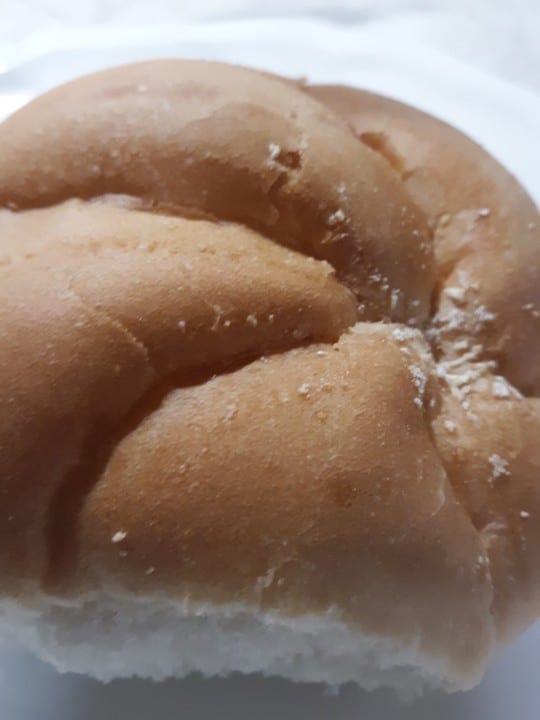
close up of hamburger bun

The Patty

Now let’s get to the deliciousness housed between the buns: the patty. Traditional cheeseburgers are made from beef, which comes from cattle. Unlike emmer wheat, cattle, which descended from wild oxen called aurochs, were domesticated separately in two (possibly three) different places: the Fertile Crescent, the Indus Valley (modern-day Pakistan), and possibly northeast Africa 10,000-8000 years ago. From there, domesticated cattle spread across the continents of Africa, Asia, and Europe.

Cattle were one of the first mammals to be domesticated. They provide many useful products used for consumption (meat, milk, fat) and tool making (horns, hooves, hides). Additionally, their large size allowed them to pull heavy objects like plows for farming. Because of their importance, many religions and cultures considered cattle to be sacred. In Ancient Egypt, many of their gods had cattle forms, including Hathor, Ptah, Menthu, and Atum-Ra, Ancient Greeks often used cattle as sacrifices to the gods. Even today, Hindus do not eat cattle meat.
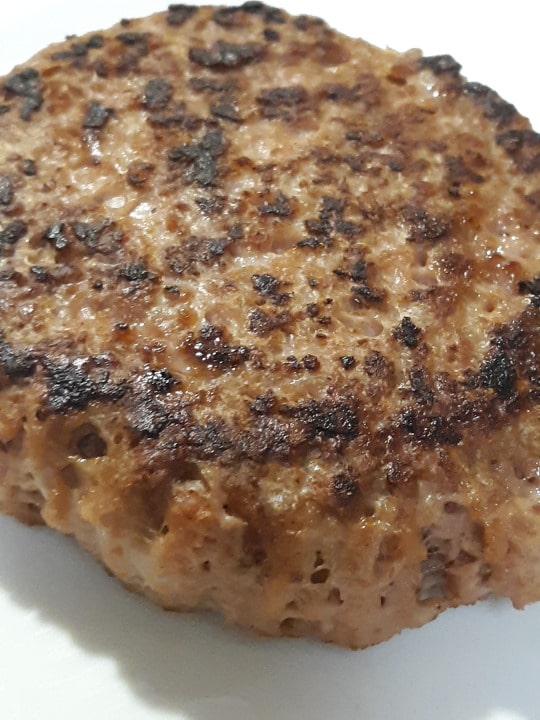
close up of burger patty

The Cheese

Finally, a cheeseburger would hardly be a cheeseburger without the cheese (which is made from milk). Although cow milk is the most popular source material today, cheese was originally made from goat or sheep milk. Cheesemaking began over 4,000 years ago, but how it started is unclear. Legend has it that it was an Arabian merchant who accidentally created the first cheese. He put his milk in a pouch made from a sheep’s stomach as he traversed across the desert. Sheep stomachs contain an enzyme called rennet, and when the milk chemically reacted to the enzyme and heat from the sun, it separated into curd and whey. The curd is what we commonly refer to as the cheese.

Although cheesemaking’s origins remain ambiguous, the Romans were the first to make cheesemaking a widespread industry. Aging and smoking cheese extends the product’s shelf-life, enabling Roman soldiers to carry this excellent source of protein with them. As they conquered the European continent, they spread their cheesemaking. At the height of the Roman empire, they were making and trading hundreds of different kinds of cheese. Only later during European colonization was cheese spread to the Americas and Asia.
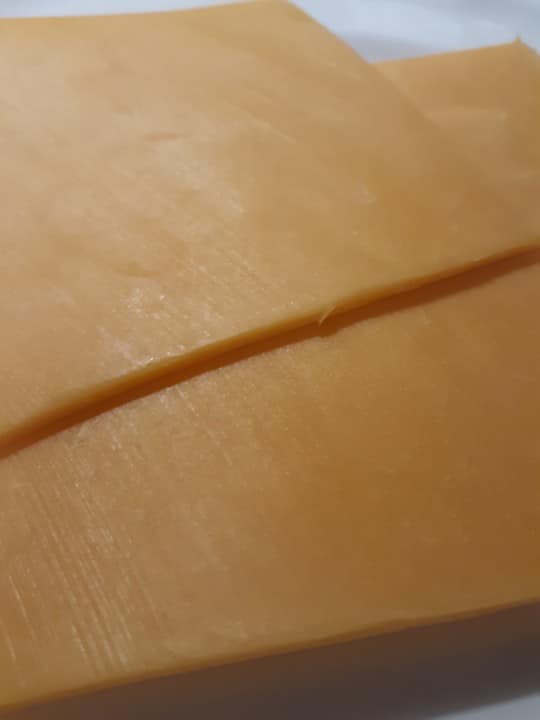
slices of yellow cheese

The Cheeseburger

So what genius put it all together? None other than a 16-year-old named Lionel Sternberger. His father owned a sandwich shop, and one day in 1924, Lionel put a slice of American cheese on one of his father’s hamburgers. He called it a “cheese hamburger.” One decade later, a Kaelin’s restaurant in Louisville, Kentucky gave the sandwich the name “cheeseburger,” which was trademarked in 1935 by Louis Ballast of Humpty Dumpty Drive-In.

man wearing pink glasses and a hat holding a cheeseburger

The End (of This Story of Deliciousness)

Who knew that there was so much behind a basic cheeseburger? From sheep stomach pouches to Babylonians, each played a role in creating the cheeseburger in your hands. Even Pittsburgh has some cheeseburger fame! Did you know that Jim Delligatti, who owned a restaurant in Uniontown PA, part of the Greater Pittsburgh Region, created the McDonald’s Big Mac in 1967?

Angela Wu is a Teen Volunteer in the Education Department. Museum employees, volunteers, and interns are encouraged to blog about their unique experiences and knowledge gained from working at the museum.

Sources:

The Big Mac turns 40, gets a museum. (2007, August 26). ABC News. Retrieved August 9, 2020, from https://abcnews.go.com/Business/story?id=3524528&page=1#:~:text=The%20Big%20Mac%20was%20first,staple%20of%20McDonald’s%20menus%20nationwide.

Cooper, R. (2015, July). Re-discovering ancient wheat varieties as functional foods. ScienceDirect. Retrieved August 5, 2020, from https://www.sciencedirect.com/science/article/pii/S2225411015000401

Cownie, E. (2018, August 27). Why cattle mattered in the Ancient World. Medium. Retrieved August 8, 2020, from https://medium.com/@emmafcownie/why-cattle-mattered-in-the-ancient-world-4e27b1c37e58

Hirst, K. (2019, July 9). Wheat Domestication. ThoughtCo. Retrieved August 6, 2020, from https://www.thoughtco.com/wheat-domestication-the-history-170669

History of Cheese. (2020, January 25). International Dairy Foods Association. Retrieved August 6, 2020, from https://www.idfa.org/history-of-cheese

Mitzewich, J. (2020, May 15). Who Invented the All-American Cheeseburger? The Spruce Eats. Retrieved August 7, 2020, from https://www.thespruceeats.com/birth-of-the-cheeseburger-101426

Pitt, D., Sevane, N., Nicolazzi, E. L., MacHugh, D. E., Park, S., Colli, L., Martinez, R., Bruford, M. W., & Orozco-terWengel, P. (2018). Domestication of cattle: Two or three events?. Evolutionary applications, 12(1), 123–136. https://doi.org/10.1111/eva.12674

Roberts, B. (2018, March 5). The Fascinating 7,500 Year History of Cheese. Forbes. Retrieved August 5, 2020, from https://www.forbes.com/sites/brianroberts/2018/03/05/the-history-of-cheese/#4807da304ca1
Related Content

Potatoes, Sweet Potatoes, and Yams: What’s the Difference?

Hip and “Trashy” Ice Cream

Jurassic Days: Cookie Excavation

Filed Under: Blog Tagged With: Anthropocene Living Room, Museum from Home

October 27, 2020 by wpengine

Clams in the Concrete! How Old is this Sidewalk?

Mollusk shells persist long after the death of the soft-bodied animals whose secretions formed the protective covers. These sturdy remains can inform us about species living in an area at that time. Many mollusks occur in specific habitats and during certain time periods in Earth’s history. When we find mollusks in sediment with dinosaur bones, for example, we receive a clue about the geologic age and habitat in which those dinosaurs lived. When mollusks first appear in an area, deposits containing their shells allow us to estimate when events in Earth’s history occurred, including archaeological events, or even relatively recent construction projects.

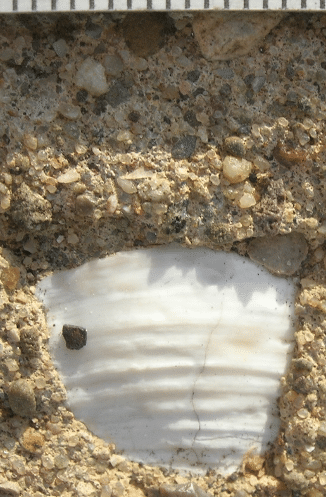
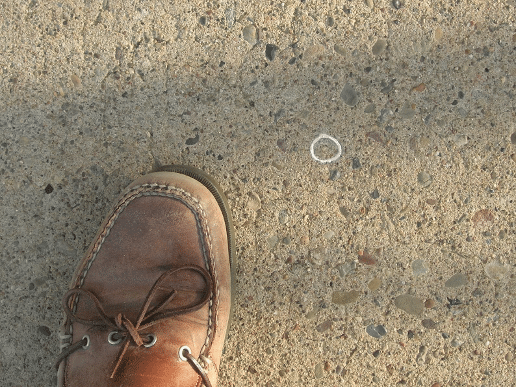
This morning as I walked across the Panther Hollow bridge near Carnegie Museum of Natural History in Pittsburgh, Pennsylvania, I noticed clam shells in the concrete of the sidewalk. What can the presence of these clam shells tell me about how long that sidewalk has been there?

tip of boat shoe on sidewalk near clam shell for scale
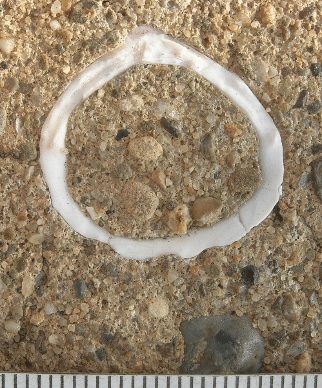
clam shell embedded in concrete
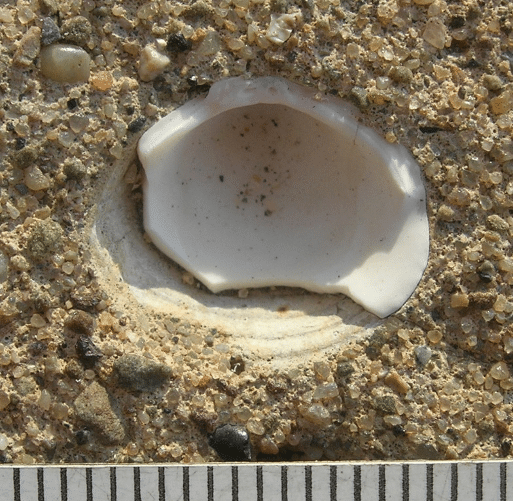
Top: Clam shell in sidewalk on Panther Hollow Bridge. Bottom: Close-up of clam shell, inside view. Scale in mm.

Concrete is a mixture of cement with sand and gravel. When sand and gravel are taken from rivers, this natural resource sometimes contains clam shells. I believe the clam shells in this sidewalk were scooped up along with the sand and gravel to make the concrete. Then after the sidewalk was poured, but before it fully hardened, the clam shells floated to the upper surface.  

As an aside, information about comparative densities is instructive here. Two common crystal forms of calcium carbonate are calcite and aragonite, which have different densities (calcite 2.71g/cc, aragonite 2.93). Most mollusks form shells of aragonite. However, shells are not pure aragonite, containing small amounts of protein and other substances, so clam shells can have densities around 2.5-2.6. In comparison, the density of quartz, which makes up much of the sand used in making concrete, is 2.65. The clam shells are slightly lighter than the sand, which probably explains why they floated up to the sidewalk surface.

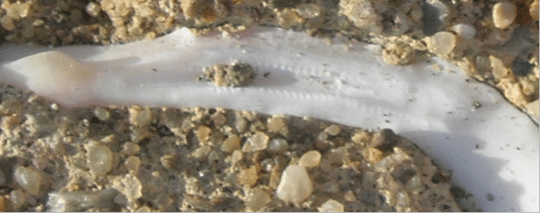
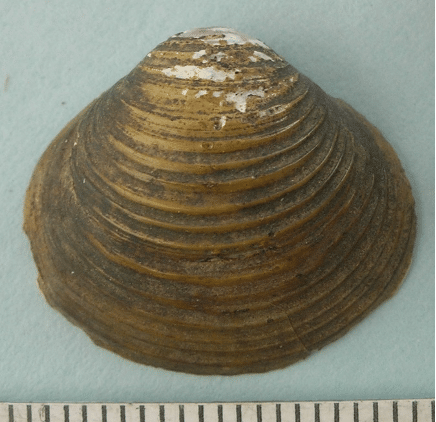
I identified these clam shells as Corbicula fluminea (common name: the Asian clam). They have the characteristic shape and size, the outside has strong regular growth ribs, and on the inside, the lateral teeth bear minute serrations. This species was first recorded in North America in British Columbia about 1924. As an invasive species, it has spread, through human activity, to at least 46 US States.

clam shell embedded in concrete
broken clam shell embedded in concrete
close up of clam shell embedded in concrete
Top: Outside view of clam showing strong ribs. Middle: Partly broken clam, inside view showing external rib impressions in concrete below. Bottom: Close-up of clam’s lateral teeth showing minute serrations. Scale in mm.

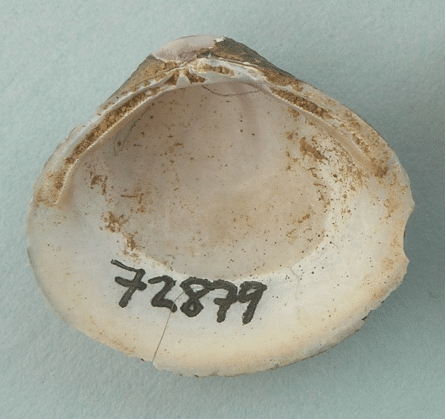
When did the species appear in southwestern Pennsylvania? There is a record of Corbicula fluminea in 1979 from the Ohio River just downstream from Pittsburgh and another in Greene County, southwestern Pennsylvania from 1981. Museum records of this species became more common after about 1993, suggesting that the clam probably became more common about then.

clam shell labeled with numbers 72879
top of clam shell on blue background
Corbicula fluminea collected in 1993 from Loyalhanna Creek, Southwestern Pennsylvania. Top: inside of shell. Bottom: outside of shell showing strong ribs. Scale in mm.

Consequently, I conclude that the Corbicula fluminea-containing concrete sidewalk on the bridge next to Carnegie Museum must have been poured after the late 1970s, and possibly after 1993, when the clam became abundant in freshwater of western Pennsylvania, the region where Pittsburgh is located.

Museum collections provide useful information about when non-native species arrived in an area. Now you know that one of the many uses of mollusks is estimating ages of things.

Although some people might think of clams as an abstract concept, here is an example of clams in the concrete!

Timothy A. Pearce, PhD, is the head of the mollusks section at Carnegie Museum of Natural History. Museum employees are encouraged to blog about their unique experiences and knowledge gained from working at the museum.

Related Content

Ask a Scientist: What is the biggest snail? 

Stalking the Freshwater Sponges of Western Pennsylvania

A Day at the Beach: The Anthropocene on Vacation

Filed Under: Blog Tagged With: Anthropocene Living Room, Science News, Section of Mollusks, Tim Pearce

October 22, 2020 by wpengine

Duck Bite

Most people assume that ducks are pretty friendly birds. That assumption was not necessarily demonstrated when I was sitting on a bench at a boardwalk in Myrtle Beach, South Carolina, enjoying a double scoop of Ben & Jerry’s with my friend. As we savored our ice cream, a well-deserved treat after practicing rigorously for an orchestra competition, one of the many ducks that spend their days along the boardwalk waddled close to our bench.

Unconcerned, we continued to converse. Soon, the duck was right by my foot, investigating my cone, and I was frozen, unsure about what to do. I nervously continued to eat my ice cream, ignoring my new feathered friend and hoping it would waddle on. That, however, was not the case. After examining my ice cream cone for a couple more seconds, the duck sounded two warning quacks, and then proceeded to grab my pinky finger. My beloved ice cream cone fell to the ground, as I sat shell shocked wondering why this duck had unleashed the wrath of its beak upon me.

My mind was left with one lingering question—why? In my experience, most ducks fly away if a human gets close to them. So why did this duck approach me with its eyes set on my ice cream cone? The answer was in the duck’s environment.

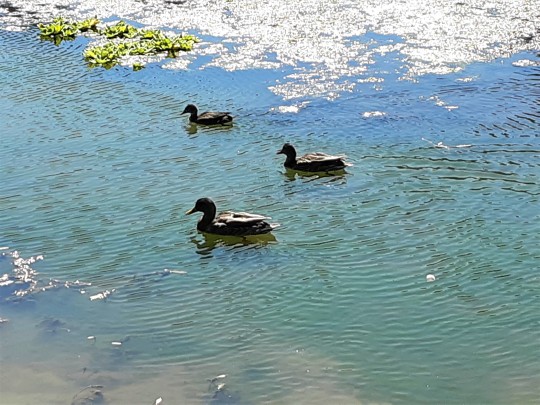
The large flocks of mallard ducks that swarmed that fated boulevard had a single temptation: the fish food dispensers stationed around the area that visitors used to feed the fish in the large pond nearby. As a result, many ducks patrolled the area, hoping to be fed by visitors. The constant contact with humans ​tamed​ the mallards; their inherent fear of humans was overridden by the hands that fed them.

three ducks on the water

Taming, often confused with domestication, is the process of making individual animals comfortable around humans. Domestication, on the other hand, is a process involving multiple generations of selective breeding, to strengthen favored traits.

Mallard ducks, the species of duck that inhabited the boulevard, are very easily tamed through regular feeding. Therefore, the ducks developed a learned behavior, one formed through experience, to approach humans for food. Thus, the duck, most likely familiar with humans feeding it, approached me. Assuming my waffle cone was intended for its stomach, it promptly bit me when I refused.

However, feeding (most) wild animals can be a detriment to their lives. A well-maintained bird feeder in your backyard is okay, as the feed can supplement birds’ diets. However, feeding other wildlife can cause a higher risk of disease transmission, as well as diet problems for wild animals. Feeding wild animals causes them to become more dependent on humans.

Consequently, they may start to hang around areas heavily populated with humans, which can lead to disease transmission and rash behavior towards us.

Moral of the story: don’t feed the ducks junk food, it’ll come back to bite someone else in the pinky.

Samhita Vasudevan is a Teen Volunteer in the Education Department. Museum employees, volunteers, and interns are encouraged to blog about their unique experiences and knowledge gained from working at the museum.

Works Cited
Bittel, Jason. “Why You Shouldn’t Feed Wild Animals (Except Maybe Birds).” ​National Geographic,​ National Geographic Partners, 5 July 2019, www.nationalgeographic.com/animals/2019/07/dont-feed-wild-animals-except-birds/. Accessed 15 Aug. 2020.

Brittingham, Margaret C., and Stanley A. Temple. “Does Winter Bird Feeding Promote Dependency?” ​Searchable Ornithological Research Archive,​ University of New Mexico, 1991, https://sora.unm.edu/sites/default/files/journals/jfo/v063n02/p0190-p0194.pdf. Accessed 1 October 2020.

“Don’t Feed the Wildlife.” ​United States Department of Agriculture​, 2 June 2020, www.aphis.usda.gov/aphis/ourfocus/wildlifedamage/sa_program_overview/ct_dontfeedw ildlife. Accessed 10 Aug. 2020.

“Learned Behavior of Animals.” ​LibreTexts,​ 15 Aug. 2020, bio.libretexts.org/Bookshelves/Introductory_and_General_Biology/Book%3A_Introducto ry_Biology_(CK-12)/10%3A_Animals/10.05%3A_Learned_Behavior_of_Animals. Accessed 16 Aug. 2020.

“Living with Wildlife.” ​Southwest Wildlife Conservation Center,​ 2020, www.southwestwildlife.org/resources/living-with-wildlife.html. Accessed 8 Aug. 2020.

“Mallard Duck.” ​National Wildlife Crime Unit,​ 2020, www.nwcu.police.uk/animal-of-the-month/mallard-duck/. Accessed 9 Aug. 2020.

Sadedine, Suzanne. “Why Can Some Animals Be Domesticated, but Not Others?” ​Forbes​, Forbes Media, 24 Oct. 2016 www.forbes.com/sites/quora/2016/10/24/why-can-some-animals-be-domesticated-but-no t-others/#68c454de5df4. Accessed 9 Aug. 2020.

Related Content

Superstitions and Black Cats

From Collector to Director

Ask a Scientist: What does a museum science director do?

Filed Under: Blog Tagged With: Anthropocene Living Room, Education

September 10, 2020 by wpengine

Feeding the Monster in the Sewer

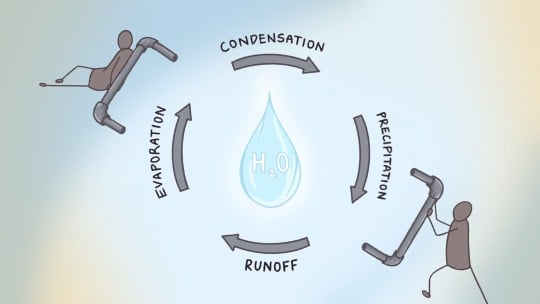
Water is a resource that I often take for granted. I take daily showers, wash my dishes, and do my laundry without a second thought to the amount or quality of water that is used. I only experience small aspects of the natural water cycle on a daily basis, from a bit of condensation on a cold glass of water to the sporadic downfall of rain that occurs in Pittsburgh. The water cycle that I’ve learned about in school can be boiled down to: precipitation, surface runoff, infiltration, evaporation, and condensation; but how do I, as a human being, fit into all of this? What is the human water cycle and how have parts of the water cycle changed within the Anthropocene?

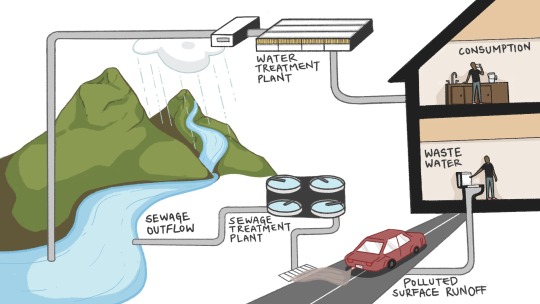
drawing of the city water cycle from waste water to drinking water

As intrigued as I was, I didn’t know enough about my own impact on the water cycle, so I took a deeper dive into learning about what was actually happening to the water that I used. In order to explore the concept of the human water cycle I needed to start by looking at infrastructure. In the case of water infrastructure, outside of irrigation, the water purification systems and sewage systems are some of the most impactful additions human beings have included into the planet’s water cycle. These infrastructural systems span thousands and thousands of miles underground, connecting houses, neighborhoods, and cities. And yet, at least for me, there was a vast mental disconnect between the water that flows underneath us and the water that we consume. I wasn’t sure how to visualize something that was happening underground, hidden away from sight. That’s when I learned about fatbergs.

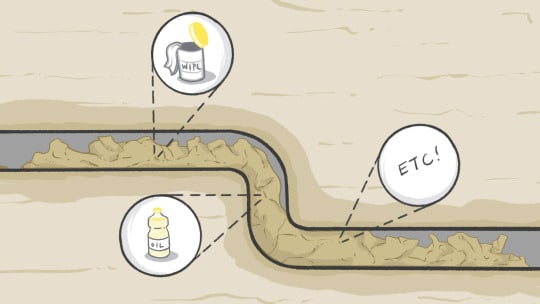
In 2017 an 820 foot long mass weighing 130 metric tons was discovered in the sewers of Whitechapel in London, England. The same type of mass, weighing 42 metric tons was found in Melbourne, Australia during the outbreak of the COVID-19 virus, most likely due to the flushing of “toilet paper substitutes” (i.e. paper towels, sanitary products, facial tissues). These masses are called fatbergs and can be found in most major cities, especially those with older sewage systems like Pittsburgh. A fatberg is a solidified mass of fat, formed overtime in sewers, that sticks to the build-up of un-flushable sewage. Fatbergs cost hundreds of thousands of dollars to remove, and also reduce river and stream water quality by making sewer overflows more likely. In the Pittsburgh Area, whenever the combined storm and sanitary sewer system is overloaded, excess flow is dumped directly into the rivers.

drawing of a pipe with a fatberg forming in it

Fatbergs are a human phenomenon that directly impacts both us and the greater environment. The sewer overflows that they cause impact both the built and natural environment, introducing pollutants such as human waste from our toilets and fats from our kitchen sinks into the living domain. But as harmful as they are, they can be easily prevented.

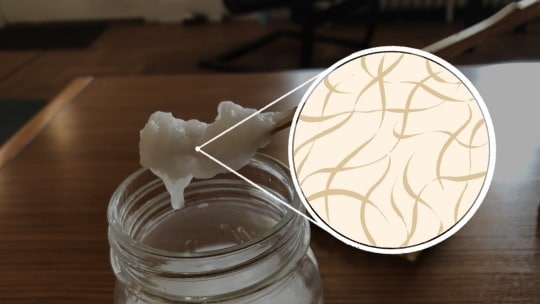
How, you ask? The solution is simple… don’t flush down anything other than toilet paper and bodily waste. But why? What makes toilet paper any different from other paper-like materials? The answer lies in the unique quality of the material that toilet paper is made up of. Unlike paper towels that use long fiber pulps, which improves the strength and absorptivity of the material, and facial tissues that contain additives that hold the fibers together, toilet paper is made using approximately 70% hardwood pulps with short fibers and 30% softwood pulps with longer fibers. Due to the hardwood pulps, once the toilet paper makes contact with water, the short fibers, which also help keep the toilet paper soft to touch, are able to untangle and fall away into smaller fragments, eventually dissolving into tiny bundles of short fiber that can easily flow through the sewage system.

jar, wet paper, and a drawing of paper fibers

Objects like ‘flushable wipes’, unlike toilet paper, take hours to days to break down. This means that just because we are able to flush something down, doesn’t necessarily make it safe for sewer and septic systems. If you want to try an experiment to explore this concept, try putting ‘flushable’ wipes and toilet paper into two separate containers of water. See for yourself what happens.

Fatbergs are all the more relevant to us during the times of the pandemic, especially in the United States. As people stay home, more objects that aren’t healthy for the sewage system are being flushed. Think about the times you flushed anything other than toilet paper. Are you feeding a potential fatberg in your neighborhood?

Daniel Noh is an intern for the Center for Anthropocene Studies, Carnegie Museum of Natural History. Museum employees are encouraged to blog about their unique experiences and knowledge gained from working at the museum.

Related Content

From the Allegheny to Our Kitchen Sinks

We Are Nature: Living in the Anthropocene (Video)

I Love this Interspecies Friendship!

Filed Under: Blog Tagged With: Anthropocene, Anthropocene Living Room, Anthropocene Section, Anthropocene Studies, Daniel Noh, Museum from Home, Science News

September 9, 2020 by wpengine

From the Allegheny to our Kitchen Sinks

There are more than 326 million trillion gallons of water on our planet. Our bodies are made up of around 60% water. Even the air that we breathe has water vapors in it. Water is everywhere, but the water we can use is limited. According to the National Groundwater Association, the Earth is made up of about 71% water. Out of that, 99.7% is trapped in oceans, icecaps, soil, and the atmosphere. That leaves us with around 0.3% of the Earth’s water to use and drink. The same water that all living and nonliving things have used again and again since water has been on the planet.

drawing of people drinking water

Every morning I go downstairs to the kitchen and pour myself a glass of cold water from a water filter. Without a second thought, I drink the water because I consider this water to be safe. After all, the porous, activated carbon filters absorb various chemicals, including chlorine, lead, and mercury, which ‘purifies’ the water. Furthermore, I don’t have to worry about what could be in the water, because I know that the water is thoroughly cleaned before it enters the house. But how is it cleaned? Where does this water come from and what does it go through in order to splash into my kitchen sink?

Let’s start with a broader concept: rivers. Most major cities can be found along rivers: Paris along the Seine River, London along the River Thames, Seoul along the Han River, and New York along the Hudson River. This is no surprise, as communities need fresh, drinking water as an essential part of building a city. Pittsburgh is no different. In fact, in Pittsburgh, two rivers, the Monongahela and the Allegheny form a third, the Ohio, which on its passage through Pennsylvania, West Virginia, Ohio, Kentucky, Indiana, and Illinois, is the primary water source for over five million people. Within the city, the Allegheny River provides us, the people of Pittsburgh, with fresh water that we use on a daily basis.

illustration of the water cycle: condensation, precipitation, runoff, evaporation

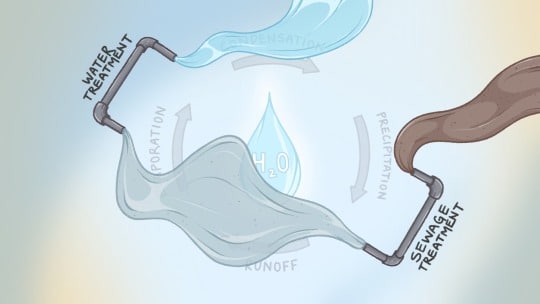
If my water comes from the Allegheny River, what’s the difference between drinking tap water and river water? That’s where the Pittsburgh Water and Sewer Authority, or the PWSA, enters the picture. PWSA is the organization in charge of providing quality water throughout the city of Pittsburgh. The organization’s drinking water system “contains approximately 965 miles of water lines, five reservoirs, and 11 tanks with a water storage capacity of 455 million gallons” (pgh2o.com). And their process for making clean water looks like this. First, the collected river water is coagulated using ferric chloride, potassium permanganate, carbon, and catatonic polymer, which react to the polluting particles in the water, causing them to stick and clump together. The water is then taken through the filtration process, where it flows through pulverized anthracite coal and sand to remove any of the remaining particles. Afterwards, the water is disinfected with sodium hypochlorite, a type of chlorine compound that is used to remove microbial particles. Lastly, once the water has been completely purified, fluoride, the processed form of a naturally occurring mineral, is added back into the water as recommended by the Center for Disease Control to prevent tooth decay.

image of sewage treatment and water treatment over water cycle

As complex as this purification process is, it isn’t perfect. The quality of the water that we receive is affected by what we put into it and there are countless compounds that cannot be completely filtered out by the processes used in water treatment plants. For example, trace amounts of dioxane, a likely human carcinogen from plastic manufacturing runoff, can be found in Pittsburgh’s own water system. Moreover, as of 2019, the PWSA has introduced orthophosphate in order to reduce lead levels, originating from the city’s ancient water pipes, in our tap water. In the end, all the water treatment plants can do is clean the water, test for contaminants, and research new ways to produce and deliver as clean a product as possible. The rest is up to us, the community. It’s up to us to be cautious of how we treat water by watching what we flush, preventing littering, or even reducing plastic use to reduce both microplastics and plastic production.

Water treatment is a growing process; new methods to remove previously unfilterable chemicals are constantly being discovered. With this in mind, think about your relationship with water. How do you treat it? What kind of objects do you flush down the toilet? What are your direct and indirect interactions with our water system? All of our actions matter. Because what we put into the river, will eventually come back to us.

Daniel Noh is an intern for the Center for Anthropocene Studies, Carnegie Museum of Natural History. Museum employees are encouraged to blog about their unique experiences and knowledge gained from working at the museum.

Resources

https://blogs.scientificamerican.com/guest-blog/the-purest-of-them-all/

https://www.portpitt.com/pages/monongahela-river

https://www.wpxi.com/news/what-you-need-to-know-about-pittsburghs-three-rivers/739536503/

http://www.orsanco.org/river-facts/

https://coolcosmos.ipac.caltech.edu/ask/67-How-much-water-does-Earth-have-#:~:text=There%20are%20more%20than%20326,in%20ice%20caps%20and%20glaciers

Related Content

The Inequity of Summer Heat

Hip and “Trashy” Ice Cream

Finding Nature in Your Local Streams

Filed Under: Blog Tagged With: Anthropocene, Anthropocene Living Room, Anthropocene Section, Anthropocene Studies, Daniel Noh, Museum from Home, Science News

June 22, 2020 by wpengine

The Zebra Mussel and the Shopping Cart

Zebra mussels (Dreissena polymorpha) are eastern European freshwater bivalves that invaded North America. Something unusual about their biology facilitated this invasion.

In marine waters, many benthic (living on the bottom) animals add their babies to the plankton, the mix of small and microscopic organisms largely adrift in the water column.

The situation is different in freshwater where almost all benthic animals lay their eggs on the bottom. (Freshwater plankton exist, but the organisms that compromise it spend their whole lives as plankton.) I don’t know why marine and freshwater animals differ that way, but they do. Zebra mussels are a major exception to this rule; they live in freshwater, but they put their babies (larvae) in the plankton.

How did zebra mussels invade North America? Partially loaded ships require ballast to safely navigate at sea. Decades ago, ships were loaded with rocks and dirt (and slug eggs) as ballast, and when they reached their intended port these materials were removed and replaced with cargo. That is why so many invasive slugs (essentially all your garden slugs are non-native) arrived first in seaports and spread from there.  Ballast tanks that can be easily filled with water and drained are a design feature of modern ships, and depending upon some ship’s departure points, their ballast water sometimes contains larval zebra mussels. For many years, ships were slow enough that zebra mussel larvae arrived in North America dead, but eventually reductions in ocean crossing time worked in the invaders’ favor.  In 1988 some larval zebra mussels arrived alive in the ballast water pumped out into Lake St. Clair near Detroit. By 1990, zebra mussels had infested all the Great Lakes and now they occur in more than half of the 50 United States.

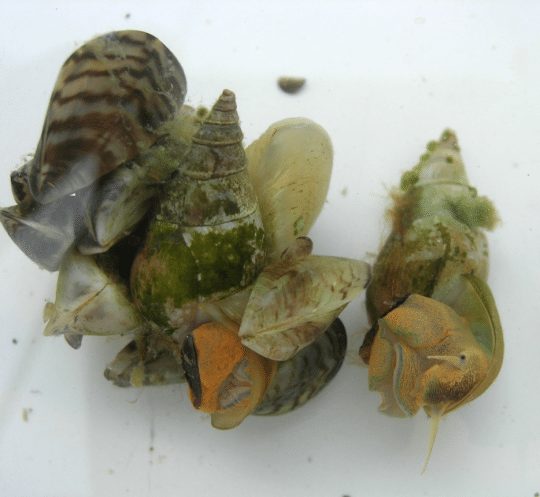
Fig. 1. Freshwater snail (Elimia livescens) colonized by zebra mussels (left) and uncolonized (right). From Douglas Lake, Michigan 30 Aug. 2015 (photo by T.A. Pearce).

The economic and ecological devastation caused by zebra mussels is legendary. Zebra mussels make threads (byssal threads) for attaching to hard objects. They clog intake pipes of city water supplies and power station cooling pipes, requiring costly removal. They compete with native mussels and young fish for food and can smother or hinder movements of our native mussels, snails (Fig. 1), and crayfish when they settle in large numbers.

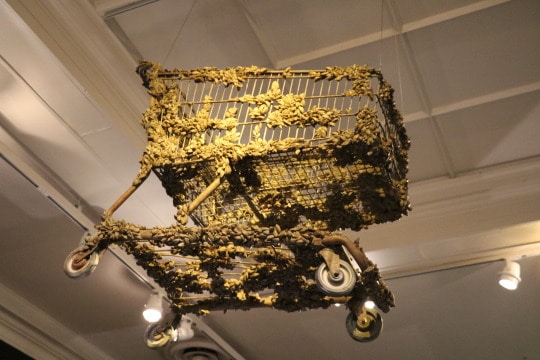
Fig. 2. Replica of shopping cart covered in zebra mussels.

A noteworthy item that became encrusted with zebra mussels is a shopping cart that was dredged out of Lake Superior in 2012. A replica of the shopping cart was on display during the We Are Nature exhibit at Carnegie Museum in 2018 (Fig. 2).

Lest you think I am biased against zebra mussels, I will note two possibly positive things you can say about them. First, they filter water efficiently and because they pump up to a liter (quart) per day, they cleaned up the formerly polluted water in Lake Erie. But even that can be negative, because they removed so much plankton from the water that our native species now have a hard time finding enough to eat. Second, because zebra mussels selectively concentrate certain toxic metals, including uranium, they have potential to be used in bioremediation efforts to clean water of this radioactive pollutant (Immel et al. 2016). But those are the only good things you can say about them. Mostly, they wreak havoc.

Literature Cited

Immel, F., Broussard, C., Catherinet, B., Plasseraud, L., Alcaraz, G., Bundeleva, I. & Marin, F. 2016. The shell of the invasive bivalve species Dreissena polymorpha: biochemical, elemental and textural investigations. PloS One, 11(5): e0154264. https://doi.org/10.1371/journal.pone.0154264

Timothy A. Pearce, PhD, is the head of the mollusks section at Carnegie Museum of Natural History. Museum employees are encouraged to blog about their unique experiences and knowledge gained from working at the museum.

Related Content

Oysters Swim Towards a Siren Soundscape

Slowest Process Ever Observed: A Trillion Times Longer Than the Age of the Universe

From Nebraska or Bust, a Truckload of Mollusks

Filed Under: Blog Tagged With: Anthropocene Living Room, Anthropocene Section, Museum from Home, Science News, Section of Mollusks, Tim Pearce

  • « Go to Previous Page
  • Page 1
  • Page 2
  • Page 3
  • Page 4
  • Go to Next Page »

sidebar

About

  • Mission & Commitments
  • Directors Team
  • Museum History

Get Involved

  • Volunteer
  • Membership
  • Carnegie Discoverers
  • Donate
  • Employment
  • Events

Bring a Group

  • Groups of 10 or More
  • Birthday Parties at the Museum
  • Field Trips

Powdermill

  • Powdermill Nature Reserve
  • Powdermill Field Trips
  • Powdermill Staff
  • Research at Powdermill

More Information

  • Image Permission Requests
  • Science Stories
  • Accessibility
  • Shopping Cart
  • Contact
  • Visitor Policies
One of the Four Carnegie Museums | © Carnegie Institute | Privacy Policy | Terms of Use | Accessibility
Rad works here logo