• Skip to primary navigation
  • Skip to main content
  • Skip to primary sidebar

Carnegie Museum of Natural History

One of the Four Carnegie Museums of Pittsburgh

  • Visit
    • Buy Tickets
    • Visitor Information
    • Exhibitions
    • Events
    • Dining at the Museum
    • Celebrate at the Museum
    • Powdermill Nature Reserve
    • Event Venue Rental
    • Gift Cards
  • Learn
    • Field Trips
    • Educator Information
    • Programs at the Museum
    • Bring the Museum to You
    • Guided Programs FAQ
    • Programs Online
    • Climate and Rural Systems Partnership
  • Research
    • Scientific Sections
    • Science Stories
    • Science Videos
    • Senior Science & Research Staff
    • Museum Library
    • Science Seminars
    • Scientific Publications
    • Specimen and Artifact Identification
  • About
    • Mission & Commitments
    • Directors Team
    • Museum History
  • Tickets
  • Give
  • Shop

Anthropocene Living Room

June 12, 2020 by wpengine

The inequity of summer heat

photo of kids playing in a fountain

Ah, summertime! In Pittsburgh, after months of cold, grey days, the warm temperatures and sunshine bring a collective sigh of relief. Plants are roaring back, coloring the world green. Animals are out and about singing and foraging; people are picnicking, barbequing, gardening. Life feels abundant. But summer can quickly become oppressive, even deadly, if it gets too hot. Extreme heat is among the deadliest weather-related phenomena in the US, and cities are most at risk for this hazard.

The concentration of impervious surfaces and low-rise buildings in cities raises temperatures significantly, creating what is termed the urban heat island effect. Temperatures in a single urban area can vary as much as 18 F depending on the density of the grey stuff (buildings, sidewalks, roadways, and parking lots) relative to the green stuff (trees, parks). The urban heat island effect also interacts with global climate change. Rising temperatures due to emissions of heat-trapping gases from the extraction and burning of fossil fuels is making urban communities increasingly vulnerable to extreme heat. And like so many other pressing issues in the early summer of 2020, namely the coronavirus pandemic and police violence, extreme heat is experienced inequitably.

In the US, communities of color and resource limited communities are both disproportionately exposed and sensitive to extreme heat. One recent study explores this climate inequity and its relationship to the historic racially discriminating housing policy, called ‘redlining’. In an analysis published in the journal Climate in January 2020, Jeremy Hoffman, Chief Scientist at the Science Museum in Virginia, and colleagues ask: “do historical policies of redlining help to explain current patterns of exposure to intra-urban heat in US cities? and how do these patterns vary by geographic location of cities?” As the study describes, in the 1930s, redlining distinguished neighborhoods that were considered “best” (outlined in green) and “hazardous” (outlined in red) for investment by the Home Owner’s Loan Corporation, a federally funded program. Categorization on a scale from A (best) to D (hazardous) was based largely on racial makeup. The program prioritized white neighborhoods for economic investment and access to credit. While the practice ended in 1968 with passage of the Fair Housing Act, its legacy has persisted in structuring the social-economic and ecological landscape of US cities today. The study examines the pattern of land surface temperatures in cities today in relation to historic housing policy.

The results for 108 urban areas in the United States can be explored in an open access article, and also shared through an explorable map. Overall, Hoffman and colleagues found that yes, for 94% of US cities, historical policies of redlining track surface land temperatures. Historically redlined neighborhoods are about 5 degrees F warmer on average today than historically greenlined neighborhoods. While temperature patterns within a city are complex and influenced by microclimates and other factors, the authors argue that the heat burden in redlined neighborhoods has been aggravated by housing policy. Redlined neighborhoods have significantly fewer trees, and an abundance of public highway projects and large building projects that create especially high asphalt to vegetation ratios.

Examining the map of the analysis in Pittsburgh, shows a complex relationship between redlining and land surface temperature, part of which I would guess reflects our extremely variable topography and a complex history of shifting neighborhood demographics associated with the boom and bust of the steel industry. I encourage you to investigate the results yourself.

Hoffman’s research demonstrates how structural inequities and institutional racism in the US affects people’s differential experience with the Anthropocene. Anthropocene challenges, like global warming and global pandemics, reveal the coupled dynamics among human social-economic-political systems and ecological-climate systems. They reveal the way that discriminatory race-based policies from the past animate the present. The experience of the pandemic, the experience of summer heat, the experience of poor air quality, the experience of police violence, the list goes on, are not evenly felt across communities. In the US, research shows time and time again that low resource communities and communities of color are disproportionately suffering. In the processes of doing sustainability and adaptation to address the Anthropocene, the work of undoing injustice is essential. In the case of increasing urban heat, as cities adapt, an important research and practice will involve work to ensure greening policies undo racial discriminatory neighborhood investing practices, while also ensuring protection from gentrification and displacement.

Putting research into practice, Hoffman in his role at the Science Museum of Virginia, is collaborating with youth community organization, Groundwork RVA, to build solutions to urban heat that are both low-cost and high impact. At CMNH’s Center for Anthropocene Studies we are inspired and motivated by the role that museums are playing in empowering communities to understand global change and build social equity and resilience.

Nicole Heller is Curator of Anthropocene Studies at the Carnegie Museum of Natural History. Museum employees are encouraged to blog about their unique experiences working at the museum.
Filed Under: Blog Tagged With: Anthropocene, Anthropocene Living Room, Anthropocene Section, Anthropocene Studies, Museum from Home, Nicole Heller, Science News

June 11, 2020 by wpengine

Fungi make minerals and clean polluted water along the way!

Fungi are all around in the environment. For example, the mold that invades wet basements, the mushrooms that we cook with, and the yeast that people use to make bread, wine, and beer are all members of the fungal kingdom. Fungi are also essential parts of natural ecosystems, breaking down complex carbon compounds like dead leaves or bark and returning nutrients to the soil. In addition to all this, many fungi are also extremely tolerant of polluted environments and can transform pollutants from highly toxic dissolved forms to less or non-toxic solid forms.

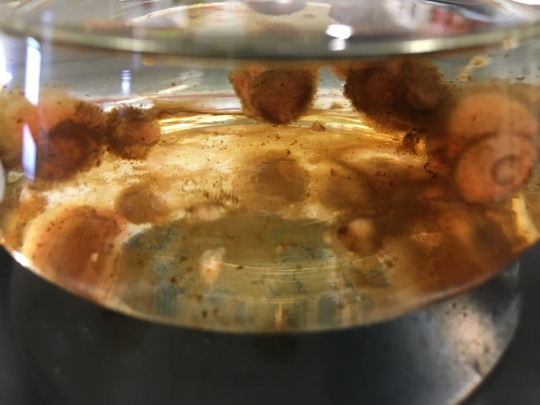
photo of biominerals being formed by fungus
Biominerals being formed in a flask by fungus, Paraconiothyrium sporulosum (pink color is Se(0) biominerals and brown color is Mn oxides).

Between 2016 and 2018, as a postdoctoral fellow at the University of Minnesota, I led a small research team in an investigation of how common soil fungi responded to two environmental pollutants, manganese (Mn) and selenium (Se). Our study, published in the journal Environmental Science & Technology, was entitled, A fungal-mediated cryptic selenium cycle mediated by manganese biominerals. For our study we used two different species of fungi from the lab’s culture collection, a resource that contains microbes isolated from natural and polluted environments all over the US. Both elements investigated are micronutrients and important in small amounts, but can be harmful at high concentrations, such as in coal mine drainage where they are highly abundant.

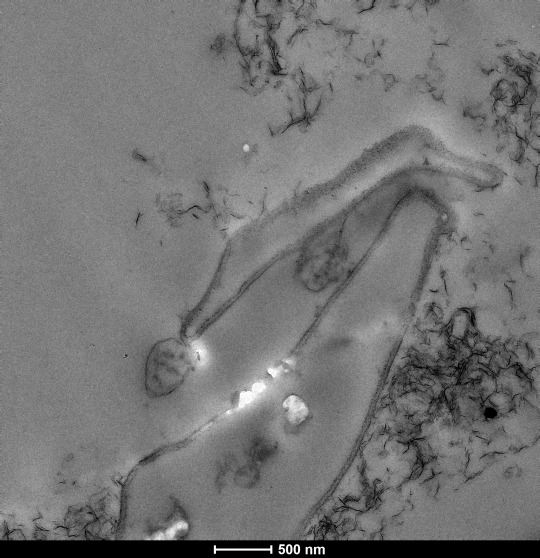
Two fungal cells surrounded by Mn oxides (thin black rods) and elemental Se (black circle) biominerals imaged using a transmission electron microscope.

We knew that under certain circumstances the fungi make biominerals, a subset of solid minerals formed through biological activity. So, we designed an experiment to track the fate of the pollutants during fungal growth. What we observed was that the fungi did, in fact, turn dissolved forms of our targeted elements into solid biominerals. Using a variety of geochemical techniques including a high-powered electron microscope, we identified manganese oxide and elemental selenium biominerals formed side-by-side, indicating that they can coexist in natural environments. The Mn oxides also seemed to recycle some of the Se back to dissolved forms, which is exciting because this transformation indicates there is a cryptic, or ‘hidden’ part of the natural Se cycle that was previously unknown. We are now working on follow-up engineering experiments using these same fungi to see if they can effectively remediate different types of contaminated wastewaters. We’re hopeful that these fungi can offer low-cost, low-input alternative remediation solutions for a wide variety of environmental clean-up applications. In the meantime, we’re also studying other biominerals that our fungi make and collecting new biomineral-forming fungi.

Carla Rosenfeld is the new Assistant Curator of Earth Sciences at Carnegie Museum of Natural History. Museum employees are encouraged to blog about their unique experiences and knowledge gained from working at the museum.

Article citation:

Rosenfeld, C.E, Sabuda, M.C., Hinkle, M.A.G., James, B.R., Santelli, C.M. A fungal mediated cryptic selenium cycle linked with manganese biominerals. Environmental Science and Technology 54(6): 3570-3580 doi:10.1021/acs.est.9b06022

Filed Under: Blog Tagged With: Anthropocene Living Room, Carla Rosenfeld, Earth Sciences, gems and minerals, Hillman Hall, Hillman Hall of Minerals and Gems, Museum from Home, Science News, Section of Minerals

June 9, 2020 by wpengine

Hip and “Trashy” Ice Cream

cows grazing in a field

I grew up in the country, on a gravel back road where the diary truck drove by to fill its tank at the local dairy farms. Those cows, I know now, were living the high life. Grazing idyllic in oak tree savanna fields, with miles of territory to wander. I knew the farmers’ kids. I even helped them with their chores, although not often because it wasn’t fun, even though they said it would be.

My assistance did result in my first taste of milk squirted straight from the udder! The term “Organic” was not used then, but now I know those were family owned organic farms in every sense of the term. No hormones. No cages. Hey, the farm kids even gave the cows names! At the time, my mom would buy name brand ice cream from the town’s market. My favorite was mint chocolate chip ice cream (the green kind). The flavor is super hip right now for being a “trashy” flavor. When I say hip and trashy, I mean in a weird nostalgic unhealthy food like tater tots and grilled cheese kind of way.  Some basic research reveals those cheap ice creams were, for their time, wholesome, waaaayyyy more wholesome than they are now.

Things have since changed in my hometown. Those family owned dairy farms are gone, replaced with mega dairy farms. And ice cream, especially my favorite trashy and hip flavor, has changed into what I consider to be really unhealthy in an environmentally unfriendly way. Palm oil. You might not know this, but palm oil is an ingredient in most frozen desserts and frozen dairy desserts (ice cream with a sub label). Palm oil is high in saturated fat and can affect cardiovascular health. The FDA does not require palm oil to be labeled, and instead the term vegetable oil is frequently substituted. Because most palm oil plantations are unsustainable, their spread across the landscape threatens rain forests, causes habitat loss for endangered species, violates human rights, and impacts climate change. Most name brand ice cream manufacturers currently use the stuff, but don’t want to be identified with its impacts. Carnegie Museum of Natural History’s Assistant Curator of Amphibians and Reptiles, and tropical conservation ecologist Jennifer Sheridan has some serious concerns about the palm oil industry and has witnessed firsthand its impacts on rainforest ecology. Check out her work here.

So how do I fix this? Or maybe, how do I get my chocolate mint chip ice cream fix?

First off, during the pandemic, I’ve been making homemade ice cream. I’ve been able to control the ingredients and add in special touches like fresh mint (growing out of control in my neighbor’s garden). Here’s a quick blender recipe I’ve used. When I need ice cream from the store for my movie binges, I choose companies that clearly label their ice cream to be palm oil free. Ben and Jerry’s does this very well. As the ice cream shops open up, I will go local.

bowl of mint chocolate chip ice cream with mint leaves and spoon
Homemade mint chocolate chip ice cream.

All of these options may seem high priced or too much work. Surprisingly the homemade recipes are really easy to make, and pretty cheap considering the quality of ice cream produced. The great thing is you can enjoy the process, sit back and not feel guilty about using palm oil, the really unhealthy and not cool ingredient in ice cream. And for me, it takes me back, to when ice cream had ingredients I could point to.

Asia Ward is CMNH Anthropocene Program Manager and Science Communication Fellow. Museum staff, volunteers, and interns are encouraged to blog about their unique experiences and knowledge gained from working at the museum.

Filed Under: Blog Tagged With: Anthropocene, Anthropocene Living Room, Anthropocene Section, Asia Ward, Museum from Home, Science News

May 26, 2020 by wpengine

South American Hippo Habitat

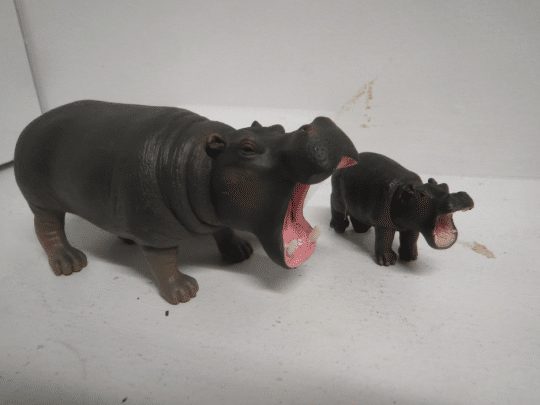
two South American hippo toys

In the wake the groundbreaking exhibition, We Are Nature, museum educators increasingly recognize opportunities for existing exhibits to foster discussions of profound human impacts. Because of a recent research study published in Proceedings of the National Academy of Science, even these sturdy plastic components of the African Wildlife Play Table (above) can spark wide ranging discussions about the impacts of large animal relocations.

The research paper Introduced herbivores restore Late Pleistocene ecological functions, by ecologist Erick Lundgren (University of Technology, Sydney, Australia) and ten co-authors, documents the establishment and growth of a hippo population along a section of Columbia’s Magdalena River over the past three decades. The founding members of a population now estimated to include as many as 80 individuals were four hippos, three females and one male, acquired during the 1980s by notorious drug lord Pablo Escobar for a private zoo on his estate.

According to researchers, the population of Magdalena River hippos could grow to between 800 and 5,000 animals by the year 2050.

For a summary of the research and its implications by The New York Times science writer Asher Elbein, please visit “Pablo Escobar’s Hippos Fill a Hole Left Since Ice Age Extinctions.”

Patrick McShea works in the Education and Visitor Experience department of Carnegie Museum of Natural History. Museum employees are encouraged to blog about their unique experiences and knowledge gained from working at the museum.

Filed Under: Blog Tagged With: Anthropocene Living Room, Anthropocene Studies, Education, Educators, mammals, Museum from Home, Pat McShea, Patrick McShea

May 19, 2020 by wpengine

Finding Resilience Through Plant Love

Feeling a little extra thankful for spring blooms? Taking extra care of your house plants? Urge to garden a little stronger than usual? People in Pittsburgh and across the US are turning to plants to find solace and a connection to nature this spring of COVID-19. Of course, people have always been drawn to plants, but this spring is different. If you’re not able to garden or are looking for some plant-y inspiration, look no further than PlantLoveStories.com. This is a project started in 2018 by a group of young women conservation scientists–including Dr. Sara Kuebbing, a professor at Pitt and collaborator with CMNH’s Mason Heberling, and me, a science communication fellow in the CMNH Anthropocene Section. At the site you’ll find first-hand stories about how plants have shaped people’s lives along with a sincere invitation for you to share a plant-based story of your own.

logo for Plant Love Stories
The Plant Love Stories logo designed by the author.

In the museum’s Anthropocene Section we believe that storytelling, emotions, and personal connections are keys to connecting with the public, communicating science, and empowering people to act. Plant Love Stories is a great example of these principles. Plant Love Stories was founded on the idea that plants tend to blend into the background and the public pays less attention to them than animals. We thought the public sharing of personal plant connections might lead, down the road, to greater awareness and funding for plant conservation.

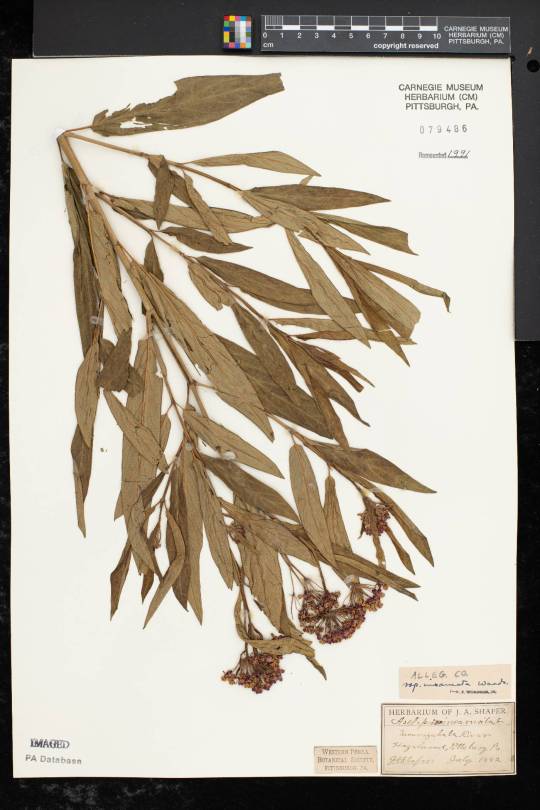
The Plant Love Stories website is a blog, a collection of stories submitted by the public about the role of plants in shaping our lives, relationships, and, in a recent post involving swamp milkweed, resilience during the pandemic.

Plant Love Stories in the CMNH Herbarium: A swamp milkweed (Asclepias incarnata) specimen from the CMNH Herbarium collected in Allegheny County in 1882.

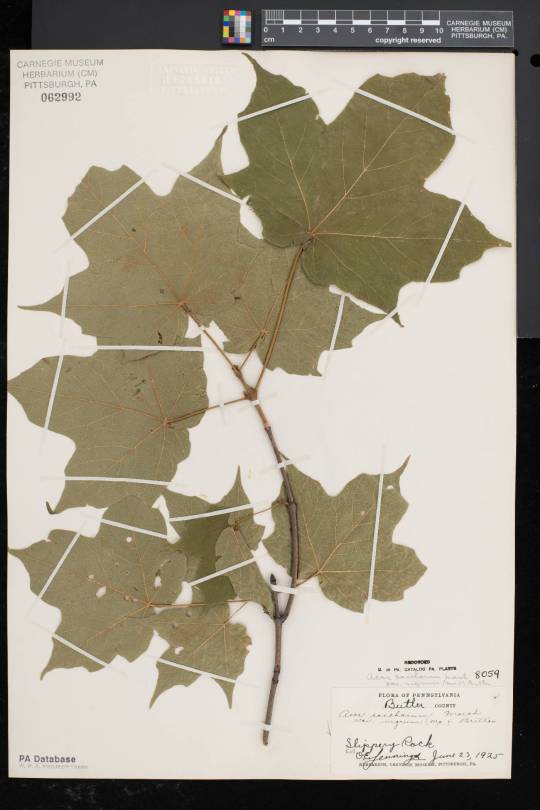
A number of Plant Love Stories have western PA roots (pun intended). We have a few stories written by Dr. Kuebbing’s Pitt students, including “Learning to Look Up” by Swapna Subramanian and “Fidel and the Hopeless, No-Good, Super Sad Raspberry Bush” by Fidel Anderson. I have posted two Plant Love Stories linked to Indiana County, where I grew up: one I wrote about how I did not break my brother’s arm (really, it wasn’t my fault), and one my aunt wrote about her grandmother, my great-grandmother, teaching her how to cook pokeweed. We also have a human love story from Butler County featuring flowering maple trees.

Plant Love Stories at the CMNH Herbarium: A sugar maple (Acer saccharum) specimen from the CMNH Herbarium collected in Butler County in 1925.

Whether you’re planting your biggest ever vegetable garden, tending a single tomato plant, or reading accounts posted on Plant Love Stories, try some plant love to help you get through this difficult time.

Bonnie McGill is a science communication fellow in the CMNH Anthropocene Section. Museum staff, volunteers, and interns are encouraged to blog about their unique experiences and knowledge gained from working at the museum.

Filed Under: Blog Tagged With: Anthropocene, Anthropocene Living Room, Anthropocene Section, Bonnie McGill, botany hall

May 18, 2020 by wpengine

Garden for the Birds (or bees, or butterflies, or creepy crawlies, or you get the picture)…

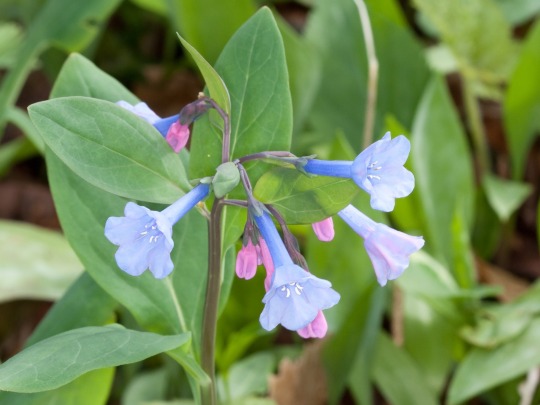
detail photo of blue and pink flowers

“What do I plant?” you may be wondering as spring starts to set in. Maybe you are a master gardener, or maybe you are a novice trying to fill the time during quarantine. Nevertheless, putting plants in the ground is on your mind. What if I told you that choosing native plants over non-native ornamentals does more than create a beautiful landscape – it creates habitat for native wildlife, connects our backyards to bigger natural landscapes, and can help mitigate negative impacts of environmental change.

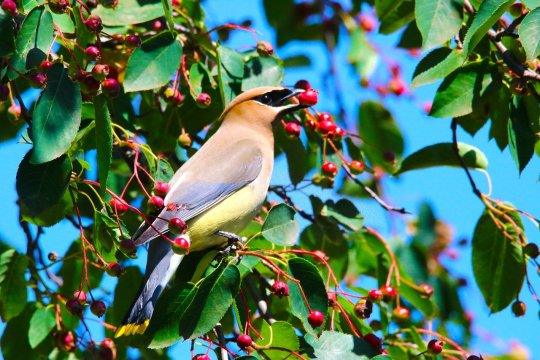
photo of cedar waxwing on a serviceberry branch with a berry in its mouth

Native plants are the plants that occur naturally in the area, and they have evolved with the local environmental conditions and other plants and wildlife that occur in the area. Because of this, native plants often provide the necessary shelter and food needed for local wildlife while requiring little to no fertilizers, pesticides, or water after they are established. Having more native plants in your backyard increases wildlife habitat, reduces air pollution (no mowing required!), decreases erosion (choose plants with deep root systems over non-native grassy lawns), reduces chemicals and excess water use (easy maintenance!), and adds natural beauty to your very own backyard or patio!

Imagine a world where our backyards, patios, and shared spaces are full of native plants – creating a completely connected world full of beautiful plants and providing food and shelter for wildlife. Our landscapes don’t have to be “Developed” OR “Wild”. Our landscapes can be a mosaic of varying levels and sizes of native habitats and local ecosystems – but always with some habitat, connecting one place to the next.

If you want to know more about the benefits of native plants, the sites below are a good place to start.

Benefits of Native Plants for Birds and People

Where I found my inspiration to plant native 

What do I plant? 

Heather Hulton VanTassel, PhD is the Carnegie Museum of Natural History’s Assistant Director of Science and Research. Museum staff, volunteers, and interns are encouraged to blog about their unique experiences and knowledge gained from working at the museum.

Filed Under: Blog Tagged With: Anthropocene, Anthropocene Living Room, Heather Hulton VanTassel, Museum from Home, Science News, We Are Nature 2

  • « Go to Previous Page
  • Page 1
  • Page 2
  • Page 3
  • Page 4
  • Go to Next Page »

sidebar

About

  • Mission & Commitments
  • Directors Team
  • Museum History

Get Involved

  • Volunteer
  • Membership
  • Carnegie Discoverers
  • Donate
  • Employment
  • Events

Bring a Group

  • Groups of 10 or More
  • Birthday Parties at the Museum
  • Field Trips

Powdermill

  • Powdermill Nature Reserve
  • Powdermill Field Trips
  • Powdermill Staff
  • Research at Powdermill

More Information

  • Image Permission Requests
  • Science Stories
  • Accessibility
  • Shopping Cart
  • Contact
  • Visitor Policies
One of the Four Carnegie Museums | © Carnegie Institute | Privacy Policy | Terms of Use | Accessibility
Rad works here logo