• Skip to primary navigation
  • Skip to main content
  • Skip to primary sidebar

Carnegie Museum of Natural History

One of the Four Carnegie Museums of Pittsburgh

  • Visit
    • Buy Tickets
    • Visitor Information
    • Exhibitions
    • Events
    • Dining at the Museum
    • Celebrate at the Museum
    • Powdermill Nature Reserve
    • Event Venue Rental
  • Learn
    • Field Trips
    • Educator Information
    • Programs at the Museum
    • Bring the Museum to You
    • Guided Programs FAQ
    • Programs Online
    • Climate and Rural Systems Partnership
  • Research
    • Scientific Sections
    • Science Stories
    • Science Videos
    • Senior Science & Research Staff
    • Museum Library
    • Science Seminars
    • Scientific Publications
    • Specimen and Artifact Identification
  • About
    • Mission & Commitments
    • Directors Team
    • Museum History
  • Tickets
  • Give
  • Shop

Anthropocene Studies

June 7, 2023 by Noelle Swart

Carnegie Museum of Natural History Presents Chirp, Chitter, Caw: Surrounded by Birdsong

This summer, Carnegie Museum of Natural History invites visitors of all ages to experience the audio exhibition Chirp, Chitter, Caw: Surrounded by Birdsong, created in partnership with artists Chris Hoff and Sam Harnett, founders of The World According to Sound. The new visitor experience runs July 1 through September 4, 2023, in the museum’s iconic Bird Hall and adjoining R.P. Simmons Family Gallery. It is free with museum admission.
Stylized banner that reads "Chirp, Chitter, Caw! Surrounded by Birdsong" Above the words there are speech bubbles with musical notes and various lines. On the right there's a woodpecker taxidermy mount.

Visitors can relax in a listening lounge, mimic unusual bird calls, and stroll down Bird Hall to hear sonic snapshots created by Hoff and Harnett. Featured sounds include the low rumble of the Southern Cassowary, the mimicry of the Superb Lyrebird, and the rhythmic knocks of the Pileated Woodpecker. The experience tunes audiences into the world of birdsong to discover the beauty and complexity of avian communication that surrounds us.

“We were so excited when Chris and Sam approached us about bringing this experience to Pittsburgh,” said Sarah Crawford, the museum’s Director of Exhibitions and Design. “Our audiences love Bird Hall and are always eager for bird programming, whether they’re exploring our displays, following the research and bird banding at our Powdermill Avian Research Center in the Laurel Highlands, or demonstrating their familiarity and passion for the region’s birds on social media. I can’t wait for them to experience the incredible artistry of Chris and Sam. The museum’s birds will never look—or sound—the same.”
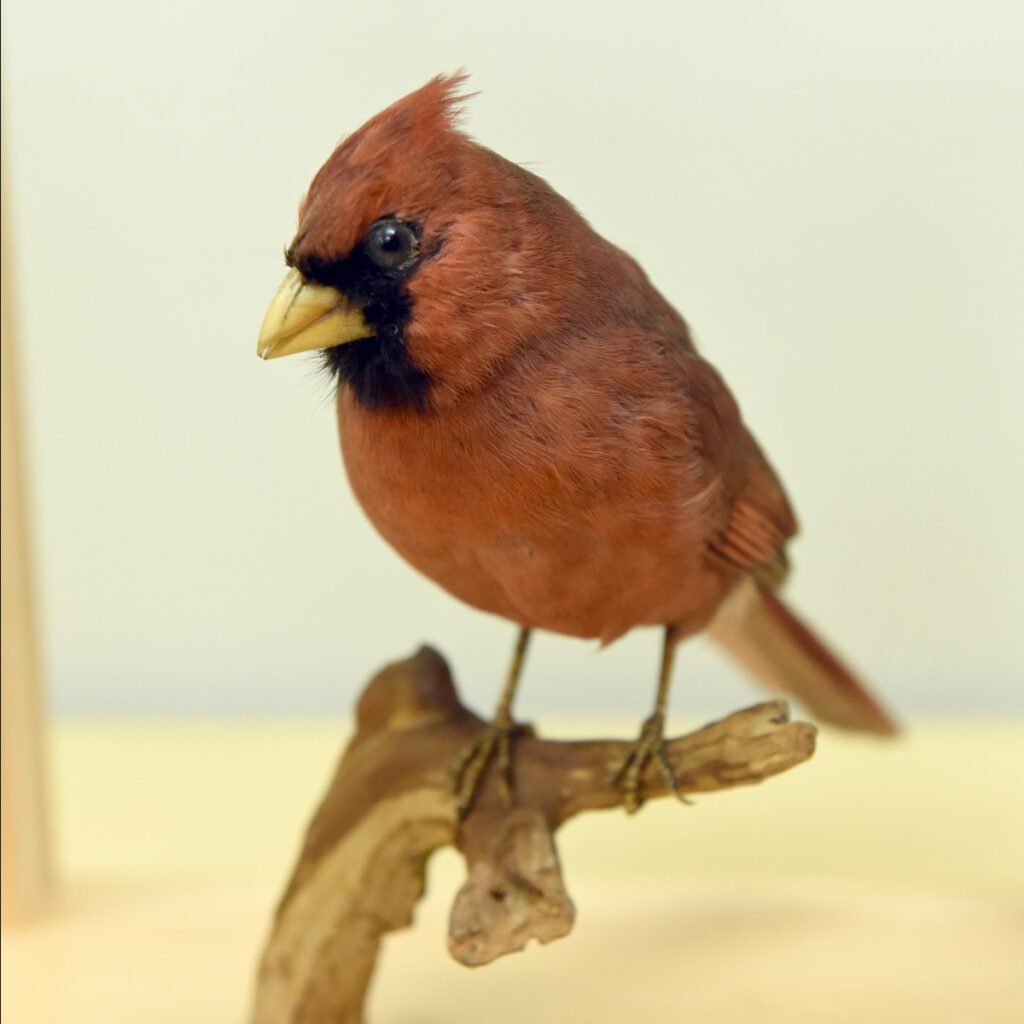
Northern Cardinal taxidermy mount
Northern Cardinal at Carnegie Museum of Natural History. Photo by Matt Unger. 

The exhibition is free with museum admission and runs until September 4, 2023. General museum admission costs $25 for adults, $20 for adults 65 and older, $15 for children aged 3-18 or students with valid student IDs, and $12 after 3 p.m. on weekdays. Admission is free for members and children aged 2 and younger. More information is available at CarnegieMNH.org.
Filed Under: Press Release Tagged With: Anthropocene, Anthropocene Section, Anthropocene Studies, Nicole Heller

April 10, 2023 by Erin Southerland

Researchers Call for New Conservation Paradigm that Embraces Positive Contributions of Land Stewardship

In a new study published by the journal Nature Sustainability, researchers call for a revised conservation paradigm that recognizes human and natural systems as inextricably intertwined and co-evolving and acknowledges the potentially positive roles that people play in generating ecosystem health through land stewardship. The researchers—representing Carnegie Museum of Natural History, Stanford University, and the Santa Cruz Mountains Stewardship Network—argue that revised conservation and sustainability science paradigms are integral to adapting to climate change and other anthropogenic stresses. Current frameworks—while recognizing the damaging impacts of society on nature and the positive contributions of nature to people’s wellbeing—gloss over people’s positive contributions to nature. This ignores the variability, complexity, and mutually constitutive states of culture, society, and ecologies. The researchers collaborated with the Santa Cruz Mountains Stewardship Network (SCMSN), located in a biodiversity “hot spot” and urban population center, as a case study assessment that incorporates land stewardship alongside other ecosystem health metrics and illuminates the challenges and opportunities for similar frameworks. 
 
Historically, people lose access to land when it is set aside for conservation, ceasing land stewardship altogether due to the assumption that human activities can only diminish the biodiversity and health of wildlands. Recently, a return to diverse forms of stewardship—including using fire, harvesting timber, raising animals, and cultivating local food—has earned attention because of the benefits to managing ecosystem health in the face anthropogenic stresses, like invasive species and climate change. For example, in California, low-intensity grazing is useful for reducing invasive plants, while Indigenous cultural burning and restoration forestry are important tools for reducing the impacts of large, severe fires that are increasing with climate change. The researchers concede that challenges lie in identifying appropriate metrics to express stewardship geospatially and study its effects. Land stewardship is relationship-based, place-based, and dynamic. It is not easily classified, mapped, or quantified, and often occurs on private lands or in private contexts that are hard to study. Understanding and embracing the social-ecological complexities of land stewardship will prove critical for the future of conservation science.
 
“The threat and urgency of climate change and biodiversity loss is real, and as a society, we are not going to solve these problems without transformational shifts in our thinking and doing in all fields of practice.” said Dr. Nicole Heller, lead author and Associate Curator of Anthropocene Studies at Carnegie Museum of Natural History.  “For too long, conservation science has promoted a worldview that eschews people from nature, ignoring valuable knowledge and mutually beneficial relationships people have with land and other species. This injustice has especially been the case with Indigenous populations and others with long cultural histories of stewardship in a specific place. The emerging paradigm shift, recognizing the value of land stewardship to ecosystem health, raises many interdisciplinary research questions and indicates an opportunity for more investment in caring for land stewards and land stewardship as part of protecting Nature. Re-thinking people and their possibility to be in good relationships with the land could be a game changer for sustainability.”
 
The study reflects one of Carnegie Museum of Natural History’s strategic commitments: to align research and programming around the “We Are Nature” concept, recognizing that humans are an inextricable part of nature—a powerful yet fragile relationship that has evolved over thousands of years.  The museum debuted the We Are Nature podcast in 2022—the first season of which focused on local and regional climate action, including land stewardship—as a follow-up and companion to We Are Nature visitor experiences in the museum in 2017 and 2021. 
 
In addition to Dr. Heller, the paper’s authors include Dr. Kelly McManus Chauvin, Jasper Ridge Biological Preserve and Department of Biology, Stanford University; Dylan Skybrook, Santa Cruz Mountains Stewardship Network; and Dr. Anthony Barnosky, Jasper Ridge Biological Preserve, Stanford University and Department of Integrative Biology, University of California, Berkley. Additional information about the study and SCMSN, including a conversation with the researchers, is available at Stanford News. 

Filed Under: Press Release Tagged With: Anthropocene, Anthropocene Section, Anthropocene Studies, climate change, Nicole Heller

June 10, 2021 by wpengine

New Anthropocene Publication: Stemming the Tide

by Nicole Heller

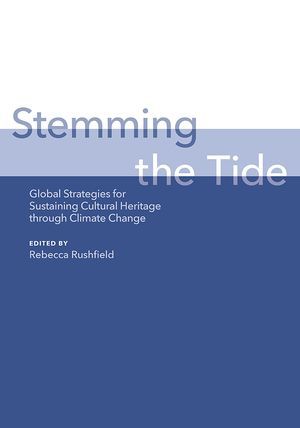
Blue and white cover of a book. Title: Stemming the Tide: Global Strategies for Sustaining Cultural Heritage Through Climate Change. Edited by Rebecca Rushfield.

I am pleased to share this Smithsonian Scholarly Press publication, Stemming the Tide: Global Strategies for Sustaining Cultural Heritage Through Climate Change. The e-book, edited by Rebecca Rushfield, is available online and freely available to read and download. It is the product of an international symposium organized and hosted by the Smithsonian Institution, Washington DC, March 5 – 6, 2020. According to Amber Kerr, Chief of Conservation, Smithsonian American Art Museum “The objective of the symposium was to empower cultural heritage authorities, managers, and advocates to pursue more ambitious engagement with, and collaborative approaches to, the climate crisis,” and “250 registrants and 1,100 live web stream viewers representing 33 states and 25 countries ranging from the United Kingdom, Spain, and Greece to Canada, Mexico, and Trinidad and Tobago” took part.

I was honored to be invited to participate and frame remarks about museums and climate change. Looking back, the symposium was at the beginning of difficult times. The crisis of the coronavirus pandemic was just becoming a known reality. I recall forgoing handshakes and hugs, and instead bumping elbows, with the awesome group of global professionals assembled.

Perhaps for this reason, seeing this volume published now gives me extra pause, and feels especially symbolic of the interconnections between people and planet – past, present and future – and the risks we face in the early 21st century. As Lonnie G. Bunch III, Secretary of the Smithsonian Institution, writes in the forward “This publication invites us to put our heads together and lead the cultural heritage sector in addressing the most pressing issue of our time.”

My chapter, “Museums Facing Climate Change. All Hands On Deck: Moving Past Climate Science and Into Culture,” is about the special opportunity for museums to lead on climate change action and education in their communities, and draws on the good works started at the Carnegie Museum of Natural History with We Are Nature: Living in the Anthropocene and Climate Systems Partnerships. Other chapters explore a wide range of issues. For example, there are chapters on adapting cultural heritage sites and historic buildings to increased risks from extreme weather and sea level rise, ensuring the preservation of collections and archeological sites, supporting resilience of displaced communities, sustaining and respecting Indigenous knowledge and storytelling, as well as tools for mitigating greenhouse gases and improving sustainability practices in collections and exhibition practices.

While intended for a professional audience, I imagine this book will be relevant to anyone concerned about human-caused climate change and interested in the diverse opportunities and challenges it presents. I commend the Smithsonian Institute for leadership in organizing the symposium and publishing this valuable resource. I look forward to using it with my colleagues at the Carnegie Museums and here in Pittsburgh toward pursuing more ambitious engagement and collaborative approaches to the climate crisis.

Read Stemming the Tide: Global Strategies for Sustaining Cultural Heritage Through Climate Change free online.

Nicole Heller is Curator of Anthropocene Studies at the Carnegie Museum of Natural History. Museum employees are encouraged to blog about their unique experiences working at the museum.

Related Content

Warmer Springs and Earlier Birds

Cities Are Not Biological Deserts

Pittsburgh’s Moths Reflect Environmental Impacts of Industry

Carnegie Museum of Natural History Blog Citation Information

Blog author: Heller, Nicole
Publication date: June 10, 2021

Share this post!

  • Share on Twitter Share on Twitter
  • Share on Facebook Share on Facebook
  • Share on Pinterest Share on Pinterest
  • Share on LinkedIn Share on LinkedIn
  • Share on Reddit Share on Reddit
  • Share via Email Share via Email

Share this post!

  • Share on Twitter Share on Twitter
  • Share on Facebook Share on Facebook
  • Share on Pinterest Share on Pinterest
  • Share on LinkedIn Share on LinkedIn
  • Share on Reddit Share on Reddit
  • Share via Email Share via Email

Filed Under: Blog Tagged With: Anthropocene, Anthropocene Studies, Nicole Heller, Science News

April 30, 2021 by wpengine

Warmer Springs and Earlier Birds

by Bonnie McGill

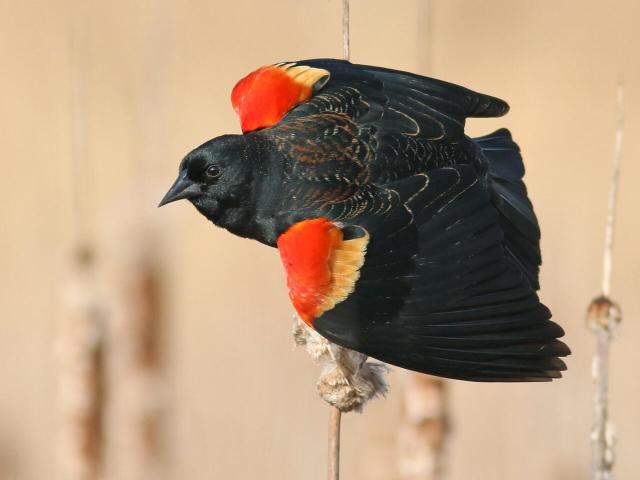
Male Red-winged Blackbird (Agelaius phoeniceus) by Jonathan Eckerson via Macaulay Library.

Male Red-winged Blackbirds! For me, their calls and bright red shoulders are one of the signs that spring is really here. Mind you, this is no subtle sign of spring that takes an expert naturalist to notice. No, this is a sign of spring that slaps you across the face, as if spring is calling, “I’m here! CONK-A-REE! Look at me!” Next time you drive past a wetland area with cattails, there is a good chance you’ll see one or more showing off their red shoulders (the brown females are beautiful too). Red-winged Blackbirds have been back in western PA and announcing their territorial claims since March. Whether you live in the country or the city, bird watching is a great way to observe the change in seasons and connect with the nature around you (and in you).

As a member of the Climate and Rural Systems Partnership (CRSP) team I’ve been gathering evidence-based stories of how climate change is impacting natural processes in western PA. Since this week is the City Nature Challenge, folks might be paying closer attention to birds, creating an opportunity for museum scientists to explain what migratory songbirds in our region can teach us about climate change.

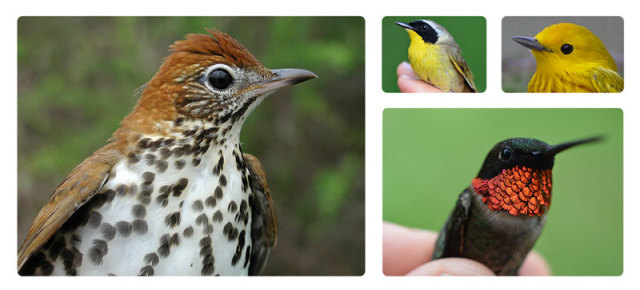
Since 1961 scientists at the museum’s Powdermill Avian Research Center (PARC) in Pennsylvania’s Laurel Highlands have been monitoring birds. In that time they have captured, studied, marked, and released almost 800,000 birds! This week, for example, PARC’s mist nets are temporarily capturing birds like the Common Yellowthroat, Yellow Warbler, House Wren, Ruby-throated Hummingbird, American Redstart, and Wood Thrush.

Migratory birds that are part of the PARC long term dataset (clockwise from left): Wood Thrush, Common Yellowthroat, Yellow Warbler, and Ruby-throated Hummingbird. All of these species are breeding earlier in the year in response to climate change that has already occured. Photos courtesy of Powdermill Avian Research Center.

All of these species are migratory–spending the winter in the southern US, the Caribbean, Central America, and/or South America. Many fly across the Gulf of Mexico (!) on their way north in the spring. All of these birds share another trait–they are nesting earlier in the year than they once did. We will follow the Wood Thrush as an example of how many birds are responding to the warming climate.

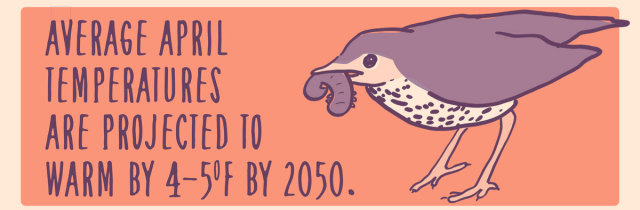
on the right side, text reads "Average April temperatures are projected to warm by four to five degrees Fahrenheit by 2050." On the left, there's an illustration of a bird holding a worm in its beak.
The artwork in this blog post is by the author and part of an infographic depicting the information written here.

PARC’s unique 50 year dataset allows scientists to study how birds respond to long term changes, including the warming climate. Average April temperatures in the Laurel Highlands have already increased by two degrees Fahrenheit since the 1960s, and are projected to warm by another four to five degrees Fahrenheit by 2050. Warmer springs trigger earlier plant budburst. Insects, especially caterpillars, feast on buds and young leaves, which have less toxins than mature leaves. Caterpillars are the breakfast of champions (among birds). So, migratory songbirds, including the Wood Thrush, need to synchronize their northward movement with the budburst. This means an earlier arrival, according to the calendar, at points all along their migration route.

Wood Thrushes arrive from Central America five days earlier than they did in the 1960s. Research suggests that migratory birds respond to temperature cues along their migration route and speed up (warmer temperatures) or slow down (cooler temperatures). Birds may be responding to temperature directly or indirectly via other temperature-dependent cues such as wind speed and direction and spring leaf out.

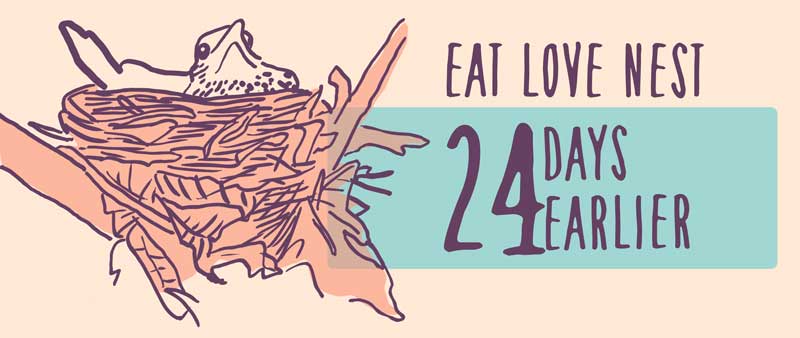
Eat, Love, Nest, 24 days earlier

Early arrival is not the only adjustment Wood Thrushes are making, however. The birds are also making their nests and hatching young earlier. Wood Thrushes are nesting 24 days earlier than they did in the 1960s. All four of the  bird species in the photo above are breeding earlier. Within the web of organisms that supplies food for birds, May 19 of the present feels like June 11 of the 1960s. The earlier nesting in response to a warming climate means birds that normally hatch and rear multiple broods per breeding season, such as House Wrens and Northern Cardinals, may  have greater reproductive capacity. PARC research shows that Gray Catbirds and Northern Cardinals are having more young in warmer springs, but other multi-brood species such as House Wrens and Common Yellowthroats are not.

While birds seem to be keeping pace with climate change now, they may not be able to in the future. Their capacity to adjust migratory and reproductive behavioral traits in response to climate change is finite. Also, we’ve already lost an estimated 3 billion North American birds since 1970 due to factors including habitat loss, insect declines, pesticide use, and predation by domestic cats. Now climate change is making bird survival even more difficult. The capacity of bird populations to evolve in response to climate change is also limited – climate change in the Anthropocene is happening much more rapidly than climate change in past epochs, many times faster than evolution can keep up. The good news is we can help birds, ecosystems, and ourselves by taking action to reduce the severity of climate change.

illustration of two birds flying with the text "You can help birds and climate"

Here are three ways individuals and communities can help birds by mitigating climate change:

1) Conserve habitat: Habitats like forests, wetlands, and prairies provide food and shelter for birds while the plants and soils remove and store carbon away from the atmosphere. These habitats are needed throughout birds’ migratory ranges. Create habitat by reducing lawns and planting native plants. For example, many birds enjoy eating the fruits of spicebush, elderberry, and black cherry, which are native to western Pennsylvania. You can find more bird-friendly plants native to your area at https://www.audubon.org/plantsforbirds.

2) Renewable energy: A just transition to renewable energy sources like properly-sited wind* and solar will reduce greenhouse gas emissions, provide local jobs, improve air quality, and help protect birds and people from climate change. *The National Audubon Society supports properly-sited wind energy.

3) Eat your vegetables: A more plant-based diet is an impactful way to reduce greenhouse gas footprints. Also, choosing food that is grown with less pesticides, and using less pesticides in the stewardship of your garden, helps support the survival of insects that are food for birds. Reductions in demand for pesticides also reduces their manufacture, which further reduces greenhouse gas emissions. Learn more from Project Drawdown.

So get out there, find the signs of spring that are gentle (Trout Lilies) and not-so-gentle (Red-winged Blackbirds), log them in iNaturalist for the City Nature Challenge, and talk with your family and your community about how you can implement one or two (or three!) of the actions suggested above!

You can also read this as an infographic here.

Thank you to the many folks who helped with the development of this blog post and infographic: Luke DeGroote, Mary Shidell, and Annie Lindsay at PARC; the Laurel Highlands network of the Climate and Rural Systems Partnership; Nicole Heller; Taiji Nelson; and Sarah Crawford.

Bonnie McGill, Ph.D. is a science communication fellow for the Climate and Rural Systems Partnership and based in the Anthropocene Studies Section at Carnegie Museum of Natural History. Museum employees are encouraged to blog about their unique experiences and knowledge gained from working at the museum.

Related Content

Teaching About Local Wildlife with the City Nature Challenge

Water Bears: Why My Yard is Like the Moon

Botanists Use Data Collected By Thoreau to Uncover Unexpected Effects of Climate Change

Carnegie Museum of Natural History Blog Citation Information

Blog author: McGill, Bonnie
Publication date: April 30, 2021

Share this post!

  • Share on Twitter Share on Twitter
  • Share on Facebook Share on Facebook
  • Share on Pinterest Share on Pinterest
  • Share on LinkedIn Share on LinkedIn
  • Share on Reddit Share on Reddit
  • Share via Email Share via Email

Share this post!

  • Share on Twitter Share on Twitter
  • Share on Facebook Share on Facebook
  • Share on Pinterest Share on Pinterest
  • Share on LinkedIn Share on LinkedIn
  • Share on Reddit Share on Reddit
  • Share via Email Share via Email

Filed Under: Blog Tagged With: Anthropocene, Anthropocene Living Room, Anthropocene Studies, Bonnie McGill, City Nature Challenge, climate change, CRSP

October 8, 2020 by wpengine

How Do You Preserve a Giant Pumpkin?

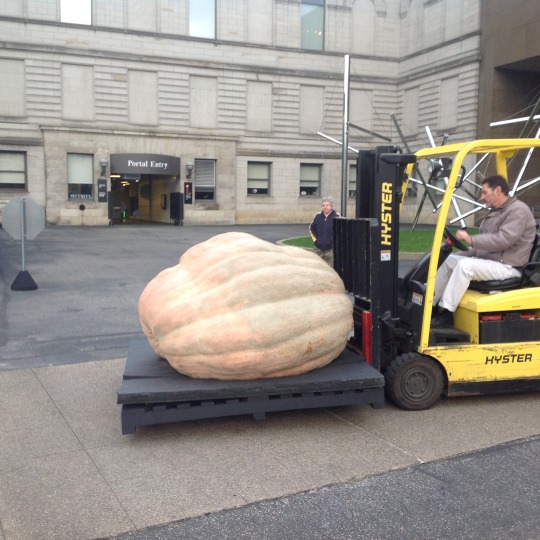
giant pumpkin being moved with a forklift

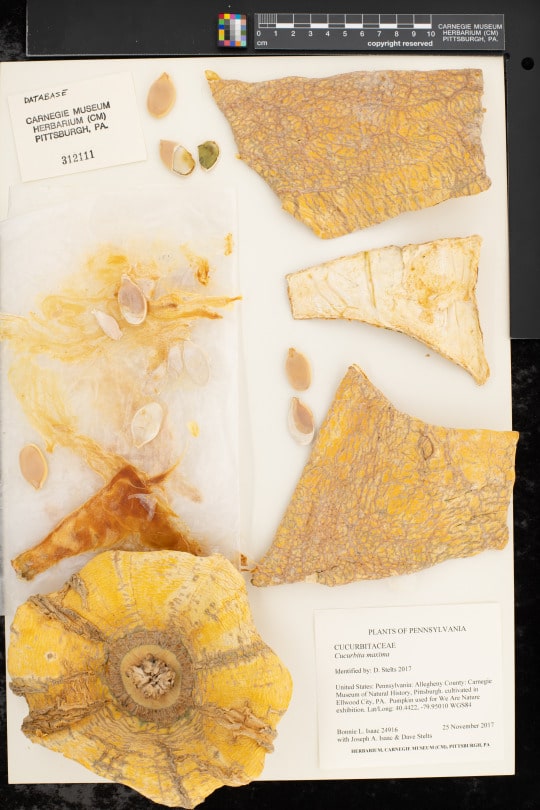
A few years ago, I came across a dilemma that I wasn’t sure how to resolve. The Section of Botany was given permission to preserve, for the scientific collection, part of the giant pumpkin that was in the exhibition, We Are Nature: Living in the Anthropocene. This was an intriguing offer. I just wasn’t sure how to go about it. Preserving any large fruits or plant parts can be a real challenge. Plant materials must be dried before they rot, and the process must happen at a temperature low enough to prevent the material from being cooked. The normal procedure of putting a plant or plant part into a plant press and drying it with warm dry air was not really an option; at least not for a 2,090-pound pumpkin that wouldn’t even fit in my car, let alone my plant press.

Pumpkins are a type of squash, but trying to literally squash one to dry it seemed a bit daunting. The farmers who grew this giant pumpkin were more than willing to give us whatever parts of the pumpkin we wanted to preserve, and they were even willing to help with cutting them from the pumpkin. We decided on trying to keep the unique parts of the pumpkin, like the stem and the blossom end (bottom). We also saved some of the inner tissue and a few seeds. The seeds on a pumpkin this large are a prize commodity. If a pumpkin from which seeds are properly harvested was a champion, as this one was, each seed could sell for $30 to upwards of $50. It was very generous of the farmers to allow us to have some of these seeds for our collection.

dried pieces of a pumpkin on an herbarium sheet

Pumpkin farmers keep close tabs on the genetics of these giants and actively work at growing larger pumpkins. You can actually find family tree information for this very pumpkin online if you search for it. Who knows how large mankind will eventually enable pumpkins to grow? The plants that grow these large squashes (the Cucurbita maxima variety known as ‘Atlantic Giant’) are a variety of the same species that produce Hubbard Squash. This species, which was originally from South America, has become one of the more diverse domesticated plants.

Giant pumpkins have been a focal point of imagination and literature for some time. Think of Cinderella. There are several variants on the Cinderella tale going back hundreds of years that involve large squash. Back when these stories were written though, it was a fantasy to think there actually could be a pumpkin that a person could fit inside.

Now that we are using QR codes on our herbarium labels, it’s easy to add photographs to plant specimen records. I wish we had thought to do this  before the massive pumpkin was cut up. Maybe I will go back and add a QR code to the label, so the actual pumpkin can be seen again in its full glory. What we have in the collection now are bits and pieces, mere remnants of the gentle giant that grew 45-50 pounds per day in 2017.

Getting back to my original question, how do you preserve a giant pumpkin? I guess the answer is a little bit at a time!

More on this giant pumpkin:

Sasquatch Squash

Giant Pumpkin Seed Harvest 

Collected on This Day: November 25, 2017

Bonnie Isaac is the Collection Manager in the Section of Botany. Museum staff, volunteers, and interns are encouraged to blog about their unique experiences and knowledge gained from working at the museum.

Filed Under: Blog Tagged With: Anthropocene Studies, Bonnie Isaac, Botany, Hall of Botany, halloween, Science News, Section of Botany

September 10, 2020 by wpengine

Feeding the Monster in the Sewer

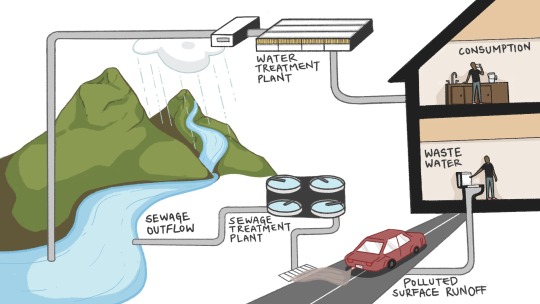
Water is a resource that I often take for granted. I take daily showers, wash my dishes, and do my laundry without a second thought to the amount or quality of water that is used. I only experience small aspects of the natural water cycle on a daily basis, from a bit of condensation on a cold glass of water to the sporadic downfall of rain that occurs in Pittsburgh. The water cycle that I’ve learned about in school can be boiled down to: precipitation, surface runoff, infiltration, evaporation, and condensation; but how do I, as a human being, fit into all of this? What is the human water cycle and how have parts of the water cycle changed within the Anthropocene?

drawing of the city water cycle from waste water to drinking water

As intrigued as I was, I didn’t know enough about my own impact on the water cycle, so I took a deeper dive into learning about what was actually happening to the water that I used. In order to explore the concept of the human water cycle I needed to start by looking at infrastructure. In the case of water infrastructure, outside of irrigation, the water purification systems and sewage systems are some of the most impactful additions human beings have included into the planet’s water cycle. These infrastructural systems span thousands and thousands of miles underground, connecting houses, neighborhoods, and cities. And yet, at least for me, there was a vast mental disconnect between the water that flows underneath us and the water that we consume. I wasn’t sure how to visualize something that was happening underground, hidden away from sight. That’s when I learned about fatbergs.

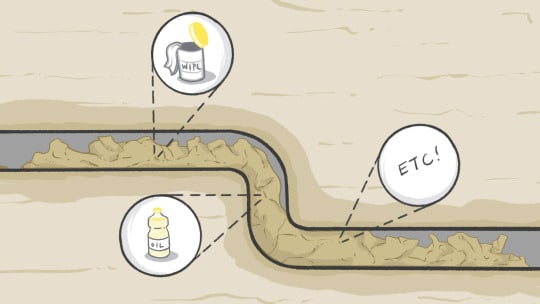
In 2017 an 820 foot long mass weighing 130 metric tons was discovered in the sewers of Whitechapel in London, England. The same type of mass, weighing 42 metric tons was found in Melbourne, Australia during the outbreak of the COVID-19 virus, most likely due to the flushing of “toilet paper substitutes” (i.e. paper towels, sanitary products, facial tissues). These masses are called fatbergs and can be found in most major cities, especially those with older sewage systems like Pittsburgh. A fatberg is a solidified mass of fat, formed overtime in sewers, that sticks to the build-up of un-flushable sewage. Fatbergs cost hundreds of thousands of dollars to remove, and also reduce river and stream water quality by making sewer overflows more likely. In the Pittsburgh Area, whenever the combined storm and sanitary sewer system is overloaded, excess flow is dumped directly into the rivers.

drawing of a pipe with a fatberg forming in it

Fatbergs are a human phenomenon that directly impacts both us and the greater environment. The sewer overflows that they cause impact both the built and natural environment, introducing pollutants such as human waste from our toilets and fats from our kitchen sinks into the living domain. But as harmful as they are, they can be easily prevented.

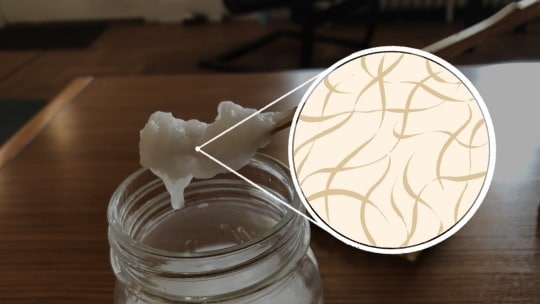
How, you ask? The solution is simple… don’t flush down anything other than toilet paper and bodily waste. But why? What makes toilet paper any different from other paper-like materials? The answer lies in the unique quality of the material that toilet paper is made up of. Unlike paper towels that use long fiber pulps, which improves the strength and absorptivity of the material, and facial tissues that contain additives that hold the fibers together, toilet paper is made using approximately 70% hardwood pulps with short fibers and 30% softwood pulps with longer fibers. Due to the hardwood pulps, once the toilet paper makes contact with water, the short fibers, which also help keep the toilet paper soft to touch, are able to untangle and fall away into smaller fragments, eventually dissolving into tiny bundles of short fiber that can easily flow through the sewage system.

jar, wet paper, and a drawing of paper fibers

Objects like ‘flushable wipes’, unlike toilet paper, take hours to days to break down. This means that just because we are able to flush something down, doesn’t necessarily make it safe for sewer and septic systems. If you want to try an experiment to explore this concept, try putting ‘flushable’ wipes and toilet paper into two separate containers of water. See for yourself what happens.

Fatbergs are all the more relevant to us during the times of the pandemic, especially in the United States. As people stay home, more objects that aren’t healthy for the sewage system are being flushed. Think about the times you flushed anything other than toilet paper. Are you feeding a potential fatberg in your neighborhood?

Daniel Noh is an intern for the Center for Anthropocene Studies, Carnegie Museum of Natural History. Museum employees are encouraged to blog about their unique experiences and knowledge gained from working at the museum.

Related Content

From the Allegheny to Our Kitchen Sinks

We Are Nature: Living in the Anthropocene (Video)

I Love this Interspecies Friendship!

Filed Under: Blog Tagged With: Anthropocene, Anthropocene Living Room, Anthropocene Section, Anthropocene Studies, Daniel Noh, Museum from Home, Science News

  • Page 1
  • Page 2
  • Go to Next Page »

sidebar

About

  • Mission & Commitments
  • Directors Team
  • Museum History

Get Involved

  • Volunteer
  • Membership
  • Carnegie Discoverers
  • Donate
  • Employment
  • Events

Bring a Group

  • Groups of 10 or More
  • Birthday Parties at the Museum
  • Field Trips

Powdermill

  • Powdermill Nature Reserve
  • Powdermill Field Trips
  • Powdermill Staff
  • Research at Powdermill

More Information

  • Image Permission Requests
  • Science Stories
  • Accessibility
  • Shopping Cart
  • Contact
  • Visitor Policies
One of the Four Carnegie Museums | © Carnegie Institute | Privacy Policy | Terms of Use | Accessibility
Rad works here logo