• Skip to primary navigation
  • Skip to main content
  • Skip to primary sidebar

Carnegie Museum of Natural History

One of the Four Carnegie Museums of Pittsburgh

  • Visit
    • Buy Tickets
    • Visitor Information
    • Exhibitions
    • Events
    • Dining at the Museum
    • Celebrate at the Museum
    • Powdermill Nature Reserve
    • Event Venue Rental
    • Gift Cards
  • Learn
    • Field Trips
    • Educator Information
    • Programs at the Museum
    • Bring the Museum to You
    • Guided Programs FAQ
    • Programs Online
    • Climate and Rural Systems Partnership
  • Research
    • Scientific Sections
    • Science Stories
    • Science Videos
    • Senior Science & Research Staff
    • Museum Library
    • Science Seminars
    • Scientific Publications
    • Specimen and Artifact Identification
  • About
    • Mission & Commitments
    • Directors Team
    • Museum History
  • Tickets
  • Give
  • Shop

Blogs about the Anthropocene

Scientists use fossils and other traces to understand how the planet changed over time. In the past these changes were caused by forces like volcanic eruptions and shifts in oceans currents. Now there’s a new force of nature shaping the planet: humans. The effects on air, land, and water are significant enough that scientists propose we are a new geological time – the Anthropocene – or age of Humans.

These blogs are about the many facets of human impact on the Earth, documenting this new age.

October 22, 2018 by wpengine

Mapping Wildlife Habitats Beyond the Borders of Protected Areas

by Chase D. Mendenhall

The best way to prevent extinctions is to protect wildlife habitats. In a world where only 13% of the land surface is dedicated to nature reserves, croplands and pastures are playing an increasingly important role in the conversation of biodiversity by providing habitat to some wildlife. Historically, agricultural activities have been pitted against nature reserves—playing the role of the “inhospitable matrix” surrounding nature reserves, which act as “islands” that safeguard biodiversity into the future. In fact, the metaphor of “islands” and “matrix” comes from decades of research studying plants and animals on oceanic islands surrounded by water.

On the mainland, we continue the tradition of largely ignoring the matrix of human-made habitats and the wildlife that use them. A major reason for overlooking human-made habitats is that we develop and use mapping techniques that only value large tracts of wildlife habitat, that are incapable of mapping fine-scale habitats, and that incorrectly classify land use types by confusing forests with croplands and pastures.
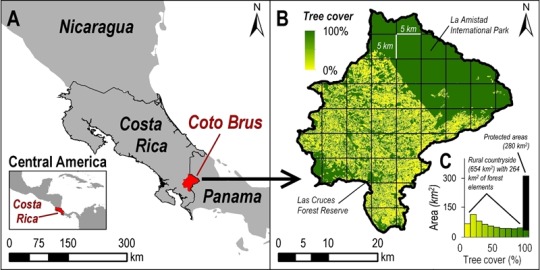
map and diagram of trees in part of Costa Rica

A new study published by the Carnegie Museum of Natural History has attempted to test the classification precision and accuracy of automated tree mapping techniques for identifying wildlife habitat in Costa Rica. In the end, we were surprised to find that two prominent mapping techniques gave distorted estimates of tree cover in deforested areas and that these distortions are potentially leading to poor decision making beyond the borders of nature reserves. We recommend conservation scientists interested in quantifying wildlife habitats embedded in croplands and pastures to consider modest techniques of digitizing habitats by hand using Google Earth. We also identify lots of room for developing new technologies using satellites, citizen science, and drones to solve the problem of counting up wildlife habitats, big and small.

The full study is available as a PDF: Improving tree cover estimates for fine-scale landscape ecology.

Chase Mendenhall is Assistant Curator of Birds, Ecology, and Conservation at Carnegie Museum of Natural History. Museum employees are encouraged to blog about their unique experiences and knowledge gained from working at the museum.


Filed Under: Blog Tagged With: Anthropocene, Chase Mendenhall

October 22, 2018 by wpengine

This is not about the Anthropocene, or is it?

by Gil Oliveira

“How many times do you need to see the evidence? How many times must the point be made? We’re causing our own extinction. Too many red lines have been crossed. […] We’re going to have to adjust to new threats we can’t even imagine. We’ve entered a new era.”

This is not about climate change, mass extinction, or ocean acidification. Rather, this quote comes from the closing scene of the recent movie Jurassic World: Fallen Kingdom. It’s about the beginning of a new fictional Jurassic-Age, where humans and dinosaurs must learn to coexist.

sunset

The final scene is visually spectacular. But what really caught my attention was the idea connecting dinosaurs and a new era. Similarly, the Anthropocene is a newly proposed time period when geological and human timescales are colliding. It entails Earth’s distant past, and also invites us to consider our actions and decisions in light of their effects long into the future. In order to link past, present and future, and make sense of it, humans construct narratives.

In a time of uncertainty, when we are indeed crossing red lines at the planetary scale in real life, one can’t help but wonder what will the future look like? What narratives do we need to live better in this new world? At their most fundamental level, narratives speak about the human condition (and its limits), so how can we better understand the role of humans as actors capable of affecting the entire Earth System?

Yuval Noah Harari, the author of Sapiens. A Brief History of Humankind, posits that humans rule the world because they are the only animal that can cooperate flexibly in large numbers (see Harari’s website). But, he asks, what is the mysterious glue that enables millions of us to cooperate seemingly more effectively than other animal societies. The glue, he argues, is the stories we tell ourselves. It is our ability to create and believe in fiction. As Jonathan Gottschall puts it: sapiens are “the great ape with the storytelling mind.”

Humans use stories to understand the world. You and I think in them. Today, dominant cultural narratives gravitate around unlimited technology, endless progress and growth, and ferocious competition. Museums have not been spared. They too have been telling stories, focused on the law of the jungle and the survival of the fittest, on nature as a realm distinct from human life, on the progress of evolution and humans as its most highly evolved product. These imaginaries have contributed to shape our representations of the world. They shape our attitudes, our beliefs, our behaviors.

Coming back to Jurassic World: Fallen Kingdom, the last scene shows a scientist appearing before a congressional committee and declaring that “Humans and Dinosaurs are now going to be forced to co-exist. These creatures were here before us and if we’re not careful they’re going to be here after.” This new pretend era seems to be characterized by a dependence between dinosaurs and humans, and humility regarding the human place in the world.

This moral may have relevance to the Anthropocene. The stories we tell and consume shape us profoundly. Stories can help us connect with the non-human world. Like science fiction, museums too are powerful spaces for storytelling. They hold great potential for generating new stories and sensibilities that may help adapt our understanding and connection to nature to better serve us in confronting the challenges of the Anthropocene.

Gil Oliveira is a postgraduate student working as an intern in the section of the Anthropocene at the Carnegie Museum of Natural History. Museum employees are encouraged to blog about their unique experiences working at the museum.

Filed Under: Blog Tagged With: Anthropocene, climate change, dinosaurs, extinction

October 18, 2018 by wpengine

Why Do Leaves Change Color in the Fall?

detail of fall leaves on a tree

One of the most anticipated events of fall is the changing colors of tree leaves. As the evenings get cooler, the trees display spectacular warm red, orange and yellow hues. The East Coast’s fall colors are SO spectacular, in fact, that many people take special trips here just to see them. But what is it about fall that makes the leaves change, and why do their colors become warmer as the days grow cold?

Are these colors really just a fall thing?

You might think that the orange and yellow colors, or pigments, are only present in leaves in fall but they’re actually there all year long–we just can’t see them because they are covered up by the strong green pigment that is also in the leaves. This green pigment comes from chlorophyll, a substance that makes energy for trees using sunlight, carbon dioxide, and water. When the amount of sunlight starts to decrease in fall, trees respond by making less chlorophyll. When this happens the green starts to disappear and the yellow and orange pigment, called carotenoid, shows through.

Red is a seasonal special

While yellow and orange are present in leaves all year round, there is another pigment that is only produced in the fall. Anthocyanin is a pigment responsible for giving leaves dark red and purple colors. This pigment is created during times in the fall when the days are warm or cool, but don’t dip below freezing. Because fall temperatures can vary from year to year, some years will have more deep red leaves than others.

Did you know?

Evergreen trees like pines, spruces, and firs stay green year-round because they have needles instead of leaves. These needles have a waxy coating that protects them from losing moisture and don’t require as much sunlight to produce the chlorophyll.

Get Outside and Find Fall Color!

Peak color for fall foliage hits Southwestern Pennsylvania in mid-October.  Track historic trends of color change to plan your outdoor excursion!

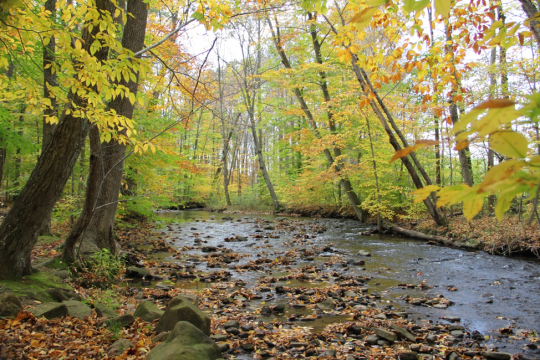
stream and trees at powdermill nature reserve

Powdermill Nature Reserve is a great place to look for fall color!


Explore nature together.  Visit Nature 360 for more activities and information.

Filed Under: Blog Tagged With: Anthropocene, autumn, Nature 360

October 8, 2018 by wpengine

Botany Near Home

by Mason Heberling

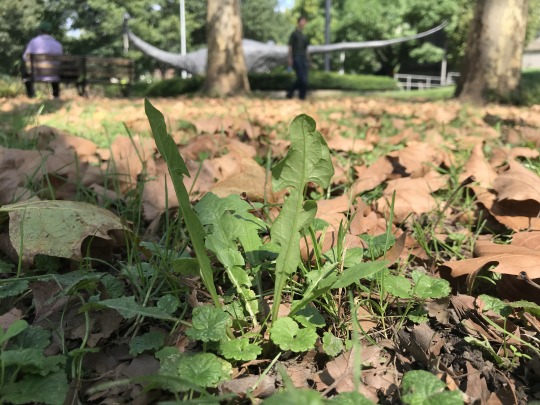
dandelion outside Carnegie Museum of Natural History

Human activities are changing our very notion of what is “natural.”  We are surrounded by nature, no matter whether we are in an asphalt parking lot in Pittsburgh or deep in the Allegheny National Forest.  This conclusion was a central theme (and namesake) of the recent exhibition at the Carnegie Museum of Natural History titled We Are Nature: Living in the Anthropocene.  The Anthropocene is an interdisciplinary, far-reaching conceptual framework for understanding, managing, protecting, and celebrating our natural heritage in a new era of global human influence on the Earth’s systems.

Is there value to nature in the city?  How about the mowed lawn in your backyard? Or the weeds in sidewalk cracks? It’s easy to overlook nature in human dominated environments, but it is something special.

While the Anthropocene as a formal term is quite new, many of the basic concepts behind it are far from it.

I recently stumbled across an inspiring, forward thinking essay by Otto Jennings entitled “Botany Near Home.”  I do not know the date or where it was published.

Affiliated with the Carnegie Museum from 1904 until his death in 1964, Jennings made many contributions throughout his career, serving as the Curator of Botany, Director of Education, and eventually Director of the museum.  He also was Professor and Head of the Department of Biological Sciences at the University of Pittsburgh, having advised many students.  His legacy remains to this day for his influence on the museum, botany, conservation, and environmental education.

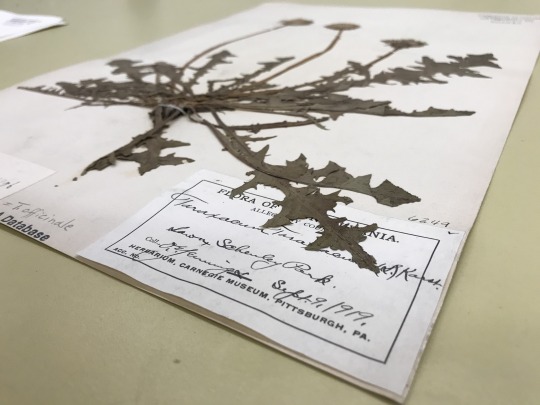
Specimen of Taraxacum offiniale (dandelion)
Specimen of Taraxacum offiniale (dandelion) collected by Otto Jennings on Sept. 9, 1919 in the lawn outside of the museum.

In his short essay, Jennings asserts that you do not need to go far to teach and learn botany hands-on. He writes, “…the teacher need not have to break up regular class schedules or to go to the trouble of organizing a field-trip to some more or less distant place.”

He continues, “Various plants grow in backyards and vacant lots which were not planted there by anyone. How did it get there?  Our back in a semi-business part of Oakland, in Pittsburgh, has had ailanthus trees, wild cherries, elderberries, southern fireweed, plantains, smartweeds, asters, a goldenrod, a thistle, and many dandelions. How did they get there?  Such a question might well be put to the school children as a quiz contest – and let them work out the answers.”  Jennings then focuses the rest of the essay on the fascinating biology of the common dandelion and advocates the use of this often overlooked, common plant to teach botany.

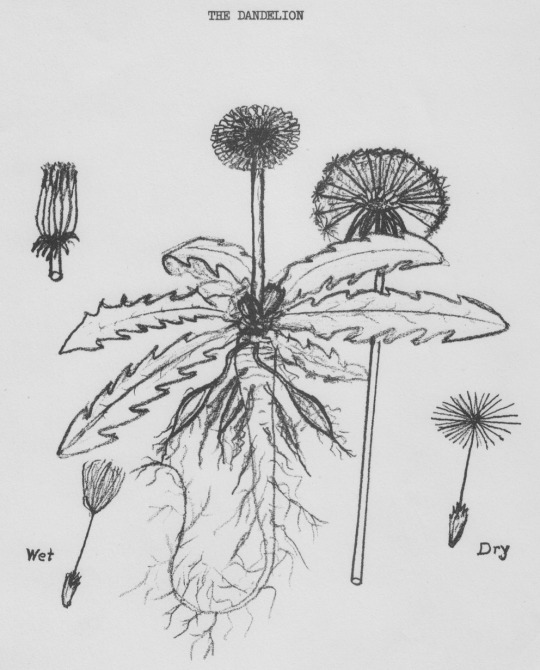
Drawing of dandelion by Otto Jennings 
Drawing of dandelion by Otto Jennings

While this basic essay may not seem like much, there is an important point.  We often think of “nature” as something far away, something you visit.  But indeed, you can find botany near home.  And once you look for it, it is a fascinating world. Even the common species aren’t as boring as you might think, once you take the time to look closely.

In the city blocks around the Carnegie Museum of Natural History alone, there are currently 104 species of plants recorded by citizen scientists in iNaturalist.  That’s right, 104! And I would presume this is far from a complete inventory.

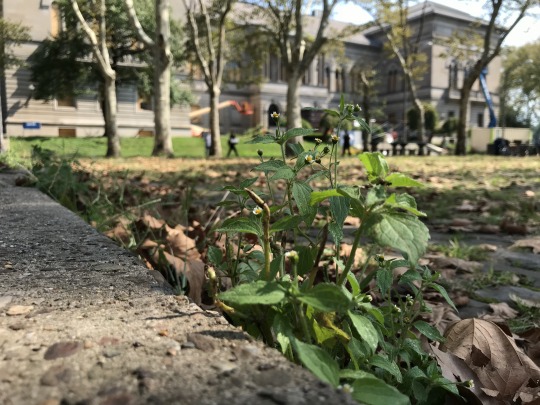
Peruvian daisy in a sidewalk crack
You can see a surprising amount of diversity in sidewalk cracks. Pictured here thriving in a sidewalk crack outside the museum is Galinsoga quadriradiata, commonly known as Peruvian daisy.  This species is common to urban environments.  So common to Pittsburgh, it is even known as “Pittsburgh Weed.”

What about urban diversity captured in the museum herbarium?  Of the 170,000+ plant specimens collected in Pennsylvania alone, over 15,000 (!) were explicitly described by the collector as growing in a human-made habitat (defined broadly, including words such as urban, sidewalk crack, vacant lot, roadside, railway, waste area, industrial, etc).

Despite the importance of appreciating life in human-dominated environments, it is also important to recognize the inherent and functional value of “pristine” nature. Managing for the “natural” is one of many difficult topics to tackle in the Anthropocene. What exactly is nature?  What should nature be?  Is there inherent value in all species? What species are priorities to conserve? How do we balance the perceived needs of human society with that of biodiversity?

These are just some of the many questions without easy answers.  But as we define our collective future in the Anthropocene, let’s always appreciate “botany near home.”

–

For more on the urban plants of Pittsburgh, be sure to check out the book Wild Urban Plants of the Northeast published in 2010 by Peter Del Tredici. https://librarycatalog.einetwork.net/Record/.b29413795

Also, be sure to check out the recent activity book published by the Cleveland Museum of Natural History.  It was designed for use by parents and teachers to engage young people with nature, even in the city.

Mason Heberling is a Postdoctoral Research Fellow in the Section of Botany at the Carnegie Museum of Natural History. Museum employees are encouraged to blog about their unique experiences working at the museum.

Botanists at the Carnegie Museum of Natural History have embarked on a three-year project to digitize nearly 190,000 plant specimens collected in the region, making images and other data publicly available online. This effort is part of the Mid-Atlantic Megalopolis Project (mamdigitization.org), a network of thirteen herbaria spanning the densely populated urban corridor from Washington, D.C. to New York City to achieve a greater understanding of our urban areas, including the unique industrial and environmental history of the greater Pittsburgh region. This project is made possible by the National Science Foundation under grant no. 1801022. Any opinions, findings, and conclusions or recommendations expressed in this material are those of the author(s) and do not necessarily reflect the views of the National Science Foundation.

Filed Under: Blog Tagged With: Anthropocene, Botany, Mason Heberling, nature, Otto Jennings, plants

October 1, 2018 by Kathleen

Scientists Live: Nicole Heller

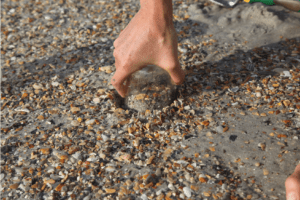
How can a jar of sand illustrate the impact of humans on the Earth?Nicole Heller, Curator of the Anthropocene, will do a broadcast on Facebook Live to share items in the Carnegie Museum of Natural History collections that relate to the essay collection Future Remains: A Cabinet of Curiosities for the Anthropocene. Dr. Heller co-wrote the lead essay “Anthropocene in a Jar” with Assistant Professor in Anthropology at the University of Pittsburgh, Dr. Tomas Matza. The essay mediates on the blurry boundaries, and often vexed relationship, between human development and natural processes through the lens of a jar of curiously patterned sand and shells collected at Wrightsville Beach.
The broadcast will begin at 10:30 a.m. and will include a question and answer segment.

Tune in at facebook.com/carnegiemnh. A recording will be posted later for those unable to watch live.


Tagged With: Anthropocene, Nicole Heller, Scientists Live

October 1, 2018 by wpengine

A Day at the Beach: The Anthropocene on Vacation

by Bob Jones

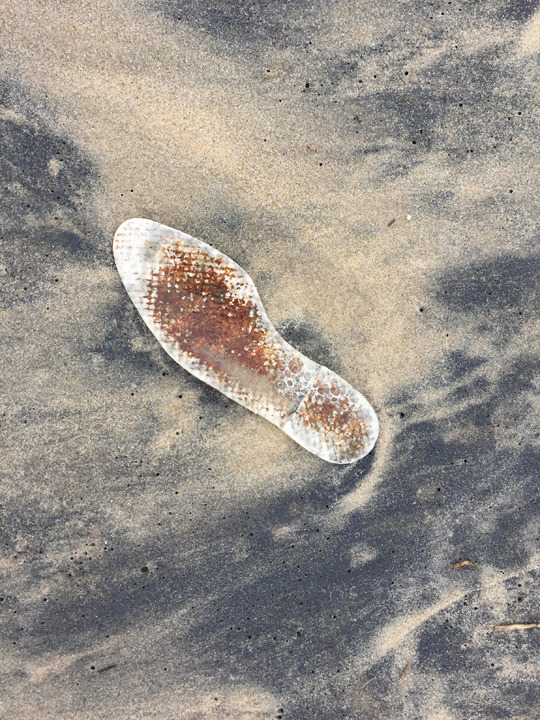
shoe insole on the beach

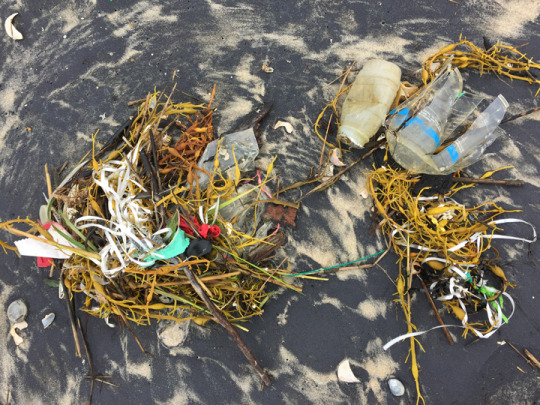
While on vacation, my wife and I took a morning walk on the beach to enjoy the sights and sounds of the surf while getting some exercise. The beach was mostly empty this morning and the sky was grey with the storm warnings of Hurricane Florence approaching to the south of our location in Delaware. It didn’t take long to notice a disturbing sight as we made our way on the sand. Plastic trash and lots of it. Bottles, bottle caps, beach toys, cups, straws, food containers, shoes, insoles, cigar tips and lots more. From a distance things look fine. Some clumps of seaweed on the sand. Just another day at the beach. Upon closer inspection, there are a wide variety of multi-colored bits of debris mixed throughout the tangles.

litter and seaweed on the beach

Since participating in the recent exhibition We Are Nature: Living in the Anthropocene at the Carnegie Museum of Natural History my awareness of our impact on the world that we inhabit has been raised to a new level. Of course, I’ve noticed trash on the beach in years past but the gradual increase over time is insidious in its’ nature. It creeps up on you slowly, so you hardly notice. It’s a bit like the metaphor of boiling a frog. The premise is that if a frog is put suddenly into boiling water, it will jump out, but if the frog is put in tepid water which is then brought to a boil slowly, it will not perceive the danger and will be cooked to death. I used to be more aware of avoiding stepping on jagged seashells, but now I find myself avoiding treading on the trash left on and washed up on the beach.

Don’t get me wrong, it’s not yet at an epidemic proportion at this location, but why wait until it reaches that point to act? To be honest, I couldn’t tell you if it was this bad last year or if I’m more conscious of it now. Either way, I want to share my experience and hopefully encourage others to make improvements wherever we can. After taking pictures to document the situation I felt the need to grab a trash bag and start collecting the debris for disposal. I realize that this is a big problem and it is easy to become overwhelmed. My first response is disgust and anger at the lack of care and respect that people give to the environment. My next response is, “What’s the use? Even If I bag this up it’s just sending the problem to another location.” My best response is to act with a purpose. I know that I’m just one person, but if one person can influence one other, ten others, a hundred others, to make a positive change then we have the potential to create a movement. With enough momentum, we can hold back the tide of trash and plastic that is choking our oceans and rivers.

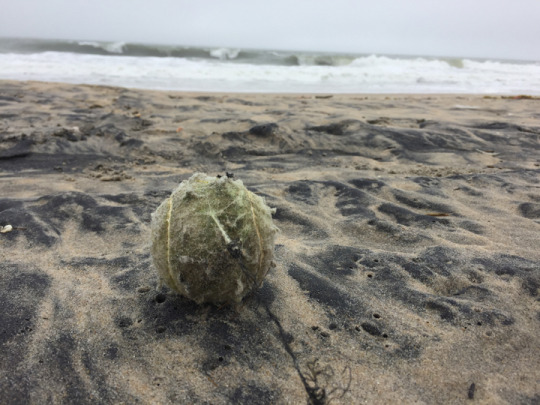
tennis ball on the beach

I am old enough to remember when the air in Pittsburgh was so bad that it was impossible to see 100 feet ahead in the morning because of all the pollution released from the mills during the night. As a boy, I used to think that the buildings in downtown and Oakland were constructed with black stone because of the amount of soot built up on their surface. I was amazed when they were sandblasted in the 1980s and 90’s to reveal the brightness of the granite that lay beneath the layer of grime. The Monongahela River was thick with sludge and garbage being dumped into the water rendering it unsafe to swim in. My brother and I used to fish from the shore in the SouthSide snagging way more old tires and junk than fish. The only fish in the rivers were carp and catfish. Today, they hold tournaments to catch bass in the three rivers. That is a phenomenal improvement. In the last forty years, we have made tremendous improvements by addressing what the problem is and taking corrective action.

It is up to each one of us to not only recognize the problems that we face, but to seek and apply solutions to put things right. I was taught that when spending any time in nature I should leave things in better condition than I found them. The simple act of picking up trash and erasing any signs that I had been there is a step in the right direction. The importance of leaving the environment in good shape so the next person can enjoy the wonders of nature, as it is intended. Working together we can make a difference.

Bob Jones is the Print Shop Manager at the Carnegie Museum of Natural History. Museum employees are encouraged to blog about their unique experiences and knowledge gained from working at the museum.
Filed Under: Blog Tagged With: Anthropocene, Bob Jones, climate change, pollution

  • « Go to Previous Page
  • Page 1
  • Interim pages omitted …
  • Page 9
  • Page 10
  • Page 11
  • Page 12
  • Page 13
  • Interim pages omitted …
  • Page 16
  • Go to Next Page »

sidebar

About

  • Mission & Commitments
  • Directors Team
  • Museum History

Get Involved

  • Volunteer
  • Membership
  • Carnegie Discoverers
  • Donate
  • Employment
  • Events

Bring a Group

  • Groups of 10 or More
  • Birthday Parties at the Museum
  • Field Trips

Powdermill

  • Powdermill Nature Reserve
  • Powdermill Field Trips
  • Powdermill Staff
  • Research at Powdermill

More Information

  • Image Permission Requests
  • Science Stories
  • Accessibility
  • Shopping Cart
  • Contact
  • Visitor Policies
One of the Four Carnegie Museums | © Carnegie Institute | Privacy Policy | Terms of Use | Accessibility
Rad works here logo