• Skip to primary navigation
  • Skip to main content
  • Skip to primary sidebar

Carnegie Museum of Natural History

One of the Four Carnegie Museums of Pittsburgh

  • Visit
    • Buy Tickets
    • Visitor Information
    • Exhibitions
    • Events
    • Dining at the Museum
    • Celebrate at the Museum
    • Powdermill Nature Reserve
    • Event Venue Rental
    • Gift Cards
  • Learn
    • Field Trips
    • Educator Information
    • Programs at the Museum
    • Bring the Museum to You
    • Guided Programs FAQ
    • Programs Online
    • Climate and Rural Systems Partnership
  • Research
    • Scientific Sections
    • Science Stories
    • Science Videos
    • Senior Science & Research Staff
    • Museum Library
    • Science Seminars
    • Scientific Publications
    • Specimen and Artifact Identification
  • About
    • Mission & Commitments
    • Directors Team
    • Museum History
  • Tickets
  • Give
  • Shop

Blogs about the Anthropocene

Scientists use fossils and other traces to understand how the planet changed over time. In the past these changes were caused by forces like volcanic eruptions and shifts in oceans currents. Now there’s a new force of nature shaping the planet: humans. The effects on air, land, and water are significant enough that scientists propose we are a new geological time – the Anthropocene – or age of Humans.

These blogs are about the many facets of human impact on the Earth, documenting this new age.

April 10, 2019 by wpengine

Another Reason to Love Ladybugs

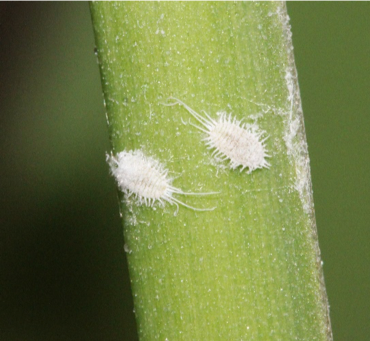
mealy bugs on plant

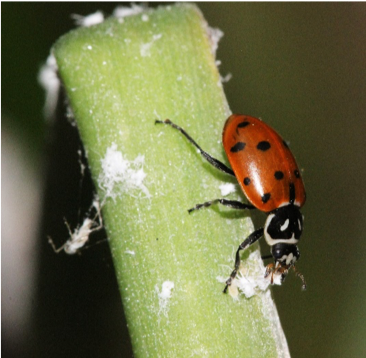
The Marsh Machine at Powdermill is great for recycling the nature center’s wastewater. It’s also great for building up huge populations of pests, such as aphids, scales, and mealy bugs (Picture 1). These plant-feeding insects thrive in the warm greenhouse environment, free from the natural predators they would encounter in an outdoor setting.
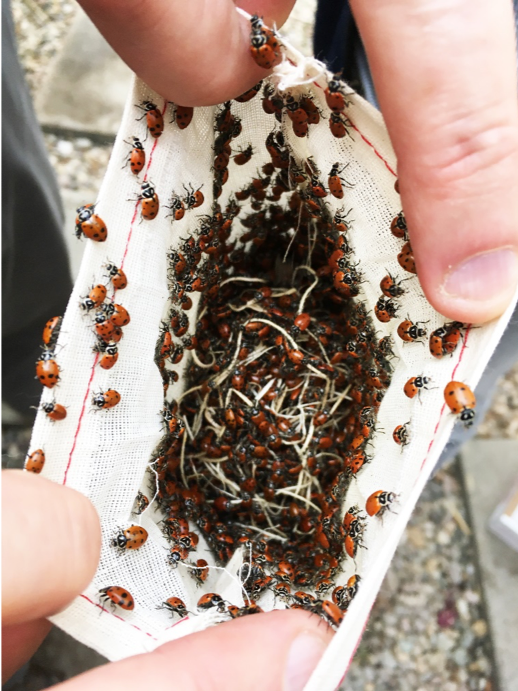
lady bugs crawling out of a canvas bag

So what would be the logical solution to combatting these pests, which are highly destructive to the Marsh Machine plants that are working so hard to treat our wastewater? Bring the predators in, of course! The convergent ladybug (Hippodamia convergens), is a native predatory beetle that prefers just the types of insects that infest the Marsh Machine. We purchased 4,000 of these ladybugs (Picture 2) and have just released them into our greenhouse. The voracious predators immediately began their search and started feasting on a buffet of teeny bugs (Picture 3).
ladybug eating a mealy bug on a plant

According to our ladybug vendor, each adult ladybug can consume about 5,000 aphids in its lifetime! The adult females lay about 10-15 eggs a day, and the larvae that hatch out consume 50-60 aphids per day. At this rate, we anticipate our infestation will be under control in no time!

Note: While releasing ladybugs is an effective way to control greenhouse pests, releasing them outdoors generally results in the ladybugs flying away from the intended target, so keep this in mind when considering pest control options in your own backyard. Other options include eliminating the use of pesticides, which also kill the beneficial predators (and pollinators), and gardening with native plants, which are adapted to defend against native pests.

Andrea Kautz is a Research Entomologist at Carnegie Museum of Natural History’s Powdermill Nature Reserve. Museum employees are encouraged to blog about their unique experiences and knowledge gained from working at the museum.
Filed Under: Blog Tagged With: Andrea Kautz, Anthropocene, bugs, insects, Powdermill Nature Reserve

April 5, 2019 by wpengine

What Makes Reptiles So Unique?

What makes reptiles so unique? Curator of Amphibians and Reptiles, Jennifer Sheridan, shares some of her favorite facts about the unique adaptations of reptiles including flying lizards and flying snakes. She also addresses how human activities impact reptiles like turtles, and how they adapt to changes in climate.

Ask a Scientist is a video series where we ask our research staff questions about the millions of amazing objects and specimens stored in our museum collection. Tune in on YouTube, and submit your own questions at https://carnegiemnh.org/visitor/ask-a-scientist-videos/

Filed Under: Blog Tagged With: amphibians and reptiles, Anthropocene, herpetology, Jennifer Sheridan, Lizards, reptiles, snakes

March 18, 2019 by wpengine

New Zealand, Realm of Birds

I recently returned from three weeks’ vacation on New Zealand’s South Island. I had expected to see bazillions of sheep (I heard there were 7 sheep for every person in New Zealand), but I found that New Zealand is characterized by birds and ferns (and although we saw lots of sheep, many farmers are turning to dairy). In this post, I’ll touch on the birds of New Zealand.

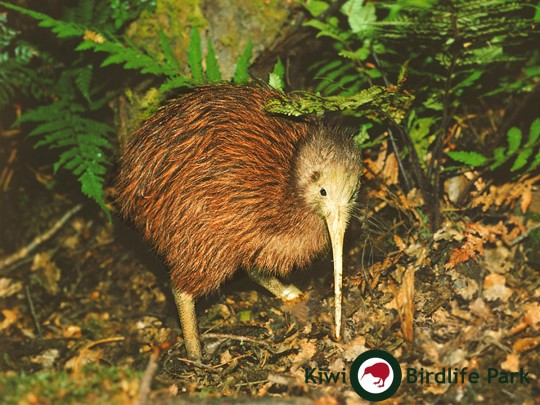
Kiwi bird. Photo courtesy of Kiwi Birdlife Park.

Before humans arrived, the only land mammals on New Zealand were two species of bats and a now-extinct mouse. That left birds to radiate into numerous niches, and without ground-based predators, many birds became flightless and fearless. (The fearsome Haast eagle, with a wingspan up to 3 m or 10 ft, hunted from the air, but is now extinct.)

42% of the bird species have become extinct since year 1300. New Zealand was colonized by humans comparatively recently: Polynesians, who became the Maori people, arrived about year 1300 AD and brought the Polynesian rat, or kiore, which started to harm ground-nesting birds, and the Maori wiped out the large, herbivorous moa birds (evidently, they were tasty). Europeans colonized in the 1800s and brought mammals that further devastated the bird fauna: Norway rats, cats, and stoats (relatives of weasels).

The New Zealand Department of Conservation traps and poisons the mammals, which helps some birds recover. Mammal lovers who oppose the control efforts don’t offer an alternate plan, but without control, even more birds would now be extinct. There is a move toward complete eradication of the introduced mammalian predators by 2050.

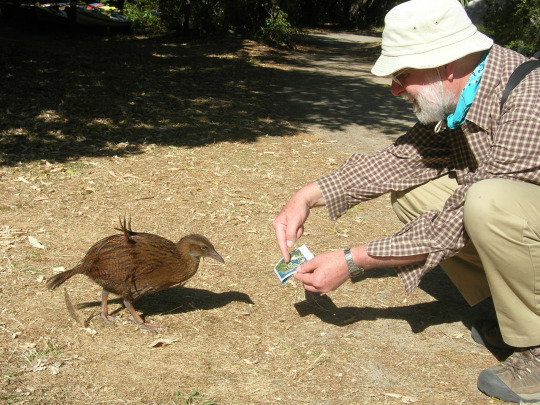
One of the widespread and friendly flightless birds is the weka. It is a member of the rail family and is roughly the size of a chicken. I tried to show one weka how to read a map, but I think it had trouble understanding my U.S. accent (see photo).

weka bird and man with a map
Weka, one of the flightless birds of New Zealand. Photo by Alice W. Doolittle.

Thanks to conservation efforts, five species of kiwi birds still live in New Zealand. They are primarily nocturnal, and we were fortunate to see some at Kiwi Birdlife Park (see photo). The mother kiwi lays an unusually large egg that is about a quarter of her mass (I imagine her saying ouch at egg laying). Recent DNA evidence suggests the kiwi is more closely related to the (extinct) elephant bird of Madagascar than to the (extinct) moa of New Zealand. I believe the large size of the kiwi’s egg relative to its body size could be from evolution shrinking the adult size faster than it shrank the egg size. Kiwis have a very long proboscis, and the Maori name for one of the kiwi species translates to weka with a walking stick. Kiwis are the only bird with nostrils at the end of its proboscis. Given that bill length is measured from the nostrils to the tip, despite its prodigious nasal protuberance, technically the kiwi has the shortest bill of any bird!

Timothy A. Pearce is Curator of Collections, Section of Mollusks at Carnegie Museum of Natural History. Museum employees are encouraged to blog about their unique experiences and knowledge gained from working at the museum.
Filed Under: Blog Tagged With: Anthropocene, Birds, Tim Pearce

March 14, 2019 by wpengine

Natural History and a Unified Museum Definition

By Eric Dorfman

person standing in front of a museum exhibit

Much is being said within the museum industry about the definition of museums. ICOM is considering the current definition and whether it needs to be rethought. I think a review is worthwhile, regardless of whether changes are ultimately made. Robust thinking about museums (or any field, in fact), whether related to practice or theory, should be based on the intrinsic nature of the field. Defining museums is a critical step along that journey.

For natural history institutions, whose main business is to study and interpret the diversity of life, the relationship between museums and the state of the Earth must by necessity play an important role in constructing a definition. At the very least, an exploration of this relationship provides a context for natural history museum collections and, at best, it has the power to incite people to explore their identity and connection to one another through the prism of nature.

To some degree, natural history museums can be defined by what they do. At Carnegie Museum of Natural History, we have defined our work through three distinct but interrelated lenses:

  • The Tree of Life: The study of evolutionary relationships among taxonomic groups,
  • The Web of Life: The collection-based and in situ study of ecological systems,
  • The Future of Life: The study of the trajectory of species, populations and ecosystems, especially in the context of anthropogenic disturbances, as well as actions to ameliorate those effects.

The collections and other infrastructure provided by our museum support this work and the story-telling that arises from them.

While the study of evolution and ecosystem relationships is the traditional work of natural history museums, the future of life bears further consideration. By most measures, conditions on the planet we bequeath to our descendants are highly uncertain. Even discounting the seemingly inescapable reality of a future effected anthropogenic climate change, many factors inhibit our predictive ability. Will we run out of power or meat? Will plastic and mercury pollution render produce from the oceans inedible? Will at least some of the planet run out of water in the face of increasing desertification?

These are “wicked problems” (Churchman 1967; Levin et al. 2012) – issues that have so many facets we cannot know the answers, but for which at least some of the alternative outcomes are negative. The interrelationships between these issues create bewildering complexity.

These effects have been recently amalgamated into the concept of the “Anthropocene”, a proposed geological era that reflects human impacts so pervasive as to influence the geological record. These effects will be detectable millions of years from now, by whoever might be looking, as an unprecedented band of plastics, fly ash, radionuclides, metals, pesticides, reactive nitrogen, and consequences of increasing greenhouse gas concentrations (Waters et al. 2016), as well as highly modified fossil composition, featuring an overwhelming preponderance of chicken bones.

How does this ‘Age of Humanity’ structure our visitors’ perceptions and help them phrase questions about their environment? How will it influence our research? Most germane here, how does lack of certainty about the future of the planet influence the museum definition as it pertains to natural history institutions?

A Natural History Perspective

bug specimens

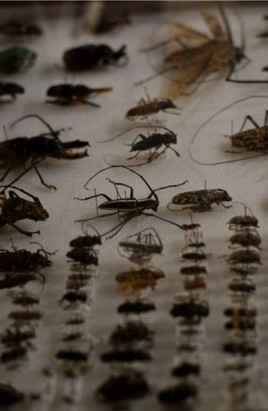
Fifteen of the world’s top natural history museums collectively contain, at rough estimate, almost 570 million specimens[1]. This represents the largest category of collection across the museum industry. Collections underpin the field. Any discussion of a unified perspective of natural history museums must therefore take into account the fact that collections form the basis of much of that is undertaken by natural history museums. This focus on collections, often from deep time, intertwines physical and temporal considerations:

Natural history museums and their collections are often thought of in terms of the past, which is not surprising. We are probably the only scientific research facility that can claim the ability to time travel, albeit in a patchy and far from perfect way. Our business is intimately connected with the past, both recent and deep time, and much of what humans know about the natural world a hundred, a hundred thousand, or a hundred million years ago arises directly or indirectly from the specimens held in our collections. When your child states with certainty that Tyrannosaurus rex lived in the Cretaceous they are, knowingly or unknowingly, drawing on the results of research done using museum collections. Norris, 2017, p. 13.

Norris (ibid.) follows this with a comment: “There is, however, a considerable difference between studying the past and belonging in the past.” Natural history institutions also focus strongly on the present and future and use information about the past uncover, contextualize and predict changes in the world around us.

Natural history museums, sitting at the crux between nature and its artistic representations have an important place in facilitating exploration of personal identity. Inasmuch as enhancing self-perception can have a positive influence on behavior, (see Falk, 2009), natural history museums’ capacity to contribute to society increases as their activities in this sphere become more purposeful. Those visitors who care about wildlife, and there are many, want natural history museums to deepen and expand their understanding. Museums like to feel that they occupy a place of credibility in the hearts and minds of the public that other channels of information, for all their worth, do not (but see Museums Association, 2013). Whether we truly are more credible than other types of institutions or not, our self-perception provides a significant opportunity to strive for best practice.

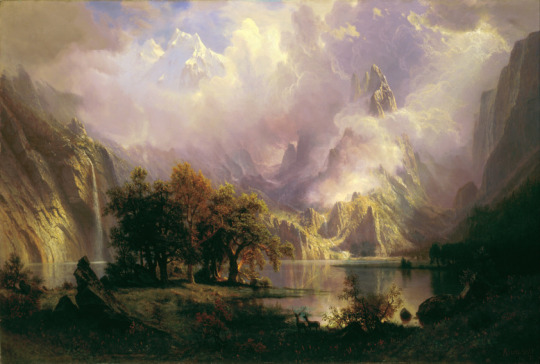
Albert Bierstadt: Rocky Mountain Landscape

The grounding of natural history museum practice in the study of physical specimens means that these institutions have at least a goal of objectivity, however influenced by curatorial subjectivity the framing of questions can sometimes be (see Dorfman, 2016). The articulation of evidential knowledge, concern over changing political environments, even in quality of governments themselves, is not new, nor restricted to the museum field.

How are museums responding to the melange of environmental, sociopolitical and technological changes that that are beginning to set the context in which they operate? Customer focus and using people’s own languages, both culturally and linguistically, to communicate touches every aspect of activities at natural history museums, including exhibitions, marketing, strategic planning, science, cleaning regimes and providing sufficient seating. Conflating individuals’ perspectives into stereotyped offers based on age, gender, race, socioeconomic background, sexual orientation undermines the relevance on which natural history museums pride themselves.  Every institution has the opportunity to provide leadership in the sense that Covey (2005) wrote “…leadership is communicating to people their worth and potential so clearly that they come to see it in themselves.”

For natural history museums, the unique signature of our industry is formed by using collection-based and in situ research to elucidate evolutionary and ecosystem relationships, as well as the intersection of these processes with humanity and its impacts, and then facing these stories outwards to the public. For all the many facets of the work of natural history museums, this is the most important and the aligned with our mission.

The Definition Through the Eyes of Natural History


The current definition of a museum as provided by ICOM is as follows:

A museum is a non-profit, permanent institution in the service of society and its development, open to the public, which acquires, conserves, researches, communicates and exhibits the tangible and intangible heritage of humanity and its environment for the purposes of education, study and enjoyment. (ICOM Statutes art.3 para.1)

At first blush, much of the definition of the definition as it stands is generic enough to include natural history museums. One question, however, that comes to mind is how well the term “humanity and its environment” fits the practice and perspective of our industry. For one thing, any organism that existed before the evolutionary rise of Homo sapiens (~2mya) could, by this definition, be considered irrelevant to the work of museums. While this is patently not the case, a careful review of the definition should take this wording into consideration.

This semantic argument notwithstanding, the implicit question embodied in the words “its” poses a deeper consideration, namely the ideological friction between the notion of ecosystem valuation versus that of the intrinsic worth of nature. Both these perspectives have their strong adherents.

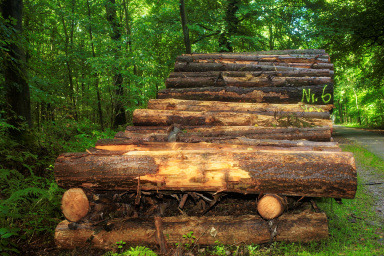
stack of lumber in the woods

Formal cost-benefit analyses and the generation of market value were first developed in 1997 by Robert Costanza, Distinguished University Professor of sustainability at Portland State University, Oregon, building on earlier discussions of economic benefits of the environmental (e.g. Rolston, 1988). Constanza and his colleagues calculated that such services were worth US$33 trillion annually, or US$44 trillion in 2019 currency (Constanza, 1997). The rationale for undertaking this exercise is that ecological system services and the natural capital stocks that produce them are critical to the functioning of the Earth’s life-support system for humans. They contribute to humanity’s welfare, both directly and indirectly, and therefore represent part of the total economic value of the planet.

Since then, the field of environmental economics has proliferated and non-market valuation has become a broadly accepted and widely practiced means of measuring the economic value of the environment and natural resources. A variety of methods, including opportunity cost, travel-cost, hedonic price and contingent valuation have been applied in highly nuanced and complex models (e.g. Weber, 2015). In most, but not all cases, environmental goods and services are geared solely toward protecting inter-generational human welfare. For instance, considering mangrove ecosystems, benefits might be characterized by direct ecological yield in the form of fish or timber, contrasting with indirect value, such as filtration services and storm protection. There is also a line of reasoning that suggests that sentimental or “existence” value: simply knowing something exists provides a distinct, discernible benefit (Krutilla 1967).

An opposing viewpoint lies in the philosophy that nature has intrinsic worth and that the environment should be protected based on its own merits without reference to real or potential benefits for humanity (McCauley, 2006). This viewpoint is strongly based in environmental philosophy and ethics (see, for instance Callicott’s 1992 criticism of Rollston, 1988).

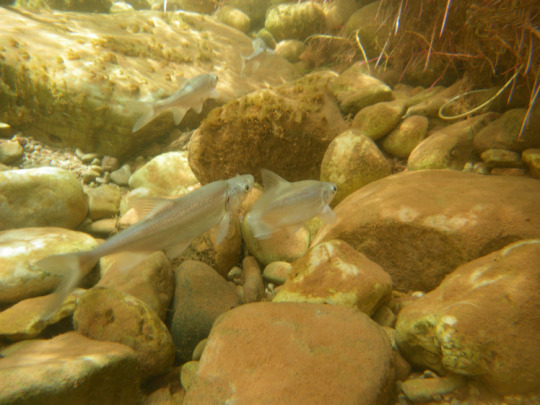
Young humpback chub (Gila cypha) swimming in Shinumo Creek, inside Grand Canyon National Park soon after release. They are part of a reintroduction program of this federally protected species with the goal to establish a second population, after they became extinct everywhere except a small part of Little Colorado River. Photo: Melissa Trammell, NPS

For instance, in discussing conservation efforts of the humpback chub (Gila cypha) a large minnow with no value to humans, native to the Colorado River, Smith (2010) suggests that all currently existing (biological) species have their own intrinsic goods, framed in terms of their ability to flourish. Based on this ethical stance alone, it could be argued that even a species like the humpback chub, that competes successfully with economically important introduced species (such as rainbow trout Oncorhynchus mykiss), should be preserved.

The work of natural history museums is firmly rooted in this second philosophy. For one thing, much of the research we do is based on advancing knowledge for its own sake or, like the example of the humpback chub, taking conservation action out of professional ethics and a moral sense that it is the right thing to do. Additionally, natural history institutions, like other types, use the museum medium of engagement to instill empathy with the subject. In the introduction to her book Fostering Empathy Through Museums, Elif Gokcigdem highlights this necessity:

…Having visibly altered our planet’s outermost layers, scientists are debating whether our footprint is worthy of naming an entire geological epoch on Earth’s billions-of-years-old timescale after ourselves: Anthropocene, the Age of Humans… A steady proliferation of new and ever more powerful technological tools seems unable to correct these ills. One must wonder why they have not succeeded. I believe it is because the tools that are at our disposal are most beneficial when filtered through a worldview that values the collective well-being of the “Whole” – our unified humanity and the planet, inclusive of all living beings as well as of its life-supporting natural resources. Such a unifying worldview cannot be attained and sustained without empathy, our inherent ability to perceive and share the feelings of another. (Gokcigdem, 2016. xix)

Connecting people both intellectually and emotionally to the world’s major stories sits firmly within the scope of work of museums. The opportunity to bring people outside themselves to engage more deeply with the world is an element of the definition of that should be incorporated across all its nuanced facets. If the definition of museums chases, these considerations should sit beside many others as influencors of the conversation.

Eric Dorfman is the Daniel G. and Carole L. Kamin Director of Carnegie Museum of Natural History. Museum employees are encouraged to blog about their unique experiences and knowledge gained from working at the museum.
Footnote

[1] Information taken from the websites of the following museums: Smithsonian Museum of Natural History: 137 million; Natural History Museum (UK): 80 million; Jardin des Plantes: ‎68 million; Los Angeles County Museum of Natural History: 35 million; American Museum of Natural History: 32 million; Naturhistorisches Museum: 30 million; Field Museum: 30 million; Museum für Naturkunde: 30 million; California Academy of Sciences: 26 million; Carnegie Museum of Natural History 22 million; Australian Museum: 21 million Harvard University Natural History Museum 21 million; ; Natural History Museum of Geneva 15 million; Yale Peabody Museum: 13 million; Museo Nacional de Ciencias Naturales: 6 million. No attempt to verify these figures has been made.

References

Callicott, J. B. 1992. Rolston on intrinsic value: A deconstruction. 1992. Environmental Ethics Vol. 14. Number 2. 129-143.

Churchman, C. W. 1967. Wicked problems. Management Science, Vol. 14, No. 4, pp. B141-142.

Costanza, R., d’Arge, R., de Groot, R., Farber, S., Grasso, M., Hannon, B., Limburg, K., Naeem, S., O’Neill, R. V., Paruelo, J., Raskin, R. G., Sutton, P., van den Belt, M. 1997. ‘The value of the world’s ecosystem services and natural capital,’ Nature, Vol. 387, pp. 253–260.

Covey, S. R. 2005. The Eighth Habit: From Effectiveness to Greatness. New York, NY: Free Press.

Dorfman, E.J. 2016. Who owns history? Diverse perspectives on curating an Ancient Egyptian Kestrel. Taipei: Proceedings of the International Biennial Conference of Museum Studies Commemorating the 80th Birthday of Professor Pao-teh Han 30th and 31th October 2014.

Dutton, D. 2009. The Art Instinct: Beauty, Pleasure and Human Evolution. New York, NY: Bloomsbury Press.

Falk, J. H. 2009. Identity and the Museum Visitor Experience. New York: Routledge.

Gockigdem, E. 2016. Fostering Empathy Through Museums. Lanham, MD: Rowman and Littlefield.

Krutilla, J. 1967. Conservation Reconsidered. The American Economic Review, Vol. 57, Issue 4, pp. 777-786.

Latour, B. 2015. Telling friends from foes in the time of the Anthropocene. In: The Anthropocene and the Global Environmental Crisis: Rethinking Modernity in a New Epoch. Edited by Hamilton, C., Bonneiul, C. and Germenne, F. London and New York: Routlege.

Levin, K., Cashore, N., Bernstein, S., and Auld, G. 2012. Overcoming the tragedy of super wicked problems: Constraining our future selves to ameliorate global climate change. Policy Sciences, Vol. 45, No. 2, pp. 123-152.

Louv, R. 2011. The Nature Principle: Reconnecting with Life in a Virtual Age. Chapel Hill, NC: Algonquin Books.

McCauley, D. J. 2006. Selling out on nature. Nature 443(7107), p. 27.

Museums Association. 2013. Public perceptions of – and attitudes to – the purposes of museums in society: a report prepared by BritainThinks for Museums Association. Museums Association, London. http://www.museumsassociation.org/download?id=954916 accessed January 13, 2019.

Norris, C. A. 2017. ‘The Future of Natural History Collections,’ in The Future of Natural History Museums. Edited by Eric Dorfman. New York, NY: Routledge, pp. 13-28.

Oxford Dictionaries. 2019. Word of the Year 2018 is… Available at: https://en.oxforddictionaries.com/word-of-the-year/word-of-the-year-2018, Accessed January 13, 2019.

Rolston, H. Environmental Ethics: Duties to and Values in the Natural World. 1988. Philadelphia, PA: Temple University Press.

Smith, I. A. 2010. The Role of Humility and Intrinsic Goods in Preserving Endangered Species: Why Preserve the Humpback Chub? Environmental Ethics. Vol. 32, No. 2, pp. 165-182.

Waters, C., N. Zalasiewicz, J., Summerhayes, C., Barnosky, A.D., Poirier, C., Gałuszka, A., Cearreta, A., Edgeworth, M., Ellis, E.C., Ellis, M., Jeandel, C., Leinfelder, R., McNeill, J.R., Richter, D., Steffen, W., Syvitski, J., Vidas, D., Wagreich, M., Williams, M., Zhisheng, A., Grinevald, J., Odada, E., Oreskes, and Wolfe, N. 2016, The Antrhopocene is functionally and stratigraphically distinct from the Holocene. Science, Vol. 351. No. 6296, p. 137.

Weber, W. L. 2015. Production, Growth and the Environment. Boca Raton, FL: Taylor & Francis Group.

Weil, S. 2002. Making Museums Matter. Washington D.C.: Smithsonian Books.

White, M. 2000. Leonardo: The First Scientist. London: Little Brown.

Filed Under: Blog Tagged With: Anthropocene

March 11, 2019 by wpengine

The Symbol of the Anthropocene in Preparation at the Carnegie Museum

black question mark on white background

As an intern in the Anthropocene section at the Carnegie Museum, I had the privilege of exploring some of its treasures, either preserved in the collections or displayed for the public, and reflecting on how objects can help us consider the planetary changes underway in the Anthropocene.

During my explorations, I was asked what was my highlight, or what object best exemplifies the Anthropocene to me?

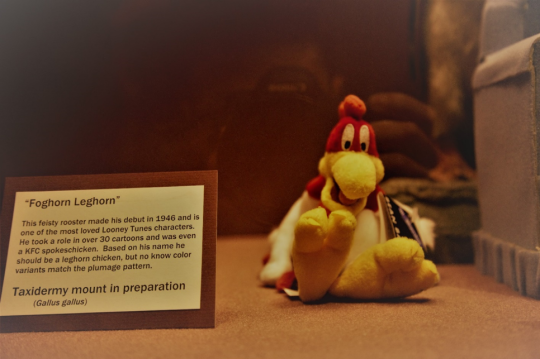
Picture from case in Bird Hall. Taxidermy mount in preparation because Steve Rogers, collections manager of Birds, is still waiting to find a specimen that looks like the Foghorn Leghorn.

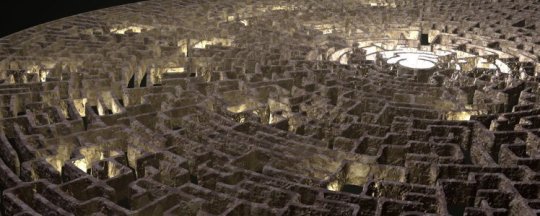
Turns out – my most vivid symbol of the Anthropocene is absent. It is not found in either the collections, or in the gallery halls (although it is found in the cafeteria)!

Yes indeed, my favorite symbol is the commercial broiler chicken, likely one of the most common birds in the world because it reaches slaughter weight in less than half the time of other domestic or wild chickens! Surprised? Disappointed? Let me explain…

Last year, the director of the museum, Dr. Eric Dorfman, wrote a compelling blog titled Counting Your Chickens: The World’s Most Numerous Bird. Chickens are likely the most numerous bird in the world. In light of the Anthropocene, we could even say in Earth history. There are about 23 billion chickens alive at any given time. By comparison, the second most numerous bird reported is the red-billed quelea, which lives across the continent of Africa, with an estimated population of 1.5 billion.

You probably wonder how the chicken conquered the world. Its long journey began around 7,000 years ago when it was first domesticated from the red junglefowl (Gallus gallus), native to south-east Asia. But the bird’s trajectory radically changed in the second half of the 20th century, during what is now called “The Great Acceleration.” With changes in farming practice and the intensive production of broilers, the chicken population exploded. Meat-chicken consumption is still on the rise with more than 65 billion chickens consumed globally in 2016.

The commercial broiler chicken is even more radically different from its ancestors and other kinds of chickens. The change is about their shape, genes, and chemistry. Their genes, for instance, have been altered so that the birds are constantly hungry. In other words, they have been bred for a specific purpose: to gain weight rapidly (and they do it five times faster than chickens from the mid-20th century). It is a perfect example of what Richard Pell, director of the Center for PostNatural History and Associate Professor of Art at Carnegie Mellon University, means by the term “postnatural,” that is an organism that has been intentionally and heritably altered by humans.

The commercial broiler chicken is the direct result of human intervention. One could argue that selective breeding practices are not new. However, the Anthropocene captures a very recent rupture in Earth’s history by highlighting rapid and unprecedented changes at a planetary scale. Commercial broiler chickens and their biology shaped by humans, created in just a few decades, symbolize the transformation of the Earth’s biosphere. And new research suggests that the commercial broiler chicken’s distinctive bones could become fossilized markers of the Anthropocene. Perhaps it would be more appropriate to talk about the Gallucene.

Stories like this show how the Anthropocene offers an opportunity to rethink how we view natural history and what we put in our collections. The Carnegie Museum of Natural History is undertaking this ambitious and necessary shift in order to understand what it means to live in this new epoch.

Gil Oliveira is an intern in the Section of the Anthropocene. Museum employees are encouraged to blog about their unique experiences and knowledge gained from working at the museum.
Filed Under: Blog Tagged With: Anthropocene, bird hall, Birds, Gil Oliviera

February 7, 2019 by wpengine

Bird is the Word

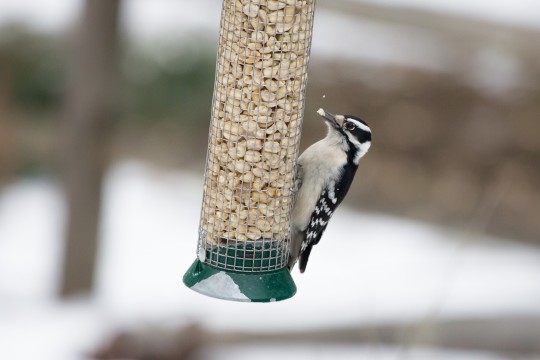
bird at bird feeder

February’s here and you know what that means… it’s time for the Great Backyard Bird Count!  Since 1998, people all over the world have participated annually in the Great Backyard Bird Count to collect information on wild birds by observing areas in their own neighborhoods.  Last year people from over 100 countries participated!  The Great Backyard Bird Count gathers data to help scientists figure out what is happening to bird populations around the globe.  That means YOU can contribute to science just by taking time to look outside your windows.  Scientists can’t be everywhere, and that’s where you come in!

Birds, Birds, Everywhere

The best part about the bird count is… it’s really easy (and free) to join in!  All you need is a way to note your observations (a task perfect for your handy nature notebook), access to the internet, and your enthusiasm!  You can look at a local park, your yard, or anywhere you want to go — data from everywhere is useful!

Ready, Set, Count!

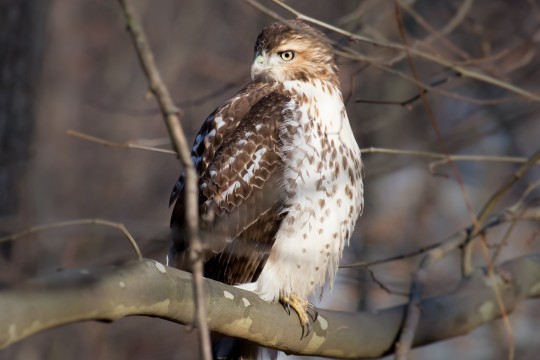
bird on a branch

Before you start looking for birds, you’ll want to set up an online account through the Great Backyard Bird Count’s website.  Once that is ready, all you have to do is spend at least 15 minutes looking outside at any time between February 15th and February 18th.  Count the number of birds and different species you see, and then submit your observations through your online account. Scientists will use the data, and you can use the information to explore what kinds of birds other people have seen nearby.

Some questions you might help scientists answer are:

-“How does weather and climate change affect bird populations?

-“How are diseases that birds can catch, like the West Nile virus, affecting birds in different areas?”

-“Are there bird species that only live in certain locations such as cities or rural areas?”

Lord of the Wings

The Christmas Bird Count, which happens at the end of December, found over 24,000 birds in Pittsburgh in 2018.  There were 71 different species represented in the total count.  Let’s see if we can find even more birds this February!  Follow this link to get ready!

Explore nature together. Visit Nature 360 for more activities and information.

Blog post written by Melissa Cagan and Rachel Carlberg.

Filed Under: Blog Tagged With: Anthropocene, bird hall, birding, Birds, Education, Melissa Cagan, Nature 360, Rachel Carlberg

  • « Go to Previous Page
  • Page 1
  • Interim pages omitted …
  • Page 7
  • Page 8
  • Page 9
  • Page 10
  • Page 11
  • Interim pages omitted …
  • Page 16
  • Go to Next Page »

sidebar

About

  • Mission & Commitments
  • Directors Team
  • Museum History

Get Involved

  • Volunteer
  • Membership
  • Carnegie Discoverers
  • Donate
  • Employment
  • Events

Bring a Group

  • Groups of 10 or More
  • Birthday Parties at the Museum
  • Field Trips

Powdermill

  • Powdermill Nature Reserve
  • Powdermill Field Trips
  • Powdermill Staff
  • Research at Powdermill

More Information

  • Image Permission Requests
  • Science Stories
  • Accessibility
  • Shopping Cart
  • Contact
  • Visitor Policies
One of the Four Carnegie Museums | © Carnegie Institute | Privacy Policy | Terms of Use | Accessibility
Rad works here logo