• Skip to primary navigation
  • Skip to main content
  • Skip to primary sidebar

Carnegie Museum of Natural History

One of the Four Carnegie Museums of Pittsburgh

  • Visit
    • Buy Tickets
    • Visitor Information
    • Exhibitions
    • Events
    • Dining at the Museum
    • Celebrate at the Museum
    • Powdermill Nature Reserve
    • Event Venue Rental
    • Gift Cards
  • Learn
    • Field Trips
    • Educator Information
    • Programs at the Museum
    • Bring the Museum to You
    • Guided Programs FAQ
    • Programs Online
    • Climate and Rural Systems Partnership
  • Research
    • Scientific Sections
    • Science Stories
    • Science Videos
    • Senior Science & Research Staff
    • Museum Library
    • Science Seminars
    • Scientific Publications
    • Specimen and Artifact Identification
  • About
    • Mission & Commitments
    • Directors Team
    • Museum History
  • Tickets
  • Give
  • Shop

Blogs about the Anthropocene

Scientists use fossils and other traces to understand how the planet changed over time. In the past these changes were caused by forces like volcanic eruptions and shifts in oceans currents. Now there’s a new force of nature shaping the planet: humans. The effects on air, land, and water are significant enough that scientists propose we are a new geological time – the Anthropocene – or age of Humans.

These blogs are about the many facets of human impact on the Earth, documenting this new age.

May 18, 2020 by wpengine

Air Quality and Urban Gardening

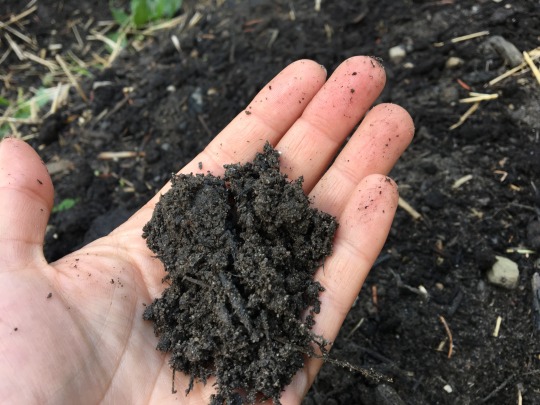
close up photo of hand full of soil

Transforming my ultra-tiny backyard into a garden has been a kind of mental, physical, and spiritual therapy for me during this COVID-19 pandemic. It’s work, even at this scale. But is it healthy? I’m new to Pittsburgh, and unlike my past community gardening experiences at places with better air quality and soil ratings, I now wonder if it’s safe to eat the plants I grow. When I look at the soil, I wonder what more than 150 years of air pollution has done to it. How can I amend past damage, manage the current risks and then eat from it?

I’m not alone in this work. Before I dive in, I want to share a quote by Robin Wall Kimmerer, author of Braiding Sweetgrass: Indigenous Wisdom, Scientific Knowledge and the Teachings of Plants:

“Even a wounded world is feeding us. Even a wounded world holds us, giving us moments of wonder and joy. I choose joy over despair. Not because I have my head in the sand, but because joy is what the earth gives me daily and I must return the gift.”

Professional advice guided my urban garden work. If you are contemplating a similar project, information at the sites listed below will be valuable.

Resources: amending the soil, soil testing, garden planning, and a cool foraging app

Grow Pittsburgh: Info Hub

University of Minnesota: How to Manage Soil and Nutrients in Home Gardens

Phipps Conservatory: Modifying PH Levels in Soil

Falling Fruit – Map the Urban Harvest!

Resources: dangers and benefits of urban gardening and foraging

The Geological Society of America: Hunting Down Hidden Dangers and Health Benefits of Urban Fruit

EurekAlert!: Risk of Lead Poisoning from Urban Gardening is Low, New Study Finds

Oxford Academic: Phytoremediation of Lead: What Works, What Doesn’t

First Step: Soil Test

The work I did to make my soil safe for gardening began with a soil test. A City of Pittsburgh site directed me to a Penn State University Agriculture Extension Office, where for a $9.00 fee, postage to mail a soil sample, and a couple of weeks’ time for testing, I learned that my typical Pittsburgh soil is full of clay and in need of compost and lime.

My front yard faces a busy intersection and contains lead and other contaminants. I decided to try phytostabilization, which is a cheap way to use plants, lime, and compost to both reduce the mobility of heavy metals in the soil and lower the bioavailability of contaminants to the food chain. I wore a mask and gloves when I tilled this soil because contaminants can bind to soil particles and can be inhaled. I mixed some nearby oak leaves into the soil to break up the clay, mixed in some lime, and planted sunflowers. (Any additions of lime should be done according to package directions about how much to use and when to plant.)
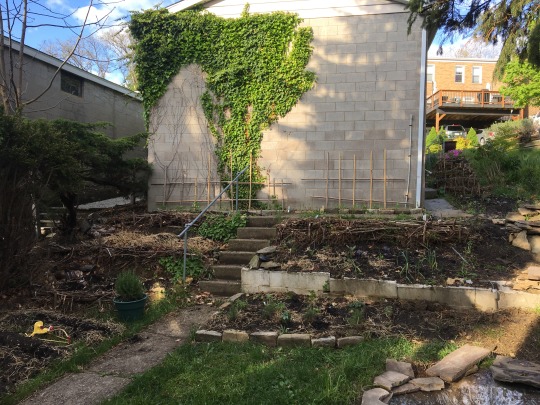
photo of a backyard garden under construction

Soil conditions in my backyard were better, requiring only lime to adjust the pH and lots and lots of compost. The backyard is where I will grow vegetables. I learned during my research that pH and compost are the key elements to healthy soil. If the air quality fluctuates during the gardening season, I will be fine as long as I wash the produce thoroughly before consuming and wash my hands after gardening. Now, after long days of online meetings, I’m able to retreat to my garden and, in good way, work myself tired. I feel better now. I feel happy.

I confess, I’m a renter, and I’m doing this work (with my landlord’s approval of course) even though I don’t own the property. My homeowner neighbors ask me why I care and put in so much energy and money into something I don’t own. I think it’s an easy answer: I live here for now, and I do this work to improve my quality of life, and because “joy is what the earth gives me daily and I must return the gift.”

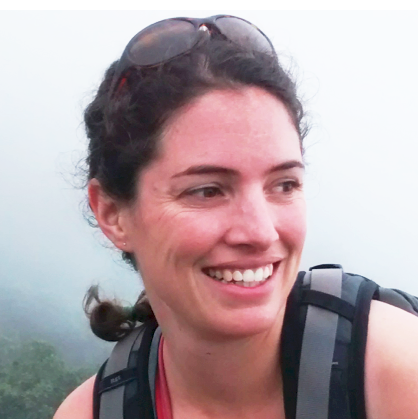
Asia Ward is CMNH Anthropocene Program Manager and Science Communication Fellow. Museum staff, volunteers, and interns are encouraged to blog about their unique experiences and knowledge gained from working at the museum.
Filed Under: Blog Tagged With: Anthropocene, Anthropocene Living Room, Asia Ward, Museum from Home, Science News, We Are Nature 2

April 29, 2020 by wpengine

A Rare New Species for Natural History: Earth System Scientists

Part of Anthropocene science is earth system science, the study of anthropogenic change of whole earth systems–the water systems, geological systems, ecosystems, and atmosphere–and their feedbacks with each other and human society. Historically earth system scientists have been a rare species at natural history museums, because they do not collect organismal specimens or valuable rocks. Instead they collect samples of air, water, microorganisms, and soil. But CMNH recognizes these scientists are key to understanding the Anthropocene and translating it to the public.

image

Two earth scientists have recently joined CMNH. Dr. Carla Rosenfeld will be the museum’s first curator of Earth Sciences. Rosenfeld’s work focuses on the microbial ecology of earth systems: how they naturally mediate the vast majority of water and soil chemistry and can be used to remediate pollution. For example, she is testing the potential for fungi to remove toxins from acid mine drainage. 

image

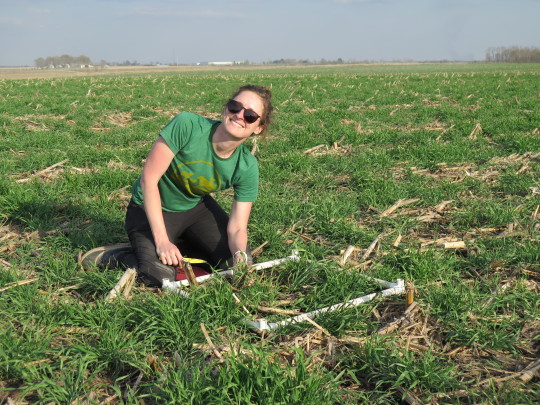
Dr. Bonnie McGill is a science communication fellow with the Climate and Rural Systems Project (CRSP) in the Anthropocene Science Section. With CRSP she is working with rural communities to explore local climate change impacts, identify the social and ecological systems involved, and design community-level actions. Much of her previous work was in the Midwest studying how soil and water conservation in corn and soybean production impacted greenhouse gas emissions and nitrate pollution of rivers.

Bonnie McGill is a Science Communication Fellow at the Carnegie Museum of Natural History. Museum employees are encouraged to blog about their unique experiences working at the museum.

Filed Under: Blog Tagged With: Anthropocene, Bonnie McGill, Carla Rosenfeld, gems and minerals, Museum from Home, Science News

April 29, 2020 by wpengine

What is the Anthropocene and How Does it Relate to Earth Day?

The Anthropocene translates roughly to “human” “times” and it is the proposed current geological period that started when the activities of human beings collectively began to have big impacts on Earth system processes, so much so that it leaves a record in Earth’s geology. While it is hard to untangle when exactly the Anthropocene should start, the leading proposal is around 1950, when human population and technology really started to grow rapidly.

The first Earth Day was organized about 2 decades after the Anthropocene “officially” started. Back then the public was already seeing how much impact humans were having on the planet and they were concerned. In the 1970s, America responded and passed all of our major environmental laws, the Clean Water Act, the Clean Air Act, the Endangered Species Act. Today, 50 years later, we know a lot more about how human activities are changing the planet, including the threat of global climate change. And like those folks celebrating the first Earth Day, we again have the great opportunity to respond and protect what we love.

Stewardship in the Anthropocene

One big question with the Anthropocene is what the heck are we going to do about it? How can we respond? The concept of stewardship is helpful here. Stewardship can be defined in different ways, but generally it refers to the job of ‘caring for the land and species.’   At CMNH a number of our scientists use their research to inform how people can live and care for the land to produce things they want while taking care of nature. We want to find these beneficial land-use and stewardship practices and share them more broadly. If more people can find ways to support the human economy while also protecting the health of ecosystems, the Anthropocene may cease to be a problem.

Examples of Stewardship Research

image

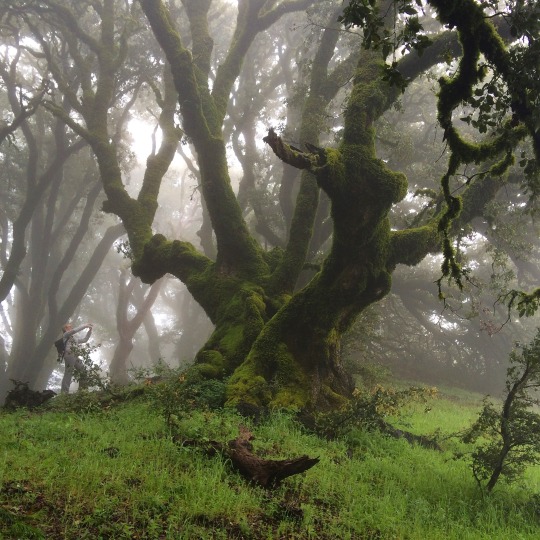
Ancient Canyon Live Oak, Santa Cruz Mountains

Curator of Anthropocene Studies, Dr. Nicole Heller conducts field work in California, where she works to adapt conservation frameworks to better include people and their positive stewardship practices in conservation decision-making. She is working with a group of scientists, farmers, foresters, conservationists, and Indigenous tribes to map and monitor all the different stewardship practices on the landscapes and understand how those practices work together to affect ecological and social health.

Curator of Amphibians and Reptiles, Dr. Jennifer Sheridan, conducts field work in Borneo, where she works with a consortium of scientists and a large palm oil producer to assess how spatial arrangement of forest and plantation can maximize biodiversity conservation. Because deforestation for oil palm plantation is the largest driver of deforestation in this biodiversity hotspot, such partnerships are critical to effective conservation.

Curator of Birds, Chase Mendenhall is a leader in establishing methods for monitoring changes in biodiversity and quantifying factors that enhance re-diversification of human-disturbed landscapes. This work has largely been conducted in Costa Rica.

image

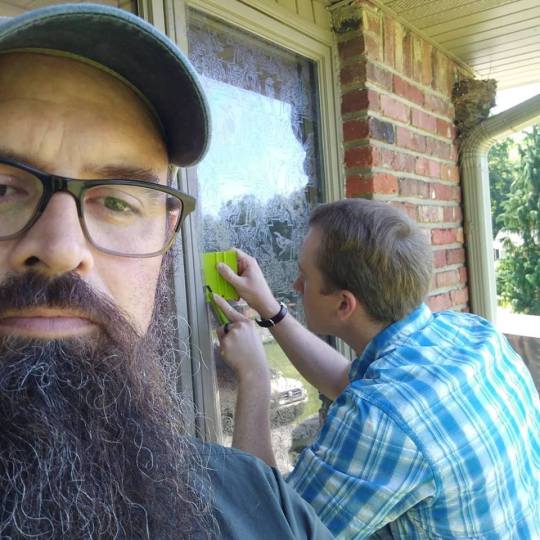
Matt Webb and Jon Rice installing decorative bird safe window film. 

Since 1961, Powdermill Avian Research Center (PARC) staff have operated one of the North America’s best bird banding programs, recording the timing of bird migration and a broad variety of life history and ecological attributes of migrating birds. PARC uses their data on birds to inform a wide variety of stewardship actions across the landscape to help birds survive. In one project, PARC works jointly with the American Bird Conservancy and select industrial partners to develop window glass that birds can see and avoid collisions.

Nicole Heller is Curator of Anthropocene Studies at the Carnegie Museum of Natural History. Museum employees are encouraged to blog about their unique experiences working at the museum.

Filed Under: Blog Tagged With: Anthropocene, Museum from Home, Science News

April 29, 2020 by wpengine

From cultivation to invasion: a common route

Collected on this Day in 1937

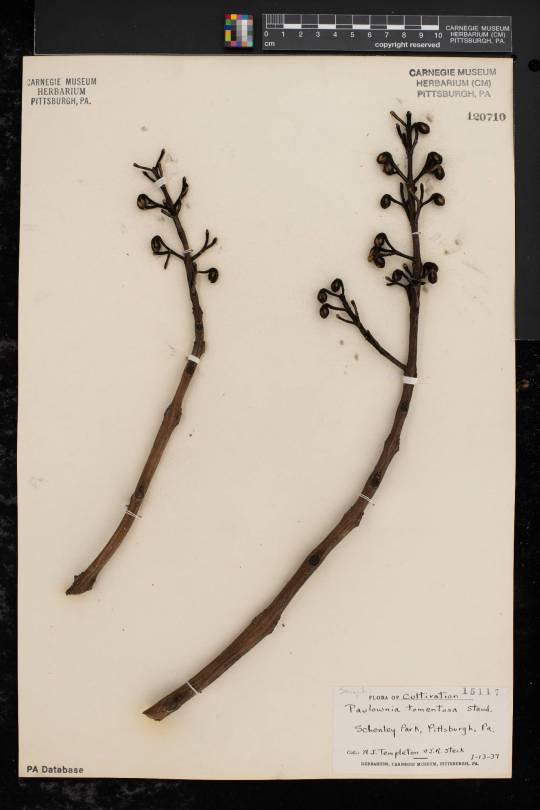
This specimen of princess tree (Paulownia tomentosa) was collected on January 13, 1937 in Schenley Park, Pittsburgh by R.J. Templeton and J.R. Steck.  Though subtle, note the heading on the label “Flora of Cultivation.”  This header suggests that this tree was planted in the park, rather than naturally occurring on its own.

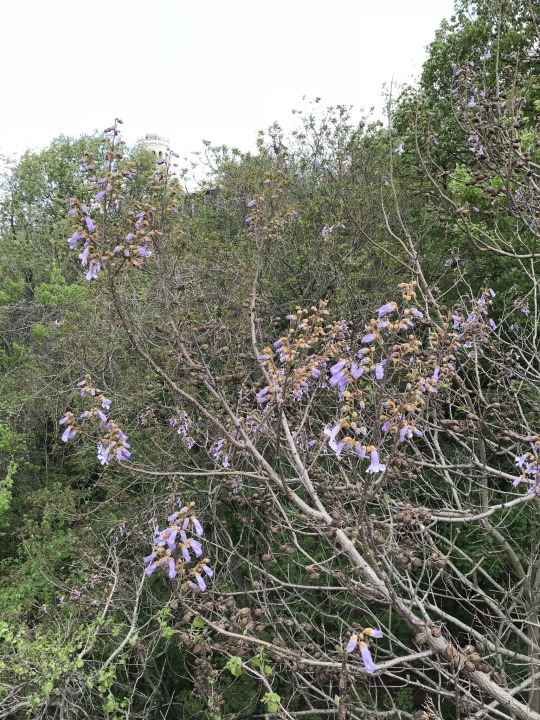
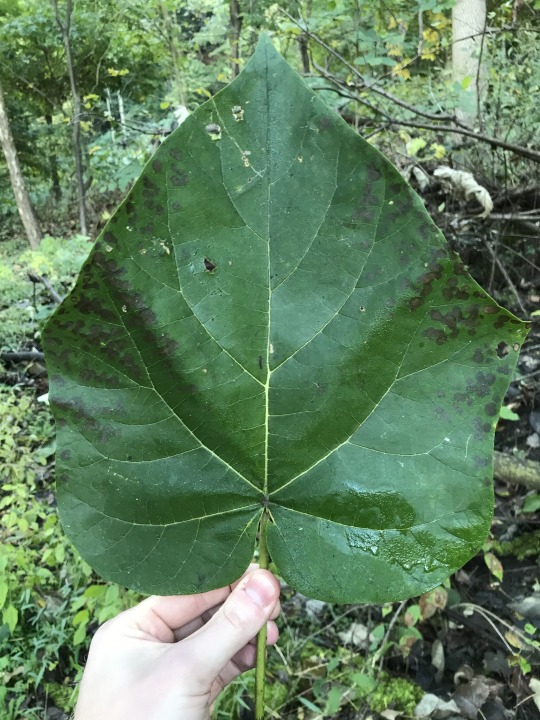
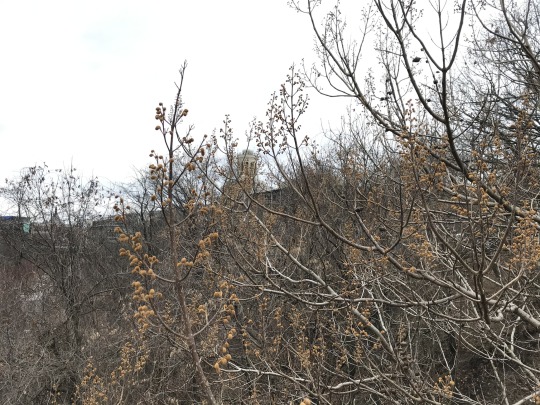
Princess tree has a remarkable presence – large wide leaves larger than your face (though you can’t see that in this winter collected specimen) and very showy, fragrant flowers that burst from large buds in the spring.  Signs of the flowers/fruits remain obvious on the branches year round.

Princess tree is a common urban weedy tree that is not native to Pennsylvania or the United States. Rather, it is native to Central and Western China.  It was brought to Europe in the 1830s (and then to the US) by the Dutch East India Company, with many historical medicinal and ornamental uses, as well as its wood. The tree was named after a Romanov princess, the Grand Duchess Anna Pavlovna.

Princess tree can still be found in Schenley Park.  It is especially noticeable, with its flowers at eye level, as you walk or drive across the bridge from the museum to Phipps Conservatory (Schenley bridge).

Listed as invasive by the state, Princess tree should not be planted in Pennsylvania.  It grows quickly and actively spreads beyond its planting, into roadsides, streams, and disturbed forests with potential to displace native plants.

Find this specimen and more here: http://midatlanticherbaria.org/portal/collections/list.php?db=all&catnum=CM120710&othercatnum=1

Check back for more! Botanists at the Carnegie Museum of Natural History share digital specimens from the herbarium on dates they were collected. They are in the midst of a three-year project to digitize nearly 190,000 plant specimens collected in the region, making images and other data publicly available online. This effort is part of the Mid-Atlantic Megalopolis Project (mamdigitization.org), a network of thirteen herbaria spanning the densely populated urban corridor from Washington, D.C. to New York City to achieve a greater understanding of our urban areas, including the unique industrial and environmental history of the greater Pittsburgh region. This project is made possible by the National Science Foundation under grant no. 1801022.

Mason Heberling is Assistant Curator of Botany at the Carnegie Museum of Natural History. Museum employees are encouraged to blog about their unique experiences and knowledge gained from working at the museum.
Filed Under: Blog Tagged With: Anthropocene, Botany, botany hall, collected on this day, Hall of Botany, Mason Heberling, Museum from Home, Uprooted

April 13, 2020 by wpengine

A Quarantine Art and Science Collaboration

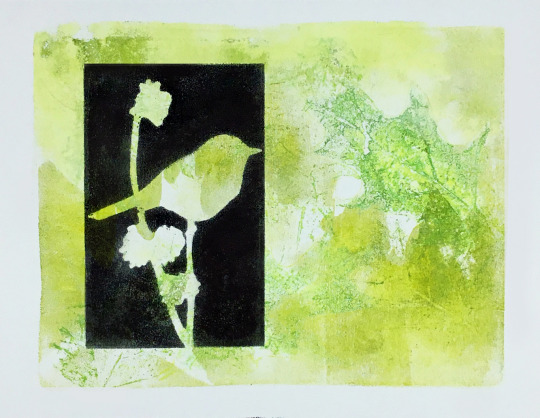
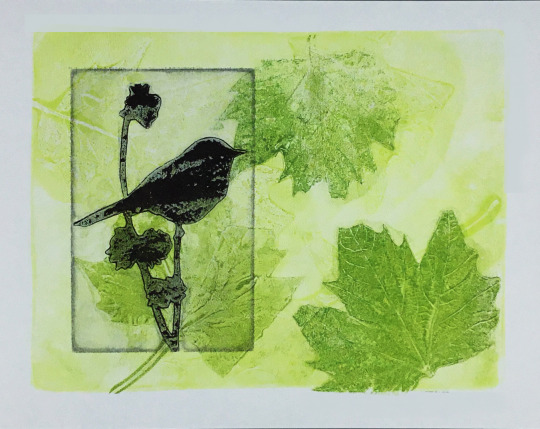
Local environmental artist Ann Rosenthal creates two prints inspired by the research of Mason Heberling, Assistant Curator of Botany at Carnegie Museum of Natural History during this quarantine art and science collaboration.

Ann Rosenthal is an environmental artist and educator who examines the intersections of nature and culture through timely issues, including climate change, biodiversity, and biophilia. In 2019, she co-curated “Crafting Conversations: A Call and Response to Our Changing Climate” for Creatives for Climate through Contemporary Craft’s BNY Mellon Satellite Gallery in Pittsburgh. She is currently one of four editors for a field guide on ecoart practices on behalf of an international network of ecoartists.

“I am interested in the relationships within and between the human and natural worlds. In this unprecedented time, we can see systems and relationships more clearly; for example, how just a few weeks of staying at home has cleared our air and water,” says Ann Rosenthal. “I am fascinated by the research CMNH botanist Mason Heberling is conducting in forests around Pittsburgh, including at Beechwood Farms. He and collaborators from the University of Pittsburgh and Boston University are studying how climate change is driving the early leaf-out of the tree canopy and how that, in turn, impacts what grows and lives in the understory. 

“My monoprint is inspired by those relationships: the red maple and red oak spring leaves suggest the tree canopy under which a hooded warbler perches on a spicebush branch. All of these species can be seen at Beechwood. The trees depicted are part of Heberling’s current and past research, and Thoreau studied their leaf-out in the 1850s. Researchers can thus compare Thoreau’s findings with their own. I hope my print will prompt readers to pause and consider the invisible threads that bind us to one another and to nature.” As Thoreau counseled, “Shall I not have intelligence with the earth? Am I not partly leaves and vegetable mould myself?”

See more of Ann’s work at locusartstudio.org.

Ann Rosenthal is an environmental artist. Asia Ward is an Anthropocene Science Communication Fellow at the Carnegie Museum of Natural History. Museum employees are encouraged to blog about their unique experiences working at the museum.

Filed Under: Blog Tagged With: Anthropocene, Museum from Home, Science News

March 9, 2020 by wpengine

I love this interspecies friendship!

I confess I am not big on social media, but occasionally I see something that I can’t stop watching. This short clip caught on a wildlife camera in San Jose, California shows a coyote leading a badger though a culvert under a highway. And I am not alone in appreciation as this post has gone viral with millions of views! Simply put, this duo is absurdly cute. I can’t stop watching. While it is well established scientifically that coyotes and badgers hunt together, this video conveys so much more. The way the coyote leaps playfully, tail wagging, beckoning his short-legged little friend to follow conveys friendship. It conveys two buddies out for an adventure. 

View this post on Instagram

🐾 Our wildlife cameras spotted this coyote and badger traveling together through a culvert (tunnel) under a highway in the South Bay. We believe this is the first observation of its kind documenting these two together. Studies have shown that a badger and coyote hunting together can be beneficial for both species, as they pursue favorite prey such as ground squirrels. Maybe that’s where they’re headed? See what else our wildlife cameras have spotted with the link in our profile or at openspacetrust.org/blog/wildlife. Video: @peninsulaopenspacetrust / @pathways_for_wildlife . . . #Coyote #Badger #Wildlife #BayAreaWildlife #WildlifeCameras #WidlifeMovement #CuteAnimals #Animals #CoyoteAndBadger

A post shared by POST – Open Space For All (@peninsulaopenspacetrust) on Feb 4, 2020 at 10:25am PST

There are so many examples of non-human animals, individuals of the same species and of different species, interacting in complex ways that reveal their unique personalities, friendships, kindness, and dare I say, love. Traits or expressions we tend to confer only to humans for fear of anthropomorphizing, a big no-no in science. (For example, see this national geographic blog about this coyote-badger video). And yet I would argue that the most apt description of these behaviors is to describe them with the same words we would use to describe them in humans. Our brains are similar. These arguments are well developed by ecologist Carl Safina, in his best-selling book Beyond Words, and summarized here in this powerful TEDX talk.

A recent study about African grey parrots also captured the surprise of scientists. African grey parrots were very helpful in sharing tokens to other parrots so that parrot could exchange the token for food. The helping parrots did this without any direct reward for themselves. This type of helping behavior, most simply described as generosity or kindness, is surprising to scientists and many expressed doubt that it is real. Why? Other creatures are our close kin. We share the same nervous systems. It makes sense that we also share feelings and thoughts, emotional and social lives too. I think this is obvious to anyone who has a pet. For this badger and coyote pair, why shouldn’t we all, scientists alike, call it a friendship? Which raises another question: if we start calling these behaviors friendship, without fear of anthropomorphizing, might this help us to better empathize with our fellow animal kin and take better care of them and the Earth?  

I wonder.

Nicole Heller is Curator of the Anthropocene for Carnegie Museum of Natural History. Museum employees are encouraged to blog about their unique experiences working at the museum.

This video was captured by Peninsula Open Space Trust (POST), a land trust nonprofit where Heller worked as the Director of Conservation Science prior to joining the museum. POST is doing terrific conservation work to make the busy San Francisco Bay Area safe for wildlife to move around, find habitat, and successfully reproduce in the face of daily human traffic and long-term urban growth and climate change.

Filed Under: Blog Tagged With: Anthropocene, Nicole Heller, Science News, We Are Nature 2

  • « Go to Previous Page
  • Page 1
  • Interim pages omitted …
  • Page 3
  • Page 4
  • Page 5
  • Page 6
  • Page 7
  • Interim pages omitted …
  • Page 16
  • Go to Next Page »

sidebar

About

  • Mission & Commitments
  • Directors Team
  • Museum History

Get Involved

  • Volunteer
  • Membership
  • Carnegie Discoverers
  • Donate
  • Employment
  • Events

Bring a Group

  • Groups of 10 or More
  • Birthday Parties at the Museum
  • Field Trips

Powdermill

  • Powdermill Nature Reserve
  • Powdermill Field Trips
  • Powdermill Staff
  • Research at Powdermill

More Information

  • Image Permission Requests
  • Science Stories
  • Accessibility
  • Shopping Cart
  • Contact
  • Visitor Policies
One of the Four Carnegie Museums | © Carnegie Institute | Privacy Policy | Terms of Use | Accessibility
Rad works here logo