• Skip to primary navigation
  • Skip to main content
  • Skip to primary sidebar

Carnegie Museum of Natural History

One of the Four Carnegie Museums of Pittsburgh

  • Visit
    • Buy Tickets
    • Visitor Information
    • Exhibitions
    • Events
    • Dining at the Museum
    • Celebrate at the Museum
    • Powdermill Nature Reserve
    • Event Venue Rental
  • Learn
    • Field Trips
    • Educator Information
    • Programs at the Museum
    • Bring the Museum to You
    • Guided Programs FAQ
    • Programs Online
    • Climate and Rural Systems Partnership
  • Research
    • Scientific Sections
    • Science Stories
    • Science Videos
    • Senior Science & Research Staff
    • Museum Library
    • Science Seminars
    • Scientific Publications
    • Specimen and Artifact Identification
  • About
    • Mission & Commitments
    • Directors Team
    • Museum History
  • Tickets
  • Give
  • Shop

Bonnie Isaac

May 22, 2024 by Erin Southerland

Botanists Gone Wild! Perspectives from the Record-Breaking Finish for City Nature Challenge 2024

by Jessica Romano

Every spring people all over the world join in the City Nature Challenge, a global effort to safely document and identify nature through the free and easy-to-use iNaturalist app. For the seventh consecutive year, Carnegie Museum of Natural History staff were among the participants taking on the challenge in and around the Pittsburgh region – and in 2024, the results were record-breaking! Totals for regional participants, identifiers, observations, and number of species hit their highest in the history of the challenge, thanks to a combination of warm, dry spring weather and dedication from participants. Observations and identifications made during the challenge are shared with scientists around the world, helping to both document and better understand the diversity of species around us.

Here are the totals from the Pittsburgh Region City Nature Challenge 2024 (CNC) – which are all records for this region’s participation! 

Total participants who made observations: 643

Total participants who made identifications: 562

Total observations made: 10,050

Total species identified: 1,753

Total identifications: 16,875

Plants topped the list for observed species, with about 46% of the total, followed by insects with about 27% of the total. Other species identified but in smaller totals include fungi, birds, arachnids, mammals, reptiles, amphibians, and mollusks. 

Mayapple (Podophyllum peltatum) took the top spot overall. This native plant species sprouts early in spring with long stems and umbrella-like leaves. The rest of the top 10 species are all plants, with the exception of the Red Admiral (Vanessa Atalanta), a beautiful butterfly with red bands on the wings. The most observed bird, the American Robin (Turdus migratorius),took spot 17, and at spot 26, the White-tailed Deer (Odocoileus virginianus) was the most observed mammal. 
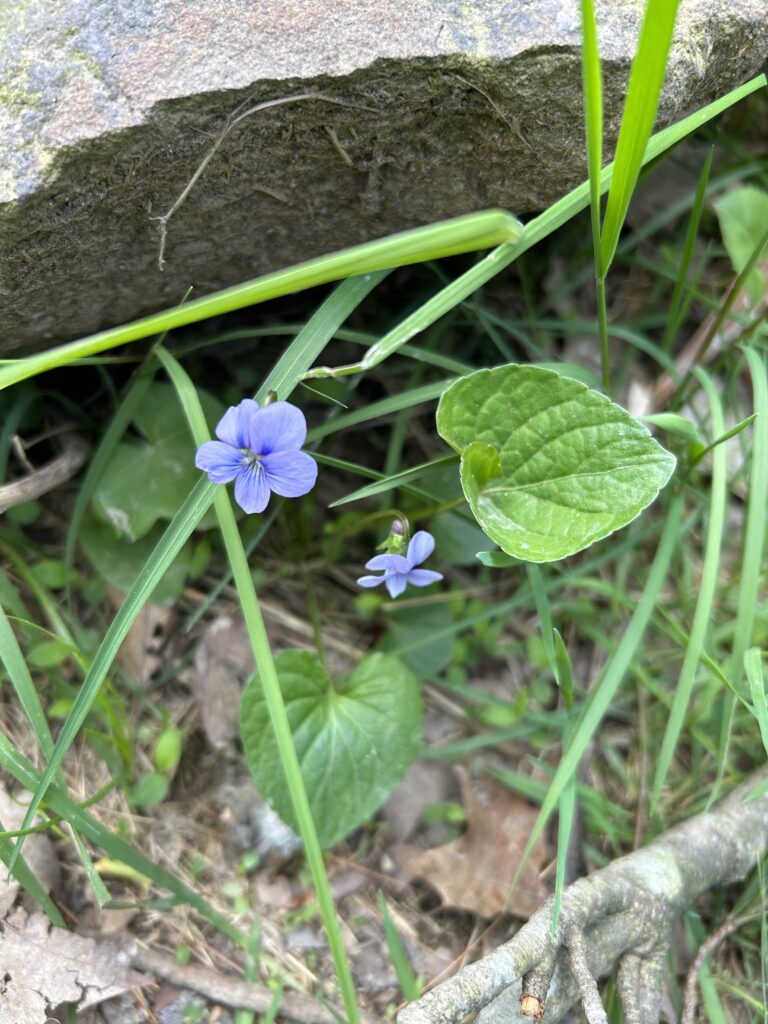
The lovely Common Blue Violet (Viola sororia) came in third place on the list of observed species.

With plants claiming nine of the top ten spots, it’s fitting to get perspective from the museum’s Section of Botany, who not only participate, but whose dedication puts them at the top of the list. Although they are literally professionals at looking for plants, the common message from the Botany staff is that anyone can do this challenge! The objective is to document nature all around us, from parks to neighborhood streets to city blocks and beyond. 

Reflections from the Section of Botany Scientists

Curatorial Assistant Alyssa Landa made a point to visit similar spots that she visited last year, as well as around her yard and street to look at things she walks past every day. “CNC is a great reminder to check out places near me,” Alyssa said. “The big thing for me this year is just the number of new-to-me species I was able to log, just by taking that little bit of extra time to pay attention to what’s around that I might not otherwise be drawn to or notice! This time of year is always really exciting to me, and CNC is a fun reminder that there’s still so much to learn. It’s also a reminder to revisit my old, well-known (plant) friends too.” And her efforts made a difference! Alyssa logged the second highest total identifications, putting her expertise to excellent use.

A steadfast champion for the City Nature Challenge, Associate Curator of Botany Mason Heberling uses the challenge to check out the woods nearby where he lives. “I get caught up in other things and forget to appreciate the hyper-local diversity, within walking distance,” Mason said. “I make it a point to visit the same woods by my house every CNC.” Despite travelling out of the area for much of the challenge, Mason logged nearly 100 local observations!

And then there’s Bonnie Isaac, the section’s Collection Manager. Although City Nature Challenge is not a competition, it’s worth noting and applauding Bonnie’s efforts – she logged the highest number of both observations and identifications in the Pittsburgh region this year! She made 607 observations, which totaled 343 different species, and identified a whopping 1,697 entries! Bonnie shared her reflections about the challenge and described why it’s so important to her.

“When I was young, I could not spend enough time outdoors. I was outside from sunup till sundown or until my folks came looking for me. My curiosity led me to want to know what everything I encountered was. One year one of my sisters gave me a Peterson field guide for Christmas. This led me to discover that there was a whole series of Peterson field guides. Thus began my collecting career. I had to have every Peterson Field Guide that came out. (I now have a complete set of Peterson Field Guides, leather bound editions.)  With these guides I could go out and try to identify everything I saw. I was in heaven. I am also a very competitive person. The City Nature Challenge takes what I love to do and makes it into a bit of a competition. I don’t live in the Pittsburgh City Nature Challenge region. I live in Lawrence County. During the pandemic the best I could do was help with identifying observations. Now that I can travel to the Pittsburgh region during the City Nature Challenge. Game on!” – Bonnie Isaac

Of Bonnie’s impressive collection of field guides, the first one she received was not plants, but animal tracks! It was written by Olaus J. Murie, a former employee of Carnegie Museum of Natural History who became a world famous biologist. Image credit: Bonnie Isaac.

For this year’s challenge, Bonnie visited Raccoon Creek State Park, Moraine State Park, Bradys Run Park, and Brush Creek Park. “The City Nature Challenge gives me a chance to get outside and see how many different things I can find,” Bonnie said. “Every year I challenge myself to find more species than I did the previous year. I also find identifying observations made by others somewhat satisfying. I get a chance to hone my identification skills and I get to see what others have found.”

Even for a botanist with decades of experience like Bonnie, each year brings surprises. “Every year there are surprises that I didn’t expect. I’ll discover that something is blooming that I didn’t think would be blooming yet, or I might find that someone found a plant growing in an area where I wouldn’t have expected it.”
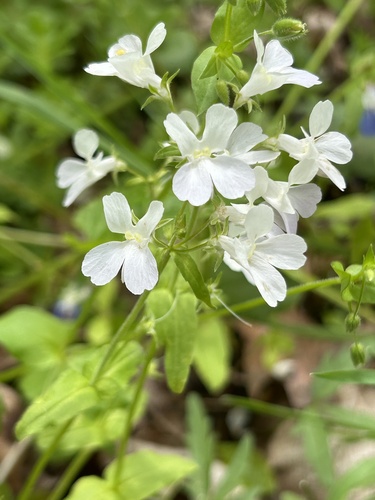
Bonnie has never seen an all-white Blue-eyed Mary (Collinsia verna). She was excited to see that iNaturalist user “bquail” found some during the challenge. Image credit: © bquail via iNaturalist, CC BY-NC

Bonnie continued, “The top observations tend to be some of the same things, many plants that are not native to the area. It’s the things with only a couple observations that I find the most interesting. It’s these unusual observations that keep me eager to see what nifty things are being found basically in our own backyards. It also keeps me energized to get out and find more and to look closer for the minute details that might separate one species from another.” 

The iNaturalist app also allows for recordings of bird song, frog calls, and other sounds. Bonnie connected with a user who identified a unique feature on one of her uploaded recordings. “One of the surprises for me was someone contacting me to let me know that one of my bird recordings had gray tree frogs singing in the background.”
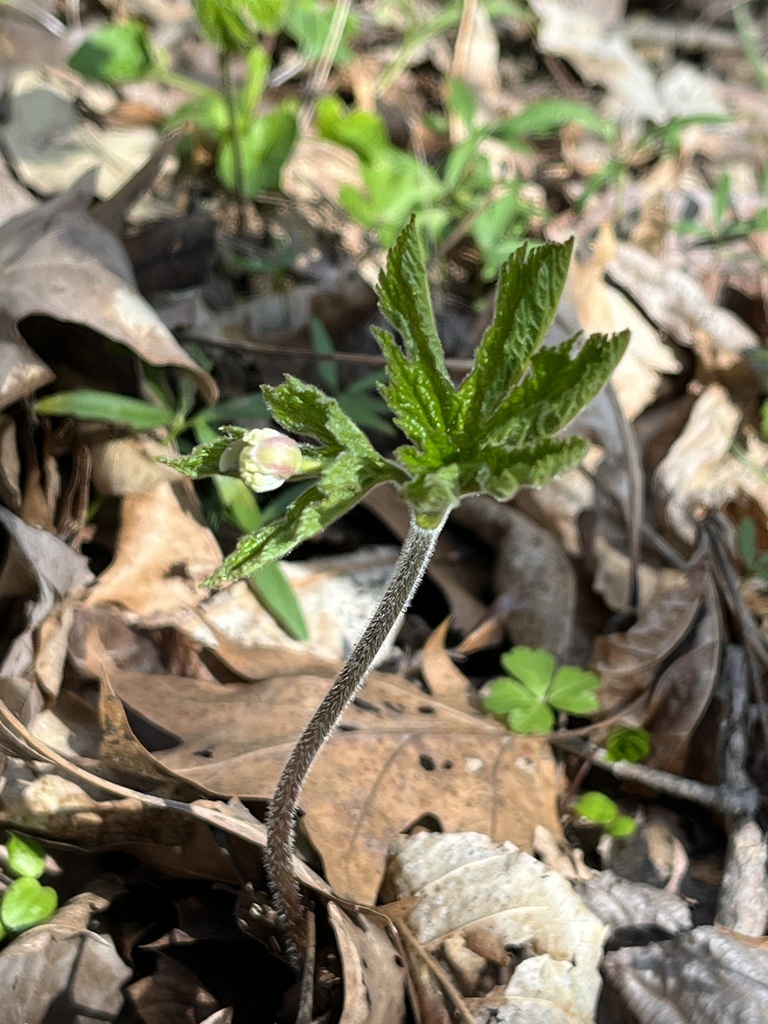
Bonnie’s favorite observation of 2024 was this Goldenseal, just coming into bloom. Image credit: Bonnie Isaac.

A Global Effort with Big Results

City Nature Challenge 2024 was not just a success in Pittsburgh – globally the number of cities participating increased to 690 this year, a big jump from 482 cities in 2023! Here are a few of the worldwide stats:

Total participants: 83,528 in 690 cities in 51 countries

Total observations made: 2.4 million

Total species identified: 65,682

The big winner across the board, with most observations, species, and participants is La Paz, Bolivia!

The City Nature Challenge returns next spring. Let’s see if we can build on the truly remarkable success of 2024!

Jessica Romano is Museum Education Writer at Carnegie Museum of Natural History.

Related Content

Snags, Logs, and the Importance of a Fallen Tree

City Nature Challenge: A 2022 Reflection

The City Nature Challenge Family Experience

Carnegie Museum of Natural History Blog Citation Information

Blog author: Romano, Jessica
Publication date: May 22, 2024

Share this post!

  • Share on Twitter Share on Twitter
  • Share on Facebook Share on Facebook
  • Share on Pinterest Share on Pinterest
  • Share on LinkedIn Share on LinkedIn
  • Share on Reddit Share on Reddit
  • Share via Email Share via Email

Filed Under: Blog Tagged With: Alyssa Landa, Bonnie Isaac, Botany, City Nature Challenge, Education, Jessica Romano, Mason Heberling

October 8, 2020 by wpengine

How Do You Preserve a Giant Pumpkin?

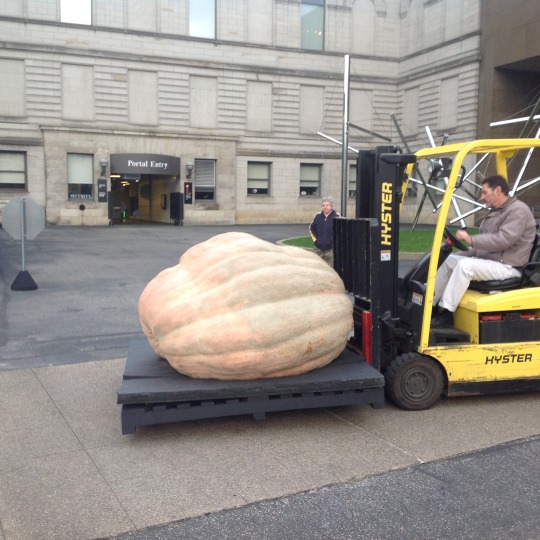
giant pumpkin being moved with a forklift

A few years ago, I came across a dilemma that I wasn’t sure how to resolve. The Section of Botany was given permission to preserve, for the scientific collection, part of the giant pumpkin that was in the exhibition, We Are Nature: Living in the Anthropocene. This was an intriguing offer. I just wasn’t sure how to go about it. Preserving any large fruits or plant parts can be a real challenge. Plant materials must be dried before they rot, and the process must happen at a temperature low enough to prevent the material from being cooked. The normal procedure of putting a plant or plant part into a plant press and drying it with warm dry air was not really an option; at least not for a 2,090-pound pumpkin that wouldn’t even fit in my car, let alone my plant press.

Pumpkins are a type of squash, but trying to literally squash one to dry it seemed a bit daunting. The farmers who grew this giant pumpkin were more than willing to give us whatever parts of the pumpkin we wanted to preserve, and they were even willing to help with cutting them from the pumpkin. We decided on trying to keep the unique parts of the pumpkin, like the stem and the blossom end (bottom). We also saved some of the inner tissue and a few seeds. The seeds on a pumpkin this large are a prize commodity. If a pumpkin from which seeds are properly harvested was a champion, as this one was, each seed could sell for $30 to upwards of $50. It was very generous of the farmers to allow us to have some of these seeds for our collection.

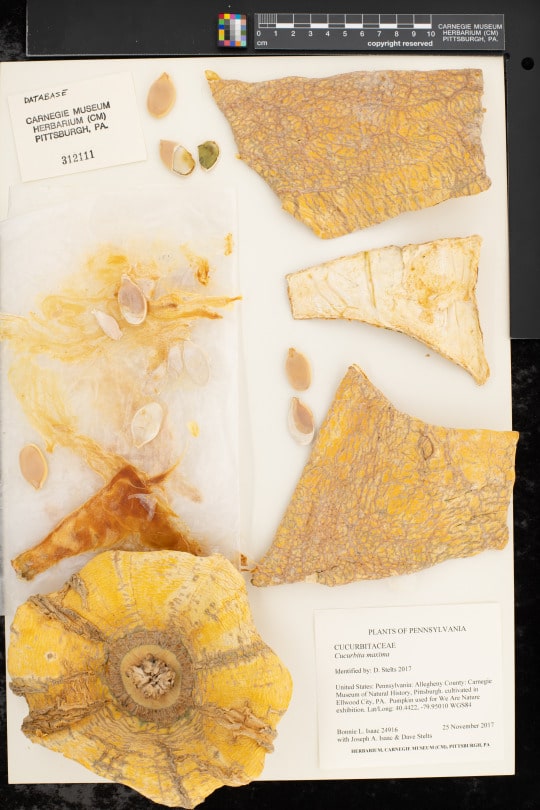
dried pieces of a pumpkin on an herbarium sheet

Pumpkin farmers keep close tabs on the genetics of these giants and actively work at growing larger pumpkins. You can actually find family tree information for this very pumpkin online if you search for it. Who knows how large mankind will eventually enable pumpkins to grow? The plants that grow these large squashes (the Cucurbita maxima variety known as ‘Atlantic Giant’) are a variety of the same species that produce Hubbard Squash. This species, which was originally from South America, has become one of the more diverse domesticated plants.

Giant pumpkins have been a focal point of imagination and literature for some time. Think of Cinderella. There are several variants on the Cinderella tale going back hundreds of years that involve large squash. Back when these stories were written though, it was a fantasy to think there actually could be a pumpkin that a person could fit inside.

Now that we are using QR codes on our herbarium labels, it’s easy to add photographs to plant specimen records. I wish we had thought to do this  before the massive pumpkin was cut up. Maybe I will go back and add a QR code to the label, so the actual pumpkin can be seen again in its full glory. What we have in the collection now are bits and pieces, mere remnants of the gentle giant that grew 45-50 pounds per day in 2017.

Getting back to my original question, how do you preserve a giant pumpkin? I guess the answer is a little bit at a time!

More on this giant pumpkin:

Sasquatch Squash

Giant Pumpkin Seed Harvest 

Collected on This Day: November 25, 2017

Bonnie Isaac is the Collection Manager in the Section of Botany. Museum staff, volunteers, and interns are encouraged to blog about their unique experiences and knowledge gained from working at the museum.

Filed Under: Blog Tagged With: Anthropocene Studies, Bonnie Isaac, Botany, Hall of Botany, halloween, Science News, Section of Botany

June 9, 2020 by wpengine

Our Eureka Moment!

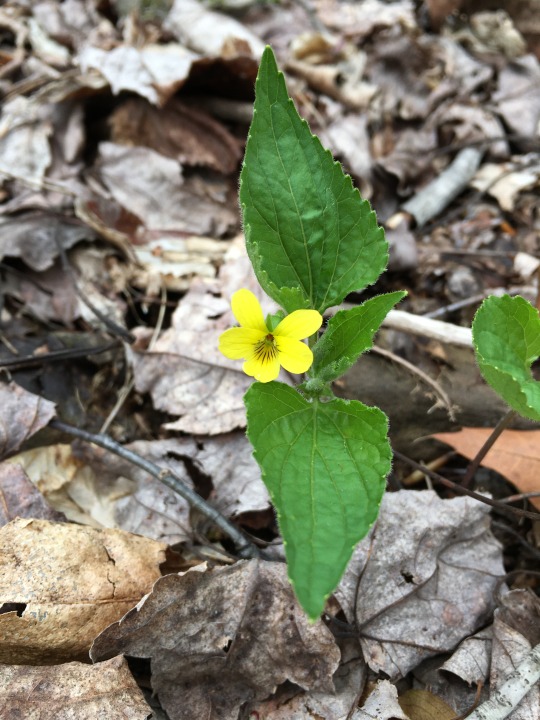
photo of viola glaberrima

Searching for rare or endangered plants has become a passion for me. It’s always exciting to find something that hasn’t been seen by very many people. It’s also special when I can share these finds with someone close to me who cares as much about them as I do. I am rather lucky in that my husband, Joe, is also a botanist and shares my passion for finding rare plants. Our household pursuit has even become a bit competitive. I will freely admit, when Joe spots a rare plant first, there is some jealousy intermingled with my excitement that we were in the right place at the right time.

For the last couple of years, we have been on a quest to find Viola glaberrima, a yellow violet last seen in Pennsylvania in 1920, May 30, 1920, to be exact.

I’ve pressed my friend Harvey Ballard, a professor at Ohio University and a renowned Violet expert, for details about habitats to investigate, the characteristics that distinguish the plant from other violets, and any tidbits I could glean to help us find this elusive plant. At least a dozen of my emails to Harvey involved questions about information I’d found in other sources relating to the plant commonly called the smooth yellow violet.

In all honesty, I was suspicious that this violet ever grew in Pennsylvania, even going so far as questioning Harvey about whether he had correctly identified one of the historic specimens. In many ways Viola glaberrima resembles other yellow violets. Pennsylvania has about 30 different kinds of violets, five of which are yellow. The other yellow stemmed violets known to occur in the Commonwealth are usually many stemmed with stems that more-or-less lay down on the ground. These other violets also have either heart shaped or what are termed hastate shaped leaves, that is leaves with outlines reminiscent of a spear point with two points protruding from its base. Many of the plants in this group have flowers that are yellow on the front and back. Some of these flowers develop purple coloring on the back of the petals with age. The violet we’ve been searching for has a single, upright stem with cuneate or wedge-shaped leaves and always has purple on the back of the petals.

Harvey served as a coach for our search for Viola glaberrima, and in doing so he did much more than advise us to look on moist wooded slopes. Many floras list our target plant as merely a variety of Viola tripartita, a flower commonly known as the threepart violet. Harvey assured us that Viola glaberrima is a good species in its own right, and provided additional motivation by making a prediction. He told us that if we found it in the field we would have a “Eureka” moment, because the species is visibly different from the other yellow violets.

Historically, the smooth yellow violet was collected 5 or 6 times in Pennsylvania. The earliest collection is pretty vague, “Mercersburg Pa. in 1845.” The other collections aren’t any more precise. One collection from 1900 is from somewhere “between Ruffsdale and Jacobs Creek in Westmoreland County.” There are two collections from the area of Hillside, PA collected in 1907 and again in 1909. The site we felt we had the best chance of relocating this difficult to find violet was Killarney Park in Fayette County. This seemed to be the most precise locality and the most recent. In May of 1920 Otto Jennings of Carnegie Museum fame and Ernest Gress, a student of Jennings who later worked for the Pennsylvania Department of Agriculture, both collected this violet at this location on the same day. Killarney Park, established in 1909, was a popular place for folks to get out of town and have a picnic or a reunion. It featured a dance hall, lakes for boating, picnic grounds and overnight accommodations. With a stop on the Indian Creek Valley Railroad, the park was easily accessible to rail travelers.

The park property changed hands a few times over the years. Its name changed in 1926 and again in 1939, and it was eventually sold in 1941 to the Christian Church of Somerset for use as a summer camp. Thus, the current name of Camp Christian came into being. In June of 2016, Joe and I spent some time at Camp Christian helping guide field trips for the Botanical Society of America, Northeast Section Joint Field Meeting. I got to know the manager of Camp Christian and told him about the rare violet that had last been collected there. June was a little late, the violets were pretty much done blooming. We looked around for the violet without any luck, but the manager invited us to come back and look anytime. Last year, 2019, we spent parts of two days looking around the property again for the little yellow violet that seemed so elusive.

Most of the violets had already gone to fruit at the time of our 2019 visit, which coincided with the historic collection calendar date of May 30. This year, we visited earlier in May, found many violets blooming, and checked thousands of them without finding a smooth yellow violet.

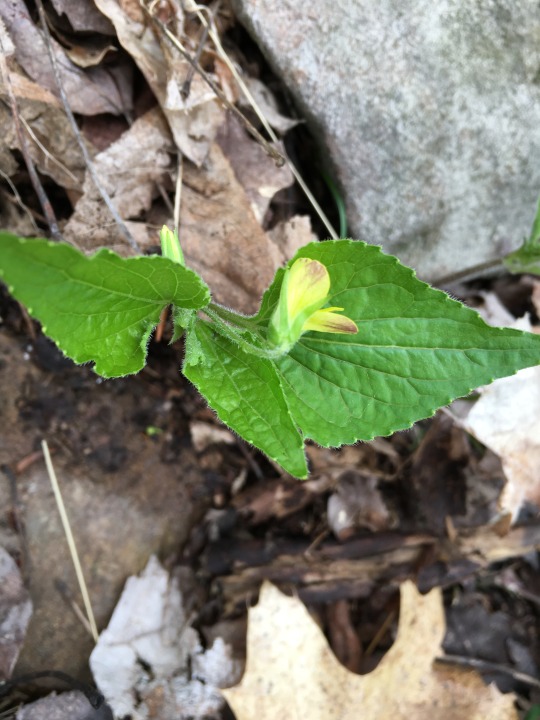
photo of viola glaberrima showing underside of petals

So, in the process of doing field work and looking for other rare plants, it became a habit for us to look for what seemed to be mythical yellow gems. During a field work day in Indiana County on May 16, while cutting up over a hill to take a shorter route back to the car, we came upon a small patch of yellow violets that were different than any we had seen before. They had single stems, with lance shaped leaves and purple coloring on the backs of the petals. There was no denying that this violet was different than any we had seen before. The plants fit all the characteristics that Harvey had so patiently described for us over the many e-mails. This was finally our promised “Eureka” moment.

Begrudgingly I’ll admit that Joe was first to spot it. (He walks faster than I do.) Of course, Harvey was one of the first people I contacted, I sent him several photographs and to my delight we received the following response: “Hi Bonnie and Joe, YOU NAILED IT!!! You found Viola glaberrima! What a great find! It is likely rare and sporadic along that mountain range. Congratulations. Big ice cream sundaes for you!” How did Harvey know I love ice cream sundaes?

I would love to say this was a “Eureka “moment 100 years in the making, but it was only 99 years and 351 days.

Bonnie Isaac is the Collection Manager in the Section of Botany. Museum staff, volunteers, and interns are encouraged to blog about their unique experiences and knowledge gained from working at the museum.

Related Posts and Videos

Rediscovering Viola glaberrima (Video)

How Do You Preserve a Giant Pumpkin?

Hidden Treasure of Pittsburgh Found

Carnegie Museum of Natural History Blog Citation Information

Blog author: Isaac, Bonnie
Publication date: June 9, 2020

Share this post!

  • Share on Twitter Share on Twitter
  • Share on Facebook Share on Facebook
  • Share on Pinterest Share on Pinterest
  • Share on LinkedIn Share on LinkedIn
  • Share on Reddit Share on Reddit
  • Share via Email Share via Email

Filed Under: Blog Tagged With: Bonnie Isaac, Botany, Hall of Botany, Museum from Home, Science News, Section of Botany

May 19, 2020 by wpengine

Joining the iNaturalist Team!

Carnegie Museum of Natural History has promoted participation in the Pittsburgh City Nature Challenge for the past three years. Because I live outside the six-county “Challenge” region, I decided to help the best way I know how, by participating, as time permits, in the identification phase of the iNaturalist-based project.

Although publicity about the City Nature Challenge tends to focus on the value of participants documenting the diversity of life around them by taking pictures and submitting them via the iNaturalist app, the proper identification of submitted images is critically important.

My normal carpool commute time to the museum is usually a little over an hour. So, I decided that what would normally be my commute time to work would become my iNaturalist identification time. This process proved to be enlightening in several ways.  First was the digital proof that a lot of people in the Pittsburgh region are interested in the outdoors. That is a good thing! Second, was the ample evidence that people of all ages got involved in a project that can potentially help me and other scientists track what is going on in the outdoors. Also, a good thing. Submitted images can help us track phenology, the timing of recurring events such as plant blooming or fruiting.

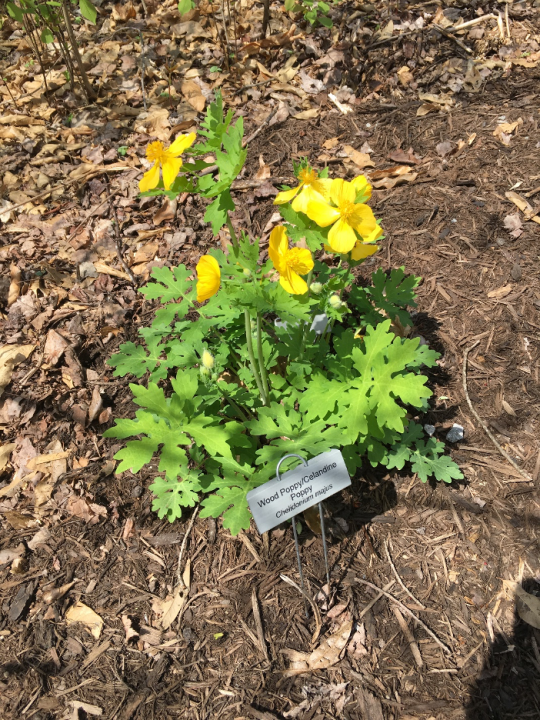
Photo of Stylophorum diphyllum mislabeled as Chelidonium majus in a native plant garden. Credit: BL Isaac

We can also use iNaturalist records for distribution studies. For instance, there is a “native” plant known as the woods-poppy (Stylophorum diphyllum) that we don’t have any records of from natural populations in the Commonwealth of Pennsylvania. There are nine documented Pennsylvania specimens in herbaria that I am aware of. Only one of those is older than I am.  The locality data on it is very vague and suspect as to whether it is really from Pennsylvania. (“Probably near Zelienople” is a far from precise location.) The other eight specimens are all known to be from cultivated populations. These specimens are from only three counties. State botanists have been discussing and debating this plant for several decades. It is native in Ohio and west, but is it native in Pennsylvania? There are now nearly 300 observations of woods-poppy (Stylophorum diphyllum) from across Pennsylvania on iNaturalist.

What is going on here? Have botanists just been overlooking this thing for decades?  Is it escaping from cultivated populations?  I know that it is being sold in native plant nurseries, so are folks just buying it and planting it out and about?  I do know that we need to get out and get some of these populations documented. Maybe by visiting some of the sites we can postulate why this plant that wasn’t seen in Pennsylvania for centuries is now popping up everywhere.

I have also learned that there is plenty of room for educating people on the importance of knowing how to identify plants.  It is almost scary the number of people (it doesn’t take many) who have trouble identifying poison ivy. There are also plenty of problems with identifying common backyard plants.  I have been active the last few years with plant identification workshops, and there is certainly a need for more of these. I’ll continue to learn as I continue to help identifying plants for the City Nature Challenge while I “commute” to work. I’m eager to see what other mysteries may pop up that pique my curiosity about the world around us.

Bonnie Isaac is the Collection Manager in the Section of Botany. Museum staff, volunteers, and interns are encouraged to blog about their unique experiences and knowledge gained from working at the museum.

Related Content

City Nature Challenge

City Nature Challenge Recap

The City Nature Challenge Family Experience

Carnegie Museum of Natural History Blog Citation Information

Blog author: Isaac, Bonnie
Publication date: May 19, 2020

Share this post!

  • Share on Twitter Share on Twitter
  • Share on Facebook Share on Facebook
  • Share on Pinterest Share on Pinterest
  • Share on LinkedIn Share on LinkedIn
  • Share on Reddit Share on Reddit
  • Share via Email Share via Email

Share this post!

  • Share on Twitter Share on Twitter
  • Share on Facebook Share on Facebook
  • Share on Pinterest Share on Pinterest
  • Share on LinkedIn Share on LinkedIn
  • Share on Reddit Share on Reddit
  • Share via Email Share via Email

Filed Under: Blog Tagged With: Bonnie Isaac, botany hall, City Nature Challenge, iNaturalist, Section of Botany

May 15, 2020 by wpengine

Going Digital for Nature

The Section of Botany continues to make progress on our NSF funded Mid-Atlantic Megalopolis digitization project. This massive three-year effort involves the creation of a searchable database of nearly a million herbarium specimens from thirteen institutions within the urban corridor stretching from New York City to Washington, D.C. 

Although the imaging portion of the project has come to a screeching halt with no access to the specimens and the camera, work continues with the processing and posting of existing images. Since 2018, when the Museum became involved in this project, critical work has been masterfully handled by Curatorial Assistant Sarah Williams. Please check out our collection and their images at midatlanticherbaria.org.

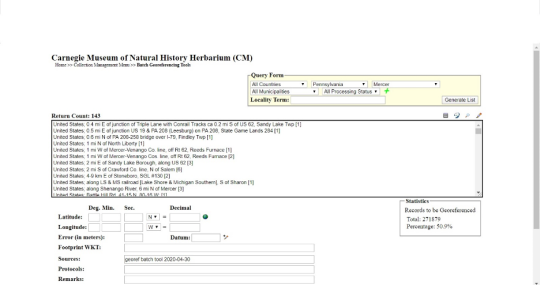
Despite all work being performed away from the museum since March 14, great strides have been made in getting specimens georeferenced. This term refers to the electronic pairing of the historic recorded location for each collected plant with an established system of geographic ground coordinates. In an effort to keep this project on schedule, I have spent about half my time working on it, adding over 7000 images to our Symbiota portal and georeferencing over 3800 specimens.

Screenshot of georeferencing portal for CM specimens.

With more images going up almost every day, the georeferencing problems have become easier to find and fix. In addition to being able to see the specimen and its label, it is also possible to query where the collector was on a given day. So not only can we see if the data was possibly mistyped or misread, we can also check to see if the locality is within the known range for each species collected. All this associated information makes for fun sleuthing projects. With almost half of our specimens currently georeferenced, I am also currently working on fixing problems with localities that map outside of the geopolitical unit to which they were assigned.

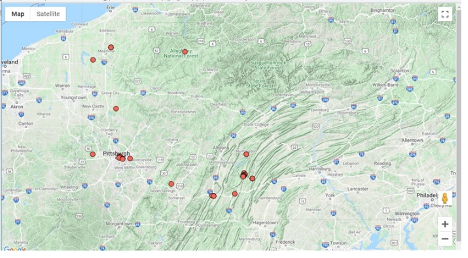
Screenshot of Pennsylvania locations with collections by former Botany Curator, Dr. Dorothy Pearth.

Georeferencing has become a bit of an obsession for a few of our volunteers and me because it combines history, plant collecting, and old maps into one big bundle. I must sometimes watch that I don’t go down some historical wormholes while looking for some very obscure place names. Some sets of georeferenced specimens have also added insights into the habits of some former Carnegie staff and volunteers and the haunts they liked to visit. I now know which collectors were precise in their collecting locality descriptions and which were more likely to stick to roadsides. We had at least one former curator who preferred to make localities vague when they were near parks and another who seemed to favor collecting where roads crossed streams. Fun times were had by all electronic explorers, or at least by me, and I’m learning a lot in the process.

Bonnie Isaac is the Collection Manager in the Section of Botany at Carnegie Museum of Natural History. Museum staff, volunteers, and interns are encouraged to blog about their unique experiences and knowledge gained from working at the museum.

Filed Under: Blog Tagged With: Bonnie Isaac, Botany, botany hall, Section of Botany

May 13, 2020 by wpengine

Spring is in the Air, Botanists are in the Field

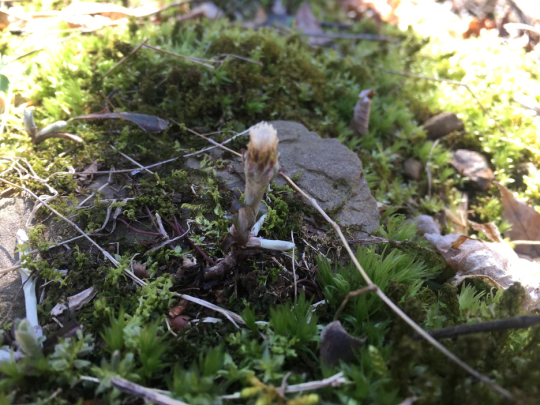
Antennaria solitaria in Ryerson Station State Park. Photo: BL Isaac.

With the arrival of warmer weather, botanists stop dreaming about what plants will be blooming and get out and look. CMNH botanists managed to make an early spring trip to the southwestern corner of Pennsylvania, visiting Ryerson Station State Park in Greene County. At Ryerson, we found some of the more common spring flowering species along with some non-native invasive species. While collecting more than a dozen plants as current vouchers for ongoing phenology comparisons with older specimens, we also visited a known site for a Pennsylvania proposed Endangered plant species, the single headed pussy-toes, or Antennaria solitaria.

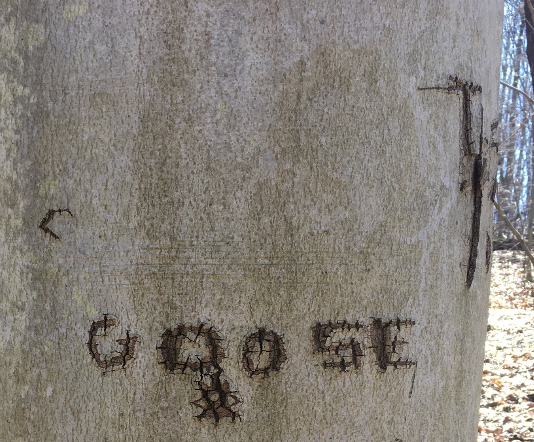
While out and about, I am always interested to see how well plants that have been labeled are identified. Over the years I have found some gross misidentifications on signs along trails. Last year I visited a boy scout camp that had a tree trail with over half of the trees misidentified. I found an especially egregious label along one of the trails in Ryerson Station State Park. This one was not on a park sign but was placed there by some misguided soul. What is obviously a beech tree (Fagus grandifolia) is clearly labeled as a goose (Branta canadensis). Evidently there were no scientific editors around when this mislabeling abuse took place by someone who not only can’t tell the forest for the trees but can’t tell a tree from a bird.

Beech tree in Ryerson Station State Park. Photo: BL Isaac.

All silliness aside, as spring moved along important field work stalled. With visits to Yellow Creek State Park and Cook Forest State Park in the works, we were notified by the Bureau of State Parks that all scientific permit holders must suspend collecting in the parks until further notice. So, our state park project, which has been running since 2017, was temporarily suspended due to the COVID-19 pandemic.

Collecting restrictions were lifted weeks later, however, we have missed one of the most important seasons for our long-term state park phenology study. With our 10-year plan in place it may be another decade before we can collect to evaluate Yellow Creek State Park flora. Hopefully we can double up on parks next year, so we won’t have to wait another 10 years to get these parks involved in our phenology project.

Bonnie Isaac is the Collection Manager in the Section of Botany. Museum employees are encouraged to blog about their unique experiences and knowledge gained from working at the museum.

Filed Under: Blog Tagged With: Bonnie Isaac, Botany, Hall of Botany, Museum from Home, Section of Botany

  • Page 1
  • Page 2
  • Page 3
  • Interim pages omitted …
  • Page 5
  • Go to Next Page »

sidebar

About

  • Mission & Commitments
  • Directors Team
  • Museum History

Get Involved

  • Volunteer
  • Membership
  • Carnegie Discoverers
  • Donate
  • Employment
  • Events

Bring a Group

  • Groups of 10 or More
  • Birthday Parties at the Museum
  • Field Trips

Powdermill

  • Powdermill Nature Reserve
  • Powdermill Field Trips
  • Powdermill Staff
  • Research at Powdermill

More Information

  • Image Permission Requests
  • Science Stories
  • Accessibility
  • Shopping Cart
  • Contact
  • Visitor Policies
One of the Four Carnegie Museums | © Carnegie Institute | Privacy Policy | Terms of Use | Accessibility
Rad works here logo