• Skip to primary navigation
  • Skip to main content
  • Skip to primary sidebar

Carnegie Museum of Natural History

One of the Four Carnegie Museums of Pittsburgh

  • Visit
    • Buy Tickets
    • Visitor Information
    • Exhibitions
    • Events
    • Dining at the Museum
    • Celebrate at the Museum
    • Powdermill Nature Reserve
    • Event Venue Rental
    • Gift Cards
  • Learn
    • Field Trips
    • Educator Information
    • Programs at the Museum
    • Bring the Museum to You
    • Guided Programs FAQ
    • Programs Online
    • Climate and Rural Systems Partnership
  • Research
    • Scientific Sections
    • Science Stories
    • Science Videos
    • Senior Science & Research Staff
    • Museum Library
    • Science Seminars
    • Scientific Publications
    • Specimen and Artifact Identification
  • About
    • Mission & Commitments
    • Directors Team
    • Museum History
  • Tickets
  • Give
  • Shop

City Nature Challenge

May 19, 2021 by wpengine

Reading Results: CNC Final Phase

by Patrick McShea

Whether you participated in the recent City Nature Challenge (CNC) or not, the results of the Pittsburgh Region’s broadest annual citizen science biological survey might be of interest.

The visually rich and geographically referenced compilation is a record of 1,219 different species of free-living plants, animals, and fungi documented, via the iNaturalist phone app, by 446 observers within six southwestern Pennsylvania counties during four mid-spring days. It’s a site where anyone with an interest in local natural history can spend a lot of time exploring.

Participation in Pittsburgh’s 2021 CNC was 16% lower than during the 2020 event, a reduction resulting in a similar-sized decline in total observations, yet only a 10% drop in the total number of different organisms documented. This year’s event was held April 30 – May 3, nearly a full week later in the spring than the 2020 CNC, a modification that might have increased the likelihood for some organisms to be observed.
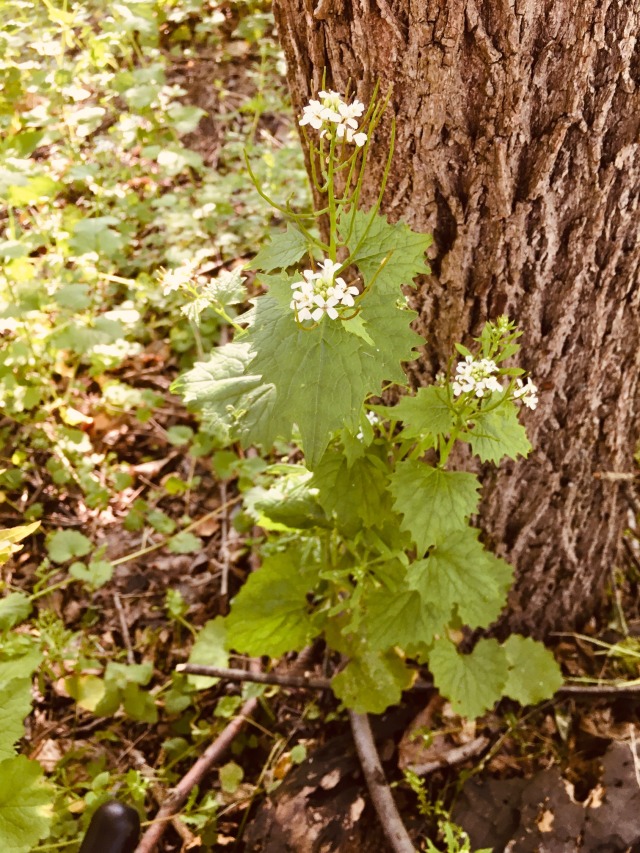
A flowering garlic mustard plant growing at the base of a black walnut tree.

Garlic mustard (Alliaria petiolata), a highly invasive plant introduced to North America in the mid-1800s for its herbal value and erosion control properties, was the most commonly documented organism, accounting for 98 of the Pittsburgh Region’s 7,045 total observations. On the results page, where visitors can further explore every documented species, there’s information to be gleaned beyond the common and scientific names of each entry. Far down the rankings, for example, all four images of organ-pipe mud-dauber nest chambers show the wasp-build tubes attached to human-built walls, and both seal salamander images appear to be illuminated by flashlight or headlamp.
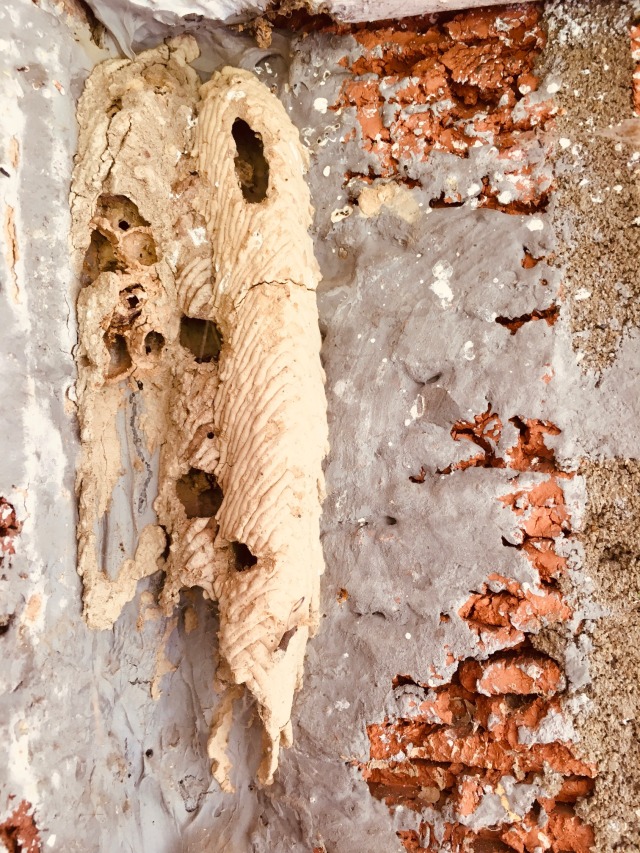
Tubular nests built by the organ pipe mud dauber, a wasp species that preys upon spiders.

As a category, plants, and frequently their blossoms, account for over half the total species documented. Birds, which included some migrants passing through the Pittsburgh region, led the vertebrate class with 111 species documented. Mammals followed with 21 documented species, and documented species for amphibians and reptiles numbered 16 and 13, respectively. 197 species of insects were documented, as were 137 species of fungi.

Participation levels are also carefully recorded in the results, with CMNH’s own Mason Heberling, Assistant Curator of Botany, leading the pack with 403 recorded observations of 208 different species. He explains his level of activity as a response to the scientifically sound parameters established by the CNC organizers. “Because it is roughly the same time each year, I have made a habit of going back to the same several sites each year, mostly ones that are convenient and nearby to me, and ironically, ones I don’t often get to as much as I wish I could.  I do that with hopes of after going back to the same handful of sites around the same time, year after year, we can look at year-to-year and longer-term differences.”

And CMNH’s own Bonnie Isaac, Collection Manager in Botany, was among 397 identifiers who contributed time and background knowledge during a critical six-day second phase of the CNC to review and identify the observations of other participants. In fact, Bonnie identified 872 observations during the challenge. Within the operations of the iNaturalist app, observations with GPS coordinates that are identified by two separate reviewers are termed “Research Grade,” meaning they can contribute to the data sets of future studies. Nearly 54% of the Pittsburgh Region’s CNC observations earned the research grade mark this year, a very slight increase over last year’s mark.

Through the CNC and other citizen science survey projects, the contributions of observers and identifiers enables the powerful image recognition software of the iNaturalist platform to increasingly transform our phones into broad spectrum field guides. As you scroll and click through this year’s CNC results it’s also worth reflecting upon what is both gained and lost through a digital interface.

In a 2015 New York Times essay titled Identification Please, naturalist Helen Macdonald pays homage to the low-tech field guide by first calling out their flaws:

Out in the field, birds and insects are often seen briefly, at a distance, in low light or half-obscured by foliage; they do not resemble the tabular arrangements of paintings in guides, where similar species are brought together on a plain background on the same page, all facing one way and bathed in bright, shadowless light so they may be easily compared.

She later explains the great value of field guides in preparing our eyes and minds for what we hope to observe:

Field guides made possible the joy of encountering a thing I already knew but had never seen before.

Patrick McShea works in the Education and Visitor Experience department of Carnegie Museum of Natural History. Museum employees are encouraged to blog about their unique experiences and knowledge gained from working at the museum.

Related Content

Cities are Not Biological Deserts

Naturally Pittsburgh: Big Rivers and Steep Wooded Slopes

Water Bears: Why My Yard is Like the Moon

Carnegie Museum of Natural History Blog Citation Information

Blog author: McShea, Patrick
Publication date: May 19, 2021
Share this post!

  • Share on Twitter Share on Twitter
  • Share on Facebook Share on Facebook
  • Share on Pinterest Share on Pinterest
  • Share on LinkedIn Share on LinkedIn
  • Share on Reddit Share on Reddit
  • Share via Email Share via Email

Share this post!

  • Share on Twitter Share on Twitter
  • Share on Facebook Share on Facebook
  • Share on Pinterest Share on Pinterest
  • Share on LinkedIn Share on LinkedIn
  • Share on Reddit Share on Reddit
  • Share via Email Share via Email

Filed Under: Blog Tagged With: City Nature Challenge, Education, Educator Resources, Pat McShea, Science News

April 30, 2021 by wpengine

Warmer Springs and Earlier Birds

by Bonnie McGill

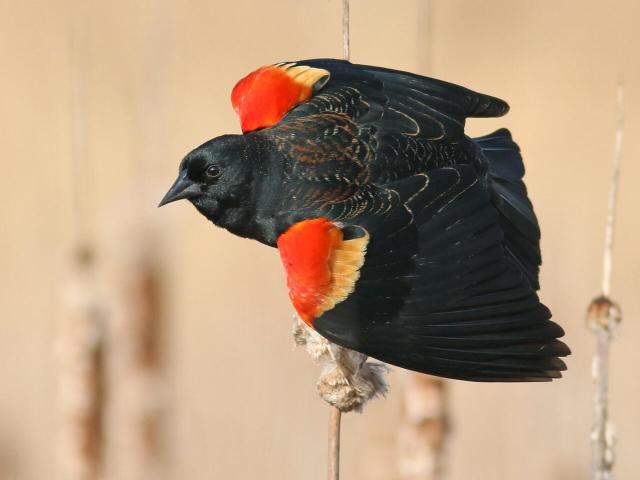
Male Red-winged Blackbird (Agelaius phoeniceus) by Jonathan Eckerson via Macaulay Library.

Male Red-winged Blackbirds! For me, their calls and bright red shoulders are one of the signs that spring is really here. Mind you, this is no subtle sign of spring that takes an expert naturalist to notice. No, this is a sign of spring that slaps you across the face, as if spring is calling, “I’m here! CONK-A-REE! Look at me!” Next time you drive past a wetland area with cattails, there is a good chance you’ll see one or more showing off their red shoulders (the brown females are beautiful too). Red-winged Blackbirds have been back in western PA and announcing their territorial claims since March. Whether you live in the country or the city, bird watching is a great way to observe the change in seasons and connect with the nature around you (and in you).

As a member of the Climate and Rural Systems Partnership (CRSP) team I’ve been gathering evidence-based stories of how climate change is impacting natural processes in western PA. Since this week is the City Nature Challenge, folks might be paying closer attention to birds, creating an opportunity for museum scientists to explain what migratory songbirds in our region can teach us about climate change.

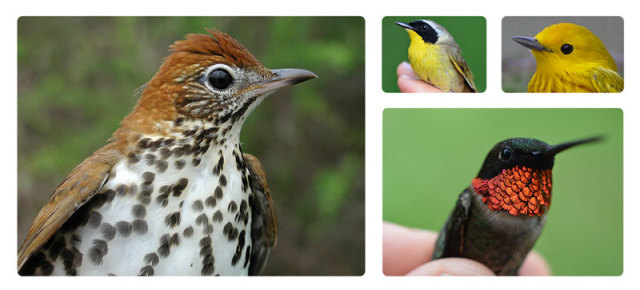
Since 1961 scientists at the museum’s Powdermill Avian Research Center (PARC) in Pennsylvania’s Laurel Highlands have been monitoring birds. In that time they have captured, studied, marked, and released almost 800,000 birds! This week, for example, PARC’s mist nets are temporarily capturing birds like the Common Yellowthroat, Yellow Warbler, House Wren, Ruby-throated Hummingbird, American Redstart, and Wood Thrush.

Migratory birds that are part of the PARC long term dataset (clockwise from left): Wood Thrush, Common Yellowthroat, Yellow Warbler, and Ruby-throated Hummingbird. All of these species are breeding earlier in the year in response to climate change that has already occured. Photos courtesy of Powdermill Avian Research Center.

All of these species are migratory–spending the winter in the southern US, the Caribbean, Central America, and/or South America. Many fly across the Gulf of Mexico (!) on their way north in the spring. All of these birds share another trait–they are nesting earlier in the year than they once did. We will follow the Wood Thrush as an example of how many birds are responding to the warming climate.

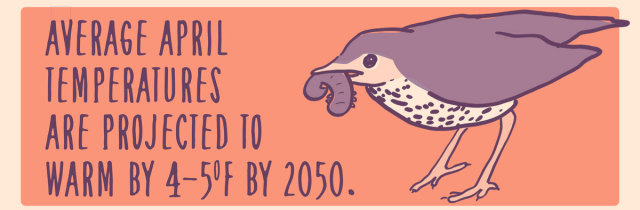
on the right side, text reads "Average April temperatures are projected to warm by four to five degrees Fahrenheit by 2050." On the left, there's an illustration of a bird holding a worm in its beak.
The artwork in this blog post is by the author and part of an infographic depicting the information written here.

PARC’s unique 50 year dataset allows scientists to study how birds respond to long term changes, including the warming climate. Average April temperatures in the Laurel Highlands have already increased by two degrees Fahrenheit since the 1960s, and are projected to warm by another four to five degrees Fahrenheit by 2050. Warmer springs trigger earlier plant budburst. Insects, especially caterpillars, feast on buds and young leaves, which have less toxins than mature leaves. Caterpillars are the breakfast of champions (among birds). So, migratory songbirds, including the Wood Thrush, need to synchronize their northward movement with the budburst. This means an earlier arrival, according to the calendar, at points all along their migration route.

Wood Thrushes arrive from Central America five days earlier than they did in the 1960s. Research suggests that migratory birds respond to temperature cues along their migration route and speed up (warmer temperatures) or slow down (cooler temperatures). Birds may be responding to temperature directly or indirectly via other temperature-dependent cues such as wind speed and direction and spring leaf out.

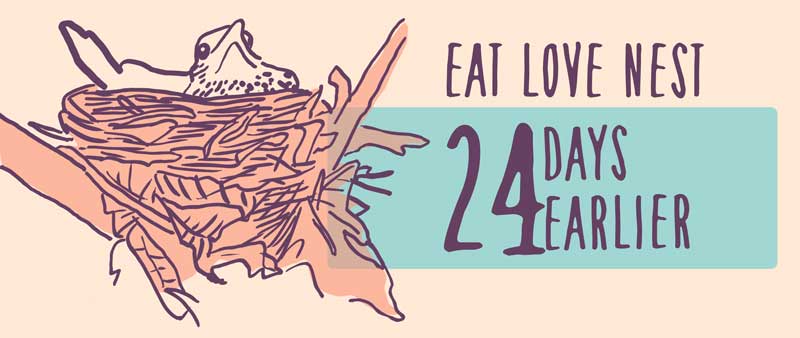
Eat, Love, Nest, 24 days earlier

Early arrival is not the only adjustment Wood Thrushes are making, however. The birds are also making their nests and hatching young earlier. Wood Thrushes are nesting 24 days earlier than they did in the 1960s. All four of the  bird species in the photo above are breeding earlier. Within the web of organisms that supplies food for birds, May 19 of the present feels like June 11 of the 1960s. The earlier nesting in response to a warming climate means birds that normally hatch and rear multiple broods per breeding season, such as House Wrens and Northern Cardinals, may  have greater reproductive capacity. PARC research shows that Gray Catbirds and Northern Cardinals are having more young in warmer springs, but other multi-brood species such as House Wrens and Common Yellowthroats are not.

While birds seem to be keeping pace with climate change now, they may not be able to in the future. Their capacity to adjust migratory and reproductive behavioral traits in response to climate change is finite. Also, we’ve already lost an estimated 3 billion North American birds since 1970 due to factors including habitat loss, insect declines, pesticide use, and predation by domestic cats. Now climate change is making bird survival even more difficult. The capacity of bird populations to evolve in response to climate change is also limited – climate change in the Anthropocene is happening much more rapidly than climate change in past epochs, many times faster than evolution can keep up. The good news is we can help birds, ecosystems, and ourselves by taking action to reduce the severity of climate change.

illustration of two birds flying with the text "You can help birds and climate"

Here are three ways individuals and communities can help birds by mitigating climate change:

1) Conserve habitat: Habitats like forests, wetlands, and prairies provide food and shelter for birds while the plants and soils remove and store carbon away from the atmosphere. These habitats are needed throughout birds’ migratory ranges. Create habitat by reducing lawns and planting native plants. For example, many birds enjoy eating the fruits of spicebush, elderberry, and black cherry, which are native to western Pennsylvania. You can find more bird-friendly plants native to your area at https://www.audubon.org/plantsforbirds.

2) Renewable energy: A just transition to renewable energy sources like properly-sited wind* and solar will reduce greenhouse gas emissions, provide local jobs, improve air quality, and help protect birds and people from climate change. *The National Audubon Society supports properly-sited wind energy.

3) Eat your vegetables: A more plant-based diet is an impactful way to reduce greenhouse gas footprints. Also, choosing food that is grown with less pesticides, and using less pesticides in the stewardship of your garden, helps support the survival of insects that are food for birds. Reductions in demand for pesticides also reduces their manufacture, which further reduces greenhouse gas emissions. Learn more from Project Drawdown.

So get out there, find the signs of spring that are gentle (Trout Lilies) and not-so-gentle (Red-winged Blackbirds), log them in iNaturalist for the City Nature Challenge, and talk with your family and your community about how you can implement one or two (or three!) of the actions suggested above!

You can also read this as an infographic here.

Thank you to the many folks who helped with the development of this blog post and infographic: Luke DeGroote, Mary Shidell, and Annie Lindsay at PARC; the Laurel Highlands network of the Climate and Rural Systems Partnership; Nicole Heller; Taiji Nelson; and Sarah Crawford.

Bonnie McGill, Ph.D. is a science communication fellow for the Climate and Rural Systems Partnership and based in the Anthropocene Studies Section at Carnegie Museum of Natural History. Museum employees are encouraged to blog about their unique experiences and knowledge gained from working at the museum.

Related Content

Teaching About Local Wildlife with the City Nature Challenge

Water Bears: Why My Yard is Like the Moon

Botanists Use Data Collected By Thoreau to Uncover Unexpected Effects of Climate Change

Carnegie Museum of Natural History Blog Citation Information

Blog author: McGill, Bonnie
Publication date: April 30, 2021

Share this post!

  • Share on Twitter Share on Twitter
  • Share on Facebook Share on Facebook
  • Share on Pinterest Share on Pinterest
  • Share on LinkedIn Share on LinkedIn
  • Share on Reddit Share on Reddit
  • Share via Email Share via Email

Share this post!

  • Share on Twitter Share on Twitter
  • Share on Facebook Share on Facebook
  • Share on Pinterest Share on Pinterest
  • Share on LinkedIn Share on LinkedIn
  • Share on Reddit Share on Reddit
  • Share via Email Share via Email

Filed Under: Blog Tagged With: Anthropocene, Anthropocene Living Room, Anthropocene Studies, Bonnie McGill, City Nature Challenge, climate change, CRSP

April 29, 2021 by wpengine

Water Bears: why my yard is like the moon

by Tim Pearce

Water bears, also known as tardigrades or moss piglets, are microscopic animals, famous for being cute and nearly indestructible. Looking a bit like the Michelin Man with eight claw-tipped legs, they can survive extreme highs and lows of temperature and pressure, and ionizing radiation. They are among the few animal groups that can completely dry up into suspended animation, a process called anhydrobiosis, and tardigrades can survive dried up for decades. Tardigrades have even survived in outer space (see “Tardigrade” in Wikipedia for more amazing feats).

Large ones can be 1 mm (1/25 inch) long, but most species are less than half that long. They live in many environments, and can often be found in moss and lichen. I even saw some tardigrades digesting the waste stream during an open house at ALCOSAN, Pittsburgh’s sewage treatment plant.

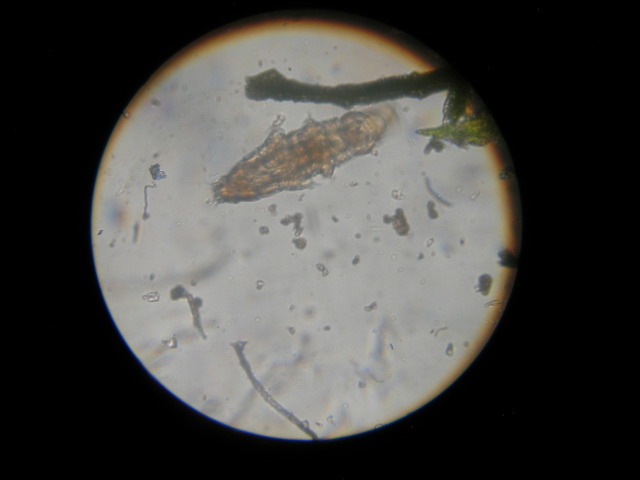
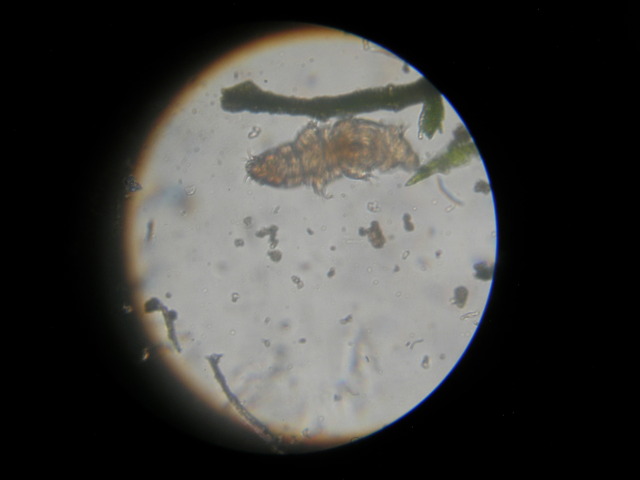
To practice for the 2021 City Nature Challenge, I looked for tardigrades in my back yard. I scraped up a bit of moss, shook it in some water, and then examined the settled material under a microscope. Within a few minutes, I had found the tardigrade illustrated here! I also saw nematodes and rotifers, two other common microscopic organisms. I just checked iNaturalist, and no tardigrades have been reported from Pittsburgh, so mine will be the first!

image of a tardigrade
Two shots of the tardigrade from my back yard in Squirrel Hill, Pittsburgh, 20 Apr 2021. Head is to the right. Animal is 0.6 mm long.

How does finding tardigrades make my yard like the moon? You might remember in 2019 an Israeli lunar probe crashed on the moon. Part of its payload was dehydrated tardigrades, which evidently have been scattered across a section of the lunar surface. My yard is like the moon because they both have tardigrades!

Examining the world of the small can yield big contributions. I encourage you to participate in the City Nature Challenge, and pay attention to tiny things.

Tim Pearce is the head of the mollusks section at Carnegie Museum of Natural History. Museum employees are encouraged to blog about their unique experiences and knowledge gained from working at the museum.

Related Content

Naturally Pittsburgh: Big Rivers and Steep Wooded Slopes

Go For a Color Walk

Evidence Counts for Absent Creatures – City Nature Challenge

Carnegie Museum of Natural History Blog Citation Information

Blog author: Pearce, Timothy
Publication date: April 29, 2021

Share this post!

  • Share on Twitter Share on Twitter
  • Share on Facebook Share on Facebook
  • Share on Pinterest Share on Pinterest
  • Share on LinkedIn Share on LinkedIn
  • Share on Reddit Share on Reddit
  • Share via Email Share via Email

Filed Under: Blog Tagged With: City Nature Challenge, mollusks, Science News, Tim Pearce

April 27, 2021 by wpengine

Naturally Pittsburgh: Big Rivers and Steep Wooded Slopes

by Patrick McShea

Pittsburghers are accustomed to seeing their hometown visually portrayed with its river-hemmed Downtown as a focal point. If your goal is to understand how the city’s geographical position in the greater landscape of southwestern Pennsylvania influences its wildlife and plant cover, images from different perspectives are useful.

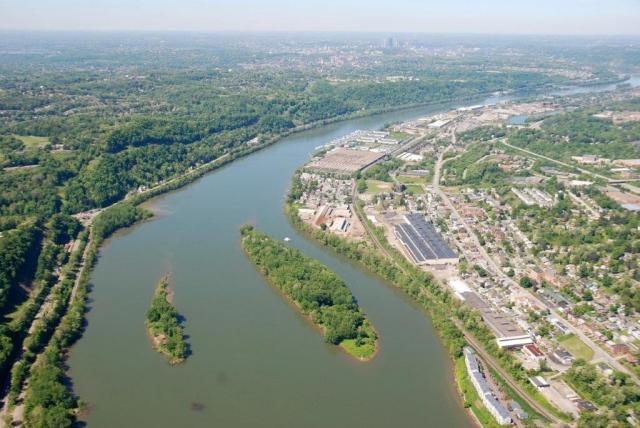
Nine Mile Island, left, and Sycamore Island, right, in the lower Allegheny River. Photo credit: Allegheny Land Trust.

The picture above offers a bird’s eye view down the Allegheny River at a point nine miles upstream from the 325-mile-long waterway’s confluence with the Monongahela River. That much-photographed merge point, which creates the Ohio River, can be spatially located in the frame’s right-of-center background by the hazy blur of Downtown’s tallest buildings. The eye movement required to locate the spot involves tracing steep left-bank wooded bluffs from suburban Penn Hills and along the Pittsburgh neighborhoods of Lincoln-Lemington, Highland Park, and Morningside.

This simple exercise has relevance to the upcoming City Nature Challenge (CNC) for the visual attention it brings to the paired Pittsburgh physical features that keep nature in continual view here – our river system and the steep wooded hillsides carved by these big winding waterways and their tributaries.

Corridors Support Biodiversity

Both features create habitat corridors that serve to enrich the city’s biodiversity. The pair of Bald Eagles with a long record of nesting success on a wooded Monongahela River hillside in Pittsburgh’s Hays neighborhood are the most prominent evidence of this phenomena. Some of the fish they feed their young at this time of year can be regarded as additional evidence.

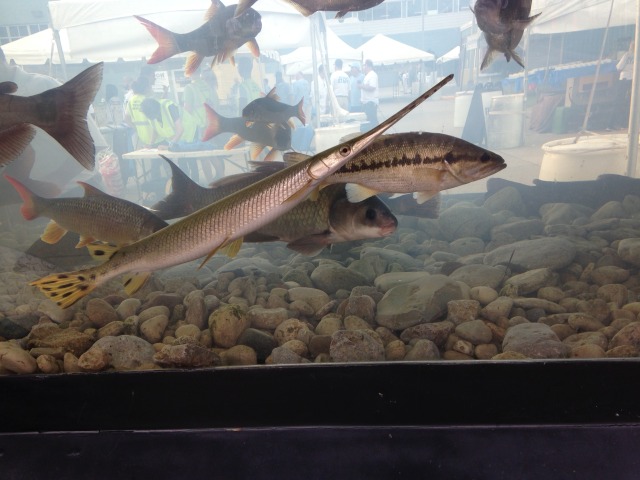
Pittsburgh fish displayed in tank set-up by the Ohio River Valley Water Sanitation Commission.

Many of the organisms supported by Pittsburgh’s wooded and flowing water corridors do not, however, lend themselves to the photo-documentation of the CNC. Some notable tree specimens and spring wildflower stands are found on high inaccessible ledges, river visits by diverse forms of waterfowl occur more frequently in the winter rather than the spring, and the predictability of the dozens fish species found in Pittsburgh’s waters challenges even the anglers who pursue them.

Importance of Incomplete Survey

The solution to this dilemma, as you record CNC observations and interpret the collective results, is simply to regard this important citizen science initiative as necessarily incomplete. In a recent BioScience paper co-authored by Nicole Heller, Curator of Anthropocene Studies at CMNH, analysis of urban biodiversity studies from all over the world pointed to the importance of enhancing public engagement and environmental stewardship. That is something that can certainly happen this year between April 30 and May 3, in a City Nature Challenge that recognizes some unavoidable bio-survey gaps.

Patrick McShea works in the Education and Visitor Experience department of Carnegie Museum of Natural History. Museum employees are encouraged to blog about their unique experiences and knowledge gained from working at the museum.

Citations for research paper:

“The Biological Deserts Fallacy: Cities in Their Landscapes Contribute More than We Think to Regional Biodiversity,” BioScience, Volume 71, Issue 2, February 2021, Pages 148–160,

Erica N Spotswood, Erin E Beller, Robin Grossinger, J Letitia Grenier, Nicole E Heller, Myla F J Aronson, The Biological Deserts Fallacy: Cities in Their Landscapes Contribute More than We Think to Regional Biodiversity, BioScience, Volume 71, Issue 2, February 2021, Pages 148–160, https://doi.org/10.1093/biosci/biaa155

Related Content

Go For a Color Walk

Teaching About Local Wildlife with the City Nature Challenge

Evidence Counts for Absent Creatures – City Nature Challenge

Carnegie Museum of Natural History Blog Citation Information

Blog author: McShea, Patrick
Publication date: April 27, 2021

Share this post!

  • Share on Twitter Share on Twitter
  • Share on Facebook Share on Facebook
  • Share on Pinterest Share on Pinterest
  • Share on LinkedIn Share on LinkedIn
  • Share on Reddit Share on Reddit
  • Share via Email Share via Email

Share this post!

  • Share on Twitter Share on Twitter
  • Share on Facebook Share on Facebook
  • Share on Pinterest Share on Pinterest
  • Share on LinkedIn Share on LinkedIn
  • Share on Reddit Share on Reddit
  • Share via Email Share via Email

Filed Under: Blog Tagged With: biodiversity, City Nature Challenge, Educator Resources, Pat McShea, Pittsburgh

April 26, 2021 by wpengine

Go For a Color Walk

by Jenise Brown

City Nature Challenge (April 29-May 2, 2022) is coming soon! Going for a “color walk” is one fun and easy way to participate no matter where you live.

What is a color walk you might ask? Each time you go for a walk, pick a single color—maybe green, white, red, pink, yellow. As you are out, keep your color in mind and look for it in the wild, noting plants, animals, and fungi that you see. When you find one (or evidence of one that you can’t see!), take a picture, and upload it to iNaturalist.

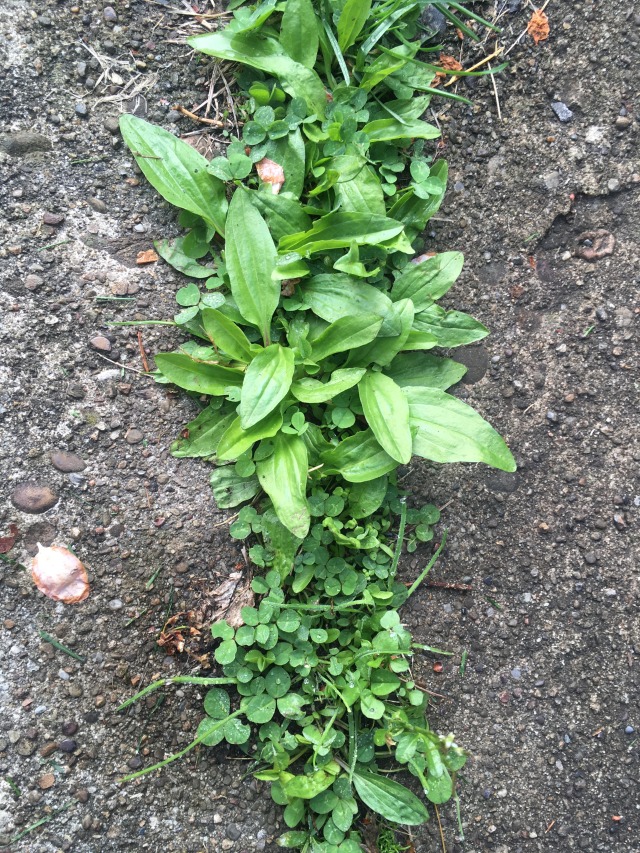
You’ll start to notice patterns among things you see in the color you’ve chosen, and you can make some hypotheses about the observations for each color, like what species you are likely to see in certain areas. Lots of plants are green, so a green color walk might help us to notice all of the plants that are around us, even in places like cracks in the sidewalk. Because the City Nature Challenge occurs during a season when Pittsburgh still experiences cold weather, this is probably the easiest color to find. In fact plants were the most common observations in Pittsburgh during the City Nature Challenge in 2020, with 9 of the top 10 observations being plants.

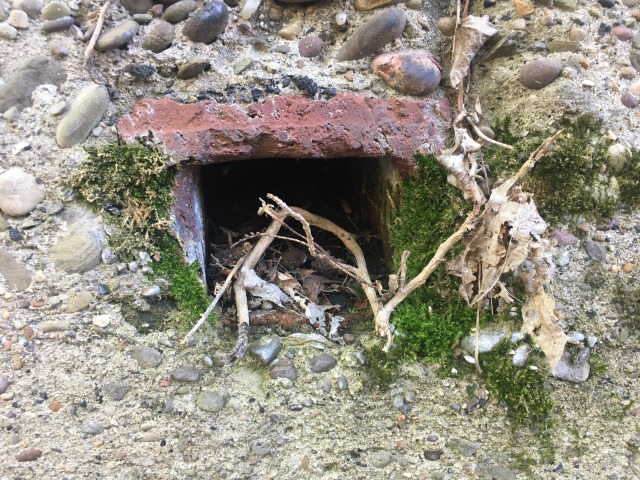
various green plants growing from a sidewalk crack
Look at the variety of green plants in this sidewalk crack!
green plants growing on rock
Don’t forget to look for small patches of green in unexpected places.

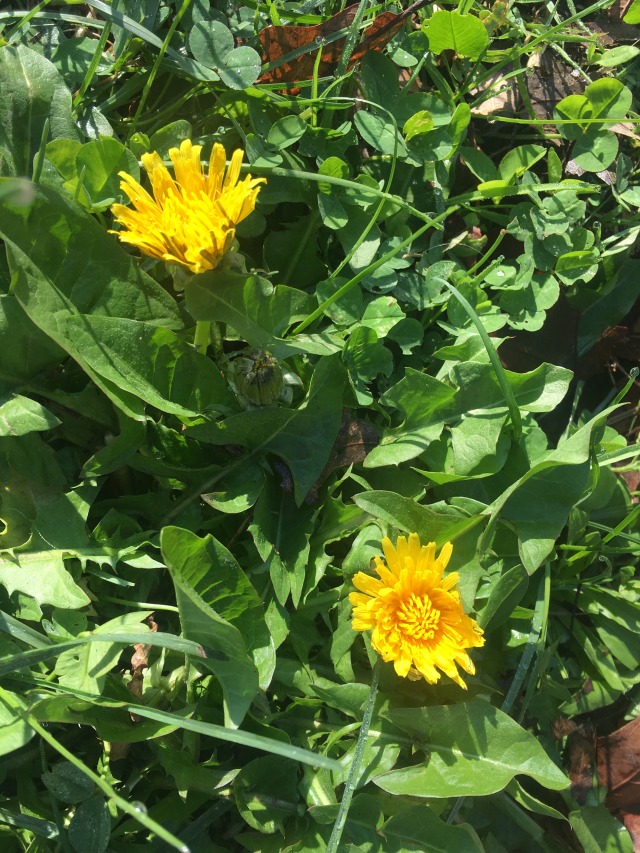
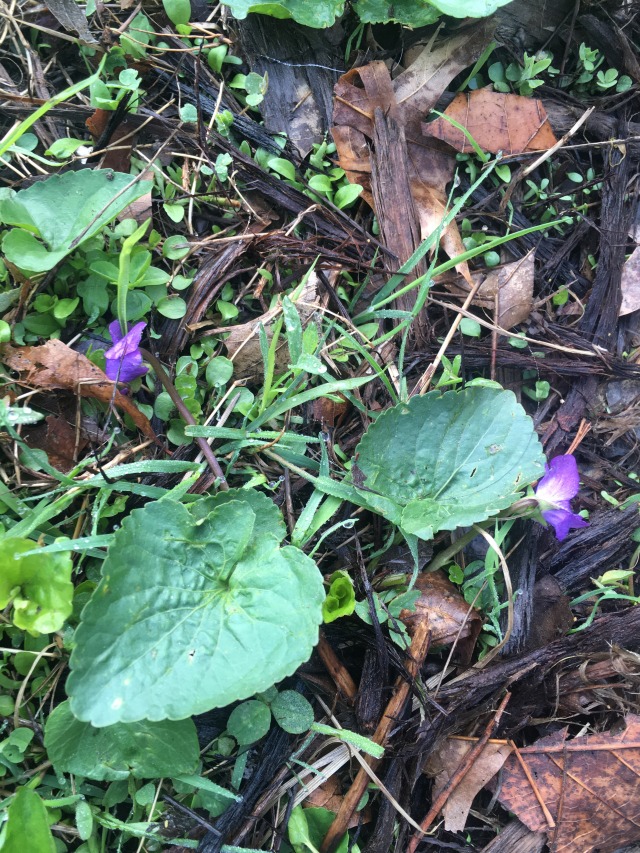
Yellow and purple are common colors in early spring flowers and might potentially switch your focus to exclusively flowering plants or even insects. City Nature Challenge tallies both the number of observations made and the species observed. Choosing one of these colors may help you to notice new and different species that you previously overlooked.

two yellow dandelions
This dandelion flower is one of the earliest yellows of the season.
two violets among leaves and sticks
Don’t miss violets! They have both both broad green leaves and small purple flowers.

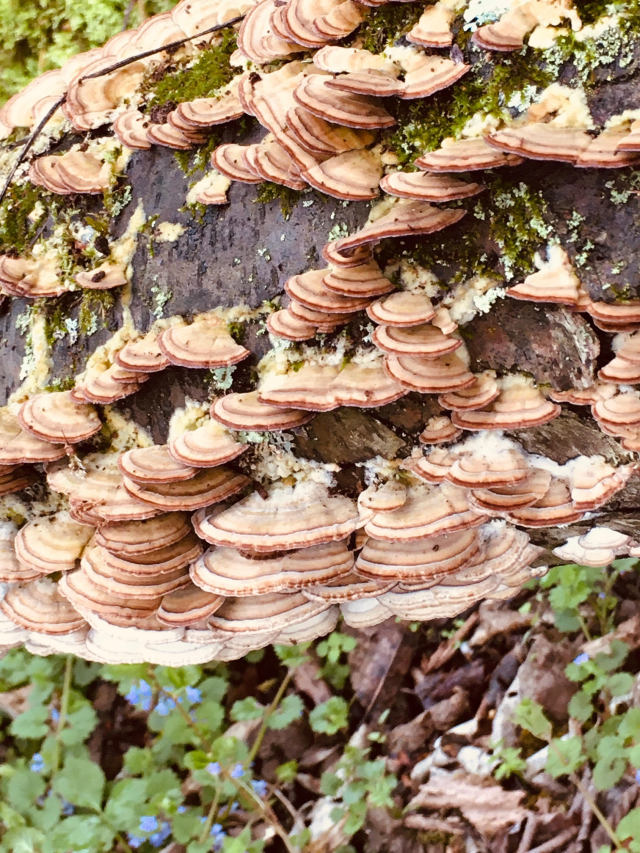
Don’t forget about the less flashy, but still abundant fungi. Orange, white, or even brown might help you to notice them growing on trees, dead wood, soil, and rocks. An added element to help find more fungi is to look for and pick up fallen branches and inspect stumps. You can read more about urban fungi observations in this NY Times article.

mushrooms and lichen growing on a log

There’s no need to leave the city or even go to a park to have a great color walk! You can plan a route near where you live and repeat it multiple times, picking a different color each time. You might be surprised by all of the things you never noticed before right in your own neighborhood!

Jenise Brown is a Museum Educator with Carnegie Museum of Natural History. Museum staff, volunteers, and interns are encouraged to blog about their unique experiences and knowledge gained from working at the museum.

Related Content

Reading Results: CNC Final Phase 2021

Field Guides: An Introduction

Water Bears: Why My Yard Is Like the Moon

Carnegie Museum of Natural History Blog Citation Information

Blog author: Brown, Jenise
Publication date: April 26, 2021

Share this post!

  • Share on Twitter Share on Twitter
  • Share on Facebook Share on Facebook
  • Share on Pinterest Share on Pinterest
  • Share on LinkedIn Share on LinkedIn
  • Share on Reddit Share on Reddit
  • Share via Email Share via Email

Filed Under: Blog Tagged With: City Nature Challenge, Education, Educator Resources, Jenise Brown

April 13, 2021 by wpengine

Evidence Counts for Absent Creatures – City Nature Challenge

by Patrick McShea

Participation in the upcoming City Nature Challenge (April 30 – May 3) can range from using your phone’s camera to document a couple front yard observations, to compiling hours’ worth of observations at multiple sites during all four days of the event. Additional information about the six-county Pittsburgh Region’s efforts in this international project can be found elsewhere on the museum’s website:

City Nature Challenge (how to participate and resources)

Teaching About Local Wildlife with the City Nature Challenge

If you have a little more time available, however, a deeper working knowledge of the City Nature Challenge’s scope, limits, and purpose can be obtained by reviewing the answers the project’s organizers provide to more than a dozen frequently asked questions. One very important aspect of the project addressed in the FAQs page is the broad range of observations that can be collected, interpreted, and compiled via iNaturalist, the innovative phone app that serves as the digital engine for the City Nature Challenge (CNC).

Mud Evidence

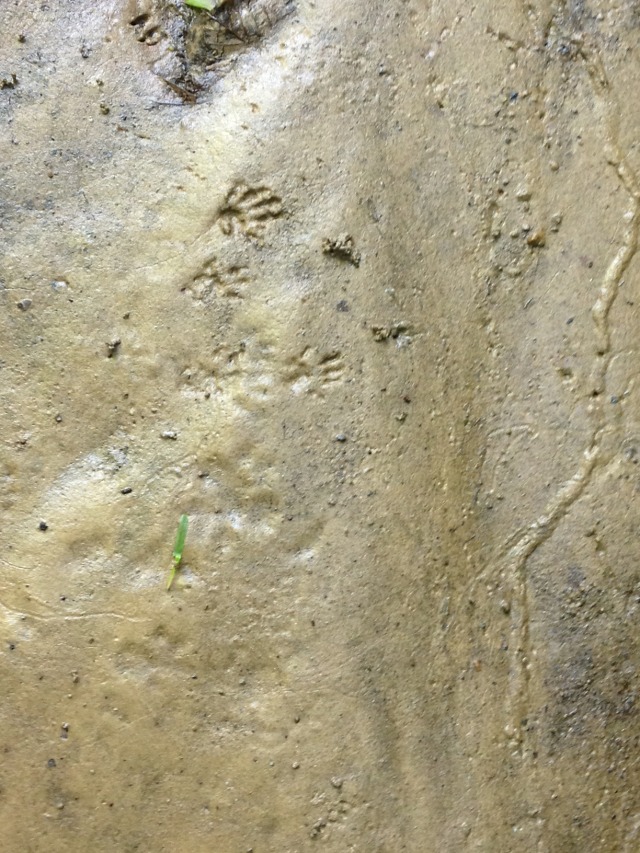
Raccoon tracks in mud.

In answer to the question, What kinds of observations should I make during the CNC? organizers suggest exactly the range of noticeable phenomena that any naturalist leading an interpretive walk would stop to point out: Any observations of WILD plants, animals, fungi, seaweed, bacteria, lichen, etc. you find in and around your city! Observations of living or dead organisms, or evidence of those organisms, like shells, tracks, scat, feathers, etc., are fine. A photo of raccoon tracks in a muddy creek edge, for example, could count in a CNC tally as evidence of the mammal’s recent passage.

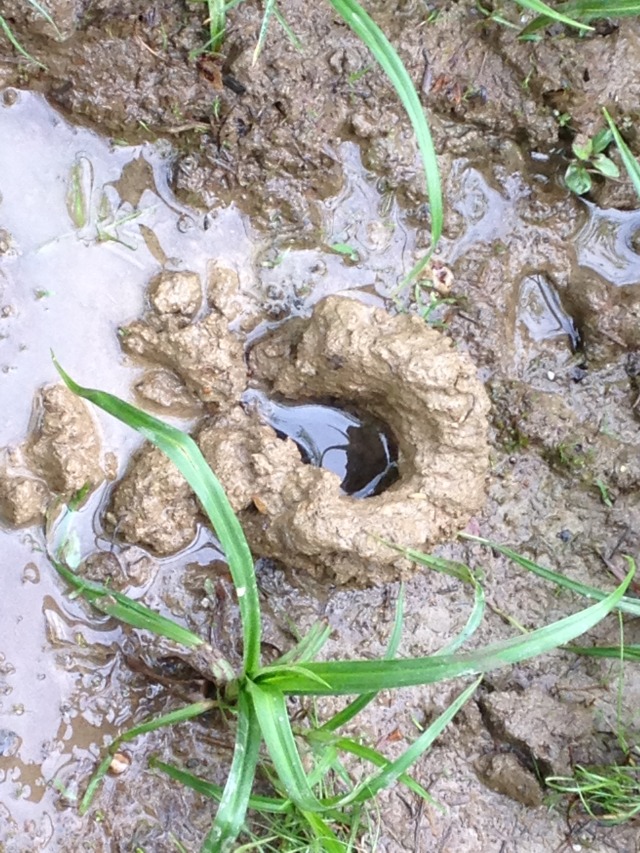
Crayfish chimney.

Another type of mud evidence indicates the presence of crayfish. In wet ground adjacent to ponds and streams, burrowing crayfish create distinctive and often fully-cylindrical mud structures above the holes they dig to reach groundwater. A photo of one of these “chimneys” documents the presence of the crustacean excavator somewhere below, but because there are multiple crayfish species in our region, further investigation would be necessary to refine such an observation to the species level.

Plants as Animal Evidence

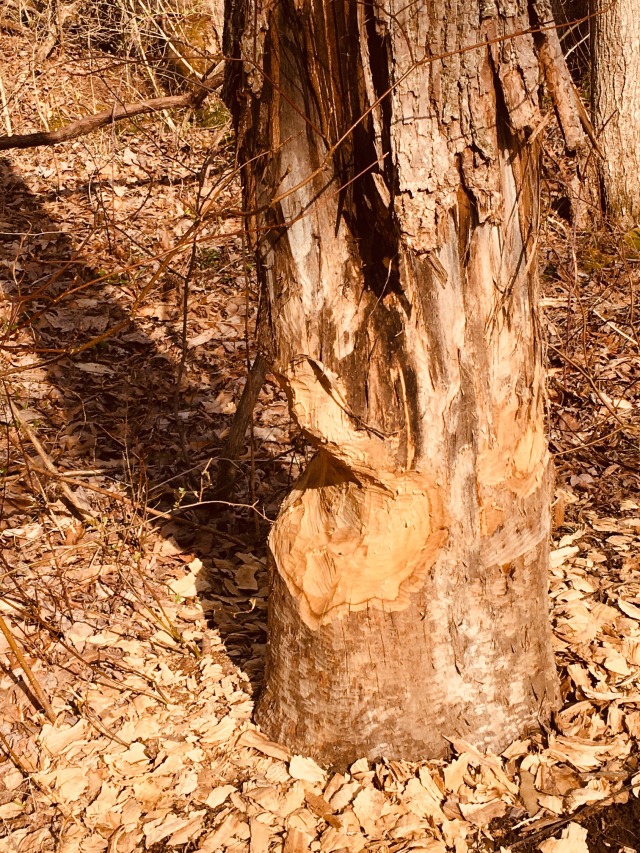
Beaver gnawed tree.

Sometimes plants can serve as animal evidence. Beavers, for example, aren’t known for appearing in cell phone camera range very often, but their activity, in the form of gnawed tree trunks and branches is easy to document along local waterways, including all three of Pittsburgh’s rivers. When photos of beaver evidence include sufficient detail to identify the impacted tree or shrub, the document becomes a “two-for-one.”

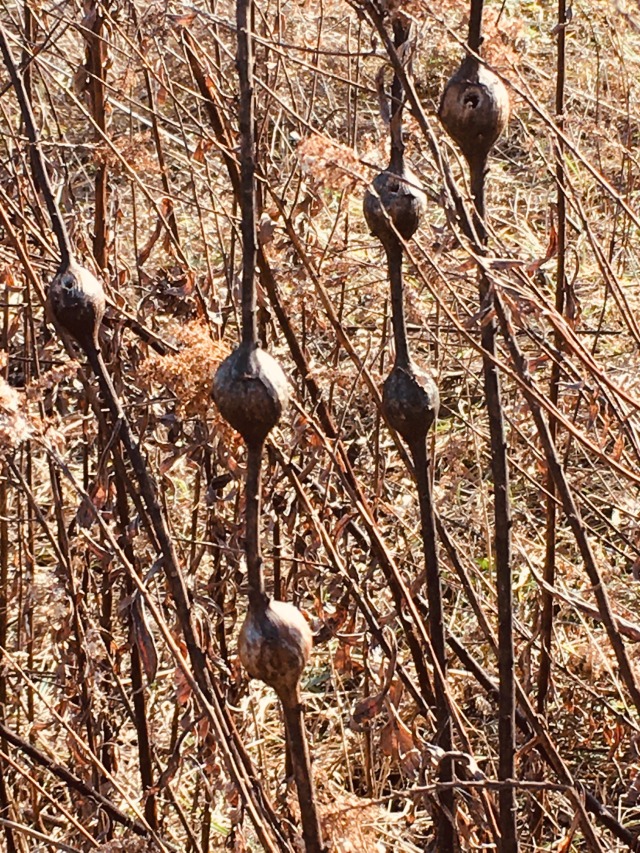
Goldenrod galls.

On higher and drier ground, amid stands of goldenrod, the deformed stalks of some plants provide evidence of a specific insect. The globular swellings, which are known as galls, are produced by the plant in reaction to the secretions of a tiny parasitic fly. Females of the goldenrod gall fly, a species know to science as Eurosta solidaginis, lay eggs at the base of goldenrod flower buds. Larvae hatched from these eggs chew into the plant stem where their secretions ultimately result in the creation of a protective winter shelter. The distinctive galls are not fully secure, however. Females of the parasitoid wasp known as Eurytoma gigantea seek out galls and their fly larvae occupants as a food source for their own larvae. Downy Woodpeckers and Black-capped Chickadees are also known to peck into galls to eat the occupants. Most of the galls in the above illustration bear evidence of such bird beak chiseling.

Patrick McShea works in the Education and Visitor Experience department of Carnegie Museum of Natural History. Museum employees are encouraged to blog about their unique experiences and knowledge gained from working at the museum.

Related Content

Cities Are Not Biological Deserts

Spring Birds in Your Backyard

A Little Harbinger of Spring…

Carnegie Museum of Natural History Blog Citation Information

Blog author: McShea, Patrick
Publication date: April 13, 2021

Share this post!

  • Share on Twitter Share on Twitter
  • Share on Facebook Share on Facebook
  • Share on Pinterest Share on Pinterest
  • Share on LinkedIn Share on LinkedIn
  • Share on Reddit Share on Reddit
  • Share via Email Share via Email

Share this post!

  • Share on Twitter Share on Twitter
  • Share on Facebook Share on Facebook
  • Share on Pinterest Share on Pinterest
  • Share on LinkedIn Share on LinkedIn
  • Share on Reddit Share on Reddit
  • Share via Email Share via Email

Filed Under: Blog Tagged With: City Nature Challenge, Education, Educators, Pat McShea

  • « Go to Previous Page
  • Page 1
  • Page 2
  • Page 3
  • Page 4
  • Interim pages omitted …
  • Page 6
  • Go to Next Page »

sidebar

About

  • Mission & Commitments
  • Directors Team
  • Museum History

Get Involved

  • Volunteer
  • Membership
  • Carnegie Discoverers
  • Donate
  • Employment
  • Events

Bring a Group

  • Groups of 10 or More
  • Birthday Parties at the Museum
  • Field Trips

Powdermill

  • Powdermill Nature Reserve
  • Powdermill Field Trips
  • Powdermill Staff
  • Research at Powdermill

More Information

  • Image Permission Requests
  • Science Stories
  • Accessibility
  • Shopping Cart
  • Contact
  • Visitor Policies
One of the Four Carnegie Museums | © Carnegie Institute | Privacy Policy | Terms of Use | Accessibility
Rad works here logo