• Skip to primary navigation
  • Skip to main content
  • Skip to primary sidebar

Carnegie Museum of Natural History

One of the Four Carnegie Museums of Pittsburgh

  • Visit
    • Buy Tickets
    • Visitor Information
    • Exhibitions
    • Events
    • Dining at the Museum
    • Celebrate at the Museum
    • Powdermill Nature Reserve
    • Event Venue Rental
  • Learn
    • Field Trips
    • Educator Information
    • Programs at the Museum
    • Bring the Museum to You
    • Guided Programs FAQ
    • Programs Online
    • Climate and Rural Systems Partnership
  • Research
    • Scientific Sections
    • Science Stories
    • Science Videos
    • Senior Science & Research Staff
    • Museum Library
    • Science Seminars
    • Scientific Publications
    • Specimen and Artifact Identification
  • About
    • Mission & Commitments
    • Directors Team
    • Museum History
  • Tickets
  • Give
  • Shop

City Nature Challenge

April 29, 2020 by wpengine

How-to Draw a Squirrel

If Pittsburgh had an animal mascot, I think it would be a squirrel.  So, let’s draw a squirrel together.
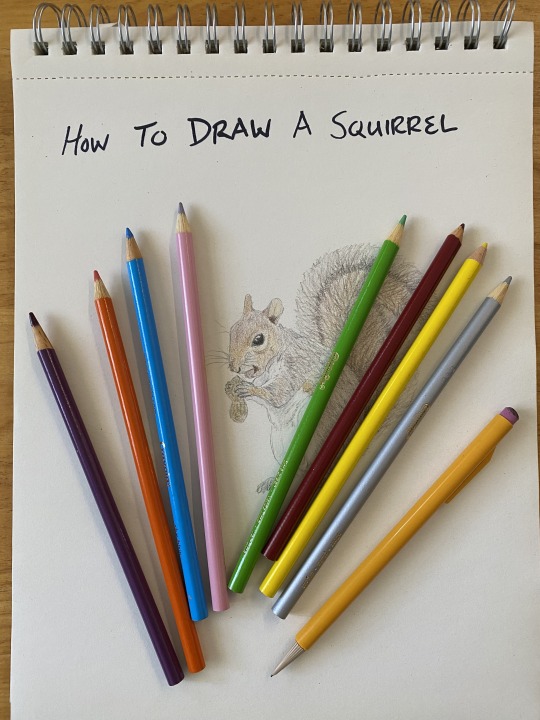
Early naturalists, explorers, and scientists didn’t have cameras to take photos of the animals and plants that they saw.  Instead they would draw them so that they could show fellow scientists and the public what kinds of new species they discovered.

One of the many squirrels that live in our area is the gray squirrel.  Gray squirrels usually have a grayish or brownish back and a white belly.  Some gray squirrels are melanistic—that means that they’re all black—and we call them black squirrels, but they’re actually a gray squirrel.

Before we get started you might need to gather some supplies.  Use a pencil and eraser, just in case you make some mistakes (it’s okay to make a mistake).  Get some paper and a comfy spot to draw—make sure you cover your table to avoid making marks on it.  Don’t forget the colors!  I like colored pencils, but you can use markers, crayons, paint, or anything else to color with.

Here’s a tip: try out some ideas on scrap paper so that you know what works best for you.  Practice makes perfect!

Step 1: Shapes
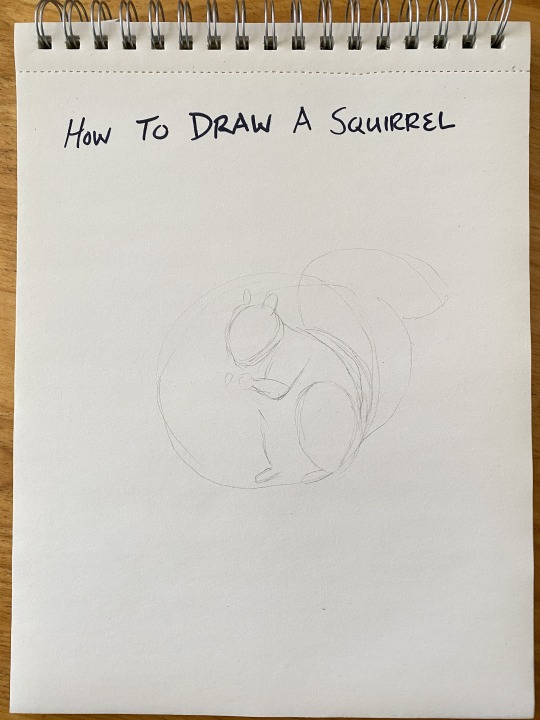
Use some basic shapes—circles, triangles, squares, and lines—to make up the general shape of what you want to draw.  Use light pencil strokes so that they’ll be easy to erase later.

Try to keep all of your shapes balanced to one another—you don’t want your squirrel to have a huge head!

I started by drawing a big circle, like a boundary zone, to keep all of the other shapes from getting too big.  It doesn’t have to be a perfect circle; we can erase it later.

I also like to have a photo that I’ve taken or found online to use as a reference for what I’m drawing.

If you want to take it to the next level, you can also check out some anatomical and skeletal models of squirrels or other animals online to understand more about their muscle and bone structure.

Step 2: Silhouette
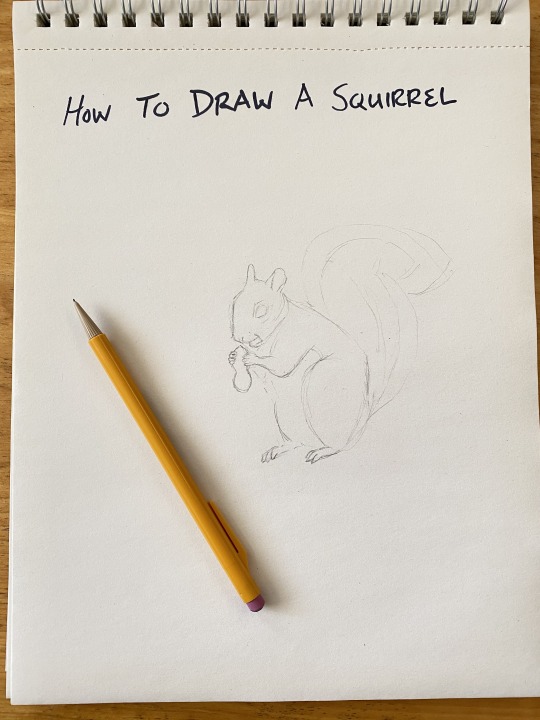
Next let’s connect our shapes so that we can have a good outline of our subject.  You can add eyes and some of the rough edges.  Try to zone out where your colors will change too—for instance the squirrel’s white belly will be different than its greyish brown back, so I’ll add a line to mark that.

We can also erase that boundary zone circle we made earlier, unless you want to add a colored background for your squirrel.

Let’s also give our squirrel a nut to eat.

Step 3: Details
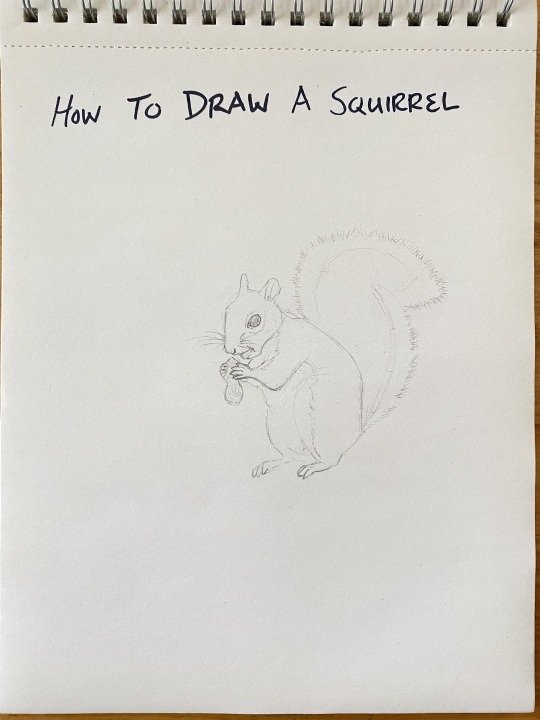
Add more details.  Add some furriness to the body, add in details on the ears and face—including some whiskers, and make that tail really fluffy.  You can also erase some of those shapes we made in step 1 and feel free to make a few changes to balance it all out if you want to.

It’s also important in this step to know how detailed you want to be.  Remember: a smaller sketch doesn’t need as much detail, but a bigger sketch can have more.  Whatever you think looks best.

Step 4: Color
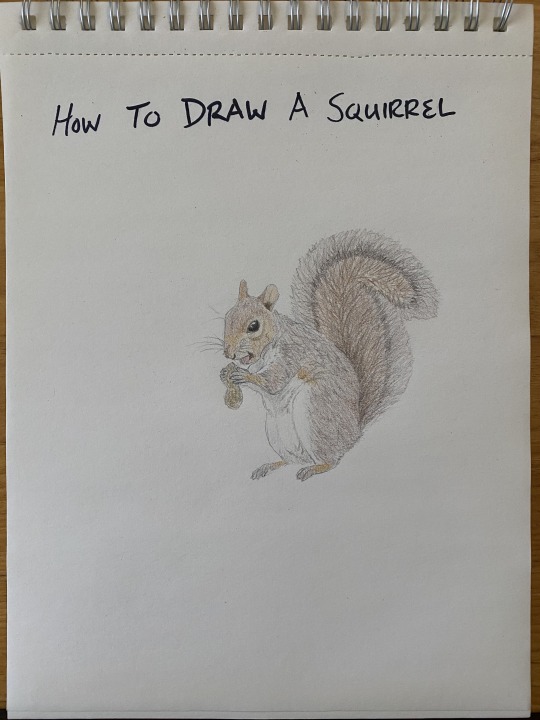
This step is optional, sometimes a black and white sketch can tell a great story.  However, if you have some time, then adding color to your drawing can also really bring it to life.

You can use crayons, markers, paint, or any other color tool you want.  It’s always a good idea to test your colors on a separate piece of paper to see if they’re right for you or to try out a mix of colors.  Squirrels that live in North America are usually brown, black, red, or gray, but there are very colorful squirrels in the tropics. Have fun with it!

Be proud of your sketches!  No one else could have made it the same way that you did.  By drawing and coloring plants, animals, and other nature you can sharpen your observation skills and gain a better appreciation for the beauty and uniqueness of all life.

Aaron Young is a museum educator on Carnegie Museum of Natural History’s Outreach team. Museum staff, volunteers, and interns are encouraged to blog about their unique experiences and knowledge gained from working at the museum.
Filed Under: Blog Tagged With: activities, City Nature Challenge, Education, mammals, Museum from Home

April 29, 2020 by wpengine

Bugging Out…and Coming Back

From the first blooms of spring through the end of summer, insects (and many other things we often call bugs), are plentiful. They make their presence known at all hours by buzzing along during the day and chirping throughout the night. But where were they all winter? There is no one answer and that is what makes it so fascinating! Let’s take a closer look at where the insects we are seeing now have been hiding.

Flying South for the Winter

When we think of migration, we usually attribute it to birds. However, insects are known to migrate as well. Generations of monarch butterflies from the United States and Canada fly south to Mexico and roost in mountain forests. Different species of dragonflies also migrate. In the US and Canada, adults of migrating species leave for Mexico in the early fall and return in the early spring. What’s really amazing is that the young larvae stick around in our winter creeks and rivers, and hatch into adults in the spring.  

The Next Generation

The end of fall can mean the end of a life cycle for many insects. To keep their species going, they lay eggs in the fall that either survive the cold as larvae or hatch in the spring. This is known as overwintering. Young woolly bear caterpillars find shelter in the cover of decaying leaves and logs or under rocks. Those praying mantises you see in the spring and summer? They hatched from eggs that survived the winter. Mayfly nymphs live in the water, even under ice, and are known to feed and grow all winter.

Yawn…See Ya in the Spring

That’s right, some insects even hibernate. Honey bees will group together in their hive and keep each other warm by slowly flapping their wings to generate heat. Certain arthropods like isopods can even produce a kind of antifreeze known as glycerol that keeps them from freezing. Now that spring is here, it’s the perfect opportunity to observe flowers in a garden, park or street and see what insects visit. You can also note these in the iNaturalist app during the City Nature Challenge.

A Buggy Challenge

How many photos of insects can you take and share on the free iNaturalist app during the 2020 City Nature Challenge, April 24-27.

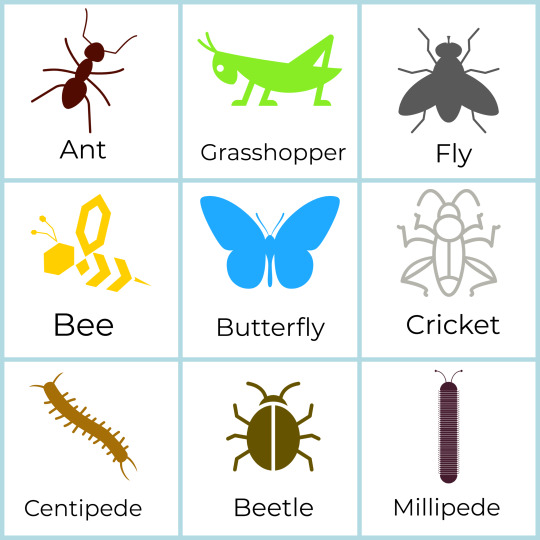
Let’s Play Bug Bingo!

Get three in a row and you win! Head outside and cross off each insect (or other type of arthropod) that you see, in the order in which you spot it. Give yourself a bonus point each time you snap a picture and upload it to the iNaturalist app (with your parents’ permission!) during the City Nature Challenge that takes place April 24-27! Have socially distant fun with family and friends to see who can get bingo and then collect the most bonus points.

Filed Under: Blog Tagged With: bugs, City Nature Challenge, Museum from Home, Nature 360, Nature Lab

April 29, 2020 by wpengine

Photogenic Fungi

by Sara Klingensmith

Often hidden in plain sight, mushrooms are silent drivers of forest ecosystems. They are busy decomposing the dead, but sometimes, they secretly steal nutrients from the living.  Underground, fungal mycelium networks are quietly abuzz with the latest arboreal gossip and tapped into nutrient supply chains that connect the forest in a “Wood Wide Web.” Occasionally, experienced foragers hunt for edible fruiting bodies; however, aesthetically, mushrooms are often outshined by wildflowers. Fungi are uniquely beautiful in their odd shapes and color. They deserve much more attention than simply “can I eat it?” So, grab your camera and keep a sharp eye out for these photogenic fungi (and more), many of which can be found at Powdermill Nature Reserve!

Be sure to share your findings on iNaturalist and social media during the City Nature Challenge on April 30 to  May 3!

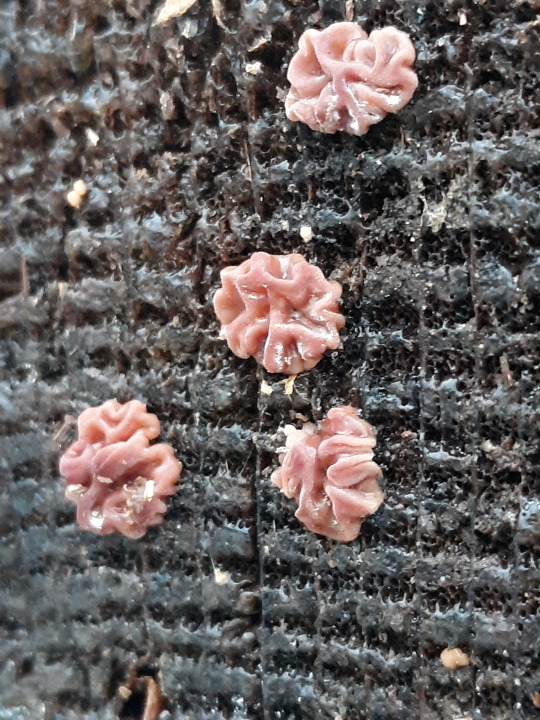
Red Tree Brain Fungus (Peniophora rufa

Hold on! Did that log sprout brains? Nope! This growth is not a part of the tree’s anatomy, but rather, it is an “intelligent-looking” crust fungus. It prefers to grow on aspens, but it can be found on other hardwood species. According to iNaturalist, the likelihood of observing this fungus peaks in April and November. (Note: The tree pictured is not the typical host species.)

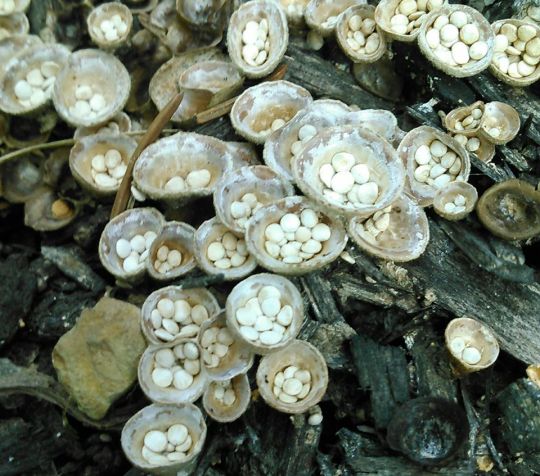
Common Bird’s Nest Fungus (Crucibulum leave)

Measuring just 4-10mm across, these infinitesimal “nests” look as though they have been built by itsy-bitsy birds. The spore-containing “eggs,” called peridoles, are kinetically dispersed by raindrops. These little mushrooms can be found growing on woody debris and even in your mulch bed! You just need to look closely.

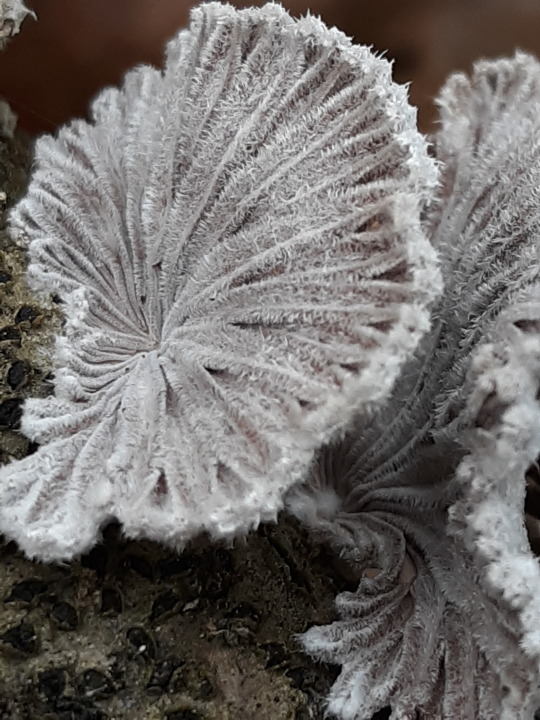
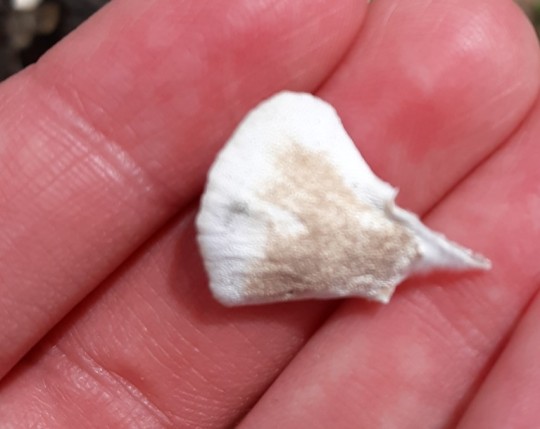
Splitgill Mushroom (Schizophyllum commune)

Spiltgill mushrooms are among the most widely distributed fungi. Beneath their plain caps lies a delicate fan containing basidiospores. These mushrooms have the unique ability to open and close their gills based on moisture levels. When the mushroom dries out, the gills split; hence the name. Look for this hidden beauty on fallen twigs and branches during your next hike.

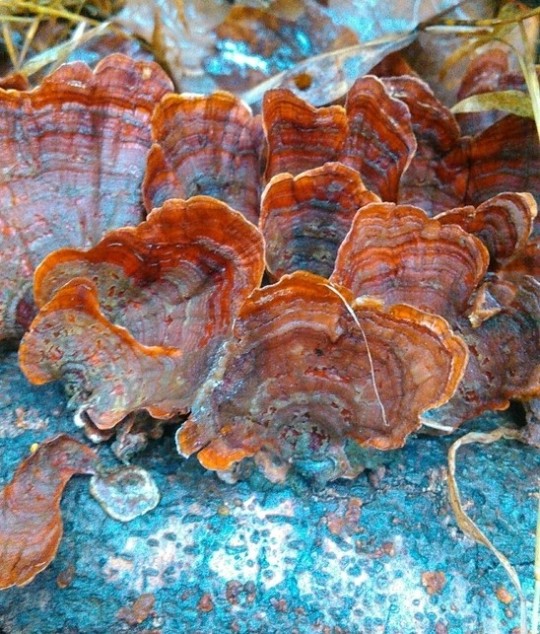
orange and brown mushroom held in a hand
close up of mushrooms
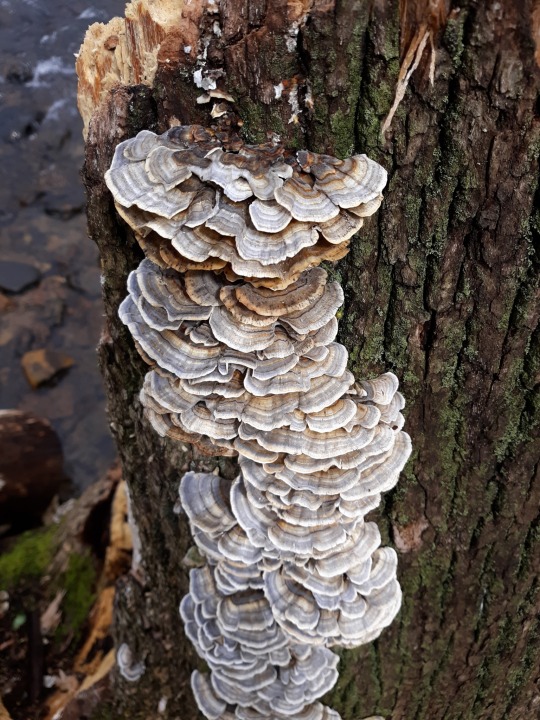
mushrooms growing on a tree
piece of white mushroom in hand
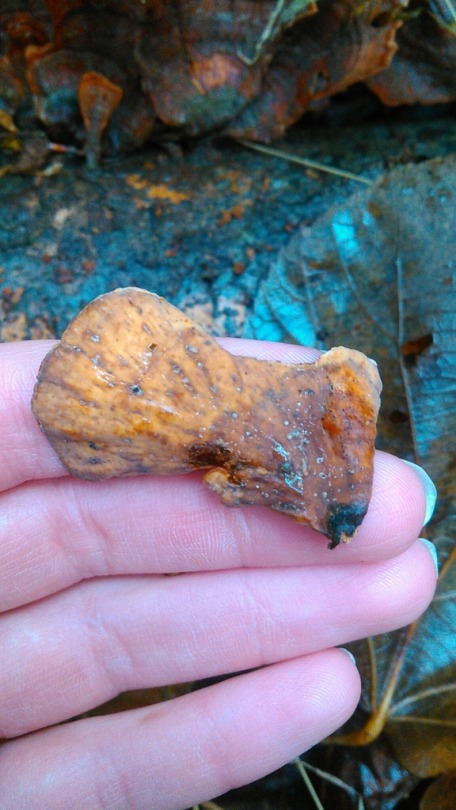
False Turkey-Tail (Stereum sp.) & Turkey-tail (Trametes sp.)


For starters, they look like a turkey’s tail! These seemingly ever-present fungi can be found growing on decaying hardwoods. False turkey-tail, with concentric rings that display deep hues of orange, red, or sometimes white, is often eye-catching. It is called “false” turkey-tail because of its similarity to another group of fungi colloquially called turkey-tail (Trametes sp.). One difference is that Trametes is a polypore (pores on the underside) and Stereum is a crust (smooth on the underside).

Sara Klingensmith is an Environmental Educator and Naturalist at Carnegie Museum of Natural History’s Powdermill Nature Reserve. Museum staff, volunteers, and interns are encouraged to blog about their unique experiences and knowledge gained from working at the museum.
Related Content

City Nature Challenge

Spring Birds in Your Backyard

Collected on This Day in 1998: Common Chickweed

Filed Under: Blog Tagged With: City Nature Challenge, fungi, Museum from Home

April 29, 2020 by wpengine

What is City Nature Challenge?

Get ready, nature explorers!  April 24-27, people all over the world will be working together to share photos of nature where they live.  

All you need is a phone or digital camera and the free iNaturalist app to help the Pittsburgh region collaborate (safely!) with cities everywhere.

Operation Observation

Start practicing now!

·      Work with a grownup

·      Download the free iNaturalist app & create a family account

·      Take photos of plants and animals that you find and share them on iNaturalist

·      The app and the online community will help you identify the nature in your photos!

·      Think about ways you might attract more wildlife to your area before the challenge.  Check https://carnegiemnh.org/visitor/city-nature-challenge/ often for activity ideas.

During the Challenge

·      Take as many photos of nature where you can safely find it between April 24-27, and share them on iNaturalist

·      Some great places to look for plants and animals include backyards, gardens, parks (but only if you can keep a safe distance between you and other people), and even the cracks in sidewalks!

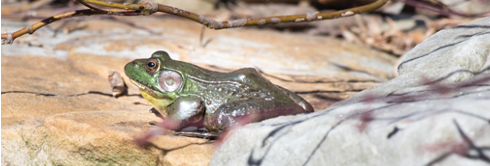
A bullfrog perched on a rock. Photo by Melissa Cagan.

Staying Safe for the City Nature Challenge

Keep up-to-date on the latest state regulations at https://www.health.pa.gov/topics/disease/coronavirus/Pages/Coronavirus.aspx.

You may want to stay close-to-home and see how many different kinds of plants and animals you can find right where you live!

If you visit a park or trail, please stay 6 feet or more away from other people.  You may want to wear a homemade mask, too.

Get social with your observations! Use the hashtag #CityNatureChallenge on Facebook, Twitter, and Instagram or tag @CarnegieMNH.

Filed Under: Blog Tagged With: City Nature Challenge

April 19, 2019 by wpengine

More Info: Steel City Nature Challenge on the Blog: Here We Go Pittsburgh!

City Nature Challenge 2019 logo

Ever wondered what wildlife is thriving in your city?  One way to learn about what is in your backyard is to team up with other people to explore nature through the City Nature Challenge!  The competition has been running since 2016, beginning in California, and growing into an international event. This year people will be participating from Antarctica to India!

We Need Your Help!

Your challenge is to look around and take pictures of as many types of plants, animals, and fungi as you can in four days!  Cities around the world are competing with each other to see who can log the most observations on iNaturalist (a free online and mobile application) – and we want Pittsburgh to have its best year yet!  This year, the City Nature Challenge takes place in two stages: the first part is April 26 – April 29 and the second part is April 30 – May 5. We’re calling for anyone in the Allegheny, Butler, Washington, Armstrong, Beaver, and Westmoreland counties to put their exploring hats on and help us identify the wildlife in our area!

bird on a post
Spring is a great time to go outside and look for wildlife!

Three Simple Steps

All you need to remember to participate are these steps:

1.    Find Wildlife!

2.    Take Pictures!

3.    Share your Findings on iNaturalist!

Stage One: April 26 – April 29

Take a picture of every wild plant or animal you find, even if it’s something you see every day!  Only photos taken during this period of time will count for the Challenge. Last year the City Nature Challenge had over 420,000 observations – can we get even more this year?

Places to look for wildlife: your backyard, local parks, hiking trails, gardens.

Stage Two: April 30 – May 5

Identify what you’ve found and explore others’ observations!  You can confirm other people’s identifications or suggest a different identification.  If you receive two confirmations for a picture you’ve shared, you’ve got yourself a research grade identification!  Cool!

How Do I Use iNaturalist?

Below are two videos to help you navigate iNaturalist.  The first will explain how you can upload observations onto iNaturalist for stage one.  The second will show you how you can identify others’ observations during stage two.

Stage One: Uploading Observations

Stage Two: Identify and Confirm Observations

image has text at the top that says City Nature Challenge is Organized By, underneath the text are logos for California Academy of Sciences and Natural History Museum of Los Angeles County

Explore nature together.  Visit Nature 360 for activities and information.

Blog post by Melissa Cagan.

Filed Under: Blog Tagged With: Anthropocene, City Nature Challenge, iNaturalist, Melissa Cagan, Nature 360, Pittsburgh

May 14, 2018 by wpengine

Pittsburgh Participates in International City Nature Challenge

We are thrilled to share that Pittsburgh has come in 26th of nearly 70 cities that participated in the City Nature Challenge! It’s a friendly competition between cities around the world. Anyone can join by logging their outdoor observations on iNaturalist.org or with the iNaturalist app.

Matt Webb, Urban Bird Conservation Coordinator at Powdermill Nature Reserve, led Pittsburgh’s involvement in the challenge. It lasted four days, from April 27-30, and 165 Pittsburghers contributed observations.

Pittsburgh participants logged 4,393 observations of 847 species with iNaturalist.

The winning city, San Francisco, had 1,532 participants who logged 41,737 observations of 3,211 species.

Even though the competition is over, anyone may still log observations using iNaturalist. Download the free app to your phone, create an account, and photograph what you see outside. The GPS on your phone automatically logs in the date, time, and location of your photo. You may add information you already know about the plant, animal, or insect you photographed, then community members may contribute more information and confirm species identification. It’s all about having fun learning in nature.

To read more about Pittsburgh’s participation in the City Nature Challenge and Matt Webb, check out this feature in Allegheny Front.

Filed Under: Blog Tagged With: City Nature Challenge, iNaturalist, Pittsburgh, Powdermill, Powdermill Nature Reserve

  • « Go to Previous Page
  • Page 1
  • Interim pages omitted …
  • Page 3
  • Page 4
  • Page 5
  • Page 6
  • Go to Next Page »

sidebar

About

  • Mission & Commitments
  • Directors Team
  • Museum History

Get Involved

  • Volunteer
  • Membership
  • Carnegie Discoverers
  • Donate
  • Employment
  • Events

Bring a Group

  • Groups of 10 or More
  • Birthday Parties at the Museum
  • Field Trips

Powdermill

  • Powdermill Nature Reserve
  • Powdermill Field Trips
  • Powdermill Staff
  • Research at Powdermill

More Information

  • Image Permission Requests
  • Science Stories
  • Accessibility
  • Shopping Cart
  • Contact
  • Visitor Policies
One of the Four Carnegie Museums | © Carnegie Institute | Privacy Policy | Terms of Use | Accessibility
Rad works here logo