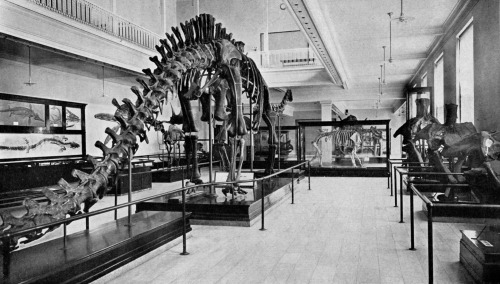
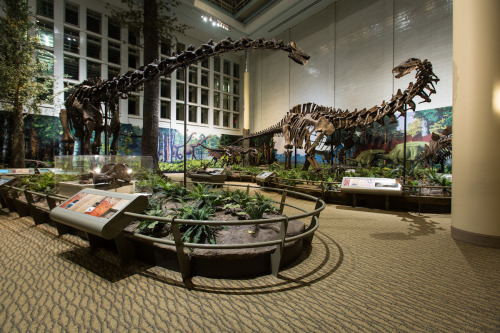
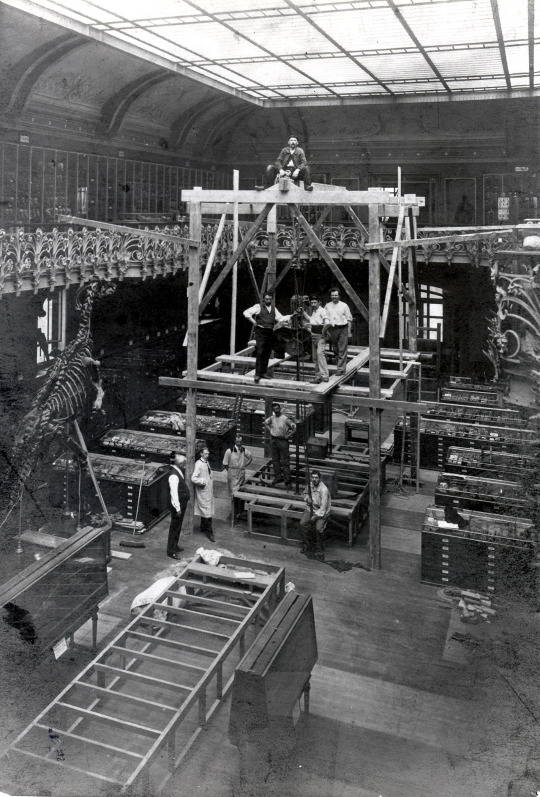
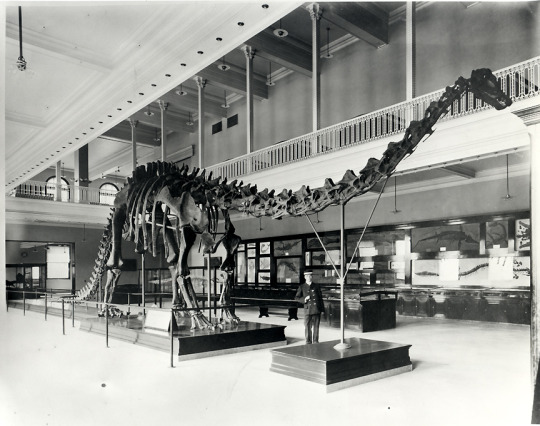
Gallery of Paleontology, 1907 vs. a recent picture of Dinosaurs in Their Time. It is amazing how much one museum can change in a century!
Carnegie Museum of Natural History
One of the Four Carnegie Museums of Pittsburgh
Gallery of Paleontology, 1907 vs. a recent picture of Dinosaurs in Their Time. It is amazing how much one museum can change in a century!
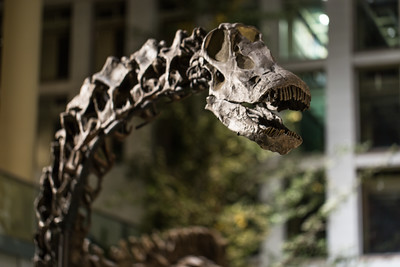
In January, Carnegie Museum of Natural History paleontologist Dr. Matt Lamanna talked from the Big Bone Room of Carnegie Museum of Natural History on Facebook Live and answered questions from viewers and schools across the country. Matt received more than 75 questions! Here’s one he wasn’t able to answer live. New episodes featuring different scientists are live streamed every month. Follow us on Facebook!
How old is the Diplodocus in our museum?
“Our Diplodocus carnegii fossils are about 150 million years old. If you’re asking how old the animals were when they died, unfortunately we don’t know that (at least for the moment).”
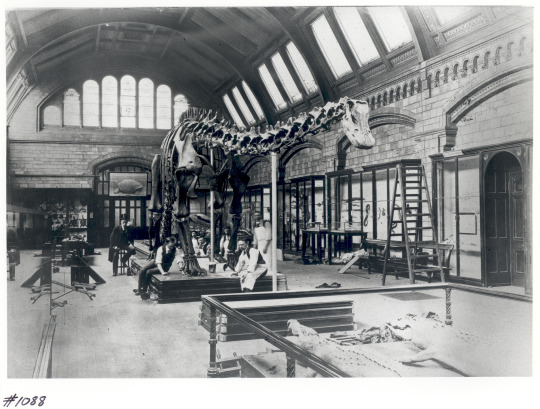
While Dippy (Diplodocus carnegii) was making his grand debut in Pittsburgh, he caught the attention of a king across the ocean. King Edward VII asked Andrew Carnegie for a dinosaur for England. Dr. William Holland, the director of Carnegie Museum of Natural History, suggested that the museum could give the king a cast—a copy made from plaster.
Under the supervision of Carnegie scientists, the Diplodocus carnegii model was erected in the Natural History Museum in London.
But Dippy’s popularity overseas did not stop there. Governments of many nations asked Carnegie if they could have their own copies. One cast famously premiered in the National Museum of Natural History in Paris to cries of “Vive la Dippy!”
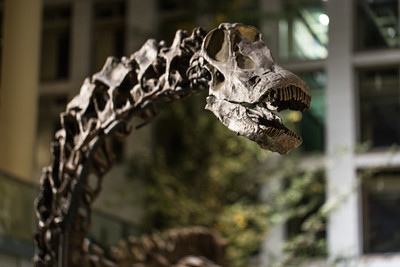
Today, replicas of Dippy stand in the national museums of Germany, Italy, France, Austria, Russia, Spain, Argentina, and Mexico. Even Carnegie Museum of Natural History made a life-size statue of Dippy that stands on Forbes Avenue outside of the museum in 1999. You might know him from the fun scarves he wears!
Of course, the original Dippy still calls Carnegie Museum of Natural History home and remains the most famous piece of our massive collection.
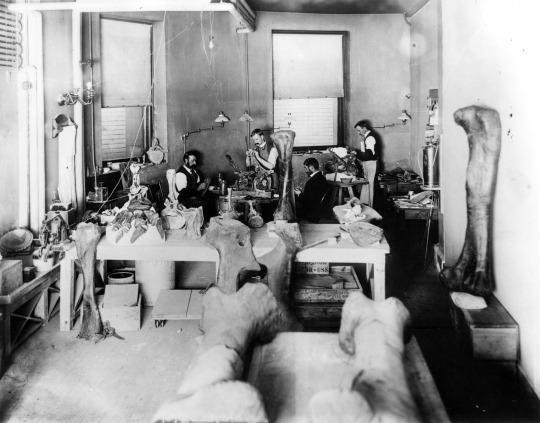
Once back in Pittsburgh, scientists worked to free the fossils from the rock and reconstruct Dippy’s skeleton.
In 1901, paleontologists realized they had discovered a new species of dinosaur and named it Diplodocus carnegii to recognize Carnegie’s support.
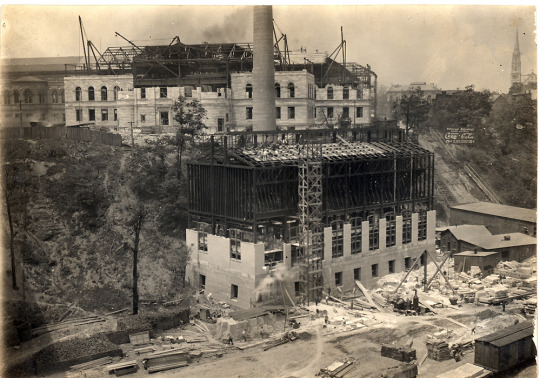
At the time of Dippy’s discovery, there was simply no room for an 85-foot-long dinosaur at Carnegie’s institution. Carnegie was not deterred. A new wing that featured Dippy as its centerpiece was added.
Dippy settled into his permanent home in 1907 as the first dinosaur in the new Dinosaur Hall. By the time the museum’s expansion was finished, the people of Pittsburgh called the museum “The House That Dippy Built.”

This is the second in a three-part blog series about Diplodocus carnegii, aka Dippy. We are celebrating all things Dippy as we launch our new logo featuring his silhouette. Share your own Dippy photos and stories using #newdippylogo.
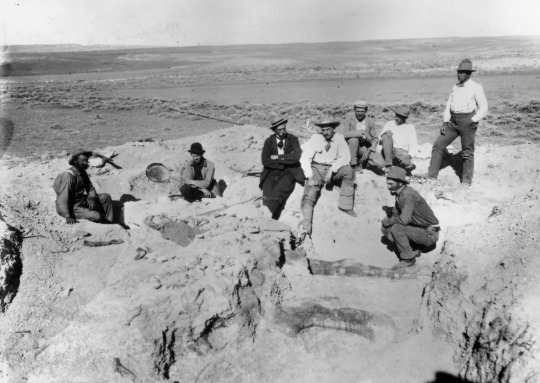
Dippy’s story began with his namesake — Andrew Carnegie. Carnegie was a philanthropist who made his fortune in Pittsburgh’s steel industry and founded Carnegie Museum of Natural History. Inspired by his ardent belief in evolution, Carnegie financed an expedition to find a dinosaur for Pittsburgh.
Museum director William J. Holland organized the expedition to the American west in 1899. After three months of searching, a team member discovered a huge toe bone at Sheep Creek, Wyoming. Further digging led to the discovery of a massive, long neck dinosaur later identified as a sauropod.
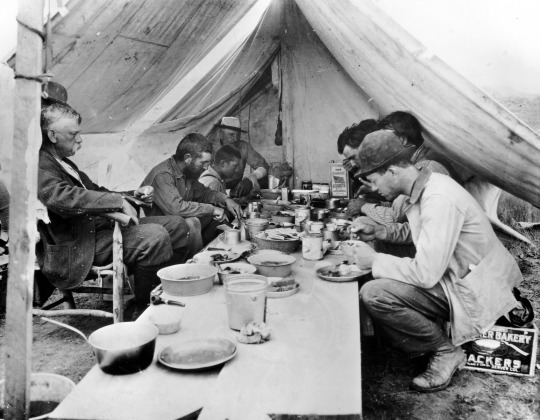
The news broke, and before he was even excavated, Dippy was a celebrity. Visitors thronged to the site in Wyoming, which was dubbed “Camp Carnegie.” After the sufficient collection of Dippy’s bones, boxes were constructed, and the bones were sent back to Pittsburgh in 130 crates. Dippy took up a whole boxcar on his trip back to Pittsburgh!

This is the first in a three-part blog series about Diplodocus carnegii, aka Dippy. We are celebrating all things Dippy as we launch our new logo featuring his silhouette. Share your own Dippy photos and stories using #newdippylogo.
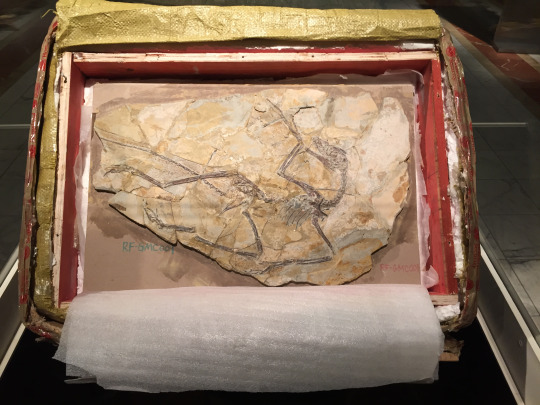
How does a fossil that was illegally smuggled out of China end up on display in Pittsburgh?
This feathered dinosaur fossil of an Anchiornis huxleyi from the late Jurassic Period is currently at Carnegie Museum of Natural History in Pittsburgh on loan from a museum in China.
U.S. Immigration and Customs Enforcement’s Homeland Security confiscated this fossil from a dealer who tried to illegally smuggle it out of China.
Carnegie paleontologist Matt Lamanna helped Homeland Security Investigations identify the fossil as a feathered predatory dinosaur from northeastern China. It was returned in 2015, but the Chinese government loaned the fossil to the museum where it will be on display until it is returned to the Geological Museum of China in Bejiing.
