• Skip to primary navigation
  • Skip to main content
  • Skip to primary sidebar

Carnegie Museum of Natural History

One of the Four Carnegie Museums of Pittsburgh

  • Visit
    • Buy Tickets
    • Visitor Information
    • Exhibitions
    • Events
    • Dining at the Museum
    • Celebrate at the Museum
    • Powdermill Nature Reserve
    • Event Venue Rental
  • Learn
    • Field Trips
    • Educator Information
    • Programs at the Museum
    • Bring the Museum to You
    • Guided Programs FAQ
    • Programs Online
    • Climate and Rural Systems Partnership
  • Research
    • Scientific Sections
    • Science Stories
    • Science Videos
    • Senior Science & Research Staff
    • Museum Library
    • Science Seminars
    • Scientific Publications
    • Specimen and Artifact Identification
  • About
    • Mission & Commitments
    • Directors Team
    • Museum History
  • Tickets
  • Give
  • Shop

Educator Loan Program

September 6, 2022 by Erin Southerland

An Intern’s Point of View

by Jia Tucker

A week before accepting a summer internship with Carnegie Museum of Natural History, I found myself standing on Forbes Avenue in front of Diplodocus carnegii, the statue that is an emblem of the vast institution.

I had never even stepped foot inside of the museum before June 2022. The career path I had formed in my head over the past few years had been wiped clean by a change of heart. To be honest, I only applied to this museum studies internship because of a moderate interest in the field — and it was paying. 

I was placed in the Education and Exhibitions departments. While beginning work in the Education Department, Program Officer Pat McShea tasked me with streamlining and modernizing one of the museum’s “Ed Loan” kits. These kits are borrowed by educators and used to create lesson plans that encompass a variety of subjects from paleontology to anthropology to zoology and beyond. He’d given me a popular, but complicated-to-use kit that focused on what we call the Monongahela, a precontact People whose settlements were concentrated in Western Pennsylvania, eastern Ohio, and northern West Virginia. The kit had a lengthy, approximately seventy-page manual and over thirty objects meant to be used for a lesson plan spanning two to three weeks. I had to pare it down to a dozen objects and two to three days of lessons. 
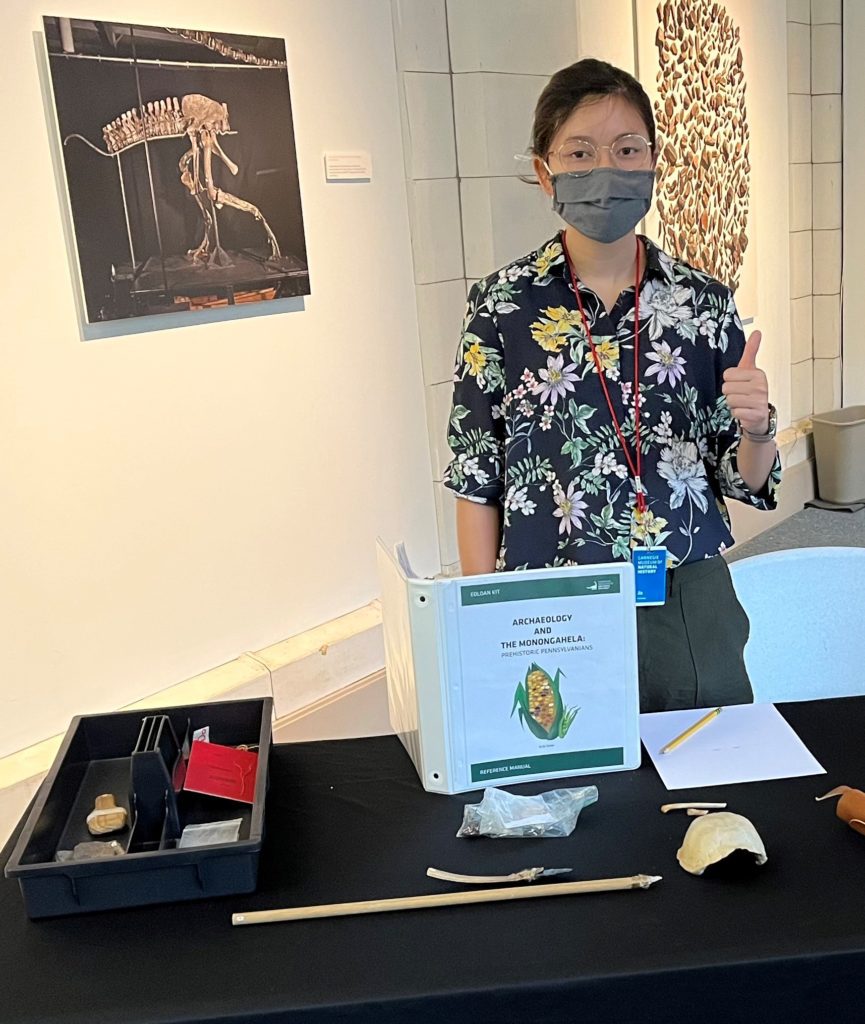
Preparing to engage museum visitors in discussions about Monongahela artifacts.

Coming from an undergraduate perspective with limited experience in workspaces like the Carnegie, I was new to this kind of responsibility. It wasn’t just an essay that would only go through the eyes of a professor, but a tool for the public. The whole time I worked on the kit and my other project in the Exhibitions department, I questioned my ability to complete my tasks adequately. Although I have an intermediate background in anthropology and am no stranger to doing research, curating an educational resource with such free rein seemed beyond my expertise. It was overwhelming, but in a good way. That’s not to say that my Internship Supervisor, Renee, or Pat left me hanging high and dry. Early in the internship, Renee set me up with a list of the people I should reach out to in the museum, and that was, well, everyone. She had firmly yet kindly suggested that I not let this chance slip away. 

So, I didn’t.
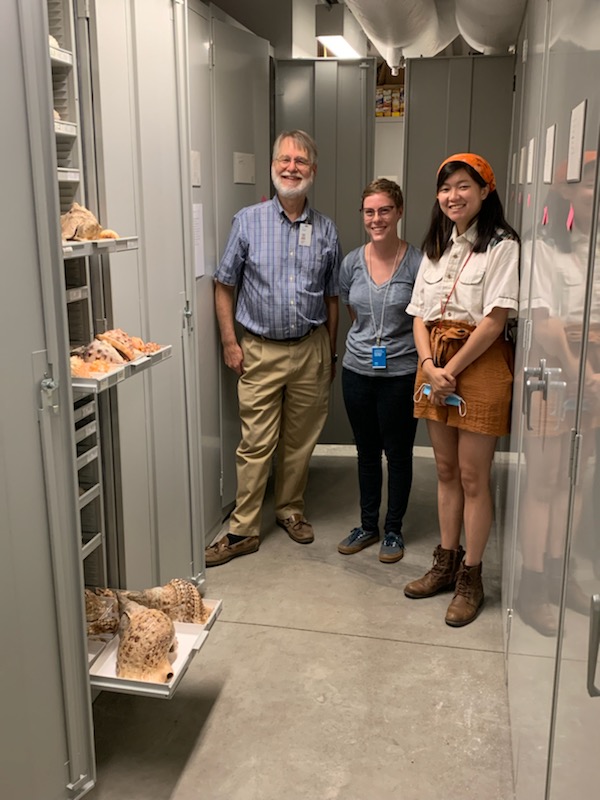
Visiting the Mollusk Collection at CMNH.

With some help, I started contacting program managers from various departments and setting up tours with curators of different collections. I got the chance to hear from people who are passionate about their field of study and eager to learn about what I had to say. It was a reciprocal learning environment that I hadn’t experienced until now. It wasn’t about a LinkedIn connection or a line in a resume. The person who printed all the posters had a name as did the person who developed all the content. What was to me one singular entity fractured into a chorus of different voices all striving to keep the museum alive, and all I wanted to do was contribute a verse. It’s always the people that make the effort worth it. Each person I spoke with would playfully try to convince me to join their field and indulge in their same joys. Although perhaps they were not-so-subtly disguising sincerity. Regardless, for the first time, I felt that flicker of potential. The smorgasbord of an undergraduate degree that I had been haphazardly holding together, hoping that eventually it would be “useful,” could finally stand on its own. The technicalities of it aren’t the important part anyways. Everyone I met came to the museum by both conventional and unconventional means. I’m no exception to the chaos of finding a purpose. 

It’s a shame that as my bones started to settle and my shoulders relaxed into an office chair that was only ever meant to be temporary, I now have to take my leave. Even so, this has been the kind of chance that reminds me that there’s always more to explore up ahead. If you’re seeking a push or some great nugget of enlightenment, here it is. Meet as many perspectives as you can, ask as many questions as you can think of, and be brave. Don’t let it slip away.

Jia Tucker’s summer internship at Carnegie Museum of Natural History was part of the PA Museums Qualifying Diversity Program.

Related Content

How I Became an Archaeologist

Pitt Outreach Efforts Enriched with Museum Materials

A Summer Internship at Powdermill

Carnegie Museum of Natural History Blog Citation Information

Blog author: Tucker, Jia
Publication date: September 6, 2022

Share this post!

  • Share on Twitter Share on Twitter
  • Share on Facebook Share on Facebook
  • Share on Pinterest Share on Pinterest
  • Share on LinkedIn Share on LinkedIn
  • Share on Reddit Share on Reddit
  • Share via Email Share via Email

Filed Under: Blog Tagged With: Education, Educator Loan Program, Jia Tucker

March 28, 2022 by Erin Southerland

Learning From Misinterpretations

by Patrick McShea

Every job has its awkward moments, even work aiding museum visitors in their interpretation of exhibits. One memorable situation in that realm involved a father explaining skeletal bear remains to his three grade-school-aged children.

The setting was Discovery Basecamp during a busy December weekend in 2012. The exhibition had been established just two months earlier as an experiment in providing museum visitors with opportunities to examine authentic objects from the Educator Loan Collection, the enormous cross-discipline teaching collection that is managed to serve the needs of classroom teachers and other educators. In a section of well-lighted, first floor rear exhibit space, three free-standing racks of wire shelves held two dozen colorful toolboxes containing a wide range of natural history materials for visitors to examine, and the tops of five adjacent tables displayed large sturdy objects for close, hands-on inspection.

I was spending the day welcoming visitors to the space, and training a work-study student from the University of Pittsburgh and another from Carnegie Mellon University to do the same. We aimed to assist visitors in retrieving and returning toolboxes, and whenever asked, to answer questions. Listening to visitor conversations during that time was an important way to evaluate the success of the ongoing experiment. 

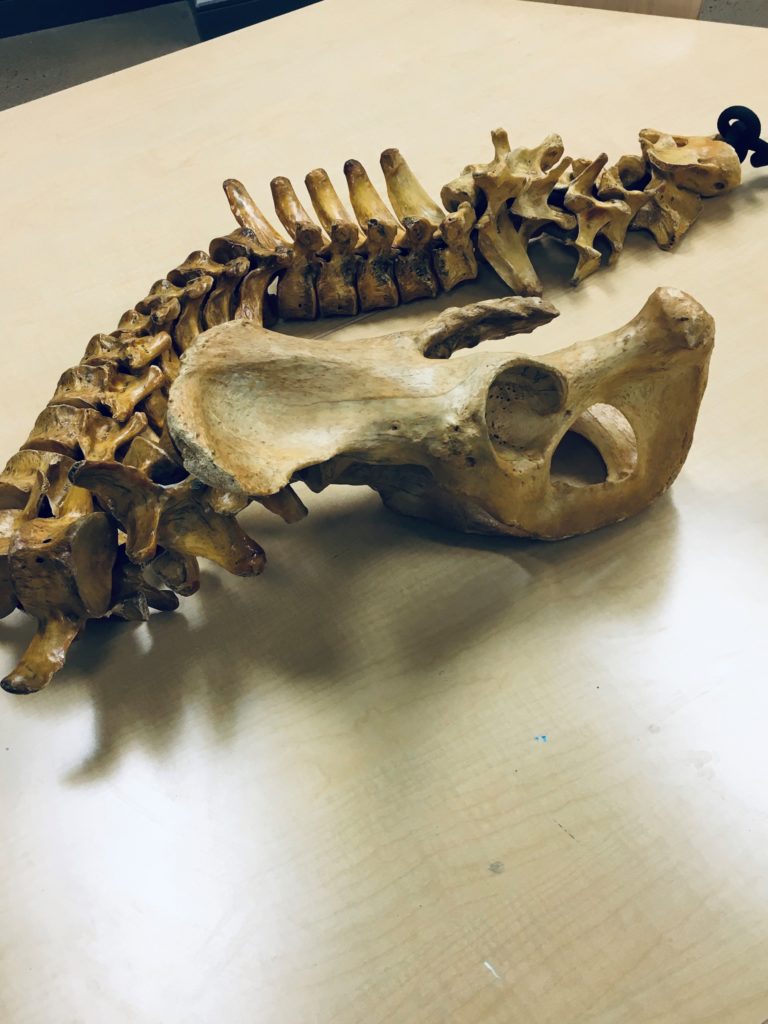
“Hey, let’s look at this,” I heard the father say as he gathered his children around a display table and picked-up one end of a yard-long, rope-linked strand of more than 20 large resin-coated vertebrae. “The tag says ‘bear,’ so let’s see if we can figure this out.” He stretched out the column on the tabletop, and moved both hands to its far end where an irregularly shaped shoebox-sized bone structure anchored the string. The structure, which was not identified on the simple paper tag, was the fused combination of the creature’s sacrum and hip bones, and the father’s unfamiliarity with mammal skeletal anatomy was immediately apparent. He mistook the bear’s butt-end for its skull, explaining to his children how the hip sockets were holes for the eyes, and that it was a shame the animal’s teeth were missing.

Bear vertebrae, sacrum, and hip bones on a table.
For anyone unfamiliar with mammal skeletal anatomy, hip sockets that once secured rounded femur heads might be confused with eye openings.

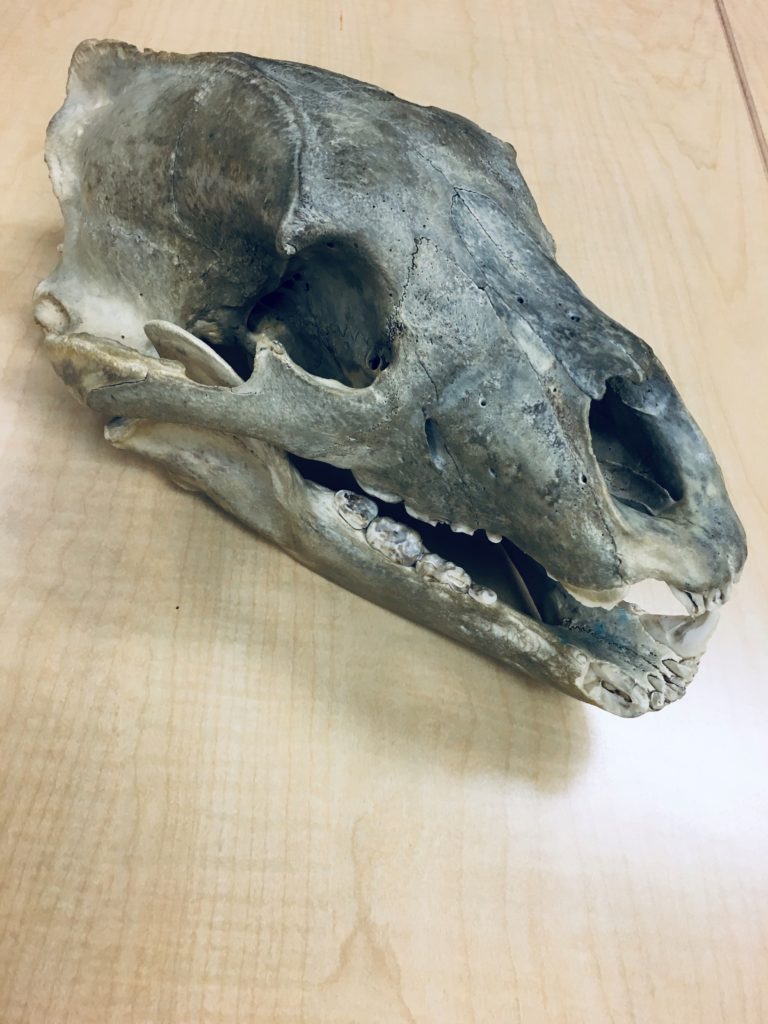
I didn’t correct him. Instead I explained to the work-study students that I’d be down in the loan program’s basement storage area for a few minutes. By the time I returned with a black bear skull, the attractions of the exhibition had pulled the family unit apart. All three children were engaged with toolboxes containing insect material, while their father was examining mineral samples on another table.

Bear skull on a table.
Discoloration and broken and missing teeth mark this American black bear jaw as a long-used teaching specimen.

I approached him holding out the bear skull and saying simply, “Our lack of labels might have caused some confusion a little earlier.” He looked at the skull, glanced back at the table with the vertebrae column, and then, to my great relief, laughed and accepted the skull from me. He called his children back to the original table, and with the skull as a visual aid, offered them a two-minute remedial lesson. I stood as far away from the table as possible.

Patrick McShea works in the Education and Visitor Experience department of Carnegie Museum of Natural History. Museum employees are encouraged to blog about their unique experiences and knowledge gained from working at the museum.

Related Content

Pitt Outreach Efforts Enriched with Museum Materials

March Mammal Madness and Middle School Science Class

African Artifacts: Back Story and Current Use

Carnegie Museum of Natural History Blog Citation Information

Blog author: McShea, Patrick
Publication date: March 28, 2022

Share this post!

  • Share on Twitter Share on Twitter
  • Share on Facebook Share on Facebook
  • Share on Pinterest Share on Pinterest
  • Share on LinkedIn Share on LinkedIn
  • Share on Reddit Share on Reddit
  • Share via Email Share via Email

Filed Under: Blog Tagged With: discovery basecamp, Education, Educator Loan Program, Pat McShea

January 27, 2022 by Erin Southerland

African Artifacts: Back Story and Current Use

by Patrick McShea

Teaching with African Artifacts at Pittsburgh Public Schools’ Gifted Center

At Pittsburgh Public Schools’ Gifted Center, Cheree Charmello Andrews has long used a set of handcrafted objects from the Educator Loan Collection of Carnegie Museum of Natural History to help her seventh and eighth grade students better understand the diverse Peoples of the African Continent. The K-8 school, which is in the city’s Elliot neighborhood, serves students throughout the school district whose Individual Education Plans (IEPs) identify them as gifted. Students visit the Center once a week to participate in innovative programs developed and presented by some two dozen faculty members.

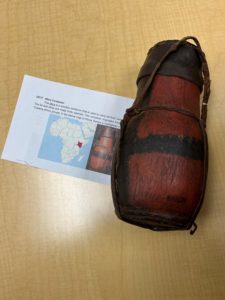
Wood and cowhide container on a table next to a piece of paper with information about it.
A wood and cowhide container represents the handwork of Kenya’s Samburu and Turkana ethnic groups.

The set of materials Cheree borrows can be broadly described as contemporary African Artifacts that reflect deep cultural history. Among the 18-item set are carved wooden figures, hammered aluminum utensils, ornate leather pouches, miniature masks in cast brass, a colorful hand-stitched story cloth, a canteen fashioned from a dried gourd, and even a fully functional set of dance bells, a musical instrument traditionally worn as ankle adornment. All the objects are sturdy enough for handling, and in-hand their educational power is enhanced when the name of the cultural group each represents is supplied – Senufo, Samburu, Turkana, Akamba, and Masai.

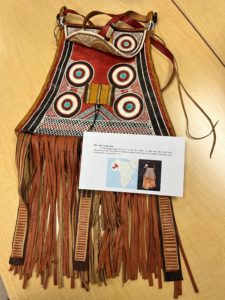
ornate leather bag with beading and fringe on a table accompanied by an information sheet
An ornate leather bag from Mali.

Preparing African Artifacts for the Educator Loan Collection

Some of the Masai and Samburu materials were purchased for educational use in the 1980s by a CMNH mammal curator performing fieldwork in Kenya. The acquisition history of the other objects is unknown, but the story of the small collection’s organization for education use is clear, and worth wider sharing. During the summer of 1992, then Cornell University sophomore Marcus McFerren was a work-study student in the CMNH Division of Education. When he expressed interest in preparing the African cultural objects in a storage cabinet for classroom use, the project became his principal work assignment. Marcus established personal connections with the librarians who then managed the African American Collection at the University of Pittsburgh’s Hillman Library, and with their assistance, created simple background information sheets for each object.

Person wearing a suit and glasses
Dr. Marcus McFerren was a work-study student at CMNH in 1992.

For the past 25 years, Marcus has been Dr. McFerren. He is a Board-Certified Dermatologist with a practice in Connecticut, who completed a PhD in Plant Biology at Cornell before he entered medical school. As a skilled ethnobotanist, he has conducted his own fieldwork at several locations in Africa. Six years ago, when Marcus visited the museum with his wife and two sons, he asked to see the educational materials he prepared so many years earlier. He’s due for an update because of recent upgrades. 

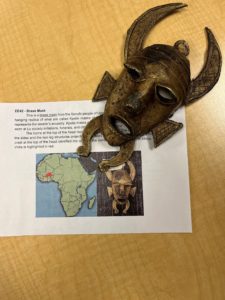
Brass mask on a table next to a piece of paper with information about it.
A brass mask from the Senufo People of Burkina Faso.

2021 Updates and Current Use

In the fall of 2021 two small teams of Duquesne University students created new labels for the African objects as a volunteer project for a seminar class titled, Science at the Service of Society. Labels now pair object images with simple maps marking their county of origin. Perhaps of greater importance, Cheree recently shared the story behind her use of the well-worn authentic objects. It’s a brief account that nonetheless encompasses art, natural history, and most of all, what skilled teachers can accomplish:

Years ago, I designed a class called #BlackMindsMatter in response to a beloved Black student who expressed that she felt her culture was consistently left out of the academic setting in any positive or substantial way. I began to use the museum boxes in my classroom as a way of helping students access a beautiful legacy that is not always included in Eurocentric curriculum. As a white woman, it can be challenging to help students connect to the vast diaspora of Black culture. I paired the artistic genius of old and new African art and artifacts with modern Black art. We explored the parallels between the older forms of African art with the work of historical and contemporary art and concluded that many artists had to be influenced by Black art and artifacts. It was illuminating and uplifting.

Cheree Charmello Andrews

Patrick McShea works in the Education and Visitor Experience department of Carnegie Museum of Natural History. Museum employees blog about their unique experiences and knowledge gained from working at the museum.

Related Content

Rising Through the Educator Ranks

Expanding the Scope of Environmental Education

Center Court Culture Sharing

Carnegie Museum of Natural History Blog Citation Information

Blog author: McShea, Patrick
Publication date: January 27, 2022

Share this post!

  • Share on Twitter Share on Twitter
  • Share on Facebook Share on Facebook
  • Share on Pinterest Share on Pinterest
  • Share on LinkedIn Share on LinkedIn
  • Share on Reddit Share on Reddit
  • Share via Email Share via Email

Filed Under: Blog Tagged With: Educator Loan Program, Educator Resources, Pat McShea

June 7, 2021 by wpengine

Expanding the Scope of Environmental Education

by Patrick McShea

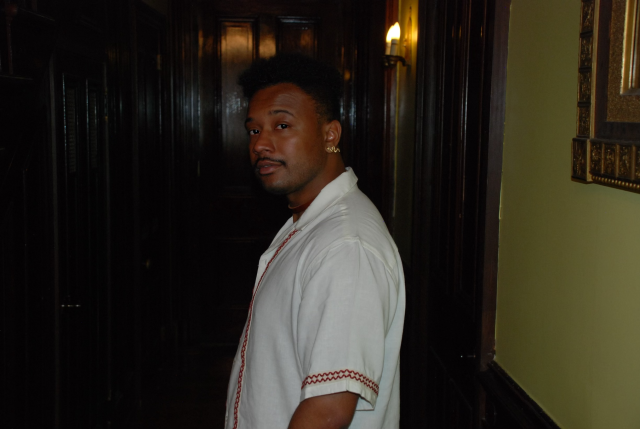
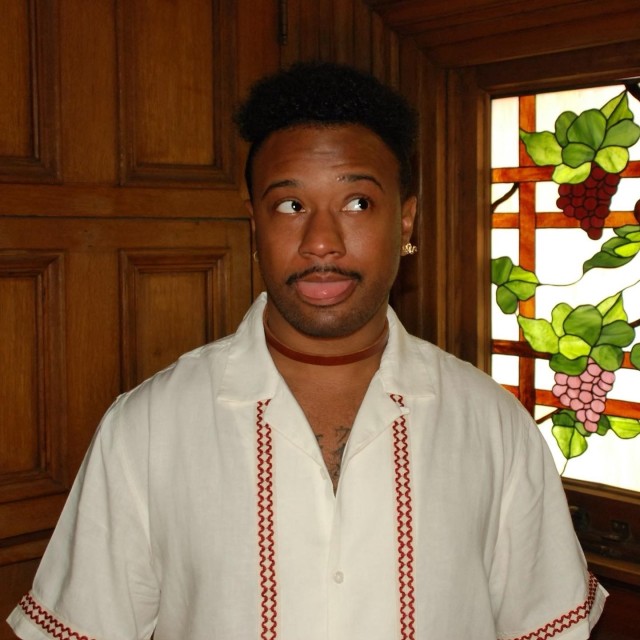
Black man in a white collared shirt standing in front of a wooden door indoors.

Seven years after he graduated from Allegheny College with a degree in Environmental Studies, Will Tolliver Jr. accepted responsibility for teaching some aspects of that discipline at the 206-year-old liberal arts institution. As an adjunct professor, he presented an overview of environmental education’s foundations and its intersection with anti-bias and anti-racist education for 22 juniors and seniors during a recent semester-long course. As a Pittsburgh native, Will brought a hometown focus to some course work at the Meadville college by leading his students in developing lesson plans for Hilltop Urban Farm, an eight-year-old initiative that is transforming 108 acres of the former St. Clair Village housing complex into a national model of community food production.

“I think the relatively short interval between being a student and being a teacher worked to my advantage.” Will explains. “The course was taught remotely because of the pandemic, and during this time of continued civic and social unrest. l was mindful of the students’ situations, concerned about elements effecting their mental health and well-being that were beyond the bounds of the course.”

Will’s out-of-school experience prepared him well for the challenge. His resume includes current work as a consultant to the Public Broadcasting Service, and various teaching, training, grant-writing, and administrative roles for the Pittsburgh Parks Conservancy, Pennsylvania Association for the Education of the Young Child, Grow Pittsburgh, and the Children’s Museum of Pittsburgh. During each phase of his career CMNH helped Will to use authentic objects in his public presentations by providing him with a toolbox of touchable objects including feathers, mammal skulls, preserved plants, and fossils.

If there’s a theme to date in Will’s career, it might be expanding the vocabulary of the people he engages. He explains his first professional challenge, as a Pittsburgh Parks Conservancy naturalist, as “closing the word gap” for three- to five-year-old children in the city’s Homewood neighborhood. In a grant-supported program called “Buzzword Pittsburgh,” he used storytelling, play, guided hikes, songs, and museum objects to explore the meanings of individual words and build vocabulary related to science, math, art, and even local plants and wildlife.

Expanding the working environmental education vocabulary of college students in 2021 involved a greater level of sharing. As Will summarizes, “I wanted to be that better teacher, who covered the core principles and ideas, but also honestly shared what it has been like for me as a Black man working in this field.” His students explored the undeniable connections between environmental health and social justice. Their understanding of the history and importance of such collaborative community initiatives as Hilltop Urban Farm, for example was tied to understanding potentially new terms like urban food deserts, and red-lined neighborhoods.

Patrick McShea works in the Education and Visitor Experience department of Carnegie Museum of Natural History. Museum employees are encouraged to blog about their unique experiences and knowledge gained from working at the museum.

Related Content

Stage and Screen Sharing

Pittsburgh’s Moths Reflect Environmental Impacts of Industry

Teaching About Local Wildlife with the City Nature Challenge

Carnegie Museum of Natural History Blog Citation Information

Blog author: McShea, Patrick
Publication date: June 7, 2021

Share this post!

  • Share on Twitter Share on Twitter
  • Share on Facebook Share on Facebook
  • Share on Pinterest Share on Pinterest
  • Share on LinkedIn Share on LinkedIn
  • Share on Reddit Share on Reddit
  • Share via Email Share via Email

Share this post!

  • Share on Twitter Share on Twitter
  • Share on Facebook Share on Facebook
  • Share on Pinterest Share on Pinterest
  • Share on LinkedIn Share on LinkedIn
  • Share on Reddit Share on Reddit
  • Share via Email Share via Email

Filed Under: Blog Tagged With: Education, Educator Loan Program, Educator Resources, Pat McShea, We Are Nature 2

April 6, 2021 by wpengine

Ocean Lessons

by Patrick McShea

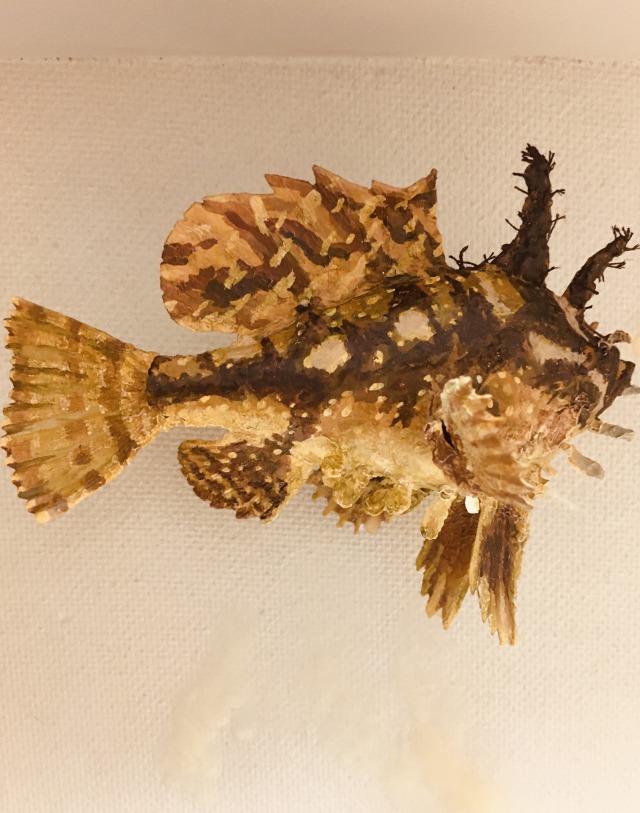
A sargassum fish taxidermy mount.

During the late winter, students and faculty at Carnegie Mellon University’s Children’s School learned about the ocean all day, every day. A five-week study of a broad topic is an annual tradition at the school, which serves pre-school and kindergarten-aged children, and operates within the university’s Psychology Department to support developmental research and the training of educators.

Coordination of the ocean lesson plan was the responsibility of Donna Perovich, a kindergarten teacher at the Children’s School for the past 24 years who has worked as an overall support educator since the advent of the COVID-19 pandemic. I learned of her efforts during the project’s planning stages when she asked to borrow ocean-related materials from the museum’s Educator Loan Collection.

Materials for Ocean Lessons from the Educator Loan Collection

The museum’s longest running outreach program is operating with a significant borrowing limitations during the pandemic: materials that cannot be cleaned, or would be damaged by repeated cleaning, are not currently available for loan. In Donna’s case the restriction meant she was able to borrow encased taxidermy mounts of several saltwater fish, plastic scale models of six different whale species, and a sea turtle shell, but not touchable examples of sea stars, sponges, sea fans, and delicate corals.

“I have a lot of seashells.” Donna explains, “Over the years I’ve been blessed with boxes of them. So, we had plenty of material for the students to touch and closely examine.” Among the museum materials she found particularly useful were the whale models. “We did a big whale measuring activity, measuring and pacing-off the lengths of different whales in the halls. Everyone developed a good sense of the size difference between species like a great blue whale and a pilot whale.”

Classroom Aquariums

Setting up and maintaining aquariums in the school’s four classrooms was among Donna’s early Ocean project tasks. The tanks featured freshwater species, two classrooms had single Betta fish, and the other two classrooms had larger tanks with mollies, tetras, and barbs. Observations of the live fish were vitally important for learning more about the movements and behavior of ocean fish. In the case of several three-year-olds, such observations also influenced their initial expectations of fish taxidermy mounts from the museum. “The aquariums had been in the classrooms for awhile before the museum materials appeared,” explains Donna, “and some of the youngest students thought the loan boxes with the fish were another aquarium.”

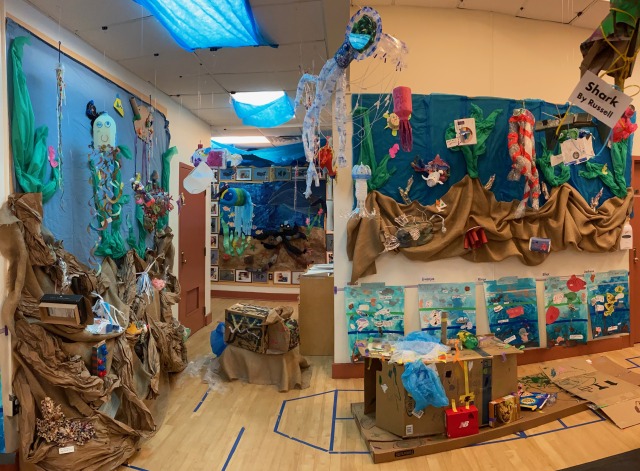
The Ocean Mural at CMU Children’s School.

Lest you think the confusion diminishes Donna’s respect for the thinking power of the children she works with, she brings up the enormous three-dimensional mural the students created to convey much of what they learned. “We had wonderful conversations where the children would be talking about things like deep ocean trenches and how reduced sunlight impacted the creatures living there. In some ways I think their brains are better able to absorb new information than our cluttered brains.”

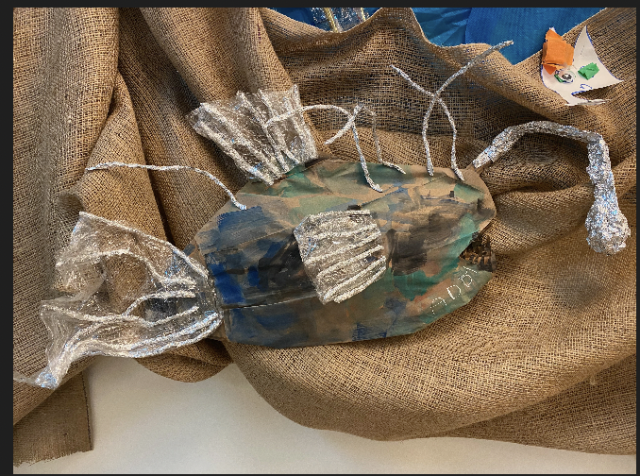
Anglerfish by Children’s School student.

Whole school study units at the Children’s School conclude with a family festival. Although the school has operated in-person with reduced capacity this year, the Ocean Family Festival was a Zoom event. The camera feeds of several event sessions focused on child-created details in the amazing mural.

Patrick McShea works in the Education and Visitor Experience department of Carnegie Museum of Natural History. Museum employees are encouraged to blog about their unique experiences and knowledge gained from working at the museum.

Related Content

Teaching in a Pandemic

Teaching about Trees

Center Court Culture Sharing

Carnegie Museum of Natural History Blog Citation Information

Blog author: McShea, Patrick
Publication date: April 6, 2021

Share this post!

  • Share on Twitter Share on Twitter
  • Share on Facebook Share on Facebook
  • Share on Pinterest Share on Pinterest
  • Share on LinkedIn Share on LinkedIn
  • Share on Reddit Share on Reddit
  • Share via Email Share via Email

Share this post!

  • Share on Twitter Share on Twitter
  • Share on Facebook Share on Facebook
  • Share on Pinterest Share on Pinterest
  • Share on LinkedIn Share on LinkedIn
  • Share on Reddit Share on Reddit
  • Share via Email Share via Email

Filed Under: Blog Tagged With: Education, Educator Loan Program, Educator Resources, Educators, ocean, Pat McShea, Patrick McShea

February 1, 2021 by wpengine

Teaching About Trees

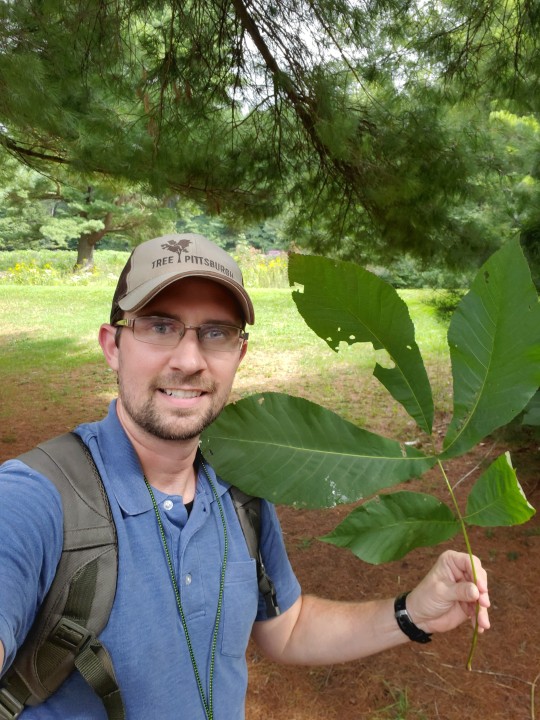
Joe Stavish doesn’t need any reflection time to summarize the impact of the COVID-19 pandemic on his work. “The new challenge to me as an outdoor educator is working with students who are watching a screen.” The Associate Director for Community Education at Tree Pittsburgh laments months spent planning and presenting programs in which students never have the opportunity to get their hands dirty. “If you’re limited to showing pictures,” he explains, “the wow factor just isn’t there.”

Joe Stavish holding a hickory leaf in pre-pandemic times.

Tree Pittsburgh is a 15-year-old non-profit organization dedicated to the restoration and protection of our region’s urban forest through tree planting and care, education, advocacy, and land conservation. Joe’s role, in the eight years he’s worked for Tree Pittsburgh, is to make sure the organization’s contact with communities it serves are as broad as possible. He kids about “cradle-to-the-grave” points of contact before listing near parallel audience segments, K-12 school classes, scout groups, youth groups, university students, neighborhood groups, adult classes, and garden clubs.

Some of the presentations he is involved with are part of formal programs, such as One Tree Per Child, a school-focused tree-planting initiative, or Explorer’s Guide, a collaborative effort with Pittsburgh’s Park Rangers for 4th and 5th grades that is scheduled to soon expand beyond its initial test audience in the City’s Northside neighborhoods. Other programs can currently be described as situational. “Teachers have been eager to have any type of virtual program we want to present.” Joe concedes in recognition of the ongoing and widespread problems with remote learning.

Although Joe is concerned about the limits of screen learning, I found the videos he directed me to on an Explorer’s Guide website to be very well done. Since 2018 Tree Pittsburgh has been headquartered in a riverside campus in Lawrenceville spacious enough to include what is termed a Heritage Tree Nursery. Much of a short video titled, The Life Cycle of a Tree, was shot in the nursery, a facility at the forefront of urban forestry. I never cried “Wow” while I watched the segment, but I learned a lot.

Patrick McShea works in the Education and Visitor Experience department of Carnegie Museum of Natural History. Museum employees are encouraged to blog about their unique experiences and knowledge gained from working at the museum.

Related Content

Ask a Scientist: How do you find rare plants?

King’s Dream and Natural History

Becoming a Science Educator

Filed Under: Blog Tagged With: Education, Educator Loan Program, Museum from Home, Pat McShea, stewardship

  • Page 1
  • Page 2
  • Page 3
  • Go to Next Page »

sidebar

About

  • Mission & Commitments
  • Directors Team
  • Museum History

Get Involved

  • Volunteer
  • Membership
  • Carnegie Discoverers
  • Donate
  • Employment
  • Events

Bring a Group

  • Groups of 10 or More
  • Birthday Parties at the Museum
  • Field Trips

Powdermill

  • Powdermill Nature Reserve
  • Powdermill Field Trips
  • Powdermill Staff
  • Research at Powdermill

More Information

  • Image Permission Requests
  • Science Stories
  • Accessibility
  • Shopping Cart
  • Contact
  • Visitor Policies
One of the Four Carnegie Museums | © Carnegie Institute | Privacy Policy | Terms of Use | Accessibility
Rad works here logo