• Skip to primary navigation
  • Skip to main content
  • Skip to primary sidebar

Carnegie Museum of Natural History

One of the Four Carnegie Museums of Pittsburgh

  • Visit
    • Buy Tickets
    • Visitor Information
    • Exhibitions
    • Events
    • Dining at the Museum
    • Celebrate at the Museum
    • Powdermill Nature Reserve
    • Event Venue Rental
  • Learn
    • Field Trips
    • Educator Information
    • Programs at the Museum
    • Bring the Museum to You
    • Guided Programs FAQ
    • Programs Online
    • Climate and Rural Systems Partnership
  • Research
    • Scientific Sections
    • Science Stories
    • Science Videos
    • Senior Science & Research Staff
    • Museum Library
    • Science Seminars
    • Scientific Publications
    • Specimen and Artifact Identification
  • About
    • Mission & Commitments
    • Directors Team
    • Museum History
  • Tickets
  • Give
  • Shop

Educator Loan Program

January 7, 2021 by wpengine

Teaching in the Parks

Allegheny County Park Rangers consider themselves to be ambassadors for a public asset whose value has increased during the ongoing COVID-19 pandemic: nine regional parks encompassing more than 12,000 acres of largely green space, laced with some 100 miles of multi-use trails.
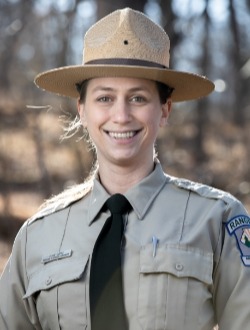
Allegheny County Park Ranger Elise Cupps in khaki shirt with black tie and tan hat
Ranger Elise Cupps. Photo credit: Allegheny County

For Elise Cupps being an ambassador for this unique resource involves teaching a variety of audiences, including school groups, scout units, garden clubs, and library patrons. The Robert Morris University (BS) and University of Pittsburgh (MA) alumna is a five-year veteran of a program just six years old, and as the Park Ranger’s Coordinator for Education and Outreach she makes regular use of the CMNH Educator Loan Program.

In many County parks, Ranger programs about owls and bats utilize taxidermy mounts borrowed from the museum. “We could just hold our hands apart to show the difference in size between a screech owl and a great horned owl,” Elise explains, “but it’s far more effective to have the preserved birds on display for the participants to inspect themselves.”
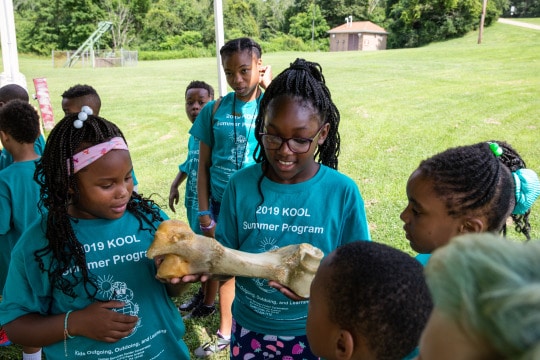
Campers at a Park Ranger program in pre-pandemic times inspect an American bison femur. Photo credit: Allegheny County

Other loans of museum materials enhance presentations that have ties to a specific park. Bison materials, including limb bones, hooves, and horn sheaths, for example, have been used for programs at South Park, where a small captive herd of the iconic prairie mammals have been a public attraction since the 1920s. Ranger programs about archaeology, which utilize authentic stone arrow points, adz heads, and fishing weights, make reference to a museum-led excavation in Boyce Park decades ago that documented how our region. was once the homeland of people known to science as the Monongahela.

During the past ten months, with the pandemic disrupting much of their planned program schedule, the Park Rangers paid close attention to their audience. “We’ve been fluid,” says Elise by way of summary. “We’ve made continual adjustments to meet the needs of groups – making live virtual presentations, sending pre-recorded videos, posting images and information on Facebook, sharing PowerPoint presentations – whatever it takes.”

Next week Elise will be borrowing a set of taxidermy mounts for upcoming programs about birds in winter. The means of program delivery has not been determined at this point, but it is a certainty that learning will occur.

Learn more about the Allegheny County Park Rangers.

Patrick McShea works in the Education and Visitor Experience department of Carnegie Museum of Natural History. Museum employees are encouraged to blog about their unique experiences and knowledge gained from working at the museum.
Related Content

Ask a Scientist: Ravens and crows, what’s the difference?

Milkweed Observations

“Quaran-Teened”: Closed Spaces, Open Minds

Filed Under: Blog Tagged With: Educator Loan Program, Educator Resources, Educators, Pat McShea, stewardship

December 7, 2020 by wpengine

Teaching About Teeth

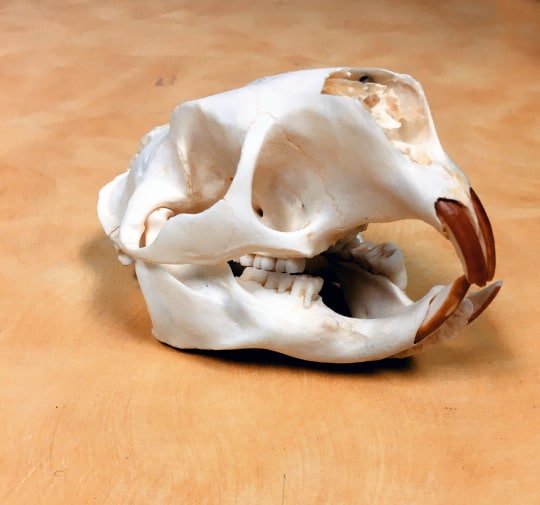
Porcupine skull from the Educator Loan Collection

The term “teachable moment” doesn’t accurately capture the opportunity first grade teachers have to guide their students in making observations about dental structure and function. “First graders are all about teeth,” explains Carolyn Mericle of the University of Pittsburgh’s Falk Laboratory School. The 29-year teaching veteran has long noted how the shared experience of tooth loss and replacement among these young students creates a high level of interest in all things dental that lasts for months, not moments.

Carolyn shared these observations during a recent phone conversation about how the mammal skulls she recently borrowed from the museum’s Educator Loan Collection would enhance student learning. Ideally, she explained, the students’ observations of the diversity of dental arrangements represented in the dozen skulls (a set which included black bear, white-tailed deer, striped skunk, and porcupine), would help them make connections to each creature’s diet. This experience would in turn lead to a better understanding of related classification terms such as, carnivore, herbivore, and omnivore.

Like every educator who is teaching through the COVID-19 pandemic, however, Carolyn is facing the necessity of modifying and adapting established plans. “Everything is hard this year.” she summarized, citing a school year that began with some of her students in her classroom and others at home, before a recent transformation to all remote instruction.

In the past, her students encountered the skulls firsthand by circulating among classroom tables where the objects were displayed. Each table included enough adjacent elbow room for students to make tooth-focused observational drawings. This week Carolyn plans to photograph the skulls and share the resulting images electronically to create a similar observational opportunity. “You have to re-think everything,” she adds, “because we’re working with a different set of tools.”

When the conversation concluded with a question about hope, Carolyn’s answer came without any hesitation. “The resilience of children gives me hope. They make the best of it. They’re powered by curiosity.”

Patrick McShea works in the Education and Visitor Experience department of Carnegie Museum of Natural History. Museum employees are encouraged to blog about their unique experiences and knowledge gained from working at the museum.
Related Content

A Gorilla for Our Imagination

Holiday Stowaway: Northern Saw-whet Owl 

Ask a Scientist: What is one of the more unique mammals of western PA?

Filed Under: Blog Tagged With: Educator Loan Program, Educators, Museum from Home, Pat McShea

September 4, 2020 by wpengine

Teaching in a Changed World

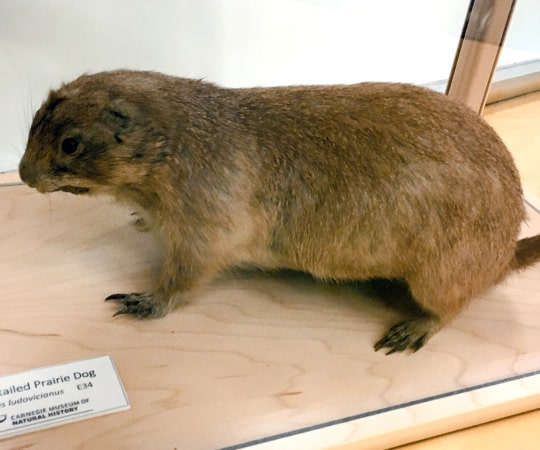
prairie dog taxidermy mount

For several years Leslie Vandegrift has used materials from the Educator Loan Collection to enhance reading lessons for kindergarten through third grade students. As the librarian for West Hills Primary School in the Armstrong School District, she’s put authentic objects to use in building vocabulary, sparking curiosity about the ideas conveyed through ever longer strands of words and sentences, and promoting the reading of all kinds of books. In the library of West Hills Primary, materials from the museum illustrating topics ranging from nocturnal animals to the wildlife discoveries of the Lewis and Clark Expeditions have helped diminish the 44 highway miles separating the two buildings.

When reached by phone a dozen days before the start of in-person classes, the 24 year veteran educator expressed concern about how the school year would proceed and whether her library could function as it did in the past. As she summarized, “The most challenging part of this new normal, is that the students will be unable to check out books for at least the first semester of school.  There is zero sharing of materials in our school building in order to keep our students as safe as possible.  It’s disheartening to engage students in new topic areas and authors, but not be able to allow them to pursue it independently.”   Student well-being was her utmost priority, and she expressed pride in knowing that was also the case for every one of her co-workers.

If the spread of COVID-19 pushes her school to on-line instruction, Leslie expressed confidence that the transition would be far smoother than what occurred across the country back in mid-March. Days of in-service training in August were devoted to mastering the intricacies and capabilities of a digital learning management platform called “Canvas,” and the first order of business after the opening day of school will be getting the students comfortable interacting with the electronic interface.

Leslie’s description of the learning platform’s flexibility leads me to remind more teachers about the Educator Loan Program’s continued importance as a resource. Materials can be borrowed to create digital products. Cell phone still images or brief videos of authentic objects can improve lessons presented on learning platforms. Your productions don’t have to meet the standards of the library displays at West Hill Primary School for learning to occur.

Patrick McShea works in the Education and Visitor Experience department of Carnegie Museum of Natural History. Museum employees are encouraged to blog about their unique experiences and knowledge gained from working at the museum.
Related Content

Cats: The Original Social Distancers

First-ever American Malacological Society Virtual Meeting

CMNH Hosts Science Bowl

Filed Under: Blog Tagged With: Education, Educator Loan Program, Educator Resources, Educators, Pat McShea, Patrick McShea

May 29, 2020 by wpengine

Educator Spotlight: Christian Shane

In mid-March, like every teacher who suddenly found work and home life disrupted by Covid-19 related school closings, Christian Shane was concerned about his students. During the earliest days of sheltering restrictions, however, the science teacher from North Allegheny School District’s Ingomar Middle School was also worried about fish.

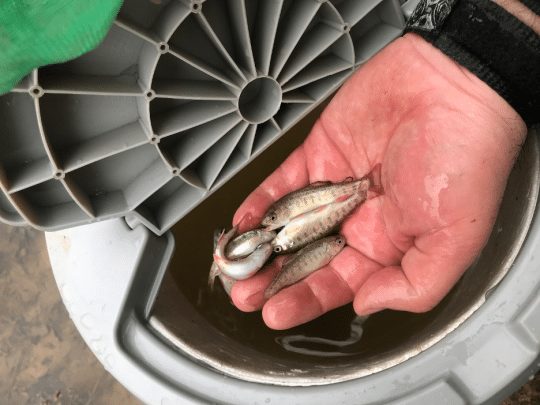
Christian and his seventh-grade students participate in Trout in the Classroom, an inter-disciplinary program made possible by a unique partnership between the Pennsylvania Council of Trout Unlimited and the Pennsylvania Fish and Boat Commission. A 55-gallon tank in Christian’s classroom held some 200 fingerling rainbow trout, fish raised from eggs since November, and destined for eventual release in designated stocked trout waters.

The release occurred far earlier than planned, and without any student participation. “When the school closed, teachers were instructed not to enter the building,” Christian explained, “but a custodian called that very first Saturday and said I’d better come get the fish.”

Fingerling trout on the early release date. A video of the release was shared with students.

I learned of the rescue and release weeks afterward when I called Christian to ask if his home-based lessons involved any of the mammal skulls he borrowed from the Museum’s loan program in early March. The skulls were secure in his classroom, Christian reported, but the first-hand learning experiences the specimens provided for students before the school closure proved to be vitally important during later home bound instruction. “I’ve been trying to get the students outside. Whatever the size of their yard, I want them to notice things where they live that relate to what we’re covering in our remote lessons.”

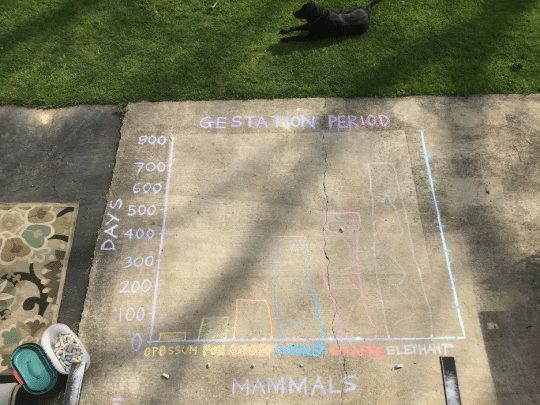
A teach-from-home innovation: Christian Shane created a driveway graph of mammal gestation periods.

According Christian, in a semester where teaching goals progressed from understanding the structures and processes of organisms to fuller comprehension of the roles of organisms in ecosystems, being able to make detailed observations of something as common as fern or a blooming violet was vitally important. “Students took two weeks to acclimate to the new conditions, but I’m confident they’ve learned a lot this spring.”

No doubt an innovative teacher had something to do with that progress.

Patrick McShea works in the Education and Visitor Experience department of Carnegie Museum of Natural History. Museum employees are encouraged to blog about their unique experiences and knowledge gained from working at the museum.
Filed Under: Blog Tagged With: Education, Educator Loan Program, Pat McShea, Patrick McShea

August 14, 2019 by wpengine

Frontier History Wizards

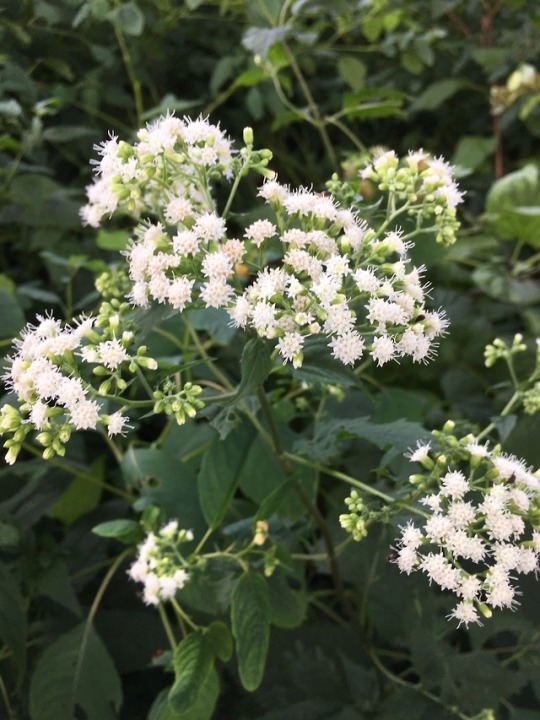
white snakeroot plant
White snakeroot blooming along the Allegheny River shoreline in early August.

Written descriptions for Carnegie Museum of Natural History summer camp, Wizard Academy, invite 8 – 10-year-old participants to experience a collision between “magic and science.” Based upon my recent experience with campers in the popular Harry Potter-themed program, the advertised subject could also include “history.”

During a discussion of poisonous plants with two dozen want-to-be wizards in the Hall of Botany, I drew the group’s attention to a display labeled “LOCAL SPECIES TO AVOID.”

The focus for my remarks was white snakeroot (Ageratina altissima) a straight-stemmed and flower-topped species in the display’s front row. I explained how the plant’s common name is an historic reference to its alleged value in treating snake bites, and that its designation as a plant to avoid was based upon on its connection to an often-fatal illness know as milk sickness.

The disease, which occurred when people drank milk from cows that had fed upon white snakeroot, was a scourge of pioneer life during the early nineteenth century, the decades-long period when settlement across what was then the American frontier dramatically altered vast forests west of the Appalachians.

One of the campers assisted my narration by reading from a handout about how Abraham Lincoln’s mother, Nancy Hanks Lincoln, died from milk sickness. When another camper asked how the plant-to-cow connection was “figured-out,” I confessed ignorance but promised to find out.

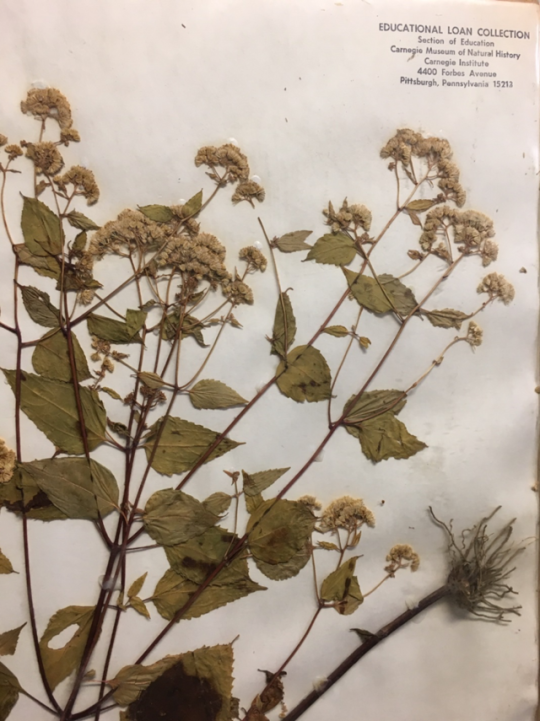
herbarium sheet of white snakeroot
White snakeroot herbarium sheet, part of the Educator Loan Collection’s “Poisonous Plants of Pennsylvania” box.

Much of the life-saving credit, I learned, belongs to a pair of women whose friendship crossed conflicting cultures of 1820’s Illinois; a frontier doctor, and an elderly fugitive of the federal government’s forced relocation of the Shawnee to territory further west. The doctor, Anna Pierce, lost family members to milk sickness and, based upon observations of disease occurrence, promoted the avoidance of milk drinking between June and the plant-killing frosts of autumn. The relocation resister, known to settlers as Aunt Shawnee, took Dr. Pierce into the woods to show her white snakeroot and explain the plant’s lethal properties. Pierce then conducted experiments to confirm the plant’s toxicity and shared her findings with other doctors.

More than 70 years later carefully controlled scientific studies documented year-to-year and geographic variations in the toxicity levels of white snakeroot, but it wasn’t until 1928 that the plant’s toxic chemical, an alcohol termed tremetol was isolated in a laboratory. Today, largely because of better pasture management, milk sickness is not a concern in commercial dairy operations.

The takeaway lesson, kindled when a ten-year-old camper’s question illuminated a nearly 200-year-old ethnobotany story, is to more fully value the indigenous knowledge of the vibrant Native cultures that continue to exist across our country.

(Information source: Natural History, July 1990, “Land of Milk and Honey” by David Duffy Cameron)

Patrick McShea works in the Education and Visitor Experience department of Carnegie Museum of Natural History. Museum employees are encouraged to blog about their unique experiences and knowledge gained from working at the museum.
Filed Under: Blog Tagged With: Education, Educator Loan Program, Educator Loans, Educator Resources, Pat McShea, Patrick McShea

June 19, 2019 by wpengine

Harriet Tubman Was a Naturalist

statue of Harriet Tubman
Photo Credit: Maryland Department of Natural Resources

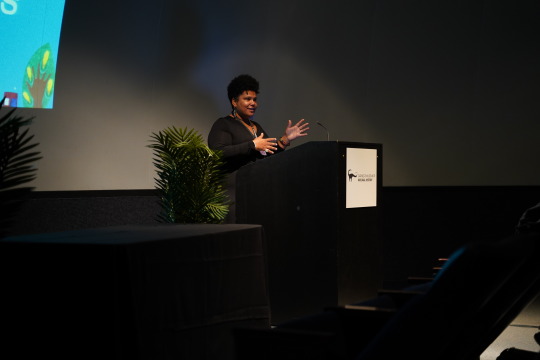
Last fall, when Akiima Price spoke to museum staff and visitors as part of the R.W. Moriarty Science Seminar series, the renowned environmental educator discussed the potential and the challenges of using nature-based experiences to help heal economically stressed families and communities.

The one-time National Park Service Ranger advised anyone who hoped to model her efforts to look for connections between seemingly disparate groups, topics, and situations. When Akiima invoked Harriet Tubman as a mentor, she helped identify a connection between the 19th Century historic figure and existing museum educational materials.

Akiima Price speaking at Carnegie Museum of Natural History.

“Harriet Tubman was a naturalist!” Akiima stated. “She had to be!” A summary of Tubman’s most celebrated accomplishments followed – her escape from slavery in 1849, and her work over the next decade planning and guiding the successful escapes of dozens of other slaves. As Akiima explained, those multi-day journeys, across marshes and through forests, implied a deep working knowledge of tides, seasons, weather, wildlife, and plants.

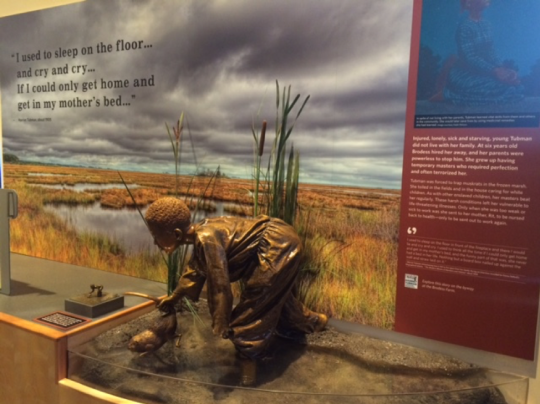
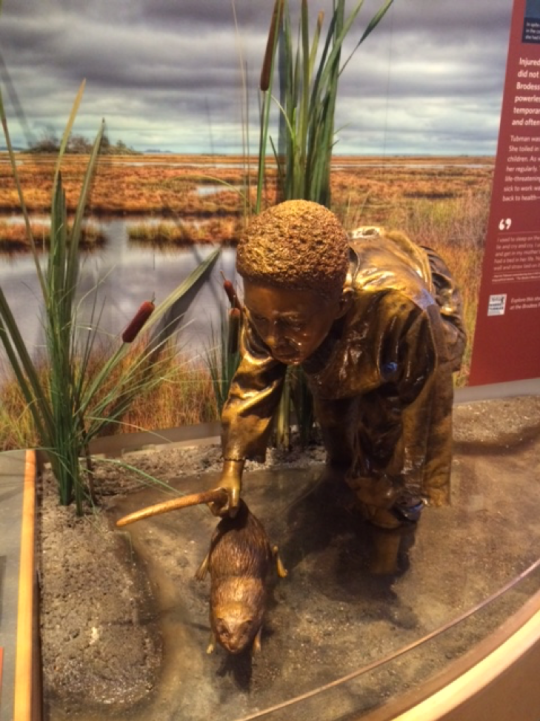
The testimony led me to read more about Harriet Tubman and her success as a “conductor” on the Underground Railroad. Her understanding of the landscape apparently began at an early age. Several accounts mentioned how Tubman’s slave labor as a child on a tidewater Maryland farm included trapping muskrats in adjacent marshes, work performed barefoot, even in freezing weather.

museum exhibit featuring Harriet Tubman
Photo Credit: Maryland Department of Natural Resources

For the past two years, this forced work has been memorialized in a life-sized bronze sculpture within the Visitor Center of the Harriet Tubman Underground Railroad National Historic Park in Church Creek, Maryland.

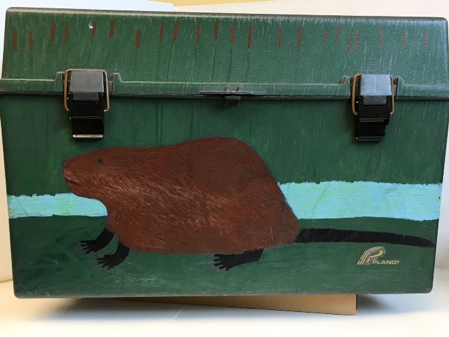
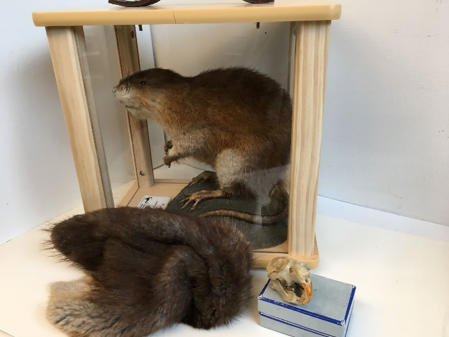
At Carnegie Museum of Natural History, a picture of the sculpture, along with information about Tubman and the park that commemorates her heroic accomplishments, now reside within the Muskrat Box of Educator Loan Collection. The additions do not diminish the unit’s traditional use. The muskrat taxidermy mount, skull, and pelt continue to help teachers present more effective lessons about mammal adaptations and wetland ecology. The new materials simply add an American history facet, a connection to a fearless woman’s struggle against the slavery system she was born into.

toolbox with muskrat painted on it
Muskrat taxidermy, skull, and pelt
Muskrat box and contents

Patrick McShea works in the Education and Visitor Experience department of Carnegie Museum of Natural History. Museum employees are encouraged to blog about their unique experiences and knowledge gained from working at the museum.
Filed Under: Blog Tagged With: Educator Loan Program, Pat McShea, Patrick McShea

  • « Go to Previous Page
  • Page 1
  • Page 2
  • Page 3
  • Go to Next Page »

sidebar

About

  • Mission & Commitments
  • Directors Team
  • Museum History

Get Involved

  • Volunteer
  • Membership
  • Carnegie Discoverers
  • Donate
  • Employment
  • Events

Bring a Group

  • Groups of 10 or More
  • Birthday Parties at the Museum
  • Field Trips

Powdermill

  • Powdermill Nature Reserve
  • Powdermill Field Trips
  • Powdermill Staff
  • Research at Powdermill

More Information

  • Image Permission Requests
  • Science Stories
  • Accessibility
  • Shopping Cart
  • Contact
  • Visitor Policies
One of the Four Carnegie Museums | © Carnegie Institute | Privacy Policy | Terms of Use | Accessibility
Rad works here logo