• Skip to primary navigation
  • Skip to main content
  • Skip to primary sidebar

Carnegie Museum of Natural History

One of the Four Carnegie Museums of Pittsburgh

  • Visit
    • Buy Tickets
    • Visitor Information
    • Exhibitions
    • Events
    • Dining at the Museum
    • Celebrate at the Museum
    • Powdermill Nature Reserve
    • Event Venue Rental
  • Learn
    • Field Trips
    • Educator Information
    • Programs at the Museum
    • Bring the Museum to You
    • Guided Programs FAQ
    • Programs Online
    • Climate and Rural Systems Partnership
  • Research
    • Scientific Sections
    • Science Stories
    • Science Videos
    • Senior Science & Research Staff
    • Museum Library
    • Science Seminars
    • Scientific Publications
    • Specimen and Artifact Identification
  • About
    • Mission & Commitments
    • Directors Team
    • Museum History
  • Tickets
  • Give
  • Shop

Erin Peters

November 17, 2017 by wpengine

Ask a Scientist: Cat Mummy

Ask a Scientist: Why does Carnegie Museum have a cat mummy?

Assistant Curator of Science and Research Dr. Erin Peters gives us the scoop on this ancient Egyptian cat mummy and even lets us in on a little secret that was only recently discovered about this object!


Ask a Scientist is a new short video series where we ask our research staff questions about the millions of amazing objects and specimens stored in our collection. Tune in on YouTube, and submit your own questions via Twitter @CarnegieMNH
Filed Under: Blog Tagged With: Erin Peters, Walton Hall of Ancient Egypt

May 9, 2017 by wpengine

Scientists Live – Egypt

Carnegie Museum of Natural History has amazing artifacts from ancient Egypt on display, but did you know there are even more objects in our hidden collection? Get a peek behind the scenes, and learn all about Egypt from assistant curator Erin Peters.

Erin showed off the collection and answered questions from commenters on Facebook Live as part of the new web series, Scientists Live. This new series is designed to give our followers a glimpse at hidden collections and the great science happening at the museum every day.

Want to bring more museum science to your classroom? Check out Carnegie Museum of Natural History field trips, Act 48 workshops, and more!

Tune in at facebook.com/carnegiemnh for new broadcasts.

Filed Under: Blog Tagged With: egypt, Erin Peters, Scientists Live

April 25, 2017 by wpengine

Discoveries at Antinoupolis

by Erin Peters

When I last posted about Egypt at the Carnegie, I was on an archaeological excavation at Antinoupolis, the emperor Hadrian’s famous ancient city founded as the cult center for his drowned and deified companion, Antinous. I am reporting on some exciting news from one of the open excavation areas of the season –Area B, which is under the supervision of MSA archaeologist Hamada Kellawy. Of all going on at the site, I was most excited about this area because it is one of the reasons I was asked to join The Antinoupolis Foundation (TAF) mission (see their blog post). The area features what the mission believes is a temple, possibly dedicated to Antinoupolis’s primary deity, the new god Osir-Antinous. For details about the previous excavations in this area, see TAF’s Summer Newsletter (pages 3-5).

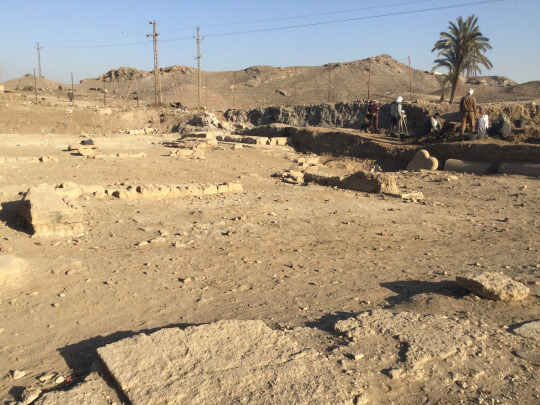
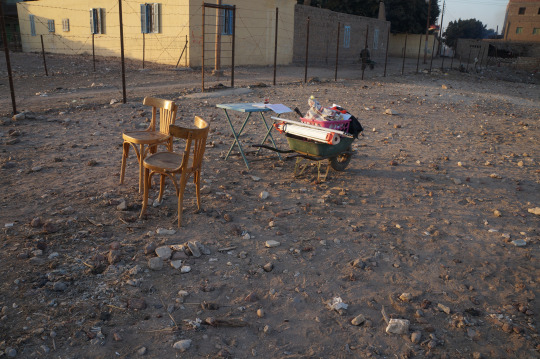
Area B is located adjacent to the dig house, and it is easily visible going to and fro every day.

Area B at the beginning of the day, directly next to the dig house

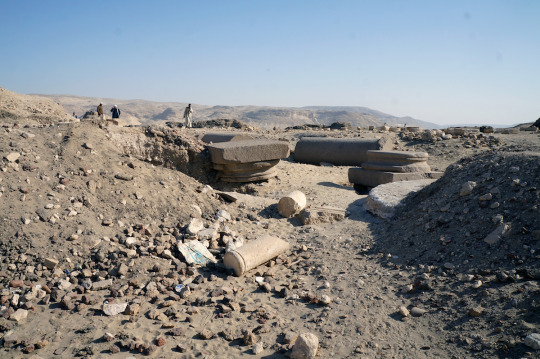
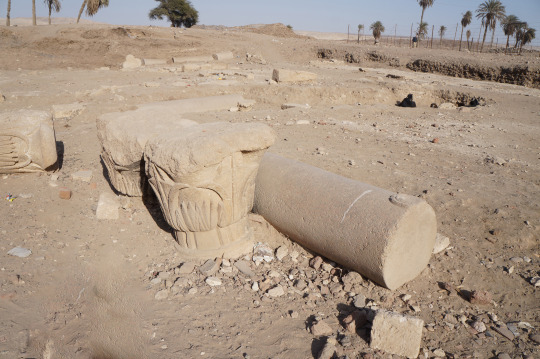
The temple complex is fascinating. There are remains of papyrus column capitals like those found in many Ptolemaic and Roman period temples in Egypt (such as Philae).

Four-lobed papyrus capitals and column shaft fragments

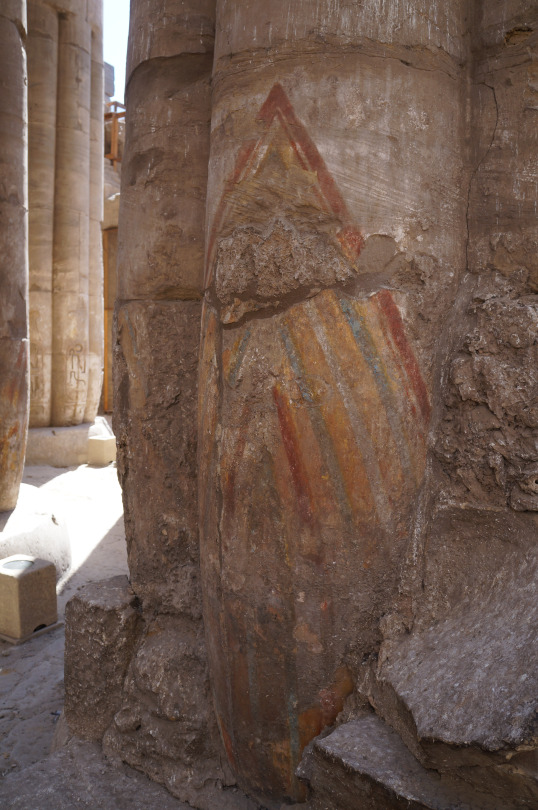
The column shafts and bases have decorative details used in pharaonic temple building, like leaf decoration you see at a number of temples in Egypt like the famous temple at Luxor.

Painted column base with leaf decoration at the temple of Luxor

In addition to these elements we think of as “Egyptian,” some of the complex was paved with thin layers of limestone, which is typical of Roman architecture. These features are just the first that demonstrate that there is a similar kind of combination of styles like the temples built or added to under Augustus. Like most Roman emperors, Hadrian is known to have emulated Augustus, and this could be evident in construction and decoration of sacred space one hundred years after Augustus in the 2nd century CE.

View of the court looking northeast with remains of Roman pavement at the bottom of the photo

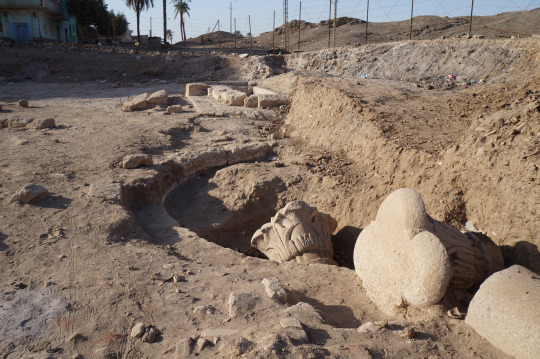
Two of the most exciting parts of the complex were excavated this season—a water feature that may be a well (the semi-circle in the photo indicates the half that was already excavated as of February) and a small temple-like structure located next to it (and visible above it in the photo). Water features were common in temple complexes, either to measure water levels from the annual inundation of the Nile River or to hold water to serve ritual purposes.

View of the well and temple looking north, a column capital has fallen in the well

Just after I returned to Pittsburgh to continue teaching my University of Pittsburgh Museum Studies class, the mission found some really exciting things! See TAF’s blog post about uncovering the “well” and an underground passage that leads towards the small temple structure! Even more, a well-preserved block featuring a cavetto cornice (an essential decorative element in Egyptian temple architecture) with the cartouches of Hadrian and his wife, Sabina, was discovered as described in this blog post! This is an extremely exciting discovery, as it is exceptionally rare for a Roman empress to appear in temple relief carving or have cartouches carved into monuments. I cannot wait to return next year to continue archaeological work at Antinoupolis to see what we uncover about this temple.

In the meantime, we are continuing exciting work with Egypt here at the Carnegie. One of our advisors for our NEH Digital Projects for the Public Discovery grant (which is funding us to carry out research for a reinterpretation of our Dynasty 12 royal Egyptian funerary boat) will be here to share his scientific research on these boats. Please attend Dr. Pearce Paul Creasman’s free public lecture on Monday April 24 from noon–1 p.m. in the Earth Theater, “Radar for the Lost Barque: Applying Scientific Techniques to Search for and Understand Ancient Egyptian Boats.”


Erin Peters is an assistant curator of science and research at Carnegie Museum of Natural History. She recently traveled to Egypt for an archaeological research study. This is a series of blog posts she wrote while in the field. 

Filed Under: Blog Tagged With: egypt, Erin Peters

March 2, 2017 by wpengine

Ancient Egyptian Column Shafts

by Erin Peters

Here at Antinoupolis, the Italian mission has been excavating since the 1930s and has a long and productive residence at
the site. There are a number of publications resulting from the mission’s work and two recent volumes that include scientific publications of the team’s work since 2000–for these resources and more, see The Antinoupolis Foundation’s bibliography. For this 2017 season, the mission has three active excavation areas open, and today I write about one that is in the east of the ancient city near what was once a monumental gate facing the Via Hadriana. Hadrian built this impressive road through the desert as a new trade route, which ran through Antinoupolis to the Nile for river transport.

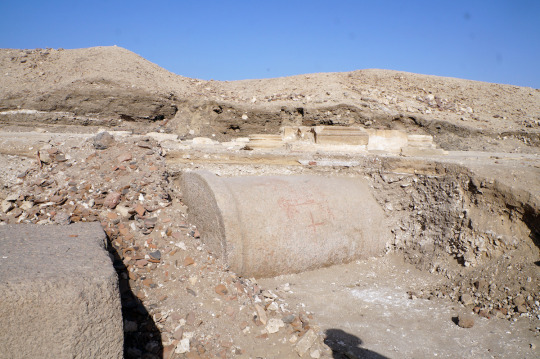
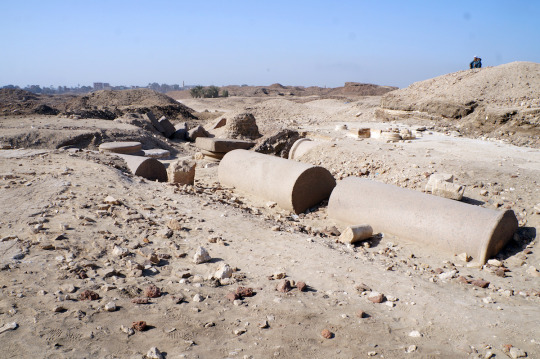
The east gate was monumentalized by huge red granite columns, of which fragments are extant. Two column bases (one upright and one overturned) and three column shaft fragments were known before this season and are an impressive sight to see.

Ancient Egyptian column shafts partially uncovered in an archeology dig
Monumental fragments of red granite column bases and shafts at the east edge of the city


Under supervision of the mission’s architect, Peter Grossman, another section of a column shaft was unearthed this season. This shaft indicates there could be more fragments nearby, possibly under the 4-5th century CE church that Peter’s team is currently excavating, the remains of which you can see above.


Ancient columns being excavated in an archeology dig
View of column shaft fragment excavated this season

Hopefully some of these shafts will be more visible in the near future and draw visitors to the site as recorded in The Antinoupolis Foundation’s February 10 blog post. The mission’s director, Rosario Pintaudi, has put in an application to the Ministry of Antiquities to re-erect the column. If approved, perhaps the column shaft will be soaring at the east edge of the city by the time I return next year!

Partially burried columns in a row
Fallen column shaft fragments that may be re-erected in the near future

Erin Peters is an assistant curator of science and research at Carnegie Museum of Natural History. She recently traveled to Egypt for an archaeological research study. This is a series of blog posts she wrote while in the field. Check back for more!

Filed Under: Blog Tagged With: ancient egypt, anthropology, egypt, Erin Peters, Walton Hall of Ancient Egypt

February 22, 2017 by wpengine

Antinoupolis

sunrise
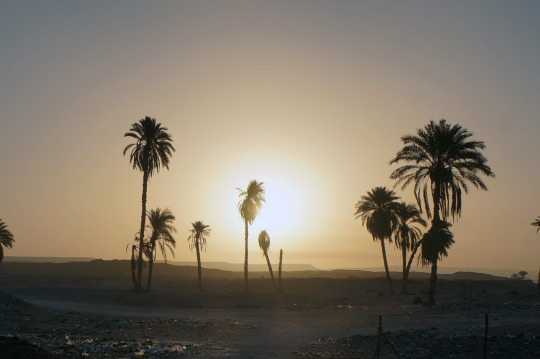
Rising sun at dawn at Antinoupolis

By Erin Peters

I arrived at Sheikh Abada for Egypt’s Ministry of State for Antiquities (MSA) and the Istituto Papirologico “G. Vitelli” of the University of Florence’s (Istituto) Italian Mission at Antinoupolis under direction of Rosario Pintaudi, PhD. I am thrilled to join the team here at this famous ancient city, which has been important since pharaonic times (there is a temple built by Ramses II that I will return to in a future post) and especially after its founding under the Roman emperor Hadrian as a Greek poleis in Egypt (administrative center of a nome, or district) for his companion, Antinous. Antinous is said to have drowned in the Nile River in 130 BCE. According to Egyptian tradition, he was affiliated with the god Osiris and thus deified after his death; Hadrian founded the city as the cult center of the new god—Osir-Antinous. The Istituto’s mission, along with The Antinoupolis Foundation (TAF) under President James Heidel, is to build a complete archaeological picture of the city, cult center, and its inhabitants.

You can read all the latest news, history of the city, and its archaeological campaigns at The Antinoupolis Foundation’s website and blog.

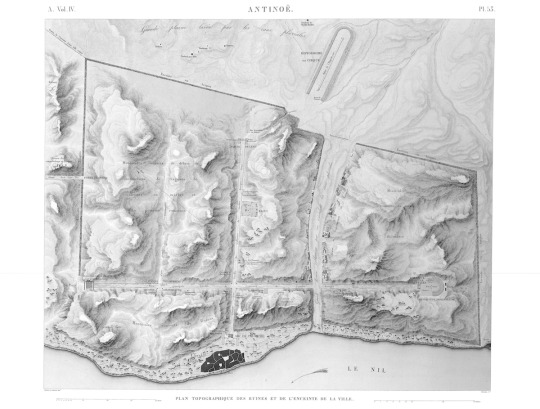
In my last blog post, I mentioned the vast archaeological site that is home to the ancient city’s remains on the Nile River. The site, along with its street grid, was documented by Edmé Francois Jomard, one of the scholars who accompanied Napoleon’s army to Egypt in 1798­–1801, and published in the massive Description de l’Egypte. The engraving shows the city plan with a large hippodrome to the east of the Nile, a “wadi” that runs from the east to the Nile, and three major streets: the “cardo” that runs north-south and is parallel to the Nile and two “decumani” that run east-west and are perpendicular to the Nile. In ancient Roman cities, the “cardo” refers to the primary north-south street, and a “decumanus” is a primary street that runs east-west.

black and white topographic map
Jomard’s topographic city plan of Antinoupolis (1818)

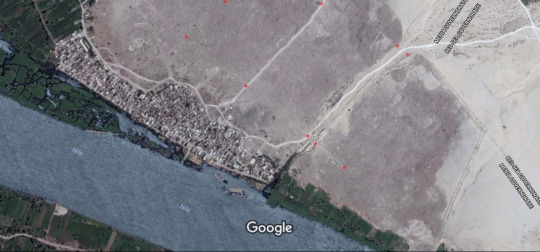
Because the official founding of the city occurred under the Roman emperor Hadrian, the Roman period city included urban elements similar to the rest of the empire. These features are still visible today and can be seen from Google satellite images. I have included small red dots near the “wadi,” the “cardo,” and the “decumani.”

image showing the Nile river and a city
Google satellite image of the remains of ancient Antinoupolis

Now on site, I cannot wait to see the town plan in person and begin the first full day at Antinoupolis with the rising sun at dawn.

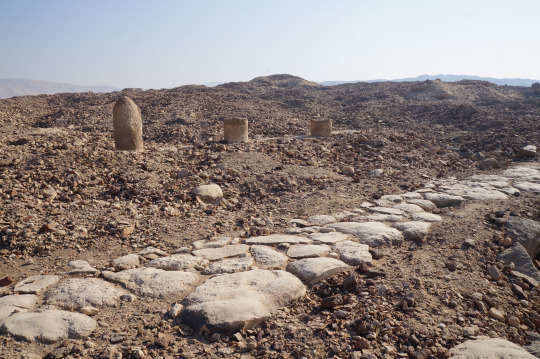
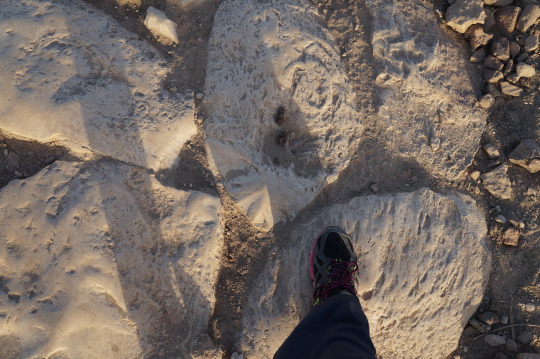
For me to get a sense of the site, TAF’s President Jay Heidel (who invited me to join the mission) and the mission’s Director Rosario Pintaudi kindly showed one of the main attractions in person: the “cardo” complete with some of the granite column shafts in situ. The “cardo” was paved with large limestone blocks that gleam in the Egyptian sun, and it is possible to see the stones along the “cardo” far across the site.

stone path and the remains of three pillars
Remains of limestone paving and granite Doric column shafts on the “cardo”

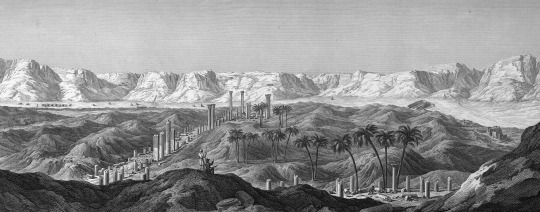
When Jomard visited the site at the turn of the 19th century, there were many more columns and shafts along the main streets—he even recorded some large pilasters and complete columns with Corinthian capitals.

black and white drawing of Antinoupolis
Jomard’s view of main streets with columns at Antinoupolis (1818)


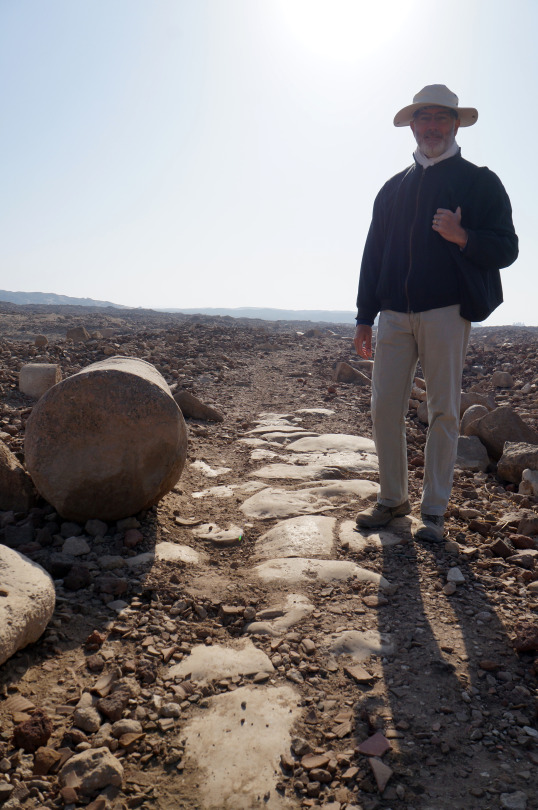
But today it is quite rare to see shafts of any size still in situ, and it is more common to see them fallen at the side of the limestone pavement, if at all.

Jay Heidel
TAF’s President Jay Heidel standing on the “cardo” with fallen column shafts


stone walkway
Walking on the “cardo” at Antinoupolis


It was an amazing experience to walk along the street that Hadrian built for Antinous and sets the tone for my stay at Antinoupolis.


Erin Peters is an assistant curator of science and research at Carnegie Museum of Natural History and is currently in Egypt for an archaeological research study. This is a series of blog posts she has written while in the field. Check back for more!

Filed Under: Blog Tagged With: Erin Peters, Walton Hall of Ancient Egypt

February 22, 2017 by wpengine

Arriving in Egypt

By Erin Peters

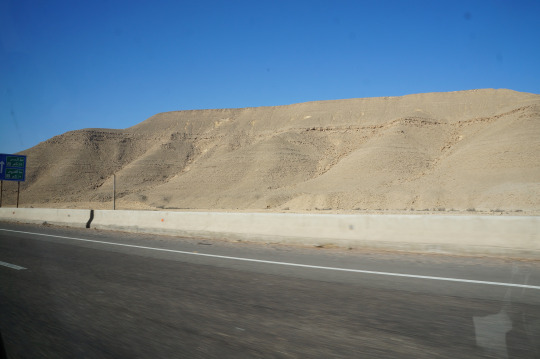
Today I travel for the first time to the famous city established by the emperor Hadrian in Middle Egypt, now next to the small modern village of Sheikh Abada. After meeting the car to drive to the site, we pull into familiar and infamous grid-lock Cairo traffic—it is a quick jolt to returning to Egypt after a period of three years away. The cars and mini-buses with all their decorations look the same, and the horns and shouts in Arabic sound the same and remind me of past visits to the lively city where I spent time in 2011 and 2013. During this trip, however, the aim is to get directly to the site, so after making it through the road block, we emerge on the comparatively quiet desert road for the four-and-a-half-hour drive south.

desert road
On the desert road from Cairo to Sheikh Abada

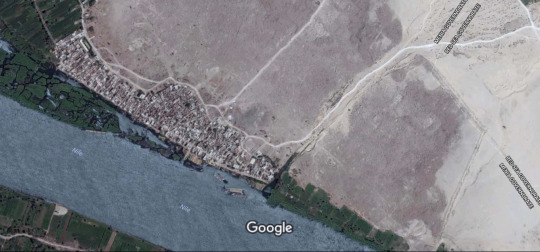
Sheikh Abada is located on the east bank of the Nile River and forms the modern Nile edge of a huge archaeological site you can see sprawling to the east (right) of the strip of buildings at the Nile.

google satellite image of Sheikh Abada
Google satellite image of modern Sheikh Abada and the remains of ancient Antinoupolis

The village is home to approximately seven major families who are primarily farmers. The other main industry of the village is unfortunately the illegal selling of antiquities land for domestic and agricultural reclamation and modern tomb plots. The illegal encroachment of the village makes the mission’s excavation and documentation of the ancient lives of this once resplendent city all the more important.

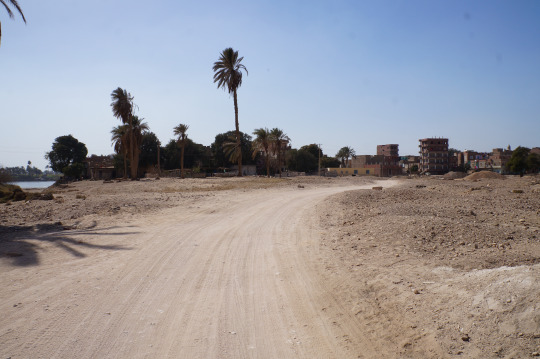
desert road at eastern edge of village
View of the eastern edge of the village from antiquities land


Much about this site is new to me because my past field work was very different. In addition to consulting museum collections in Cairo and Alexandria, I completed three rounds of independent spatial analysis at temple complexes in upper Egypt from 2011­–2014, many of which are major tourist sites. Additionally, a number of these complexes have been removed from their original context because of the 1960s UNESCO Campaign to Save the Monuments of Nubia due to the building of the Aswan High Dam, like the temple complex on the island of Philae.

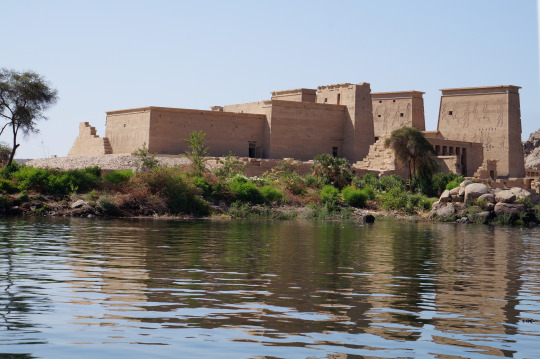
Main temple of Isis at Philae
South side of the main temple of Isis at Philae, relocated to Agilkia Island

The temple complex originally at Philae (and now relocated to a nearby island) is one of the primary sites I research because it was added to after Egypt was annexed as a Roman province in 30 BCE by the first Roman
emperor Augustus. The main “Egyptian” temple of Isis (with its soaring pylons) was carved with relief decoration depicting Augustus as pharaoh and is one of many temples that ushered in a long tradition in which the Roman emperors took on the role of Egyptian pharaoh.

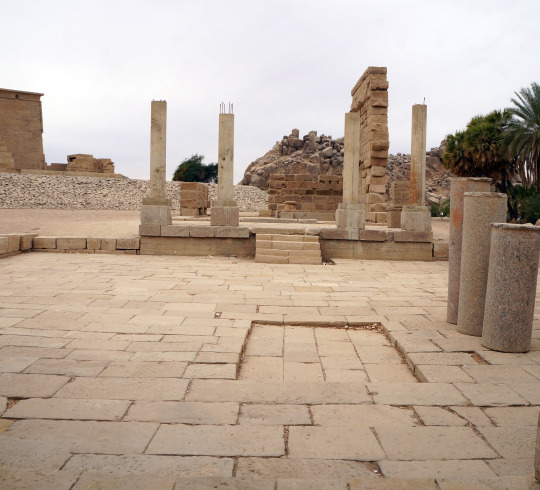
Imperial cult temple of Augustus at Philae
Imperial cult temple of Augustus at Philae, relocated to Agilkia Island

Fascinatingly, at the same complex, a temple to the imperial cult that looks like a “Roman” podium temple was also built under Augustus. My research uses the archaeological method of spatial analysis to demonstrate that
the two seemingly different monuments communicate spatially, combining what we want to separate into different cultures into one functioning sacred landscape.

I was invited to Antinoupolis in part because we have the same thing at Hadrian’s famous city in Egypt. I’m thrilled to get a sense of the site and current work in the ancient city and modern village by joining a large
international team this season.


Erin Peters is an assistant curator of science and research at Carnegie Museum of Natural History and is currently in Egypt for an archaeological research study. This blog is part of a series of blog posts she has written while in the field. Check back for more!

Filed Under: Blog Tagged With: ancient egypt, Erin Peters, Walton Hall of Ancient Egypt

  • « Go to Previous Page
  • Page 1
  • Page 2
  • Page 3
  • Go to Next Page »

sidebar

About

  • Mission & Commitments
  • Directors Team
  • Museum History

Get Involved

  • Volunteer
  • Membership
  • Carnegie Discoverers
  • Donate
  • Employment
  • Events

Bring a Group

  • Groups of 10 or More
  • Birthday Parties at the Museum
  • Field Trips

Powdermill

  • Powdermill Nature Reserve
  • Powdermill Field Trips
  • Powdermill Staff
  • Research at Powdermill

More Information

  • Image Permission Requests
  • Science Stories
  • Accessibility
  • Shopping Cart
  • Contact
  • Visitor Policies
One of the Four Carnegie Museums | © Carnegie Institute | Privacy Policy | Terms of Use | Accessibility
Rad works here logo