• Skip to primary navigation
  • Skip to main content
  • Skip to primary sidebar

Carnegie Museum of Natural History

One of the Four Carnegie Museums of Pittsburgh

  • Visit
    • Buy Tickets
    • Visitor Information
    • Exhibitions
    • Events
    • Dining at the Museum
    • Celebrate at the Museum
    • Powdermill Nature Reserve
    • Event Venue Rental
    • Gift Cards
  • Learn
    • Field Trips
    • Educator Information
    • Programs at the Museum
    • Bring the Museum to You
    • Guided Programs FAQ
    • Programs Online
    • Climate and Rural Systems Partnership
  • Research
    • Scientific Sections
    • Science Stories
    • Science Videos
    • Senior Science & Research Staff
    • Museum Library
    • Science Seminars
    • Scientific Publications
    • Specimen and Artifact Identification
  • About
    • Mission & Commitments
    • Directors Team
    • Museum History
  • Tickets
  • Give
  • Shop

fossils

July 9, 2018 by wpengine

Revisiting a former expedition: Antarctica Peninsula Paleontology Project (AP3)

The following was taken from a blog series posted by Carnegie Museum of Natural History which documented a paleontology expedition in 2016.
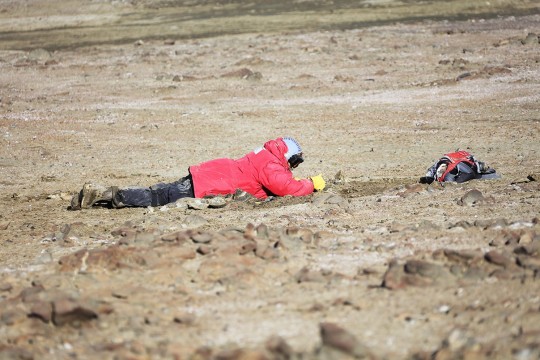
researcher in Antarctica

“February 29–March 6, 2016

Project G-182-N (PI Matt Lamanna)

The team completed several of its research objectives and continued to make progress towards others during week three. At the Sandwich Bluff locality on Vega Island, scientists discovered four new fossil plant sites, found additional Cretaceous fish and bird material, and prepared a plesiosaur (long-necked marine reptile) shoulder girdle for extraction.

All of these specimens were recovered from the Upper Cretaceous Sandwich Bluff Member of the López de Bertodano Formation. At approximately 70 million years in age, this rock unit dates to only a few million years prior to the infamous mass extinction that ended the Mesozoic era, or Age of Dinosaurs.
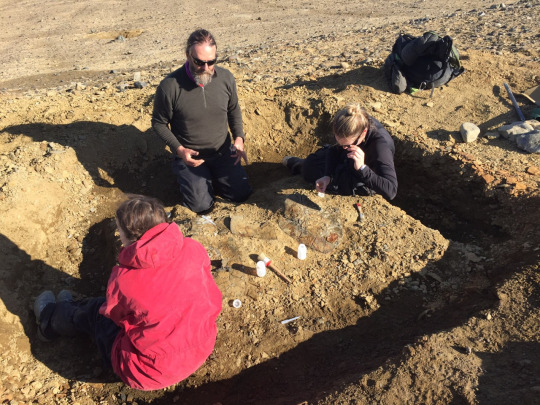
researchers at work in Antarctica

Geologists Eric Roberts and Zubair Jinnah completed their stratigraphic and sedimentological study of the sections of the Snow Hill Island and López de Bertodano formations exposed on the southwestern flank of Sandwich Bluff, an area that, due to its steepness, elevation, and snow cover, has been nicknamed ‘K2’ after that well-known Himalayan peak. They sampled the middle and upper levels of the Sandwich Bluff Member for aragonitic fossil invertebrate shells to be used in strontium isotope geochronological analyses.

Scientists also continued to conduct helicopter-supported reconnaissance visits to other areas of the James Ross Basin, identifying two previously undocumented Cretaceous exposures that were targeted for future investigation.

Inclement weather forced many members of the team to return to their ship, the RVIB Nathaniel B. Palmer, for two days during week three. They spent the time refining strategies for the remainder of the field season, updating the project’s blog and social media pages, and studying fossils that had already been collected.
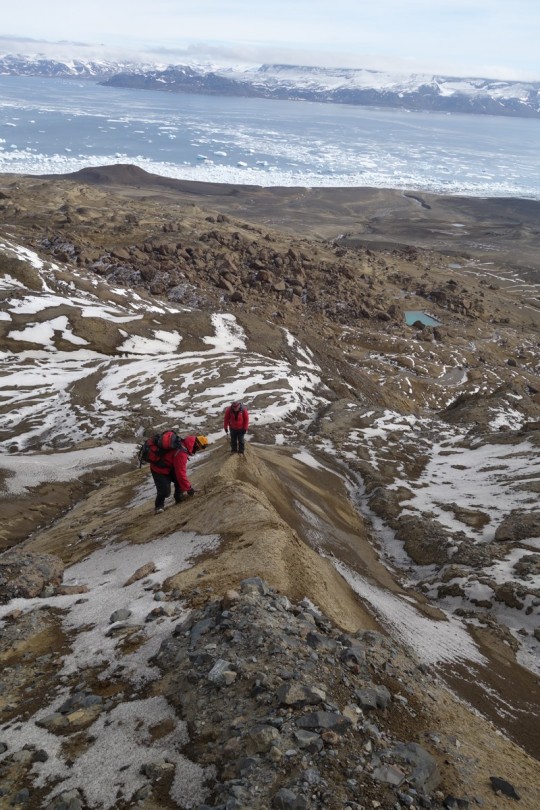
researchers in Antarctica

1) G-182-N paleontologists Abby West (left) and Steve Salisbury (center) collect a plesiosaur shoulder girdle co-discovered by Salisbury with ASC Marine Technician Julia Carlton (right). Photo by Matt Lamanna.

2) G-182-N geologists Zubair Jinnah (foreground) and Eric Roberts study the stratigraphy and sedimentology of the ‘K2’ section on Vega Island. Photo by Pat O’Connor.

3.) G-182-N paleontologist Kerin Claeson searches for fossils in the ‘Fish Horizon’ near the K–Pg boundary on Seymour Island. Claeson and other G-182-N personnel have collected dozens of partial to nearly complete fish skeletons from the ‘Fish Horizon’ to date, the analysis of which promises to inform understanding of the K–Pg mass extinction in the southern high latitudes. Photo by Meng Jin.”


Matt Lamanna is a paleontologist and the principal dinosaur researcher at Carnegie Museum of Natural History in Pittsburgh. Matt and his team of researchers blogged frequently from Antarctica while on expedition at antarticdinos.org. Detailing his trip in a family-friendly, interactive documentary, Expedition Antarctica, paleontologist Matt Lamanna shares his unique experience. Members are required to preregister for the event. Sign up now.
Filed Under: Blog Tagged With: Antarctic Peninsula Paleontology Project, antarctica, fossils, Matt Lamanna, paleontology

October 9, 2017 by wpengine

Solnhofen Fossils

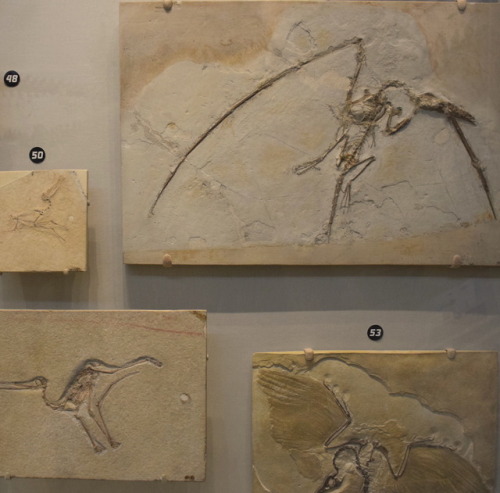
These fossils were found in a quarry in Solnhofen, Germany, which was once a series of shallow, tropical lagoons. The environmental conditions at Solnhofen resulted in remarkably preserved fossils of Late Jurassic plants, invertebrates, fish, reptiles, and bird species.

These fossils were found in a quarry in Solnhofen, Germany, which was once a series of shallow, tropical lagoons. The environmental conditions at Solnhofen resulted in remarkably preserved fossils of Late Jurassic plants, invertebrates, fish, reptiles, and bird species like these fossils on display in Dinosaurs in Their Time.

Filed Under: Blog Tagged With: Birds, fish, fossils, reptiles

January 31, 2017 by wpengine

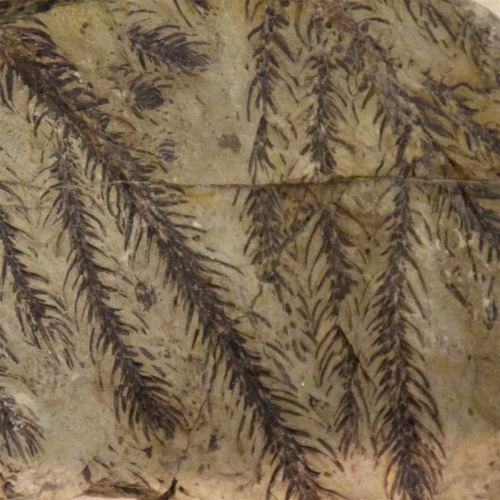
Fossilized Elatides

fossilized Elatides specimen

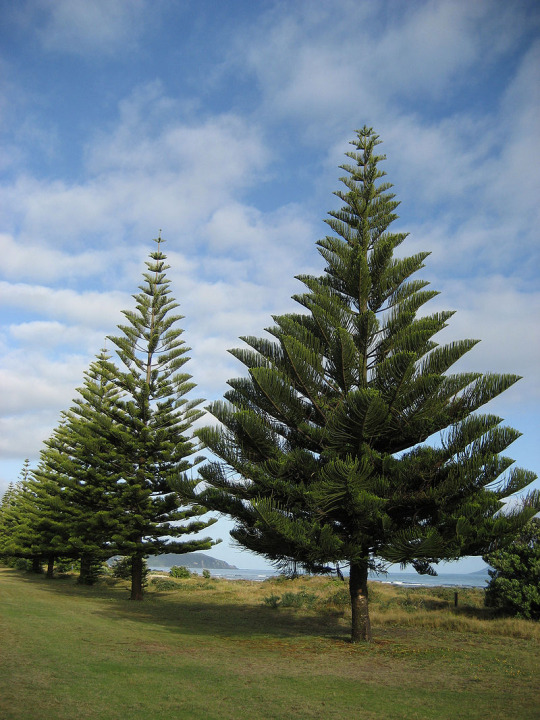
Conifers like this fossilized Elatides specimen were common during the Late Cretaceous period. This tree may have resembled the modern Norfolk Island Pine, which exists today and is pictured below.

Norfolk Island Pine

Filed Under: Blog Tagged With: Botany, fossils

January 3, 2017 by wpengine

Giant Scorpions in Pennsylvania

fossilized tracks of a eurypteri

Can you imagine a giant scorpion living western Pennsylvania?

It seems pretty crazy, but there is evidence that about 350 million years ago colossal invertebrates lived near Pittsburgh!

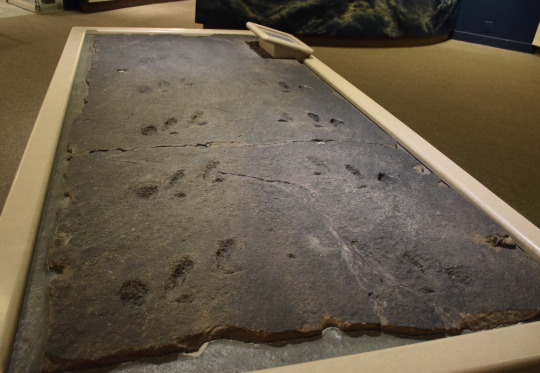
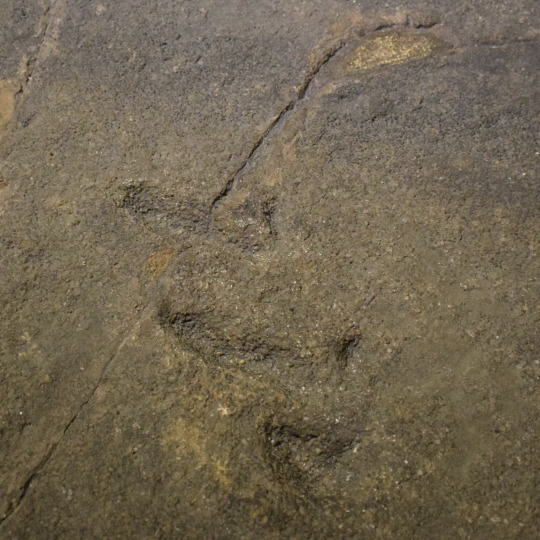
At Carnegie Museum of Natural History, we have fossilized tracks of a eurypterid, or sea scorpion, that were found along the Clarion River in Elk County, Pennsylvania.

The fossilized trackway is the largest known in the world. It was discovered by former museum employee James Kosinski in 1948. In 1983, English paleontologists described and named the creature who created the large footprint Palmichnium kosinskiorum.

Paleontologists estimate that Palmichnium kosinskiorum was more than seven and a half feet long and may have been amphibious—a far cry from the insects and crayfish you find in our creek beds today!

image

Filed Under: Blog Tagged With: Benedum Hall of Geology, fossils

December 5, 2016 by wpengine

Snails in the Staircase

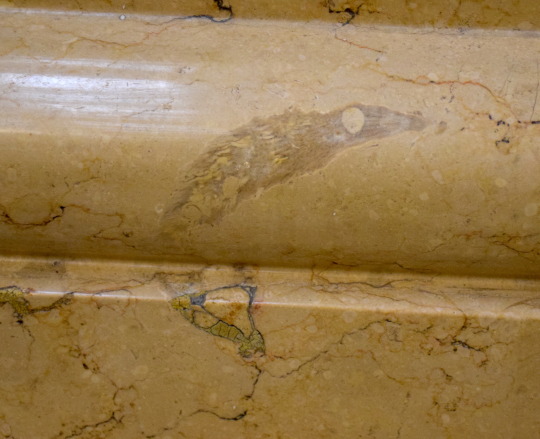
Snail Fossil embedded in grand staircase
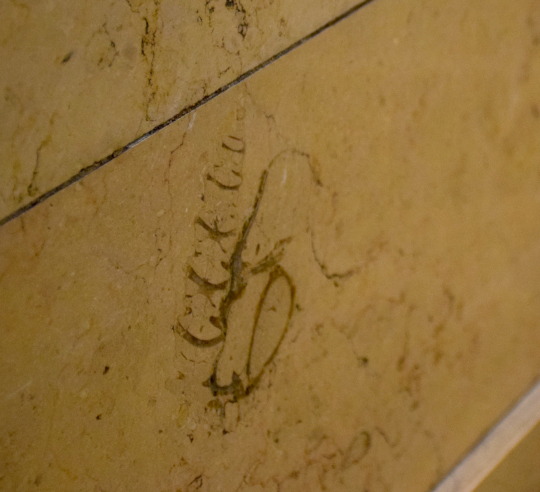
A Fossil of a small invertebrate visible in the walls of Carnegie Museum of Natural History’s Grand Staircase.

invertebrate fossil in the grand staircase
A small invertebrate visible in the walls of the Grand Staircase.

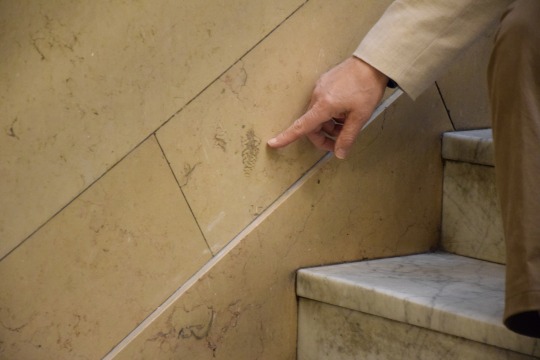
Everyone in Pittsburgh knows that Carnegie Museum of Natural History is the place to see some amazing fossils. But did you know they’re not just in our famous paleontology and geology halls? If you look carefully at the walls of our Grand Staircase, there are fossils of small invertebrates visible in the walls!

In the photo below, Carnegie Geologist Albert Kollar pointed out a small snail fossil embedded in the stone.

Keep an eye out for them on your next visit!

snail fossil embedded in stone
Carnegie Geologist Albert Kollar points out a small snail fossil embedded in the stone.

Filed Under: Blog Tagged With: Albert Kollar, fossils, invertebrate paleontology, snails

November 29, 2016 by wpengine

Fossil Search: Expert Assistance

paleontologists using GPS
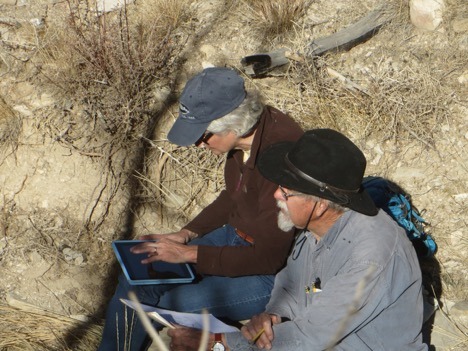
During a search for the contact point of two different Sheep Pass Formation rock units, Amy Henrici uses GPS-linked topographic maps in her iPad to locate the zone referenced in a stratigraphic map held by Richard Hilton.

by Patrick McShea

The frog fossil expedition workforce doubled briefly with the arrival of a two-person team affiliated with Sierra College in Rocklin, California. Earth Science professor Richard Hilton and field assistant Tina Campbell drove east from the Sacramento area, crossing the Sierra Nevada and a large portion of the Great Basin to meet us for two days of field work. They then proceeded to another fossil locality in the region to retrieve material discovered during earlier summer field work.

The Sheep Pass Formation within the South Egan Wilderness was familiar territory for both. In 2012 and 2013 they participated in larger expeditions to the area that involved not just Carnegie Museum of Natural History and Sierra College, but also the University of Nevada at Las Vegas.

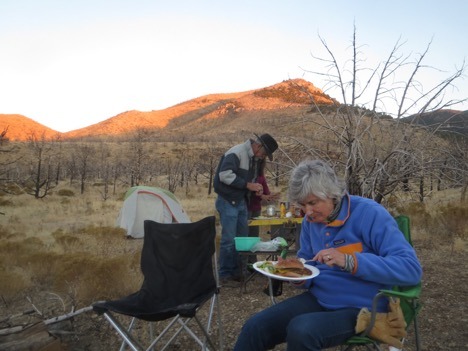
Because Hilton is chairmen of Sierra College’s natural history museum,  our fireside conversations included the potential for using blog posts to broaden the audience for information about paleontological field work. Through the combination of his generosity, two-burner stove, and culinary skills, camp meals also improved.

paleontologists eating at campsite
Dinner at dusk, including Caesar salad, baked beans, and hamburgers.

Patrick McShea is a museum educator who is traveling through Nevada with Vertebrate Paleontology Collections Manager Amy Henrici to search for frog fossils. He frequently blogs about his experiences.

Filed Under: Blog Tagged With: Amy Henrici, fossils, frogs, paleontology

  • « Go to Previous Page
  • Page 1
  • Page 2
  • Page 3
  • Page 4
  • Page 5
  • Page 6
  • Interim pages omitted …
  • Page 8
  • Go to Next Page »

sidebar

About

  • Mission & Commitments
  • Directors Team
  • Museum History

Get Involved

  • Volunteer
  • Membership
  • Carnegie Discoverers
  • Donate
  • Employment
  • Events

Bring a Group

  • Groups of 10 or More
  • Birthday Parties at the Museum
  • Field Trips

Powdermill

  • Powdermill Nature Reserve
  • Powdermill Field Trips
  • Powdermill Staff
  • Research at Powdermill

More Information

  • Image Permission Requests
  • Science Stories
  • Accessibility
  • Shopping Cart
  • Contact
  • Visitor Policies
One of the Four Carnegie Museums | © Carnegie Institute | Privacy Policy | Terms of Use | Accessibility
Rad works here logo