• Skip to primary navigation
  • Skip to main content
  • Skip to primary sidebar

Carnegie Museum of Natural History

One of the Four Carnegie Museums of Pittsburgh

  • Visit
    • Buy Tickets
    • Visitor Information
    • Exhibitions
    • Events
    • Dining at the Museum
    • Celebrate at the Museum
    • Powdermill Nature Reserve
    • Event Venue Rental
    • Gift Cards
  • Learn
    • Field Trips
    • Educator Information
    • Programs at the Museum
    • Bring the Museum to You
    • Guided Programs FAQ
    • Programs Online
    • Climate and Rural Systems Partnership
  • Research
    • Scientific Sections
    • Science Stories
    • Science Videos
    • Senior Science & Research Staff
    • Museum Library
    • Science Seminars
    • Scientific Publications
    • Specimen and Artifact Identification
  • About
    • Mission & Commitments
    • Directors Team
    • Museum History
  • Tickets
  • Give
  • Shop

gems and minerals

October 10, 2018 by wpengine

Fred the Crystal Skull

by Debra Wilson
Fred the Crystal Skull

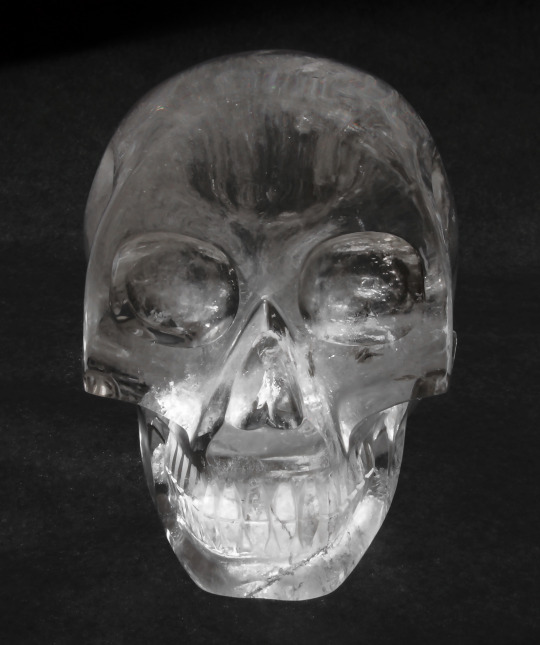
Just about every year since the Carnegie Museum of Natural History acquired it, Fred the Crystal Skull has made an appearance in Hillman Hall of Minerals and Gems right around Halloween. So how did we acquire a crystal skull and how did it get the name Fred you ask? Just to set the record straight right off the bat, Fred is not one of the dozen or so mysterious skulls that some think were carved by an ancient Mesoamerican civilization thousands of years ago. Our skull was carved and polished from a single quartz crystal with modern tools in Brazil and was donated to the museum in 2004 by South American Gems, Ltd located in Guarapari, Espirito Santo, Brazil.Germany, China and Brazil currently produce thousands of carved crystal skulls every year in numerous sizes. Fred measures 7.8 inches high by 5 inches wide, which is slightly smaller than the average human skull (8 to 9 inches high and 6 to 7 inches wide) so he was named after a man of small stature, namely the step father of the former Head of the Section of Minerals Marc Wilson. Marc was Section Head from August 1992 to August 2017.
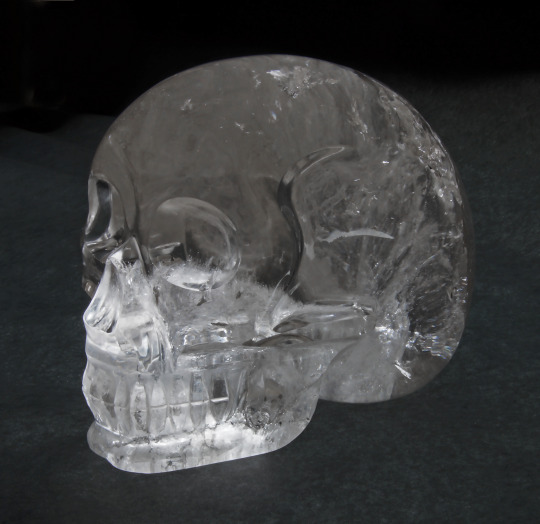
Fred the Crystal Skull side view

As you can see in the photograph of Fred, he has some internal flaws and fractures which is very common in the mineral quartz. Chemical impurities, physical flaws and twinning in natural quartz are issues that caused industry to develop a commercial process of manufacturing pure, electronics-grade quartz that can be used in circuits for consumer products such as televisions, radios, computers, cell phones and electronic games, just to name a few, and for crystal-controlled clocks and watches. As it so happens, the Section of Minerals also has a few lab-grown quartz crystals in the collection, including a large crystal nicknamed The Football that is nearly a foot across.
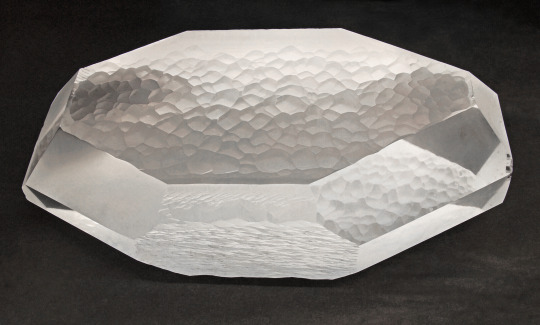
the football crystal

You will notice it is so clear that you can see the growth patterns of the bottom surface through the crystal. The Football was part of a donation of 57 lab created specimens given to the Section of Minerals in 2017 by Lynn Boatner just before he retired from Oak Ridge National Laboratory in Tennessee.

Debra Wilson is the Collection Manager for the Section of Minerals at Carnegie Museum of Natural History. Museum employees are encouraged to blog about their unique experiences and knowledge gained from working at the museum.
Related Content

Born to the Purple

How Do You Preserve A Giant Pumpkin?

Early Bats: Ancient Origins of a Halloween Icon

Filed Under: Blog Tagged With: Debra Wilson, gems and minerals, halloween, Hillman Hall of Minerals and Gems, minerals and gems, quartz, Science News

August 6, 2018 by wpengine

BBQ Chips

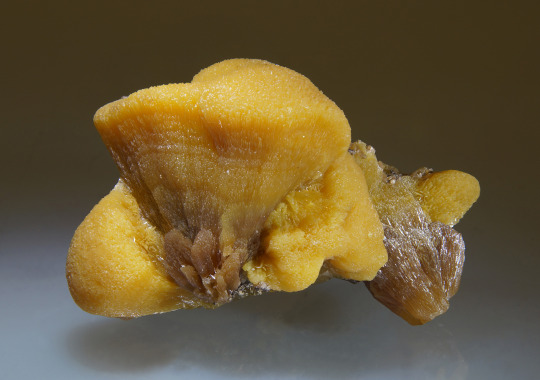
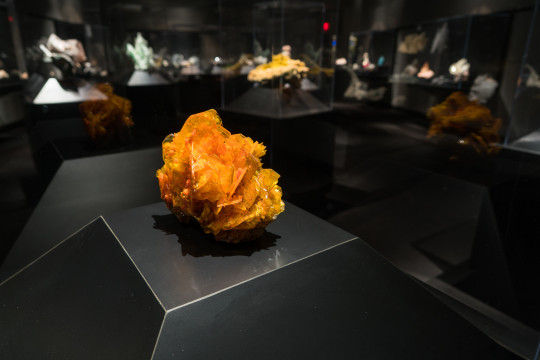
wulfenite with mimetite

How about some BBQ chips with your burger?

Just kidding! BBQ chips is the nickname for this wulfenite with mimetite specimen on display in the Masterpiece Gallery.

Filed Under: Blog Tagged With: gems and minerals, Hillman Hall of Minerals and Gems, minerals

August 1, 2018 by wpengine

Manhattan Project Glass

By Debra Wilson

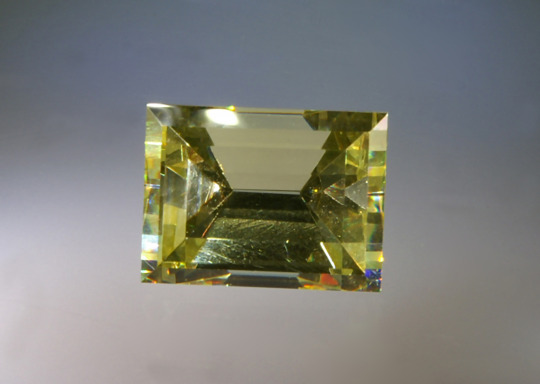
Manhattan Project glass specimen

The Section of Minerals collection contains many specimens with interesting stories of historical significance. One such story is about an unusual faceted stone.

As part of the Manhattan Project, the mission of the Hanford Site in Benton County, Washington was to produce plutonium for the atomic bomb. This included the first bomb tested at Trinity Site in New Mexico and the Fatman bomb that was dropped on Nagasaki to end World War II in 1945. The viewing windows that the scientists looked through in the chemical processing buildings (AKA plutonium recovery buildings, where the plutonium was being extracted from the fuel rods) were made of 70% lead to protect them from the highly radioactive material they were working with.

When the buildings began being salvaged in 1990, five of these radiation windows were sent to a salvage yard in Walla Walla, Washington, where they were stored in a warehouse. Sometime during the two decades of storage one of the panes shattered. When the broken pieces were sold, Patrick Kelley of PAK Designs in North Carolina was able to acquire two pieces. He faceted the Rectangular Baguette Cut, 51.4 carat gemstone in 2013 that now resides in the Section of Minerals collection. Note the yellow color of the glass due to the high lead content.

This stone is now on display in the Treated & Synthetic Stones case in Wertz Gallery.

Debra Wilson is the Collection Manager for the Section of Minerals at Carnegie Museum of Natural History. Museum employees are encouraged to blog about their unique experiences and knowledge gained from working at the museum.
Related Content

Beauty From the Ashes

What Does Pittsburgh Have in Common With Mount Vesuvius?

Master of Optical Illusion

Carnegie Museum of Natural History Blog Citation Information

Blog author: Wilson, Debra
Publication date: August 1, 2018

Share this post!

  • Share on Twitter Share on Twitter
  • Share on Facebook Share on Facebook
  • Share on Pinterest Share on Pinterest
  • Share on LinkedIn Share on LinkedIn
  • Share on Reddit Share on Reddit
  • Share via Email Share via Email

Filed Under: Blog Tagged With: Debra Wilson, gems and minerals, Hillman Hall of Minerals and Gems, minerals

July 2, 2018 by wpengine

Wire Silver

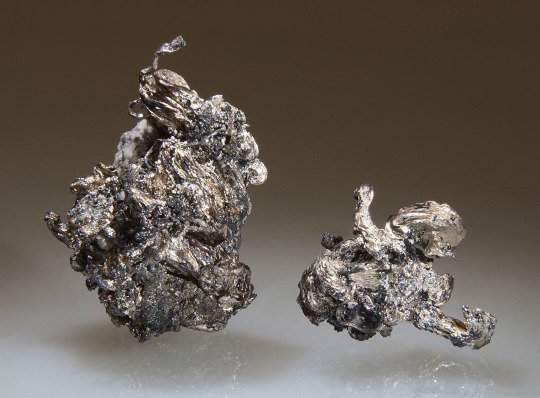
image

You might not recognize these at first glance, but these new specimens in Hillman Hall are a common metal: silver. Wire silver from China to be exact. It is hard to imagine pieces like these are the same material as delicate jewelry, isn’t it? Get a close look at these specimens in the Native Elements case in the Systematic Collection.

Photo by Debra Wilson, Collection Manager, Section of Minerals

Filed Under: Blog Tagged With: gems and minerals, Hillman Hall of Minerals and Gems, minerals

June 25, 2018 by wpengine

Pyromorphite from Zambia

Pyromorphite from Zambia

Scanning electron microscope analysis has revealed that one of the specimens in our Phosphates case isn’t exactly what we thought it was at first.

Mimetite from Zambia is actually Pyromorphite from Zambia.

Many mimetite and pyromorphite specimens are nearly indistinguishable. Both are six-sided crystals that come in colors like yellow, orange, brown, and green. They are brittle with similar levels of hardness and transparency. Energy-Dispersive X-ray Spectroscopy (EDS) was performed on this specimen using a Scanning Electron Microscope (SEM) which found levels of O (oxygen), Pb (lead), Cl (chlorine), and P (phosphorus) consistent with pyromorphitePb5(PO4)3Cl. Mimetite is Pb5(AsO4)3Cl.

See Pyromorphite Zambia on display in Hillman Hall of Minerals and Gems in the Systematic Collection.

Photo by Debra Wilson, Collection Manager, Section of Minerals

Filed Under: Blog Tagged With: gems and minerals, Hillman Hall of Minerals and Gems, minerals

June 4, 2018 by wpengine

Agate and Wooden Boxes

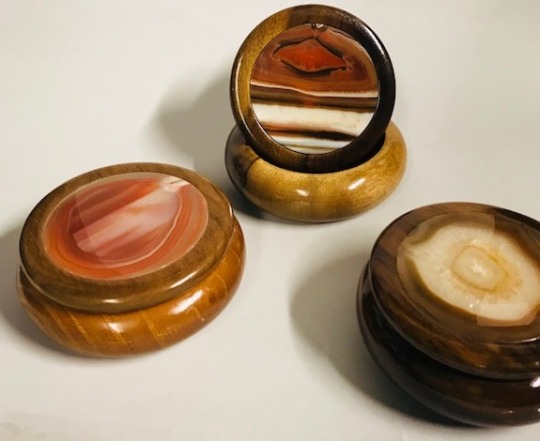
Agate and wooden boxes

Looking for a host or hostess gift that lasts longer than a bottle of wine?

Natural agate and wooden boxes made in Brazil are unique and useful.

Each lid is made of agate, a mineral that has as many different looks as you can imagine. Stripes, swirling clouds, and even moss-like patterns appear in agate. No two pieces are the same, every agate box is one of a kind.

Several pieces of agate from Brazil and around the world are on display in Hillman Hall of Minerals and Gems.

Filed Under: Blog Tagged With: gems and minerals, gift shop, minerals and gems

  • « Go to Previous Page
  • Page 1
  • Page 2
  • Page 3
  • Page 4
  • Page 5
  • Go to Next Page »

sidebar

About

  • Mission & Commitments
  • Directors Team
  • Museum History

Get Involved

  • Volunteer
  • Membership
  • Carnegie Discoverers
  • Donate
  • Employment
  • Events

Bring a Group

  • Groups of 10 or More
  • Birthday Parties at the Museum
  • Field Trips

Powdermill

  • Powdermill Nature Reserve
  • Powdermill Field Trips
  • Powdermill Staff
  • Research at Powdermill

More Information

  • Image Permission Requests
  • Science Stories
  • Accessibility
  • Shopping Cart
  • Contact
  • Visitor Policies
One of the Four Carnegie Museums | © Carnegie Institute | Privacy Policy | Terms of Use | Accessibility
Rad works here logo