• Skip to primary navigation
  • Skip to main content
  • Skip to primary sidebar

Carnegie Museum of Natural History

One of the Four Carnegie Museums of Pittsburgh

  • Visit
    • Buy Tickets
    • Visitor Information
    • Exhibitions
    • Events
    • Dining at the Museum
    • Celebrate at the Museum
    • Powdermill Nature Reserve
    • Event Venue Rental
  • Learn
    • Field Trips
    • Educator Information
    • Programs at the Museum
    • Bring the Museum to You
    • Guided Programs FAQ
    • Programs Online
    • Climate and Rural Systems Partnership
  • Research
    • Scientific Sections
    • Science Stories
    • Science Videos
    • Senior Science & Research Staff
    • Museum Library
    • Science Seminars
    • Scientific Publications
    • Specimen and Artifact Identification
  • About
    • Mission & Commitments
    • Directors Team
    • Museum History
  • Tickets
  • Give
  • Shop

insects

April 20, 2023 by

So Many Bugs!

  • Third Floor

Explore Bug Hall to learn about the creatures that make up more than 80% of all life on Earth: arthropods. Compare the varied colors of butterflies, moths, and beetles. See enlarged dioramas of where bugs live. Watch a slow-motion video to understand how bugs move.

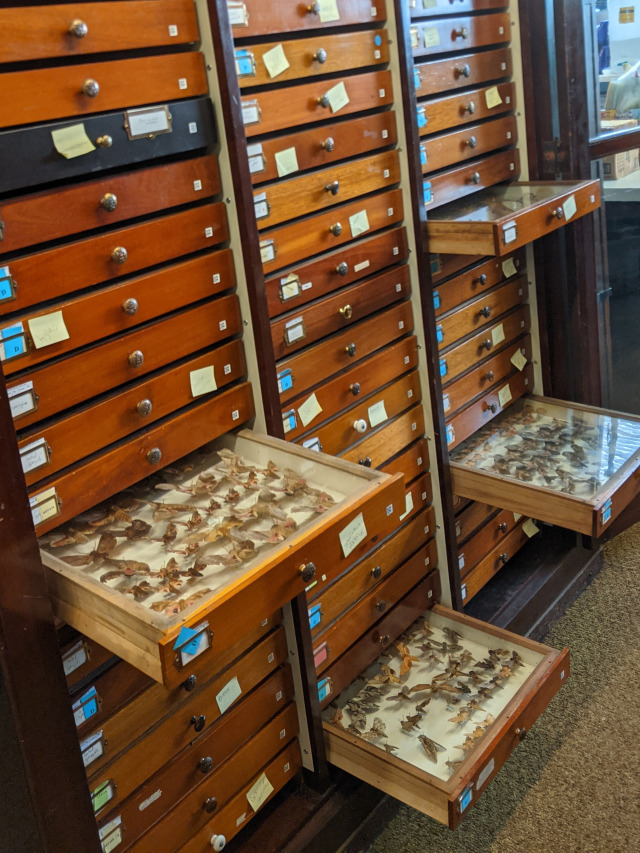
Behind the scenes, the museum’s invertebrate zoology collection houses 14 million pinned bug specimens in 30,000 drawers. Museum scientists use them in their research to better understand the world around us.
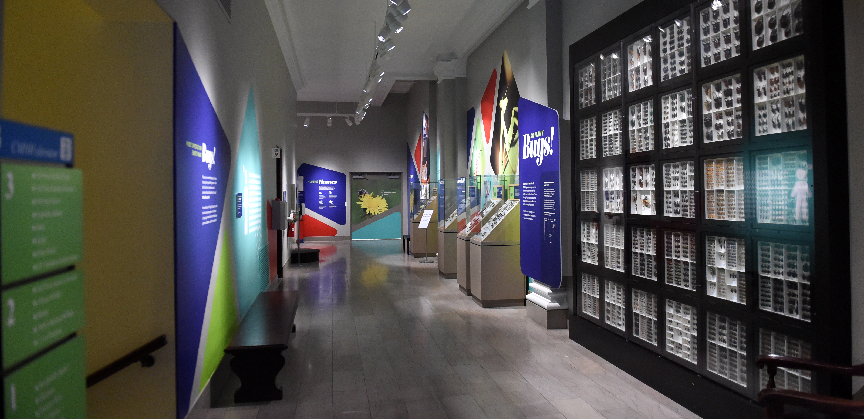
The brand new Bug Hall

Meet our Invertebrate Zoologists

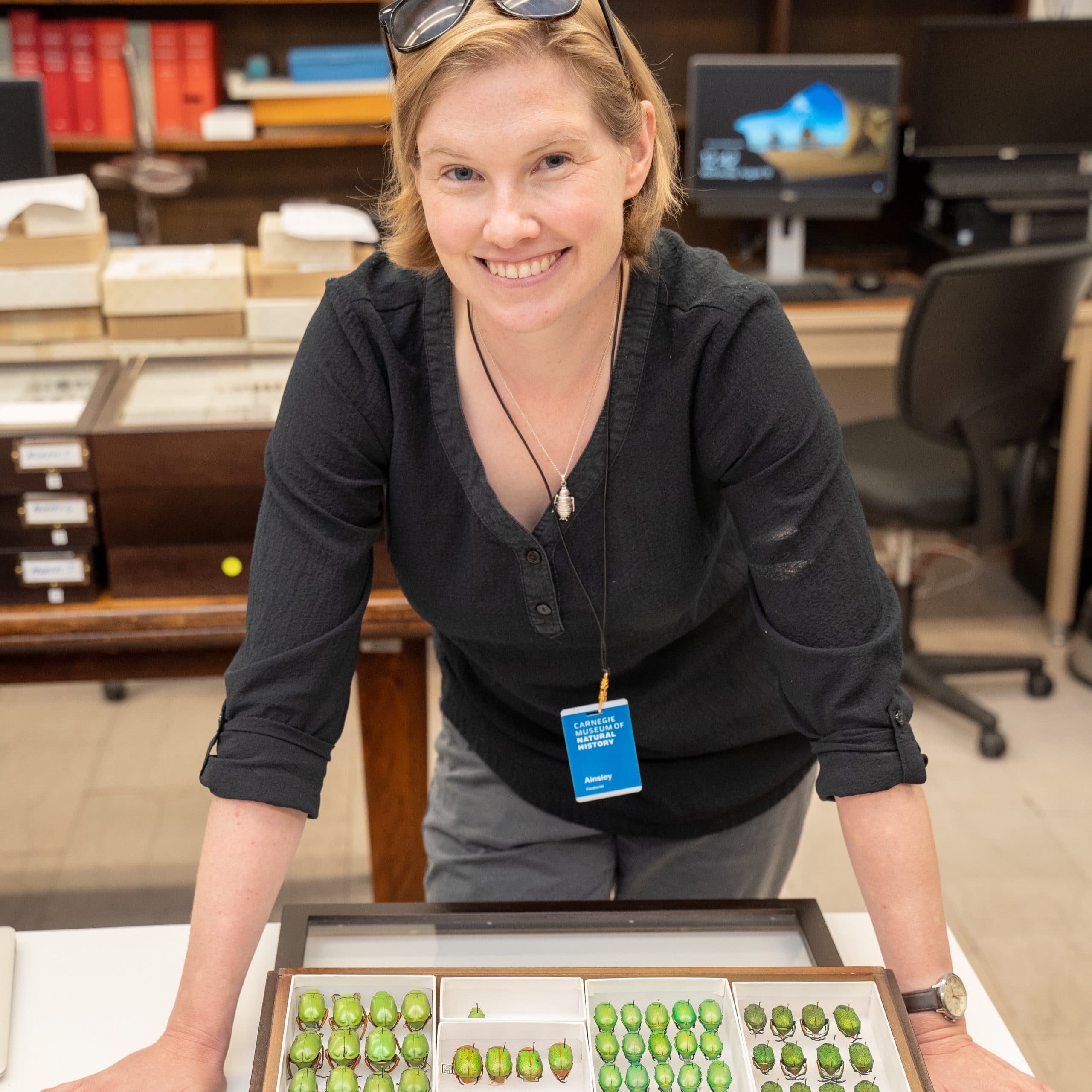
Ainsley Seago

Ainsley E. Seago, Ph.D.

Associate Curator, Invertebrate Zoology

Learn More

Fetzner, Jim

James W. Fetzner, Jr., Ph.D.

Assistant Curator

Learn More

Kevin Keegan

Kevin Keegan, Ph.D.

Collection Manager

Learn More
Bob Androw

Robert Androw, B.S.

Collection Manager

Learn More

Learn about the Invertebrate Zoology Collection at the Museum

Learn about the Section of Invertebrate Zoology

Blogs about Bugs

  • Do No Harm: Dealing with Spotted Lanternflies

    Do No Harm: Dealing with Spotted Lanternflies

    by Jonathan Rice Spotted lanternflies are a “true bug,” cousins of the cicada and stink bug. Unlike our native bug species, these …
  • Can’t Choose Just One: Asking an Entomologist to Name Their Favorite Native Species

    Can’t Choose Just One: Asking an Entomologist to Name Their Favorite Native Species

    by Bob Androw I was recently asked what my favorite native species of beetle is. A seemingly simple question, but one with …
  • Beyond the Simple Ecosystem Graphic: Teaching About Biodiversity and Pollination

    Beyond the Simple Ecosystem Graphic: Teaching About Biodiversity and Pollination

    by Pat McShea You probably remember some version of this graphic: simple line drawings linked by arrows to chart energy flow through …
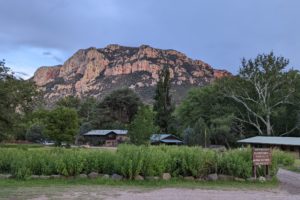
  • Two Perspectives on Attending a Course on Moths and Butterflies in the Southwest

    Two Perspectives on Attending a Course on Moths and Butterflies in the Southwest

    by Kevin Keegan and Vanessa Verdecia Kevin Keegan, Collection Manager of Invertebrate Zoology (IZ), and Vanessa Verdecia, Scientific Preparator for IZ, recently …
Filed Under: Uncategorized Tagged With: bugs, insects, Invertebrate Zoology

May 10, 2021 by wpengine

Natural History Discoveries

by Vanessa Verdecia

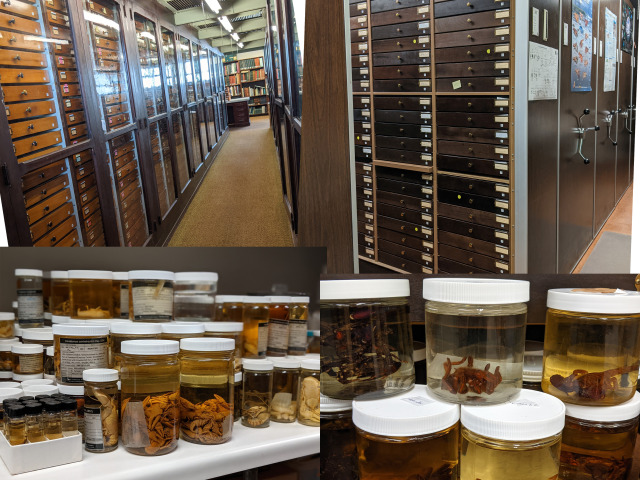
Collage of photos from the Section of Invertebrate Zoology. The top two photos show cabinets of drawers. The bottom two photos show jars of specimens preserved in liquid.

“Why do you collect so many?” That’s a common question we get from people who experience a glimpse into the Invertebrate Zoology collection at Carnegie Museum of Natural History. The Invertebrate Zoology collection, which consists of mostly insects, but also includes crayfish, spiders, and other invertebrates like millipedes and centipedes, is the largest collection at CMNH.

There are several reasons why we collect so many specimens. Nature is not always easy to interpret, even for the most knowledgeable scientists. In fact, an expert’s knowledge develops in part from time spent looking at many specimens, an unparalleled experience which helps create an accurate understanding of complicated species. So, one of the reasons we collect so many is to have enough material to look at and make informed decisions regarding species determinations. Some species can have significant variations across individuals. Having a lot of material also allows scientists to sacrifice some specimens for dissections or for use in molecular studies.

Another important reason for collecting so many is to create records of species occurring across as many geographical regions as possible and at different times of the year. By sampling and re-sampling, there is more data available to be analyzed and used to arrive at stronger conclusions. Having a historical collection is important for research that looks at species composition over time. Such collections help to answer questions about how biodiversity has been affected by climate change and other factors over time.

Collections as Scientific Tools

For these reasons, the insect collection at the Carnegie is an incredible scientific tool. We get many requests to borrow specimens, requests to visit the collection to gather data from the specimens, and requests for images of published specimens that are designated as types and deposited at CMNH. Type specimens are among the most scientifically valuable specimens, and the Invertebrate Zoology collection holds tens of thousands of specimens in type series that are referenced in scientific research and provide comparison material during the discovery of new species.

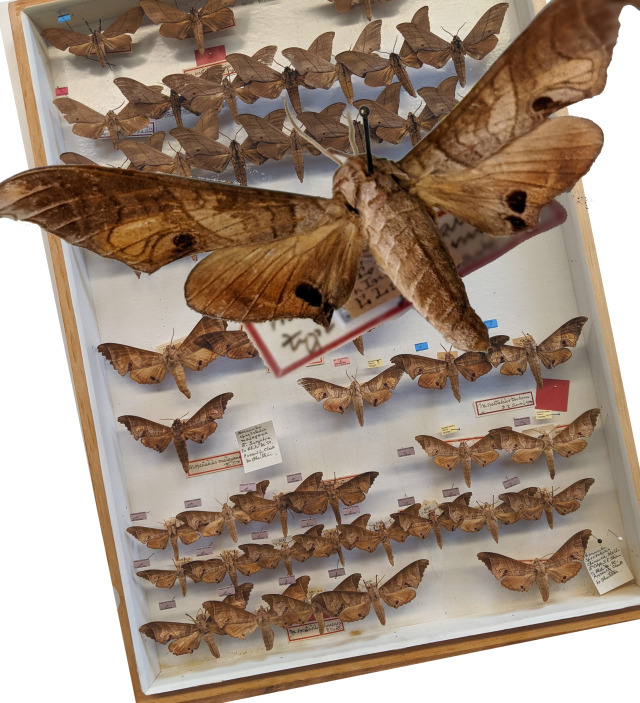
Drawer full of moth specimen with a larger moth over top.
Marumba drawer with types.

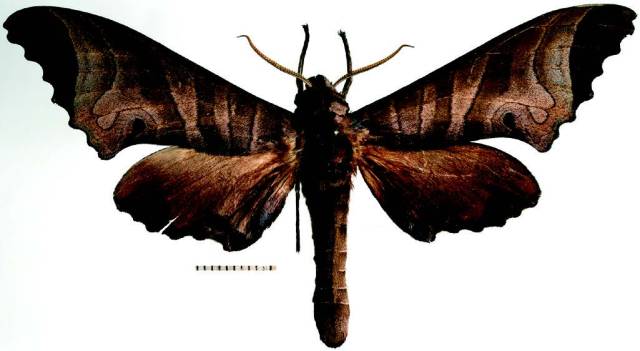
This background information leads to a nice little story for me to share. Sometimes requests for collection access come with a very special “thank you.” A request for images of type specimens in the Sphingidae (hawkmoths) collection earlier this year led to a publication that included new species, and instead of the usual acknowledgment, one of the authors named a new species after me—Marumba verdeciae. This type of taxonomic work, which involves making detailed observations related to the form and structures on the new specimens, requires the use of published museum specimens for comparative reference. Without access to the types, researchers would not be able to verify their discoveries, since comparison to the type material is essential in confirming the new species.

specimen of the moth Marumba verdeciae
Marumba verdeciae. Image from original description. Eitschberger, U. and H.B. Nguyen. 2021. Erster Schritt zur Revision des Marumba saishiuana auct. Artenkomplexes (nec Okamoto, 1924) (Lepidoptera, Sphingidae). Neue Entomologische Nachrichten 75: 123-327

Naming Species

Biological species are given a Latin name in the form of a genus and species. Placement of a species in a given genus is based on a biological relationship, but the species name is unique. There should be a section in the published work that explains the root of the name, which is often based on a Latin descriptive term related to a distinct feature of the species. However, sometimes a new species is dedicated to a person. In the case of Marumba verdeciae, the genus (Marumba) already existed, and one of the new species was dedicated to me as recognition of the effort I put into locating and imaging type specimens needed as a reference for the research the authors were doing with this group of moths. People might have a species dedicated to them for various reasons, which range from participating in or facilitating the research, to achieving prominence as an expert in a group of organisms. The species name verdeciae is a Latin conjugation of my last name, Verdecia.

The focus of this story, however, should be the importance of CMNH collections, and other museum collections across the world. In this case, the researchers in Germany needed to reference type specimens deposited at CMNH in order to complete their research. But CMNH scientists also need to borrow and request images of type specimens deposited at other museums when doing their research. Strong collaboration between scientists is very important. As stewards of our collections, we are not only maintaining the specimens for our use, but for use by the entire scientific community.

Cabinet of drawers with four drawers open showing specimens preserved inside.
Columns of Sphingidae protem.

Although it is an honor to have a new species named after me, the next step is the most exciting—the ongoing use of the new published work to hunt for specimens of the newly described species in our own collection. We have a vast collection in Invertebrate Zoology, and the moths and butterflies (Lepidoptera) comprise about 2/3 of the entire collection. There are many drawers with specimens that are not curated and there are over 100 drawers of mixed Sphingidae that, depending upon the geographical represented, might include some of the new species of Marumba. When new research like this is published, it allows curatorial staff to go into their collections to curate specimens, and update identifications. The Invertebrate Zoology collection is a work in progress, with many specimens waiting to be curated, and many discoveries yet to be made.

Vanessa Verdecia is Scientific Preparator in the museum’s Invertebrate Zoology Section. Museum employees are encouraged to blog about their unique experiences and knowledge gained from working at the museum.

Related Content

How to Prepare Insect Specimens

Ask a Scientist: What is a caterpillar database?

Garden for the Birds (or bees, or butterflies, or creepy crawlies, or you get the picture)…

Carnegie Museum of Natural History Blog Citation Information

Blog author: Verdecia, Vanessa
Publication date: May 10, 2021

Share this post!

  • Share on Twitter Share on Twitter
  • Share on Facebook Share on Facebook
  • Share on Pinterest Share on Pinterest
  • Share on LinkedIn Share on LinkedIn
  • Share on Reddit Share on Reddit
  • Share via Email Share via Email
  • Share on Twitter Share on Twitter
  • Share on Facebook Share on Facebook
  • Share on Pinterest Share on Pinterest
  • Share on LinkedIn Share on LinkedIn
  • Share on Reddit Share on Reddit
  • Share via Email Share via Email

Filed Under: Blog Tagged With: insects, Invertebrate Zoology, Science News, SWK2, Vanessa Verdecia

January 19, 2021 by wpengine

Insect metamorphosis: the key to a fresh new start

For many people, the new year represents an opportunity to make a fresh start, consider self-improvement, or turn over a new leaf. As in all fields of human endeavor, insects are way ahead of us and have already developed the ultimate technology for personal reinvention: metamorphosis.

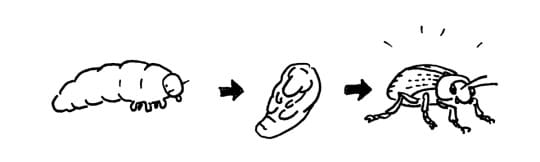
drawing of the stages of metamorphosis

Among entomologists, “metamorphosis” refers to the process by which a tiny hatchling insect becomes a fully functioning adult. This process can take place in two ways. Incomplete metamorphosis is the process by which an insect molts through a series of increasingly large, adult-like stages (“instars”) before completing the final molt into an adult. Insects that develop this way include grasshoppers, stink bugs, dragonflies, termites, and mantises.

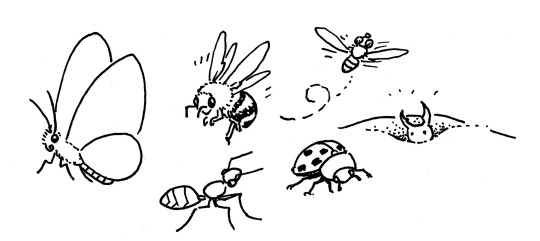
drawing of various insects including a butterfly, bee, and beetle


Complete metamorphosis, on the other hand, involves a (typically) worm-like larva which undergoes a quiescent, or inactive, pupal stage before reaching adulthood. Insects that undergo complete metamorphosis include beetles, ants, bees, wasps, lacewings and antlions, flies, and moths. These orders are often described as “holometabolous,” which simply means that their development includes pupation.

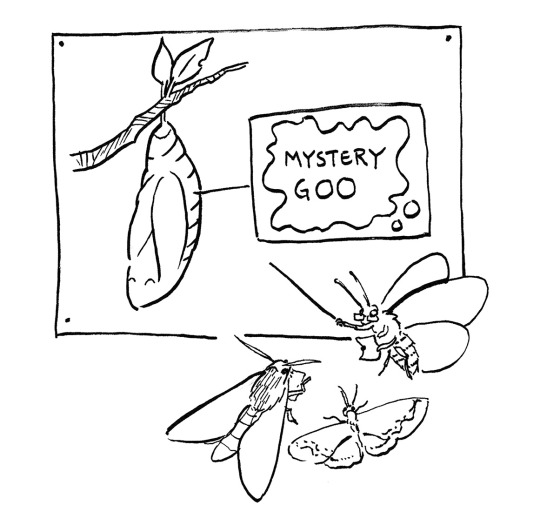
drawing of a moth teaching other moths about cocoons and turning to "mystery goo"


The process of pupation is fascinating and mysterious: essentially, the caterpillar zips itself up into a sleeping bag made of its own skin, turns to soup, and comes out a butterfly. How?

In fact, insect pupation remained a scientific mystery for many years, largely because of the difficulty in observing the pupation process without destroying or interfering with development. However, interfering with development turned out to be the key to understanding this process: early investigators (e.g. Jan Swammerdam, the 17th century microscopist) discovered that structures corresponding to the approximate positions of future wings could be dissected from within late stage, prepupal larvae. Several centuries later, the ability to induce fluorescence in selected cell lines allowed researchers to observe the activity of these future wings, legs, and antennae throughout larval development. This research led to the identification of what are now known as “imaginal discs.”

caterpillar wearing headphones holding a record called "I, Ron Butterfly"

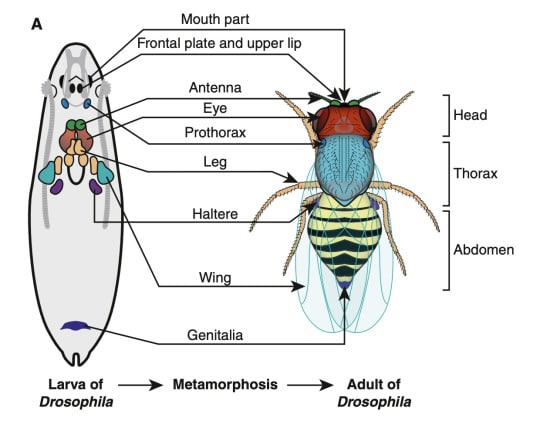
Here’s how it works: secret little collections of cells are formed during embryogenesis, and rest dormant inside the larva as it grows. The larva and its essential larval structures (usually the digestive system) grow larger, but the dormant cells do very little. These cells are known as imaginal cells and their aggregate structures are called imaginal discs (The term refers not to imagination, but to the imago, a synonym for the insect’s adult stage). The cells within these imaginal discs are largely dormant until a special cue— temperature, day length, growth, or otherwise— triggers the hormones that kickstart pupation. The larva forms a tough outer casing from its outermost exoskeleton or uses silk glands to create a protective nest (e.g. a cocoon).

metamorphosis diagram
Image source: Aldaz, S. and Escudero, L.M., 2010. Imaginal discs. Current Biology, 20(10), pp.R429-R431.

As pupation begins and the larval body breaks down into fluid, the imaginal discs begin to undergo rapid development, telescoping outward to form the longer legs, wings, antennae, mouthparts, and other complex adult body structures. The only remnants of the larva that stay functional are the tracheae, hollow tubes which allow it to breathe.

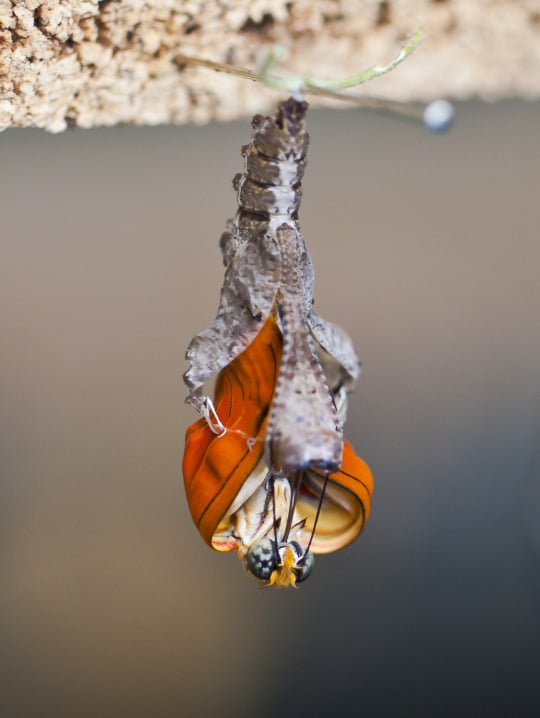
Once the adult structures are fully formed, they will remain soft in order to fit inside the now too-small pupa. The pupal case splits open, and the newly emerged adult insect forces air and fluid into its new wings to unfurl them fully before they harden.

butterfly emerging from cocoon
Image from Creative Commons.

Forming a hard outer casing and liquefying your existing body may not sound like an inspirational concept for the new year, but perhaps it should. The lesson of the butterfly is that the developmental foundations of the beautiful, functional adult were inside the awkward, squirmy larva all along. The imaginal cells were always there, just waiting to be awakened.

For more discussion of insect pupation and tips on using caterpillars to get kids into science, see this previous IZ blog post by Dr. Jim Fetzner, “Kids and Caterpillars: Fostering a Child’s Interest in Nature by Rearing Lepidoptera (Moth and Butterfly) Larvae.”

Ainsley Seago is Associate Curator of Invertebrate Zoology. Museum employees are encouraged to blog about their unique experiences and knowledge gained from working at the museum.

Related Content

O-Do-Nates or O-Don’t-Nates: Dragonflies and Damselflies in the Section of IZ

Looking for Bugs in Your Yard

Why One Bug Just Won’t Do…

Filed Under: Blog Tagged With: Ainsley Seago, insects, Invertebrate Zoology, Museum from Home, Science News

December 14, 2020 by wpengine

Oh deer, that’s a lot of parasites!

by Andrea Kautz

When a permitted hunter harvested a deer from Powdermill Nature Reserve in mid-November, I took the opportunity as an entomologist to inspect the hide for parasites. I was not surprised to find deer ticks and deer keds on the animal, but I was surprised by how many parasites there were, and the presence of two additional species of ticks not previously known from Powdermill.

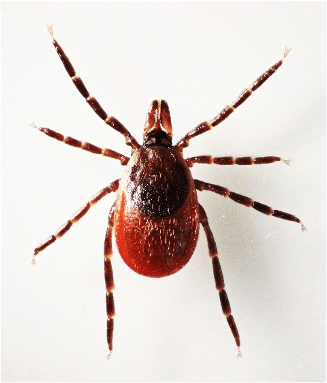
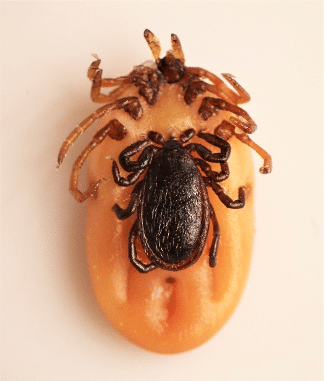
Deer ticks (Ixodes scapularis) are infamous to most Pennsylvanians as the main vectors of Lyme disease. Over 300 deer ticks were found on this single deer, so that should give you an idea of how they can be so abundant, especially in areas with high deer densities. Adult females (Picture 1) were mostly found attached to the skin, in the process of becoming engorged with blood. Many adult males were also found on the deer, but since they don’t require a blood meal, what were they doing on a host? It turns out, a deer is a great place to locate a mate! While the female is attached for days feeding on blood, a male can easily locate and mate with her by inserting his mouthparts into an opening on her ventral side. Many of the females removed from the deer had a male attached (Picture 2).

deer tick
female deer tick with male deer tick attached

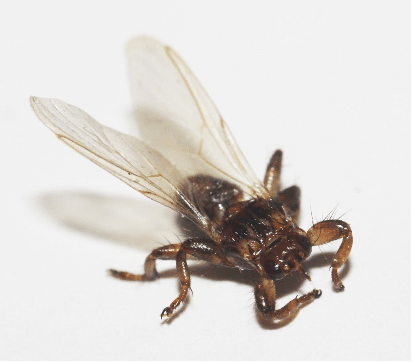
Deer keds (Lipoptena cervi) are sometimes called tick flies because of their resemblance to ticks (both are flattened dorsoventrally), but they behave rather differently. Keds move much faster than ticks, and don’t remain attached for long periods of time while feeding. They are indeed true flies, in the same group of insects as the typical house fly, but they remove their wings once they locate a host, to make it easier to move within the dense hair. The adult females and males both feed on blood, and the female carries one larva at a time internally, giving birth to a mature larva ready to pupate. This is rare among insects, which typically lay many eggs at one time. About 450 keds were collected off this one deer, so the strategy seems to be working for them!

deer ked

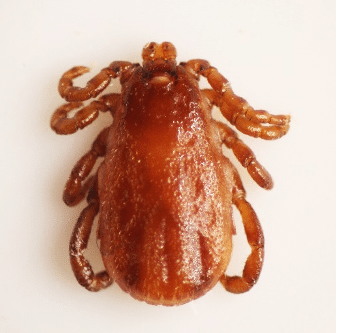
Winter ticks (Dermacentor albipictus) are closely related to the more familiar American dog tick (Dermacentor variabilis), but have a different life cycle. While most ticks utilize different hosts throughout their life cycle (feeding on three different animals as a larva, nymph, and adult), winter ticks spend their whole life on a single host, most commonly a deer, elk, or moose. They can be a serious problem for moose when infestations are severe. Three males of this species were collected off the deer. Although the winter tick has a broad distribution across North America, this trio represents the first Powdermill record.

winter tick

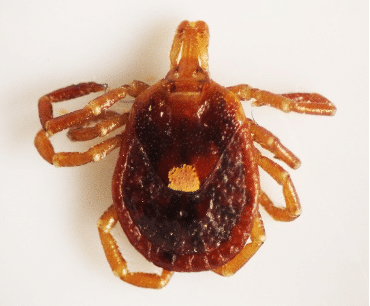
The fourth and final parasite recovered from the deer was a single female Lone Star tick (Amblyomma americanum). Easily recognized by the white dot on the back of adult females, Lone Star ticks are found across the eastern U.S. and use a variety of mammals and birds as hosts. This is our first time encountering this species at Powdermill as well!

Lone Star tick

Penn State is conducting a citizen science project called PA Parasite Hunters to learn more about deer parasitology and vector-borne diseases, so the keds and ticks we collected will be sent there in order to contribute to these important studies.

Andrea Kautz is a Research Entomologist at Carnegie Museum of Natural History’s Powdermill Nature Reserve. Museum employees are encouraged to blog about their unique experiences and knowledge gained from working at the museum.

Related Content

An Annual Return to My Bug-Loving Roots

Bobcats

Ask a Scientist: What are murder hornets?


Carnegie Museum of Natural History Blog Citation Information

Blog author: Kautz, Andrea
Publication date: December 14, 2020

Share this post!

  • Share on Twitter Share on Twitter
  • Share on Facebook Share on Facebook
  • Share on Pinterest Share on Pinterest
  • Share on LinkedIn Share on LinkedIn
  • Share on Reddit Share on Reddit
  • Share via Email Share via Email

Filed Under: Blog Tagged With: Andrea Kautz, insects, Museum from Home, Powdermill Nature Reserve, Science News

August 21, 2019 by wpengine

Lasius will Amaze-i-Us

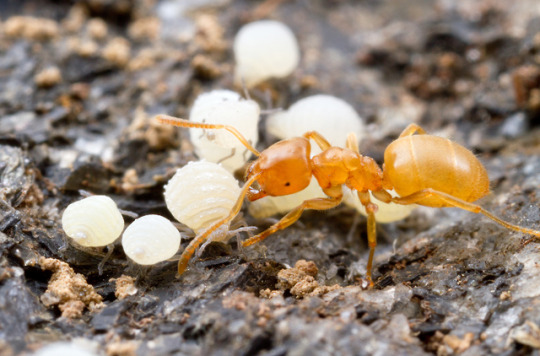
Lasius workers tending a flock of aphids underground. Photo by Alex Wild.

Common Lasius ants tend aphids that live underground feeding on plant roots. They protect the herd of aphids from other ants, and move them to more productive roots if the plant dies back. Sometimes the future queen will pick up an aphid in her mandibles and carry it along on the mating flight, and place it on a good root in the wall of the first nest chamber to start a new herd of aphids.

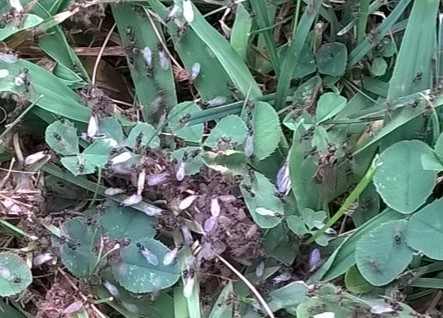
At this time of year, Lasius have their mating flights. A warm day with some rain in the afternoon to soften the soil, and then a clear sky near sundown would be perfect. The ants will be in the top of the nest, awaiting the exact right moment. Somewhere between about 4:00 pm and 7:00 pm, when the atmosphere is just right, workers dig several passages to the surface, and usually the small and slender male ants emerge first, taking flight quickly. Future queens, much larger than the workers or males, and bearing large wings, emerge next and take flight. All the colonies in the landscape where the weather is appropriate may emerge in a time span as short as five or ten minutes.  We found dozens of colonies of two species (below) emerging in an area of our lawn about 20 feet by 40 feet.

Silver wings of many male Lasius neoniger are obvious as they prepare to take flight. Photo by Donna Wenzel.

The many gossamer wings may give the impression of smoke rising from the soil. Swallows, swifts, and other birds will fly in circles snapping up the winged ants. The queens will mate with one or a few males, who die promptly, and then the queens will dig into the moist soil and create a chamber for her new nest, maybe with an aphid she carried along the way to start her new colony.

But the life of Lasius ants is not all pastoral peace and harmony. Two different methods of parasitic attack have evolved where a queen of one species of Lasius will invade the nest of a different species of Lasius to take it over. In one of these methods, the parasitic queen releases citronella, a lemon-like odor that is pleasant to humans but communicates alarm to ants. The workers avoid the invading queen who works her way into the chamber where the host queen is. Quickly, the parasitic queen accumulates the odor of the host colony, and the workers will not recognize her as an alien usurper.

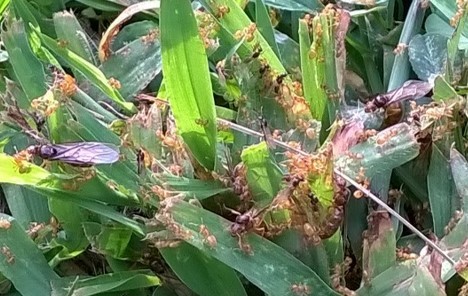
Here we see several large, winged Lasius claviger queens among many small workers, preparing to fly. These queens will parasitize mature colonies of other species, such as L. neoniger above. A few small, dark males are visible top, center. Photo by Donna Wenzel.

A different method used by some species is that the queen is very hairy or armored, and simply fights her way into the host nest. There, the invader may kill the host queen. By either method, the parasitic queen takes over the host nest, and the workers of the original colony, not knowing any better, spend their lives raising the offspring of the parasitic queen. As the original workers die out, the workers of the parasitic queen replace them until the colony is entirely of the parasitic species.

If you keep a sharp eye out at this time of year, you have a good chance of observing a mating flight of Lasius or another ant species, but you have to be in the right place at exactly the right time!

John Wenzel is the Director at Powdermill Nature Reserve, Carnegie Museum of Natural History’s environmental research center. Museum employees are encouraged to blog about their unique experiences and knowledge gained from working at the museum.

Filed Under: Blog Tagged With: bugs, insects, Invertebrate Zoology, John Wenzel, Powdermill Nature Reserve

August 6, 2019 by wpengine

Spiders as Interior Designers

by Megan Jones
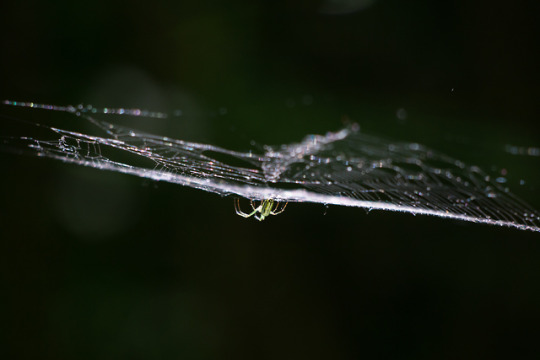
spider hanging from a spider web
A spider meticulously builds an orb web.

Did you know you can recognize a family group of spiders by the way a spider web is designed?  These web-making skills are important to a spider’s survival, and each style helps spiders catch prey in slightly different ways.

There are over 40,000 known species with different types of silk and designs. The most common four spider web designs you’ll see while exploring nature are orb webs, tangled webs, woolly webs, and sheet webs.

Silky Smooth Designs

Orb webs

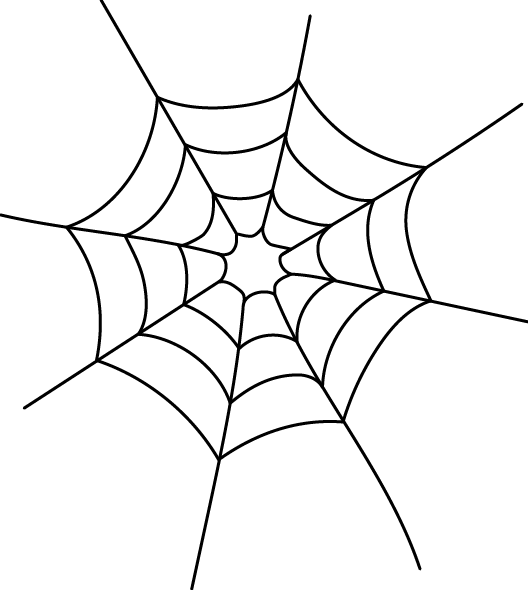
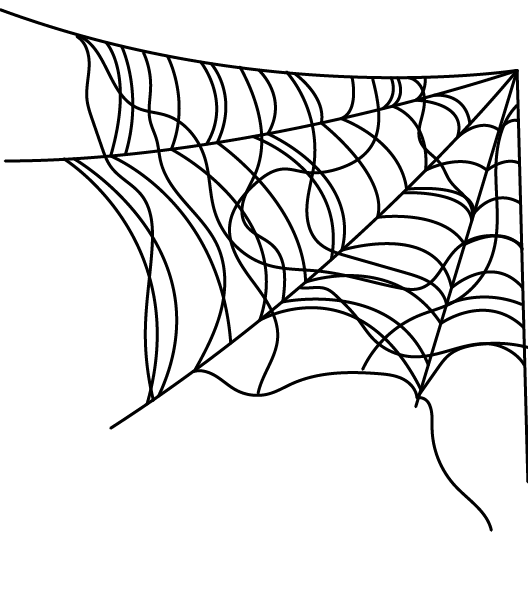
Orb webs are the classic looking spider webs with a wheel-shape that allows spiders to fully enter a vertical space. Orb webs help attract prey, catching up to 250 insects per day!

drawing of an orb web

Tangled webs

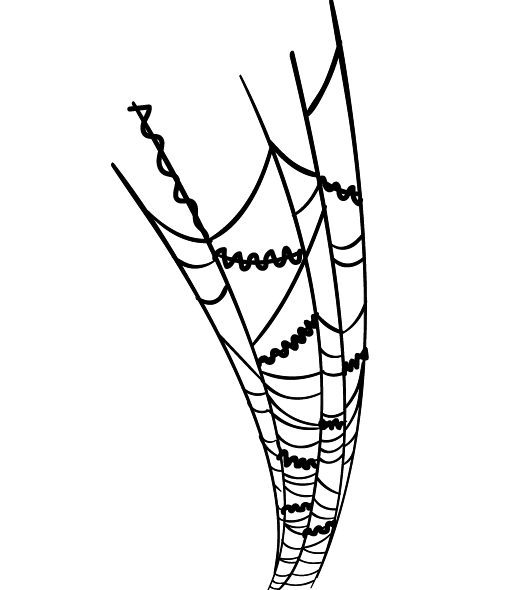
Tangled webs or cobwebs are known for their messy and shapeless design.

These are the webs you’ll see in the corner of an un-swept room. The ends of this web have sticky droplets that help catch unsuspecting prey.

drawing of tangled web

Woolly webs

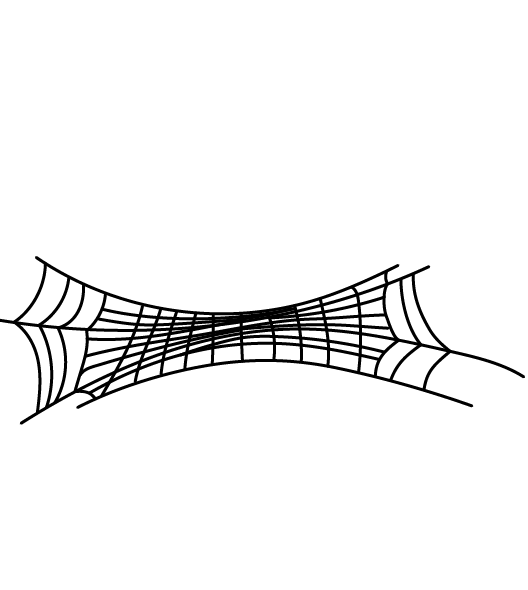
Woolly webs have a unique texture with adhesive silk. Woolly webs aren’t perfectly made but are usually built horizontally in a geometric shape.

drawing of woolly web

Sheet webs

Sheet webs can be found strung across bushes acting as a maze of silk. When an insect flies into one of the silk strings, it is knocked into a net below where the spider waits for its prey.

drawing of sheet web

Too Much Time On The Web

Spiders don’t just use their silk for web-building. They are known to use their silk as a trail behind them when hunting and as material for creating egg sacs. Some spiders even hang glide by sailing through the sky attached to strands of silk!

What Designs Are Around You?

Although most web designs are done with purpose, some spiders are known to actively decorate their webs. They creatively weave their webs daily. Now that you know what you’re looking for, even your backyard can be an adventure!

tangled spider web on a plant
A tangled web covers a plant in wait for prey to land.

Can You find all four types of webs around you? Draw a picture of each web you find!

Spider webs can be found anywhere. We recommend your backyard, the nooks and crannies of your porch, or even the corners of an undusted room in your house!

Blog post and illustrations by Megan Jones. Photos by Melissa Cagan. Museum employees are encouraged to blog about their unique experiences and knowledge gained from working at the museum.

Related Content

Spiders Catch All Sorts of Insects

Jumping Spiders

Natural History Discoveries

Carnegie Museum of Natural History Blog Citation Information

Blog author: Jones, Megan
Publication date: August 6, 2019

Share this post!

  • Share on Twitter Share on Twitter
  • Share on Facebook Share on Facebook
  • Share on Pinterest Share on Pinterest
  • Share on LinkedIn Share on LinkedIn
  • Share on Reddit Share on Reddit
  • Share via Email Share via Email

Share this post!

  • Share on Twitter Share on Twitter
  • Share on Facebook Share on Facebook
  • Share on Pinterest Share on Pinterest
  • Share on LinkedIn Share on LinkedIn
  • Share on Reddit Share on Reddit
  • Share via Email Share via Email

Filed Under: Blog Tagged With: Education, insects, Megan Jones, Melissa Cagan

  • Page 1
  • Page 2
  • Page 3
  • Page 4
  • Go to Next Page »

sidebar

About

  • Mission & Commitments
  • Directors Team
  • Museum History

Get Involved

  • Volunteer
  • Membership
  • Carnegie Discoverers
  • Donate
  • Employment
  • Events

Bring a Group

  • Groups of 10 or More
  • Birthday Parties at the Museum
  • Field Trips

Powdermill

  • Powdermill Nature Reserve
  • Powdermill Field Trips
  • Powdermill Staff
  • Research at Powdermill

More Information

  • Image Permission Requests
  • Science Stories
  • Accessibility
  • Shopping Cart
  • Contact
  • Visitor Policies
One of the Four Carnegie Museums | © Carnegie Institute | Privacy Policy | Terms of Use | Accessibility
Rad works here logo