• Skip to primary navigation
  • Skip to main content
  • Skip to primary sidebar

Carnegie Museum of Natural History

One of the Four Carnegie Museums of Pittsburgh

  • Visit
    • Buy Tickets
    • Visitor Information
    • Exhibitions
    • Events
    • Dining at the Museum
    • Celebrate at the Museum
    • Powdermill Nature Reserve
    • Event Venue Rental
    • Gift Cards
  • Learn
    • Field Trips
    • Educator Information
    • Programs at the Museum
    • Bring the Museum to You
    • Guided Programs FAQ
    • Programs Online
    • Climate and Rural Systems Partnership
  • Research
    • Scientific Sections
    • Science Stories
    • Science Videos
    • Senior Science & Research Staff
    • Museum Library
    • Science Seminars
    • Scientific Publications
    • Specimen and Artifact Identification
  • About
    • Mission & Commitments
    • Directors Team
    • Museum History
  • Tickets
  • Give
  • Shop

insects

July 31, 2019 by wpengine

Dressing Fleas

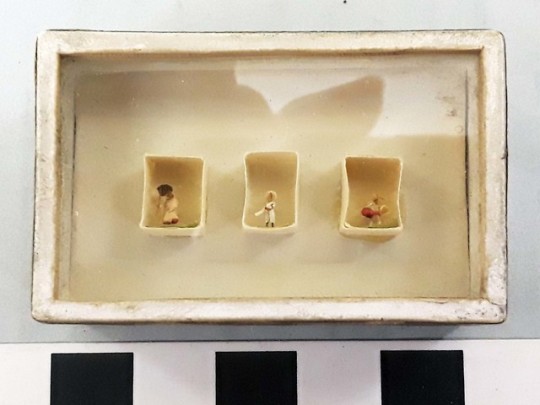
box of three dressed fleas

“If we do not mass produce products, we vie with one another
in the difficult, exquisite and useless art of dressing fleas”

Octavio Paz [diplomat, poet, writer, winner of 1990 Nobel Prize in Literature]

The art of dressing fleas in costumes and creating tiny tableaus began in Mexico in the 19th century, centered around the state of Guanjuato. Some people believe that Pulgas Vestidas (dressed fleas) began being made in convents; they went on to become a craft done by ordinary people. Eventually they became something to sell to tourists. Dressed fleas were still being created well into the 1930s, the most popular forms being bride and groom or farmer and wife sets. Some were as elaborate as an entire mariachi band, complete with instruments.
One set of dressed fleas from the Carnegie Museum of Natural History collection. Each block underneath this box represents just one centimeter! 

In the 1920s Octavio Paz called it a “difficult art, exquisite and useless,” and added, “I shall never be one to disparage this amazing skill, since where spiritual health is concerned, building a skyscraper and adorning a flea are each as monstrous as the other.” A British entomologist, Tim Cockerill, has taught himself how to make them, and includes a modern bride and groom set on his website.
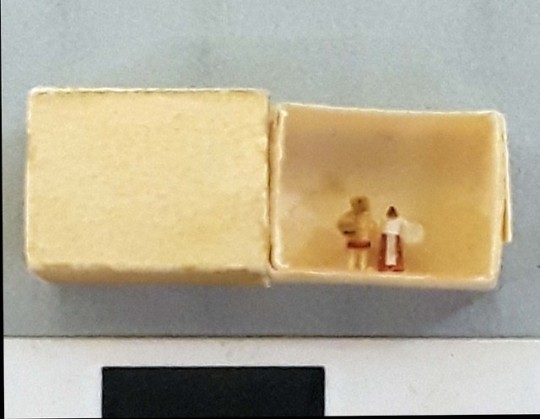
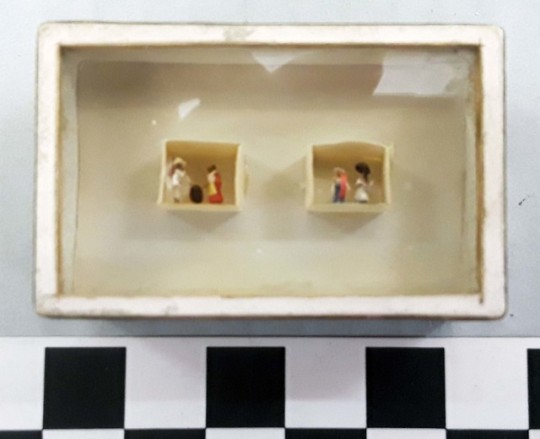
pair of dressed fleas in a box

The museum’s three sets of dressed fleas were acquired in the 1930s, and donated by different people in the late 20th century. They are part of an extensive collection of ethnographic and historic dolls. They are a must-see for anyone having a behind-the-scenes tour of the Anthropology storage areas. Dressed fleas are a prime example of human ingenuity and skill, even if a reason for being is not immediately obvious.

Deborah Harding is the collection manager of the Section of Anthropology at Carnegie Museum of Natural History. Museum employees are encouraged to blog about their unique experiences and knowledge gained from working at the museum.

Filed Under: Blog Tagged With: Anthropocene, anthropology, archaeology, art, Deborah Harding, insects

July 23, 2019 by wpengine

Brood VIII Birthday Bash

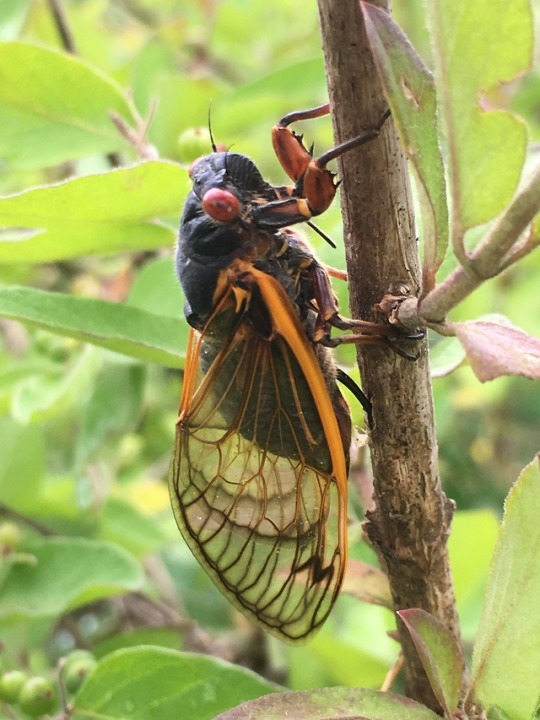
Photo by Andrea Kautz.

Millions upon millions of tiny cicada nymphs are being born. The periodical cicadas that emerged in our area (called “Brood VIII”) earlier this summer mated and laid eggs in the twigs of woody plants. Cicadas do not feed on twigs; they pierce the twigs on the underside, with a knife-like egg-laying tube called an ovipositor, and lay 10 to 20 eggs per incision. In the photo above, you can see the ovipositor behind the female’s back leg, inserted into the twig. At rest, the ovipositor would extend the length of the abdomen, so this one is about half embedded in the twig. In mid or late July, those eggs will hatch and the tiny nymphs will fall to the ground. They burrow down to find roots, where they will remain for 17 years, sucking plant juice.

Females can make dozens of separate incisions to lay hundreds of eggs in total. Because the cicadas need to leave their offspring on roots that will persist for 17 years, they prefer laying eggs in trees rather than shrubs, and tend to pick harder species, such as oaks, rather than softer woods like tulip poplar. Although they can feed on evergreen roots, the resinous nature of the sap in the twigs tends to suffocate the eggs, and they rarely lay eggs in evergreens. They can also feed on grass roots, and a big tree above a lawn becomes a popular egg-laying site. The many separate wounds on the twig interrupt water flow from the roots, and the twig often breaks or dies.

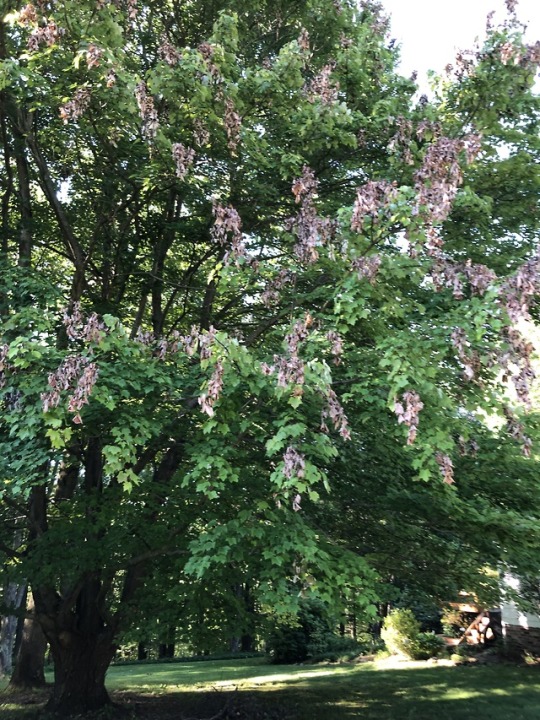
Photo by John Wenzel.

These damaged twigs are called “flagging” by cicada biologists, and they are a clear indicator of the density of females at a site.  This red maple over a lawn shows extensive flagging. A big tree may be supporting hundreds of thousands of eggs.

Photo by John Wenzel.

Despite the obvious damage to the tree, it appears that most trees do not suffer much unless they are little saplings. In fact, fruit tree farmers in the 1800s reported that their trees produced better crops the year after this natural pruning process.  Another benefit of the cicadas is that the millions of emergence holes open up the soil for air and water penetration and provide an avenue for nutrients at the top to pass into lower soil layers.  Although many people find the mass emergence of periodical cicadas to be annoying, they represent an inspiring and beneficial piece of our ecosystem, unique to eastern North America.

John Wenzel is the Director at Powdermill Nature Reserve, Carnegie Museum of Natural History’s environmental research center. Museum employees are encouraged to blog about their unique experiences and knowledge gained from working at the museum.
Filed Under: Blog Tagged With: Cicadas, insects, Invertebrate Zoology, John Wenzel, Powdermill Nature Reserve

May 22, 2019 by wpengine

O-Do-nates or O-Don’t-nates—Dragonflies and Damselflies in the Section of IZ

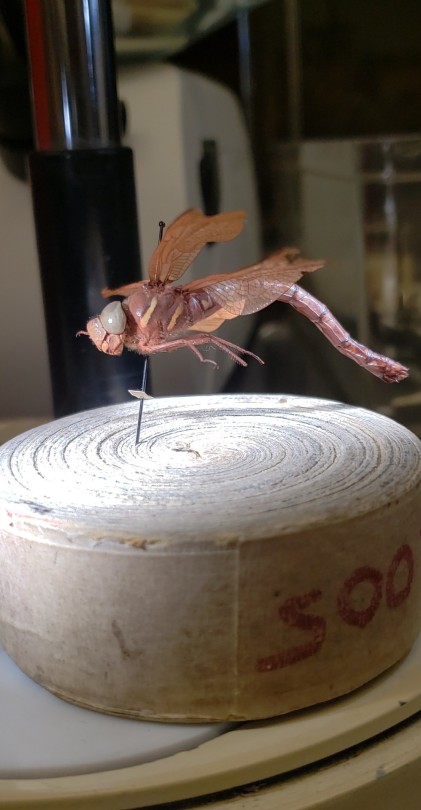
Here, in the section of Invertebrate Zoology, we have a large collection of moths (order Lepidoptera: particularly in the families Sphingidae and Noctuidae), beetles (order Coleoptera: particularly in the family Carabidae), and fleas (order Siphonaptera: from all over the world). However, one of the most interesting groups we have in our collection is the order Odonata (pronounced oh-DOE-naw-ta), also known as dragonflies and damselflies (Figure 1). Aquatic in their juvenile stages, these masters of air and water are stunningly beautiful in overall design and coloration, and are phenomenal hunters. Truly, these delicate predators are impactful and under-appreciated among insect taxa.

Figure 1. A pinned dragonfly, undetermined. Photograph taken by Catherine Giles.

Odonates are insects that undergo incomplete metamorphosis, and have three primary life stages: egg, nymph, and adult (or imago). Incomplete metamorphosis (also called hemimetaboly) is a process where juveniles look like miniature versions of the adults, but get larger over time. Organisms undergoing complete metamorphosis (also called holometaboly) have a pupal stage, and juvenile and adult stages appear very different. For example, a caterpillar turns into a pupa, before emerging as an adult moth or butterfly. Odonates can spend months or years in their nymphal stages, depending on the taxon. Most people (myself included!) are more familiar with the adult phase of an odonate’s life cycle, and see them darting around freshwater ponds and rivers, hunting to satiate their carnivorous diet.

Recently, I transferred our pinned and papered odonate material from one kind of drawer (USNM) into other drawers (Old Holland and Ortmann) due to space limitations in our collection. (For a refresher on drawer types found around the section, see the “Ants in our Pants and Bugs in Our Drawers” blog post!) Among much of our pinned material were numerous nymphal exuviae, or skins cast off by young, immature, juvenile odonates as they grew towards adulthood.

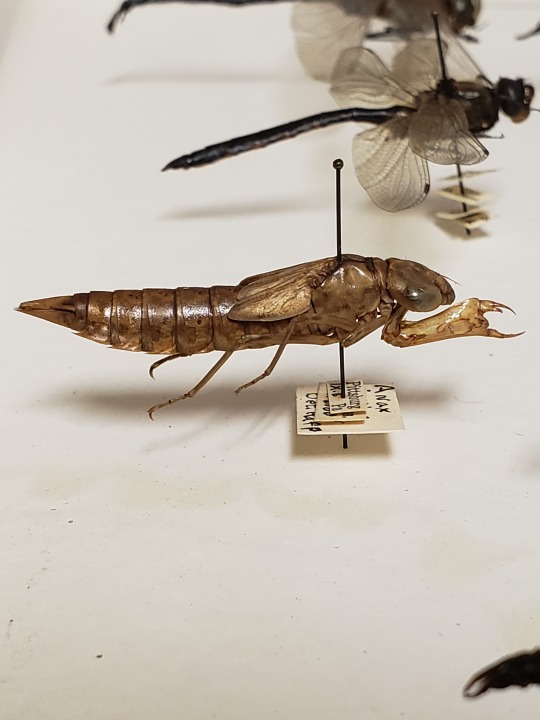
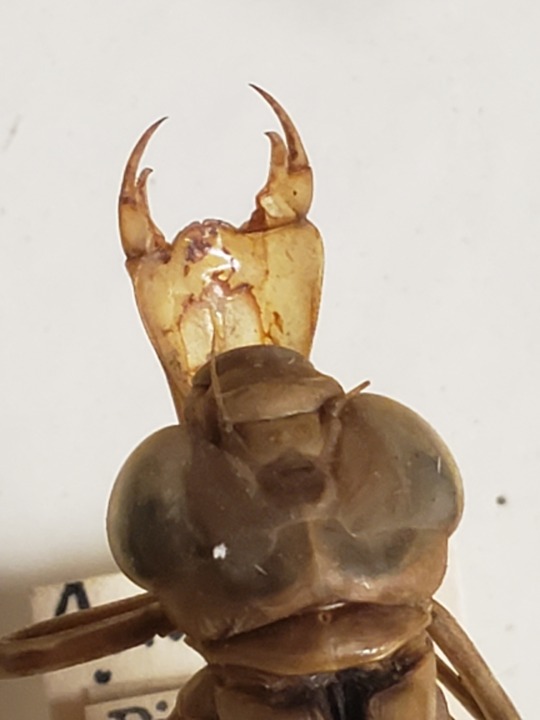
Pictured below is not a Hollywood monster, but rather a dragonfly nymph, Anax junius, in the family Aeshnidae, with the labium extended (Figure 2). While this image could be considered the stuff of nightmares, for an entomologist like me, it makes me excited! Nymphs use the labium to grab for prey in the water, and on the end of this particular specimen’s labium, you can clearly see additional pincers, used to grasp prey more securely. Pictured below is a close-up view of these pincers (Figure 3). Even as juveniles, dragonflies are top predators, making them masters of both water and air.

Figure 2. Nymphalexuviae of Anax junius. Photograph taken by Catherine Giles.


Figure 3. A close-up of pincers on Anax junius’s labium. Photograph taken by Catherine Giles.

At last count, we had approximately 40,000 pinned and papered odonate specimens in our collection. Having nymphal exuviae, like the ones pictured here, only enrich and enhance the diversity and magnificence of our insect collection here at the Carnegie.

Catherine Giles is the Curatorial Assistant of Invertebrate Zoology at the Carnegie Museum of Natural History. Museum employees are encouraged to blog about their unique experiences working at the museum.

Filed Under: Blog Tagged With: bugs, Catherine Giles, insects, Invertebrate Zoology

April 10, 2019 by wpengine

Another Reason to Love Ladybugs

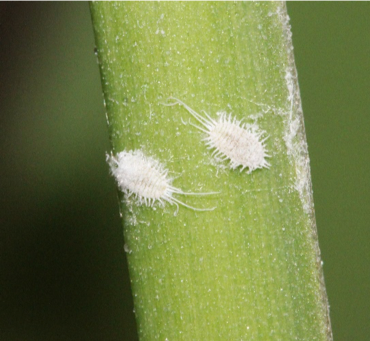
mealy bugs on plant

The Marsh Machine at Powdermill is great for recycling the nature center’s wastewater. It’s also great for building up huge populations of pests, such as aphids, scales, and mealy bugs (Picture 1). These plant-feeding insects thrive in the warm greenhouse environment, free from the natural predators they would encounter in an outdoor setting.

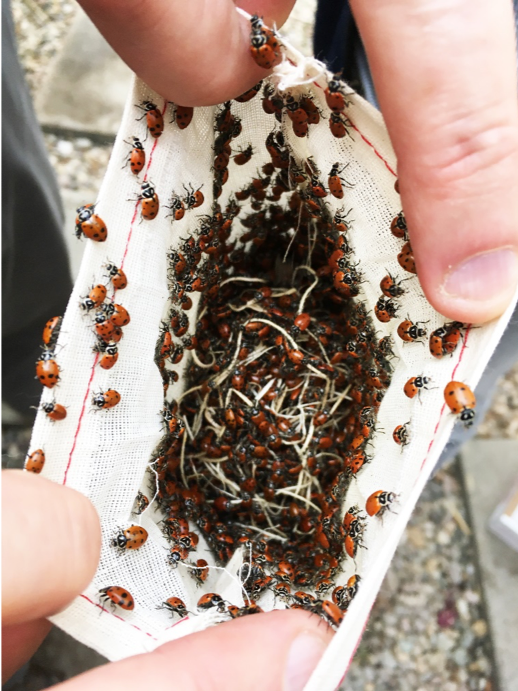
lady bugs crawling out of a canvas bag

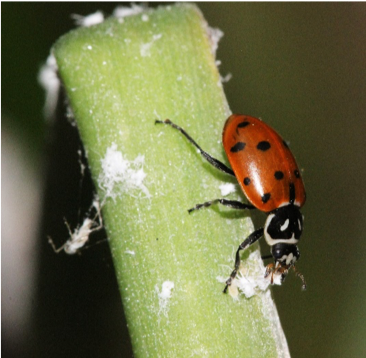
So what would be the logical solution to combatting these pests, which are highly destructive to the Marsh Machine plants that are working so hard to treat our wastewater? Bring the predators in, of course! The convergent ladybug (Hippodamia convergens), is a native predatory beetle that prefers just the types of insects that infest the Marsh Machine. We purchased 4,000 of these ladybugs (Picture 2) and have just released them into our greenhouse. The voracious predators immediately began their search and started feasting on a buffet of teeny bugs (Picture 3).

ladybug eating a mealy bug on a plant

According to our ladybug vendor, each adult ladybug can consume about 5,000 aphids in its lifetime! The adult females lay about 10-15 eggs a day, and the larvae that hatch out consume 50-60 aphids per day. At this rate, we anticipate our infestation will be under control in no time!

Note: While releasing ladybugs is an effective way to control greenhouse pests, releasing them outdoors generally results in the ladybugs flying away from the intended target, so keep this in mind when considering pest control options in your own backyard. Other options include eliminating the use of pesticides, which also kill the beneficial predators (and pollinators), and gardening with native plants, which are adapted to defend against native pests.

Andrea Kautz is a Research Entomologist at Carnegie Museum of Natural History’s Powdermill Nature Reserve. Museum employees are encouraged to blog about their unique experiences and knowledge gained from working at the museum.
Filed Under: Blog Tagged With: Andrea Kautz, Anthropocene, bugs, insects, Powdermill Nature Reserve

March 22, 2019 by wpengine

So, Just What is a Wheel Bug?

As March was approaching, I knew I was ‘on deck’ to produce a blog entry originating from our Section of Invertebrate Zoology. Looking at the calendar, I saw that the deadline would land around the 15th of the month, and something nagged at me about that date – what was the significance? Why, yes – the Ides of March was looming! Shakespeare’s Caesar failed to heed the warnings, and in the end… met his assassin…

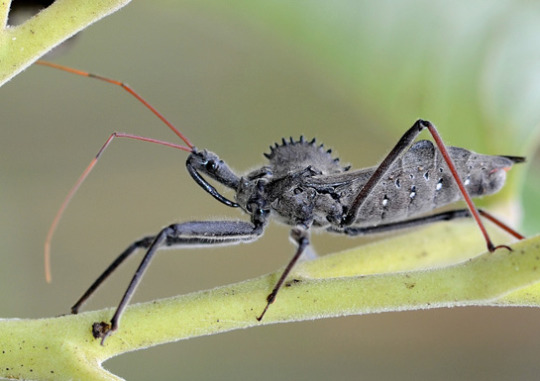
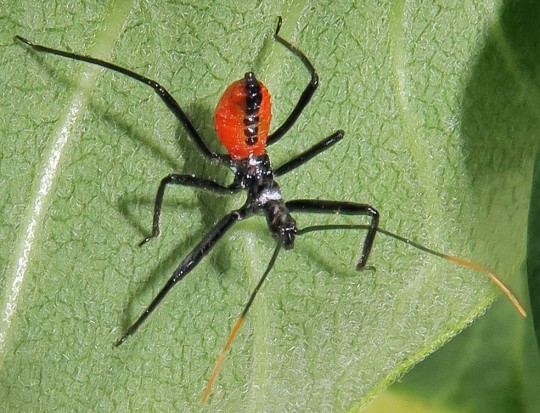
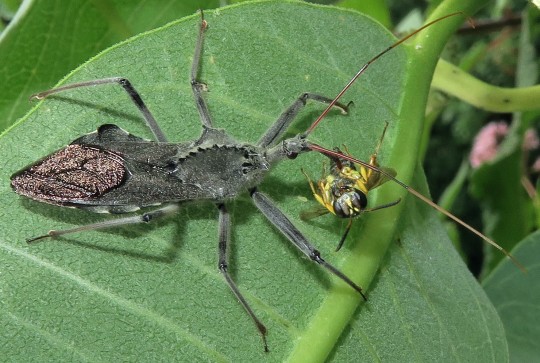
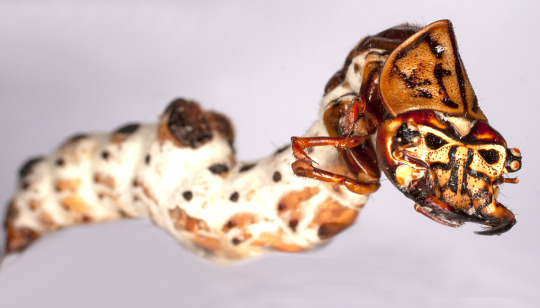
So, let’s take a look at an insect that carries the moniker of “assassin bug” – a species that possesses a bite of which everyone should truly beware. The insect is Arilus cristatus (Linnaeus), a species of ‘true bug’ in the order Heteroptera, in the family Reduviidae, collectively known as the assassin bugs. Arilus cristatus also carries the common name of ‘wheel bug’ due to the distinctive, serrated crest on its pronotum that in profile resembles a portion of a wheel or gear. No other insect in the United States possesses such a structure and the ‘wheel’ allows this species to be readily identified. In addition to the odd cog-like crest, the bug is large – nearly 1 ½ inches in length in mature adults and is dull gray in coloration. The immatures, or nymphs, look entirely different – they are small, bright red and lack the ‘wheel.’

Wheel bug, Arilus cristatus (Linnaeus) (Heteroptera: Reduviidae) (Image ©Rich Kelly, New Hyde Park, NY. Used with permission)

The wheel bug occurs throughout the southern half of the United States, ranging northward to the upper Midwest and southern New England. While Southwest Pennsylvania is within its natural distributional range, it appears to have become more common in our area over the last decade. People began bringing specimens into the museum for identification at an increasing rate starting around 10 or so years ago. While the evidence is anecdotal, the apparent increase in their abundance in our area could be a result of our changing climate – as our region becomes warmer on average, the environment becomes more suitable for the wheel bug, allowing it to thrive. Another potential factor for its increased numbers in our area is the introduction of an invasive species, the brown marmorated stinkbug, Halyomorpha halys Stål — a true bug species native to eastern Asia. With an increase in easily captured prey, the wheel bug may be exploiting this new food source. On a number of occasions, I have witnessed wheel bugs feeding on the introduced stinkbugs in the field.

Immature of the wheel bug, Arilus cristatus (Image ©Seth Ausubel, Washington Crossing, PA. Used with permission)

All of the reduviids are predatory on other invertebrates, using their beak-like mouthparts to pierce their prey and inject a powerful mix of enzymes that kills and begins digesting their prey from the inside, similar to the feeding habits of spiders. I can attest, from personal experience, to the extreme pain this insect can inflict by its bite. Wheel bugs, like many Insects, can be attracted to lights at night, and while collecting around some bright gas station lights some years ago, I foolishly decided to pick one up by the wheel with my bare fingers, assuming it could not reach me with its relatively short beak – and oh, how wrong I was! The initial bite was not terribly bad, but unusual, feeling like a tiny electrical shock. In less than a minute, however, a sharp, burning sensation began spreading the length of my thumb. The pain reached a crescendo in about 5 minutes and stayed at that level for several hours. The next day, the burning had subsided, but was replaced by a dull, throbbing ache that felt as if I’d smashed my thumb with a hammer. That discomfort persisted for a couple more days, yet oddly, there was no swelling and no obvious redness or sore at the site of the bite.

Arilus cristatus feeding on a hymenopteran (Image ©Seth Ausubel, Washington Crossing, PA. Used with permission)

While the bite of the wheel bug can certainly be a painful experience, and potentially worse in individuals that have a sensitivity or allergic reaction to the bite, they are rightfully considered a beneficial insect. Their predatory behavior helps rid gardens and forests of a wide variety of pest insects, from leaf-feeding beetles to caterpillars — a process of natural pest elimination known as biocontrol. So, if you should encounter a wheel bug — mid- to late summer is their peak time of activity — enjoy observing this odd insect and appreciate it for the role it plays in the environment. But heed my warning — resist any temptation to pick it up for a closer look!

Bob Androw is a Scientific Preparator in Invertebrate Zoology. Museum employees are encouraged to blog about their unique experiences and knowledge gained from working at the museum.
Filed Under: Blog Tagged With: Bob Androw, bugs, insects, Invertebrate Zoology

February 25, 2019 by wpengine

The Manticore

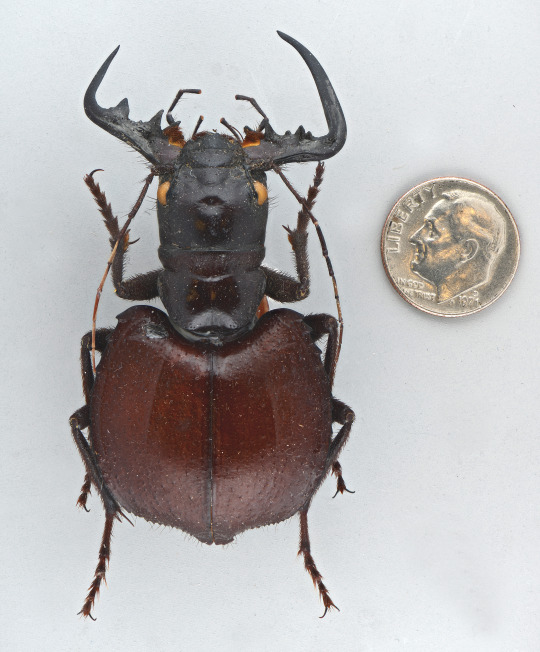
manticore specimen next to a dime for scale
Figure 1.  Adult male Manticora imperator, dorsal view (photo credit: V. Verdecia).

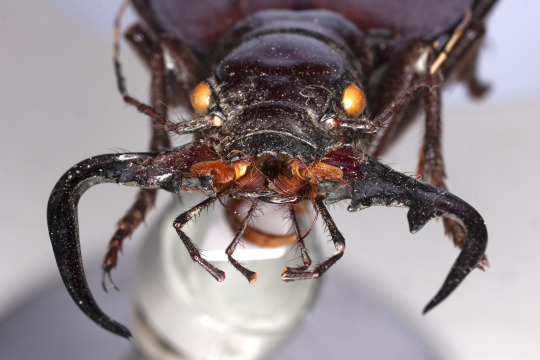
The Manticore.  In ancient Persia, a scary, man-eating monster with the head of a man, the body of a lion, and the tail and sting of a scorpion. In nature, one of the most spectacular of God’s favorite creatures, beetles (there are more beetle species than anything else living today).  The genus Manticora (“the one who devours men”) consists of 15 known species confined to the southern portions of Africa, mostly to the oldest geologic portions of that region, and mostly to open desert and dry savannah habitats. They are relatively primitive, flightless, predatory black tiger beetles of enormous size.  The males of some species are particularly spectacular, with huge asymmetrical mandibles, reaching the extreme in Manticora imperator, with a toothed left mandible and a larger right mandible bent like a sickle (Figures 1-2).  Mandibles in both sexes are used to attack prey, and, in males, also to combat other males and to clasp the female during copulation.

Figure 2.  Close-up of mandibles and maw of male M. imperator (photo credit: V. Verdecia).

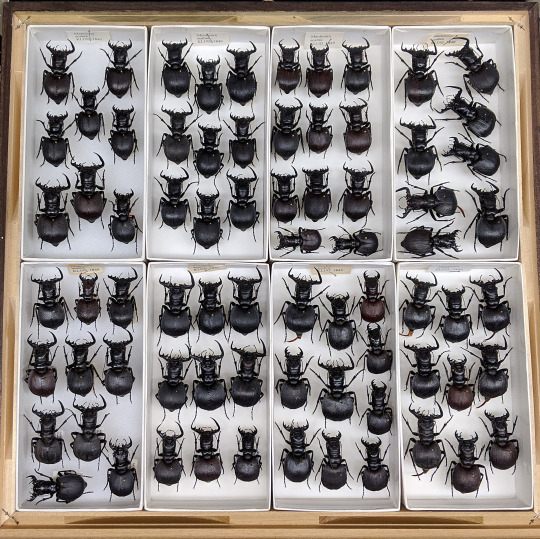
A recent donation gives Carnegie Museum of Natural History one of the best collections of these beetles in the world, nearly a thousand specimens, including all the species and subspecies.  This includes many of the types (specimens designated to represent the species when an author names a new animal or plant).  Long series of many of them (Figure 3) allows analysis of variation and distribution, addressing conservation issues, and has great potential for exhibit purposes.  Some of the species are now threatened, not by collecting, but by construction and development over their very limited habitats and ranges.

Figure 3.  Typical drawer from CMNH collection with several Manticora species (photo credit: V. Verdecia).

The larvae (Figure 4) look and behave more like tiger beetle larvae from other parts of the world, except that they are enormous.  They dig a vertical burrow up to a meter in depth, depending on substrate, which they can drop down into when disturbed.  The larval head is like a big armored plug with jaws attached.  In attack mode, they block the burrow entrance with the head (making the hole difficult to see) and wait.  There is also a large hook toward the rear on the larva’s back which makes it difficult for anything to dislodge it from the burrow. If something edible gets within striking distance, the larva throws its forebody out, grabs with its large jaws, and drags the prey into the burrow.

Figure 4.  Larva of M. mygaloides, antero-lateral view (photo credit: V. Verdecia).

Adults hibernate underground in a large chamber at the end of a tunnel that can be as much as a meter and a half in length.  Most are active from October to March after the summer rains, but they can wait a long time if necessary, until the unpredictable, erratic summer rains come. Activity is in the daytime, and they do not hesitate to attack other large armored beetles, or invertebrates that are larger than the attacker.  You have perhaps seen giant millipedes the size of a bratwurst in various insect zoos? There is a filmed instance of a Manticora finishing off and eating a 10-12 inch millipede, though the beginning of the event was missed, and it is possible the millipede was already injured. These are probably not the normal preferred prey of these aggressive beetles (the millipedes, that is, not the bratwursts, which are not known to occur in the wild).  But it still seems like quite a feat for an animal only about 20% the size of its dinner.

Bob Davidson is Collection Manager of Invertebrate Zoology at Carnegie Museum of Natural History. Museum employees are encouraged to blog about their unique experiences and knowledge gained from working at the museum.
Filed Under: Blog Tagged With: beetles, Bob Davidson, bugs, insects, Invertebrate Zoology

  • « Go to Previous Page
  • Page 1
  • Page 2
  • Page 3
  • Page 4
  • Go to Next Page »

sidebar

About

  • Mission & Commitments
  • Directors Team
  • Museum History

Get Involved

  • Volunteer
  • Membership
  • Carnegie Discoverers
  • Donate
  • Employment
  • Events

Bring a Group

  • Groups of 10 or More
  • Birthday Parties at the Museum
  • Field Trips

Powdermill

  • Powdermill Nature Reserve
  • Powdermill Field Trips
  • Powdermill Staff
  • Research at Powdermill

More Information

  • Image Permission Requests
  • Science Stories
  • Accessibility
  • Shopping Cart
  • Contact
  • Visitor Policies
One of the Four Carnegie Museums | © Carnegie Institute | Privacy Policy | Terms of Use | Accessibility
Rad works here logo