• Skip to primary navigation
  • Skip to main content
  • Skip to primary sidebar

Carnegie Museum of Natural History

One of the Four Carnegie Museums of Pittsburgh

  • Visit
    • Buy Tickets
    • Visitor Information
    • Exhibitions
    • Events
    • Dining at the Museum
    • Celebrate at the Museum
    • Powdermill Nature Reserve
    • Event Venue Rental
  • Learn
    • Field Trips
    • Educator Information
    • Programs at the Museum
    • Bring the Museum to You
    • Guided Programs FAQ
    • Programs Online
    • Climate and Rural Systems Partnership
  • Research
    • Scientific Sections
    • Science Stories
    • Science Videos
    • Senior Science & Research Staff
    • Museum Library
    • Science Seminars
    • Scientific Publications
    • Specimen and Artifact Identification
  • About
    • Mission & Commitments
    • Directors Team
    • Museum History
  • Tickets
  • Give
  • Shop

Invertebrate Zoology

May 10, 2021 by wpengine

Natural History Discoveries

by Vanessa Verdecia

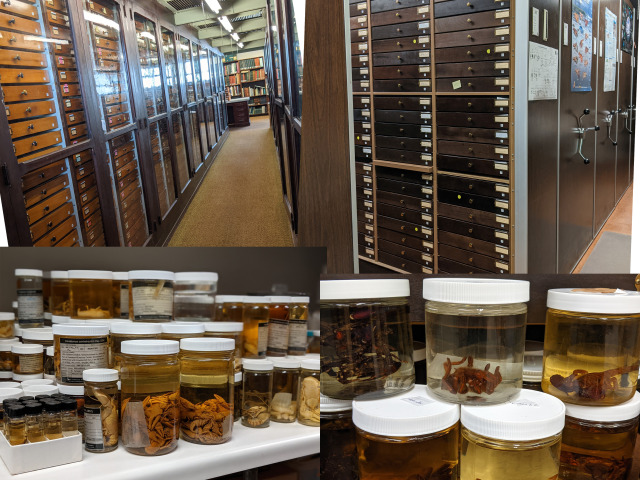
Collage of photos from the Section of Invertebrate Zoology. The top two photos show cabinets of drawers. The bottom two photos show jars of specimens preserved in liquid.

“Why do you collect so many?” That’s a common question we get from people who experience a glimpse into the Invertebrate Zoology collection at Carnegie Museum of Natural History. The Invertebrate Zoology collection, which consists of mostly insects, but also includes crayfish, spiders, and other invertebrates like millipedes and centipedes, is the largest collection at CMNH.

There are several reasons why we collect so many specimens. Nature is not always easy to interpret, even for the most knowledgeable scientists. In fact, an expert’s knowledge develops in part from time spent looking at many specimens, an unparalleled experience which helps create an accurate understanding of complicated species. So, one of the reasons we collect so many is to have enough material to look at and make informed decisions regarding species determinations. Some species can have significant variations across individuals. Having a lot of material also allows scientists to sacrifice some specimens for dissections or for use in molecular studies.

Another important reason for collecting so many is to create records of species occurring across as many geographical regions as possible and at different times of the year. By sampling and re-sampling, there is more data available to be analyzed and used to arrive at stronger conclusions. Having a historical collection is important for research that looks at species composition over time. Such collections help to answer questions about how biodiversity has been affected by climate change and other factors over time.

Collections as Scientific Tools

For these reasons, the insect collection at the Carnegie is an incredible scientific tool. We get many requests to borrow specimens, requests to visit the collection to gather data from the specimens, and requests for images of published specimens that are designated as types and deposited at CMNH. Type specimens are among the most scientifically valuable specimens, and the Invertebrate Zoology collection holds tens of thousands of specimens in type series that are referenced in scientific research and provide comparison material during the discovery of new species.
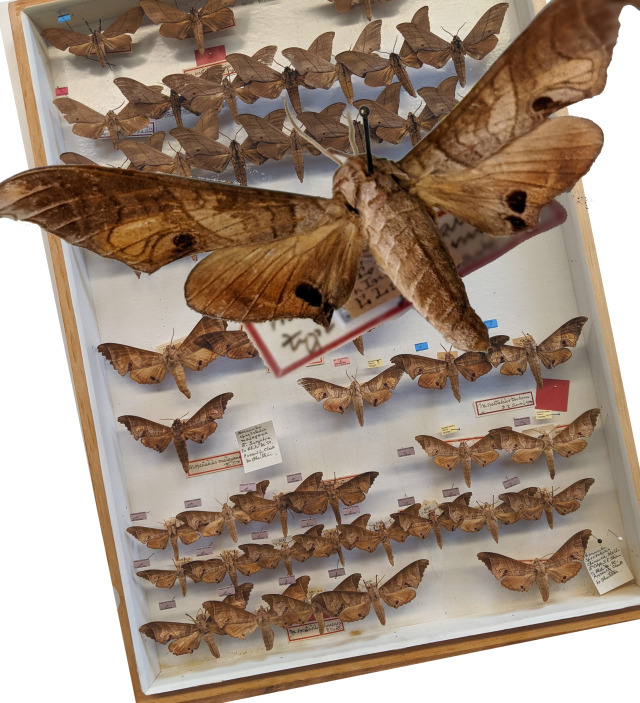
Drawer full of moth specimen with a larger moth over top.
Marumba drawer with types.

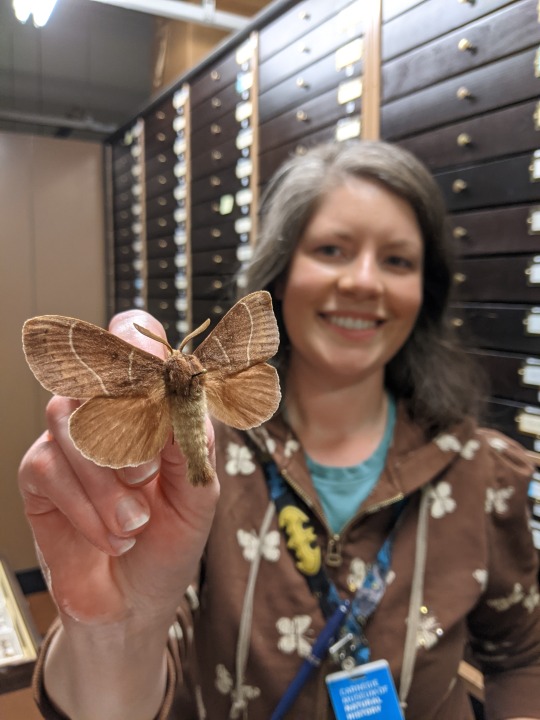
This background information leads to a nice little story for me to share. Sometimes requests for collection access come with a very special “thank you.” A request for images of type specimens in the Sphingidae (hawkmoths) collection earlier this year led to a publication that included new species, and instead of the usual acknowledgment, one of the authors named a new species after me—Marumba verdeciae. This type of taxonomic work, which involves making detailed observations related to the form and structures on the new specimens, requires the use of published museum specimens for comparative reference. Without access to the types, researchers would not be able to verify their discoveries, since comparison to the type material is essential in confirming the new species.
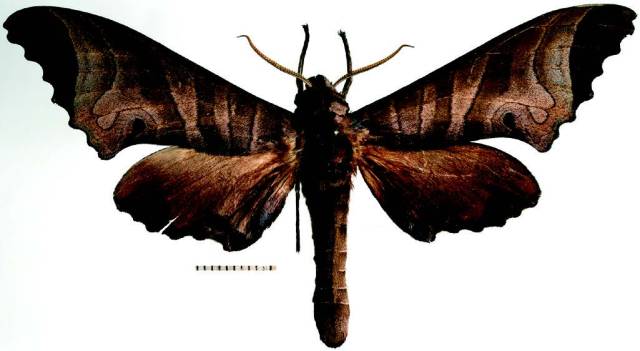
specimen of the moth Marumba verdeciae
Marumba verdeciae. Image from original description. Eitschberger, U. and H.B. Nguyen. 2021. Erster Schritt zur Revision des Marumba saishiuana auct. Artenkomplexes (nec Okamoto, 1924) (Lepidoptera, Sphingidae). Neue Entomologische Nachrichten 75: 123-327

Naming Species

Biological species are given a Latin name in the form of a genus and species. Placement of a species in a given genus is based on a biological relationship, but the species name is unique. There should be a section in the published work that explains the root of the name, which is often based on a Latin descriptive term related to a distinct feature of the species. However, sometimes a new species is dedicated to a person. In the case of Marumba verdeciae, the genus (Marumba) already existed, and one of the new species was dedicated to me as recognition of the effort I put into locating and imaging type specimens needed as a reference for the research the authors were doing with this group of moths. People might have a species dedicated to them for various reasons, which range from participating in or facilitating the research, to achieving prominence as an expert in a group of organisms. The species name verdeciae is a Latin conjugation of my last name, Verdecia.

The focus of this story, however, should be the importance of CMNH collections, and other museum collections across the world. In this case, the researchers in Germany needed to reference type specimens deposited at CMNH in order to complete their research. But CMNH scientists also need to borrow and request images of type specimens deposited at other museums when doing their research. Strong collaboration between scientists is very important. As stewards of our collections, we are not only maintaining the specimens for our use, but for use by the entire scientific community.
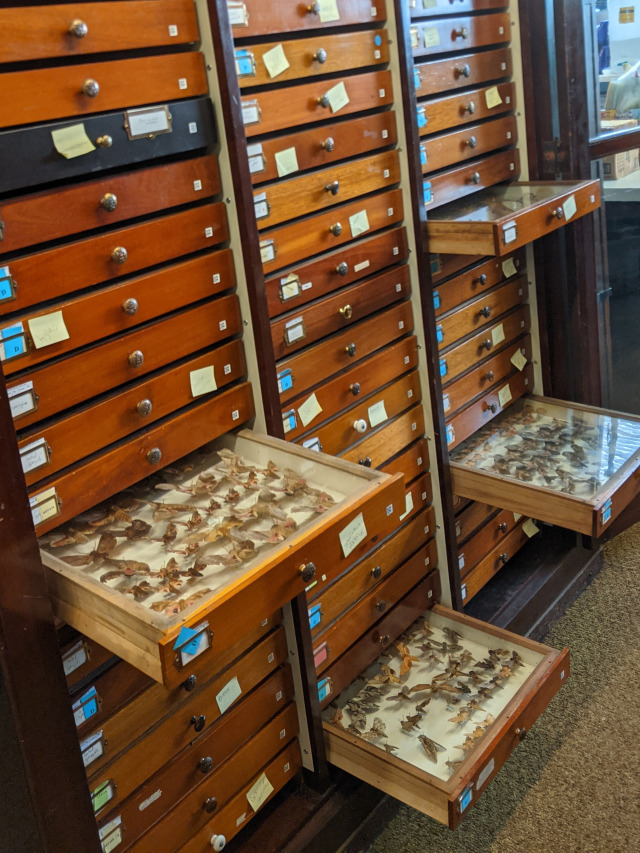
Cabinet of drawers with four drawers open showing specimens preserved inside.
Columns of Sphingidae protem.

Although it is an honor to have a new species named after me, the next step is the most exciting—the ongoing use of the new published work to hunt for specimens of the newly described species in our own collection. We have a vast collection in Invertebrate Zoology, and the moths and butterflies (Lepidoptera) comprise about 2/3 of the entire collection. There are many drawers with specimens that are not curated and there are over 100 drawers of mixed Sphingidae that, depending upon the geographical represented, might include some of the new species of Marumba. When new research like this is published, it allows curatorial staff to go into their collections to curate specimens, and update identifications. The Invertebrate Zoology collection is a work in progress, with many specimens waiting to be curated, and many discoveries yet to be made.

Vanessa Verdecia is Scientific Preparator in the museum’s Invertebrate Zoology Section. Museum employees are encouraged to blog about their unique experiences and knowledge gained from working at the museum.

Related Content

How to Prepare Insect Specimens

Ask a Scientist: What is a caterpillar database?

Garden for the Birds (or bees, or butterflies, or creepy crawlies, or you get the picture)…

Carnegie Museum of Natural History Blog Citation Information

Blog author: Verdecia, Vanessa
Publication date: May 10, 2021
Share this post!

  • Share on Twitter Share on Twitter
  • Share on Facebook Share on Facebook
  • Share on Pinterest Share on Pinterest
  • Share on LinkedIn Share on LinkedIn
  • Share on Reddit Share on Reddit
  • Share via Email Share via Email
  • Share on Twitter Share on Twitter
  • Share on Facebook Share on Facebook
  • Share on Pinterest Share on Pinterest
  • Share on LinkedIn Share on LinkedIn
  • Share on Reddit Share on Reddit
  • Share via Email Share via Email

Filed Under: Blog Tagged With: insects, Invertebrate Zoology, Science News, SWK2, Vanessa Verdecia

April 2, 2021 by wpengine

A Little Harbinger of Spring…

by Bob Androw

As I begin to write this, it’s early March, the sun is shining, the temperature outside is climbing over 50°F and I’m starting to think… “I need to go look for some deer poop!”

As an entomologist, I’ve developed a mental calendar not based on seasons or months… but rather on what species of insects are likely to be out and about on any given day of the year. Once summer arrives, the specificity disappears and it just becomes a question of whether it’s a “good bug day” or not – based entirely on the weather and my chances of prying myself out of the museum (or the house, in these new times) to go somewhere and chase them.

During autumn, the onset of wet weather and cooling temperatures gradually reduces the number of active insects. Like most organisms, I tend to head for shelter from the outside environment, settling indoors to wait out the winter. Of course, winter is time for “bug work” as well – but rather than hunting living specimens, time is dedicated to catching up on the lab work set aside during ‘collecting’ season. This entails pinning and labeling specimens collected earlier in the year, performing identifications, data-basing specimen records, and working on manuscripts.

But then there’s spring – that pivotal period that influences one to keep checking the weather forecast, hoping for warming days. This seemingly never-arriving season focuses one’s attention on how fast the last snow is melting off. It’s a time that has me searching for signs of plant shoots breaking the soil surface and tree buds exhibiting tiny slivers of green to announce the upcoming burst of foliage.

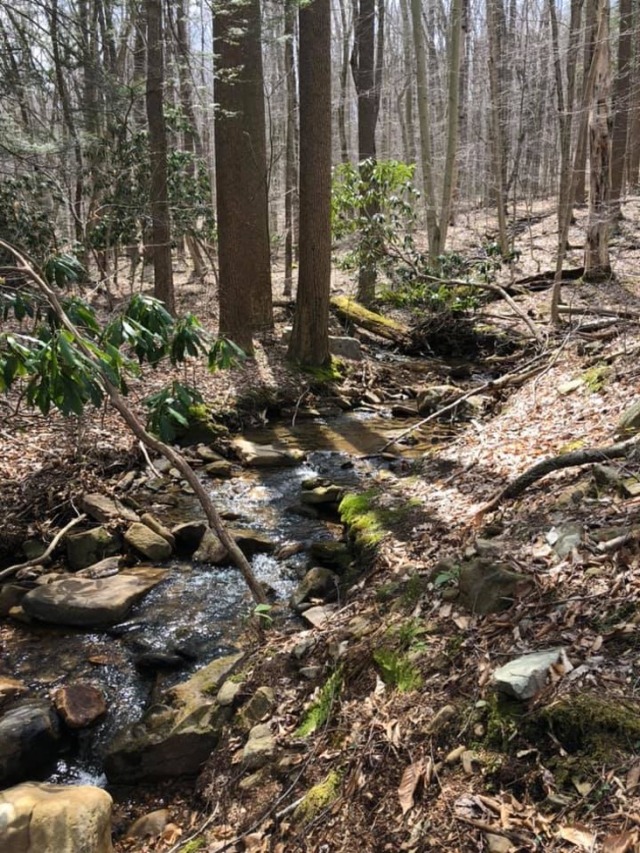
Hardwood forest habitat in late winter at Powdermill Nature Reserve in the Laurel Highlands of Pennsylvania. Image courtesy of the Powdermill Nature Reserve Facebook page.

Once these signs converge to indicate spring is just around the corner – it’s time to test the theory that winter is finally ending by – you got it! – going to look for deer poop!

Now, don’t get me wrong – deer regularly poop all year round – which is good for them – but during the first warm days of spring – or more accurately the warmest days of late winter – a little beetle becomes active and begins its own search for deer dung.

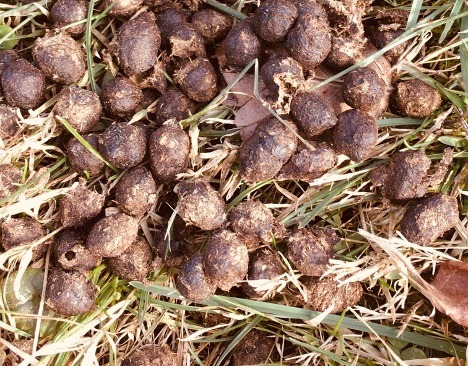
A typical pile of deer dung. The pellet in the lower left corner shows a hole created by a feeding beetle.

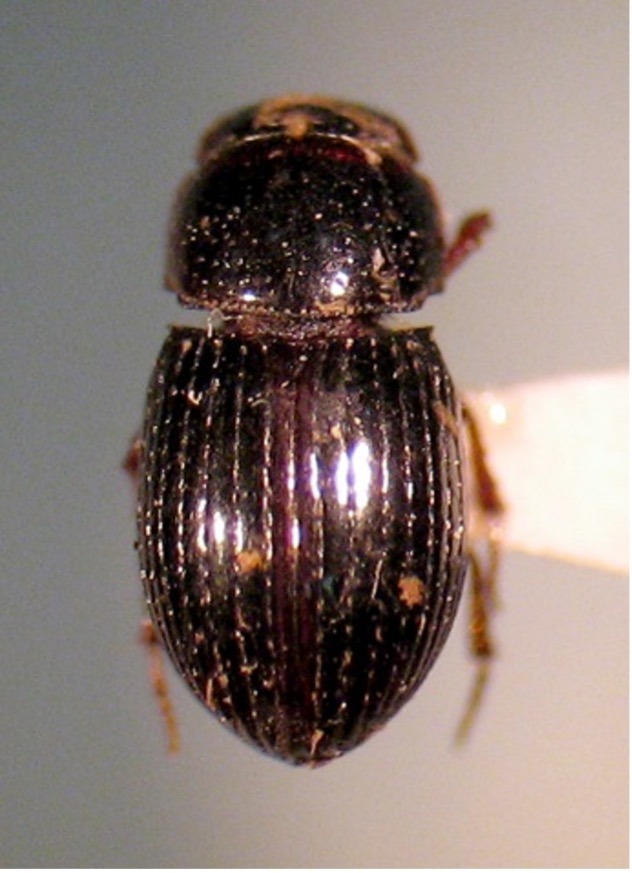
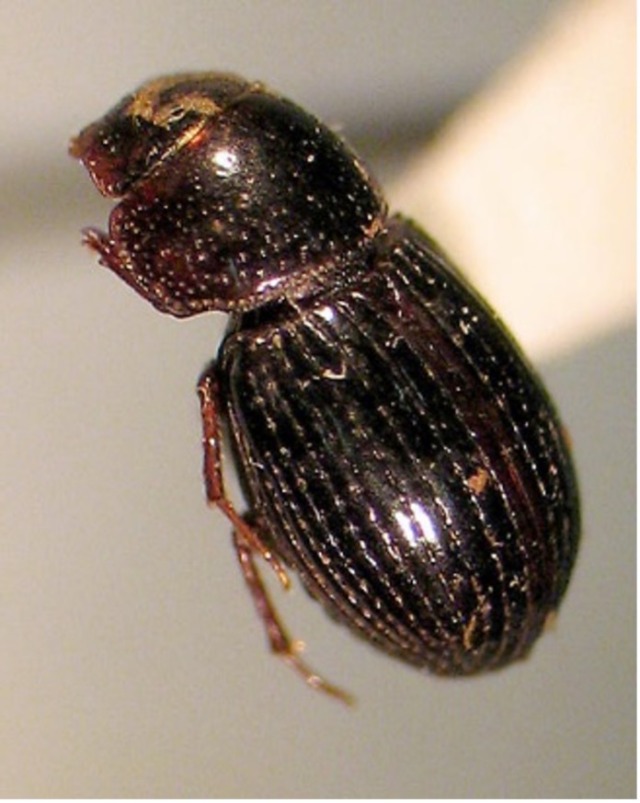
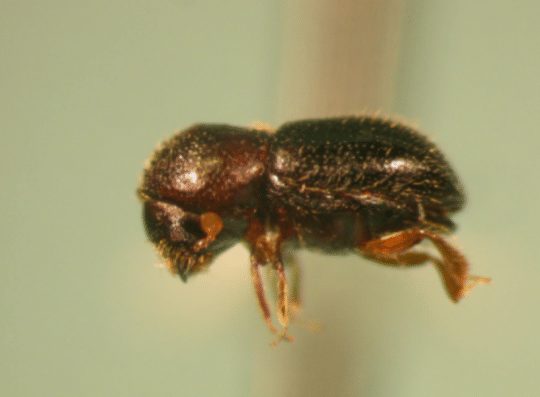
The species Dialytellus tragicus (Schmidt, 1916) is a mere 3mm in length and one of only two species in the genus Dialytellus. My favorite location to search for it is the museum’s field research station, Powdermill Nature Reserve, in the Laurel Highlands. Dialytellus tragicus is found in forested areas of the northeastern United States, but is sporadic in distribution and never seems to be overly common. The other species in the genus, Dialytellus dialytoides (Fall, 1907), is more widely distributed in the eastern states, much more common, and is taken frequently in pitfall traps. The genus Dialytellus is a member of the large subfamily Aphodiinae in the large family Scarabaeidae, the scarab beetles.

The Aphodiinae is a diverse group of small to tiny beetles, with over 400 species occurring in the United States and Canada. Nearly all of them are specialists on animal dung for feeding as adults and for provisioning their larvae with food. Many are considered ‘generalists’ which means they will utilize whatever dung they find – from cattle, horses, deer, pigs, dogs, and even humans (Oh, there are some stories to tell there…). Some species dig tunnels in the soil under dung and create brood chambers where they lay eggs on dung brought down from the source on the ground surface, but most lay eggs directly in the dung and the larvae develop within.

A fair number of aphodiine species are ‘specialists’, utilizing dung from only certain species of animals. In the Great Plains region of the U.S., the group reaches its greatest diversity of species for North America, with most species being obligate associates with prairie dogs, living in the burrows and feeding in the dung ‘middens’ that the resident prairie dogs create. In the Pacific Northwest, aphodiines are often associated with the burrows of marmots. In the Southeast, many species are associated only with pocket gophers, while a few have evolved to live only in the nests of squirrels, or packrats, feeding on decaying nest materials. Some of these specialized beetles have even evolved to live in ant nests, feeding on plant detritus in the ants’ garbage heaps.

beetle specimen
Dialytellus tragicus (Schmidt, 1916). Specimen data: PENNSYLVANIA: Westmoreland County, Powdermill Nature Reserve, 15 March 2003, in deer dung, R. Androw, coll. Image from BugGuide.net, courtesy of Blaine Mathison, Salt Lake City, Utah.

Dialytellus tragicus is able to pull me out of the house and into the woods in late winter on an annual search first for piles of deer dung, and then if lucky, beetles. The beetles can be found inside the deer dung pellet, which means the search entails splitting dung pellets to find the precious one with a beetle inside. Thankfully, deer dung is dry and hard and has little odor, so the process is less offensive than it sounds. Still, I would guess that laying on one’s side in the leaves, splitting pellets with a forceps as if they were little coconuts with prizes inside, isn’t a common way to celebrate the onset of Spring – no Facebook group for us folks!

Most specimens that I have collected have been found during the middle two weeks of March, always on days where the temperatures have been over 50°F for at least the preceding three days. It takes a few days of warmer weather to get the beetles up and moving. I’ve learned that searching for them later in the year – say mid-April – never produces specimens of D. tragicus, but instead produces numerous specimens of another aphodiine, the extremely abundant generalist, Oscarinus rusicola (Melsheimer, 1845). Circumstantial evidence would suggest that as D. tragicus evolved alongside O. rusicola in eastern forests of North America it shifted its period of activity to earlier in the season to avoid competition for resources with the more abundant O. rusicola.

By the end of February of any normal year, the urge to get out of the house and into the woods starts to become irresistible, but the insects are more patient – waiting for the perfect number of degree-days to become active. Knowing this little beetle is out there early – and is not necessarily easy to find – provides the perfect impetus to shake off the winter dust and go out to look for it. In a year like the one we’ve all suffered through, this little beetle is even more appreciated as an excuse to rouse and get moving again.

Bob Androw is a Collection Manager for Invertebrate Zoology. Museum employees are encouraged to blog about their unique experiences and knowledge gained from working at the museum.

Related Content

So, Just What is a Wheel Bug?

Do No Harm: Dealing with Spotted Lanternflies

The BSF – Leveraging Our Collections and Expertise to Help Fight Invasive Species

Carnegie Museum of Natural History Blog Citation Information

Blog author: Androw, Bob
Publication date: April 2, 2021

Share this post!

  • Share on Twitter Share on Twitter
  • Share on Facebook Share on Facebook
  • Share on Pinterest Share on Pinterest
  • Share on LinkedIn Share on LinkedIn
  • Share on Reddit Share on Reddit
  • Share via Email Share via Email

Filed Under: Blog Tagged With: Bob Androw, Invertebrate Zoology, Science News

February 18, 2021 by wpengine

New Moth Species Marumba verdeciae Named for CMNH Scientific Preparator

Specimens from Carnegie Museum of Natural History are frequently cited in the research papers of scientists from all over the world.  For researchers, access to these vital materials comes through the assistance of museum staff who are familiar with the physical organization of the collections, and this routine service is generally recognized in the “Acknowledgements” section of any resulting publications. A far rarer form of “thank you” occurred this month when German entomologist Ulf Eitschberger, the first author of a 200-page paper revising  a species complex of a sphinx moth known from multiple localities across southeast Asia, named one of the resulting new species for Vanessa Verdecia, Scientific Preparator in the CMNH Section of Invertebrate Zoology.

image
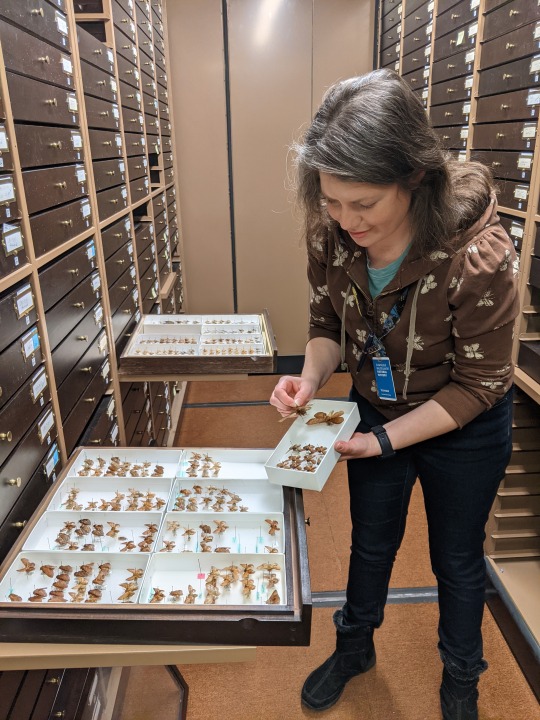
Vanessa checking specimens in a collection storage unit.

Vanessa assisted Ulf in his study of the Marumba saishiuana species complex by taking images of specimens from the museum’s collection and sharing them with him via email. This process involved searching for and verifying many relevant type specimens in the IZ collection because Ulf needed to view images of numerous moths within the Marumba genus for his research.

The type locality for Marumba verdeciae is Qingchenhou Shan, in Sichuan, China.  There were an additional 52 male specimens collected at the same site, between May and June of 2005, which need to be studied further. The new publication makes no mention of M. verdeciae collected at other sites, and at this time the female of the species is unknown.

image
The assistance of Vanessa Verdecia allowed a researcher in Germany to evaluate pinned insects in Pittsburgh.

Vanessa is pleased with the recognition. As she explains, “I feel honored to have this beautiful species dedicated to me as the Sphingidae are one of my favorite groups of moths and a part of the collection I enjoy working in. It was my pleasure to search for these specimens and provide the images necessary for this revision and ongoing work by this researcher.”

For reference the full citation of the publication is below:

“Erster Schritt zur Revision des Marumba saishiuana auct. Artenkomplexes (nec Okamoto, 1924) (Lepidoptera, Sphingidae)”

[TRANSLATION: “First step in revising the Marumba saishiuana species complex (Okamoto, 1924) (Lepidoptera, Sphingidae)”]

Authors:  Ulf Eitschberger & Hoa Binh Nguyen

Journal: Neue Entomologische Nachrichten 75: 123-327, Marktleuthen (Februar 2021)

Patrick McShea works in the Education and Visitor Experience department of Carnegie Museum of Natural History. Museum employees are encouraged to blog about their unique experiences and knowledge gained from working at the museum.

Related Content

Ask a Scientist: Why do moths love lamps?

The Significance of Raising Caterpillars

One-Spotted Variant Instars

Filed Under: Blog Tagged With: Invertebrate Zoology, moths, Science News, Vanessa Verdecia

January 19, 2021 by wpengine

Insect metamorphosis: the key to a fresh new start

For many people, the new year represents an opportunity to make a fresh start, consider self-improvement, or turn over a new leaf. As in all fields of human endeavor, insects are way ahead of us and have already developed the ultimate technology for personal reinvention: metamorphosis.

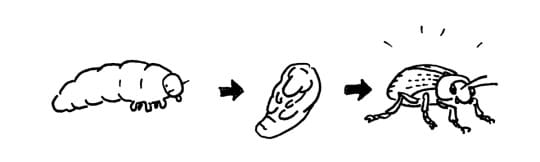
drawing of the stages of metamorphosis

Among entomologists, “metamorphosis” refers to the process by which a tiny hatchling insect becomes a fully functioning adult. This process can take place in two ways. Incomplete metamorphosis is the process by which an insect molts through a series of increasingly large, adult-like stages (“instars”) before completing the final molt into an adult. Insects that develop this way include grasshoppers, stink bugs, dragonflies, termites, and mantises.

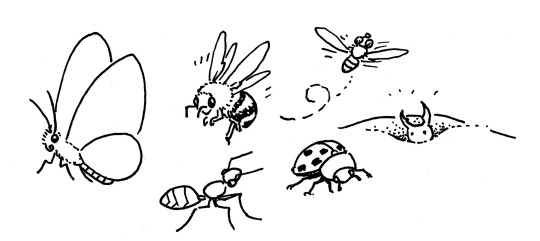
drawing of various insects including a butterfly, bee, and beetle


Complete metamorphosis, on the other hand, involves a (typically) worm-like larva which undergoes a quiescent, or inactive, pupal stage before reaching adulthood. Insects that undergo complete metamorphosis include beetles, ants, bees, wasps, lacewings and antlions, flies, and moths. These orders are often described as “holometabolous,” which simply means that their development includes pupation.

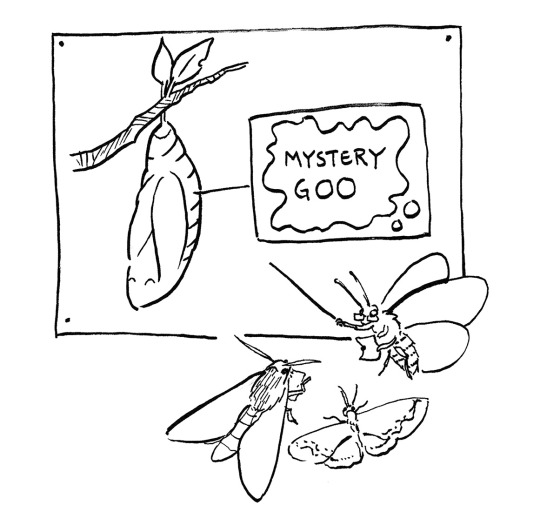
drawing of a moth teaching other moths about cocoons and turning to "mystery goo"


The process of pupation is fascinating and mysterious: essentially, the caterpillar zips itself up into a sleeping bag made of its own skin, turns to soup, and comes out a butterfly. How?

In fact, insect pupation remained a scientific mystery for many years, largely because of the difficulty in observing the pupation process without destroying or interfering with development. However, interfering with development turned out to be the key to understanding this process: early investigators (e.g. Jan Swammerdam, the 17th century microscopist) discovered that structures corresponding to the approximate positions of future wings could be dissected from within late stage, prepupal larvae. Several centuries later, the ability to induce fluorescence in selected cell lines allowed researchers to observe the activity of these future wings, legs, and antennae throughout larval development. This research led to the identification of what are now known as “imaginal discs.”

caterpillar wearing headphones holding a record called "I, Ron Butterfly"

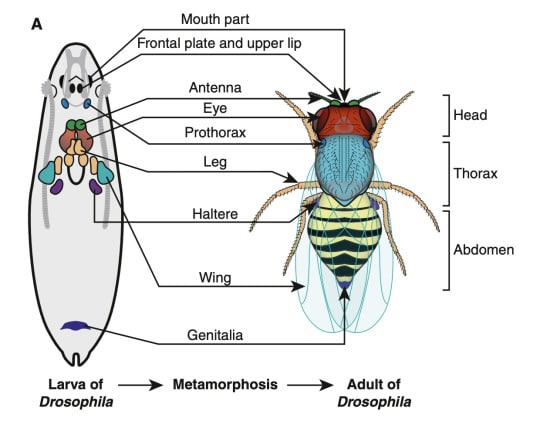
Here’s how it works: secret little collections of cells are formed during embryogenesis, and rest dormant inside the larva as it grows. The larva and its essential larval structures (usually the digestive system) grow larger, but the dormant cells do very little. These cells are known as imaginal cells and their aggregate structures are called imaginal discs (The term refers not to imagination, but to the imago, a synonym for the insect’s adult stage). The cells within these imaginal discs are largely dormant until a special cue— temperature, day length, growth, or otherwise— triggers the hormones that kickstart pupation. The larva forms a tough outer casing from its outermost exoskeleton or uses silk glands to create a protective nest (e.g. a cocoon).

metamorphosis diagram
Image source: Aldaz, S. and Escudero, L.M., 2010. Imaginal discs. Current Biology, 20(10), pp.R429-R431.

As pupation begins and the larval body breaks down into fluid, the imaginal discs begin to undergo rapid development, telescoping outward to form the longer legs, wings, antennae, mouthparts, and other complex adult body structures. The only remnants of the larva that stay functional are the tracheae, hollow tubes which allow it to breathe.

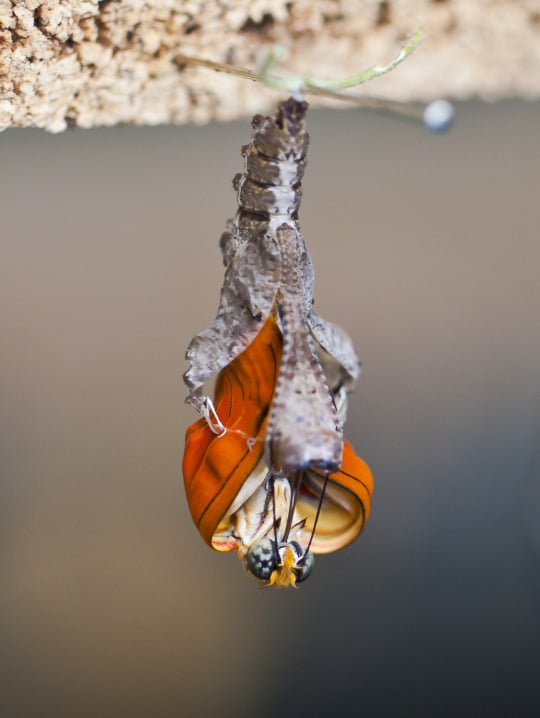
Once the adult structures are fully formed, they will remain soft in order to fit inside the now too-small pupa. The pupal case splits open, and the newly emerged adult insect forces air and fluid into its new wings to unfurl them fully before they harden.

butterfly emerging from cocoon
Image from Creative Commons.

Forming a hard outer casing and liquefying your existing body may not sound like an inspirational concept for the new year, but perhaps it should. The lesson of the butterfly is that the developmental foundations of the beautiful, functional adult were inside the awkward, squirmy larva all along. The imaginal cells were always there, just waiting to be awakened.

For more discussion of insect pupation and tips on using caterpillars to get kids into science, see this previous IZ blog post by Dr. Jim Fetzner, “Kids and Caterpillars: Fostering a Child’s Interest in Nature by Rearing Lepidoptera (Moth and Butterfly) Larvae.”

Ainsley Seago is Associate Curator of Invertebrate Zoology. Museum employees are encouraged to blog about their unique experiences and knowledge gained from working at the museum.

Related Content

O-Do-Nates or O-Don’t-Nates: Dragonflies and Damselflies in the Section of IZ

Looking for Bugs in Your Yard

Why One Bug Just Won’t Do…

Filed Under: Blog Tagged With: Ainsley Seago, insects, Invertebrate Zoology, Museum from Home, Science News

August 18, 2020 by wpengine

The BSF – Leveraging Our Collections and Expertise to Help Fight Invasive Species

Within the CMNH Section of Invertebrate Zoology resides a program called the Biodiversity Services Facility – the BSF for short. The program is a revenue-generating insect screening and identification service whose principle client is the U.S. Department of Agriculture’s (USDA) Animal and Plant Health Inspection Service (APHIS) and Plant Protection and Quarantine Program (PPQ), as well as various state departments of agriculture. The BSF is designed to support time-sensitive survey work being performed by these agencies to detect invasive species, primarily wood-boring beetles.

As the Primary Identifier and Program Manager of the BSF, I can accurately describe 2020 as a busy year by citing a workload of nearly 8,000 raw trap samples generated through 23 survey projects being run in 16 states, stretching from Maine to Georgia and west to Nebraska and Kansas.

So how did it all begin? Let’s take a look…

In 2001, the country suffered the greatest tragedy in recent memory, the terrorist attacks of September 11. As a response, in 2002, the Office of Homeland Security was created, and during the following years, federal funding and personnel were reallocated from efforts to guard against agricultural and environmental threats to increase screening for human-centered security threats to the country. This resource shift created a void in the areas of pest detection and identification, and it became increasingly important to find outside support to help fill the gaps.

In 2005, through collaboration with Dr. Robert Acciavatti, an entomologist with the U.S. Forest Service and a long-time Research Associate in the Section of IZ, a proposal for a proof-of concept study was submitted to the U.S. Forest Service to determine if the museum could provide the needed identification services as a private contractor to the U.S. Department of Agriculture. The proposal called for funding staff to do the contract work as well as providing some collection support for the Section of Invertebrate Zoology. All aspects of the process were quantified: how long it took to check in samples; the time spent in proofing data; the number of samples that could be screened in a day; the number of specimen ID’s generated from any given sample; the resources needed to archive specimens; and the time involved in managing the activities. And most importantly – could it all be done in a fiscally responsible way to offer a service cheaper than existing options, while generating enough funding to complete the work as well as support the essential staff? The results of the project concluded that, yes… it could.

The icing on the cake during the proof-of-concept study was the detection of an invasive bark beetle species (Coleoptera: Curculionidae: Scolytinae) native to eastern Asia, Anisandrus maiche Stark. It was found in samples collected at the Moon Industrial Park near the Pittsburgh International Airport. It had not previously been recorded from the United States and in subsequent years was found to already have spread into eastern Ohio and the West Virginia panhandle before its discovery in the Pittsburgh area. Not only had the project proved the work could be done at a competitive price for the USDA, it proved that the taxonomic expertise in the Section of IZ was up to the task. The BSF was officially launched in 2006 and to date has processed nearly 95,000 raw samples, generating nearly $2,000,000.00 in outside funding.

Figure 1. Anisandrus maiche Stark (a species of bark beetle), about 2 mm in body length.

First detected in the United States in 2005 by Robert Androw.

(Image courtesy of Dr. Robert Acciavatti)

When I screen samples, I work against a ‘Priority Pest List’ developed by the USDA that contains the exotic species considered to be the greatest potential environmental threats should they be introduced into the country. In addition to the twenty or so priority pests, I screen for nearly 75 other species known to have been previously intercepted at ports or established in the U.S. to aid in monitoring the distribution of those species. The USDA efforts are guided by a practice dubbed EDRR – Early Detection, Rapid Response – a plan of responding quickly to any new pest detection to improve the likelihood that it can be extirpated before it can spread and become a major problem. To help meet this goal, I work under a self-imposed 90-day deadline for every sample – from the time a sample arrives with its associated collection data, it gets processed and the results reported to the client within 90 days. Prior to the BSF’s formation and involvement, samples could sometimes take as long as two years to get processed by the over-taxed screeners within the existing system.

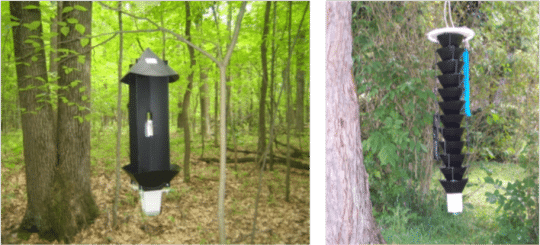
Most samples are collected using one of two types of traps: the Lindgren funnel trap and the Cross-vane panel trap. Both act as “silhouette” traps – their dark, vertical design can appear to be the trunk of a tree to a flying insect. These can effectively capture many species through this deceptive visual cue alone, but most often, the traps are baited with various chemical lures designed to attract specific species or genera of beetles. Traps can be deployed in forests, in urban parks, outside of warehouses or any other location where pest species may potentially be found. Most traps are run for a period of 10-14 days before the sample is removed from the collection cups and submitted to the BSF.

Figure 2. A Cross-vane panel trap (left) and Lindgren 12-funnel trap (right). Flying insects collide with the trap and fall down into the white sample collection cups which are filled with preservative. The white and blue pouches are filled with chemical lures. (Images from the BSF advertising flyer)

The two most commonly monitored lineages of beetles – Curculionidae (weevils and bark beetles) and Cerambycidae (long-horned beetles) – are both wood-boring taxa, with the damage usually being done by the larvae. The nature of the damage differs across lineages, with most of the damage caused by long-horned beetles being physical in nature – burrows and holes in the wood which hasten decay as well as providing avenues of access to other wood-boring insects. The bark beetles cause a variety of damage but are more likely to spread plant disease by boring into wood and creating chambers in which fungus is deposited by the female as an eventual food source for the larvae. While the long-horned beetles are moderate to large in size, most bark beetles in the weevil subfamily Scolytinae – the primary group of concern – are tiny insects generally less than 3mm in length.

Many target species are small enough to be accidentally discarded if attempts are made to “clean” the sample by removing leaves or other debris. Therefore, the BSF requires raw, unsullied samples to be submitted by our collaborators to ensure that no target taxa are lost during handling of the samples. We have another benign ulterior motive for raw samples to be submitted – to allow us to assess the “bycatch” in detail. This includes examining all specimens in the sample, not just checking for the species on the lists of known pests. This scrutiny ensures the detection of any new invasive not yet known to occur in the country, as was the case with Anisandrus maiche. The bycatch also provides a wealth of native specimens to augment the main IZ research collection. As I screen the samples, I extract all target species, specimens of uncommon to rare native species, specimens representing groups of special interest to the IZ staff, and specimens in groups for which specialists are available to provide identification.

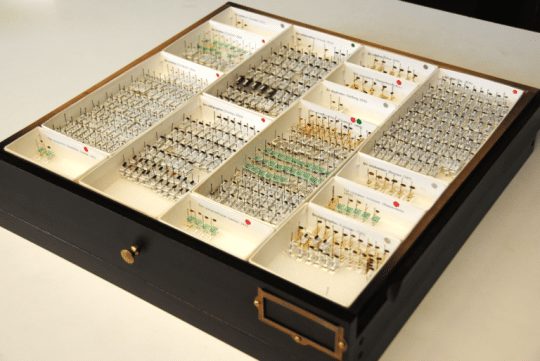
Once the specimens are extracted from the samples, they are prepared and labeled and then sorted by taxonomic groups for identification by me or other specialists. Once ID’d, the specimens have their data captured in a data base with the information made available to the customer through their project page on the BSF web site. In a recent data dump, over 70,000 records of a wide variety of insects, but primarily beetles – were provided to USDA in response to their request for data for a bycatch assessment study. All specimens extracted and data based are permanently archived in the research collections in the Section of Invertebrate Zoology. This allows for reexamination of the actual specimens reported upon as well as providing the comparative material for future identification efforts.

Figure 3. A curated drawer of identified bark beetles from the research collection in the Section of Invertebrate Zoology.

Many of these specimens were acquired from BSF projects over the years.

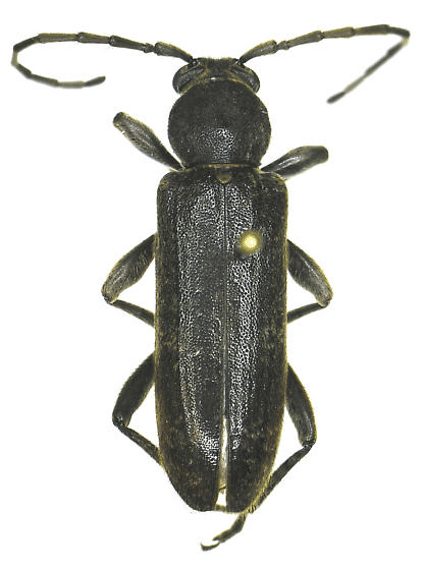
The bycatch also provides a continual influx of material for various projects underway in the Section of IZ.  My personal group of interest is the Cerambycidae – or long-horned beetles – and thousands of specimens have been documented in support of several faunal studies in progress. Lindgren trap samples from West Virginia have generated many records for long-horned beetles that will be used for an eventual publication on the Cerambycidae of West Virginia. Records of ground beetles taken from the trap samples are being compiled for a publication by Robert Davidson, Collection Manager Emeritus, documenting new state records of Carabidae. Thousands of specimens, from many families of beetles, have also been loaned to various specialists to garner determinations to further enhance the main research collection.

Figure 4. The ‘velvet long-horned beetle’ – Trichoferus campestris (Faldermann) – is a species introduced from Asia into the United States. Specimens from several eastern states have been found in BSF samples. (Image from BugGuide.net, courtesy Jeff Brown, Huber Heights, Ohio)

All-in-all, the Biodiversity Services Facility is a win-win situation – the funding supports collection staff and provides revenue for supplies and equipment, and the USDA and other clients get much needed support in their screening and identification efforts at a competitive price. The samples provide an annual infusion of specimens into the Carnegie collection and the clients receive information that would be otherwise lost about the insects coming to their traps. And maybe most importantly, the BSF leverages the taxonomic expertise of the IZ staff against real-world problems and contributes to making an impact in protecting our environment from invasive pest species.

Bob Androw is Collection Manager in Invertebrate Zoology. Museum employees are encouraged to blog about their unique experiences and knowledge gained from working at the museum.

Related Content

Do No Harm: Dealing with Spotted Lanternflies

How to Prepare Insect Specimens

Mobilizing Millions of Marine Mollusks: Seashells by the Eastern U.S. Seashore

Carnegie Museum of Natural History Blog Citation Information

Blog author: Androw, Bob
Publication date: August 18, 2020

Share this post!

  • Share on Twitter Share on Twitter
  • Share on Facebook Share on Facebook
  • Share on Pinterest Share on Pinterest
  • Share on LinkedIn Share on LinkedIn
  • Share on Reddit Share on Reddit
  • Share via Email Share via Email

Filed Under: Blog Tagged With: Bob Androw, Invertebrate Zoology, Science News, Section of Invertebrate Zoology

August 18, 2020 by wpengine

How to Prepare Insect Specimens

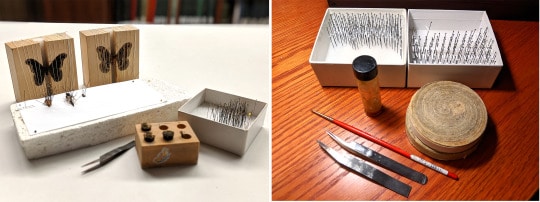
specimens and specimen preparation tools

Museum collections play a significant role in helping scientists answer questions about biodiversity and in providing data that may be used for conservation studies.  Every specimen in the Invertebrate Zoology collection tells a story and all together they contribute to the story of life on Earth.  Picture it, millions of specimens prepared and labeled.  Each has a story to tell about where, when, and how it was collected.  This critically important data is also gathered when samples are collected in the field.

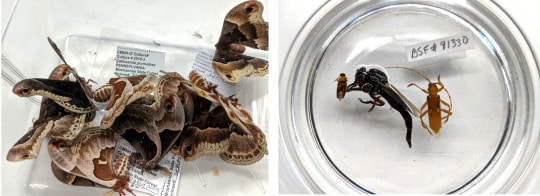
The next step is processing the sample and picking specimens to be prepared.  So, how do we prepare specimens?  Lepidoptera (moths and butterflies) are usually pinned in the field or preserved in the freezer and then pinned and spread in the lab.  Most non-Lepidoptera are preserved in alcohol and prepared in the lab.  Preparation techniques differ, therefore, with what is being collected.

specimens before preparation

High quality scientific preparation is important, not just for aesthetic reasons but also for a specimen’s future in the service of research.  In some situations, characters on the bodies of the specimens need to be viewed under a microscope, sometimes segments need to be counted to identify a species, and more excitingly, a new species might need to be described from a series of specimens.

Handling of specimens that will be prepared needs to be done when the specimens are flexible—either from an alcohol sample, or a dry specimen that was rehydrated overnight.  The pin should be inserted within the thorax, which is the mid region of the body.  Insects are bilaterally symmetrical (left and right sides are duplicates), so the pin is always inserted slightly to the right of the midline.  This will preserve the integrity of the midline which might possess unique characters that are not duplicated.

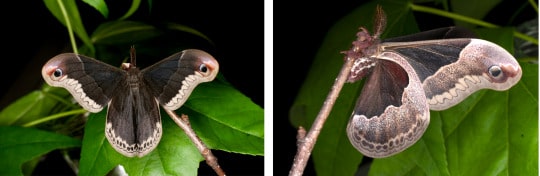
In 2018 a culture of Callosamia promethea caterpillars were reared.  A record of each stage of metamorphosis was preserved in alcohol and stored with reared caterpillars in the collection. Some of the cocoons were kept alive to allow the adult moths to emerge.  The adults were then preserved in the freezer so they could be prepared and added to the collection as a record of the offspring from that culture.

moths on leaves at night

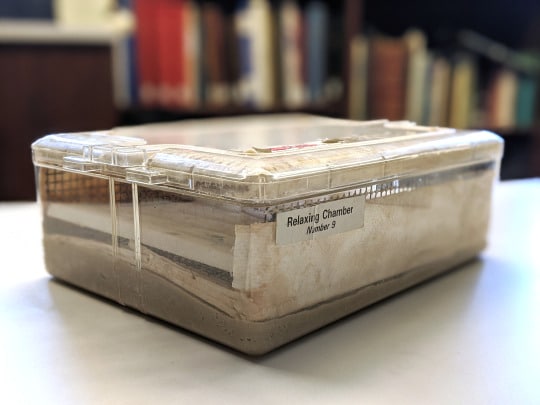
The moths were placed in a humidifying chamber overnight.  This chamber is kept humid by adding water to the absorbent paper towels that are layered in above a layer of sand mixed with an antifungal agent that keeps the specimens from getting moldy.

container labeled moth relaxing chamber number 3

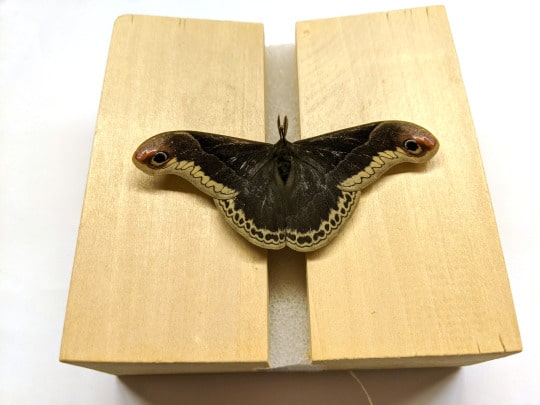
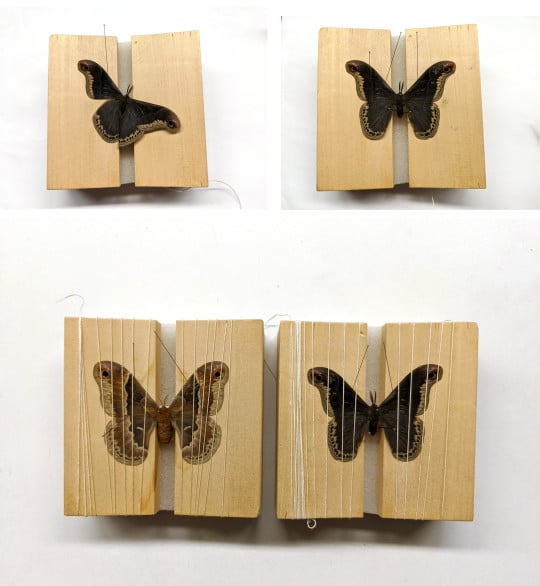
The specimens were thawed, and moisture kept the specimens relaxed enough to handle.  Specimens were pinned through the thorax and placed in a wooden pinning block designed for spreading the wings.

lepidoptera specimen laid out on blocks

A series of very thin pins (size #000) were used to arrange the wings by carefully moving the forewings up high enough to expose the hindwings.  String was then wrapped around the block to hold the wings down and allow the specimens to dry.  Spread specimens remain on the spreading blocks for about a week to ensure they are completely dry and remain in the desired position.  Spreading moths and butterflies allows for all the characters on the hindwings to be visible, and it also allows the underside of the specimen to be viewed more easily.  The string is carefully unwrapped a week later, and specimens are removed from the blocks and ready to be labelled.

lepidoptera specimen on blocks in various stages of preparation

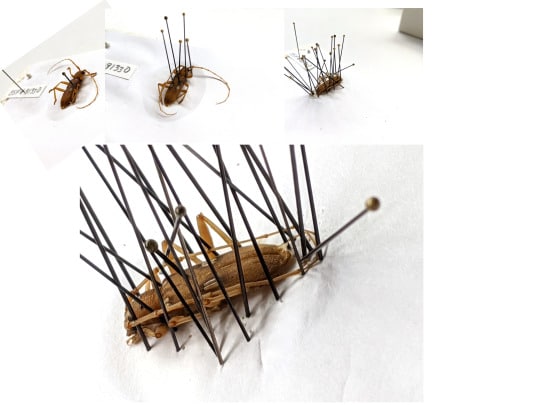
Non-Lepidoptera are usually pinned straight out of alcohol, when they are flexible enough to handle.  If they are collected and kept dry before preparation, then a relaxing chamber may be used to rehydrate them.  After the pin is inserted, the specimen is placed on a Styrofoam board lined with white paper.  Legs, antennae, and wings are arranged using brace pins that hold everything close to the body.  Specimens remain on the board for about a week until they are fully dry.

pinned specimens

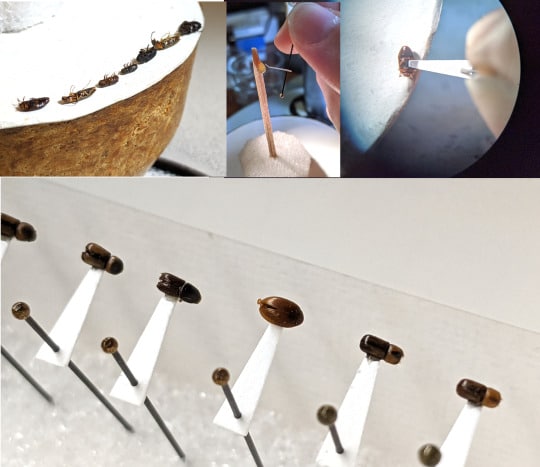
If specimens are too small to be pinned, they are mounted on paper points using shellac glue.  The pin goes through the point made from archival paper using a tool known as a point punch.  After laying the specimens with the underside facing up, the tip of the point gets a dab of glue and each specimen is glued on to the tip of the point.

specimens mounted on paper

Guess what the next step is…labeling!

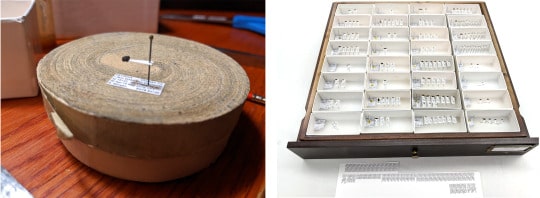
As mentioned before, specimens tell an important story.  The data is just as valuable as the specimens, and that data is printed on archival paper using a laser printer.  A labeling block is used to apply the label on the pin, below the specimen.  Any specimen that is prepared and labeled is ready to be identified and curated into the collection.

materials for labeling specimens

In a collection with 13.5 million specimens, space is valuable.  Well prepared specimens take up less space and are less vulnerable to damage.  A damaged specimen is still valuable because of the story it tells through its labels, even if damage makes the story incomplete.  High-quality preparation is important because it allows for easier examination of the specimens and interpretation of the differences between species.  These specimens are not just a bunch of bugs—all together, they are part of the record of life on Earth.

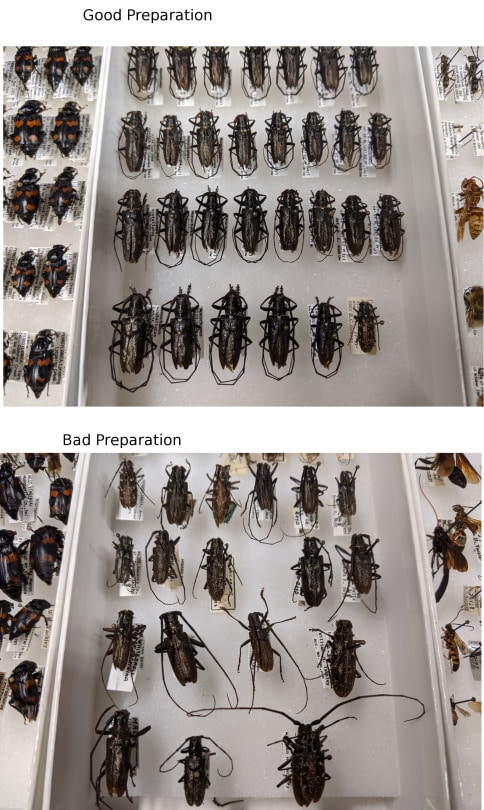
examples of good specimen preparation and bad specimen preparation

Vanessa Verdecia is Scientific Preparator in the museum’s Invertebrate Zoology Section. Museum employees are encouraged to blog about their unique experiences and knowledge gained from working at the museum.

Related Content

Traub Flea Data Books

Hillbilly Gourmets: Snail-eaters of the Yew Mountains

Ask a Scientist: What is a Caterpillar Database?

Filed Under: Blog Tagged With: Invertebrate Zoology, Science News, Section of Invertebrate Zoology, SWK2, Vanessa Verdecia

  • « Go to Previous Page
  • Page 1
  • Page 2
  • Page 3
  • Page 4
  • Interim pages omitted …
  • Page 10
  • Go to Next Page »

sidebar

About

  • Mission & Commitments
  • Directors Team
  • Museum History

Get Involved

  • Volunteer
  • Membership
  • Carnegie Discoverers
  • Donate
  • Employment
  • Events

Bring a Group

  • Groups of 10 or More
  • Birthday Parties at the Museum
  • Field Trips

Powdermill

  • Powdermill Nature Reserve
  • Powdermill Field Trips
  • Powdermill Staff
  • Research at Powdermill

More Information

  • Image Permission Requests
  • Science Stories
  • Accessibility
  • Shopping Cart
  • Contact
  • Visitor Policies
One of the Four Carnegie Museums | © Carnegie Institute | Privacy Policy | Terms of Use | Accessibility
Rad works here logo