• Skip to primary navigation
  • Skip to main content
  • Skip to primary sidebar

Carnegie Museum of Natural History

One of the Four Carnegie Museums of Pittsburgh

  • Visit
    • Buy Tickets
    • Visitor Information
    • Exhibitions
    • Events
    • Dining at the Museum
    • Celebrate at the Museum
    • Powdermill Nature Reserve
    • Event Venue Rental
  • Learn
    • Field Trips
    • Educator Information
    • Programs at the Museum
    • Bring the Museum to You
    • Guided Programs FAQ
    • Programs Online
    • Climate and Rural Systems Partnership
  • Research
    • Scientific Sections
    • Science Stories
    • Science Videos
    • Senior Science & Research Staff
    • Museum Library
    • Science Seminars
    • Scientific Publications
    • Specimen and Artifact Identification
  • About
    • Mission & Commitments
    • Directors Team
    • Museum History
  • Tickets
  • Give
  • Shop

Invertebrate Zoology

August 17, 2020 by wpengine

Traub Flea Data Books

With work-from-home restrictions in place, I’ve been transcribing the handwritten field notes (Figures 1-2) of world-renowned flea expert Robert Traub into a digital database. Between 1995 and 1997, Traub donated most of his collection to CMNH. Materials housed in the Traub collection span the globe, from the middle east to central America to islands in the pacific and beyond. The notebook I’m currently transcribing dates back to the mid-1900s, with records from particular field expeditions to Pakistan and Mexico.
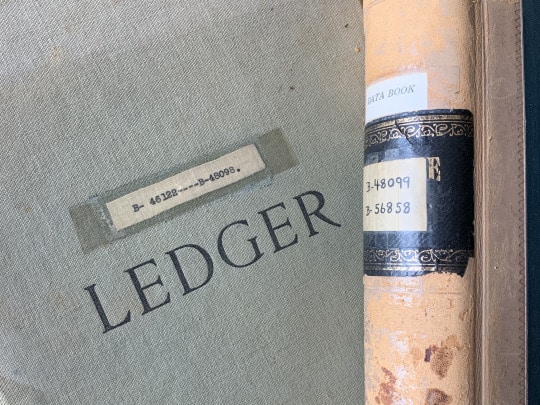
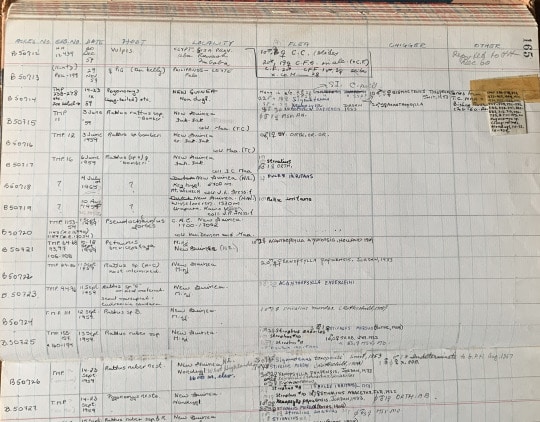
Figure 1. Some of the notebooks written by Robert Traub containing information on his flea specimens.
Figure 2. One of the pages from a Traub notebook illustrating the specimen data it contains. Eventually, all of this data will be transcribed into electronic format so it can be searched and shared.

This type of retroactive data capture allows us to put standard locality information on specimens formerly associated with just an identification or data code number. This process also allows us to verify and update taxonomic names as necessary. While it’s not nearly as fun as field work, data capture and transcribing are still an important part of collections work.

The Traub collection is estimated to contain nearly 75,000 specimens mounted on glass slides (Figure 3), with 5,000 associated genitalic dissections. The enormous collection is housed in antique cabinetry as well as modern Eberbach cabinets. Almost 7,000 of these specimens only have a data code; thus, my digitization efforts and subsequent labeling continue!
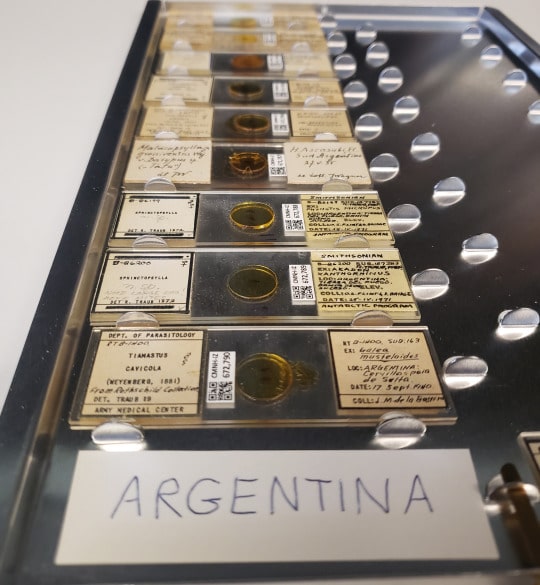
Figure 3. Several slides from the Traub Flea collection.

Since I started working in IZ nearly three years ago, I have had the distinct privilege of working with different taxa every few months. From Lepidoptera, to Odonata, to Coleoptera, to Arachnida, and now Siphonaptera, these tasks serve as beautiful reminders of the diversity of life here on planet Earth.

Catherine Giles is Curatorial Assistant in the Section of Invertebrate Zoology at Carnegie Museum of Natural History. Museum employees are encouraged to blog about their unique experiences and knowledge gained from working at the museum.

Related Content

Moth Meme Science

Working with the Type Collection

A Bumble’s Blog and Bumble “Weee” Catapult Craft

Filed Under: Blog Tagged With: Catherine Giles, Invertebrate Zoology, Museum from Home, Science News, Section of Invertebrate Zoology

August 12, 2020 by wpengine

Working with the Type Collection

The staff of the Section of Invertebrate Zoology are currently working on many projects.  One of those projects is gathering, organizing, and taking inventory of our type collection materials.

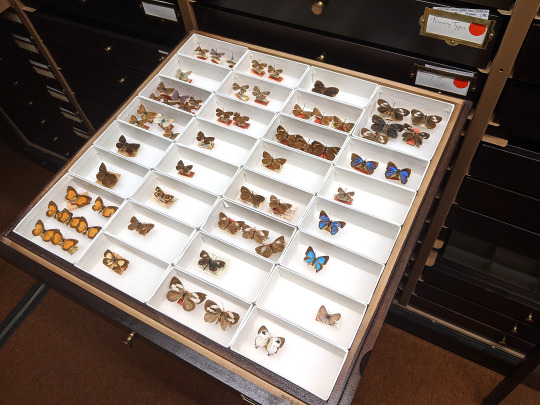
Image 1.  A drawer of Lepidoptera types from the Invertebrate Zoology collection at CMNH.

Type specimens are the specimens upon which the scientific name and description of a species are based.  In other words, when scientists describe a new species, they use particular specimens to characterize the unique features of that particular species. Once a new species description is published, the specimen(s) used in the process of formally naming and describing the species become the type specimens.

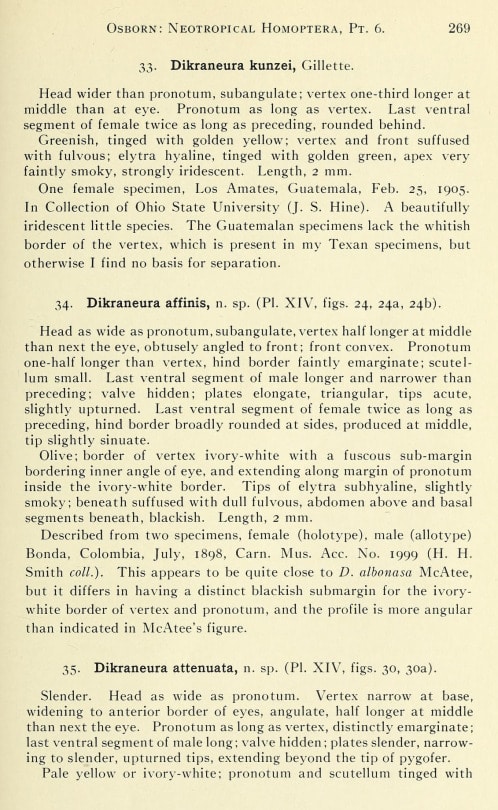
Image 2. The original description of Dikraneura affinis (a leafhopper) as published in the Annals of Carnegie Museum, Vol. 18.

As such, type specimens are very valuable to science. Museum type collections serve as a sort of ‘library’ of species for scientific researchers.  With millions of insect species found on the earth, identification of a specimen you have in hand can be a daunting task.  Researchers around the world can compare specimens in their own collections with these scientific types to apply species-level determinations.

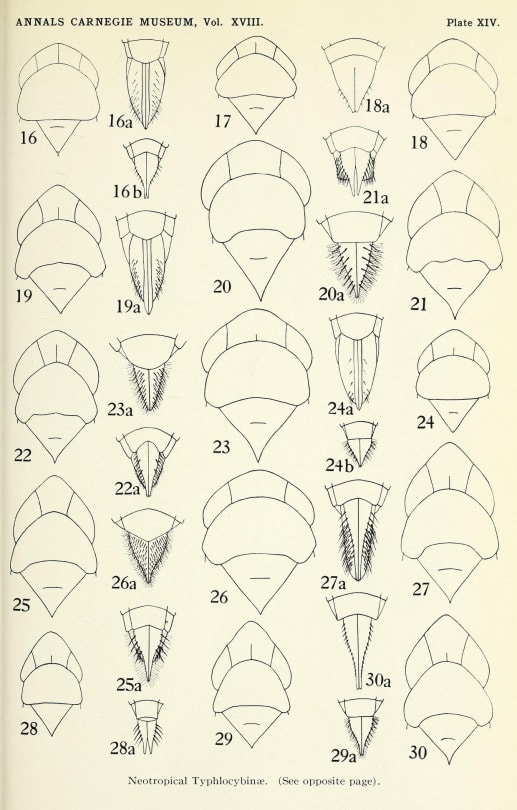
Image 3.  The plates included as part of the original species description.  Characteristics of Dikraneura affinis are illustrated in Figs. 24, 24a, and 24b.

It is estimated that there are approximately 40,000+ type specimens in the Invertebrate Zoology collection at CMNH. A more complete inventory and cataloguing of the type specimens in Invertebrate Zoology is currently required so that our type collections can be of greater use to the scientific community.

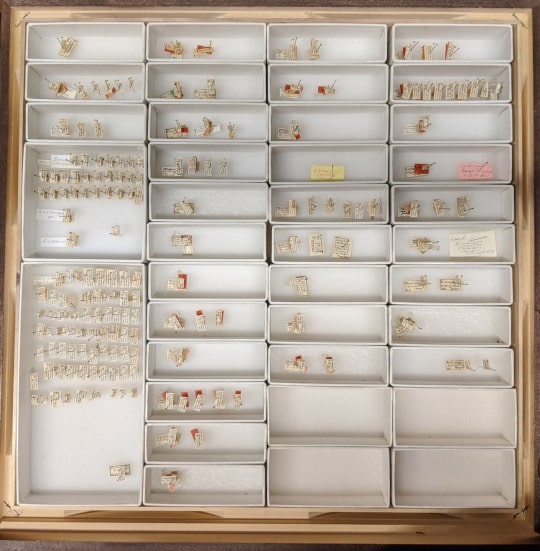
Image 4.  A drawer containing Hemipteran types, including Dikraneura affinis.  These particular insects are very tiny and are adhered to paper points for preservation and study.
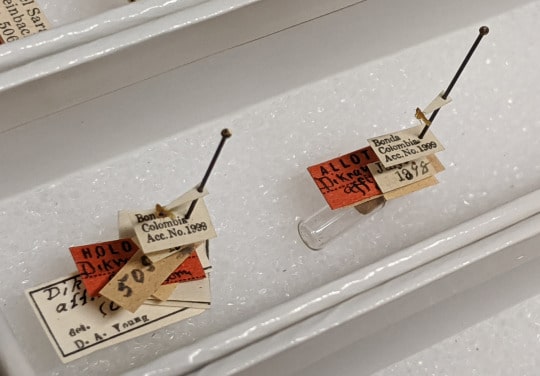
Image 5.  Tray containing the two type specimens of Dikraneura affinis and their associated labels.

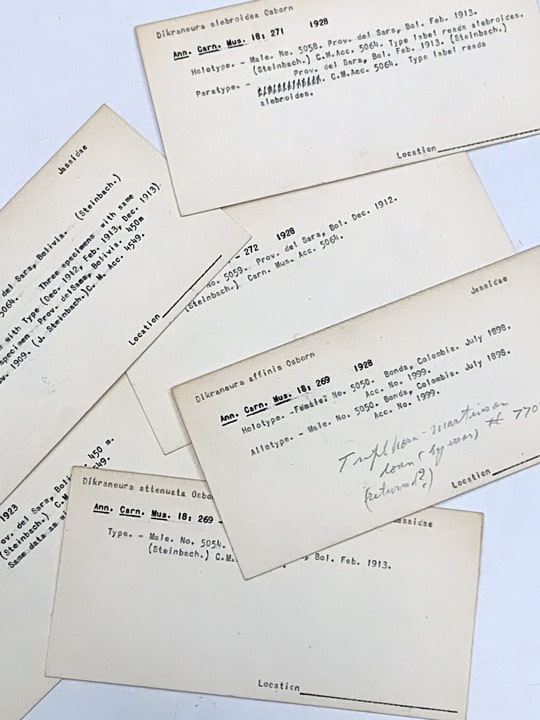
Prior to the availability of computers, George Wallace, a curator who worked at the museum on Hymenoptera from the 1930s to the 1970s, compiled and maintained a card catalog file of non-lepidopteran types in the Invertebrate Zoology collection.

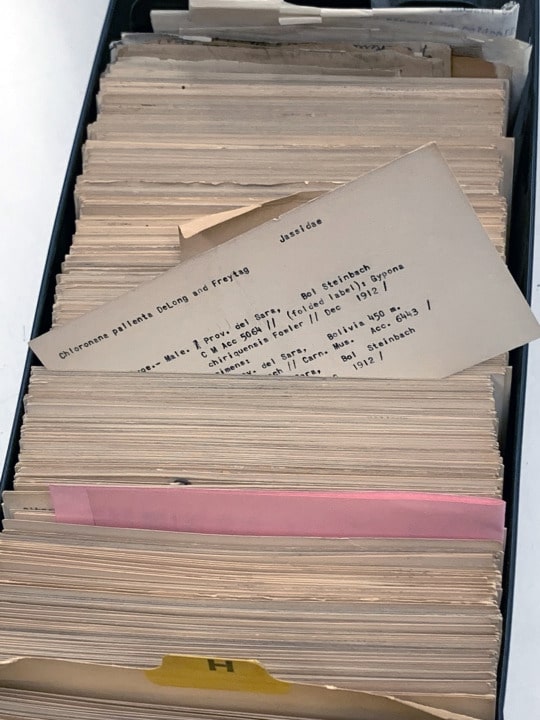
Image 6.  Image of ‘card catalog’ of types compiled and maintained by curator George Wallace.
Image 7.  A sampling of the cards and associated information captured by George Wallace.

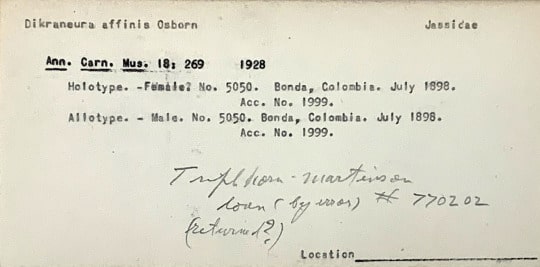
Many of the cards contain information about the published species descriptions, the numbers and kinds of type specimens in our collection, and label data associated with the specimens, including geographical, accession number, date, and collector information.

Image 8.  Type card showing information for Dikraneura affinis (a leafhopper).

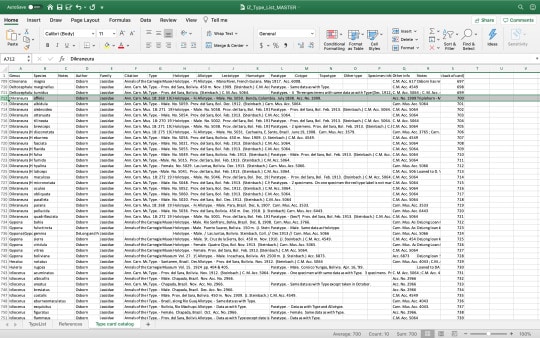
To assist in the type collection organization effort, I have been tasked with digitizing over 1100 of these cards.  Digitizing the information renders it searchable and accessible to staff and allows for a more accurate inventory of our types.

Image 9.  Screenshot of file containing digitized data from Wallace type cards.  Information for Dikraneura affinis is highlighted on the screen.

Currently, researchers must contact us directly with queries that relate to our type collection. In the future, we hope to photograph our type specimens and make all of their specimen data available via the internet so that researchers worldwide may have access to the invaluable type collection resource that resides in the Section of Invertebrate Zoology at CMNH.

Hillary Fetzner is a Laboratory Assistant in the Section of Invertebrate Zoology at Carnegie Museum of Natural History. Museum employees are encouraged to blog about their unique experiences and knowledge gained from working at the museum.
Related Content

Delving into Lepidoptera Life History Studies

Meet Ainsley Seago, New Assistant Curator of Invertebrate Zoology

Ask a Scientist: Why do moths love lamps? 

Filed Under: Blog Tagged With: Hillary Fetzner, Holotypes, Invertebrate Zoology, Science News, Section of Invertebrate Zoology

August 11, 2020 by wpengine

Delving into Lepidoptera Life History Studies

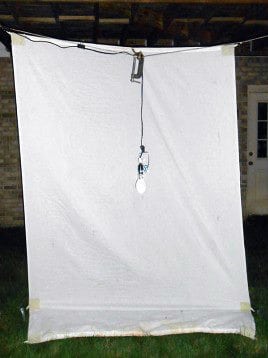
For a number of years now in the Section of Invertebrate Zoology (IZ), we have been rearing larvae (= caterpillars) of different species of Lepidoptera (moths & butterflies) for both fun and research. This summer, given the ongoing COVID-19 pandemic and the need for everyone to isolate, I have taken to collecting and rearing a number of different species at home that were collected at a bug sheet in my own back yard (Figure 1).

Figure 1. A set up “bug sheet” used to attract insects at night.

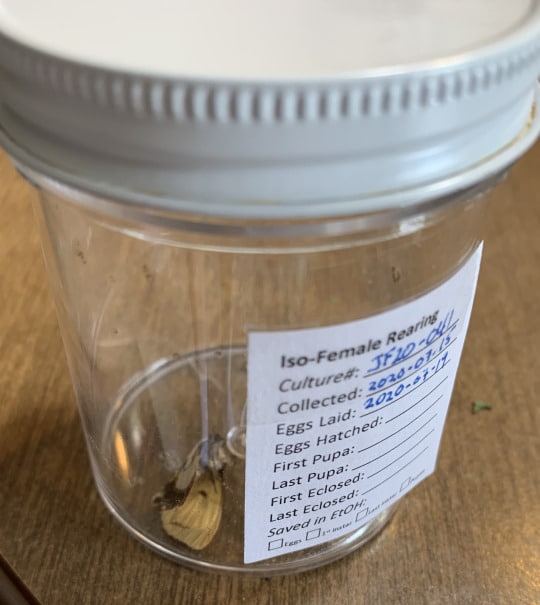
Female moths are collected live and held in a plastic jar we call a “live jar” (Figure 2), until they lay eggs. If eggs are laid, and they are fertile, they usually hatch in about 7-10 days. This gives you enough time to identify the female adult to species (a recent field guide to moths and butterflies is a good place to start) so you can find out information on its preferred food source(s), or host plant(s), before the little larvae hatch are start searching around for food. If the eggs do hatch, rearing the resulting little caterpillars is a fun way to break up the tedium of being cooped-up at home for so long and is a nice way to bring Nature indoors.

Figure 2. Plastic “live jar” used to hold female moths until they lay eggs for rearing.

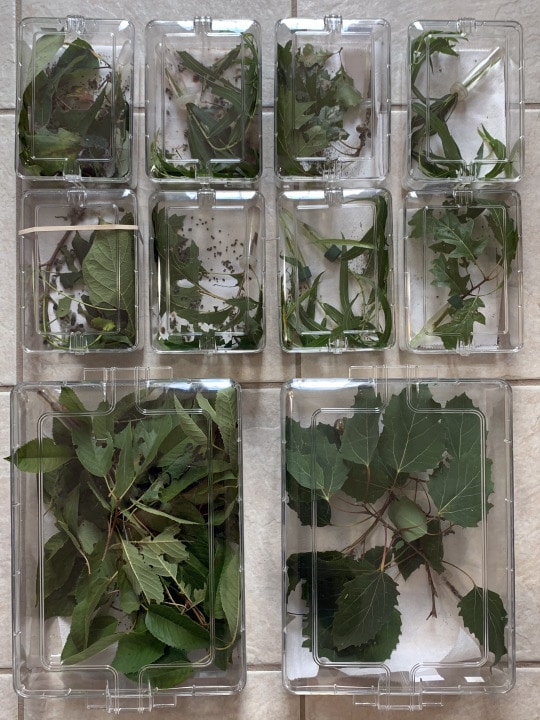
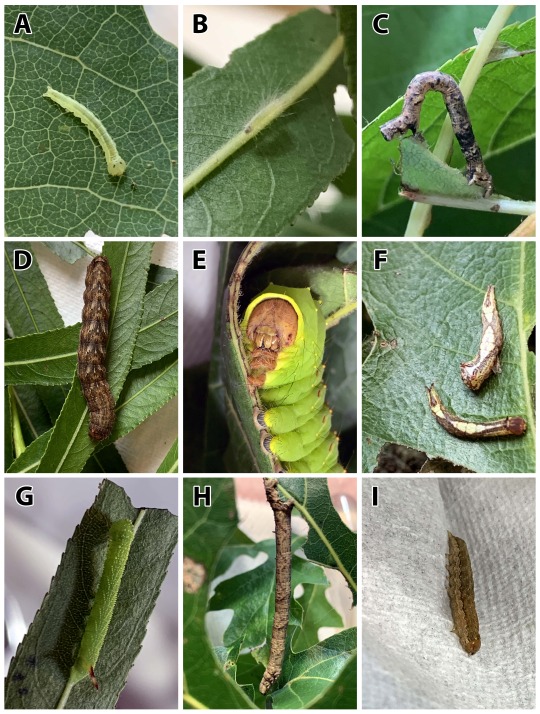
We have a little bit of experience rearing caterpillars at home. As you may know from a previous IZ blog post, my son and I reared some caterpillars that were not yet known to science, which resulted in a small publication. Right now, we have caterpillars of ten different species at various developmental stages. I check on them daily, making sure to keep their containers clean, and provide them with enough food to eat from their preferred host plant (Figure 3). It is amazing how quickly these little guys grow and change, all in the matter of a few short weeks. I try to capture images of them as they develop (see Figure 4), so they can be used on our websites, in blog posts (such as this one), or in eventual scientific publications that may result from the work.

Figure 3. Clear plastic rearing chambers containing caterpillar cultures, each started from eggs laid by a single female moth (= iso-female culture). Host plants include Maple, Willow, Oak, Sassafras, Cherry and Poplar.
Figure 4. Images of various species of caterpillars currently being reared by the author at home. A.) Early instar of Gluphisia septentrionis (Notodontidae), B.) Early instar of Acronicta dactylina (Noctuidae), C.) Later instar of Metarranthis sp. (Geometridae), D.) Last instar of Lithophane disposita (Noctuidae), E.) Later instar of Antheraea polyphemus (Saturniidae), F.) Two different early instars of Heterocampa obliqua (Notodontidae), G.) Early instar of Paonias excaecata (Sphingidae), H.) Last instar of Besma quercivoraria (Geometridae), I.) Later instar of an unknown caterpillar that was found on host plant food obtained for other caterpillars. The species will be determined when the adult moth emerges from the pupa later in the summer.

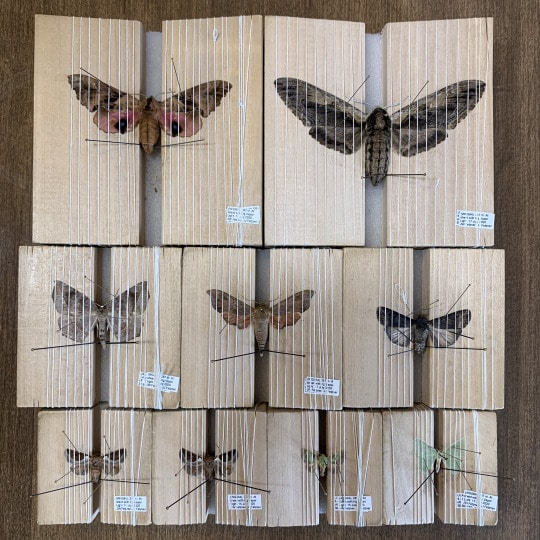
Once the females have laid eggs, they usually die as a result, having completed their task in the moth’s life cycle.  The females are then pinned, and the wings are usually spread on wooden blocks until they dry, so that the specimens can be easily identified and examined by experts in the future (Figure 5).  They then receive data labels that includes information on the specific locality and date of collection, method of collection, and the collector name(s).

Figure 5. Moths that have been pinned with their wings spread to aid in identification. Note the data labels have been associated with each specimen (lower right of each block).

My son and I are looking forward to watching our little menagerie of caterpillars progress throughout the summer, eventually completing their life cycle and becoming adult moths. I’m glad that we are able to give you a glimpse of our progress to date and hope you have enjoyed seeing some of these diverse little spineless wonders. Hopefully, when we can all return to our normal outdoor activities, you will have a newfound appreciation for these amazing insects when you encounter them out in the wild.

James W. Fetzner Jr. is Assistant Curator of Invertebrate Zoology at Carnegie Museum of Natural History. Museum staff, volunteers, and interns are encouraged to blog about their unique experiences and knowledge gained from working at the museum.
Related Content

Ask a Scientist: What are Murder Hornets?

Bug Bonanza: Virtual Bug Display

Is This Butterfly Blue or Green?

Filed Under: Blog Tagged With: Invertebrate Zoology, James Fetzner, Museum from Home, Science News, Section of Invertebrate Zoology

April 29, 2020 by wpengine

“Say Cheese!” – Specimen Imaging in Invertebrate Zoology

“A picture tells 1,000 words.”

Specimen imaging is a method of documenting specimens in the Invertebrate Zoology collection for research as well as collection maintenance. Digitizing the collection allows it to be more accessible to the scientific community. Specimen-based documentation includes capturing the data from the specimen as well as images of the specimen from different angles. Images of labels serve as a primary data capture that may then be used to populate a database of specimen records.

Most of the imaging currently being done is based on requests from the entomology community needing images of specimens known to be deposited at the Carnegie. There are many historical specimens that are not otherwise imaged but are referenced in older publications. These specimens include cataloged species vouchers referred to as types, or specimens referenced in publications that are of interest to researchers studying those species.  

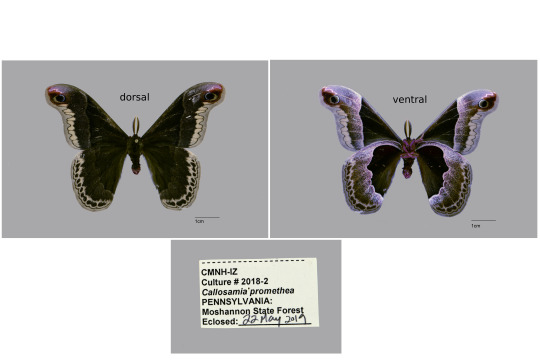
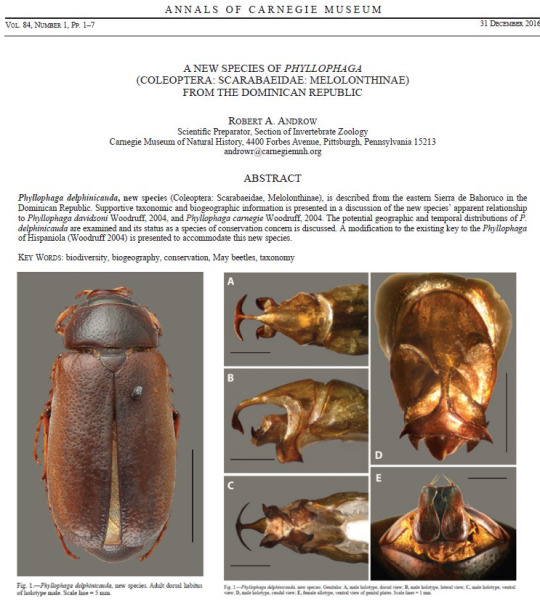
Specimen photography is also essential when discovering new species. When a paper is published describing a new species, images of the designated types are included. The type series includes the series of specimens that were examined and used to describe the new species in detail. These images should be taken with a scale line to show the size of the specimen. Images of prepared dissections are also included.

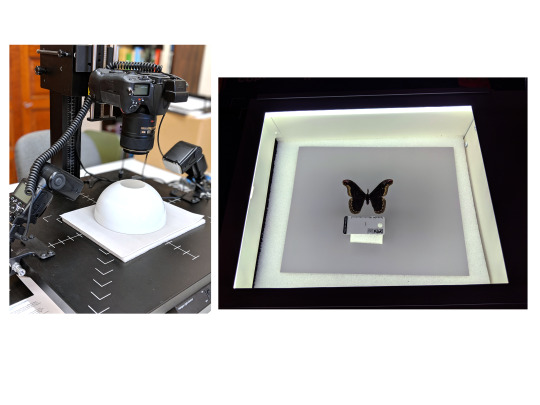
Imaging techniques include using a copy stand, flash lighting, and focus-stacking through software that produces a final high-quality image with all parts of the specimen in focus. A light box may also be used, as an alternative to flash lighting, to provide even lighting and sharp images.  

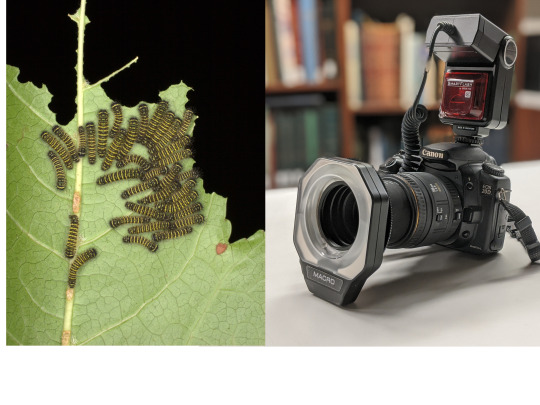
A macro ring flash helps with producing even lighting when imaging live insects that are moving or are very small and need to be really close to the lens.  

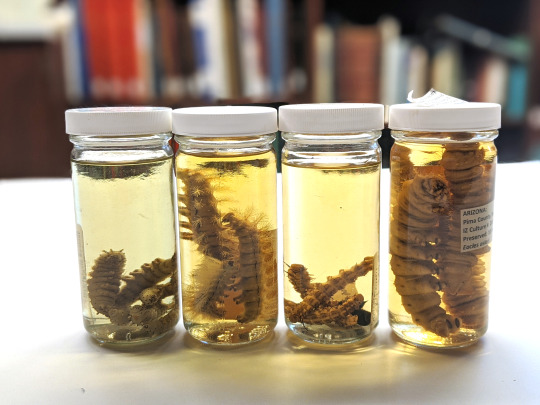
Photographing live specimens that will lose their color when preserved in alcohol, such as caterpillars, is crucial.  Larval images are a major component of the caterpillar collection and are incredibly valuable documentation of larval growth.  Raising caterpillars is a way to document the life history of different species of moths and butterflies, and their associated caterpillars.  Since the caterpillars will be stored in alcohol, the color will be lost in the preserved specimen, but these characteristics will be recorded through high-quality images.  

Several other types of equipment are used to capture images at higher magnification so that characters may be seen in greater detail.  Taking an image through a compound microscope allows one to capture an image that may be used to draw a detailed illustration. An image taken through a Scanning Electron Microscope offers even greater detail. All-together, the image collection is a major component of the archived data that contributes to the understanding of the specimens in the collection. This includes digital files and images on older slide film that still need to be scanned. The digital image collection continues to grow daily, and serves the broader entomological community that needs access to the reference specimens stored in the Invertebrate Zoology collection at the Carnegie.

Vanessa Verdecia is a collection assistant in the museum’s Invertebrate Zoology Section. Museum employees are encouraged to blog about their unique experiences and knowledge gained from working at the museum.
Filed Under: Blog Tagged With: Invertebrate Zoology, Museum from Home, Science News, Vanessa Verdecia

April 9, 2020 by wpengine

Building Webs and Making Connections: Working with the Arachnid Collection

At one point in the long history of Invertebrate Zoology, we went by the name “Section of Insects & Spiders.” It may be surprising to some readers, but spiders aren’t actually insects. Insects and Arachnids (spiders and their kin) are two very distinct groups of animals that make up part of the mega-diverse lineage of organisms known as the Arthropods (phylum Arthropoda; which also includes the crustaceans (crabs, shrimps, and lobsters, etc.) and myriapods (centipedes and millipedes).

Arthropods are characterized by having segmented bodies, the presence of an exoskeleton, bilateral symmetry, and paired jointed appendages. Within this phylum, the classes Insecta and Arachnida vary in several key ways. Arachnids have a fused head and thorax (called a cephalothorax) with a separate abdomen, while insects have three distinct regions: a head, thorax, and abdomen, typically unfused. Additionally, insects have 6 legs, while spiders have 8.

Within arachnids, there are several orders, including Araneae (spiders), Acari (mites & ticks), Opiliones (Harvestmen/“Daddy Long Legs”), Scorpionida (scorpions), Solifugae (camel or sun spiders), and others. Spiders comprise the majority of the order Araneae and includes the tarantulas.

Historically, spiders have been treated differently from most of the insects housed here in IZ. As largely a section of entomology, the main focus has been on class Insecta, while still building on donated arachnid materials where applicable.

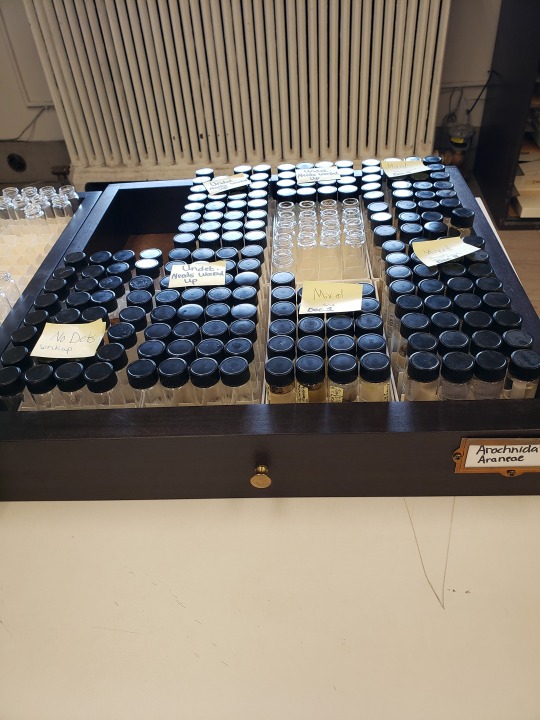
In early 2019, I was tasked with bringing the arachnid holdings together and began databasing its contents. This was part of a larger digitization initiative pioneered in IZ as well as many museum collections world-wide. As with many soft-bodied organisms, we store our spider specimens in alcohol (80% ethanol), as shown in Figure 1.

Figure 1. A standard alcohol drawer, containing arachnid specimens in 6 dram vials.

I began by bringing determined material together taxonomically. Determined materials are those that an expert has identified to the genus and/or species level. I can then catalogue that information into a database so that the holdings here can be shared electronically to other arachnologists around the globe.

Currently, we have over 900 spiders databased of the estimated 2700+ arachnids in our collection. Most of our spiders are from field expeditions to the Dominican Republic, from a large donated collection from Brazil, and from a former curator’s backyard in Gibsonia, PA.

We plan to move on to other arachnid groups in the future, and ultimately hope to have our specimens completely digitized and available for loans to the scientific community.

I’d like to give a special thank you to two of our wonderful volunteers, J. Murphy and A. Bianco. Their dedication and hard work have allowed this project to really blossom and our “web” of arachnid lovers to grow ever larger.

Catherine Giles is the Curatorial Assistant of Invertebrate Zoology at the Carnegie Museum of Natural History. Museum employees are encouraged to blog about their unique experiences working at the museum.

Filed Under: Blog Tagged With: Catherine Giles, Invertebrate Zoology, Museum from Home, Science News

March 11, 2020 by wpengine

Tarantula relative found at Powdermill

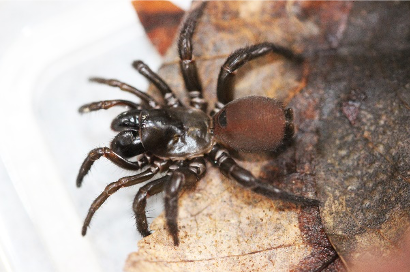
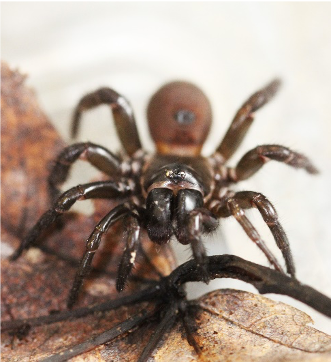
On March 6th, CMNH herpetologist Dr. Danny Hughes came across a very cool spider at Powdermill while digging holes for a salamander survey, and graciously captured it for us. We were excited to find out that it was a folding-door spider in the family Antrodiaetidae and genus Antrodiaetus!  It is related to tarantulas and belongs to the same group of primitive spiders called mygalomorphs. They are uncommonly encountered, partly because they spend most of their lives in underground, silk-lined burrows. The entrance to the burrow is camouflaged with debris so that when unsuspecting prey walk by, the spider can just reach up and out of the opening, grab its meal, and retreat (see this YouTube video for an example: https://www.youtube.com/watch?v=k5owIY63g3E).

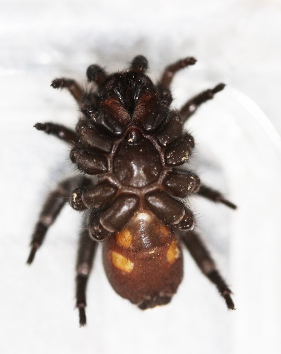
While the large fangs of these spiders may seem intimidating, they are not aggressive and are not of medical concern to humans because their venom is not very potent. In the ventral image, note the two pairs of yellow patches on the underside of the abdomen. These are respiratory structures known as book lungs. Nearly all spiders have a pair of book lungs, but only the primitive groups have two pairs.

Most folks are familiar with tarantulas which are found more in warmer climates, but these lesser-known mygalomorphs can be found right here in western PA. In fact, Powdermill is home to another family of mygalomorphs, the purseweb spiders (in the family Atypidae) which look similar, but they build silken tubes that run up along the base of a tree or rock above ground. We will be keeping our eyes peeled for this other cool family of spiders so we can photograph and show them off in another post. Stay tuned!

Andrea Kautz is a Research Entomologist at Carnegie Museum of Natural History’s Powdermill Nature Reserve. Museum employees are encouraged to blog about their unique experiences and knowledge gained from working at the museum.
Filed Under: Blog Tagged With: Invertebrate Zoology, Powdermill, Science News

  • « Go to Previous Page
  • Page 1
  • Page 2
  • Page 3
  • Page 4
  • Page 5
  • Interim pages omitted …
  • Page 10
  • Go to Next Page »

sidebar

About

  • Mission & Commitments
  • Directors Team
  • Museum History

Get Involved

  • Volunteer
  • Membership
  • Carnegie Discoverers
  • Donate
  • Employment
  • Events

Bring a Group

  • Groups of 10 or More
  • Birthday Parties at the Museum
  • Field Trips

Powdermill

  • Powdermill Nature Reserve
  • Powdermill Field Trips
  • Powdermill Staff
  • Research at Powdermill

More Information

  • Image Permission Requests
  • Science Stories
  • Accessibility
  • Shopping Cart
  • Contact
  • Visitor Policies
One of the Four Carnegie Museums | © Carnegie Institute | Privacy Policy | Terms of Use | Accessibility
Rad works here logo