• Skip to primary navigation
  • Skip to main content
  • Skip to primary sidebar

Carnegie Museum of Natural History

One of the Four Carnegie Museums of Pittsburgh

  • Visit
    • Buy Tickets
    • Visitor Information
    • Exhibitions
    • Events
    • Dining at the Museum
    • Celebrate at the Museum
    • Powdermill Nature Reserve
    • Event Venue Rental
  • Learn
    • Field Trips
    • Educator Information
    • Programs at the Museum
    • Bring the Museum to You
    • Guided Programs FAQ
    • Programs Online
    • Climate and Rural Systems Partnership
  • Research
    • Scientific Sections
    • Science Stories
    • Science Videos
    • Senior Science & Research Staff
    • Museum Library
    • Science Seminars
    • Scientific Publications
    • Specimen and Artifact Identification
  • About
    • Mission & Commitments
    • Directors Team
    • Museum History
  • Tickets
  • Give
  • Shop

Jon Rice

September 6, 2023 by Erin Southerland

Do No Harm: Dealing with Spotted Lanternflies

by Jonathan Rice

Spotted lanternflies are a “true bug,” cousins of the cicada and stink bug. Unlike our native bug species, these invasive bugs feed on a very wide variety of plants and don’t have enough native predators or parasites to keep their population in check. Their favorite food is tree-of-heaven (Ailanthus altissima), which is already widespread in our area. This means their population is exploding, and Pittsburghers are looking for ways to get rid of them. 
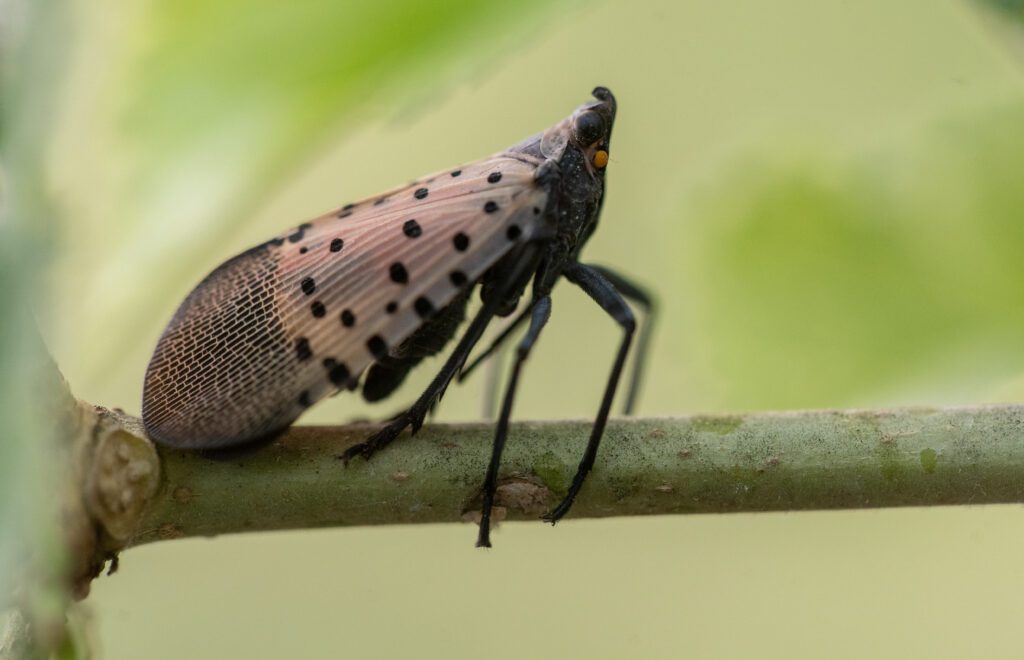
adult spotted lanternfly

There’s no special pesticide that targets the lanternflies. However, we can outsmart them. 

Spotted lanternflies display a unique behavior of climbing up tree trunks (or any other vertical surface), falling to the ground, and climbing up again. This is repeated many times throughout each stage of their life cycle.  By using this behavior to our advantage, we can trap spotted lanternflies. The best currently used traps include circle traps and oviposition traps, which corral the lanternflies so they can be contained and destroyed. You can make circle traps as a DIY project, or you can order them premade. 

Sticky traps: to stick or not to stick?

Although sticky traps (tape, sticky sheets, and glue traps) have been suggested in the past for spotted lanternfly control and are currently used by some landowners, these are extremely dangerous for birds. Sticky traps can kill many species of local birds that forage on tree trunks, including woodpeckers, nuthatches, and wrens. After the birds are stuck to the trap it becomes impossible for them to free themselves and they will die a slow and miserable death.
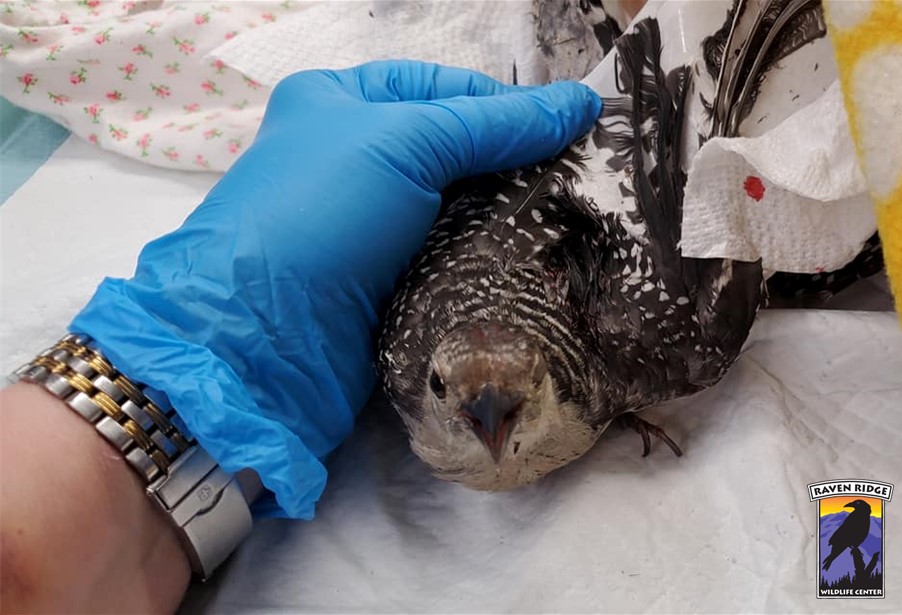
Woodpecker being treated for injuries from a sticky trap. Credit: Raven Ridge Wildlife Center.

If you find a live bird or mammal stuck to a lanternfly sticky trap, do not try to remove the bird yourself. Cover any remaining sticky areas on the trap with plastic wrap to reduce double sticking the bird (or yourself), remove the entire trap from the tree, and take it to the nearest wildlife rehabilitation center. If you must use a sticky trap, ensure it is covered with a wire mesh (hardware cloth or similar) to prevent anything larger than a lanternfly from touching it. Check sticky traps at least once a day to ensure no birds or mammals have been caught. 

Jonathan Rice is Urban Bird Conservation Coordinator at Powdermill Nature Reserve, Carnegie Museum of Natural History’s environmental research center.

Related Stories

Tracking Migratory Flight in the Northeast

A Summer Internship at Powdermill

Can’t Choose Just One: Asking an Entomologist to Name Their Favorite Native Species

Carnegie Museum of Natural History Blog Citation Information

Blog author: Rice, Jonathan
Publication date: September 6, 2023
Share this post!

  • Share on Twitter Share on Twitter
  • Share on Facebook Share on Facebook
  • Share on Pinterest Share on Pinterest
  • Share on LinkedIn Share on LinkedIn
  • Share on Reddit Share on Reddit
  • Share via Email Share via Email

Filed Under: Blog Tagged With: Anthropocene, Birds, Invertebrate Zoology, Jon Rice, liocf, Powdermill Nature Reserve, Science News

July 17, 2023 by Erin Southerland

Tracking Migratory Flight in the Northeast

by Patrick McShea
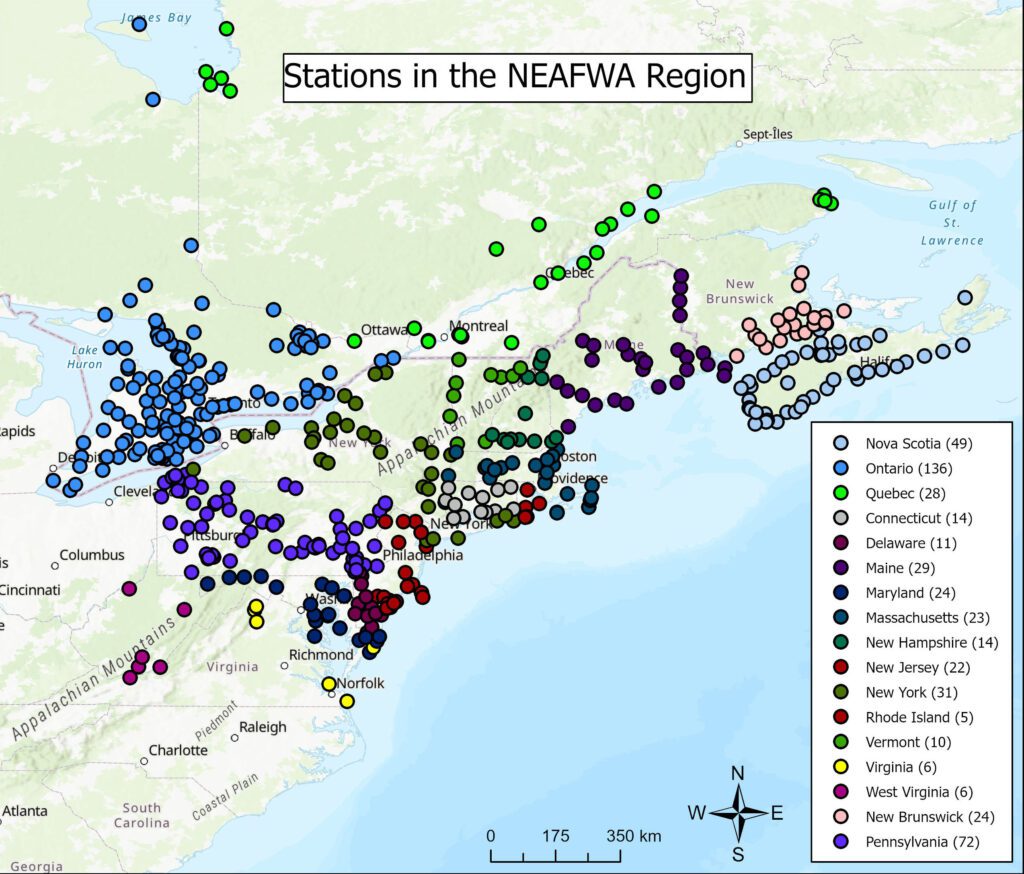
Map of northeastern US and southeastern Canada with dots representing Motus stations in the Northeast Association of Fish and Wildlife Agencies region

Explanations of networks benefit from maps or other graphic representations of linked participants. In the case of a recent bulletin describing regional growth within the international research network known as the Motus Wildlife Tracking System, the inclusion of a map helps ground updated information about the program to the landscape.

The collaborative effort, known informally as simply Motus, a Latin word for movement, was founded by the bird conservation organization, Birds Canada in 2014, and has grown to involve hundreds of partners among scientific and educational institutions, government agencies, and independent researchers.

The ground-breaking work of Motus involves the use of automated radio telemetry to track the migratory movements of free-flying birds, bats, and insects. After an animal under study is safely captured, fitted with a highly miniaturized transmitter, known as a nanotag, and released, the creature’s flight movements are electronically detected and recorded whenever it passes within nine miles of strategically placed antennas mounted on low, just-above-tree-canopy-height receiving stations.

Carnegie Museum of Natural History is a Motus partner through the work of staff at its Powdermill Avian Research Center who have installed 136 receiving stations from western Maryland through Maine and continue to monitor 50 receiving stations from southwestern Pennsylvania up through western New York along the Adirondack Mountains. 

Although Motus stations are in place across the Western Hemisphere landmass from Nunavut, Canada, to southern Chile, the world’s densest concentration of them is found in the thirteen U.S. states and five Canadian provinces that make up the network’s Northeast Collaboration. The 504 tower sites in this territory represent one third of the global total, and since 2017 have logged more than 170 million nanotag detections. This tracking has involved more than 4,700 tagged individuals of 147 species of birds contributing vital information to 194 different research projects.

Ongoing maintenance and technological upgrades will be necessary for the Northeast Motus Network to continue generating research findings that inform conservation initiatives. As Jon Rice, the Museum’s Urban Bird Conservation Coordinator explains, “As this network reports findings for museum research into both the survivorship of window collisions and stopover behavior for species of greatest conservation need, it simultaneously supports ongoing research for countless other projects in the western hemisphere. The real power of this technology isn’t captured by the map. It’s our ability to help our neighbors using the same resources we are using to perform our own novel research.”

Patrick McShea is an Educator at Carnegie Museum of Natural History.

Related Content

A Taste for Metal

Milestones at Powdermill’s Banding Lab

Ruffed Grouse or Scarlet Tanager: Debating the Pennsylvania State Bird

Carnegie Museum of Natural History Blog Citation Information

Blog author: McShea, Patrick
Publication date: July 17, 2023

Share this post!

  • Share on Twitter Share on Twitter
  • Share on Facebook Share on Facebook
  • Share on Pinterest Share on Pinterest
  • Share on LinkedIn Share on LinkedIn
  • Share on Reddit Share on Reddit
  • Share via Email Share via Email

Filed Under: Blog Tagged With: Birds, Jon Rice, parc, Pat McShea, Powdermill Nature Reserve, Science News

February 22, 2022 by Erin Southerland

Fall 2021 Lights Out Pittsburgh Overview

by Jon Rice
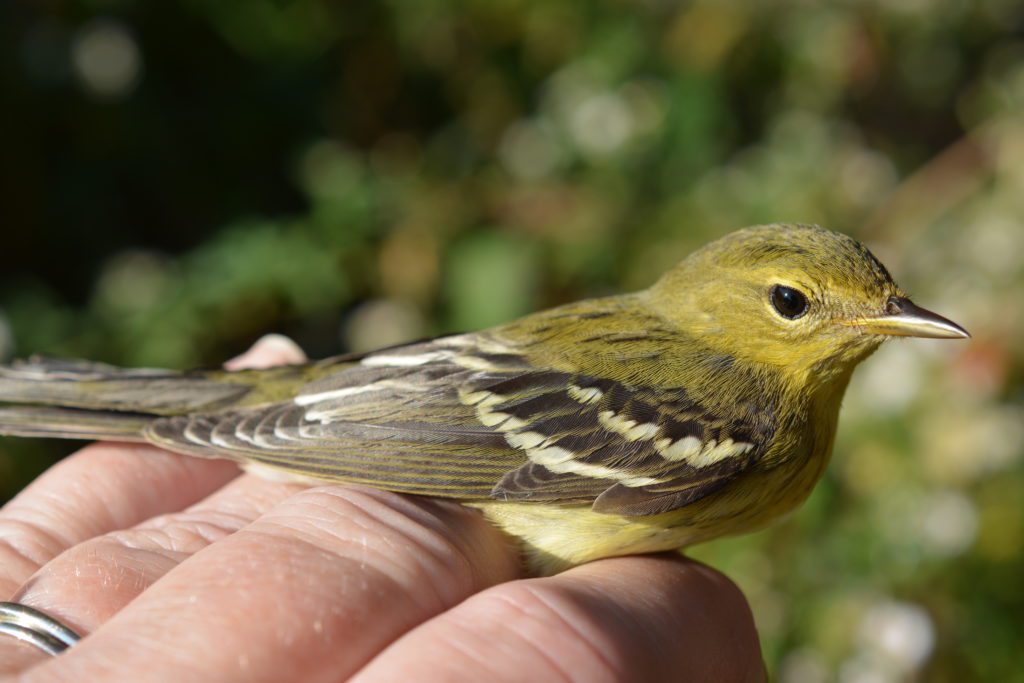
Yellow bird held in a hand outdoors.

Why Lights Out Pittsburgh?

Over the past eight years, scientists from Powdermill Nature Reserve have conducted research in Downtown Pittsburgh, working with the generous help of the public to determine where and when birds collide with windows and other building surfaces. During this time, we have determined what building parameters make the structures deadlier to birds. Meanwhile, at Powdermill Nature Reserve, research on avian perception of glass has identified and tested products that can deter birds from colliding with windows. Outside of these research efforts, one major factor related to window collisions demands more attention – light pollution.

Pittsburgh skyline at night with lights on.

As birds migrate at night, using the moon and stars to navigate, they can become disoriented by light pollution coming from the ground surface below them. The source is often large cities, but urban sprawl and suburban areas can be just as detrimental. Disoriented birds are drawn out of the sky into these areas, often ending their migratory flight for the night, when otherwise they would continue flying. It’s at this stage, when migrating birds are close to the ground and moving among buildings, that a large percentage of window collisions occur.

Dark Sky Ordinances and Lights Out Pittsburgh

Many cities around the world have begun developing dark sky ordinances to reduce light pollution for multiple reasons, including public health, improved potential for astronomical observations, and wildlife conservation. The City of Pittsburgh created such an ordinance in August of 2021. At the same time, Carnegie Museum of Natural History was approached by the National Aviary at Pittsburgh and the Building Owners and Managers Association (BOMA) with a proposal to start a local Lights Out initiative.  A program modeled after existing ones in Philadelphia and several Ohio cities was developed with the input and aid of BOMA, whose participation ensured representation for the owners and managers of some of the city’s largest buildings.

Pittsburgh skyline with lights off during Lights Out Pittsburgh.

Skyscrapers aren’t the only buildings participating in the program. Residential homes, apartment buildings, and other low-rise buildings are also encouraged to participate in the Lights Out initiative. To participate, all one must do is turn out unnecessary external lights from midnight to 6:00 a.m. between March 15 and May 31, then again between September 1 and November 15. These weeks-long intervals are the peak spring and fall avian migration periods.

Fall 2021 Lights Out Results

In the first week of our Fall 2021 Lights Out campaign, 18 buildings signed up. Five were residential homes in the area, and 13 were large commercial buildings in Downtown Pittsburgh, including Point Park University, BNY Mellon Center and Client Service Center, and several PNC Downtown properties. Over the next month an additional 35 participants joined. In total, 73 buildings began participating in the fall migration period, and we are hopeful participation will grow in the upcoming spring season from March 15 to May 31.

To learn more about how you can get involved or participate in Lights Out Pittsburgh visit our website birdsafepgh.org or email us at birdsafepgh@gmail.com.

Jon Rice is the Urban Bird Conservation Coordinator at Carnegie Museum of Natural History’s Powdermill Nature Reserve. Museum employees are encouraged to blog about their unique experiences and knowledge gained from working at the museum.

Related Content

Bird Safe Glass Installed at Carnegie Museums

60 Years, One Bird at a Time

World Pangolin Day: February 19, 2022

Carnegie Museum of Natural History Blog Citation Information

Blog author: Rice, Jon
Publication date: February 22, 2022

Share this post!

  • Share on Twitter Share on Twitter
  • Share on Facebook Share on Facebook
  • Share on Pinterest Share on Pinterest
  • Share on LinkedIn Share on LinkedIn
  • Share on Reddit Share on Reddit
  • Share via Email Share via Email

Filed Under: Blog Tagged With: Birds, birdsafe pittsburgh, Carnegie Museum of Natural History, Jon Rice, Powdermill Nature Reserve, Science News, We Are Nature 2

February 8, 2021 by wpengine

A Taste for Metal

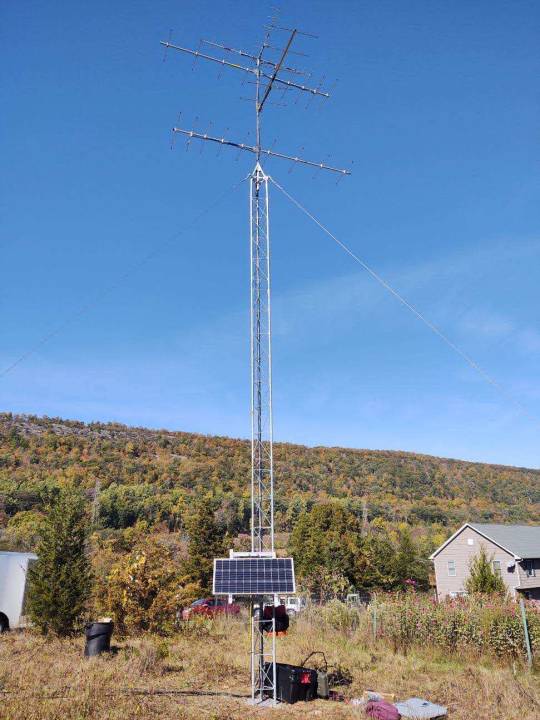
Motus tower in a field with a hill behind it

Powdermill Nature Reserve researchers are using radio technology to track songbirds marked with grain-of-rice-sized nanotags as they migrate North and South through our region each year. Tracking these birds requires a network of automated radio receiving stations, termed Motus stations, tuned to listen for nanotags affixed to the birds under study as they fly by. Motus is Latin for movement. The name serves to acknowledge the importance of tracking animal movement in ecological studies. The same Motus stations that track songbirds also track nano tagged bats, butterflies, or dragonflies.

Over 100 of these Motus Stations have been installed in the Northeast US with over 30 in Western Pennsylvania alone. These stations have tracked songbirds as they travel from Canada to Central and South America, providing critical data for researchers to make discoveries about migratory behavior, stop over site importance, and impacts of weather events on migration of birds, bats, and insects.

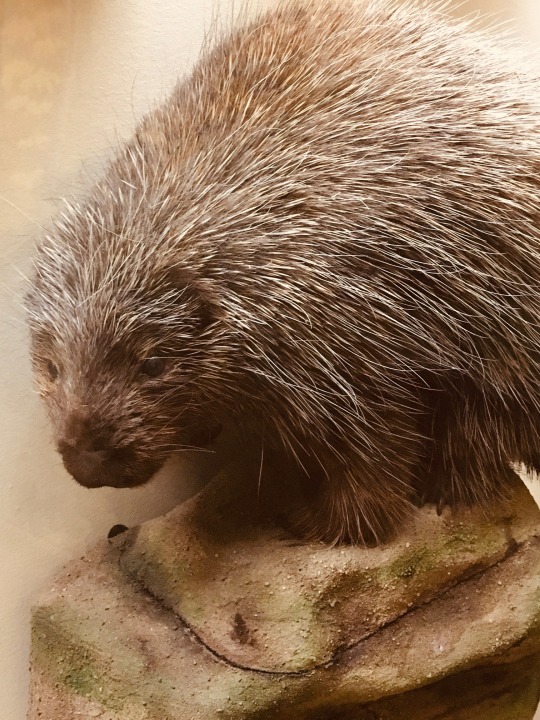
Porcupine taxidermy mount.

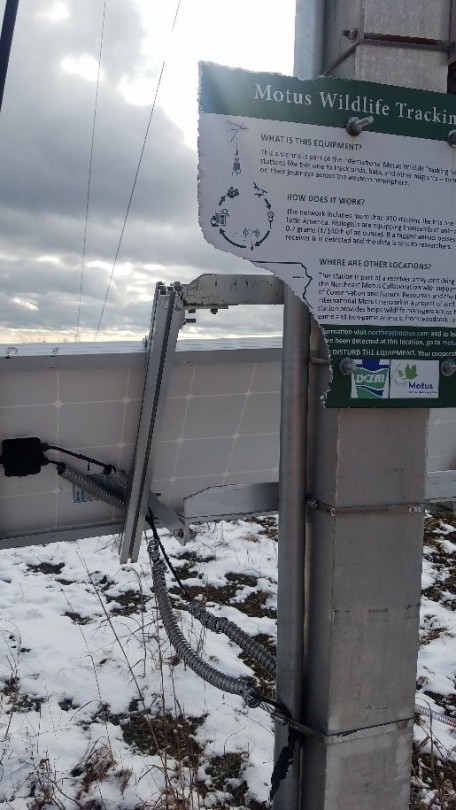
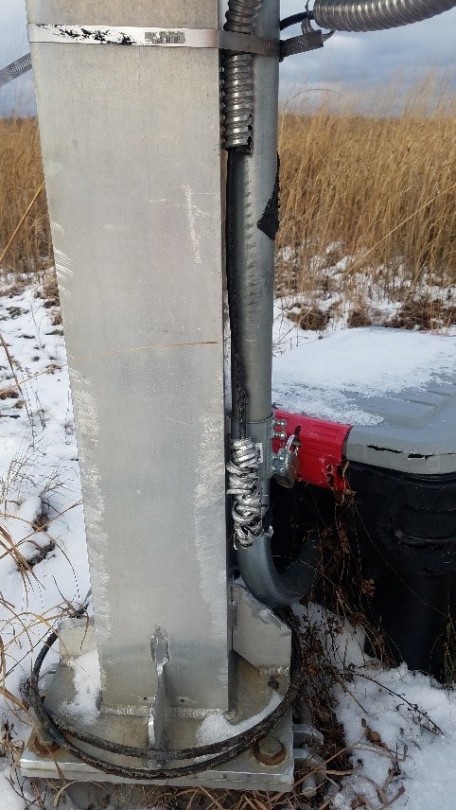
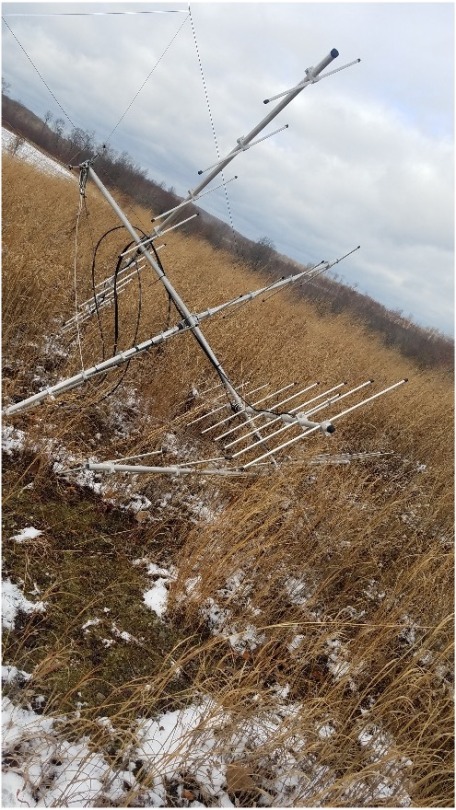
Maintaining these stations often requires fixing issues related to wind, snow, or ice, but one station on a State Game Land here in Western PA has been regularly decommissioned by porcupines! The local porcupines detect salt in the metals used to construct the station and can’t help but chew through all manner of equipment. On three recent occasions, destroyed equipment had to be replaced after the porcupines chewed through plastic boxes, flexible metal tubing, steel turnbuckles, aluminum informational signs, solar panels, coaxial cabling, and even the steel tower itself!

detail of Motus station with part of the sign on it missing
detail of damaged Motus tower
fallen Motus tower in a field with snow

Plans have been made to tear down the station and rebuild it to be “porky proof.” To do this a different structure will be used to hold the equipment well off the ground, and anti-climb baffles will be attached to keep the porcupines from getting to the equipment.

Jon Rice is the Urban Bird Conservation Coordinator at Carnegie Museum of Natural History’s Powdermill Nature Reserve. Museum employees are encouraged to blog about their unique experiences and knowledge gained from working at the museum.

Related Content

Bird Safe Glass Installed at Carnegie Museums

Keeping Birds Safe with GIS and Citizen Science

Before Powdermill Nature Reserve

Filed Under: Blog Tagged With: Birds, Jon Rice, Science News

November 9, 2018 by wpengine

Keeping Birds Safe with GIS and Citizen Science

By Jon Rice and James Whitacre

Almost 600 million birds die every year in North America after colliding with buildings. BirdSafe Pittsburgh, which has been a museum program for over four years, has collected over 1,500 birds that collided with windows. These birds have been collected in Downtown and surrounding areas, and through our efforts, we have learned what increases the likelihood of birds colliding with windows.

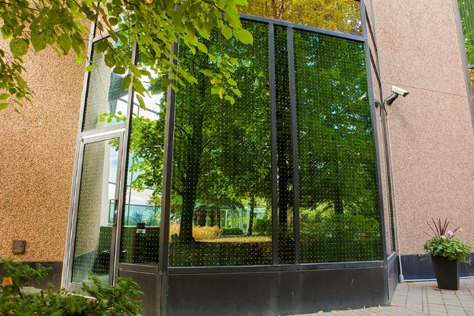
windows modified with a pattern birds can see

Locating and Researching Bird Strikes

Using the power of Geographic Information Systems (GIS), we have been tracking and collecting where birds have collided with windows. This will help us to find collision hotspots and assess the types of buildings that cause the most problems for birds. Our efforts so far have concentrated on downtown Pittsburgh with a crew of dedicated volunteers.

However, we are now inviting you – the public – to help us find bird strikes in your neighborhood. We have developed a form on our website for you to add bird strikes to our database. If you find a bird dead or stunned, you can help us add to our database of bird strikes using the form. It will guide you through how to add pictures of the bird, add the location to the map, and fill out the required data. Any bird added will help us expand our research.

We already know that skyscrapers, low-rise buildings, and residential houses alike threaten birds, albeit unequally. According to a study published in 2014, low-rises account for the majority of building related mortalities at 56%, with residential houses accounting for nearly all the rest at 44%, and high-rises only accounting for less than 1%. But, how do the buildings in downtown Pittsburgh and the surrounding neighborhoods fit into this picture?

By analyzing the precise locations of bird strikes in Pittsburgh using GIS, we hope to assess the types of buildings impacting bird deaths. By collecting fine scale data where birds strike windows, we could identify specific problem windows that birds strike more often than others. This would allow us to focus mitigation efforts to specific areas of concern rather than along an entire building façade. For instance, treating 10 windows on a building side instead of all 100 windows would result in considerable cost-savings while maintaining the same effect on decreasing bird strikes.

How You Can Help Save Birds

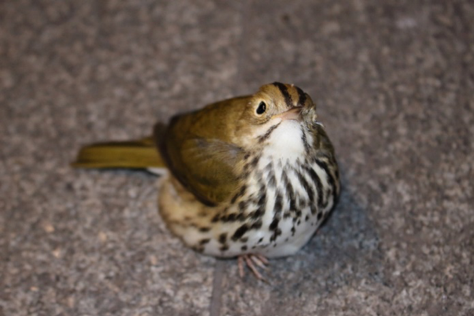
bird sitting on the sidewalk

Birds hit windows because of the reflections caused by sunlight hitting the glass and looking like open sky, trees or habitat. By breaking up the reflections with anything following a “2-inch-by-4-inch rule,” birds are less likely to strike the window. The 2-by-4 rule refers to the space between horizontal elements at no more than 2 inches apart, and the space between vertical elements at no more than 4 inches apart. These simple and cost-effective measures will reduce window collisions while maintaining the aesthetic qualities.

By helping us collect bird strike data and modifying the windows of your home or business, we can decrease the number of bird-window collisions and maintain stronger bird populations.

More information about BirdSafe Pittsburgh can be found at birdsafepgh.org.

Jon Rice is Citizen Science Assistant and James Whitacre is a GIS Research Scientist at Carnegie Museum of Natural History’s Powdermill Nature Reserve. Museum employees are encouraged to blog about their unique experiences and knowledge gained from working at the museum.

Filed Under: Blog Tagged With: Birds, birdsafe pittsburgh, James Whitacre, Jon Rice, Pittsburgh, Powdermill Nature Reserve

sidebar

About

  • Mission & Commitments
  • Directors Team
  • Museum History

Get Involved

  • Volunteer
  • Membership
  • Carnegie Discoverers
  • Donate
  • Employment
  • Events

Bring a Group

  • Groups of 10 or More
  • Birthday Parties at the Museum
  • Field Trips

Powdermill

  • Powdermill Nature Reserve
  • Powdermill Field Trips
  • Powdermill Staff
  • Research at Powdermill

More Information

  • Image Permission Requests
  • Science Stories
  • Accessibility
  • Shopping Cart
  • Contact
  • Visitor Policies
One of the Four Carnegie Museums | © Carnegie Institute | Privacy Policy | Terms of Use | Accessibility
Rad works here logo