• Skip to primary navigation
  • Skip to main content
  • Skip to primary sidebar

Carnegie Museum of Natural History

One of the Four Carnegie Museums of Pittsburgh

  • Visit
    • Buy Tickets
    • Visitor Information
    • Exhibitions
    • Events
    • Dining at the Museum
    • Celebrate at the Museum
    • Powdermill Nature Reserve
    • Event Venue Rental
  • Learn
    • Field Trips
    • Educator Information
    • Programs at the Museum
    • Bring the Museum to You
    • Guided Programs FAQ
    • Programs Online
    • Climate and Rural Systems Partnership
  • Research
    • Scientific Sections
    • Science Stories
    • Science Videos
    • Senior Science & Research Staff
    • Museum Library
    • Science Seminars
    • Scientific Publications
    • Specimen and Artifact Identification
  • About
    • Mission & Commitments
    • Directors Team
    • Museum History
  • Tickets
  • Give
  • Shop

Matt Lamanna

December 19, 2022 by Erin Southerland

Stepping Back in Time

by Suzanne Nuss

I grew up in the silent Canadian Arctic, so sounds switch me to alertness. Once alert, I pause to hear spoken words. During a recent late afternoon in Dinosaurs in Their Time, I focused on a sound that moved me to alertness until it became the voice of the museum’s Gallery Experience Presenter Shannon McGuinn saying, “I found a footprint.” 

Because the exhibition hall was mostly empty of visitors, I had been standing near and contemplating the visually striking display of the holotype Tyrannosaurus rex fighting in a field of replica Cretaceous poppies against a cast of another T. rex skeleton, the fossil that since its discovery in 1997 has been known informally as Peck’s Rex. As a Natural History Interpreter, I have been walking these halls for more than six years, yet I had never noticed a footprint. “Hmm,” I thought. “Really?”

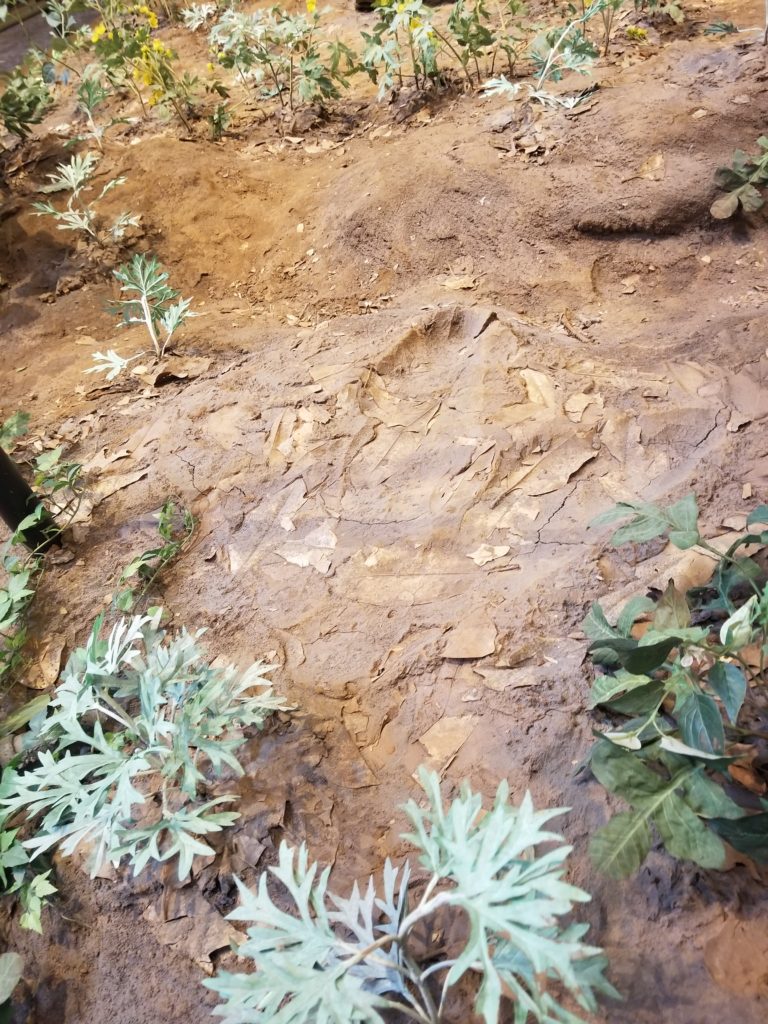
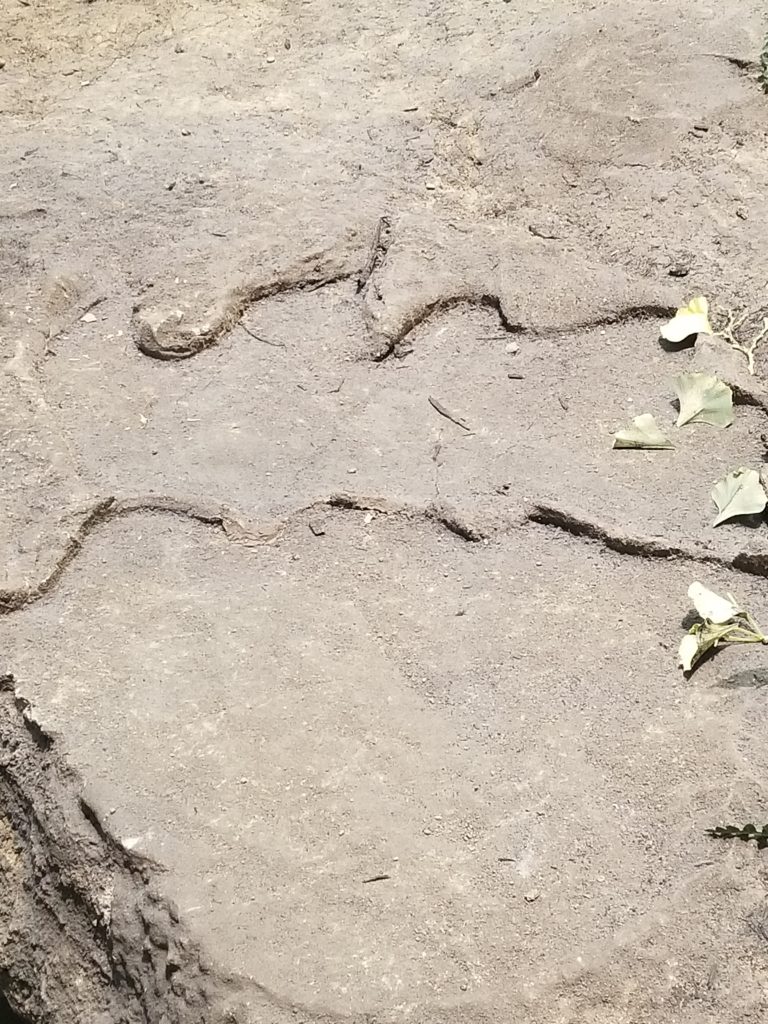
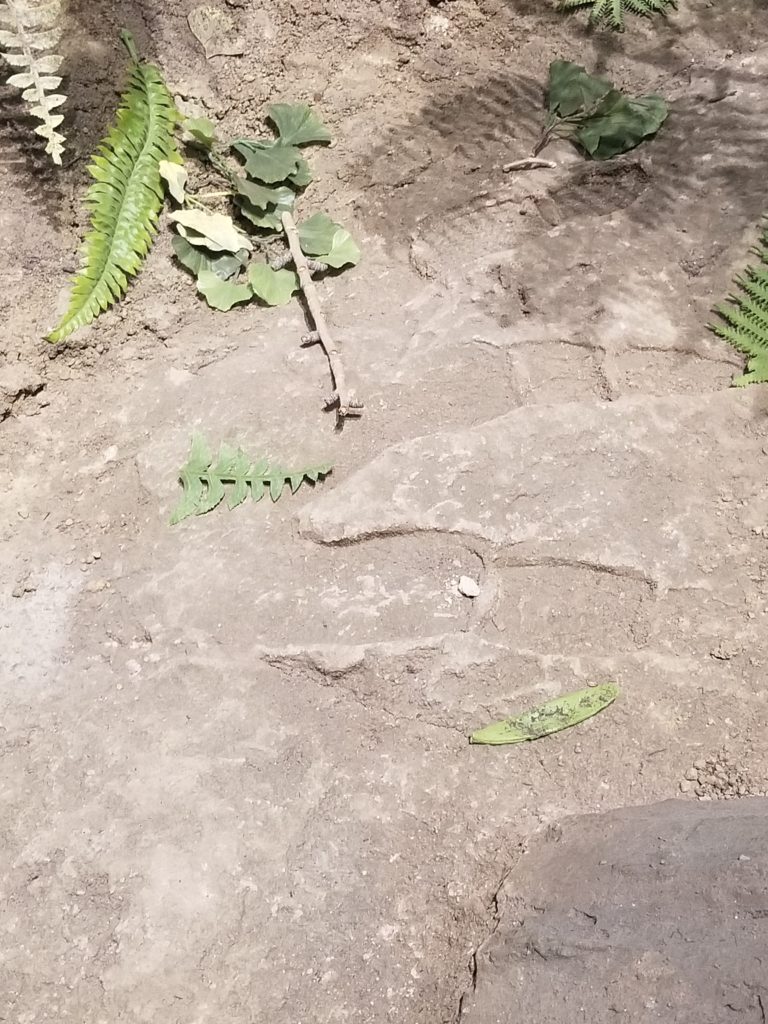
 I followed Shannon. She pointed. There it was: faint but unmistakable, on the recreated ground surface of the exhibit base, the impressions of three digits resembling a gigantic bird footprint. 
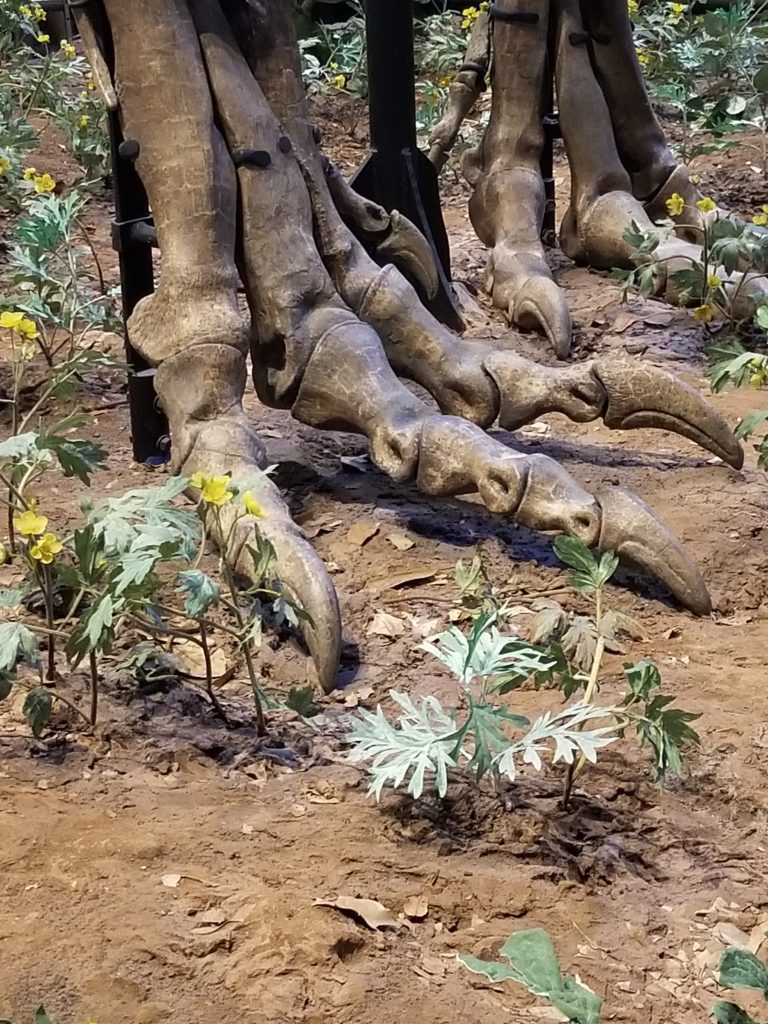
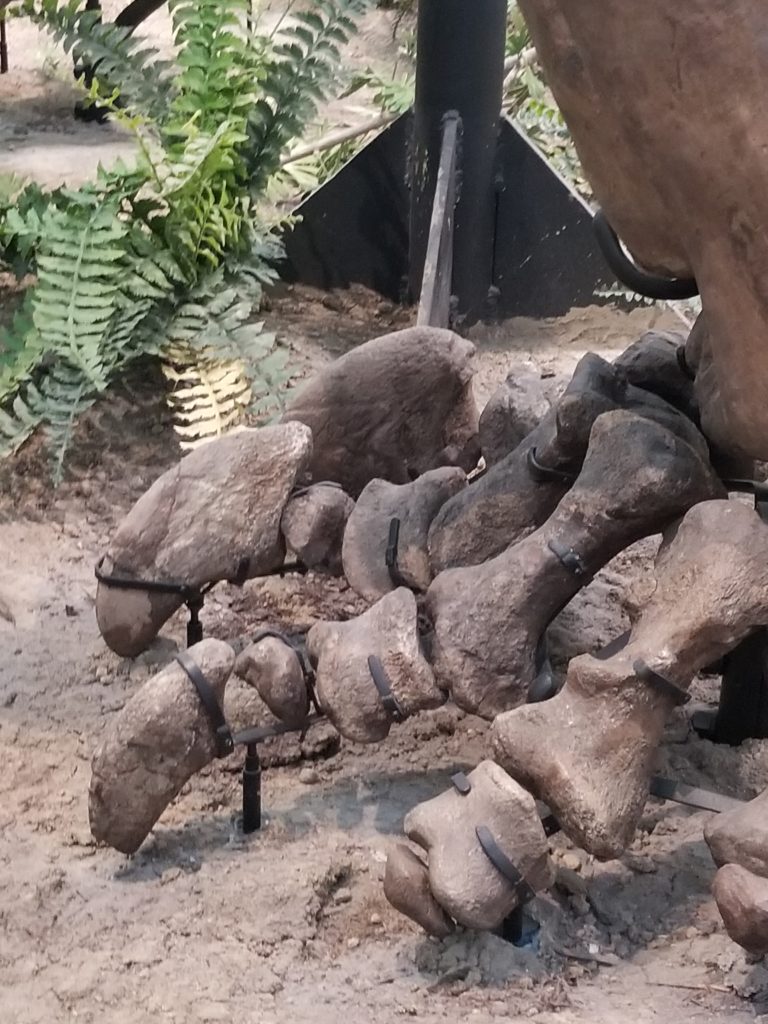
  • T. rex fossil foot

We both entertained the same thought: if there’s one track, could there be more? We trotted over behind Peck’s Rex and yes. A second footprint was visible, two feet behind and under the tail, as if the animal had been ambling along.

At this point, Dr. Matt Lamanna, the person most responsible for the scientific content of the now-15-year-old hall, walked by. Gurgling with excitement, we showed him the footprints. He was delighted by our find. “Yes. Two ‘Easter Eggs.’ When Dinosaurs in Their Time was built, we included many simulated footprints, sculpted on the basis of actual fossilized dinosaur tracks. I only wish I’d been able to add a few fake coprolites (fossil poop) too.”

 We continued to hunt, with Matt now with us. Three toes again, much smaller. Now that we recognized the tracks as intentional creations, we wondered what animal tracks we might find.  Our third discovery, pictured below, was a faux footprint of the bird-like oviraptorosaur Anzu wyliei.
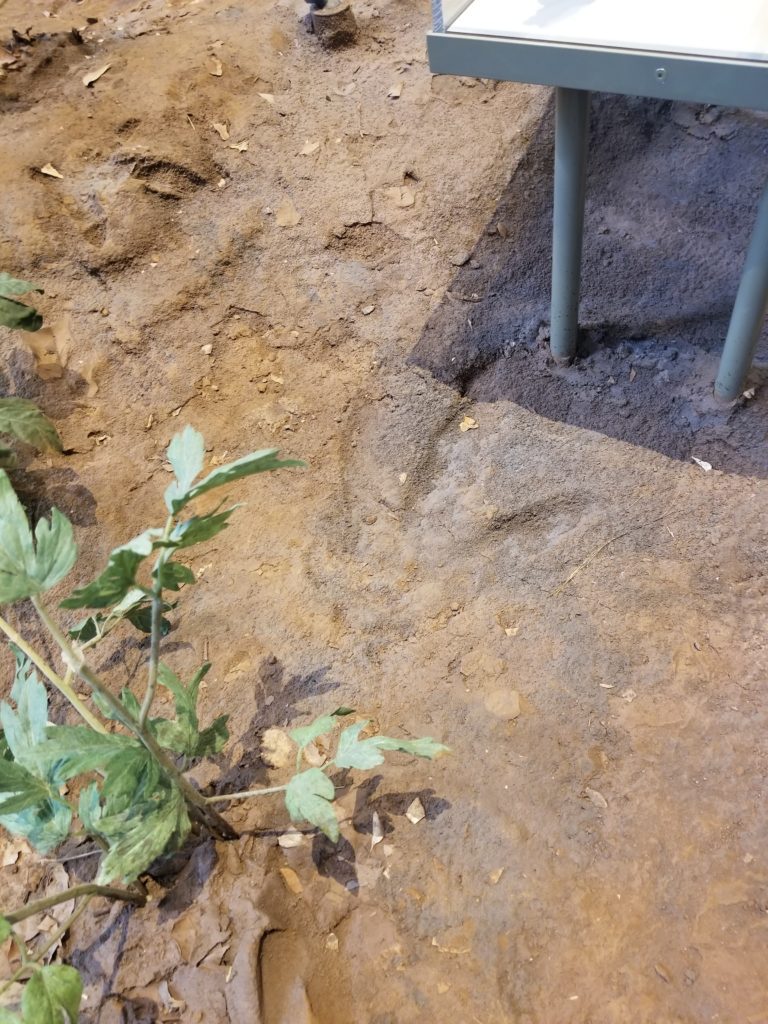
fossil footprint in a museum display

Moving into the Jurassic portion of the exhibition, we stepped back in time, figuratively speaking, by more than 80 million years, and were dwarfed by huge, long-necked, plant-eating dinosaurs (sauropods). We also found very different-looking tracks, some of which were overlapping. Our questions multiplied: could tracks like this indicate that these enormous beasts walked in herds? Is it possible to match up the toes of the foot with the footprint? Was the wide, flat heel of sauropods important for weight distribution?   
Those thoughts captivated me, mainly because I was introduced to D’Arcy Thompson’s book, On Growth and Form, when I studied biophysics at McGill University in Montreal. One section of the book was devoted entirely to demonstrating how the many kinds of tetrapods (four-limbed, backboned animals such as amphibians, reptiles, birds, and mammals) all had the same fundamental form: head, torso, and tail, with forelimbs attached at the shoulder girdle and hind limbs attached to the hip. I loved the accompanying images that stretched all the body parts to ‘morph’ one tetrapod into another. A more technical term for this concept is “homologous structures.” In the image below, a simple letter key is used to mark forelimb bones: (H) humerus, (R) radius, (U) ulna, (C) carpals, (MC) metacarpals, and (P) phalanges (the latter better known as finger and toe bones). The hind limbs match up  in a similar way.
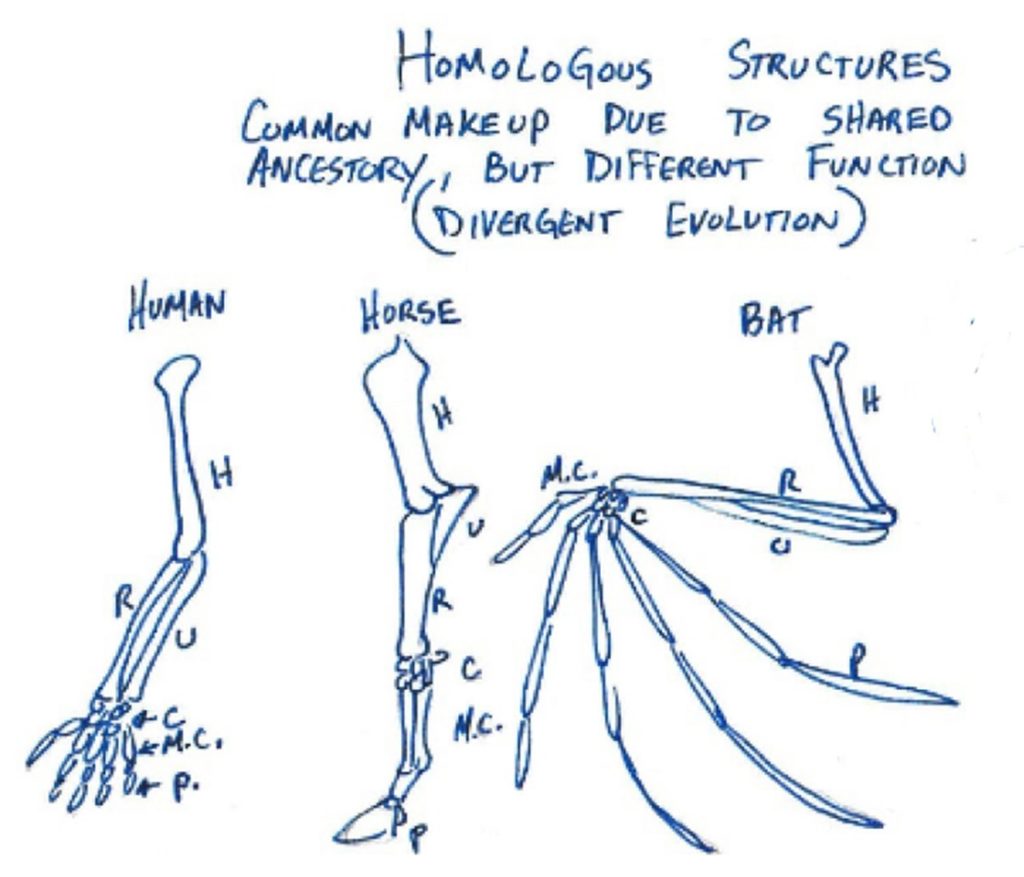
Drawing of human, horse, and bat limb skeletons side by side

I thought about what a human footprint looks like, and then a horse footprint, and even a bat footprint. Bears and humans walk with their heels on the ground (a stance known as plantigrade). Horses and giraffes walk on the very tips of their toes (unguligrade), whereas cats, dogs, and predatory dinosaurs such as Allosaurus and T. rex walked on their toes (digitigrade). 

Returning to my original spot within the dinosaur exhibition, I was determined to take a closer look. Could I tell from the fossil evidence how the species on display walked? Was it possible to identify the femur, tibia, and fibula of each skeleton?

The colorful murals lining the walls of the exhibition helped. The depictions of each creature are based upon well-studied fossils and biomechanical modelling. I could start musing about how they walked and make a guess. Each guess became a test, which produced a working hypothesis. I have since discovered that the museum’s Bird Hall and Hall of North American Wildlife are also great places to think about feet, footprints, and the biomechanics of animal movement, and why some dinosaur footprints look so much like bird footprints. 

Footprints have stories to tell about movement, behavior, and speed. Properly interpreted, footprints can reveal how long their makers’ legs might have been, the width of these animals’ hips, and even whether adults and young traveled together in family groups. What, I have been steadily wondering, would the footprints recording a fight look like? 

I don’t want to look anything up yet. I need to muddle through with my own thinking first. When I am ready, I might start with legged robot studies to clarify the physical constraints that must be considered in moving through space. I have since found simulated tracks of Allosaurus and Stegosaurus, and in my searching have also discovered how even an exhibition I know well still holds tremendous potential for inquiry and further learning.
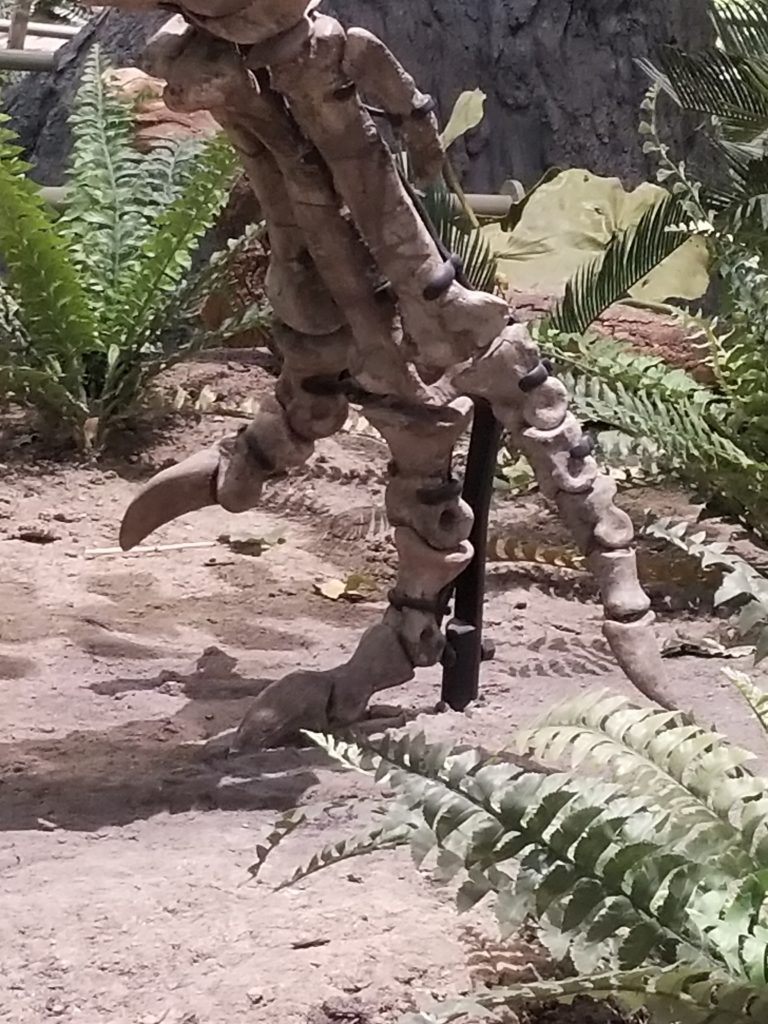
Suzanne Nuss is a Natural History Interpreter at Carnegie Museum of Natural History.

Related Content

The Strange Saga of Spinosaurus, the Semiaquatic Dinosaurian Superpredator

The Two-Headed Dinosaur

The Bromacker Fossil Project

Carnegie Museum of Natural History Blog Citation Information

Blog author: Nuss, Suzanne
Publication date: December 19, 2022
Share this post!

  • Share on Twitter Share on Twitter
  • Share on Facebook Share on Facebook
  • Share on Pinterest Share on Pinterest
  • Share on LinkedIn Share on LinkedIn
  • Share on Reddit Share on Reddit
  • Share via Email Share via Email

Filed Under: Blog Tagged With: dinosaurs in their time, Matt Lamanna, Suzanne Nuss, Vertebrate Paleontology

June 8, 2022 by Erin Southerland

Bizarre Meat-Eating Dinosaur Joins “Rogues’ Gallery” of Giant Predators from Classic Fossil Site in Egypt’s Sahara Desert

Fossil Reveals First Evidence of Abelisaurid Dinosaurs Found in Bahariya Oasis
 
Carnivorous Dinosaur Group Known for Bulldog-like Faces, Tiny Arms, and Small Teeth

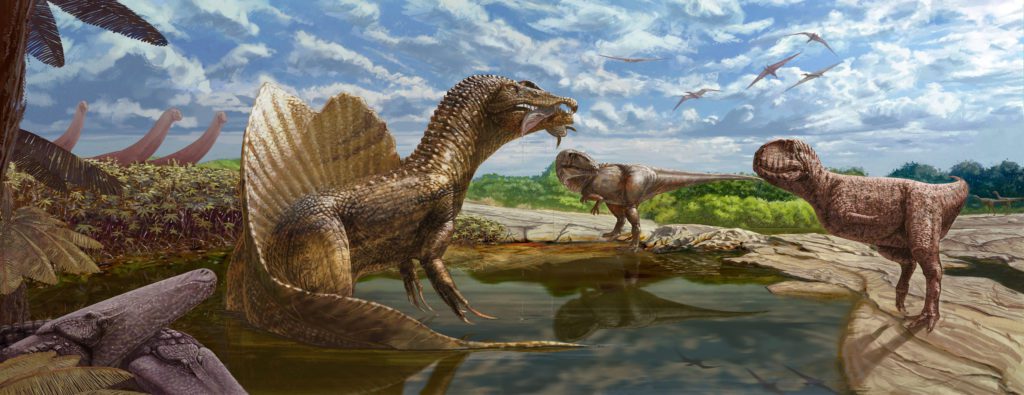
Illustration of dinosaurs in a desert oasis
Reconstruction of the ecosystem of the Bahariya Oasis in the Sahara Desert of Egypt approximately 98 million years ago, showing the diversity of large theropods (predatory dinosaurs). The newly discovered, as-yet unnamed abelisaurid (right) confronts Spinosaurus (left center, with lungfish in jaws) and Carcharodontosaurus (right center), while two individuals of the crocodilian Stomatosuchus (left) look on. In the background, a herd of the sauropod (giant, long-necked herbivorous dinosaur) Paralititan (left) warily regard these predators and two individuals of another theropod, Bahariasaurus (far right), while a flock of a still-unnamed pterosaur (flying reptile) soars above. The vegetation is dominated by the mangrove-like tree fern Weichselia. Image by Andrew McAfee, Carnegie Museum of Natural History. 

[Pittsburgh, Pennsylvania] — An Egyptian-American team of researchers has announced the discovery of a new kind of large-bodied meat-eating dinosaur, or theropod, from a celebrated fossil site in Egypt’s Sahara Desert. The fossil of a still-unnamed species provides the first known record of the abelisaurid group of theropods from the Bahariya Formation, a rock unit in the Bahariya Oasis that dates to the middle Cretaceous Era (approximately 98 million years ago). In the early 20th century, this locality famously yielded the original specimens of a host of remarkable dinosaurs—including the colossal sail-backed fish-eater Spinosaurus—which were then destroyed in World War II. Abelisaurid fossils had previously been found in Europe and in many of today’s Southern Hemisphere continents, but never before from the Bahariya Formation. The team describes the Bahariya abelisaurid discovery in a paper published today in Royal Society Open Science. 
 
The study was led by Belal Salem of the Mansoura University Vertebrate Paleontology Center (MUVP) in Mansoura, Egypt, who is also a graduate student at Ohio University and a faculty member at Benha University. The research team also included Dr. Matt Lamanna, Mary R. Dawson Associate Curator and Head of Vertebrate Paleontology and lead dinosaur specialist at Carnegie Museum of Natural History (CMNH); Dr. Patrick O’Connor, Professor of Biomedical Sciences at Ohio University; Sanaa El-Sayed, a doctoral student at the University of Michigan and the MUVP’s former vice director; Dr. Hesham Sallam, a professor at the American University in Cairo (AUC) and Mansoura University and the founding director of the MUVP; and additional colleagues from Benha University and the Egyptian Environmental Affairs Agency. CMNH Vertebrate Paleontology Scientific Illustrator Andrew McAfee produced or assisted with most of the illustrations in the paper.

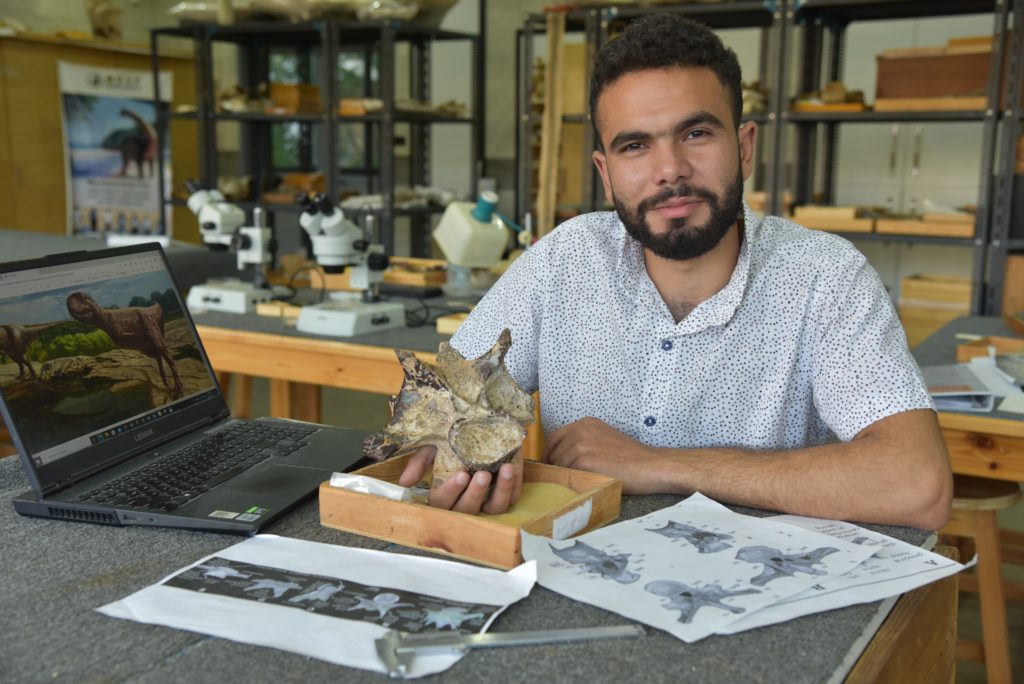
Person sitting at a desk holding a fossil
Study leader Belal Salem of the Mansoura University Vertebrate Paleontology Center (MUVP), Ohio University, and Benha University examines the roughly 98-million-year-old abelisaurid theropod neck vertebra discovered from the Bahariya Oasis that forms the basis of the new study. Photo by Hesham Sallam, American University in Cairo/MUVP. 

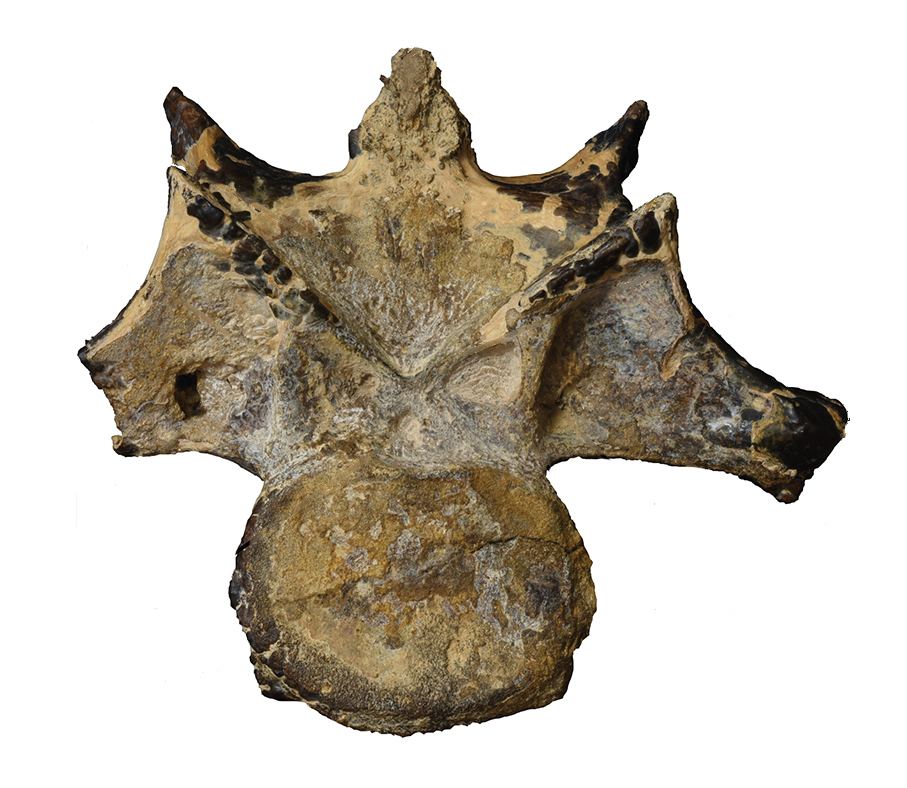
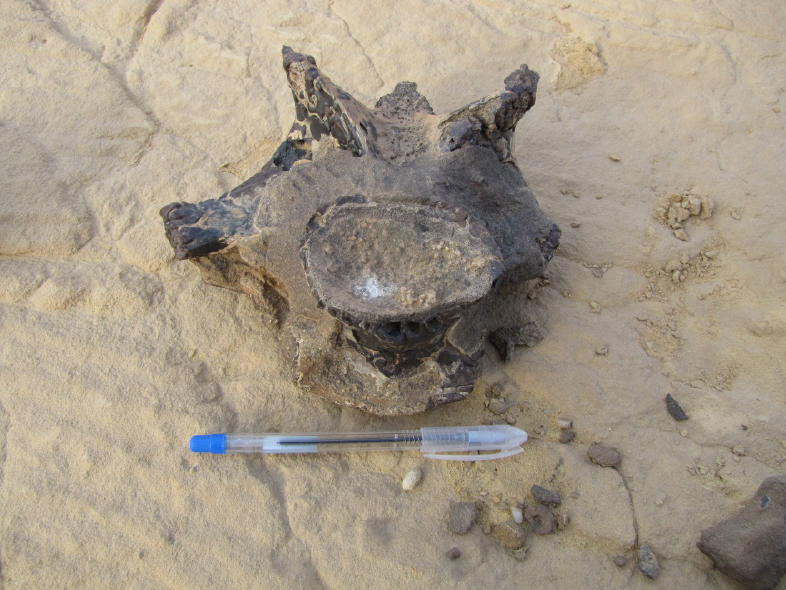
The fossil in question, a well-preserved vertebra from the base of the neck of a theropod, was recovered by a 2016 MUVP expedition to the Bahariya Oasis. The vertebra belongs to an abelisaurid, a kind of bulldog-faced, small-toothed, tiny-armed theropod that is estimated to have been roughly six meters (20 feet) in body length. Abelisaurids—most notably represented by the horned, demonic-looking Patagonian form Carnotaurus of Jurassic World and Prehistoric Planet fame—were among the most diverse and geographically widespread large predatory dinosaurs in the southern landmasses during the Cretaceous Period, the final time period of the Age of Dinosaurs. Along with Spinosaurus and two other giant theropods (Carcharodontosaurus and Bahariasaurus), the new abelisaurid fossil adds yet another species to the cadre of large predatory dinosaurs that roamed what is now the Egyptian Sahara roughly 98 million years ago. 
 
“During the mid-Cretaceous, the Bahariya Oasis would’ve been one of the most terrifying places on the planet,” says Salem. “How all these huge predators managed to coexist remains a mystery, though it’s probably related to their having eaten different things, their having adapted to hunt different prey.”

fossil vertebra
The abelisaurid neck vertebra from the Bahariya Oasis, Egypt that constitutes the first record of this dinosaur group from that classic fossil locality. The bone is shown in anterior view. Photo by Belal Salem, Mansoura University Vertebrate Paleontology Center/Ohio University/Benha University.

The new vertebra holds implications for the biodiversity of Cretaceous dinosaurs in Egypt and the entire northern region of Africa. It is the oldest known fossil of Abelisauridae from northeastern Africa, and shows that, during the mid-Cretaceous, these carnivorous dinosaurs ranged across much of the northern part of the continent, east to west from present day Egypt to Morocco, to as far south as Niger and potentially beyond. Spinosaurus and Carcharodontosaurus are also known from Niger and Morocco, and a close relative of Bahariasaurus has been found in the latter nation as well, suggesting that this fauna of large to gigantic theropods coexisted throughout much of northern Africa at this time.
 
The Site
 
The Bahariya Oasis is renowned within paleontological circles for having yielded the type specimens (the original, first-discovered, name-bearing fossils) of several extraordinary dinosaurs during the early 20th century, including, most famously, Spinosaurus. Unfortunately, all Bahariya dinosaur fossils collected prior to World War II were destroyed during an Allied bombing of Munich in 1944.
 
As a graduate student in the early 2000s, study co-author Matt Lamanna helped make the first dinosaur discoveries from the oasis since that infamous air raid, including the gargantuan sauropod (long-necked plant-eating dinosaur) Paralititan. “The Bahariya Oasis has taken on near-legendary status among paleontologists for having produced the first-known fossils of some of the world’s most amazing dinosaurs,” says Lamanna, “but for more than three quarters of a century, those fossils have existed only as pictures in old books.”

A group of people posing for a selfie in the desert
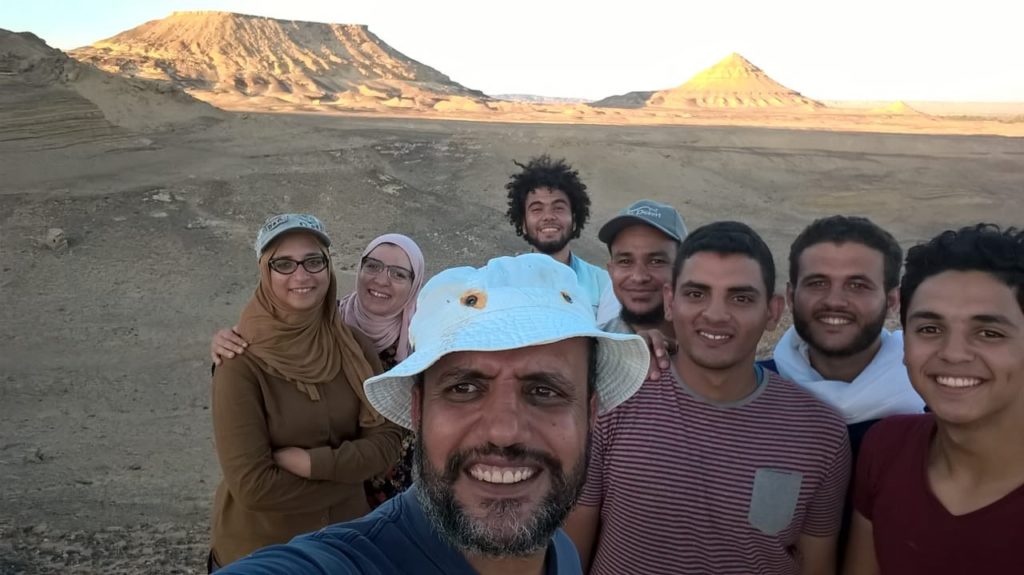
A Mansoura University Vertebrate Paleontology Center (MUVP) team exploring the Bahariya Oasis in 2018, including several authors of the new paper: Hesham Sallam (closest to camera), Sanaa El-Sayed (far left), and Belal Salem (farthest from camera). Photo by Hesham Sallam, American University in Cairo/MUVP.

Thankfully, discoveries made during recent expeditions led by researchers from AUC and MUVP—such as the new abelisaurid vertebra—are helping to restore the paleontological legacy of this classic site. These expeditions have recovered a wealth of additional fossils that the researchers plan to unveil in the near future.
 
As team member Sanaa El-Sayed, who co-led the 2016 expedition that collected the abelisaurid vertebra, explains, “this bone is just the first of many important new dinosaur fossils from the Bahariya Oasis.” 
 
The Bahariya Formation holds promise to shed further light on mid-Cretaceous African dinosaurs and the vanished ecosystems in which they once lived. Unlike more thoroughly explored rocks of the same age in Morocco that tend to yield isolated bones, the Bahariya Formation appears to preserve partial skeletons of dinosaurs and other land-living animals with a relatively high degree of frequency. The more bones that are preserved within the skeleton of a given fossil vertebrate species, the more paleontologists can generally learn about it. The propensity of the Bahariya Oasis for producing associated partial skeletons suggests that much remains to be learned from this historic locality.
 
“In terms of Egyptian dinosaurs, we’ve really just scratched the surface,” notes Hesham Sallam. “Who knows what else might be out there?”

Fossil vertebra set next to a pen for scale
The abelisaurid neck vertebra, approximately 98 million years old, as it was found in the field in the Bahariya Oasis during the 2016 Mansoura University Vertebrate Paleontology Center (MUVP)/Carnegie Museum of Natural History expedition funded by the National Geographic Society. Photo by Sanaa El-Sayed, University of Michigan/MUVP.

One Fossil
 
How can the discovery of a single neck vertebra lead researchers to conclude that the fossil belongs to a member of Abelisauridae, a kind of carnivorous dinosaur that has never been found in the Bahariya Formation before? The answer is remarkably simple: it is virtually identical to the same bone in other, better-known abelisaurids such as Carnotaurus and Viavenator from Argentina and Majungasaurus from Madagascar. Additionally, Belal Salem and his collaborators conducted a computer-based evolutionary study—known as a cladistic analysis—that confirmed the placement of the species represented by the new vertebra within Abelisauridae. As co-author Patrick O’Connor, who in 2007 published an exhaustive study of the vertebral anatomy of the abelisaurid Majungasaurus, explains, “I’ve examined abelisaurid skeletons from Patagonia to Madagascar. My first glimpse of this specimen from field photos left no doubt about its identity. Abelisaurid neck bones are just so distinctive.”
 
Research on the new abelisaurid vertebra was supported by a grant to Matt Lamanna from the National Geographic Society’s Committee for Research and Exploration, grants to Hesham Sallam from Mansoura University and the American University in Cairo intramural grant program, and a grant to Patrick O’Connor from the National Science Foundation.

Filed Under: Press Release Tagged With: Matt Lamanna, Science News, Vertebrate Paleontology

September 18, 2020 by wpengine

In the Field: Following the Work of a Paleontologist

Introduction by Jessica Sperdute

Edited by Matt Lamanna

With 22 million specimens housed at Carnegie Museum of Natural History (CMNH) and nearly 10,000 on display at any given time, chances are you’ve seen a dinosaur or two during your museum visits. But have you ever wondered how those dinosaurs get to the museum after they’re found? Or how we know where to dig for them in the first place?

What is a Fossil?

Fossils are the remains of animals, plants, and other ancient life that have been preserved in rock layers, or sediment. Fossils can include things such as leaves, skin, feathers, hair, footprints, and, most commonly, hard material such as wood, shells, teeth, and bones. Even poop can be fossilized! Many kinds of fossils are rare, and studying them can help us understand how the world looked tens of thousands or even millions of years before our time. Scientists who study fossils are known as paleontologists.

Looking at the Layers

Paleontologists use many tools to help them find fossils, but the key to knowing where fossils may be hidden underground lies with rocks—massive layers of rocks, called strata, are piled onto one another over time. These layers of different rocks can tell us not only what type of rock the layer is made of, but also approximately how old the layer is. The study of rock layers is called stratigraphy, and paleontologists use it to find potential fossil beds. For instance, if a paleontologist is looking specifically for fossils of dinosaurs, they would use stratigraphy to locate exposed layers of sedimentary rocks that formed at the time when dinosaurs lived and died—the Mesozoic Era. Once rocks from the Mesozoic Era are found in a location, the paleontologist goes to that location to hunt for fossils.

Big Prospects

Finding the right type of strata is only half the work of finding fossils; once paleontologists arrive at the field site, they need to physically walk around and search for clues that fossils may be around or underneath them. This is called prospecting, and the best place to prospect is usually at the base of a hill. Wind and rain will erode or gradually wear away rocks, allowing some fossils to break loose from higher sediments and roll downhill. If a fossil fragment is found, the team can then search the area to see if there may be other, more complete fossils—oftentimes higher up the hill and still embedded in rock.

Once prospecting has yielded an area where a fossil is likely to buried, the team can begin to block out the site and start digging. They use a wide variety of tools—even household items like paintbrushes, shovels, and hammers—to uncover fossils without damaging them. Records are taken of this step-by-step process to ensure all the data, from the precise location of the dig site, to the type of fossils found and their spatial relationships to one another, and even the measurements of the quarry, is kept for further study.

Safety First

The team has found a fossil, dug it up, and recorded the data. Now what? Once a fossil has been carefully excavated, it needs to be protected. Most fossils are delicate, so to transport them, especially larger ones, paleontologists use a method called plaster jacketing to protect them. First, they wrap the fossil in soft material such as paper towels, toilet paper, or aluminum foil to cover it. Then they wrap the covered fossil in strips of burlap that have been soaked in liquid plaster. This method is like using a cast on broken bones. After the plaster hardens, it acts as a shield. When the fossil has been safely transported and is ready to be studied or put on display at a place like Carnegie Museum, the paleontologist can gently cut away the plaster without damaging the fossil inside.

Paleontologist Photos

Dr. Matt Lamanna, Mary R. Dawson Associate Curator of Vertebrate Paleontology here at CMNH, has shared some of his favorite photos of his work at previous fossil dig sites. Look at the photos—do you recognize some of the locations, the tools that Dr. Lamanna is using, or the fossils that he’s digging up?

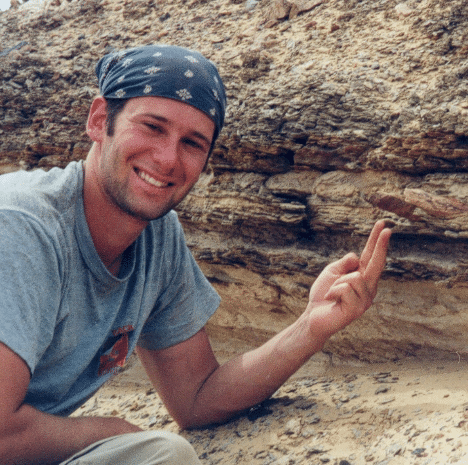
Here, Carnegie Museum of Natural History Mary R. Dawson Associate Curator of Vertebrate Paleontology Dr. Matt Lamanna is pointing at two ribs of a small—possibly baby—sauropod (long-necked plant-eating dinosaur) projecting from a rock face in the Bahariya Oasis of Egypt in 2001. He’d found this small sauropod only minutes before this photo was taken. Sometimes prospecting yields great finds! Credit: Mandi Lyon.
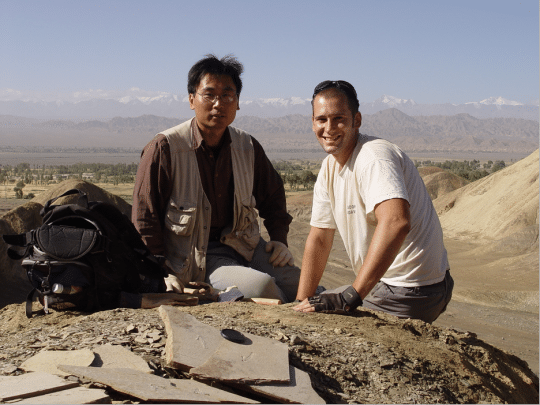
Dr. Matt Lamanna (right) on an expedition that found dozens of roughly 120-million-year-old fossil bird skeletons, mostly belonging to the species Gansus yumenensis, in the Changma Basin of Gansu Province, China in 2004. Lamanna is with collaborator Hailu You. Credit: Ken Lacovara.
In this photo, also taken in 2004 in Gansu Province, China, Dr. Lamanna poses next to the ribs of a giant sauropod—these ribs were just part of the massive skeleton that was discovered. Credit: Hailu You.
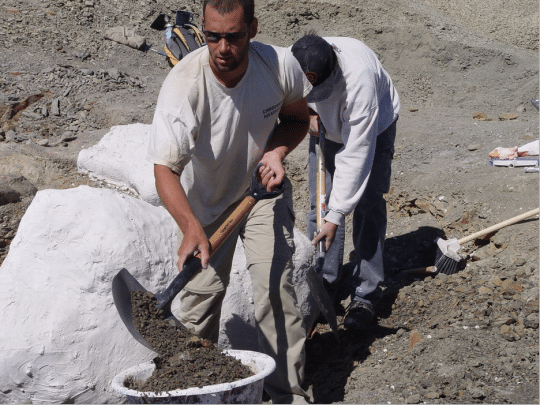
Dr. Lamanna on the expedition that found the new and gigantic titanosaur (a type of sauropod, again, a long-necked plant-eating dinosaur) Dreadnoughtus schrani in Santa Cruz Province, Argentina in 2005. Lamanna is shoveling loose rock out of the Dreadnoughtus quarry. Credit: Ken Lacovara.
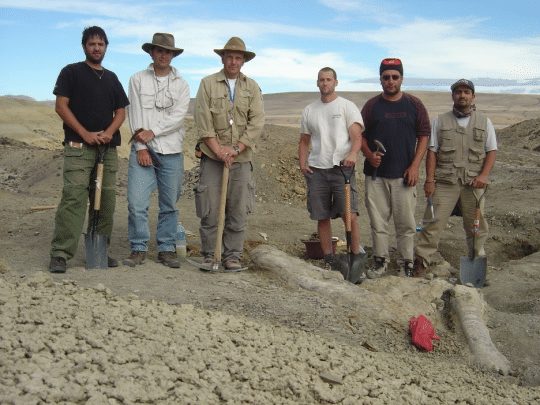
Members of the expedition from Drexel University, the Universidad Nacional de la Patagonia San Juan Bosco, and CMNH that found the giant titanosaur Dreadnoughtus in Santa Cruz Province, Argentina in 2005 (left to right: Lucio Ibiricu, Chris Coughenour, Ken Lacovara, Matt Lamanna, Marcelo Luna, and Gabriel Casal). The huge femur (thigh bone) and tibia (shin bone) of Dreadnoughtus are visible in the foreground. Credit: Matt Lamanna.
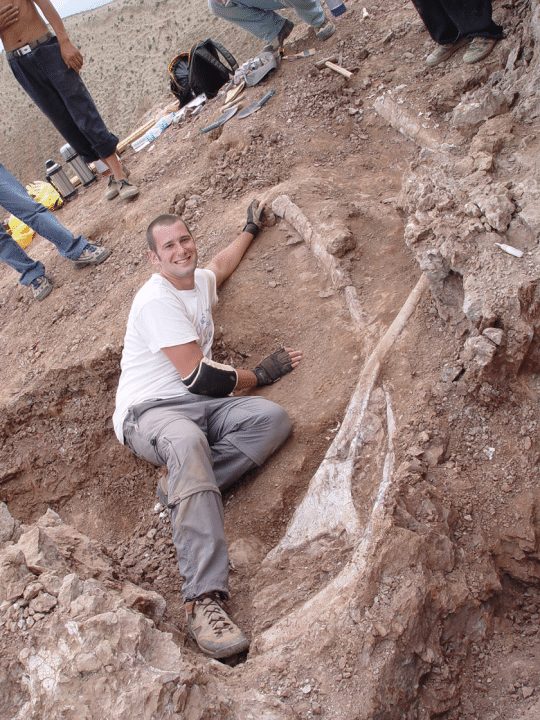
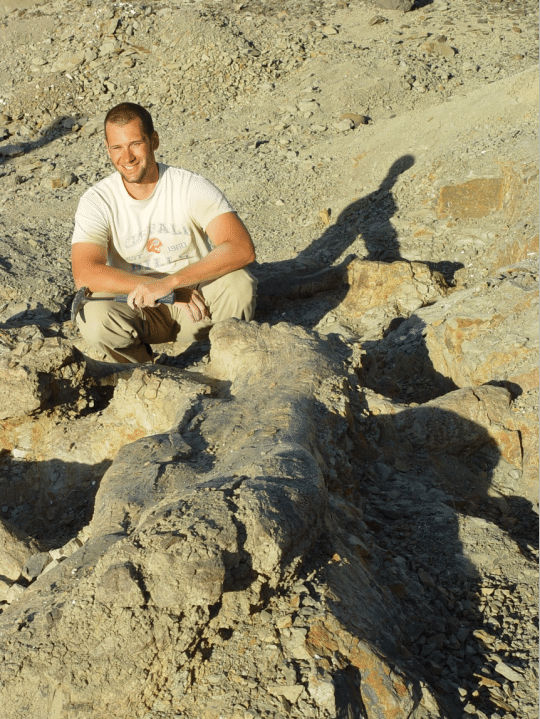
Dr. Lamanna on the expedition that found the titanosaur Dreadnoughtus in Santa Cruz Province, Argentina in 2005. He’s sitting behind the 1.91 m (6 ft 3 in) femur, or thigh bone, of Dreadnoughtus not long after its discovery. Credit: Chris Coughenour.
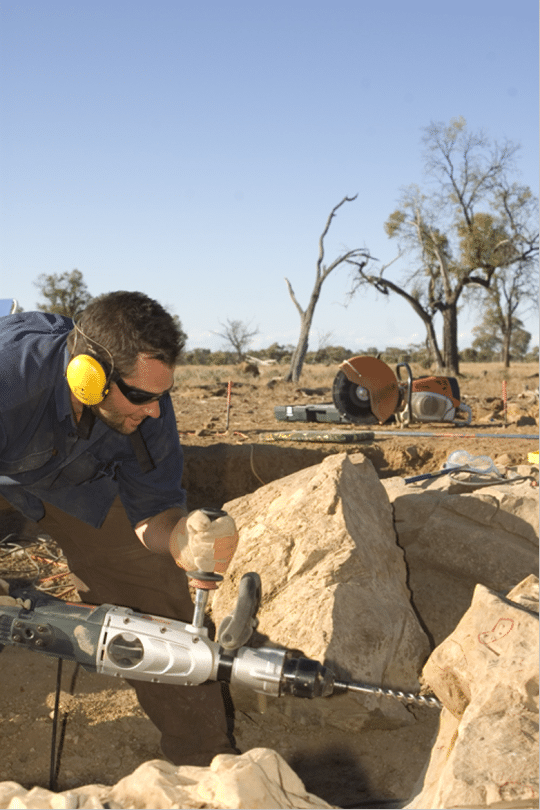
Here, Dr. Lamanna is using a rock drill (one of his very favorite field tools!) to help collect the skeleton of a new armored dinosaur in Queensland, Australia in 2008. Credit: Steve Salisbury.
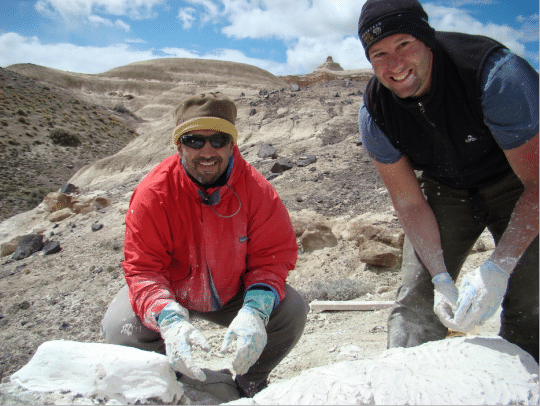
Dr. Lamanna (right) with collaborator Gabriel Casal making a plaster-and-burlap jacket to protect bones of the titanosaur Sarmientosaurus musacchioi in Chubut Province, Argentina in 2008. Credit: Mandi Lyon.
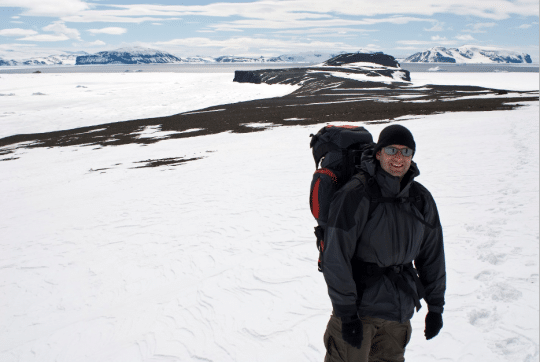
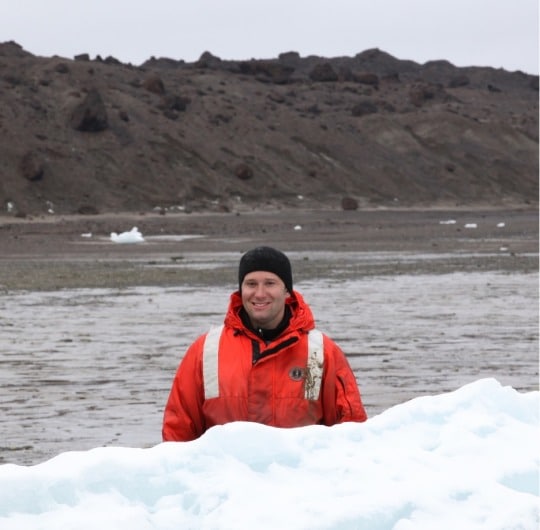
Lamanna on the day he found the only known fossil of the new, ~90-million-year-old crab Hadrocarcinus tectilacus on James Ross Island, Antarctica in 2009. Credit: Patrick O’Connor.
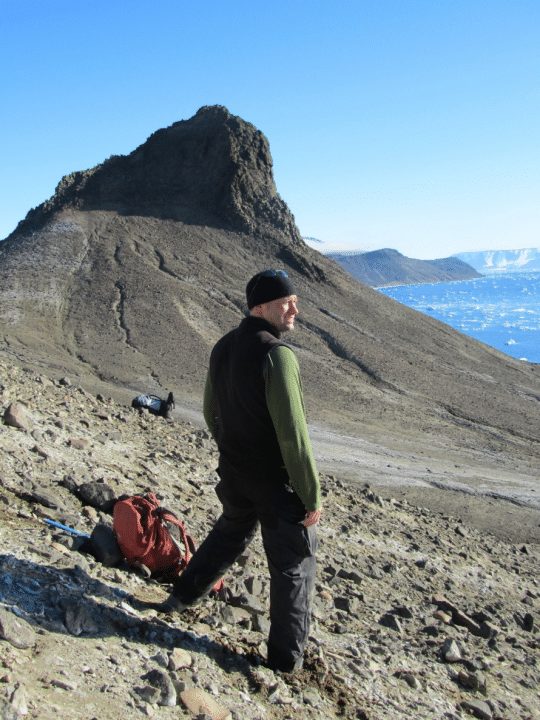
Here’s another photo of Lamanna on James Ross Island of Antarctica, this time in 2011. The team found tooth and bone fragments of the theropod—meat-eating dinosaur—Imperobator antarcticus at this site. Credit: Meng Jin.
During the 2011 Antarctic expedition, Lamanna and his fellow paleontologists also found lots of fossils on nearby Vega Island, especially those of approximately 70-million-year-old birds. Credit: Meng Jin.
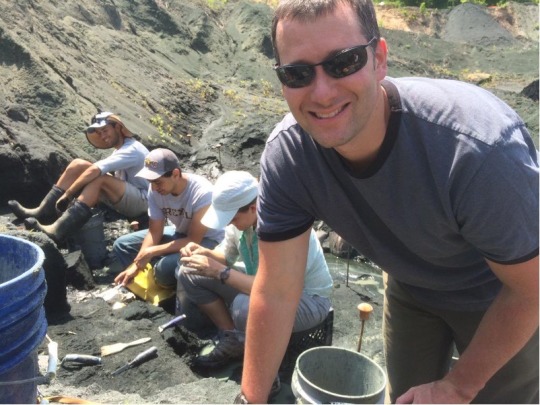
In this photo from 2015, Lamanna is shown collecting fossils in a New Jersey quarry with a research team from Drexel University, who were uncovering marine creatures from the very end of the Mesozoic Era. Credit: Ken Lacovara.

Jessica Sperdute is a Gallery Presenter II Floor Captain and Lead Animal Husbandry Specialist in CMNH’s Lifelong Learning Department. Museum staff, volunteers, and interns are encouraged to blog about their unique experiences and knowledge gained from working at the museum.

Related Content

The Strange Saga of Spinosaurus, the Semiaquatic Dinosaurian Superpredator

Dippy in Star Wars?

Ah, Snap! Dino Named for Marvel’s Thanos

Filed Under: Blog Tagged With: dinofest, dinosaurs in their time, Matt Lamanna, Scientist Takeover, Section of Vertebrate Paleontology, Super Science Days

September 14, 2020 by wpengine

The Strange Saga of Spinosaurus, the Semiaquatic Dinosaurian Superpredator

I’ve been captivated by dinosaurs for as long as I can remember. My parents tell me that I told them that I wanted to be a paleontologist as early as age four. Naturally, then, I had lots and lots of books about dinosaurs when I was a boy growing up during the 1980s. One of the dinosaurs that always fascinated me the most was Spinosaurus aegyptiacus. Found in 1912 in the Bahariya Oasis of the Western Desert of Egypt (could anyplace sound more exotic to a small-town kid from upstate New York?!), Spinosaurus was originally known from a highly incomplete but also very large and extremely distinctive partial skeleton found in a middle Cretaceous-aged (roughly 95-million-year-old) rock layer in the oasis. Among the few skeletal elements known were part of a strangely shaped (for a dinosaur) lower jaw, some crocodile-like teeth, and most strikingly, several back vertebrae that each sported tall spines, some of them measuring nearly six feet. These spines clearly impressed Ernst Stromer von Reichenbach, the German paleontologist who studied the skeleton and gave the animal its name in a 1915 publication. Tragically, however, that original Spinosaurus skeleton—and all of Stromer’s other dinosaur fossils from Egypt—were destroyed during the Second World War, more specifically in a British Royal Air Force bombing of Munich on April 24, 1944. The story of Stromer’s lost dinosaurs found its way into many a children’s book, including several that I read cover-to-cover. As such, the tale took on near-legendary status for me, and, I’m sure, many other young dinosaur enthusiasts around the world. Here was an absolutely extraordinary dinosaur from a faraway land, similar in size to the gargantuan Tyrannosaurus rex, but clearly very different from all other predatory dinosaurs known at the time – and it was represented only by a few teeth and bones that had been blasted into oblivion decades ago and so now existed only as pictures in books.

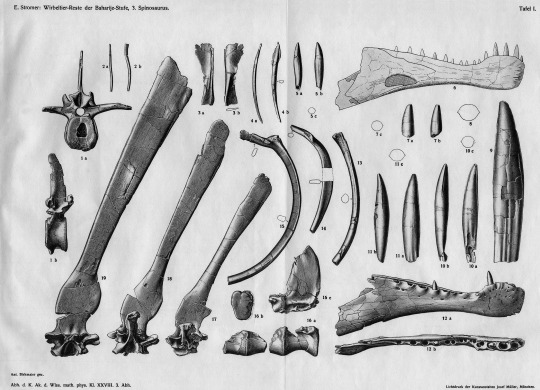
A scan of my photocopy of plate I of Ernst Stromer’s original 1915 publication on Spinosaurus aegyptiacus, showing some of the teeth and bones preserved in the holotype (= name-bearing) partial skeleton, discovered in 1912 in Egypt’s Bahariya Oasis. Check out the long spines on the back vertebrae at lower left!
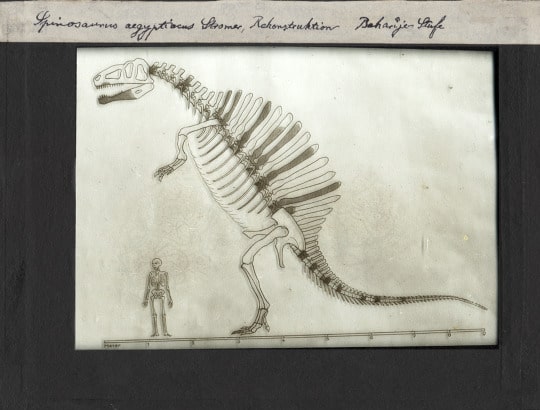
Stromer’s conception of Spinosaurus, as depicted in a 1936 publication and on a glass slide of his that colleagues of mine scanned during our visit to the Paläontologisches Museum München in Munich, Germany in 2001. Stromer knew this animal was big, as evidenced by the human skeleton he included for scale. Interestingly, too, he reconstructed Spinosaurus with unusual proportions for a carnivorous dinosaur, such as an abnormally elongate torso and short hind limbs. We’ll come back to those odd proportions a little later…

When I arrived in graduate school at the University of Pennsylvania in 1997, one of the first things I did was make a lengthy list of all the paleontological sites I was interested in exploring, ranked by their potential (in my mind, at least) to produce scientifically significant finds. The Bahariya Oasis and the search for a ‘replacement Spinosaurus’ quickly rose to the top of the list. Amazingly, no one had ever found—or at least officially reported—new dinosaur fossils in the oasis in the more than half-century since Stromer’s beasts were obliterated during that fateful airstrike. A need to keep this post to a reasonable length prevents me from describing the stars that had to align to make this happen, but in January 2000 I found myself in the Bahariya Oasis—one of the places I’d dreamed about going since I was a small child—as part of the first significant ‘dinosaur hunt’ to take place at the site since the early 20th century. It was bittersweet, though, in the sense that we never really found that ‘replacement Spinosaurus’ I’d fantasized about – all we ever discovered of that creature were a few isolated, fragmentary teeth and bones (and, in a very different location, a couple previously unpublished photos of the original skeleton in a Munich archive). We did find and dig up a gigantic new species of long-necked, plant-eating sauropod dinosaur, Paralititan stromeri, a creature that to this day is one of the largest land animals of any kind that’s ever been found, anywhere – but that’s another story for another time.

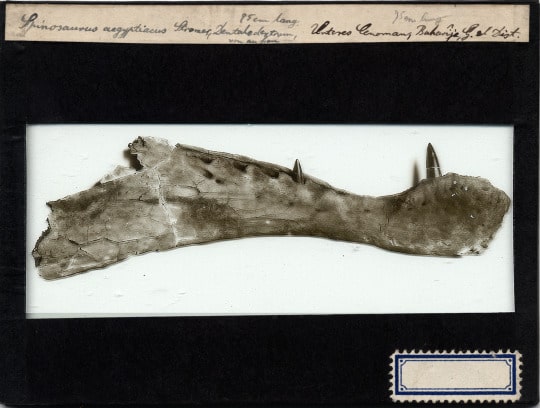
One of the rare contributions that I personally have made to scientific knowledge of Spinosaurus: a glass slide showing the only known photo of the right dentary (tooth-bearing lower jaw bone) of the original, name-bearing partial skeleton from Egypt. Like all of Stromer’s Egyptian dinosaur material, this specimen (including this bone) was destroyed in a British air raid on Munich during World War II. Several colleagues and I ‘rediscovered’ this photo—which nobody apparently knew existed—in an archive at the Paläontologisches Museum München in 2001. We published it and one other previously unknown photo of the Spinosaurus type specimen in a 2006 paper in the Journal of Paleontology.
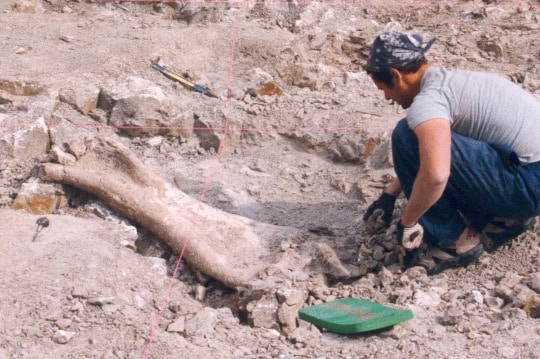
A much younger yours truly digging up the incomplete left humerus (upper arm bone) of the gigantic sauropod (long-necked herbivorous dinosaur) Paralititan stromeri in the Bahariya Oasis of Egypt, February 2000. Paralititan is one of the largest dinosaurs ever discovered – a nice ‘consolation prize’ given that we didn’t find much of Spinosaurus during our expeditions to Bahariya. (A cast replica of the complete right humerus of Paralititan is on display in PaleoLab at Carnegie Museum of Natural History.) Credit: Josh Smith.

Back to the matter at hand, meaning Spinosaurus. Fast-forward to 2011. I had the honor of serving as the external thesis examiner for Nizar Ibrahim, a promising doctoral student at University College Dublin in Ireland. I’d known Nizar for years, ever since he reached out to me by email while an undergraduate at the University of Bristol, England, to discuss our mutual interests in African Cretaceous dinosaurs. Nizar’s Ph.D. thesis was on dinosaurs and other middle Cretaceous-aged vertebrates from the celebrated Kem Kem beds of southeastern Morocco, a set of rocks that had yielded a fossil fauna very similar to, though seemingly more diverse than, that of the Bahariya Oasis. Among the many finds that Nizar documented in his colossal thesis were intriguing new remains of Spinosaurus. I went to Dublin to participate in his successful thesis defense, and afterward, he and I hit up some of the city’s finest public houses to celebrate (no surprise for those who know me). Over a pitcher of yummy Irish stout, he told me an exciting story – he and his team had lately discovered not just isolated bones of Spinosaurus in Morocco, but parts of a probable new skeleton. If so, this find would be the first skeleton since Stromer, and moreover would be exceedingly important given how little was known about Spinosaurus, even as recently as the early 2010s. The more parts we paleontologists have of a given fossil animal, the more we can generally learn about it, so the prospect of a new and relatively complete Spinosaurus skeleton—in other words, many bones belonging to a single individual dinosaur—was thrilling to say the least.

Again I’ll skip details for brevity’s sake, but fast-forward once again, to 2014. I was contacted by an editor of Science—one of the foremost scientific journals in the world—to peer-review a paper that had been submitted by (you guessed it!) Nizar and a long list of collaborators describing that new skeleton of Spinosaurus that he’d told me about over beers in Ireland three years before. Nizar and team had revisited the quarry and it had panned out in a big way. From this one, single individual Spinosaurus—again, the first associated skeleton of this dinosaur to have been found in roughly a century—they had bones from the skull, backbone (including a few of those famously long-spined vertebrae!), forelimb, pelvis, and hind limb. More importantly, these ‘new’ bones revealed that Spinosaurus was even more bizarre than anyone imagined! We already knew, from Stromer’s specimen and other, isolated finds made through the years, that the shapes of the skull and back were really weird for a predatory dinosaur. Now, the new skeleton showed that the bones were remarkably dense, the hind legs were oddly short, and the hind feet may have been webbed! All of this led Nizar and colleagues to propose that Spinosaurus may have been semiaquatic; in other words, that its lifestyle was much more comparable to that of a modern-day alligator or crocodile than it was to a more ‘typical’ land-living predatory dinosaur such as T. rex. Other evidence for an affinity to watery habitats had been found in Spinosaurus and closely related dinosaurs (known, perhaps unsurprisingly, as spinosaurids) before, but this was, in my mind, the most convincing case yet made that these animals spent significant amounts of their time at least partly submerged in lakes and rivers. The paper was published in Science a few months later, accompanied by a cover story in National Geographic magazine and a special on the venerable PBS TV series NOVA. Almost exactly one hundred years after it had been named, Spinosaurus had become a celebrity.

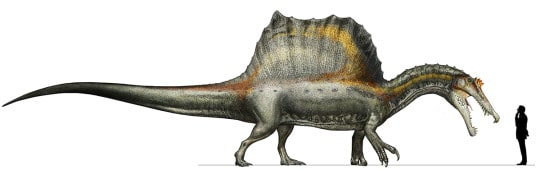
Nizar Ibrahim and colleagues’ initial conception of Spinosaurus aegyptiacus in the flesh, released to coincide with the publication of their Science paper in 2014. Two aspects stand out: as Stromer already knew (see his skeletal reconstruction above), the animal is enormous, but it was more oddly proportioned than even he had imagined. Note also the ‘regular-looking’ (for a dinosaur) tail, and read on. Credit: Davide Bonadonna.
Semiaquatic Spinosaurus chowing down on a tasty lungfish in what is now northern Africa some 95 million years ago. Italian paleoartist Davide Bonadonna has produced some of the most beautiful and accurate modern depictions of this extraordinary dinosaur, and I’m grateful to him for letting me reproduce his art here.

But the story didn’t end there. Some prominent paleontologists criticized Nizar and colleagues’ semiaquatic interpretation of Spinosaurus. These opinions weren’t a final judgment. Instead, this is just how science works: we scientists propose ideas, or hypotheses—in this case, that Spinosaurus lived and behaved more like a crocodile than your garden-variety carnivorous dinosaur—and then test these hypotheses by reevaluating the existing evidence and/or bringing new information to light. If a hypothesis repeatedly stands up to testing, then it gradually gets incorporated into the body of knowledge. Other paleontologists presented evidence that they claimed refuted the semiaquatic hypothesis, but Nizar and team eventually countered with new data of their own. In late 2019, another prominent scientific journal—this time it was Nature—came calling, asking me to review a second paper by Nizar et al. on Spinosaurus. What, I thought, could these researchers have to say about this dinosaur that they hadn’t already said before? Well, as it turns out, Nizar and colleagues had kept digging at their Spinosaurus skeleton site, and incredibly, they’d continued to find important new bones belonging to the same specimen. Among these post-2014 finds was the almost complete tail. When I saw what it looked like (via an illustration in their paper), I literally laughed out loud with surprise and delight. Somehow, the shape of the Spinosaurus tail Nizar’s team had discovered—the first even reasonably complete tail of this dinosaur to have ever been unearthed—was simultaneously both unexpected and predictable. It looked really dissimilar from the tails of other predatory dinosaurs, but it was nearly exactly like what one might expect for a dinosaur that used its tail to propel itself through water. In other words, the tall, fin-like tail of Spinosaurus looked more like that of a supersized alligator or newt than that of T. rex.

Nizar and team’s Nature paper on their Spinosaurus tail was published this past April 29. Is it the last word on this dinosaur and its mode of life? Most certainly not, but the evidence is now stronger than ever—in my opinion, very strong—that Spinosaurus spent more time in the water than any other non-avian (= non-bird) dinosaur that we currently know about.

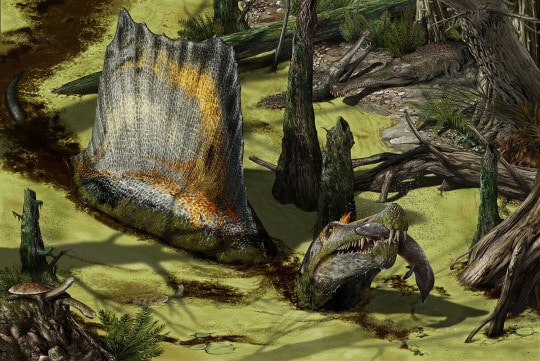
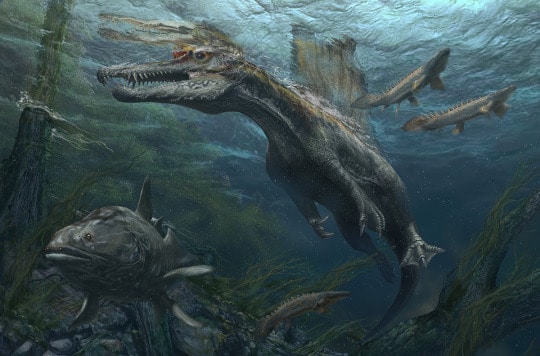
The modern view of Spinosaurus, not as a ‘regular’ predatory dinosaur, but rather as a specialized semiaquatic hunter that spent much of its life in the water. Self-serving side note: the three smaller, spiky-looking fish are Bawitius bartheli, a polypterid (an archaic, still-extant group of thick-scaled ray-finned fishes) that several colleagues and I named in 2012 from fossils found in the Bahariya Oasis. The larger fish at lower left is the giant coelacanth Axelrodichthys (sometimes called Mawsonia) libyca. Credit: Davide Bonadonna.
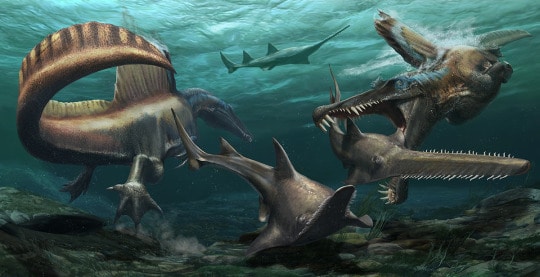
Two Spinosaurus invite the sawfish Onchopristis numidus to lunch in what’s now northern Africa some 95 million years ago. Look at those fin-like Spinosaurus tails! Credit: Davide Bonadonna/National Geographic.

Nizar (who’s a Research Associate here at Carnegie Museum of Natural History), myself, and our many colleagues and collaborators are continuing to study the mysterious dinosaurs and other fossil vertebrates from the middle and Late Cretaceous of northern Africa. Indeed, Nizar and I have several collaborative papers in the works right now, and I’m also working with an amazing team of paleontologists at Mansoura University on multiple new Egyptian fossil finds. It’s a good bet that African Cretaceous dinosaurs even stranger than Spinosaurus are still out there, waiting to be discovered!

Further reading/watching:

Nothdurft, W. E., with J. B. Smith, M. C. Lamanna, K. J. Lacovara, J. C. Poole, and J. R. Smith. 2002. The Lost Dinosaurs of Egypt. Random House, New York, 256 pp.

Smith, J. B., M. C. Lamanna, H. Mayr, and K. J. Lacovara. 2006. New information regarding the holotype of Spinosaurus aegyptiacus Stromer, 1915. Journal of Paleontology 80:400–406.

Ibrahim, N., P. C. Sereno, C. Dal Sasso, S. Maganuco, M. Fabbri, D. M. Martill, S. Zouhri, N. Myhrvold, and D. A. Iurino. 2014. Semiaquatic adaptations in a giant predatory dinosaur. Science 345:1613–1616.

Bigger Than T. rex (NOVA documentary): https://www.pbs.org/wgbh/nova/video/bigger-than-t-rex/

Henderson, D. M. 2018. A buoyancy, balance and stability challenge to the hypothesis of a semi-aquatic Spinosaurus Stromer, 1915 (Dinosauria: Theropoda). PeerJ 6:e5409.

Ibrahim, N., S. Maganuco, C. Dal Sasso, M. Fabbri, M. Auditore, G. Bindellini, D. M. Martill, S. Zouhri, D. A. Mattarelli, D. M. Unwin, J. Wiemann, D. Bonadonna, A. Amane, J. Jakubczak, U. Joger, G. V. Lauder, and S.E. Pierce. 2020. Tail-propelled aquatic locomotion in a theropod dinosaur. Nature 581:67–70.

Matt Lamanna is Mary R. Dawson Associate Curator and Head of the Section of Vertebrate Paleontology at Carnegie Museum of Natural History. Museum staff, volunteers, and interns are encouraged to blog about their unique experiences and knowledge gained from working at the museum.

Related Content

Mesozoic Monthly: Gryposaurus

Behind the Scenes of Dinosaur Armor

Egypt and the Nile

Filed Under: Blog Tagged With: dinofest, dinosaurs in their time, Matt Lamanna, Museum from Home, Science News, Section of Vertebrate Paleontology

February 18, 2019 by Kathleen

Diving for Dinosaurs: Cretaceous Fossils from Croatia

Speaker: Matt Lamanna, Assistant Curator of Vertebrate Paleontology, Carnegie Museum of Natural History

In the late 1980s, Early Cretaceous-aged (~130 million-year-old) dinosaur fossils were discovered in shallow waters of the Adriatic Sea on the coast of Istria, Croatia. Approximately 200 bones, teeth, and bone fragments from at least three distinct dinosaur species were found. Since then, however, little paleontological work has been conducted at the site. During the Early Cretaceous, this region of Croatia is thought to have been part of a Bahamas-like series of islands; in the modern world, such environments are often home to unique, highly unusual species. In October 2018, with funding support from the Carnegie Discoverers, a multinational team of paleontologists, geologists, scientific divers, and science educators conducted a paleontological survey of this Croatian site. In this presentation, Dr. Lamanna will recount results of this effort, which constitutes one of the world’s first underwater explorations for dinosaur fossils.

Tagged With: Matt Lamanna

October 1, 2018 by Kathleen

Scientists Live: Matt Lamanna

Lamanna, MattAssistant Curator and Head of Vertebrate Paleontology Dr. Matt Lamanna will broadcast on Facebook Live to share details of his upcoming research trip to Croatia. Discovered in the 1990s, the site of Kolone/Porto Colonne on the coast of Istria, Croatia preserves ~130-million-year-old dinosaur bones in shallow water on the bed of the Adriatic Sea. During the time these dinosaurs were alive, this area of Croatia was part of a large island or long peninsula in the middle of an ancient ocean. Despite its probable significance, the site has never been systematically explored by paleontologists. Lamanna and a team of Croatian, Italian, and US paleontologists, geologists, and scientific divers will conduct a five-day underwater reconnaissance of Kolone/Porto Colonne from October 8–13, to discover additional fossils, map the site in detail, and form a comprehensive plan for future research.

The broadcast will begin at 10:30 a.m. and will include a question and answer segment.

Tune in at facebook.com/carnegiemnh. A recording will be posted later for those unable to watch live.


Tagged With: dinosaurs, Matt Lamanna, Scientists Live, Vertebrate Paleontology

  • Page 1
  • Page 2
  • Page 3
  • Interim pages omitted …
  • Page 6
  • Go to Next Page »

sidebar

About

  • Mission & Commitments
  • Directors Team
  • Museum History

Get Involved

  • Volunteer
  • Membership
  • Carnegie Discoverers
  • Donate
  • Employment
  • Events

Bring a Group

  • Groups of 10 or More
  • Birthday Parties at the Museum
  • Field Trips

Powdermill

  • Powdermill Nature Reserve
  • Powdermill Field Trips
  • Powdermill Staff
  • Research at Powdermill

More Information

  • Image Permission Requests
  • Science Stories
  • Accessibility
  • Shopping Cart
  • Contact
  • Visitor Policies
One of the Four Carnegie Museums | © Carnegie Institute | Privacy Policy | Terms of Use | Accessibility
Rad works here logo