• Skip to primary navigation
  • Skip to main content
  • Skip to primary sidebar

Carnegie Museum of Natural History

One of the Four Carnegie Museums of Pittsburgh

  • Visit
    • Buy Tickets
    • Visitor Information
    • Exhibitions
    • Events
    • Dining at the Museum
    • Celebrate at the Museum
    • Powdermill Nature Reserve
    • Event Venue Rental
  • Learn
    • Field Trips
    • Educator Information
    • Programs at the Museum
    • Bring the Museum to You
    • Guided Programs FAQ
    • Programs Online
    • Climate and Rural Systems Partnership
  • Research
    • Scientific Sections
    • Science Stories
    • Science Videos
    • Senior Science & Research Staff
    • Museum Library
    • Science Seminars
    • Scientific Publications
    • Specimen and Artifact Identification
  • About
    • Mission & Commitments
    • Directors Team
    • Museum History
  • Tickets
  • Give
  • Shop

parc

July 10, 2018 by wpengine

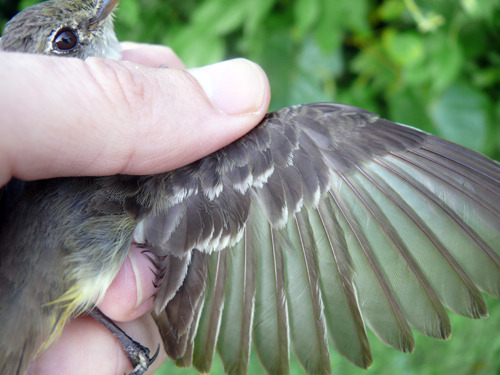
Adult Flycatcher

Adult Flycatcher

This adult Flycatcher undergoes the pre-basic molt of the wintering grounds. These adults can be readily identified by their white bars and wear on the feather tips.


Powdermill Nature Reserve’s avian research center is part of Carnegie Museum of Natural History’s biological research station in Rector, Pennsylvania.  The research center operates a bird banding station, conducts bioacoustical research, and performs flight tunnel analysis with the goal of reducing window collisions.
 

Filed Under: Blog Tagged With: avian research, bird banding, birding, Birds, nature, parc, Powdermill, Powdermill Nature Reserve, research

July 10, 2018 by wpengine

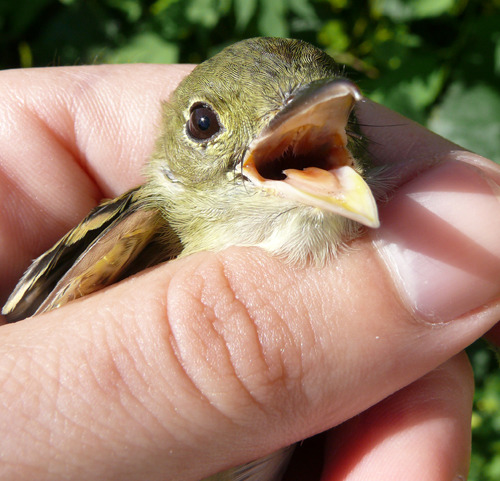
Acadian Flycatcher

acadian flycatcher

This Flycatcher has a pale yellow mouth lining.


Powdermill Nature Reserve’s avian research center is part of Carnegie Museum of Natural History’s biological research station in Rector, Pennsylvania.  The research center operates a bird banding station, conducts bioacoustical research, and performs flight tunnel analysis with the goal of reducing window collisions.
 

Filed Under: Blog Tagged With: avian research, avian research center, bird banding, Birds, nature, parc, Powdermill, Powdermill Nature Reserve, research

July 2, 2018 by wpengine

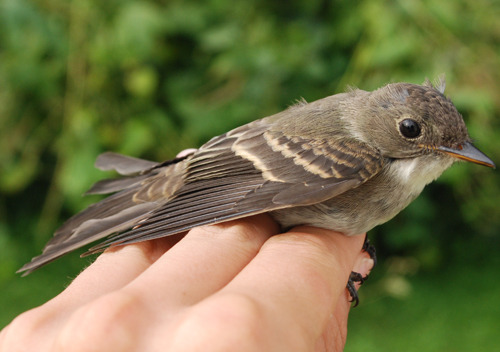
Eastern Wood Pewee

image

The buffy tips to many of the coverts and body feathers identifies this as a HY bird.  For banders, this bird can be identified by their short tarsus and long wings.


Powdermill Nature Reserve’s avian research center is part of Carnegie Museum of Natural History’s biological research station in Rector, Pennsylvania.  The research center operates a bird banding station, conducts bioacoustical research, and performs flight tunnel analysis with the goal of reducing window collisions.
 

Filed Under: Blog, Powdermill Tagged With: Birds, parc, Powdermill Nature Reserve

June 21, 2018 by wpengine

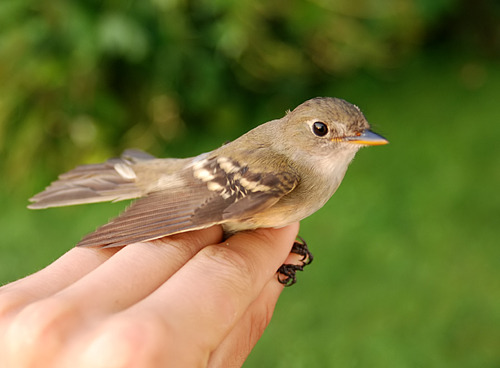
Trail’s Flycatcher

Trail's Flycatcher

This bird has an indistinct eye ring, dark gray legs, lack emargination on primary 6, and has a yellow-orange mouth lining.


Powdermill Nature Reserve’s avian research center is part of Carnegie Museum of Natural History’s biological research station in Rector, Pennsylvania.  The research center operates a bird banding station, conducts bioacoustical research, and performs flight tunnel analysis with the goal of reducing window collisions.
 

Filed Under: Blog Tagged With: birding, Birds, parc, Powdermill, Powdermill Nature Reserve

June 7, 2018 by wpengine

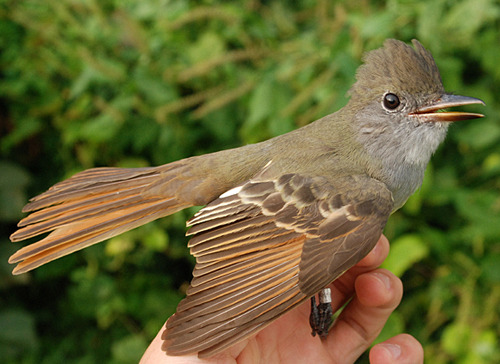
Great-crested Flycatcher

Great-Crested Flycatcher

This bird can be identified as a HY by the molt limits among the greater coverts (or the limit among the median coverts).  Only one of these was banded at Powdermill in 2011.


Powdermill Nature Reserve’s avian research center is part of Carnegie Museum of Natural History’s biological research station in Rector, Pennsylvania.  The research center operates a bird banding station, conducts bioacoustical research, and performs flight tunnel analysis with the goal of reducing window collisions.

 

Filed Under: Blog Tagged With: avian research center, birding, Birds, parc, Powdermill, Powdermill Nature Reserve

May 30, 2018 by wpengine

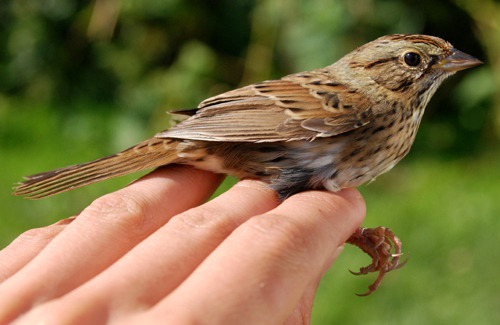
Lincoln’s Sparrow

Lincoln's Sparrow

Known to conceal itself, this sparrow sneaks around the ground in wet meadows, rarely making an appearance to humans. John James Audubon coined the species, Lincoln’s Sparrow, after his travel companion Thomas Lincoln, was the only one to capture the bird for study.


Powdermill Nature Reserve’s avian research center is part of Carnegie Museum of Natural History’s biological research station in Rector, Pennsylvania.  The research center operates a bird banding station, conducts bioacoustical research, and performs flight tunnel analysis with the goal of reducing window collisions.


Filed Under: Blog Tagged With: birding, Birds, parc, Powdermill, Powdermill Nature Reserve

  • « Go to Previous Page
  • Page 1
  • Page 2
  • Page 3
  • Page 4
  • Go to Next Page »

sidebar

About

  • Mission & Commitments
  • Directors Team
  • Museum History

Get Involved

  • Volunteer
  • Membership
  • Carnegie Discoverers
  • Donate
  • Employment
  • Events

Bring a Group

  • Groups of 10 or More
  • Birthday Parties at the Museum
  • Field Trips

Powdermill

  • Powdermill Nature Reserve
  • Powdermill Field Trips
  • Powdermill Staff
  • Research at Powdermill

More Information

  • Image Permission Requests
  • Science Stories
  • Accessibility
  • Shopping Cart
  • Contact
  • Visitor Policies
One of the Four Carnegie Museums | © Carnegie Institute | Privacy Policy | Terms of Use | Accessibility
Rad works here logo