• Skip to primary navigation
  • Skip to main content
  • Skip to primary sidebar

Carnegie Museum of Natural History

One of the Four Carnegie Museums of Pittsburgh

  • Visit
    • Buy Tickets
    • Visitor Information
    • Exhibitions
    • Events
    • Dining at the Museum
    • Celebrate at the Museum
    • Powdermill Nature Reserve
    • Event Venue Rental
    • Gift Cards
  • Learn
    • Field Trips
    • Educator Information
    • Programs at the Museum
    • Bring the Museum to You
    • Guided Programs FAQ
    • Programs Online
    • Climate and Rural Systems Partnership
  • Research
    • Scientific Sections
    • Science Stories
    • Science Videos
    • Senior Science & Research Staff
    • Museum Library
    • Science Seminars
    • Scientific Publications
    • Specimen and Artifact Identification
  • About
    • Mission & Commitments
    • Directors Team
    • Museum History
  • Tickets
  • Give
  • Shop

Patrick McShea

February 1, 2019 by wpengine

Arctic Message

By Patrick McShea

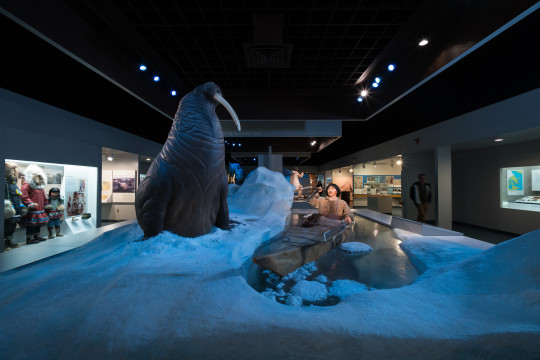
Polar World exhibition with animals and man in boat
Polar World at Carnegie Museum of Natural History. Photo credit: Josh Franzos

What happens in the Arctic effects all of us. The frozen seas of the northern hemisphere’s remotest territory influence the circulation patterns of ocean currents and air masses that support temperate climate conditions for land masses far to the south.

The urgent need for broader understanding of this sea ice-dependent system recently drew four dozen researchers and educators to the University of Rhode Island for a National Science Foundation -sponsored workshop titled ARISE, for Arctic Researchers and Informal Science Education.

The three-day program was designed to address two explicit goals – broadening the impact of Arctic research findings and increasing the informal science community’s engagement with Arctic scientists.

Paired sessions assured that big ideas were anchored to specific ongoing research. A formal review of proposed Polar Literacy Principles, for example, was followed by small discussion groups in which researchers explained their own observations of diminished sea ice or disrupted food webs. As an educator representing CMNH’s exhibit hall about Arctic life and extensive scientific collections from the region, I was an eager participant in every session.
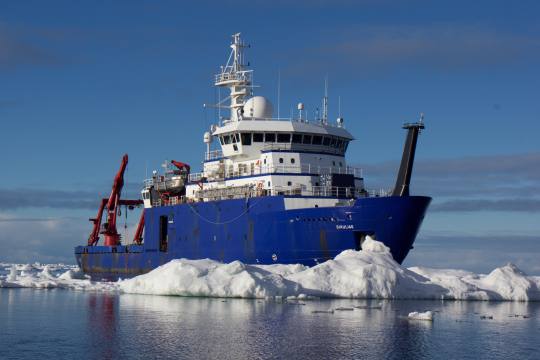
Ship in icy waters
Research ship Sikuliaq. Photo credit: Mark Teckenbrock

Existing National Science Foundation resources were the focus of several presentations. Profiled assets ranged from the digital archive known as the Arctic Data Center to a floating mobile research platform, the 261-foot blue-hulled ice capable research vessel Sikuliaq, which is operated by the University of Alaska Fairbanks.

I did more listening than talking, learning directly from scientists about research projects that included the study of thousand- year-old clay-lined food storage pits along hard-to-reach stretches of Alaskan coast, and a “citizen science” berry survey by middle school students in remote villages that will document climate driven vegetation changes on the tundra.
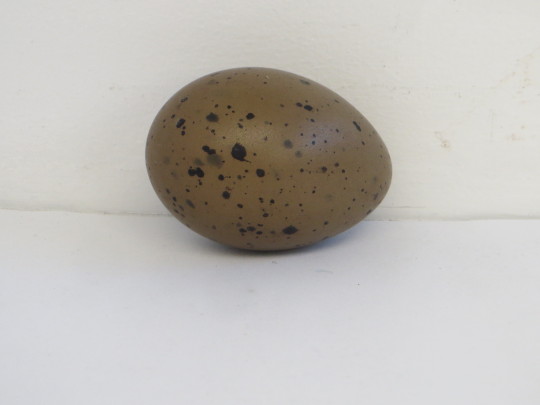
Arctic loon egg
Arctic loon egg.

When discussion opportunities arose, I shared two items I carried with me each day, the preserved hollow egg of an Arctic Loon, and a copy of Barry Lopez’s now 32-year-old masterpiece, Arctic Dreams. The three-inch long egg, a dark mustard brown with chocolate-colored flecks, bore in tiny handwritten script a collection date of 6/19/24. This 94-year-old specimen, part of the museum’s teaching collection, and sturdy enough to be carefully passed hand-to-hand, served to represent and draw attention to the museum’s own Arctic archive, the portion of preserved plants, animals, minerals, artifacts, and fossils in the museum’s scientific collections that have Arctic origins.
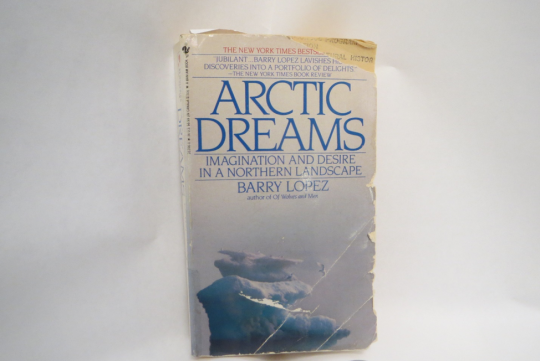
Arctic Dreams book

Arctic Dreams, which bears the subtitle, Imagination and Desire in a Northern Landscape, is a poetic 372-page chronical of Lopez’s immersion in historical Arctic exploration accounts and his own travels in the region with Arctic indigenous people, biologists, oceanographers, geologists, and oil drilling crews. The work contains repeated alarm calls about threats to the region’s delicately balanced ecosystems, but on the occasions when I passed the paperback to a workshop colleague it was to note particularly eloquent passages about narwhals, snowy owls, or muskox.

The book also provided appropriate reading material to pass flight delays on my way home from the workshop. In the crowded confines of a Reagan National Airport terminal, I re-read a section that helped me better understand my conversations with Arctic researchers.

At the close of a Chapter titled “The Country of The Mind,” Lopez recounts conversations with paleontologists Mary Dawson and Robert West during a shared plane ride between remote Canadian Arctic islands. When Dawson, then Curator of Vertebrate Paleontology at Carnegie Museum of Natural History and now curator emeritus, leaves Lopez with letters to mail at one of the plane’s later stops, the packet spurs thoughts about how we share information. Lopez wrote:

I rode for hours with the letters on the seat beside me. I thought about the great desire among friends and colleagues and travelers who meet on the road, to share what they know, what they have seen and imagined. Not to have a shared understanding, but to share what one has come to understand. In such an atmosphere of mutual regard, in which each can roll out his or her maps with no fear of contradiction, of suspicion, or theft, it is possible to imagine the long, graceful strides of human history.

The ARISE Workshop, I realized, fostered such map unrolling by creating a forum where scientists shared what they had come to understand about the state of our planet’s northern reaches. The way their messages are received and acted upon will undoubtedly influence future strides of human history.

Patrick McShea works in the Education and Visitor Experience department of Carnegie Museum of Natural History. Museum employees are encouraged to blog about their unique experiences and knowledge gained from working at the museum.
Filed Under: Blog Tagged With: arctic, Barry Lopez, Education, Mary Dawson, Pat McShea, Patrick McShea, Polar World, Robert West

January 4, 2019 by wpengine

Sounds of Science

By Patrick McShea

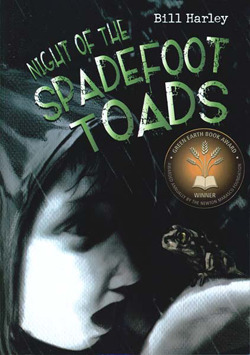
Night of the Spadefoot Toads book cover

In early October, when a pre-school teacher requested frog and toad materials from the museum’s Educator Loan Collection, she mentioned plans to share the items with a fifth-grade teacher.

Jean Nipaver, an early childhood teacher at Pittsburgh’s Beechwood PreK-5, has long borrowed museum materials to create stimulating learning environments for children 3 – 5 years old. In her email request, she credited a former student for the plan to share resources:

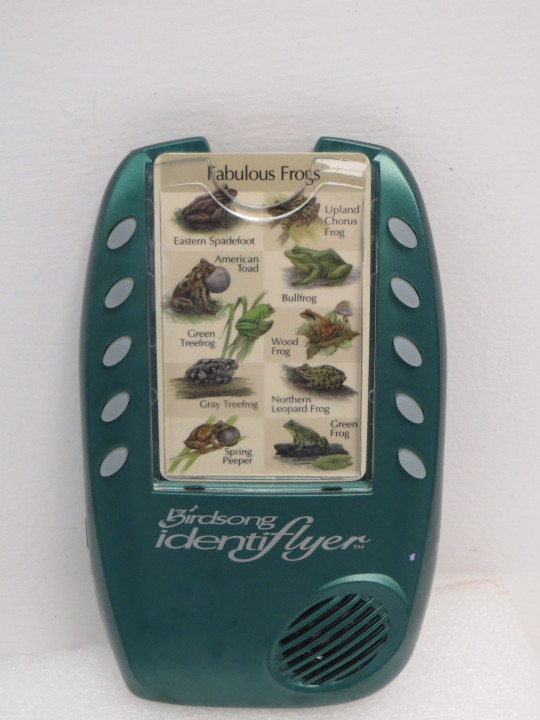
“Yesterday, a fifth-grade teacher stopped me in the hall. Her class is reading Night of the Spadefoot Toads, and a girl in the class told her about all the science she remembered from pre-k, especially about the frogs & toads we’d borrowed from you and the very cool frog song player that you lent us.”

Battery-powered song player


Night of the Spadefoot Toads, which all fifth grade students in Pittsburgh Public Schools read as part a core literacy program, is an award-winning book from 2012 by long-established children’s book author Bill Harley.

It tells the story of a fifth grade boy’s adjustment to a move from Arizona to Massachusetts, and his eventual attachment to new varieties of wildlife and the habitat that supports them. As the author summarizes on his website, the book is “about nature and wildlife, friends, school, bullies, and finding a home in the world. The story reminds us that the place around the corner has its own secrets and treasures.”

At Beechview PreK-5, borrowed museum materials let pre-school students and fifth graders in on the same secret – the deep groan-like croak of the spadefoot toad. For the older students the spooky noise added a bit of a soundtrack to the engaging, relevant, age-appropriate story they were reading. For the younger students in Jean Nipaver’s class, the toad call was part of a school-year-long soundtrack, one focused on learning about science.

Learn more about spadefoot toads and play their call courtesy of the University of Georgia’s Savannah River Ecology Laboratory.

For information about the popular book, visit Bill Harley’s website.

Learn more about the CMNH Educator Loan Program.

Patrick McShea works in the Education and Visitor Experience department of Carnegie Museum of Natural History. Museum employees are encouraged to blog about their unique experiences and knowledge gained from working at the museum.
Filed Under: Blog Tagged With: amphibians and reptiles, Educator Loan Program, Patrick McShea

December 10, 2018 by wpengine

Snow White Bird Search

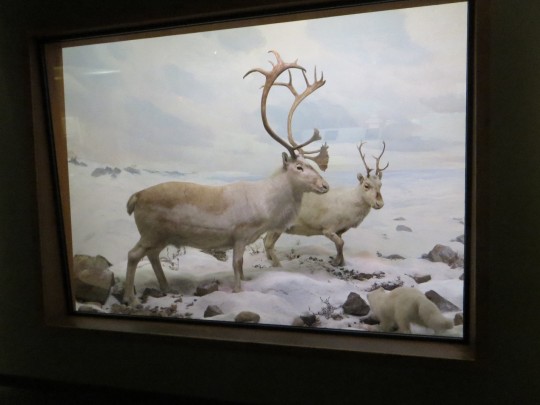
winter mammal diorama

by Patrick McShea

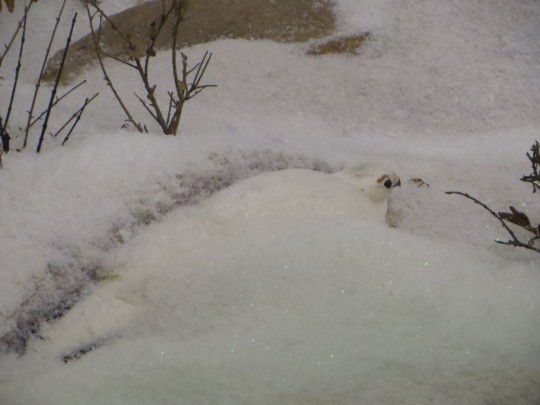
Visitors who read the descriptive label at the snowiest diorama in the Hall of North American Wildlife are presented with a visual challenge. Under the title, Arctic animals don their winter whites, the interpretive text lists four species within the exhibit displaying  protective coloration: Caribou, Arctic Fox, Collared Lemming, and Willow Ptarmigan.

The first two species are impossible to miss. If you center yourself in front of the three-dimensional scene, an Arctic fox crouches a few feet from your right knee, and a caribou pair so dominate the view that the concealment value of their pale coats is not fully apparent until you notice faint images of a larger herd painted into the backdrop horizon.

arctic fox

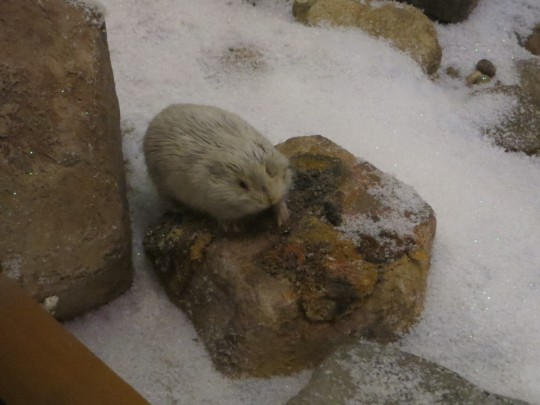
A quick search of the foreground perimeter is all that’s necessary to locate a collared lemming (above) but finding the willow ptarmigan requires determined effort. This member of the bird family that also includes pheasants, grouse and turkeys, undergoes a near complete annual color change. Willow ptarmigan trade their largely brown summer plumage for snow white winter feathers.

bird in the snow

The birds also utilize the insulating properties of snow, sometimes roosting as much as a foot below the surface. The resting place for the willow ptarmigan in the diorama isn’t that deep, but even with the aid of the above picture it can take some searching to locate.

Patrick McShea works in the Education and Visitor Experience department of Carnegie Museum of Natural History. Museum employees are encouraged to blog about their unique experiences and knowledge gained from working at the museum.
Filed Under: Blog Tagged With: diorama, Patrick McShea, Winter

December 3, 2018 by wpengine

Gift from Underground

By Patrick McShea

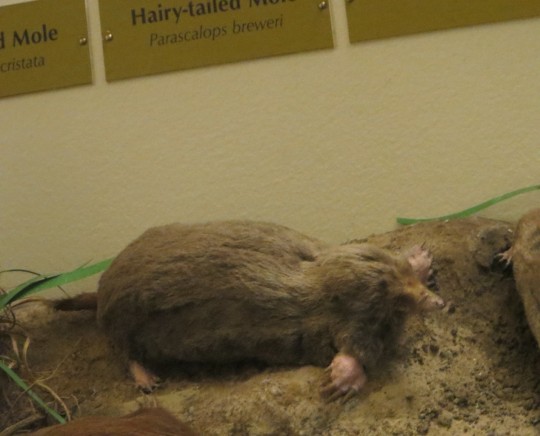
Hairy-tailed Mole in the Hall of North American Wildlife

Do wild creatures ever participate in gift giving? Their very presence can be thought of as a gift, of course. Think only of what the chorus of bird song adds to a spring dawn, or how a trotting red fox transforms a frost white meadow.

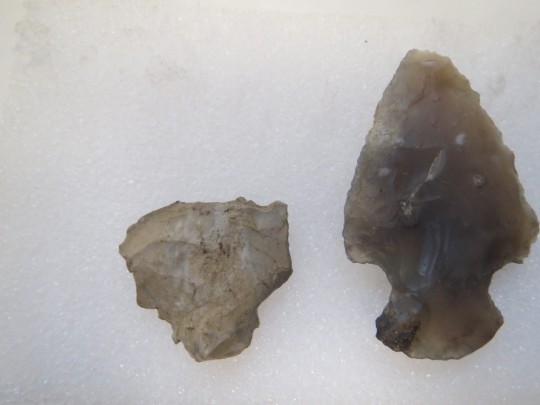
One spring morning more than a decade ago, however, I found something in the freshly churned soil of a mole hill that I’ve come to regard as a kind of peace offering gift. As I used my right foot to spread the damp earth flat, a sliver of pale gray flashed briefly in the otherwise peanut butter colored pile. Bending down to investigate, I found an irregularly-shaped, quarter-sized piece of chert that a quick spit wash and pants wipe revealed to be the lower portion of an arrowhead.

Stone point fragment next to an intact point

The broken artifact was certainly an unintentional gift, mere tunnel debris to be pushed skyward by the shovel-like front paws and sharply pointed nose of the creature who last encountered it. For me, however, the tool fragment has become a magical kind of time capsule, holding without revealing information about its ancient creator, its use, and eventual breakage.

Since that morning I’ve looked patiently but without success for the arrowhead’s other half in every mole hill I’ve smoothed out. I’ve also spent a lot of time wondering about what the arrowhead maker called the unusual mammal whose tunnel making is the basis for our acquaintance.

Patrick McShea works in the Education and Visitor Experience department of Carnegie Museum of Natural History. Museum employees are encouraged to blog about their unique experiences and knowledge gained from working at the museum.
Filed Under: Blog Tagged With: mammals, Patrick McShea

May 14, 2018 by wpengine

Texas Solar

By Patrick McShea

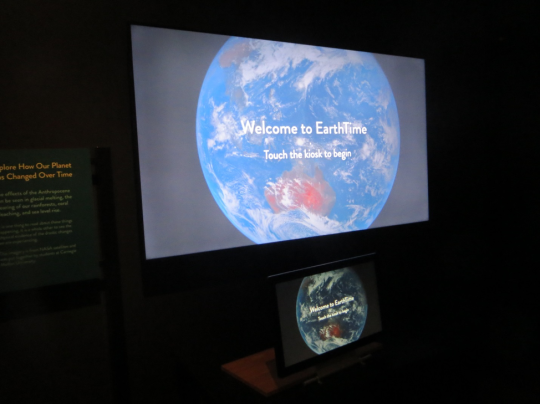
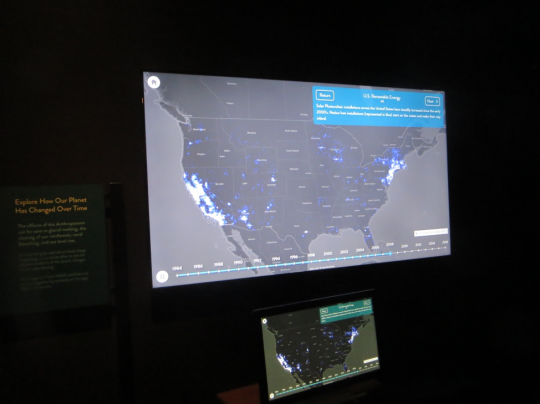
Within We Are Nature an interactive kiosk known as EarthTime documents alarming change over recent decades in glacial melting, the clearing of rainforests, and coral bleaching. The imagery, which was generated by NASA satellites and compiled by students at Carnegie Mellon University, is simultaneously displayed on a table-mounted touchscreen and a towering adjacent display screen.

Literal glimmers of hope appear on both screens when visitors select the digital loop that documents the increase in the installation of solar energy panels across the US between 1984 and 2016. A textbox message directs viewers to, “Notice how installations start on the coasts and make their way inland.”

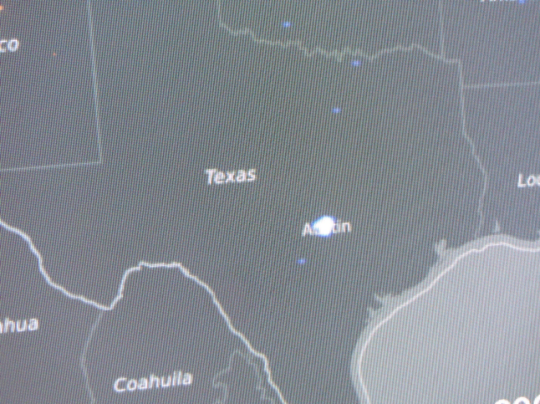
A recent visitor who replayed the seven-second simulation a few times voiced her state-focused perspective to a companion: “Watch this. Solar energy blooms in Austin before it does in Houston or Dallas.”

Patrick McShea works in the Education and Visitor Experience department of Carnegie Museum of Natural History. Museum employees are encouraged to blog about their unique experiences and knowledge gained from working at the museum.
Filed Under: Blog Tagged With: Anthropocene, Patrick McShea, We Are Nature, We Are Nature: Living in the Anthropocene

May 10, 2018 by wpengine

Plant Blindness

By Patrick McShea

Cactus

Plant Blindness refers to the inability to see or notice the plants in one’s own environment. The term was coined twenty years ago by two botanists, Elizabeth Schussler, of the Ruth Patrick Science Educator Center in Aiken, South Carolina, and James Wandersee, of Louisiana State University in Baton Rouge. The common condition, according to the pair, results in a chronic inability to recognize the importance of plants in the biosphere and in human affairs.

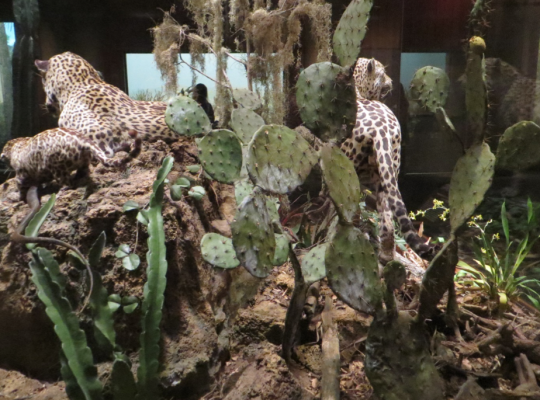
Fortunately, not all of us are afflicted. As evidence, CMNH Conservator Gretchen Anderson recounts a touching interaction she observed while conducting exhibit restoration work within the museum’s second floor Hall of North American Wildlife. From a just-opened elevator door a five-year old made a headlong dash to the diorama featuring a pair of mature jaguars and their three cubs. “LOOK Dad!” he called back to his father while pointing into the display, “CACTUS!”

For additional information about Plant Blindness, visit: https://plantsocieties.cnps.org/index.php/about-main/plant-blindness

Patrick McShea works in the Education and Visitor Experience department of Carnegie Museum of Natural History. Museum employees are encouraged to blog about their unique experiences and knowledge gained from working at the museum.
Filed Under: Blog Tagged With: Botany, cactus, Hall of North American Wildlife, Patrick McShea

  • « Go to Previous Page
  • Page 1
  • Interim pages omitted …
  • Page 3
  • Page 4
  • Page 5
  • Page 6
  • Page 7
  • Interim pages omitted …
  • Page 9
  • Go to Next Page »

sidebar

About

  • Mission & Commitments
  • Directors Team
  • Museum History

Get Involved

  • Volunteer
  • Membership
  • Carnegie Discoverers
  • Donate
  • Employment
  • Events

Bring a Group

  • Groups of 10 or More
  • Birthday Parties at the Museum
  • Field Trips

Powdermill

  • Powdermill Nature Reserve
  • Powdermill Field Trips
  • Powdermill Staff
  • Research at Powdermill

More Information

  • Image Permission Requests
  • Science Stories
  • Accessibility
  • Shopping Cart
  • Contact
  • Visitor Policies
One of the Four Carnegie Museums | © Carnegie Institute | Privacy Policy | Terms of Use | Accessibility
Rad works here logo