• Skip to primary navigation
  • Skip to main content
  • Skip to primary sidebar

Carnegie Museum of Natural History

One of the Four Carnegie Museums of Pittsburgh

  • Visit
    • Buy Tickets
    • Visitor Information
    • Exhibitions
    • Events
    • Dining at the Museum
    • Celebrate at the Museum
    • Powdermill Nature Reserve
    • Event Venue Rental
  • Learn
    • Field Trips
    • Educator Information
    • Programs at the Museum
    • Bring the Museum to You
    • Guided Programs FAQ
    • Programs Online
    • Climate and Rural Systems Partnership
  • Research
    • Scientific Sections
    • Science Stories
    • Science Videos
    • Senior Science & Research Staff
    • Museum Library
    • Science Seminars
    • Scientific Publications
    • Specimen and Artifact Identification
  • About
    • Mission & Commitments
    • Directors Team
    • Museum History
  • Tickets
  • Give
  • Shop

pennsylvania

April 2, 2018 by wpengine

Hellbenders aren’t so scary!

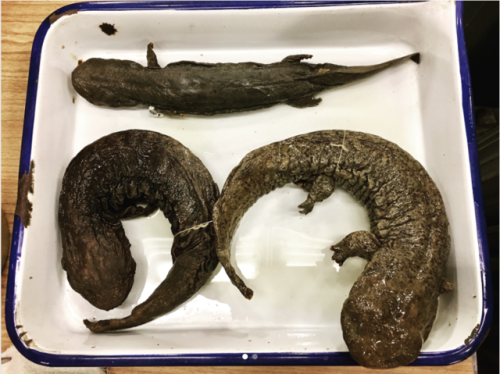
three hellbender specimens in a tray

Hellbenders aren’t so scary! Cryptobrachus alleganiensis are in the running to become the Pennsylvanian State Amphibian. Due to their permeable skin, hellbenders are extremely susceptible to pollution, making them great bioindicators. A bioindicator is an organism who is representative of the status of an ecosystem’s health. Hellbenders are the largest North American salamander.


This post was originally posted on our curatorial assistant’s Instagram, which features specimens in the museum’s historic Alcohol House. 
Filed Under: Blog Tagged With: amphibians, pennsylvania

October 27, 2017 by wpengine

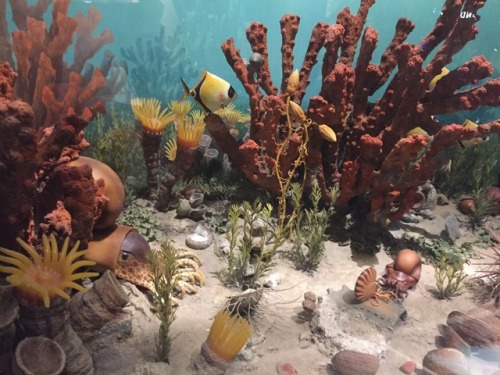
Have you noticed this diorama is looking brighter?

Have you noticed that this Benedum Hall of Geology diorama is looking a little brighter and more colorful?  That is because conservationists recently cleaned and preserved the exhibit, which shows an underwater scene in Pennsylvania between 286 and 320 million years ago.  Even they were surprised how bright the diorama’s colors were under the layer of dust!

Have you noticed that this Benedum Hall of Geology diorama is looking a little brighter and more colorful?

That is because conservationists recently cleaned and preserved the exhibit, which shows an underwater scene in Pennsylvania between 286 and 320 million years ago.

Even they were surprised how bright the diorama’s colors were under the layer of dust!

Filed Under: Blog Tagged With: Benedum Hall of Geology, conservation, pennsylvania

July 26, 2017 by wpengine

Collected on this Day in 1904

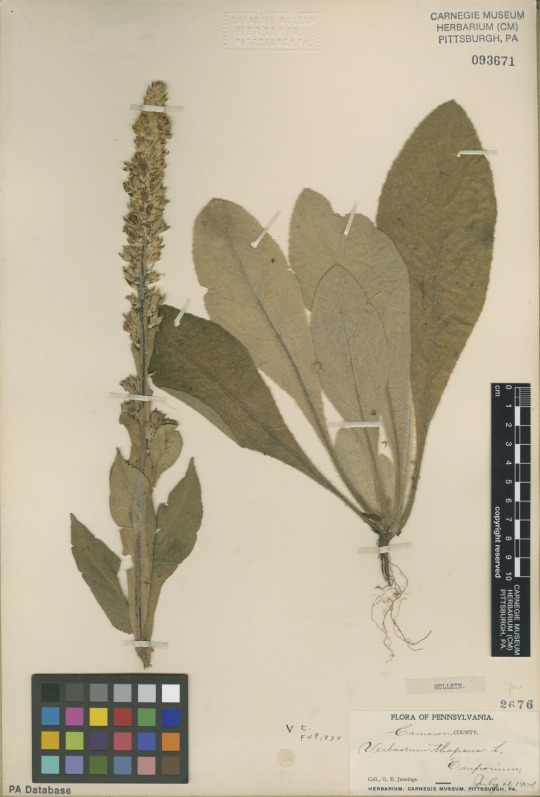
Herbarium specimen Common mullein (Verbascum thapsus)

Collected on July 21, 1904, this specimen was found by Otto Jennings (a former curator of botany at Carnegie Museum of Natural History) in Cameron County, Pennsylvania. Common mullein (Verbascum thapsus) is a weedy species from Eurasia and is now common in roadsides and disturbed fields across the United States.

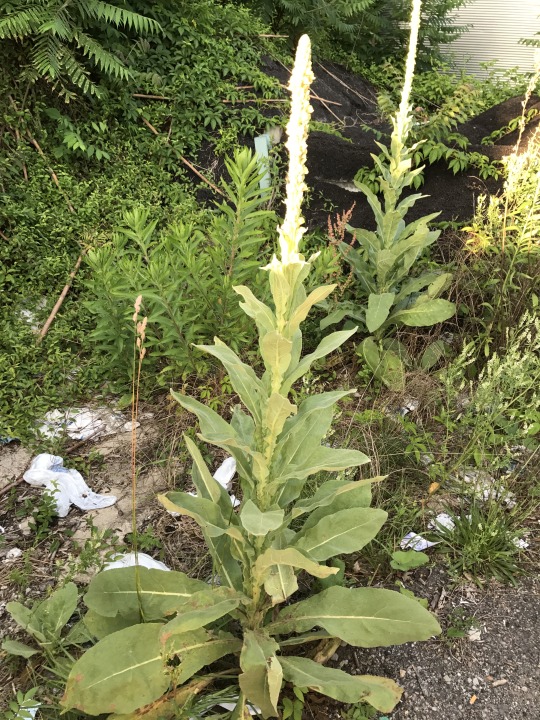
When you know to look for it, it is hard to miss at up to 6 feet tall with bright yellow flowers and velvety leaves. It was introduced at least 230 years ago, cultivated by early European colonists for use as a fish poison (the seeds contain several compounds deadly to fish).

Throughout history, the plant has had many medicinal uses—one Greek botanist recommended it for pulmonary diseases over 2,000 years ago. It can be found in herbal products for this purpose, but many of these products have not yet been tested for safety or effectiveness.

Common mullein (Verbascum thapsus)

Botanists at Carnegie Museum of Natural History share pieces of the herbarium’s historical hidden collection on the dates they were discovered or collected. Check back for more!

Filed Under: Blog Tagged With: Botany, herbarium, Mason Heberling, pennsylvania

February 6, 2017 by wpengine

Identifying Macroinvertebrates

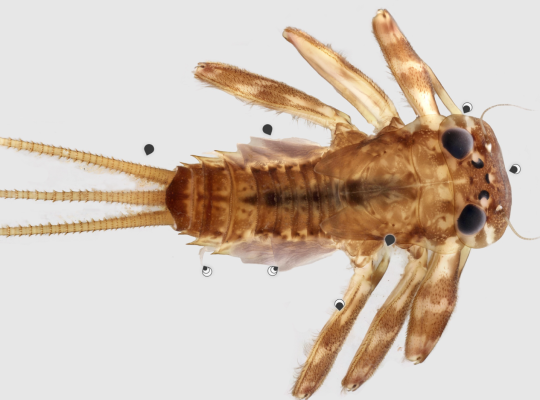
detailed hi-resolution image of a mayfly

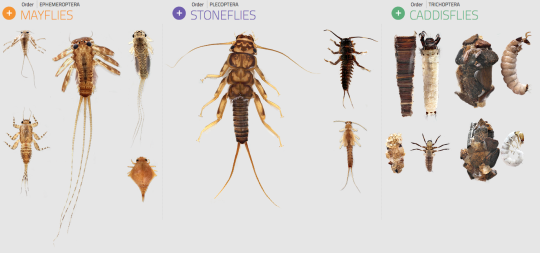
Did you know that macroinvertebrates are great indicators of stream quality?

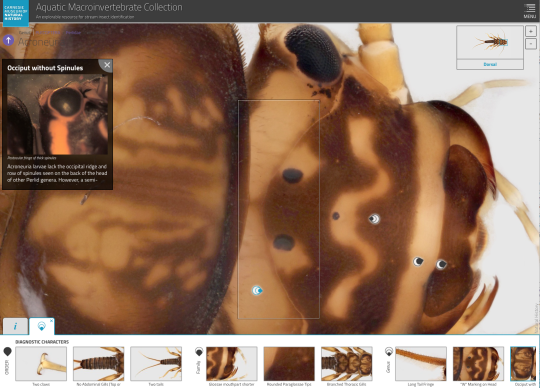
Identify and learn about these tiny creatures using our online Aquatic Macroinvertebrate Collection resource, which was funded by the National Science Foundation and done in collaboration with Carnegie Mellon University and the University of Pittsburgh.

Zoom in, and explore amazingly detailed pictures of macroinvertebrates like the mayfly above to discover more about invertebrates living in your backyard!

Learn more at http://www.macroinvertebrates.org


screenshot from macroinvertebrates.org
different categories of macroinvertebrates including stoneflies and mayflies

Filed Under: Blog Tagged With: pennsylvania, water

November 7, 2016 by wpengine

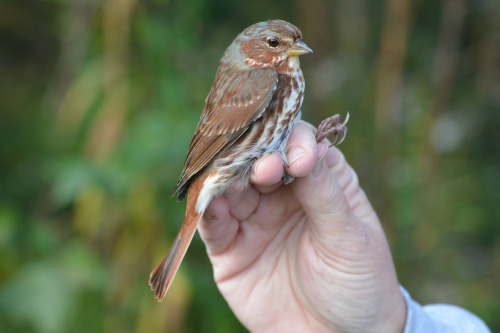
Foxy sparrow

foxy sparrow

A foxy sparrow banded at Powdermill Nature Reserve, Carnegie Museum of Natural History’s environmental research center.

Filed Under: Blog Tagged With: pennsylvania, Powdermill

September 5, 2016 by wpengine

Even on our warmest and muggiest days

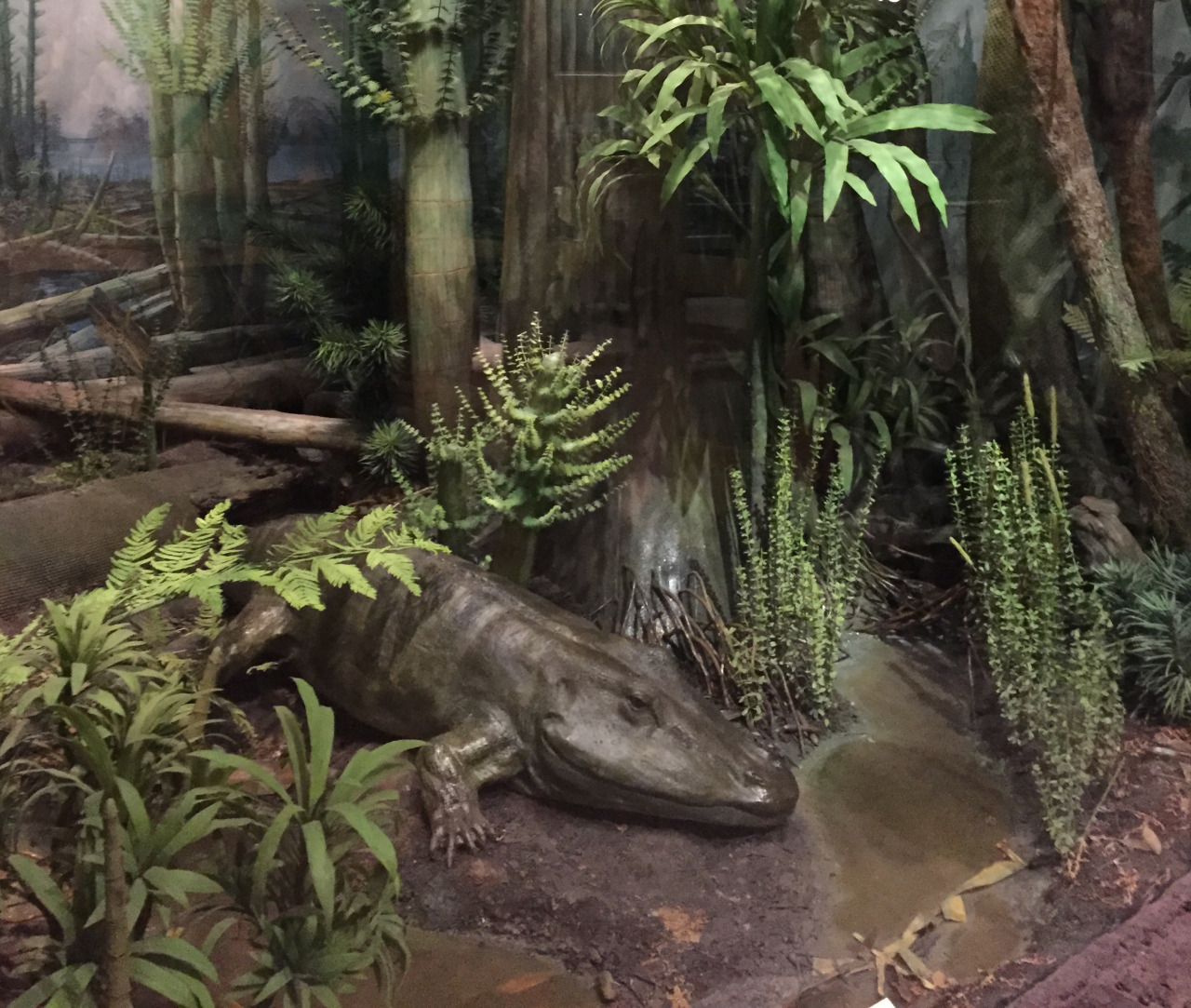
crocodile on display in the coal forest diorama at Carnegie Museum of Natural History
A Pennsylvania coal forest diorama on display in Carnegie Museum of Natural History.

Even on our warmest and muggiest days, it’s hard to imagine Pennsylvania ever looked like this coal forest diorama.

Giant cockroaches, dragonflies, and centipedes shared the area we now call home with huge amphibians like the Eryops, which is pictured above.

Oddly, there were no birds in those ancient forests. They wouldn’t evolve for another 100 million years!

Filed Under: Blog Tagged With: diorama, pennsylvania

  • « Go to Previous Page
  • Page 1
  • Page 2
  • Page 3
  • Page 4
  • Go to Next Page »

sidebar

About

  • Mission & Commitments
  • Directors Team
  • Museum History

Get Involved

  • Volunteer
  • Membership
  • Carnegie Discoverers
  • Donate
  • Employment
  • Events

Bring a Group

  • Groups of 10 or More
  • Birthday Parties at the Museum
  • Field Trips

Powdermill

  • Powdermill Nature Reserve
  • Powdermill Field Trips
  • Powdermill Staff
  • Research at Powdermill

More Information

  • Image Permission Requests
  • Science Stories
  • Accessibility
  • Shopping Cart
  • Contact
  • Visitor Policies
One of the Four Carnegie Museums | © Carnegie Institute | Privacy Policy | Terms of Use | Accessibility
Rad works here logo