• Skip to primary navigation
  • Skip to main content
  • Skip to primary sidebar

Carnegie Museum of Natural History

One of the Four Carnegie Museums of Pittsburgh

  • Visit
    • Buy Tickets
    • Visitor Information
    • Exhibitions
    • Events
    • Dining at the Museum
    • Celebrate at the Museum
    • Powdermill Nature Reserve
    • Event Venue Rental
  • Learn
    • Field Trips
    • Educator Information
    • Programs at the Museum
    • Bring the Museum to You
    • Guided Programs FAQ
    • Programs Online
    • Climate and Rural Systems Partnership
  • Research
    • Scientific Sections
    • Science Stories
    • Science Videos
    • Senior Science & Research Staff
    • Museum Library
    • Science Seminars
    • Scientific Publications
    • Specimen and Artifact Identification
  • About
    • Mission & Commitments
    • Directors Team
    • Museum History
  • Tickets
  • Give
  • Shop

plants

September 17, 2018 by wpengine

Combating Climate Change with Plants

by Steve Tonsor

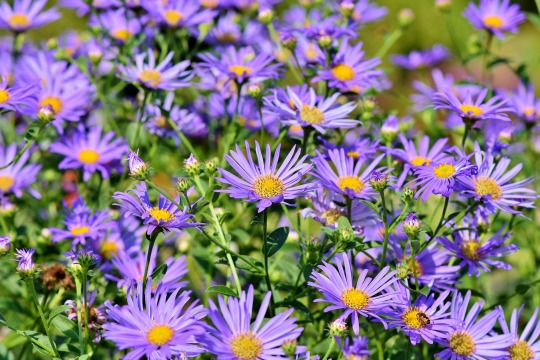
aster

It is easy for everyone to overlook plants as being at the heart of Earth’s carbon and oxygen cycles; they are simply background and decoration as the default for many.  Yet they make the planet livable by producing atmospheric Oxygen and the ozone layer that reduces ultraviolet light to livable levels.  They scrub carbon dioxide and use the carbon to store the sun’s energy in molecules that are the basis of food, fuel, and fiber, nearly everything we use in one way or another.  They are also the most cost-effective way of sequestering carbon and reducing global change.

To understand the issue we are having with greenhouse gasses is to understand the carbon cycle. To understand the carbon cycle is to understand what plants do.

Growing more plants, by tending them ourselves and supporting organizations that do, is a low-cost way to make a positive contribution to the carbon cycle. It’s a method of combating climate change implementable on any scale you choose from backyard to continental.

Learn more about why low-cost, easy to implement ways to reduce climate change are critical in “A low-tech method for comabting climate change” from The Washington Post.

Steve Tonsor is Director of Science and Research at the Carnegie Museum of Natural History. Museum employees are encouraged to blog about their unique experiences and knowledge gained from working at the museum.
Filed Under: Blog Tagged With: climate change, plants

September 6, 2018 by wpengine

Collected on This Day: September 6

by Mason Heberling

September 6, 1952: 66 years ago

…and recollected September 6, 2018

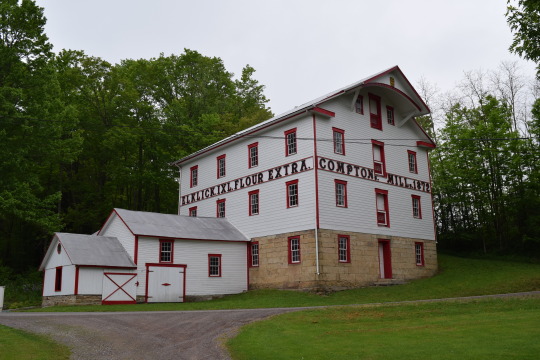
These specimens (and more) were collected on September 6, 1952 near Compton’s Mills (near Salisbury, PA, Somerset County) by Leroy Henry and Werner Buker. Henry was a long time Curator of Botany at the museum (1937-1973), and Buker was a math teacher at Perry High School, who was also a very active botanist at the museum.  Collectively, they collected nearly 50,000 specimens in the Carnegie Museum herbarium!

These specimens are part of a larger project ongoing in the Section of Botany at the Carnegie Museum.  Starting last year, we are revisiting historic sites across Western Pennsylvania, where former botanists have collected.  We are revisiting these sites in order to record and monitor biological change in the Anthropocene.  Are the same species present? (local extinction or persistence) Are new species present? (newly introduced invasive species)

We are also recollecting specimens from these historic sites to compare specimens collected decades to a century ago, to those collected today. For example, how are species affected by climate change? Are species flowering earlier? How are plant communities affected by invasive species and introduced pests? These are just a few of the many questions that can be answered.

Compton's Mills

With generous permission of the current landowner, we are able to recollect specimens at Compton’s Mills. Compton’s Mills is a site of a family-run historic grist/flour mill built in 1872 on the foundation of an even earlier mill. We have done some recollections at this site last spring, including specimens of the endemic Appalachian violet (Viola appalachiensis).  Compton’s Mills is also of special importance, as specimens collected from this site were used by Leroy Henry to formally describe species new to science (known as “type” specimens).  Read about our recollection in Spring 2017.

This year we are revisiting in the late summer/early fall.

With data from Compton’s Mills, in addition to repeatedly revisiting other sites across Western Pennsylvania, we will be able to document and understand a century of past, present, and future impacts of humans on the landscape– a hallmark of the Anthropocene.  Some of our first recollections were featured in the We Are Nature exhibition.  Although this exhibition recently ended, specimens from this project will remain on display in the Hall of Botany.

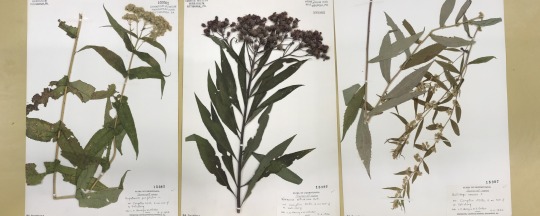
wildflower specimens

The wildflower specimens pictured here are welcomed signs of late summer and fall (left to right): common boneset (Eupatorium perfoliatum), tall ironweed (Vernonia altissima), wreath goldenrod (Solidago caesia).

Mason Heberling is a Postdoctoral Research Fellow in the Section of Botany at the Carnegie Museum of Natural History. Museum employees are encouraged to blog about their unique experiences working at the museum.

Filed Under: Blog Tagged With: Botany, collected on this day, Mason Heberling, pennsylvania, plants, western pennsylvania

August 24, 2018 by wpengine

Celebrating the weed that engulfed western Pennsylvania?

by Mason Heberling

Knotweed Festival balloons

A few weekends ago, I went to the 7th annual Knotweed Festival in Blairsville, about 40 miles east of Pittsburgh in Indiana County.  Aside from reading a brief advertisement, I knew little about the festival before going. But, given I study non-native plant invasions, I had to go to a celebration named after a local weed that is a focus of my research! And this invader is one of the most aggressive and widespread ones in western Pennsylvania – Japanese knotweed.

Native to East Asia, Japanese knotweed (Fallopia japonica) is a large herbaceous perennial that was first introduced to the U.S. in the late 1800s as an ornamental.  As its name suggests, it eventually spread well outside of gardens to become a major nuisance. More troubling, the spread of the species displaces native vegetation and disrupts the natural function of the ecosystem.  The plant has thick hollow stems that somewhat resemble bamboo, although they are not related (knotweed is in the buckwheat family, Polygonaceae; bamboo in the grass family, Poaceae).  Knotweed spreads through persistent below-ground structures called rhizomes (below-ground stems), as well as by seed.  Small fragments of rhizomes can be washed downstream and easily establish, often forming dense stands along Pittsburgh’s many streams and rivers. Knotweed is among the most economically and ecologically problematic invasive plants in Pennsylvania.

So, why name a community festival after this invasive plant?!  Despite the dislike for the plant, the community of Blairsville named the festival partly as a tongue-in-cheek sentiment for the plant that has taken over the landscape and partly to recognize the weed as embedded into the local culture. The nearby Conemaugh River that runs throughs Blairsville has been transformed by this non-native species, completely covering the banks with stands so dense they completely block the view of the river along the community recreational trail.

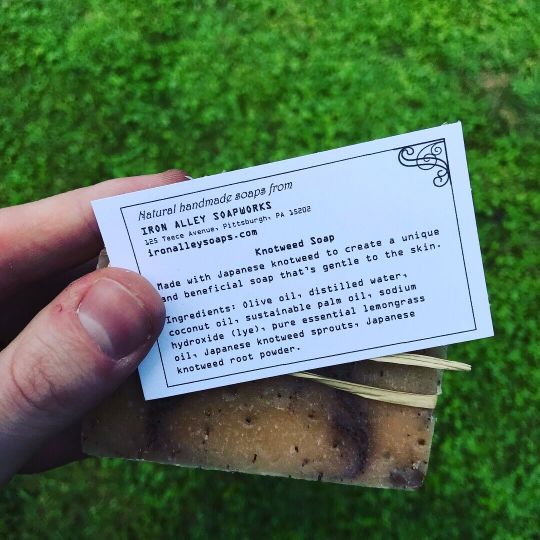
My family and I had a great time at the festival, visiting local craft and food vendors, listening to musicians and other entertainment, seeing a monarch butterfly display, and even a parade. I even bought soap made from the rhizomes and stems of knotweed collected by the river.

knotweed soap
Soap for sale at the Knotweed Festival made from young knotweed stems and rhizomes.

At first, I had mixed feelings about naming a festival after an aggressive invasive plant known to cause ecological harm. On one hand, it embraces the nature around us – whether we like it or not, non-native plants are part of the landscape around us. The global movement of plants is one of the defining features of the Anthropocene, the current era of pervasive human influence on the environment and Earth’s systems. But, on the other hand, naming a festival after an invasive species normalizes plant invasions and perhaps even embraces the change to the landscape as a good thing.  Despite my initial mixed feelings, I think the festival is a great community gathering that has the potential to raise awareness about the presence of the invasive plant in our community, its ecological effects, and in turn, nature around us (native and non-native).

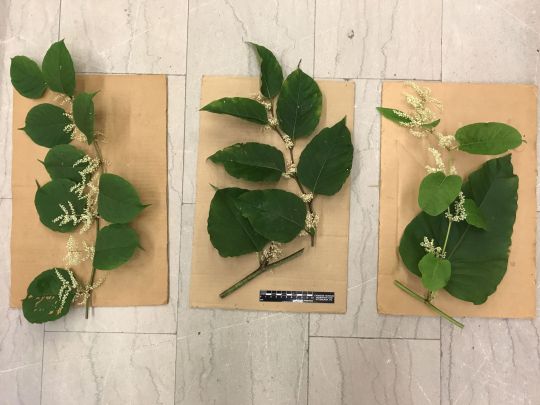
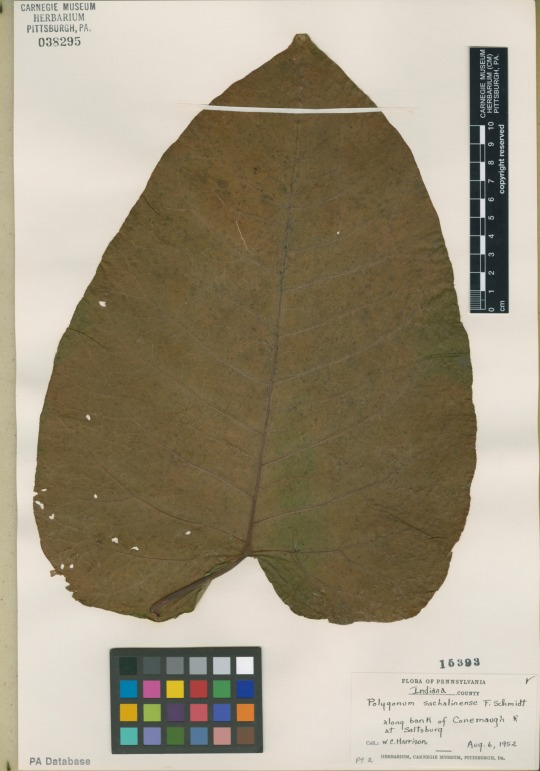
It turns out there is more than one species of invasive knotweed in western PA: Japanese knotweed (Fallopia japonica), Giant knotweed (Fallopia sachalinensis), and a hybrid between the two species, Bohemian knotweed (Fallopia xbohemica).  The hybrid was only recognized in the past several decades and likely originated when these two species “met” after they were introduced in Europe.  The three species are visually similar.  Giant knotweed can be distinguished by its large (usually much larger than your hand), heart-shaped leaves. Japanese knotweed and the hybrid Bohemian knotweed are much more difficult to distinguish, with much variation in leaf shape.  Japanese knotweed tends to be rounder in shape, while the Bohemian knotweed is intermediate between the other two species in leaf shape and size.  The leaf hairs are sometimes the only definitive identifying feature.

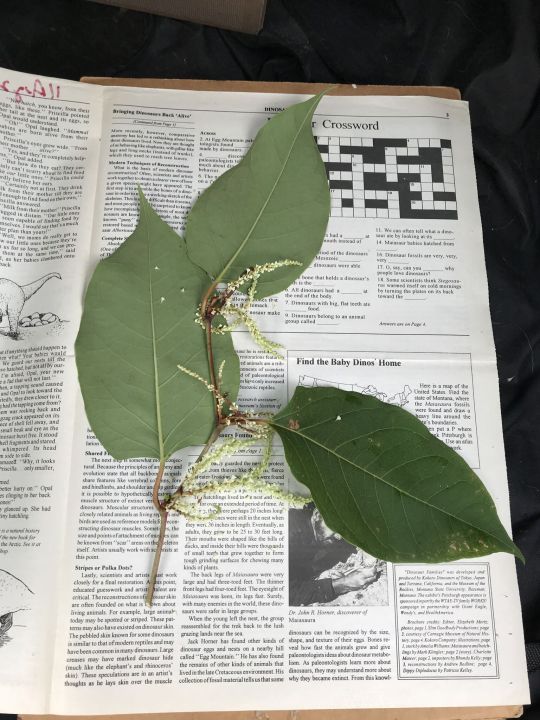
While I was at the Knotweed Festival, I collected some knotweed specimens for the Carnegie Museum of Natural History’s herbarium. Along the Conemaugh River in Blairsville, I collected both the Giant knotweed and Bohemian knotweed (the hybrid).  But, I did not find any Japanese knotweed. (I suspect my knotweed soap is actually made from Giant knotweed, after all.)

Bohemian knotweed
Bohemian knotweed specimen collected at the Knotweed Festival.

fresh knotweed specimens
Last year, I found all three knotweed species growing together at the same site near the Allegheny River and Barking Slopes Conservation Area, near New Kensington/Plum, PA.  Left to right: Japanese knotweed (Fallopia japonica), Bohemian knotweed (Fallopia xbohemica), Giant knotweed (Fallopia sachalinensis).

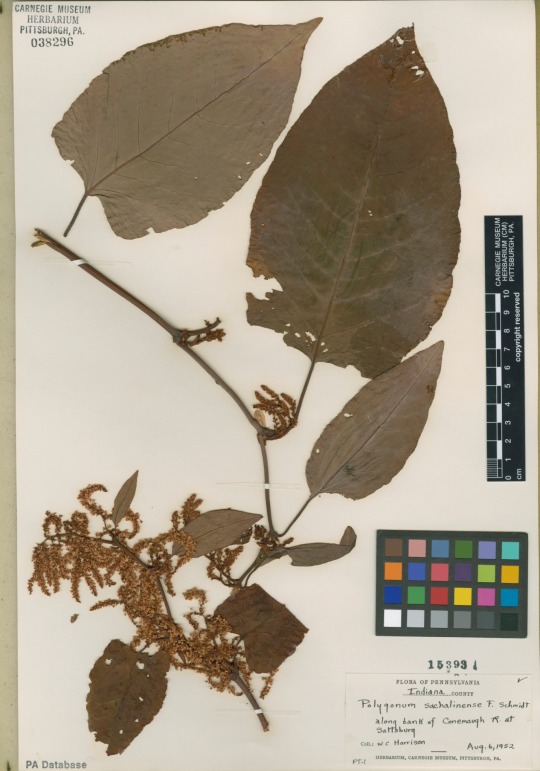
The earliest herbarium specimens from Indiana County were collected in 1952 along the Conemaugh River in Saltsburg (not far from Blairsville).  Interestingly, these specimens were of Giant knotweed and Bohemian knotweed – the same species I collected.

knotweed specimen
 

knotweed specimen
The two earliest specimens of knotweed recorded in Indiana County, collected in Saltsburg on August 6, 1952.  I recently recollected these same species not far from the same site, 66 years later.

Keep an eye out for knotweed.  If you live in western PA, chances are that you see it every day!

Mason Heberling is a Postdoctoral Research Fellow in the Section of Botany at the Carnegie Museum of Natural History. Museum employees are encouraged to blog about their unique experiences working at the museum.

Filed Under: Blog Tagged With: Botany, Mason Heberling, plants

August 13, 2018 by wpengine

Plant Specimen Images Now Online

By Bonnie Isaac

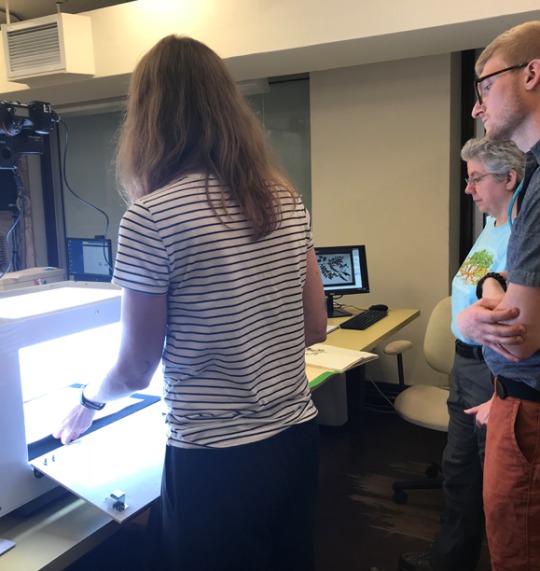
Anne Barber training Botany staff Mason Heberling and Bonnie Isaac to use the new imaging station
Anne Barber training Mason Heberling and Bonnie Isaac to use the new imaging station for our NSF grant.


Anne Barber, the Research Project Coordinator for the Mid-Atlantic Megalopolis TCN recently came to Pittsburgh to train the Botany staff (Bonnie Isaac, Mason Heberling, and Sarah Williams) to use our new imaging equipment.  We spent a day and a half learning how to image our specimens and get them up on the Mid-Atlantic Herbaria portal. We are now up and running and images of our specimens are making it to the internet.

We will be photographing the specimens from Pennsylvania, Delaware, New Jersey, New York, Maryland, and D.C. for this project. These images will be added to the portal for the mid-Atlantic region over the next three years.  You can search our specimen database to find out what specimens we have or watch for the images of these specimens to start appearing.

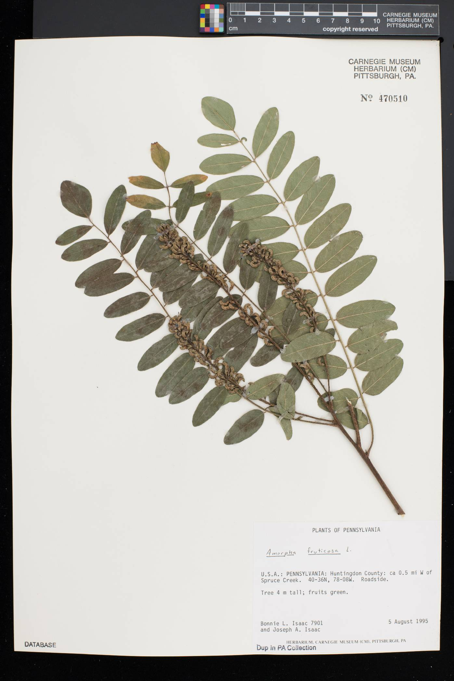
What was the lucky specimen to be first imaged and added to the portal?  Just by chance, it was a specimen that I collected in Huntingdon County back in 1995.

Amorpha fruticosa specimen
Amorpha fruticosa specimen from Pennsylvania collected by Bonnie Isaac, first specimen imaged with the new imaging station.


Bonnie Isaac is the Collection Manager in the Section of Botany. Museum employees are encouraged to blog about their unique experiences and knowledge gained from working at the museum.

Filed Under: Blog Tagged With: Bonnie Isaac, Botany, plants

August 3, 2018 by Erin Southerland

Tiny Terrarium

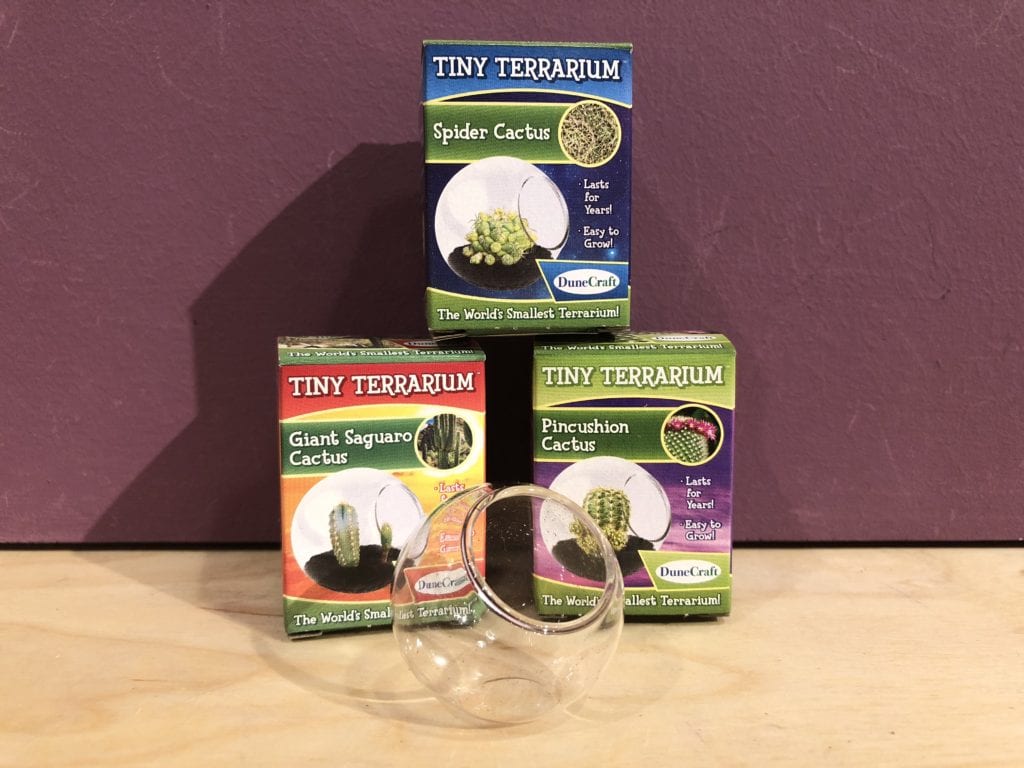
tiny terrarium

Grow a tiny cactus in the “world’s smallest terrarium.” Cacti thrive with just a little water and lots of sunlight. They live for years with minimal care, the ideal plant for someone with a “black thumb.”

The Tiny Terrarium is great for small spaces. While the Giant Saguaro Cactus can grow up to 40 feet tall, this one will only grow to this miniature terrarium.

$5.50 each, available in the Museum Store.

Filed Under: Visitor Info Tagged With: cactus, gift shop, plants

July 10, 2018 by wpengine

Collected on This Day: Apocynum cannabinum

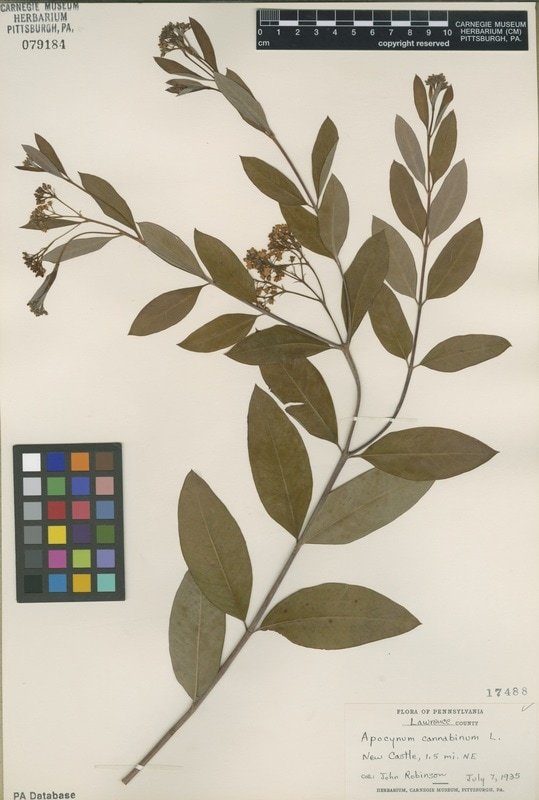
Hemp dogbane (Apocynum cannabinum) specimen

Collected on July 7, 1935, this specimen was found by John Robinson near New Castle, PA.  Hemp dogbane (Apocynum cannabinum) are important food plants for moth and butterfly larvae, and like other plants in the milkweed family, this plant is poisonous.  Its milk-like, sticky, latex sap contains cardiac glycosides that causes heart problems, rapid pulse, vomiting, and possible death.  This is especially of concern to pets and livestock, although dogbane is generally avoided. Hemp dogbane has a rich ethnobotanical history by Native Americans – its bark having been used for fiber (hence the “hemp” part of name), and roots, seeds, or leaves used for medicines to treat a wide variety of ailments. Hemp dogbane can be found in sparely wooded areas, ditches, and field edges across United States.

Botanists at Carnegie Museum of Natural History share pieces of the herbarium’s historical hidden collection on the dates they were discovered or collected. Check back for more!

Mason Heberling is Associate Curator of Botany at Carnegie Museum of Natural History.

Carnegie Museum of Natural History Blog Citation Information

Blog author: Heberling, Mason
Publication date: July 6, 2017

Share this post!

  • Share on Twitter Share on Twitter
  • Share on Facebook Share on Facebook
  • Share on Pinterest Share on Pinterest
  • Share on LinkedIn Share on LinkedIn
  • Share on Reddit Share on Reddit
  • Share via Email Share via Email

Filed Under: Blog Tagged With: Botany, collected on this day, herbarium, Mason Heberling, museums, plants

  • « Go to Previous Page
  • Page 1
  • Interim pages omitted …
  • Page 4
  • Page 5
  • Page 6
  • Page 7
  • Go to Next Page »

sidebar

About

  • Mission & Commitments
  • Directors Team
  • Museum History

Get Involved

  • Volunteer
  • Membership
  • Carnegie Discoverers
  • Donate
  • Employment
  • Events

Bring a Group

  • Groups of 10 or More
  • Birthday Parties at the Museum
  • Field Trips

Powdermill

  • Powdermill Nature Reserve
  • Powdermill Field Trips
  • Powdermill Staff
  • Research at Powdermill

More Information

  • Image Permission Requests
  • Science Stories
  • Accessibility
  • Shopping Cart
  • Contact
  • Visitor Policies
One of the Four Carnegie Museums | © Carnegie Institute | Privacy Policy | Terms of Use | Accessibility
Rad works here logo