• Skip to primary navigation
  • Skip to main content
  • Skip to primary sidebar

Carnegie Museum of Natural History

One of the Four Carnegie Museums of Pittsburgh

  • Visit
    • Buy Tickets
    • Visitor Information
    • Exhibitions
    • Events
    • Dining at the Museum
    • Celebrate at the Museum
    • Powdermill Nature Reserve
    • Event Venue Rental
  • Learn
    • Field Trips
    • Educator Information
    • Programs at the Museum
    • Bring the Museum to You
    • Guided Programs FAQ
    • Programs Online
    • Climate and Rural Systems Partnership
  • Research
    • Scientific Sections
    • Science Stories
    • Science Videos
    • Senior Science & Research Staff
    • Museum Library
    • Science Seminars
    • Scientific Publications
    • Specimen and Artifact Identification
  • About
    • Mission & Commitments
    • Directors Team
    • Museum History
  • Tickets
  • Give
  • Shop

Powdermill

October 5, 2017 by wpengine

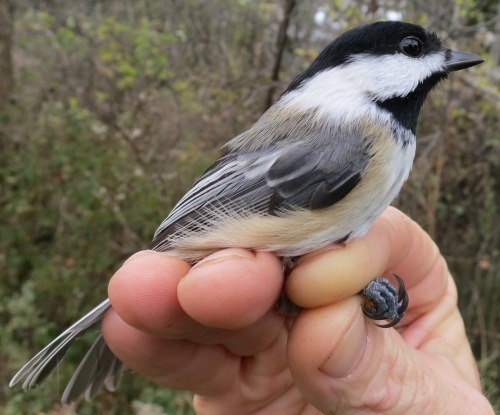
8½-year-Old Black-capped Chickadee at Powdermill

black-capped chickadee, a black, white, and tan bird

Residents of western Pennsylvania are familiar with the small and spunky black-capped chickadees that often visit their birdfeeders. These fearless birds are also frequent visitors at our banding lab at Powdermill Nature Reserve.

Last winter, this chickadee was one of the oldest of his species banded at the lab. It was first banded as a hatch-year bird at the end of August 2007, which means its age was 8½ years!

This individual has been captured 42 times in its life (so far!), at least twice every year, most often in the winter months.
It has shown up in every month of the year except June and July. In 2011, the only year that we saw this bird in May, it had a cloacal protuberance, an enlargement of the cloaca indicating breeding condition in males. So we know it is a male and that his territory is obviously not near our nets.

We are hoping to see this individual in the future. The oldest known black-capped chickadee was 11½ years old when it was banded in Minnesota in 2002.


Powdermill Nature Reserve’s avian research center is part of Carnegie Museum of Natural History’s biological research station in Rector, Pennsylvania.  The research center operates a bird banding station, conducts bioacoustical research, and performs flight tunnel analysis with the goal of reducing window collisions.
Filed Under: Blog Tagged With: bird, parc, Powdermill

October 5, 2017 by wpengine

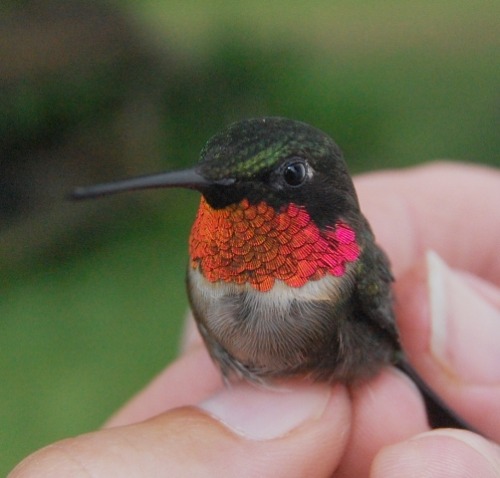
1,400 Miles in Three Weeks

hummingbird with a bright red throat and black head

We received word this spring from the National Banding Lab that a young male ruby-throated hummingbird banded at Powdermill Nature Reserve on September 18, 2014 was recaptured three weeks later (October 10) in Lake Jackson, Texas.

A journey of 1,425 miles in three weeks is pretty astounding when one considers that this male weighed in at just 3.5 grams, not much more than a penny. His wings measured 42 mm (a little over 1.5″).

The hummingbird’s wing beat has been measured at 50 times per second. Now we’re not sure exactly when he left our banding area or if he was caught the day he arrived in Texas, but if he used every day in the interval to fly south, he would have averaged 65 miles per day. Pretty impressive!

Once the data was collected in Texas, the bird was released and probably spent a few days fattening up for the next leg of its migration—a nonstop crossing of the Gulf of Mexico!


Powdermill Nature Reserve’s avian research center is part of Carnegie Museum of Natural History’s biological research station in Rector, Pennsylvania.  The research center operates a bird banding station, conducts bioacoustical research, and performs flight tunnel analysis with the goal of reducing window collisions.
Filed Under: Blog Tagged With: bird, parc, Powdermill

October 5, 2017 by wpengine

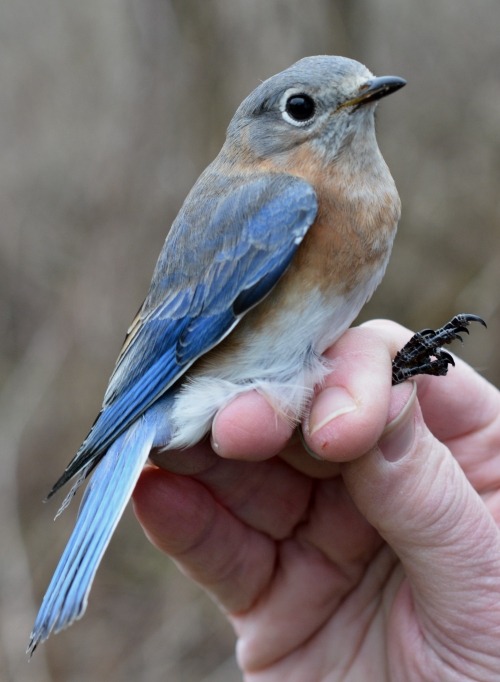
Eastern Bluebird

Eastern Bluebird, a small vibrant blue bird

This pretty little eastern bluebird was banded this year at Powdermill Nature Reserve’s bird banding lab in Rector, Pa.

Although they are common winter residents in a field just over the hill from the banding lab, eastern bluebirds only occasionally stray into the banding area, so it was a pleasant surprise to find this individual in one of our nets.


Powdermill Nature Reserve’s avian research center is part of Carnegie Museum of Natural History’s biological research station in Rector, Pennsylvania.  The research center operates a bird banding station, conducts bioacoustical research, and performs flight tunnel analysis with the goal of reducing window collisions.
Filed Under: Blog Tagged With: Birds, Powdermill

July 7, 2017 by wpengine

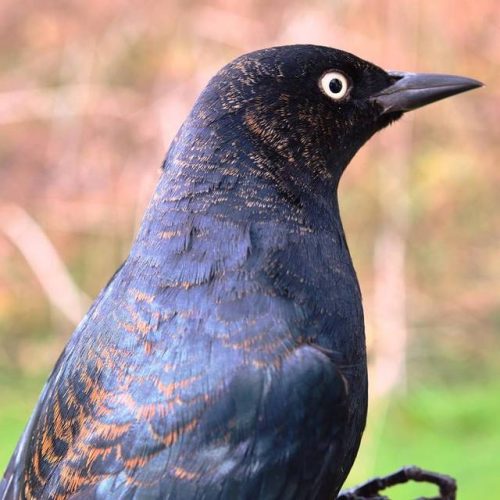
Adult male rusty blackbird

male rusty blackbird

This adult male rusty blackbird was banded March 29, 2017 at Powdermill Nature Reserve, Carnegie Museum of Natural History’s environmental research center.

Filed Under: Blog Tagged With: bird banding, Birds, Powdermill

March 6, 2017 by wpengine

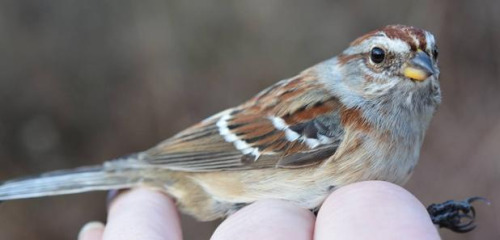
American Tree Sparrow

American Tree Sparrow, a small brown bird
This American Tree Sparrow was banded at Powdermill Nature Reserve.

Filed Under: Blog Tagged With: bird banding, Powdermill, Powdermill Nature Reserve

February 22, 2017 by wpengine

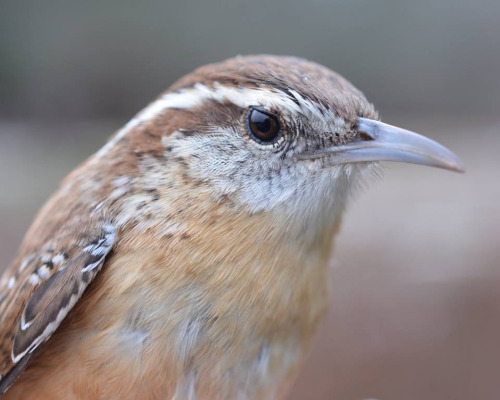
Carolina Wren

Brown and tan Carolina Wren bird
Researchers banded this Carolina Wren in February at Powdermill Nature Reserve.

Filed Under: Blog Tagged With: bird banding, Birds, Powdermill, Powdermill Nature Reserve

  • « Go to Previous Page
  • Page 1
  • Interim pages omitted …
  • Page 5
  • Page 6
  • Page 7
  • Page 8
  • Page 9
  • Go to Next Page »

sidebar

About

  • Mission & Commitments
  • Directors Team
  • Museum History

Get Involved

  • Volunteer
  • Membership
  • Carnegie Discoverers
  • Donate
  • Employment
  • Events

Bring a Group

  • Groups of 10 or More
  • Birthday Parties at the Museum
  • Field Trips

Powdermill

  • Powdermill Nature Reserve
  • Powdermill Field Trips
  • Powdermill Staff
  • Research at Powdermill

More Information

  • Image Permission Requests
  • Science Stories
  • Accessibility
  • Shopping Cart
  • Contact
  • Visitor Policies
One of the Four Carnegie Museums | © Carnegie Institute | Privacy Policy | Terms of Use | Accessibility
Rad works here logo