• Skip to primary navigation
  • Skip to main content
  • Skip to primary sidebar

Carnegie Museum of Natural History

One of the Four Carnegie Museums of Pittsburgh

  • Visit
    • Buy Tickets
    • Visitor Information
    • Exhibitions
    • Events
    • Dining at the Museum
    • Celebrate at the Museum
    • Powdermill Nature Reserve
    • Event Venue Rental
    • Gift Cards
  • Learn
    • Field Trips
    • Educator Information
    • Programs at the Museum
    • Bring the Museum to You
    • Guided Programs FAQ
    • Programs Online
    • Climate and Rural Systems Partnership
  • Research
    • Scientific Sections
    • Science Stories
    • Science Videos
    • Senior Science & Research Staff
    • Museum Library
    • Science Seminars
    • Scientific Publications
    • Specimen and Artifact Identification
  • About
    • Mission & Commitments
    • Directors Team
    • Museum History
  • Tickets
  • Give
  • Shop

Powdermill

October 26, 2016 by wpengine

Comparing Pictures to Mounts

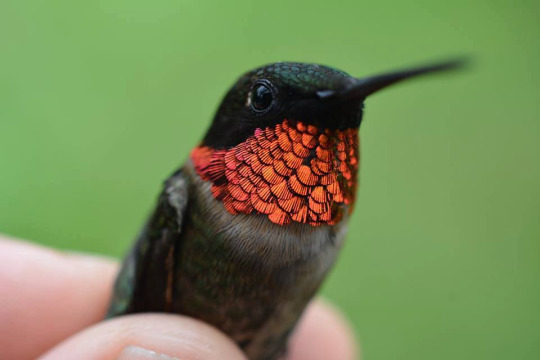
ruby throated hummingbird
The Ruby-throated hummingbird, which has iridescent, fuchsia feathers on its neck, a dark green head, and a long black beak.

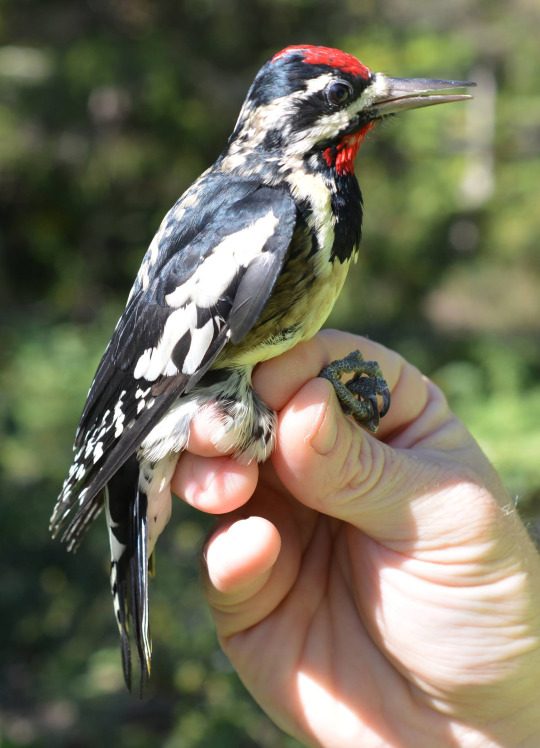
Each week, staff at Powdermill Nature Reserve staff posts stunning,
high-resolution photos of birds that land in their nets on their Facebook page.

The photos show detailed characteristics of local birds, like the
subtle coloring of a Common Yellowthroat or the sharp beak of a Pine
Siskin, that are hard to see as they fly above.

Powdermill is Carnegie Museum of Natural History’s environmental
research center in Rector Pa, where thousands of birds are identified, banded,
and released each year. As they band, research staffers often snap pictures
that highlight the huge variety of different birds flying through Western
Pennsylvania’s skies.

One favorite is the Ruby-throated hummingbird, which has
iridescent, fuchsia feathers on its neck that abut a dark green heads and long
black beak.

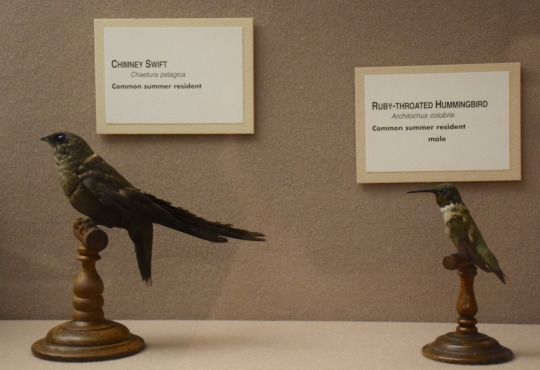
Comparing the Powdermill pictures to Bird Hall in the museum
is an interesting exercise. For example, Powdermill’s high resolution pictures let
you appreciate each and every line of the hummingbird’s bright feathers. But in
the museum, to see a taxidermy mount of a ruby throated humming bird
helps you grasp the miniscule size of these little birds that don’t often grow
larger than 3.5 inches.

Powdermill’s pictures and Bird Halls specimens work
in tandem to encourage us to pause and consider tiny players in our huge
local ecosystem, helping us all foster a little more appreciation for the
natural world.
taxidermied birds
Specimens on display in Bird Hall at Carnegie Museum of Natural History

Filed Under: Blog Tagged With: avian research, bird hall, Birds, museums, Pittsburgh, Powdermill

October 24, 2016 by wpengine

Fall Bird Banding at Powdermill

bird banding at Powdermill Nature Reserve

Fall is an exciting and busy time for our avian researchers at Powdermill Nature Reserve, Carnegie Museum of Natural History’s environmental research center in Rector Pennsylvania.

As birds migrate south, thousands fly through Powdermill, where they are identified, banded, and studied before they continue their long journey to their winter nesting grounds.

Researchers band anything from worm-eating Warblers to brightly colored purple finches in their nets each year.

This fall alone, more than 4,000 birds representing 150+ species have been studied and banded since September. Researchers catch the birds in specially designed mist nets that are cast each morning before dawn. Caught birds are carefully transported to a banding station, where they are identified, measured, and given a small band issued through the US Geological Survey.  Bands provide information for other researchers and don’t affect the birds flight, nesting, or eating habits.

Above all else, the well being of every bird is Powdermill’s top priority at all times. The entire banding process takes less than a minute, and the vast majority of birds are actually quite calm during their short visit at the banding station.

But why band birds at all?

The fundamental goal of bird banding has always been to record the age, sex, wing length, fat deposits, and body mass of captured species as a way of monitoring, year to year, how avian populations are faring in the wild.

Banding gives us insight into many things like the life cycles and longevity of birds, habitat use, and how disease and environmental toxins are affecting wild bird populations.

Want to learn more? You can see monthly and annual banding summaries online or follow Powdermill Nature Reserve on Facebook for weekly updates and stunning pictures.

Filed Under: Blog Tagged With: avian research, bird banding, Birds, nature, parc, Powdermill, research

August 20, 2016 by wpengine

Young Green Heron

A young green heron

A young green heron banded at Powdermill Nature Reserve, the environmental research center of Carnegie Museum of Natural History.

Filed Under: Blog Tagged With: bird banding, Birds, nature, Pittsburgh, Powdermill

August 12, 2016 by wpengine

An Appalachian Research Hub

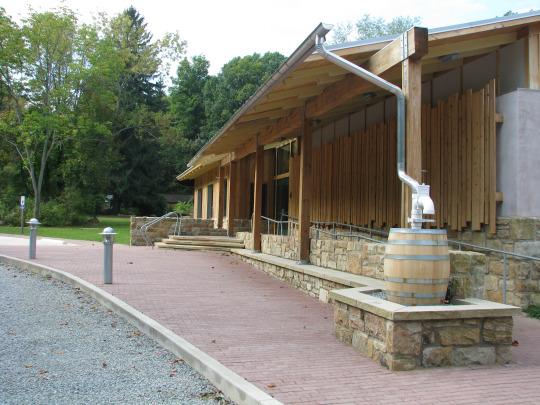
Powdermill Nature Reserve Visitor's Center

Researchers at Powdermill Nature Reserve, the environmental research center of Carnegie Museum of Natural History, are documenting the health of Western Pennsylvania’s flora and fauna with bird banding, long-term studies, and other key environmental research out of Rector Pa.

Those efforts will be bolstered thanks to a recent $700,000 grant from the Richard King Mellon Foundation, which will further position Powdermill as an ecological research powerhouse of the Appalachian region. The grant will fund new technology like drone imagining and radio frequency “nanotags” to study and protect birds. The focal species groups that will be studied are birds, pollinators, salamanders, and forest trees.

Powdermill scientists are eager to use nanotag radio telemetry to improve their tracking of migratory birds, attaching tiny radio beacons to birds that will track their migration as they fly by special towers equipped with sensors.

The sensors will log the tagged birds in a central database, allowing scientists to track birds from South America to Canada without recapturing them. Since only about one in 1,000 birds banded at Powdermill are ever recaptured, the new technology is sure to improve the reserve’s data collection efforts.

“As this grant strengthens our scientific activities, Powdermill will accordingly improve its educational outreach regarding pressing environmental issues of interest to concerned citizens,” said Powdermill Director John Wenzel.

Check out Powdermill Nature Reserve’s Facebook page for beautiful images and snapshots of some of the important working happening there that will benefit the entire Western Pennsylvania region.

Filed Under: Blog Tagged With: Birds, conservation, nature, pennsylvania, Powdermill

June 7, 2016 by wpengine

Cicadas at Powdermill

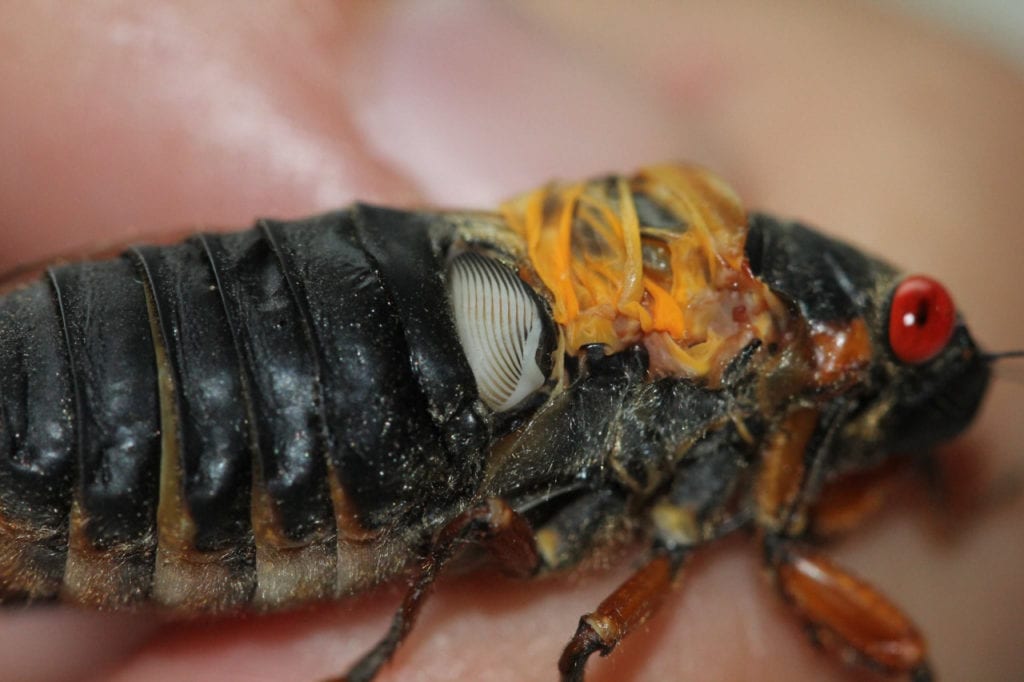
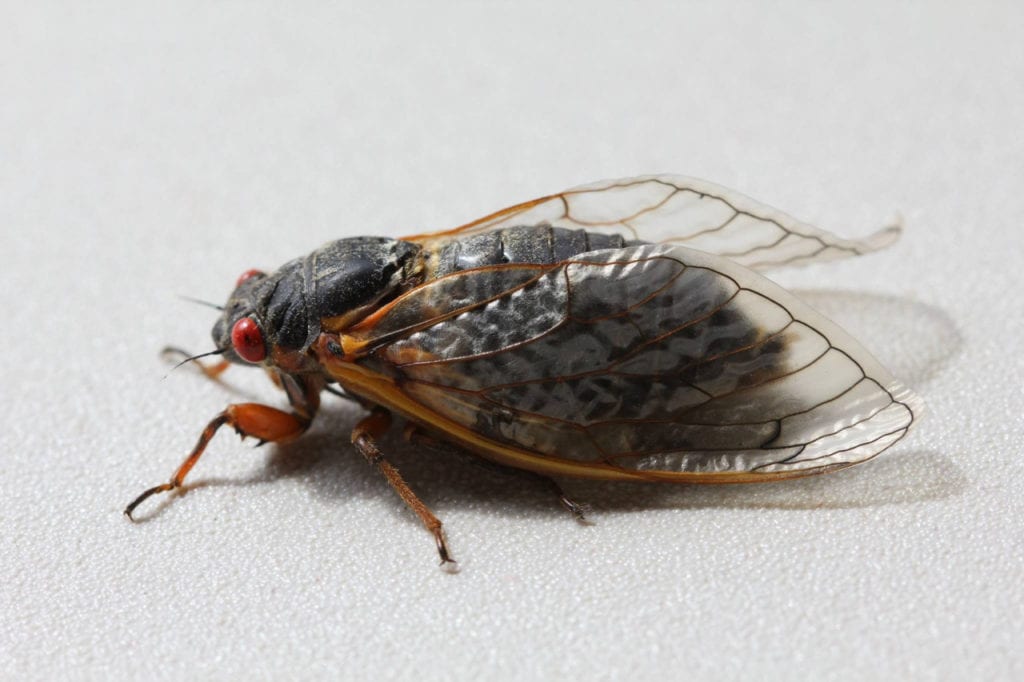
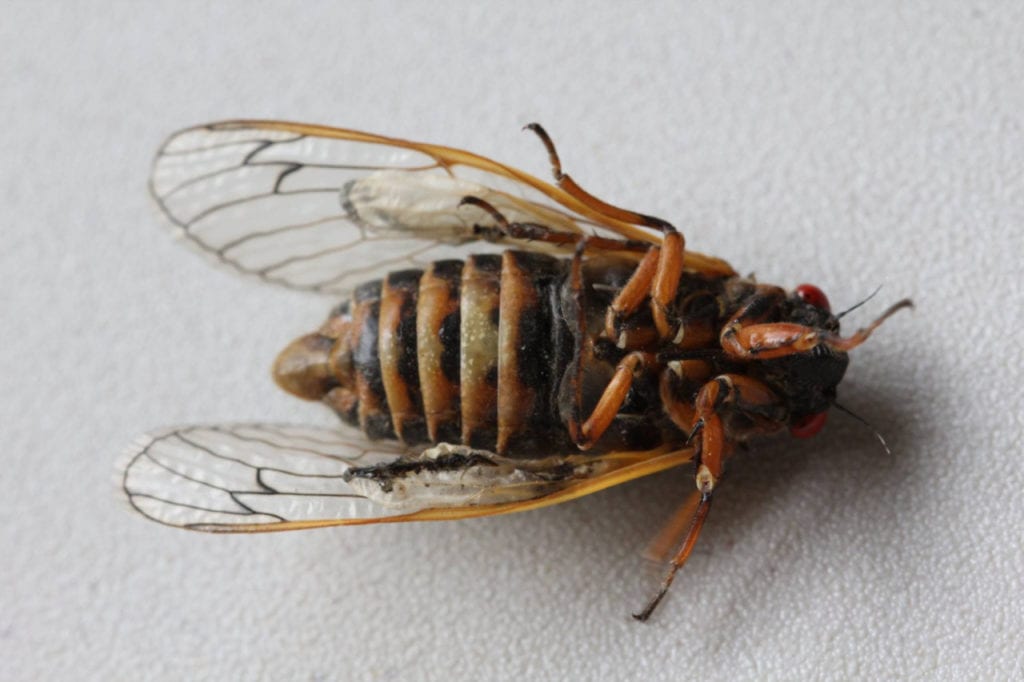
Cicada insect close up Cicada insect Cicada insect on its back

The cicadas are here! Staff at Powdermill Nature Reserve, Carnegie Museum of Natural History’s environmental research center, posted these up-close photos of this 17-year cicada and some more information about it last week.

“This specimen in particular is Magicicada septendecim, indicated by the broad orange stripes on the underside of the abdomen. It is also a male, because of the tymbals located near the base of the wings on each side. These organs are what the males use to make a loud buzzing sound to attract females. When many males sing together, it can be quite deafening!

This cicada has spent seventeen long years underground as a wingless nymph, feeding off of the juices from plant roots. In the year of its emergence, it waits until the soil temperature in its underground tunnel reaches 64 degrees, and then climbs up out of the ground (often onto a tree trunk or other surface) for its final molt into adulthood.”

Have the cicadas come to your neighborhood? Report your sightings at Magicicada.org, where you can also find much more additional information about periodical cicadas!

Filed Under: Blog Tagged With: insects, Pittsburgh, Powdermill, Powdermill Nature Reserve, western pennsylvania

May 18, 2016 by wpengine

Flow to Pittsburgh

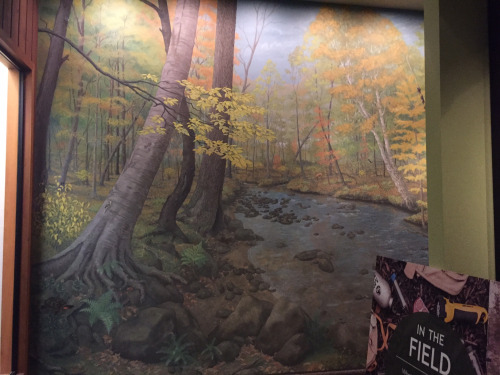
mural of a stream

by Patrick McShea

The scene in a new mural on the second floor of Carnegie Museum of Natural History is a fall morning at Powdermill Nature Reserve, the museum’s field research station which is located some 55 miles southeast of Pittsburgh.

The view is upstream along Powdermill Run, just below the place where the stream absorbs the flow of a tributary known as White Oak Run. These waters, gathered from a portion the western slope of Laurel Ridge, eventually flow through Pittsburgh. Their path to the city, a vertical descent of some 650 feet via the meanders of Loyalhanna Creek, the Kiskiminitas, and Allegheny River, is nearly twice the length of the highway route.

As a vital element of the forested landscape, the stream provides a focal point for considering the diverse life forms supported on Powdermill Nature Reserve’s 2,200 acres.

The artists who created the mural paid careful attention to vegetation, depicting specific trees, shrubs, and grasses. They also populated the scene with a variety of creatures. The closer you study the mural the more living details you’ll notice.

See how many plants and animals you can locate and identify, then make plans to visit Powdermill Nature Reserve at any season of the year.

Curious about Powdermill? Visit on June 4 for the annual public day!

Patrick McShea works in the Education and Visitor Experience department of Carnegie Museum of Natural History. Museum employees are encouraged to blog about their unique experiences and knowledge gained from working at the museum.

Filed Under: Blog Tagged With: conservation, nature, Patrick McShea, Pittsburgh, Powdermill, water

  • « Go to Previous Page
  • Page 1
  • Interim pages omitted …
  • Page 7
  • Page 8
  • Page 9

sidebar

About

  • Mission & Commitments
  • Directors Team
  • Museum History

Get Involved

  • Volunteer
  • Membership
  • Carnegie Discoverers
  • Donate
  • Employment
  • Events

Bring a Group

  • Groups of 10 or More
  • Birthday Parties at the Museum
  • Field Trips

Powdermill

  • Powdermill Nature Reserve
  • Powdermill Field Trips
  • Powdermill Staff
  • Research at Powdermill

More Information

  • Image Permission Requests
  • Science Stories
  • Accessibility
  • Shopping Cart
  • Contact
  • Visitor Policies
Stay in the loop! Sign up for our newsletter(s).
One of the Four Carnegie Museums | © Carnegie Institute | Privacy Policy | Terms of Use | Accessibility
Rad works here logo