• Skip to primary navigation
  • Skip to main content
  • Skip to primary sidebar

Carnegie Museum of Natural History

One of the Four Carnegie Museums of Pittsburgh

  • Visit
    • Buy Tickets
    • Visitor Information
    • Exhibitions
    • Events
    • Dining at the Museum
    • Celebrate at the Museum
    • Powdermill Nature Reserve
    • Event Venue Rental
    • Gift Cards
  • Learn
    • Field Trips
    • Educator Information
    • Programs at the Museum
    • Bring the Museum to You
    • Guided Programs FAQ
    • Programs Online
    • Climate and Rural Systems Partnership
  • Research
    • Scientific Sections
    • Science Stories
    • Science Videos
    • Senior Science & Research Staff
    • Museum Library
    • Science Seminars
    • Scientific Publications
    • Specimen and Artifact Identification
  • About
    • Mission & Commitments
    • Directors Team
    • Museum History
  • Tickets
  • Give
  • Shop

Erin Southerland

January 11, 2022 by Erin Southerland

Paradise Found: The Real-Life Residents of Shangri-La

by Shelby Wyzykowski 

In 1933, when British author James Hilton published the novel Lost Horizon, much of the world was in the midst of the Great Depression, and in some countries there were signs of movement towards another large-scale war. The book became a best-seller in part because it provided a welcome respite from reality. The focal point of the story is a serene paradise called Shangri-La, a fabled land hidden amongst the snow-capped peaks of the Himalayas that is blissfully free of sickness, poverty, conflict, or struggle. The tantalizing tale of a mystical utopia with no shortage of security, beauty, peace, and excited weary readers and piqued their imaginations. 

Sadly, for humankind, the enchanting world of Shangri-La is now, and will likely always be, a dream. However, for some fauna species of Central Asia with homes nestled high up amid the rugged and intimidating terrain of the frigid Himalayan mountains, life does seem to imitate literary art. At great heights within the boundaries of this mysterious and remote part of the world, they have carved out a little piece of heaven for their very own. But, unlike the idyllic scenario presented in Hilton’s fictional novel, living in a real-world paradise is not without its challenges. 

Paradise Found for the Black Snub-Nosed Monkey?
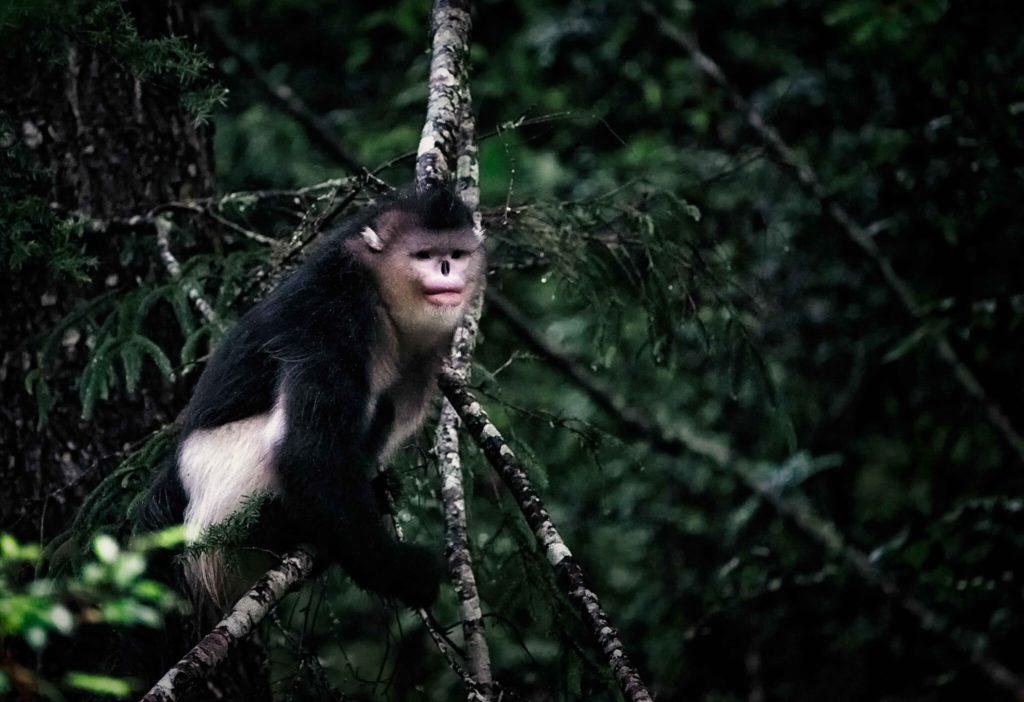
black snub-nosed monkey in a tree
“Black Snub-nosed Monkey” by Rod Waddington is licensed under CC BY-SA 2.0.

The black snub-nosed monkey, the rarest monkey in the world, lives at a higher altitude than any other primate besides humans. The species makes its home at roughly 10,000 to 15,000 feet above sea level in the majestic mountain forests of the Yunnan region in southern China. Lush, Eden-like valleys are their primary residence for much of the year. Here there is an ample supply of food (in the form of leaves) at their fingertips.

However, when winter arrives, they make a move that, at first, seems a bit counterintuitive. For the coldest months of the year, the monkeys choose to live in the highest part of their range. They brave the bone-chilling temperatures higher in the Himalayas because their favorite food, a particularly nourishing variety of lichen, is more abundant there. At high elevations, the monkeys rest on sunny rock outcrops to take advantage any available solar heat. This sensible tactic, along with huddling in groups of up to eight, helps the species survive.

Protecting the Black Snub-Nosed Monkey

Due to poaching and deforestation, the black snub-nosed monkey is considered endangered – even more endangered than the beloved panda. Conservation groups are hoping to make a change for the better as they work to find ways for the monkeys and their neighboring human communities to coexist. One notable development involves a forest monitoring campaign where some local villagers are trained as forest rangers who patrol the monkey habitat, searching for old poaching traps and installing infrared cameras to monitor and protect the small population. These positive and productive efforts are exactly what the black snub-nosed monkeys need in their ongoing struggle to survive in their mountain habitat. If these conservation initiatives are successful, the monkey population has an excellent chance of rebounding and recovering.

Snow Leopards Thrive at the Top
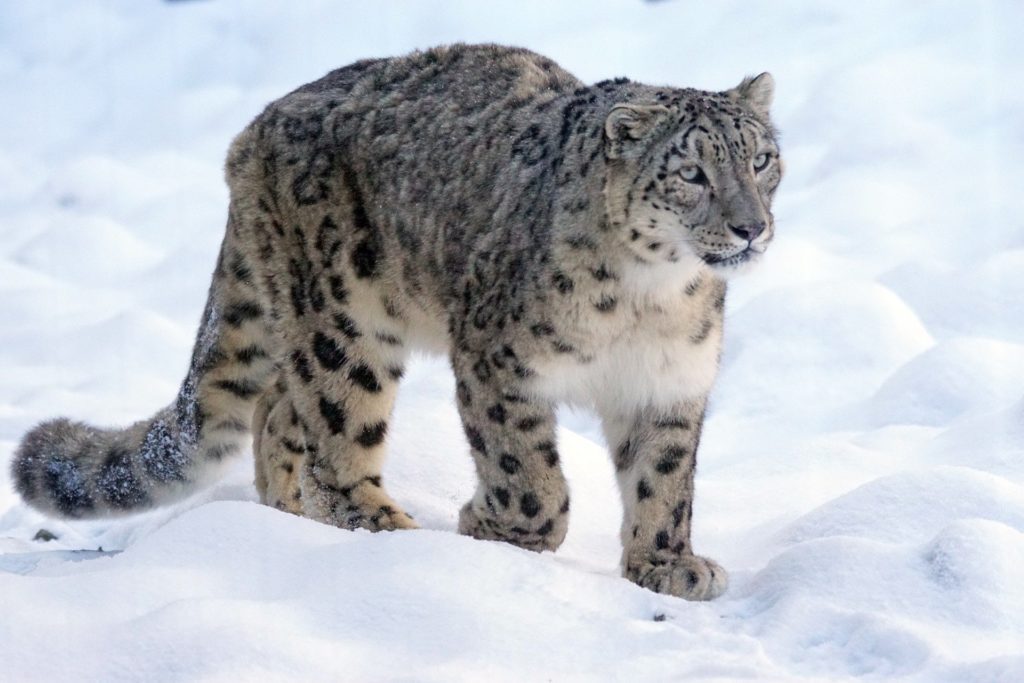
snow leopard in the snow
Image credit Marcel Langthim via Pixabay.

You might think that it’s lonely at the top, but snow leopards are very happy living a solo lifestyle. Mature adults live alone, high up (at elevations of 9,800 to 14,700 feet) in the steep and rocky mountains across Asia. They are perfectly designed to live in such a harsh and rugged environment. Their strong build allows them to effortlessly scale steep slopes, and their powerful hind legs give them the ability to leap six times the length of their body. Their long tail provides them with the agility and balance that is needed to traverse icy, slippery ground. It also does double duty as a soft, furry blanket that can be wrapped around the leopard’s body to provide warmth when sleeping. Appropriately referred to as the “ghost of the mountains,” they have an amazing knack of blending in with their frosty environment. 

Threats to Snow Leopard Survival

Snow leopards thick whitish-gray spotted coat with black rosettes blends in seamlessly with the snowy, jagged cliffs and ravines. However, this gift that provides them with virtual invisibility has also been a curse. In illegal wildlife trade, poached snow leopard pelts bring a high price. Unfortunately, it’s not only law-breaking hunters that set their sights on the cats. As local human development has increased, livestock grazing has expanded into the snow leopard’s range. Argali and Blue Sheep, the snow leopard’s natural prey, have become harder to find (humans hunt these sheep as well); the leopards are forced to prey on livestock for sustenance. In retaliation, snow leopards are often killed by local farmers and herders. 

Snow Leopard Conservation

This magnificent cat’s fate might seem a bit grim, but their future is brightening. In the Eastern Himalayas, conservationists are working with local communities to monitor and protect snow leopards. Predator-proof livestock pens are being installed to reduce the retaliatory killings, and in an attempt to spread the word about the leopard’s plight, leopard awareness programs are being presented to school students and the mountain communities at large. So, things are definitely looking up for the graceful and ghostly snow leopard. 

Meet the Takin 
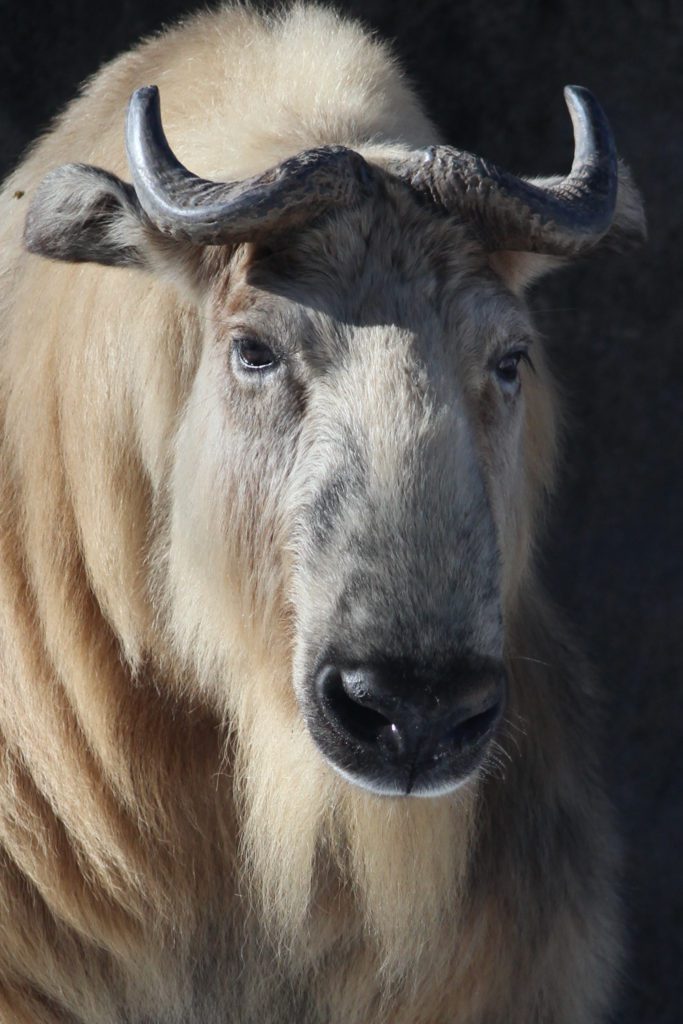
close up of a Takin's face
“Takin in the Soft Light” by Mark Dumont is licensed under CC BY-NC 2.0

The takin almost appears to be an imagined creature from a Star Wars movie, and it would by no means look out of place if it were roaming the windswept tundra of the ice planet of Hoth. Yet this ungulate, which looks like a compilation of a goat, muskox, and a gnu, is quite real.

Weighing up to 770 pounds, you would think that such a bulky bovid could never survive at mountain elevations as high as 14,000 feet. This nimble creature, which is most closely related to wild sheep, is an expert at maneuvering up and down steep rocky slopes. Takins have also adapted to the challenging weather of their lofty, chilly sanctuary. The species’ massive, moose-like snout has large sinus cavities that warm up the cold mountain air. Without this high-elevation adaptation they would lose a large amount of body heat simply by breathing. Another physical adaptation this mammal relies upon to combat the weather is an oily bitter substance they secrete through their skin. The secretion coats the takin’s fur and acts as a natural raincoat during storms and periods of fog.    

The Takin: Sacred and Endangered

Though this remarkable animal’s existence is generally unknown in the Western world, the creature is revered in Asia. The takin is sacred to Tibetan Buddhists, and it is also the national animal of the Kingdom of Bhutan, the landlocked country in the Eastern Himalayas, between China and India. Despite their elevated status, takins are endangered or vulnerable throughout much of their range. Habitat destruction is a major threat, and hunters poach them for food and fur. 

In response to the takin’s dire situation, China’s government has taken steps to ensure that its national treasure will survive. The takin has been given the country’s highest legal protection, and, in 2013, in cooperation with The Nature Conservancy, the Laohegou Land Trust Reserve was established. This tract of land links several existing reserves in China that together sustain a wide array of animals, including the takin, golden snub-nosed monkey, and the giant panda. These linked protected areas, along with some recently established programs promoting ecotourism and eco-friendly agriculture, are slowly transforming the dream of a successful and sustainable takin sanctuary into a reality.

Shangri-La: Fictional or Real Place?

It’s unfortunate that Shangri-La is only a fictional fabrication found within the pages of a book. Yet even though it does not exist in our physical world, Shangri-La does seem to exist for us in spirit. In a pivotal scene in Lost Horizon, one of the novel’s key characters, the High Lama of Shangri-La, foretells of a time when the nations of the world will tear each other apart through war. He proclaims that, after the chaos has finally come to an end, all that will remain are Shangri-La’s messages of wisdom, harmony, and hope for the future. His one great wish is to see this hopeful and harmonious way of life spread throughout the entire world.

In our real world, a genuine spirit of hope for the future is visible in the joint efforts of conservation organizations, governments, and local Himalayan communities as they work together to save endangered mountain species. Their efforts are showing the snub-nosed monkey, snow leopard, and takin the kindness and respect that they so rightfully deserve. These three extraordinary animals have found their own special Shangri-La. And as the self-appointed caretakers of this planet, it is up to us  to continue to help them to flourish in their wintry nirvana for many years to come.

Shelby Wyzykowski is a Gallery Experience Presenter in CMNH’s Lifelong Learning Department. Museum staff, volunteers, and interns are encouraged to blog about their unique experiences and knowledge gained from working at the museum. 

Related Content

Waddling in a Winter Wonderland: How Penguins, Humans, and Other Animals Traverse Ice and Snow

How Do Trees Survive the Winter?

Ice and Snow: The Effects of Temperature

Carnegie Museum of Natural History Blog Citation Information

Blog author: Wyzykowski, Shelby
Publication date: January 12, 2022
Share this post!

  • Share on Twitter Share on Twitter
  • Share on Facebook Share on Facebook
  • Share on Pinterest Share on Pinterest
  • Share on LinkedIn Share on LinkedIn
  • Share on Reddit Share on Reddit
  • Share via Email Share via Email

Filed Under: Blog Tagged With: Shelby Wyzykowski, Super Science, We Are Nature 2

January 11, 2022 by Erin Southerland

Collected on this Day in 1951: Bittersweet

by Mason Heberling
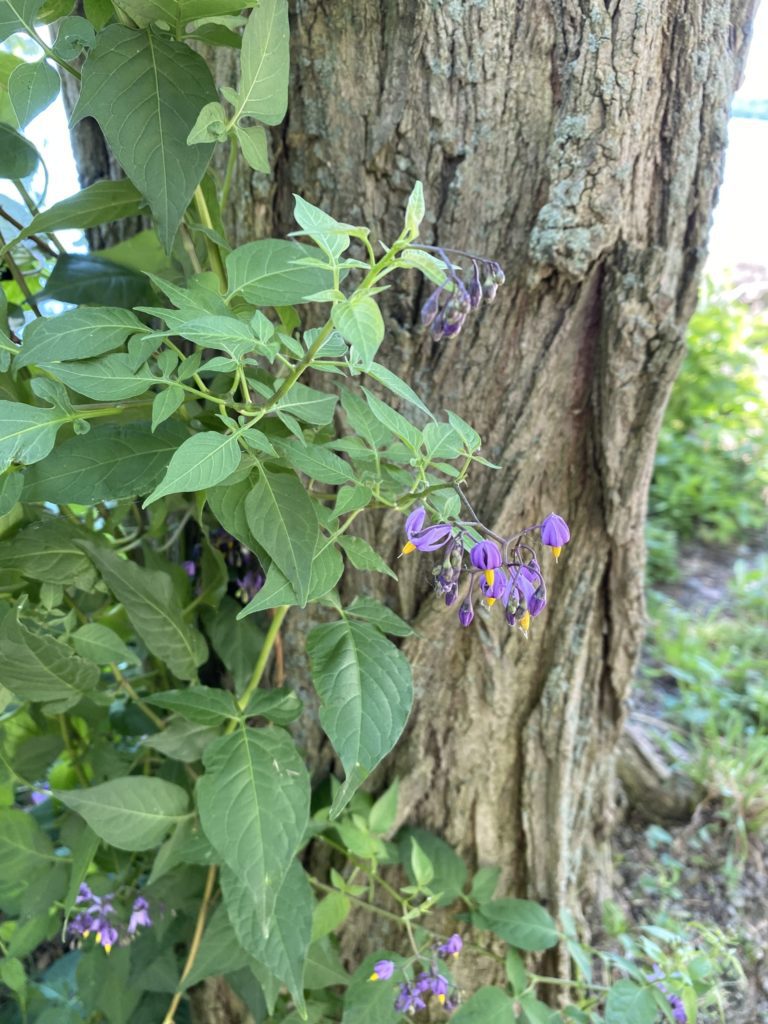
Bittersweet plant in spring

Leaves are gone, but fruits hang on

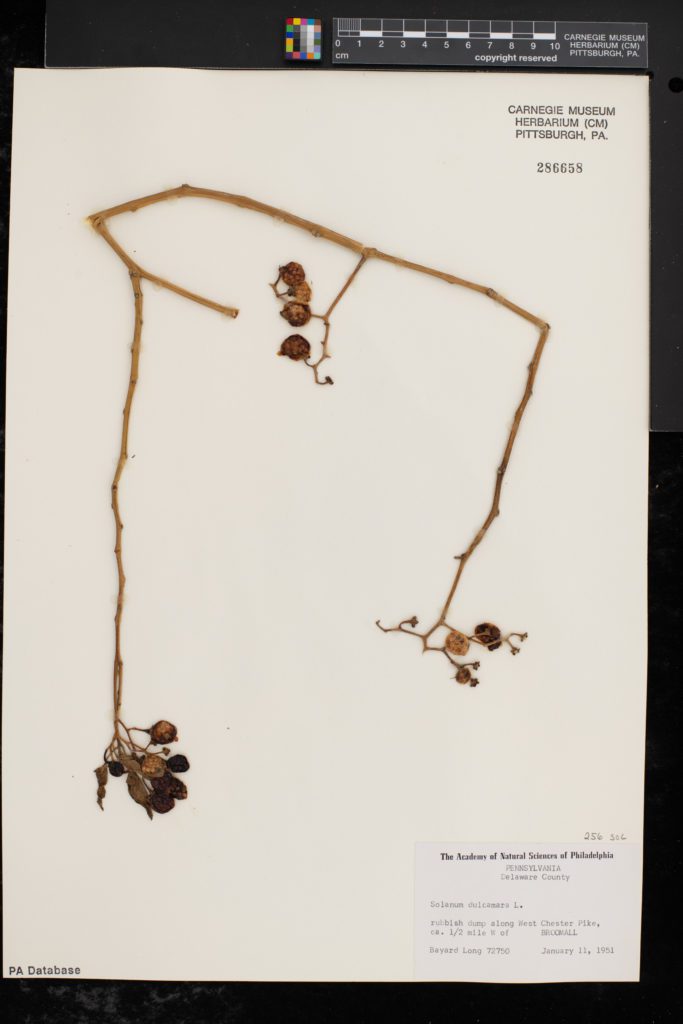
Bittersweet plant specimen on herbarium sheet

This specimen of bittersweet (Solanum dulcamara) was collected by Bayard Long on January 11, 1951 in a “rubbish dump” on West Chester Pike, near Broomall, Pennsylvania (outside of Philadelphia). Bayard Long (1885-1969) was a Philadelphia-area botanist and an active member of the Philadelphia Botanical Club (founded in 1891 and still an active organization). He was a prolific collector and for 56 years served as Curator of the Club’s Local Herbarium, which is housed at the Academy of Natural Sciences. 

Bittersweet nightshade (Solanum dulcamara) is in an herbaceous vine in the potato or nightshade family (Solanaceae), not to be confused with the similarly named Asian bittersweet (Celastrus orbiculatus), which is also a woody vine in the staff vine or bittersweet family (Celastraceae).

Bittersweet is an invasive species, introduced from its native range in Europe and Asia as early as the 1800s. It is common to see climbing along fences in urban areas and elsewhere across North America.

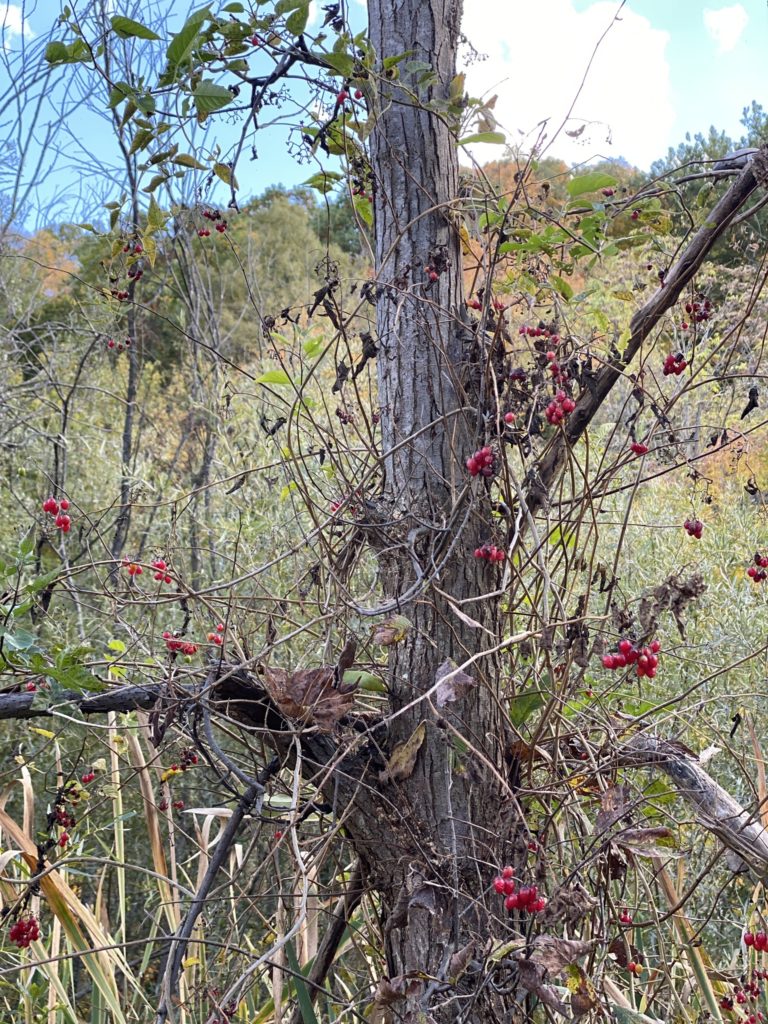
In the winter, its fleshy red berries are commonly still attached to the vines, long after the leaves are gone.

bittersweet plant in the fall

Find this specimen of bittersweet. 

Check back for more! Botanists at the Carnegie Museum of Natural History share digital specimens from the herbarium on dates they were collected. They are in the midst of a three-year project to digitize nearly 190,000 plant specimens collected in the region, making images and other data publicly available online. This effort is part of the Mid-Atlantic Megalopolis Project (mamdigitization.org), a network of thirteen herbaria spanning the densely populated urban corridor from Washington, D.C. to New York City to achieve a greater understanding of our urban areas, including the unique industrial and environmental history of the greater Pittsburgh region. This project is made possible by the National Science Foundation under grant no. 1801022.

Mason Heberling is Assistant Curator of Botany at Carnegie Museum of Natural History. Museum employees are encouraged to blog about their unique experiences and knowledge gained from working at the museum.

Related Content

Plants with Bladders?

Collected on this Day in 1998: Common Chickweed

Collected on this Day in 1925: A Flower with No Leaves?

Carnegie Museum of Natural History Blog Citation Information

Blog author: Heberling, Mason
Publication date: January 11, 2022

Share this post!

  • Share on Twitter Share on Twitter
  • Share on Facebook Share on Facebook
  • Share on Pinterest Share on Pinterest
  • Share on LinkedIn Share on LinkedIn
  • Share on Reddit Share on Reddit
  • Share via Email Share via Email

Filed Under: Blog Tagged With: Botany, Mason Heberling, Science News, Uprooted, We Are Nature 2

January 7, 2022 by Erin Southerland

Rating River Residents on the Monster Scale

by Patrick McShea
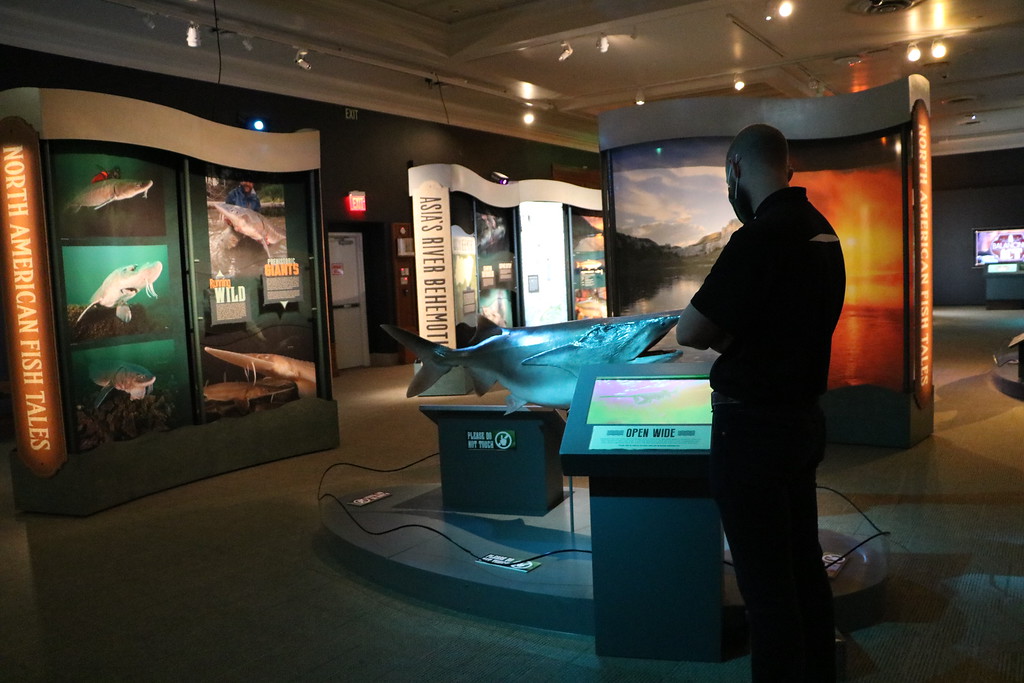
person standing in the exhibition Monster Fish

The world’s big river systems are a sub-topic of Monster Fish: In Search of the Last River Giants, an exhibition developed and traveled by National Geographic Museum, and now on view in the R.P. Simmons Family Gallery.

Species featured in the exhibition as life-size replicas continue to inhabit portions of the Mekong, Amazon, Ganges, Murray, and Mississippi River systems. Text panels, maps, and in-the-field video testimony by National Geographic Explorer Dr. Zeb Hogan repeatedly present the current state of these enormous finned residents as a measure of each freshwater network’s ecological health.

The message is certainly locally relevant. The Ohio River, which forms in Pittsburgh at the confluence of the Allegheny and Monongahela Rivers, drains the massive eastern flank of the Mississippi River Watershed. Visitors to Monster Fish from western Pennsylvania, northern West Virginia, or eastern Ohio will naturally wonder about the largest fish in our region’s flowing waters. Addressing such curiosity is second nature for Ryan Argo, a Technical Programs Manager for the Ohio River Valley Sanitation Corporation, a multi-state agency widely known in abbreviated form as ORSANCO. 

The 73-year-old organization works with member states on water quality improvements in the Ohio River Basin to ensure the river system can be a resource for drinking water, industrial supplies, and recreation, as well as habitat for a healthy and diverse aquatic wildlife community. Ryan’s work involves regular surveys of fish and aquatic invertebrate populations along the whole 981-mile length of the Ohio River as well as lower portions of significant tributaries.

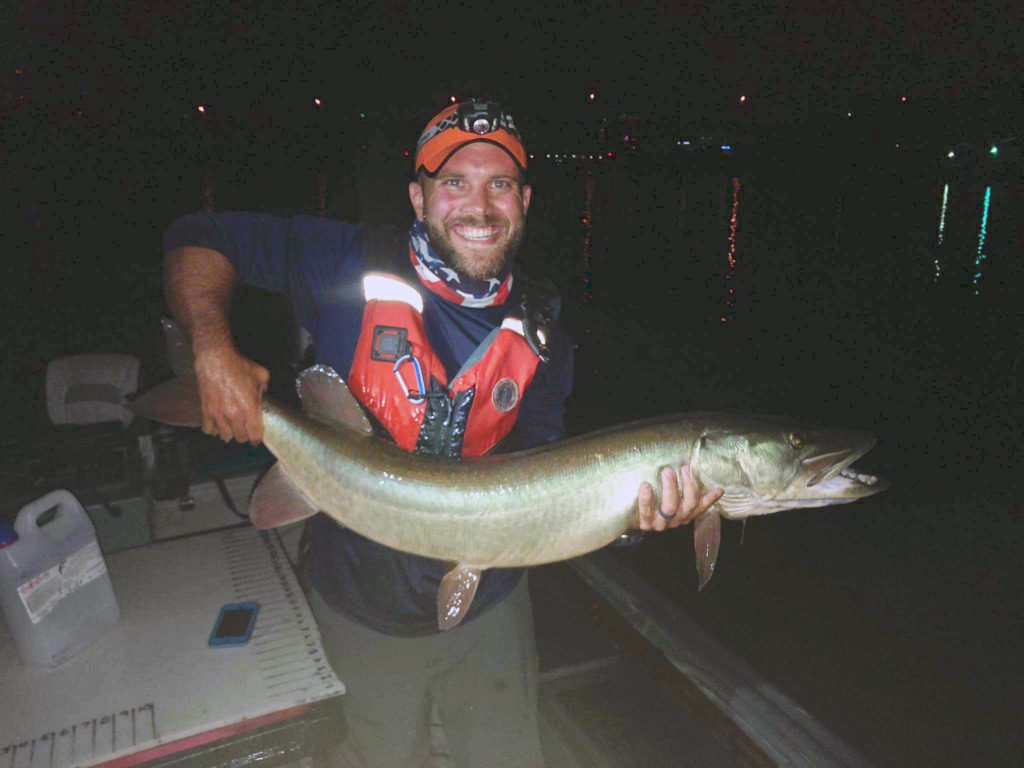
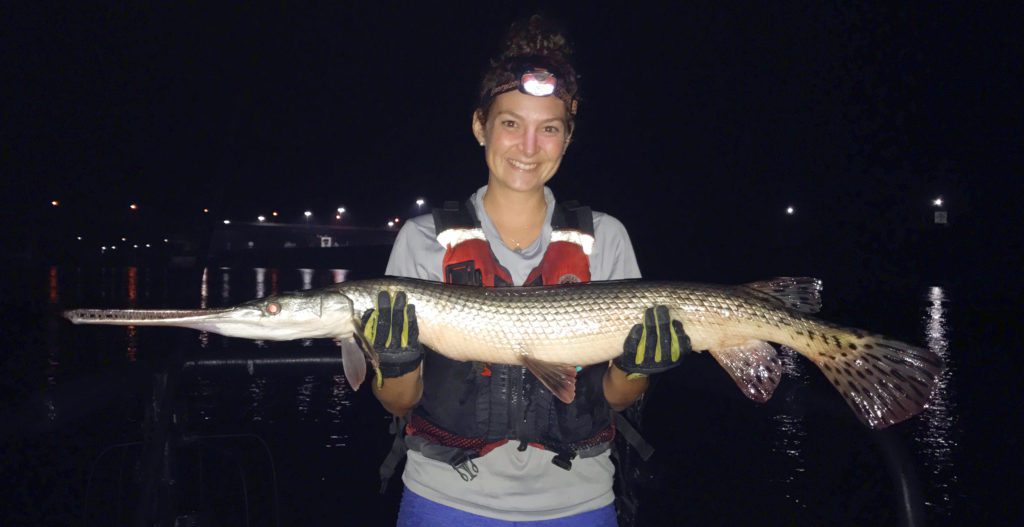
person holding a large fish at night
Ryan Argo holding Pittsburgh Muskellunge before releasing it un-harmed.

Speaking recently from ORSANCO’s Cincinnati headquarters, Ryan began a big fish conversation with a Pittsburgh reference. “During a survey on the lower Allegheny a couple years ago, we came upon a 50-inch-long muskellunge at a place well within sight of Downtown buildings. In that part of the river system, muskellunge are the top predator, and this one was waiting along shore in what seemed barely six inches of water to ambush its next meal.” That next meal could have been any one of a long list of fish species. Surveys document more than 120 species of fish in the Ohio River, a handful of which can approach monster standards in size. 

In addition to muskellunge, Ryan mentions American Paddlefish, Flathead and Blue Catfish, and a species of sucker known as Black Buffalo as Ohio River fish with potential to grow particularly large and can exceed 50 pounds. “Perhaps Long-nosed Gar should also be considered. They’re thin bodied, completely without bulk, but a twenty-pound gar can be a fish more than four feet long.”

person holding a large fish at night
ORSANCO seasonal biologist Vanessa Vest with Long-nosed Gar.

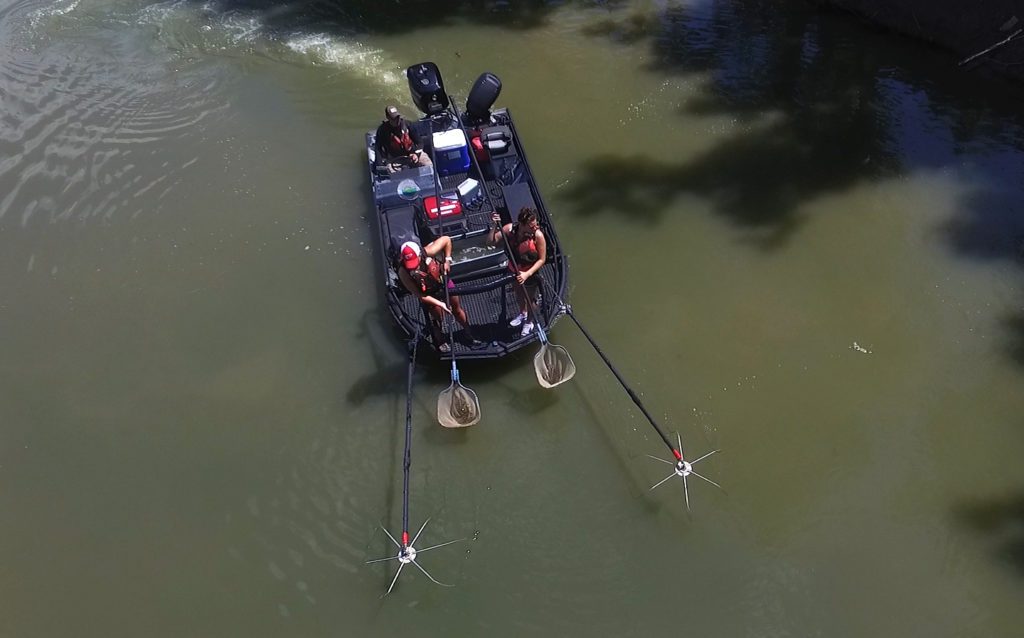
Ryan qualified his species selection by explaining that ORSANCO survey techniques generally involve near shore electrofishing, a practice that employs a weak direct electrical current to temporarily immobilize fish for easy capture. “Our surveys look at the entirety of fishery by sampling similar lengths of shoreline throughout the river system. The work documents not just species diversity, but also biomass. Species like paddlefish that tend to remain out in the main flow of the river don’t show-up much, so their presence is accounted for in other survey methods. The ongoing examination of the fish community tells us about the system’s health, and this information is shared with state and federal agencies.” 

people in a boat on a river
ORSANCO survey crew at work.

In explaining how much the river has changed from the time when its fish and freshwater mollusks were a vital food resource for the Native Peoples who lived along its banks, Ryan cites the Ohio’s binary geologic structure as important baseline information. “There’s the cool water, high gradient, upper river that’s draining a portion of the Appalachians. Then there’s the warm water, low gradient, lower river that wanders across glaciated terrain. Same river, but for fish, different habitat.”

Active management of both sections for navigation, which began in the 1820’s with a federally-funded snag removal, eventually produced the current system of 20 locks and dams that create a dependable main channel for commercial and recreational watercraft. “We know fish can move through,” Ryan explains, “but continuing discussions are important, especially as more dam sites become hydro-electricity generators. We want our native fish populations to be as robust as possible, and that means discussions about how locks operate, and how hydro plants operate.”  

After summarizing the Ohio River as a “large robust biologic system” that is always facing new emerging issues, Ryan concluded the conversation with an account of a big fish observation worthy of those Dr. Zeb Hogan shares in multiple Monster Fish videos.  

“Along the lower Ohio River there are some places where the remnants of old wicket dams still cling to the shore. During periods of high water, when these anchor points are submerged, the water flow over them creates an enormous standing wave, perhaps six feet high. Amidst this churning water I’ve seen big paddle fish and gar moving with ease, the way those species have been doing for thousands of years.”

Patrick McShea works in the Education and Visitor Experience department of Carnegie Museum of Natural History. Museum employees are encouraged to blog about their unique experiences and knowledge gained from working at the museum.

Related Content

Fish and the Fourth of July?

Educator Spotlight: Christian Shane

Lights Out for Birds

Carnegie Museum of Natural History Blog Citation Information

Blog author:
Publication date:

Share this post!

  • Share on Twitter Share on Twitter
  • Share on Facebook Share on Facebook
  • Share on Pinterest Share on Pinterest
  • Share on LinkedIn Share on LinkedIn
  • Share on Reddit Share on Reddit
  • Share via Email Share via Email

Filed Under: Blog Tagged With: Monster Fish, Pat McShea

January 6, 2022 by Erin Southerland

2021 Rector Christmas Bird Count Results

by Annie Lindsay

All week leading up to the Christmas Bird Count (CBC), the weather forecast threatened heavy rain for December 18, 2021, but that did not deter a group of 34 dedicated birders from going outside and counting birds all day! In fact, after a touch of rain before dawn, the weather cleared, and the day was mostly cloudy, pleasant, and perfect for birding. And what a Christmas Bird Count it was! The birders, along with six people who counted birds visiting their feeders and yards, tallied 7,239 birds of 79 species, broke the high-count records for several species, and added two new species that had never been seen during the Rector CBC before!

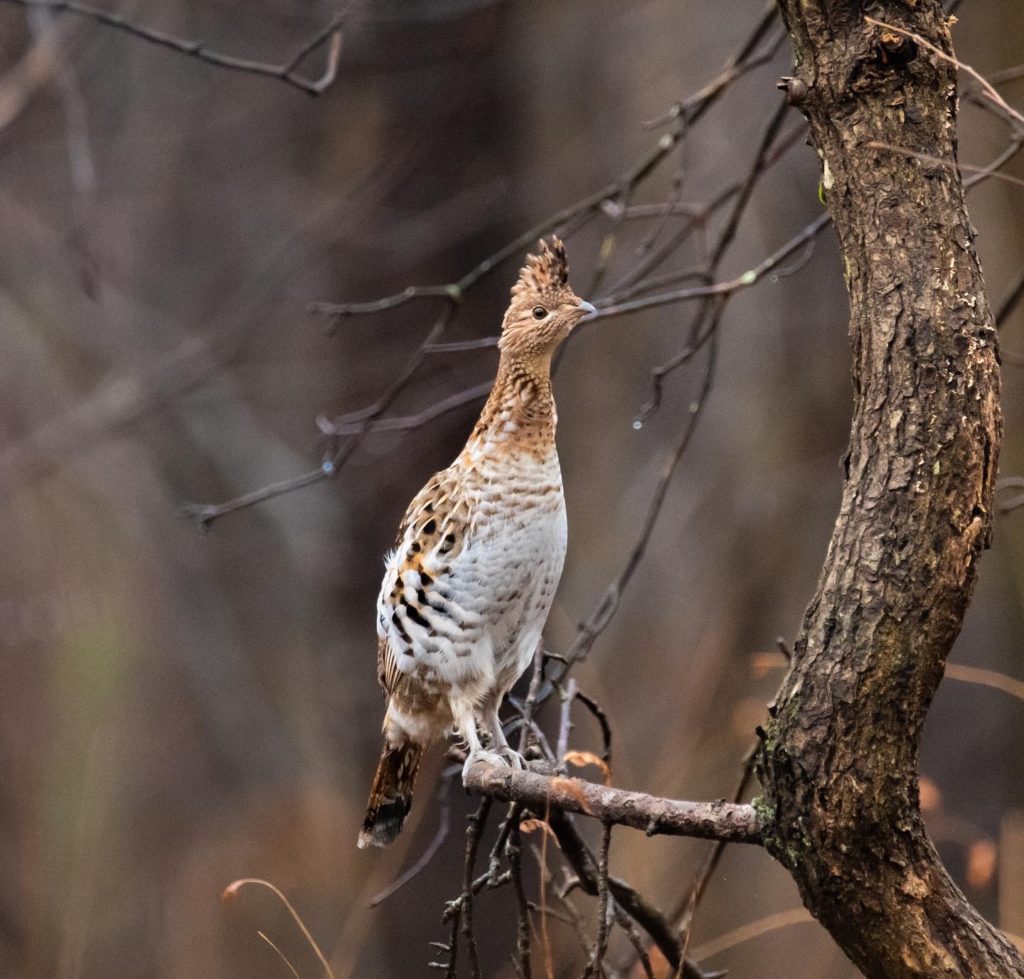
ruffed grouse on a branch in winter
Ruffed Grouse, photo by Alex Busato. Pennsylvania’s state bird can be difficult to find due to its well-camouflaged plumage and declining population, but one posed nicely on Laurel Moutain during this year’s Christmas Bird Count.

Christmas Bird Count History

The CBC is an annual tradition that began on Christmas in 1900. Participants counted birds they saw or heard all day, a step away from previous bird censuses during which people used shotguns to collect and count birds. The original group of 27 birders tallying birds in 25 count circles has now become an international event, sponsored by the National Audubon Society, with nearly 3,000 count circles spread across the Western Hemisphere. The compilers for each count circle choose a date between December 14 and January 5, and participants tally every bird they encounter within a designated 15-mile diameter circle. With such a large geographic range and over 100 years of data, the CBC is one of the largest community science projects. The data gathered has been used to study population trends and over 200 peer-reviewed publications have used CBC data.

The Rector count circle is centered just northwest of Powdermill Nature Reserve. Its variety of habitat types along an elevational gradient is excellent for species diversity. Begun in 1974, the Rector count has consistently tallied more than 50 species every year, with the highest species counts of 88 in 2012 and 80 in 2009. This year’s total of 79 species was the third highest in this count’s history! Although there are core species, like chickadees and cardinals, that we expect to see every year, rarities occasionally pop up, and Rector counters have tallied 131 species since 1974.

2021 Rector Christmas Bird Count Numbers and Highlights

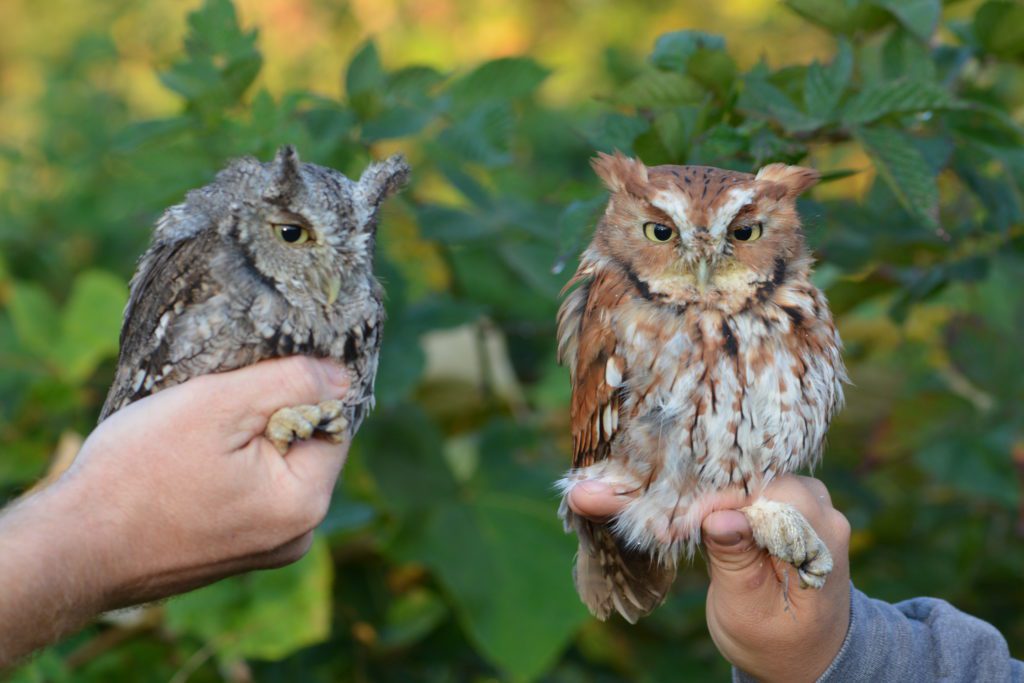
The 2021 count started at 4:30 a.m. with several birders searching for owls. Despite the drizzle, the owlers counted three Great Horned Owls, three Barred Owls, a surprise Northern Saw-whet Owl that was spotted in headlights as it flew across the road, and an incredible 17 Eastern Screech-Owls, a number that shattered the previous record of 11. Off to a great start, the owlers were joined by the bulk of the participants to survey their assigned sectors within the count circle, and there were many surprises in store.

two eastern screech owls held in hands
Eastern Screech-Owls, gray morph and red morph. Although not encountered as frequently due to their nocturnal habits, Eastern Screech-Owls are a common species in our area. CBCers shattered the previous high count record for this species during this year’s count, tallying a total of 17 individuals!

At the end of the day, counters met at Powdermill for the tally dinner to report what they’d seen and share stories from the field. As we tallied, we quickly noticed that we were setting new high-count records, or tying existing records, for many species, including Ring-necked Duck, Bufflehead, Red-breasted Merganser, Black Vulture, Eastern Screech-Owl, Northern Saw-whet Owl (tie), Red-bellied Woodpecker, Yellow-bellied Sapsucker, Northern Flicker, Merlin (tie), Common Raven, Ruby-crowned Kinglet (tie), Eastern Bluebird, Hermit Thrush, American Robin, Gray Catbird, Yellow-rumped warbler, White-throated Sparrow, and Eastern Towhee.

The owls certainly set new records due to the increased effort to find them this year: screech owls are a common species in our area, and saw-whets, although quite difficult to find and usually not vocal at this time of year, are likely here in the appropriate habitat.

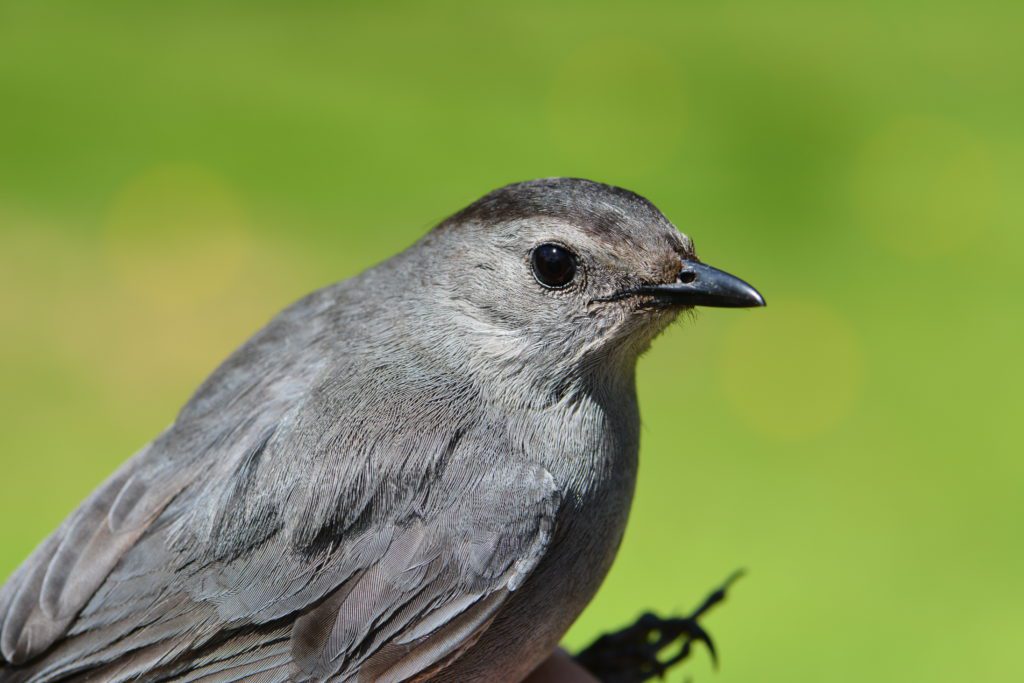
gray catbird
Gray Catbird. A species that winters from coastal Massachusetts through Central America, catbirds have popped up during the Rector Christmas Bird Count in the past. However, this year we tallied three catbirds, which is quite unusual.

We noticed an interesting trend in the species with high counts: most are species that tend to spend the winter a bit south of us, or if they are species that are expected during the Rector CBC, their winter range tends not to extend much farther north of us and we generally do not expect them in high numbers. We speculate that the combination of a late fall, mild temperatures through the end of 2021, and an abundance of berries may have contributed to some individuals of these shorter-distance migrants not migrating as far south as they usually do.

Our biggest surprises were two new species that had never been encountered during the Rector CBC before. The first was a Palm Warbler reported on a farm in Ligonier foraging with a flock of Yellow-rumped Warblers on the edge of a cow pasture. Palm Warblers are seen annually in our area during migration, and we band several of them at Powdermill every year. Many Palm Warblers spend the winter in the southeastern US, but it is not expected in southwest Pennsylvania in the winter. The second species was a Surf Scoter spotted at Donegal Lake. Surf Scoters are a species of duck usually seen in the ocean along the Atlantic and Pacific coasts in winter, or perhaps on the Great Lakes or human-made lakes if they’re forced down by bad weather during migration. This is a very unusual species for our area and an excellent find.

As we submit the Rector count’s data to Audubon and wrap up another CBC, we thank all of the participants and look forward to the 2022 count!

Annie Lindsay is the Bird Banding Program Manager at Carnegie Museum of Natural History’s Powdermill Nature Reserve. Museum employees are encouraged to blog about their unique experiences and knowledge gained from working at the museum.

Related Content

Milestones at Powdermill’s Banding Lab

Bird Safe Glass Installed at Carnegie Museums (Video)

Northern Saw-whet Owl (Video)

Carnegie Museum of Natural History Blog Citation Information

Blog author: Lindsay, Annie
Publication date: January 6, 2022

Share this post!

  • Share on Twitter Share on Twitter
  • Share on Facebook Share on Facebook
  • Share on Pinterest Share on Pinterest
  • Share on LinkedIn Share on LinkedIn
  • Share on Reddit Share on Reddit
  • Share via Email Share via Email

Filed Under: Blog Tagged With: Annie Lindsay, Powdermill Nature Reserve, Science News, We Are Nature 2

December 20, 2021 by Erin Southerland

Sea Snails from Christmas Island

by Timothy A. Pearce

There really is a Christmas Island. It is in the Indian Ocean about 250 km (155 mi) SW of Java and it is administered by Australia. Christmas Island, which was uninhabited by humans until the late 1800s, has a highly endemic flora and fauna, reflecting little human disturbance. Nearly two-thirds of the island is designated as a national park. 

Carnegie Museum of Natural History has two species of sea snails from Christmas Island. Neither of these species is endemic to the island, and neither is rare.

Money Cowries from Christmas Island

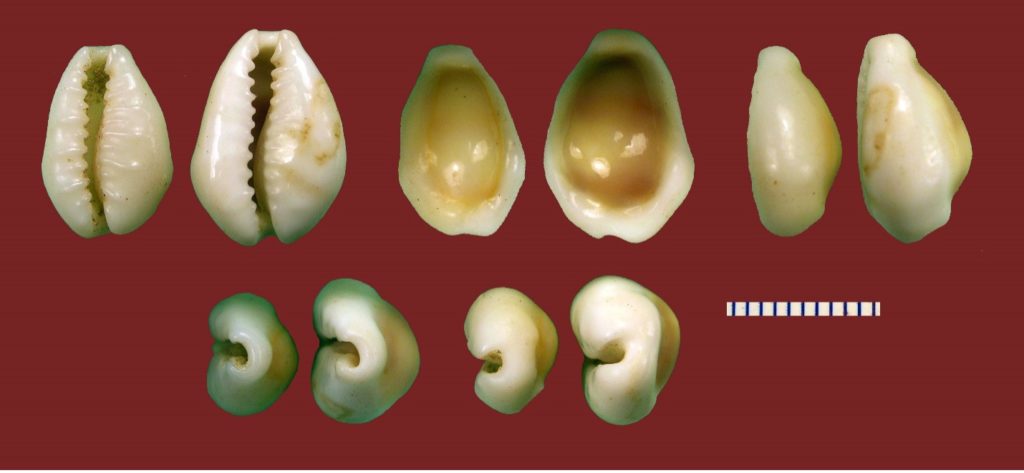
Ten Monetaria moneta snail shells from Christmas Island on a red background.
Fig. 1. Monetaria moneta, the money cowry, from Christmas Island. Views from top left: aperture, dorsal, left side, anterior, posterior. Specimen CM 123323 at Carnegie Museum of Natural History. Scale in mm. Photo by T.A. Pearce. 

These Moneteria moneta (Fig. 1), also known as money cowries, are from Christmas Island. They were donated to the museum by Casimir Potyraj, Jr. in September of 2012, although we don’t know when they were collected. These specimens are smaller than average M. monetaria. This species of cowry is used as decoration and was used as currency in many islands of the south Pacific Ocean region into the 1800s. Both the genus and the species names, Monetaria moneta, reflect their use as currency. This species occurs broadly in tropical areas of the Indian and Pacific Oceans, but not in the Atlantic. Monetaria moneta is in the cowry family, Cypraeidae, a group of snails appreciated around the world for their shiny, colorful shells, that look like they have a zipper underneath.

Castor Bean Shells from Christmas Island

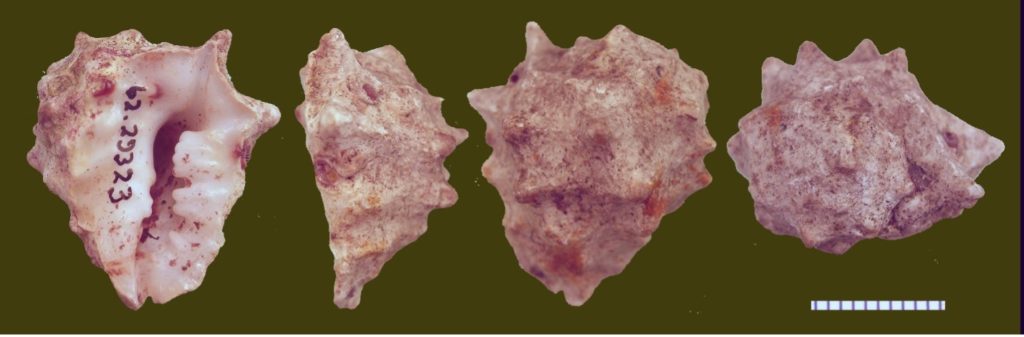
Four castor bean shells from Christmas Island on a green background.
Fig. 2. Drupa ricina, the castor bean shell, from Christmas Island. Views from left: aperture, side, dorsal, spire. Specimen CM 62.29323 at Carnegie Museum of Natural History. Scale in mm. Photo by T.A. Pearce. 

This Drupa ricinus (Fig. 2), also known as the castor bean shell, is also a sea snail from Christmas Island. It came to Carnegie Museum of Natural History by way of the British Museum of Natural Science on July 25, 1935. It’s unclear whether that was the date the British Museum gave it to us, or the date it was collected; my guess is the former. Like the Monetaria moneta, Drupa ricinus also occurs broadly in tropical areas of the Indian and Pacific Oceans, but not in the Atlantic. Drupa ricinus is in the murex family, Muricidae, which includes snails that produce the purple dye prized by the Romans and Phoenicians.

Every day is Christmas on Christmas Island! We wish Merry Christmas to all the creatures there.

Timothy A. Pearce, PhD, is the head of the mollusks section at Carnegie Museum of Natural History. Museum employees are encouraged to blog about their unique experiences and knowledge gained from working at the museum.

Related Content

A Perfect Mineral for the Christmas Season

Ask a Scientist: How did snails evolve from living in water to living on land?

Collected on Christmas Eve 1883: Mistletoe

Carnegie Museum of Natural History Blog Citation Information

Blog author: Pearce, Timothy A.
Publication date: December 20, 2021

Share this post!

  • Share on Twitter Share on Twitter
  • Share on Facebook Share on Facebook
  • Share on Pinterest Share on Pinterest
  • Share on LinkedIn Share on LinkedIn
  • Share on Reddit Share on Reddit
  • Share via Email Share via Email

Filed Under: Blog Tagged With: Carnegie Museum of Natural History, mollusks, Science News, Tim Pearce

December 14, 2021 by Erin Southerland

Carnegie’s Water Fountains

by Albert D. Kollar

Potable Water Sources

Access to drinking water from a water fountain seems to be passé today with the ubiquitous availability of plastic water bottles from vending machines. In 2018, as an effort to ‘change the culture’ in the use of plastic water bottles by museum staff and patrons, the Oakland museums, Carnegie Museum of Natural History, and Carnegie Museum of Art (respectively CMNH and CMOA), installed filling stations for reusable water bottles. These eco-friendly “fountains” are located adjacent to the Fossil Fuels Cafeteria in CMNH, and in the rest room lobby of CMOA1 (Fig. 1), and their rapid and wide acceptance invites a deeper consideration of drinking water as an amenity in a public facility.  

gray and silver water fountain
Fig. 1.

The public water supply in the massive Oakland building comes from the Pittsburgh Water and Sewer Authority’s Herron Hill Reservoir, which in turn draws its supply from the Highland Park Reservoir in the city’s East End1. The water, which is initially sourced from the Allegheny River, undergoes several treatments before it is pumped to the reservoir. 

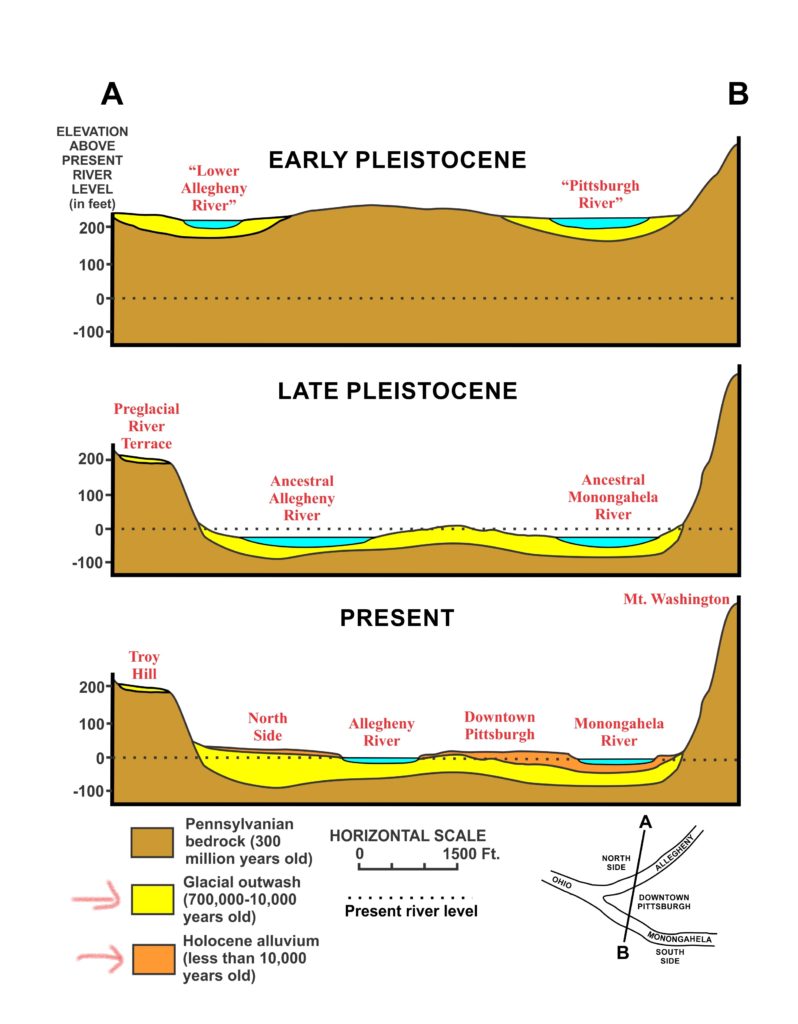
The geologic perspective on our water supply also bears mention here. The glacial melt waters of the Pleistocene Epoch filled the potable aquifers of western Pennsylvania2 (Fig. 2 red arrows). With population growth in the 20th Century, water demands for agricultural, industrial, and residential uses led to the depletion of these aquifers within the Allegheny River Basin. Today potable waters stored in reservoirs are principally drawn from the three rivers of Pittsburgh, waterways replenished to a significant degree by rain fall and snow melt.

chart looking at glacial outwash in the Allegheny River Basin in the Pleistocene and at present
Fig. 2

A myth in the minds of many Pittsburghers is the city’s Fourth River. According to a 2016 publication by John Harper2, the Fourth River does not exist as underground caves, fissures, or cavities under any of the three rivers. As shown in Fig. 2, (red arrows) glacial outwash and Holocene alluvium comprise thick deposits of sediment within the river valleys, and tiny interconnected pore spaces between sand grains and pebbles allow water from the rivers and their adjoining floodplains and riverbanks, to move slowly but freely through this sediment. At some locations this subterranean flow is accessed by artesian wells, the most prominent example being the fountain in Point State Park.  

Carnegie’s Water Fountains

Presentation is important, especially for something as vital as drinking water, and within the halls and hallways of the Carnegie building complex in Oakland, carved stone is frequently part of the refreshment package. Visitors encounter three types of water fountains. In the 1907 Carnegie Institute Extension, a Beaux-Arts masterpiece designed by architects Alden and Harlow, water fountains are plumbed through either white Carrara Marble from Italy or yellow Hauteville fossil limestone of France. In the Museum of Art wing built in 1974, thirsty patrons are served by chrome water fountains (Fig. 3). 

two chrome water fountains
Fig. 3

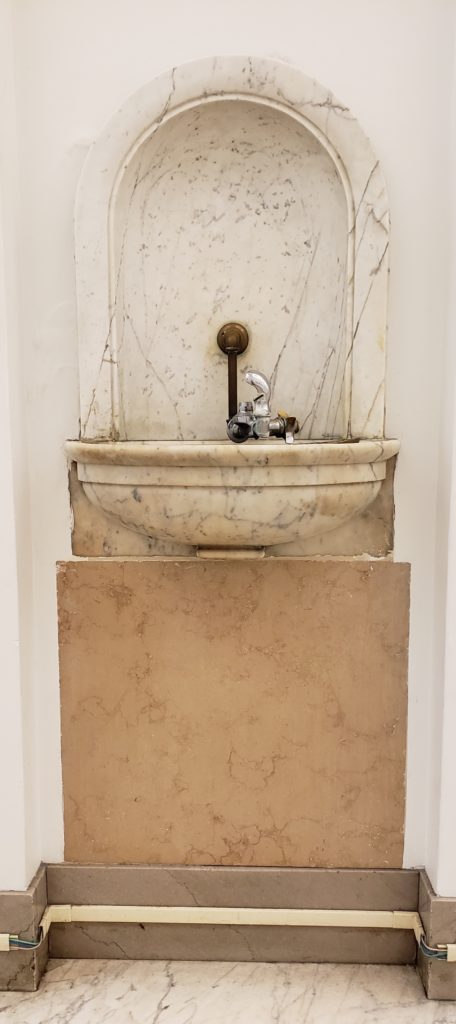
Carrara Marble was created during the Cenozoic Era when limestones formed during the Triassic or early Jurassic age limestones underwent metamorphosis.4 The locations of the eighteen Carrara Marble fountains in the 1907 building include the engine room, basement hallways, the Carnegie Library of Pittsburgh first floor lobby (Fig. 4), Carnegie Music Hall vestibule hallway, the Carnegie Lecture Hall, and exhibit halls on the second and third floors of Carnegie Museum of Natural History.3 Although the Carrara Marble fountains originally had red brass fixtures (Fig. 4), some now operate with replacement fixtures of chrome1. 

marble water fountain
Fig. 4

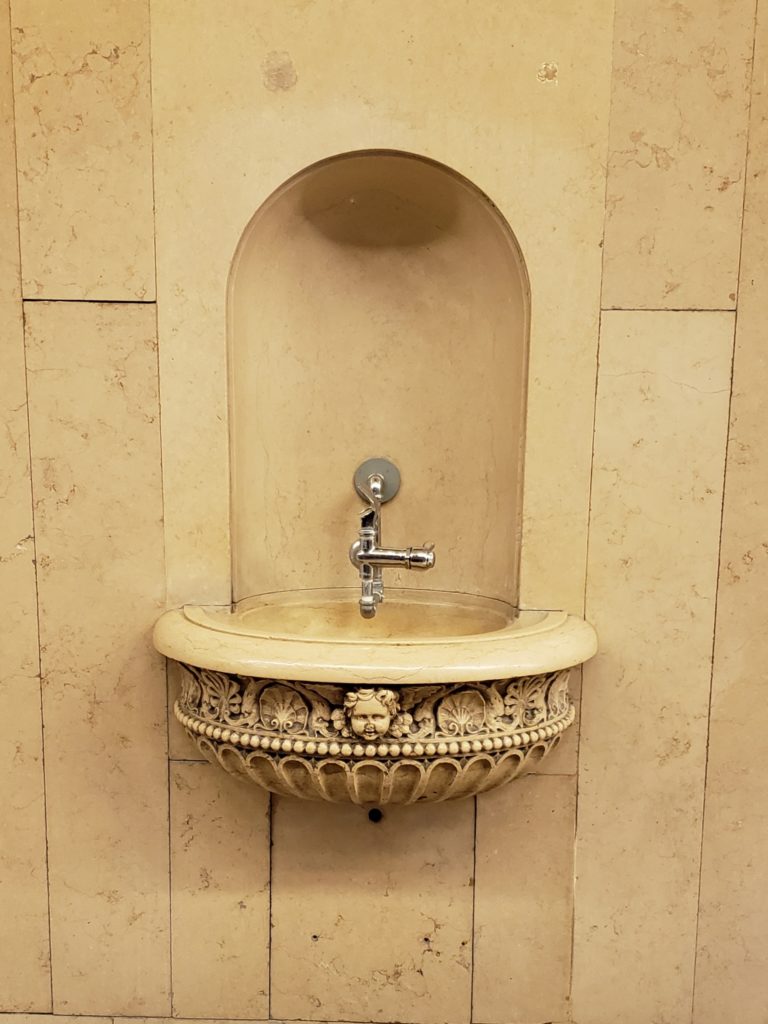
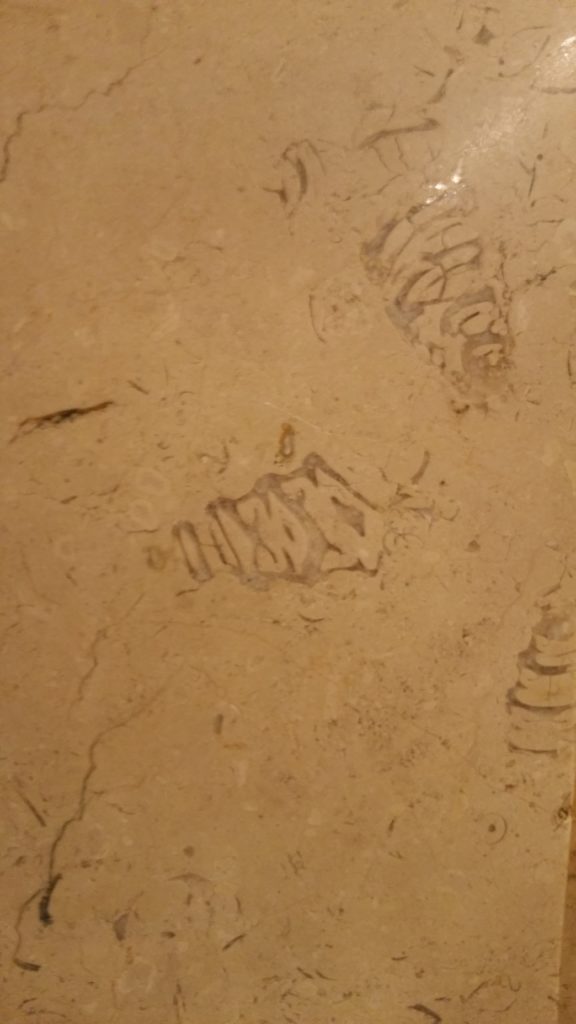
There are three Hauteville limestone fountains along the walls of the three floors in the Grand Staircase Hall. These neo-Baroque fountains feature carvings that represent a diverse group of invertebrate fossils and an allegory human face (Fig. 5). The fountains are surrounded by the Hauteville limestone wall panels with Cretaceous age snail Nerinea (Fig. 6) visible in many Hauteville floor tiles, walls, door framing, and pedestals.5 Some 350 tons of Hauteville limestone were used for the interior stone in the Grand Staircase and throughout the Carnegie Institute Extension.6 The Hauteville fountains also originally used red brass fixtures, and now function with chrome replacements.

limestone water fountain
Fig. 5
snail fossils in limestone
Fig. 6

A World-Famous Fountain In Rome And More

If there’s a place in a discussion of fountains to consider the top of the scale, an Italian reference belongs here. One of the most famous water fountains in the world is the Baroque Trevi Fountain (Nicola Salvi, Giuseppe Pannini, architects) that opened in 1762 in Rome7. The fountain had its moments in classic movies such as, Federico Fellini’s La Dolce Vita (1960) with Marcello Mastroianni and Anita Ekberg in the leads8 (Fig. 7, image by Hernán Piñera).  

Trevi Fountain
Fig. 7

Around 19 BC, aqueducts were constructed in ancient Rome to bring pure water to the city from mountains 13 km (8.1 mi) from Rome9. Roman citizens enjoyed the function of a fountain not only as a source of clean water but as a gathering place.  

The Trevi Fountain is made of travertine, a sedimentary limestone (calcium carbonate) quarried in the Italian village of Bogni di Tivoli10. The village is noted for travertine quarries that produced the exterior stone for the Roman Amphitheater opened in 80 AD11 and the building of the Getty Museum in Los Angeles, California (1997). 

Travertine forms when ground water combines with carbon dioxide in the soils to form carbonic acid waters that then dissolve subsurface limestone. As these calcium carbonate-concentrated waters flow through the cracks in the bedrock they eventually precipitate a new rock called travertine. 

An excellent example of travertine formation can be observed at Mammoth Hot Springs in Yellowstone National Park. High above the Hot Springs, rainwater seeps into the buried Cretaceous age limestone where it mixes with carbon dioxide gas that rises from a subterranean magma chamber dissolving the calcium carbonate that is carried along in the underground streams through fractures in the overlying strata. Once the water exits the bedrock, travertine terraces start to build as the carbon dioxide gas escapes, leaving behind the calcium carbonate mineral. 

Travertine in Oakland: In an abandoned sandstone quarry behind Phipps Conservancy in Schenley Park travertine deposits is preserved on the exterior of the quarry rock12.  The site is no longer open for visitors.

Albert D. Kollar is the Collection Manager for the Section of Invertebrate Paleontology. Museum employees are encouraged to blog about their unique experiences and knowledge gained from working at the museum.

References

  1. Young, T. Carnegie Museum of Pittsburgh Facilities. 
  2. Harper, J. A. 2016. The Geological Evolution of Pittsburgh’s Three River. PAlS Publication 21. 
  3. Kollar et al. 2020. Connemara Marble at the Carnegie Institute Extension. ACM, 86, 207-2
  4. Price, M. T. 2007. The Sourcebook of Decorative Stone: An Illustrated identification guide. 287 pp.
  5. Kollar, A. D. 2020. https://carnegiemnh.org/carnegie-museum-grand-staircase/
  6. Kollar, A. D. 2021 DE L’ÉCHAILLON À L’ANNEXE DU CARNEGIE INSTITUTE DE PITTSBURGH Saint-Quentin-sur-Isère, 18 Septembre 2021.
  7. Pinto, J. A. 1986. The Trevi Fountain. Yale University Press. 326 pp. 
  8. Fellini, F. 1960. La Dolce Vita. The Criterion Collection, Paramount Home Entertainment
  9. Beard, M. 2015. SPOR A History of Ancient Rome. Liveright Publishing Corporation. 606 pp.
  10. Hirt, A. M. 2010. Imperial Mines and Quarries in the Roman World Organizational Aspects 27 BC-AD 235. Oxford Press, 551 pp. 
  11. Acocella, A. 2013. Travertine, An Italian Stone. Journal ARCHITETTURA DI PIETRA.
  12. Kollar, A. D. The Geology of Oakland, in manuscript. 

Related Content

Understanding Fossil Fuels through Carnegie Museum Exhibits

A Century Ago, a Donor Walked into the Museum

The Connemara Marble: A Cross-Atlantic Connection Between Ireland and Pittsburgh

Carnegie Museum of Natural History Blog Citation Information

Blog author: Kollar, Albert D.
Publication date: December 14, 2021

Share this post!

  • Share on Twitter Share on Twitter
  • Share on Facebook Share on Facebook
  • Share on Pinterest Share on Pinterest
  • Share on LinkedIn Share on LinkedIn
  • Share on Reddit Share on Reddit
  • Share via Email Share via Email

Filed Under: Blog Tagged With: Albert Kollar, Carnegie Museum of Natural History, invertebrate paleontology, Science News

  • « Go to Previous Page
  • Page 1
  • Interim pages omitted …
  • Page 18
  • Page 19
  • Page 20
  • Page 21
  • Page 22
  • Interim pages omitted …
  • Page 24
  • Go to Next Page »

sidebar

About

  • Mission & Commitments
  • Directors Team
  • Museum History

Get Involved

  • Volunteer
  • Membership
  • Carnegie Discoverers
  • Donate
  • Employment
  • Events

Bring a Group

  • Groups of 10 or More
  • Birthday Parties at the Museum
  • Field Trips

Powdermill

  • Powdermill Nature Reserve
  • Powdermill Field Trips
  • Powdermill Staff
  • Research at Powdermill

More Information

  • Image Permission Requests
  • Science Stories
  • Accessibility
  • Shopping Cart
  • Contact
  • Visitor Policies
One of the Four Carnegie Museums | © Carnegie Institute | Privacy Policy | Terms of Use | Accessibility
Rad works here logo