• Skip to primary navigation
  • Skip to main content
  • Skip to primary sidebar

Carnegie Museum of Natural History

One of the Four Carnegie Museums of Pittsburgh

  • Visit
    • Buy Tickets
    • Visitor Information
    • Exhibitions
    • Events
    • Dining at the Museum
    • Celebrate at the Museum
    • Powdermill Nature Reserve
    • Event Venue Rental
  • Learn
    • Field Trips
    • Educator Information
    • Programs at the Museum
    • Bring the Museum to You
    • Guided Programs FAQ
    • Programs Online
    • Climate and Rural Systems Partnership
  • Research
    • Scientific Sections
    • Science Stories
    • Science Videos
    • Senior Science & Research Staff
    • Museum Library
    • Science Seminars
    • Scientific Publications
    • Specimen and Artifact Identification
  • About
    • Mission & Commitments
    • Directors Team
    • Museum History
  • Tickets
  • Give
  • Shop

January 13, 2023 by

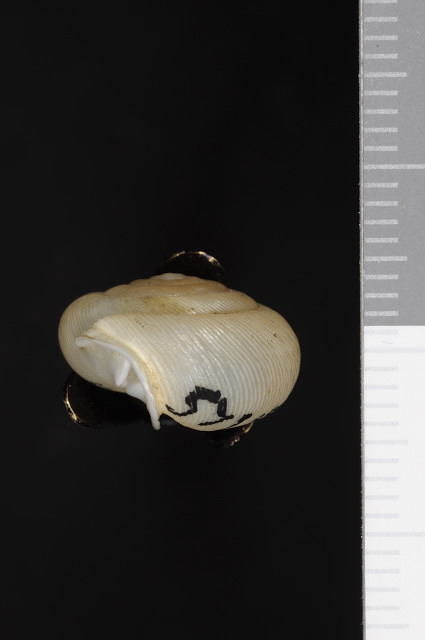
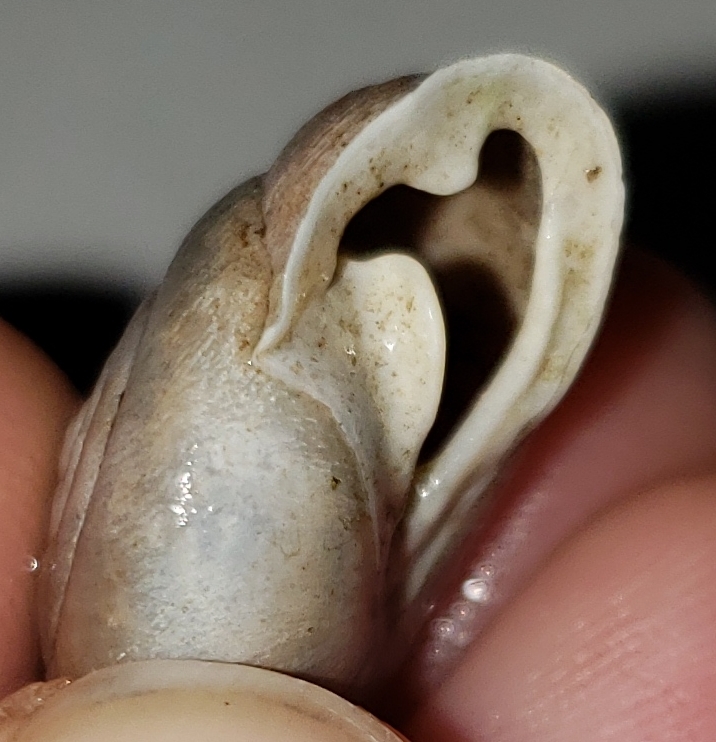
Xolotrema denotatum

Image Usage Information

  • Tina Marie Camp Scheff
  • CC BY-NC 4.0 DEED
  • Additional information about this specimen

Family: Polygyridae

Common name: Velvet Wedge

Discovery: Férussac, 1821

Identification

Width: 18-26 mm
Height: 10-14 mm
Whorls: 5+

Xolotrema denotatum has an exceptional shell – large, dark, and fuzzy with a striking flared lip. The outer coat of its shell is covered with fine, hair-like processes, giving it a moleskin-like texture, and it is often draped with cobwebs that provide a sort of camouflage. Old shells lose this fine coating as it is part of the outer protein coat, or periostracum. The lip is concave and has elongate parietal and basal teeth, and a shorter, blunt palatal tooth. The umbilicus is usually closed and the animal itself is very dark-colored.

Ecology

This species is often found near or upon big logs and snags, sometimes on steep, damp slopes where large trees have fallen. It may also occasionally be found on floodplains (Hubricht, 1985).

Taxonomy

Synonyms for X. denotatum are Helix denotata, Triodopsis denotata, Triodopsis notata, and Xolotrema denotata.

Distribution

This animal lives in upland forests from Vermont, southeastern Canada, and Michigan, south to eastern Arkansas, northern Mississippi, and Alabama. In Virginia it is mainly in the western counties but is also reported from Fairfax County (Hubricht, 1985).

Conservation

NatureServe Global Rank: G5
NatureServe State Rank: S3S4
January 13, 2023 by

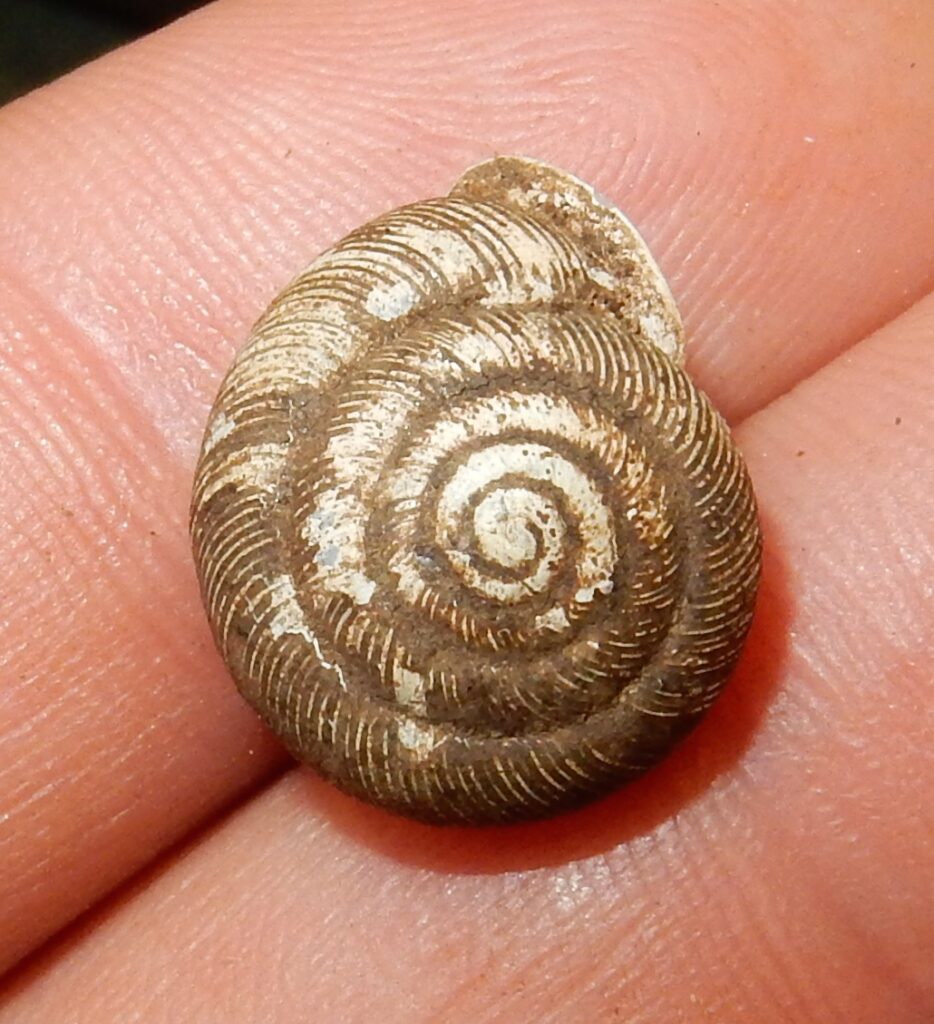
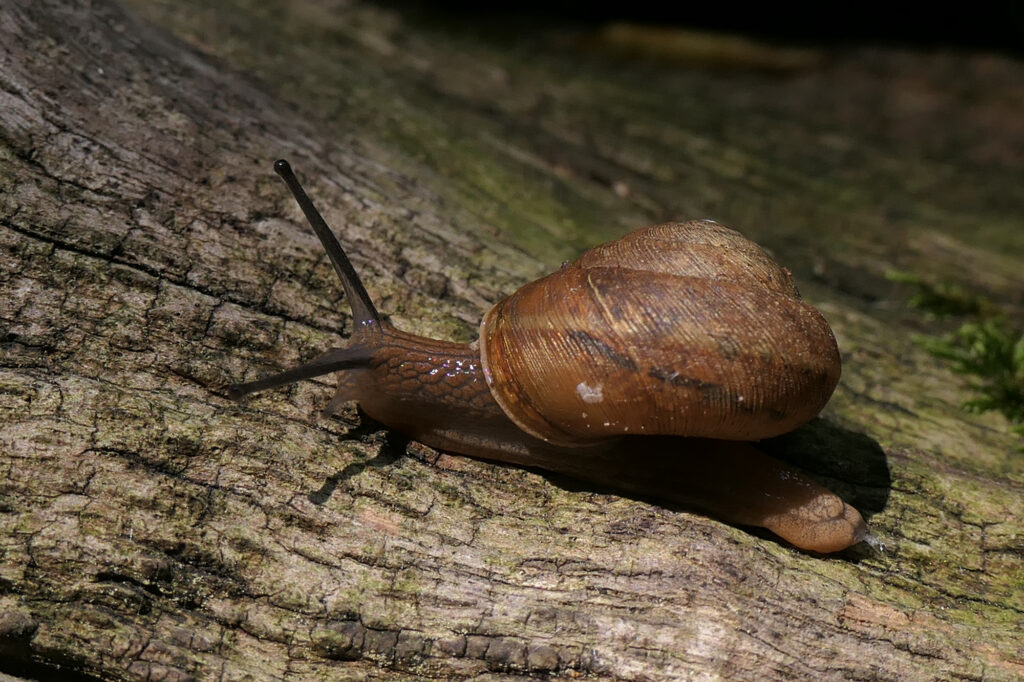
Webbhelix multilineata

Image Usage Information

  • Kerry Givens
  • CC BY-NC 4.0 DEED
  • Additional information about this specimen

Family: Polygyridae

Common name: Striped Whitelip

Discovery: Say, 1821

Identification

Width: 14.5-32 mm
Height: 17-20 mm
Whorls: 5.5-6

The glossy, thin shellof Webbhelix multilineata is heliciform, the lip is thin and reflected. The shell is imperforate and there are no denticles in the aperture. The color is ivory to olive buff with multiple dark reddish-brown bands that vary in width. Transverse striae are well-developed and impressed spiral striae are present. 

Ecology

A species of low damp habitats including floodplains, bogs, marshes, and margins of lakes and ponds, it also occurs on forested islands in the Ohio River (e.g. Taylor and Counts, 1976). Webbhelix multilineata is common west of the Ohio River but quite restricted in the Northeast region. At a wetland in the central Appalachian Mountains this snail dwells among speckled alder and sedge hummocks eating decaying skunk cabbage leaves (Hotopp, pers. obs.). Active snails that sense disturbances may rapidly withdraw, falling from low plants. Many overwinter in dense vegetation at the water’s edge.

The parasite Panopistus pricei has been documented using the kidneys and ureter of W. multilineata as a microhabitat (Barger, 2011). Shrews and deer mice that routinely feed on this species can become infected by this parasite.

Taxonomy

The numerous synonyms include Triodopsis multilineata, Polygyra multilineata altonensis, Mesodon multilineata var. alba and var. unicolor, Helix multilineata var. rubra, Helix multilineata var. alba, Polygyra multilineata, Mesodon multilineata, and Helix multilineata.

Distribution

In the Northeast, this species is known from only a handful of sites in New York, Pennsylvania, Maryland and West Virginia, though it is more common in the upper Midwest.

Conservation

NatureServe Rank: G5.
NatureServe State Ranks: West Virginia, S1; Pennsylvania, S1; Maryland, S1; New York, Not ranked. Webbhelix multilineata is globally secure but quite rare in the Northeast.

January 13, 2023 by

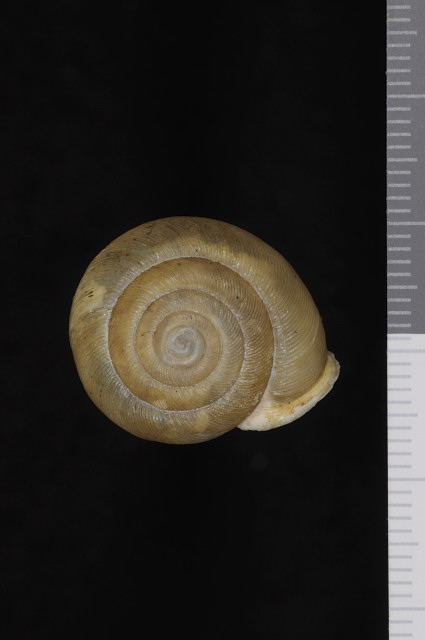
Triodopsis vulgata

Image Usage Information

  • The Academy of Natural Sciences of Philadelphia
  • CC BY-NC 4.0 DEED
  • For additional information about this specimen: Gary Rosenberg (rosenberg.ansp@drexel.edu)

Family: Polygyridae

Common name: Dished Threetooth

Discovery: Pilsbry, 1940

Identification

Width: 13.5-15 mm
Height: 7-10 mm
Whorls: 5+

One of many variations on the three-tooth theme, Triodopsis vulgata’s shell has a recessed outer (palatal) tooth. It has a heavy parietal tooth that is smaller than occurs in T. fraudulenta, a peg-like basal tooth, and the usual sculpture of tiny radial ridges over its shell. The umbilicus is open.

Ecology

Triodopsis vulgata prefers mature or late-successional, mesic forests, inhabiting ravines and wooded hillsides (Hubricht, 1985). In Tennessee it can be found on very steep slopes in leaf litter and woody debris (Coney et al, 1982).

Taxonomy

Synonyms for this species are Helix tridentata, H. fallax, Polygyra fraudulenta, Triodopsis fallax, and T. fraudulenta vulgata.

Distribution

From southern Michigan, southeastern Canada and New York in the north, T. vulgata’s range extends south in the Appalachians to Alabama, and west to Mississippi and Illinois (Pilsbry, 1940; Hubricht, 1985). In Virginia it is found mainly in the western counties.

Conservation

NatureServe Global Rank: G5
NatureServe State Rank: S3S4

January 13, 2023 by

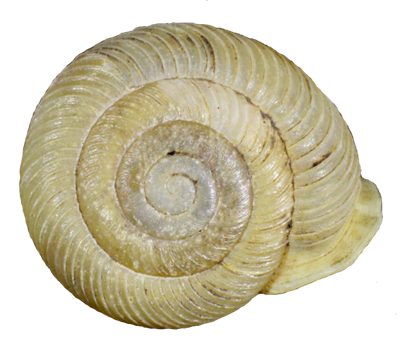
Triodopsis tridentata

Image Usage Information

  • Jonathan (JC) Carpenter
  • CC BY-NC 4.0 DEED
  • Additional information about this specimen

Family: Polygyridae

Common name: Northern Threetooth

Discovery: Say, 1816

Identification

Width: 12-14.5 mm
Height: 6.5-8.0 mm
Whorls: 5+

The Northern Threetooth is the quintessential threetooth, having a shell with three denticles or “teeth” of calcium carbonate surrounding the reflected aperture. The basal and palatal teeth are small and in the plane of the lip, and the parietal tooth, on the final whorl of the shell, is discrete. The parietal tooth, “points” at or below the outer, palatal, tooth. The shell is covered with fine ridges and has an open umbilicus.

Ecology

Widespread in hardwood or mixed forest, the Northern Threetooth is typically found scattered through the leaf litter in low numbers. Aggregations may occur around and underneath logs or in damp spots. It may also be found along roadsides, in meadows, and even on abandoned terrain in urban areas (Hubricht, 1985).

Taxonomy

Synonyms for T. tridentata include: Helix tridentata, Polygyra tridentata, and Triodopsis lunula.

Distribution

Triodopsis tridentata is the most widespread threetooth of the East, ranging from the southern Appalachian Mountains, west to Michigan and southern Canada, and east into Vermont. In Virginia it is found in the western and northwestern counties

Conservation

NatureServe Global Rank: G5
NatureServe State Rank: S4S5

January 13, 2023 by

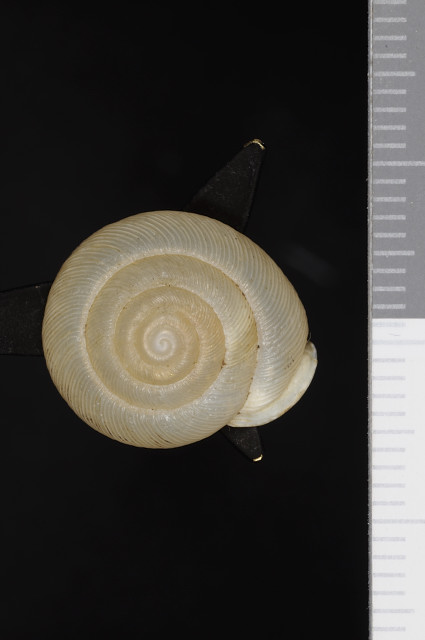
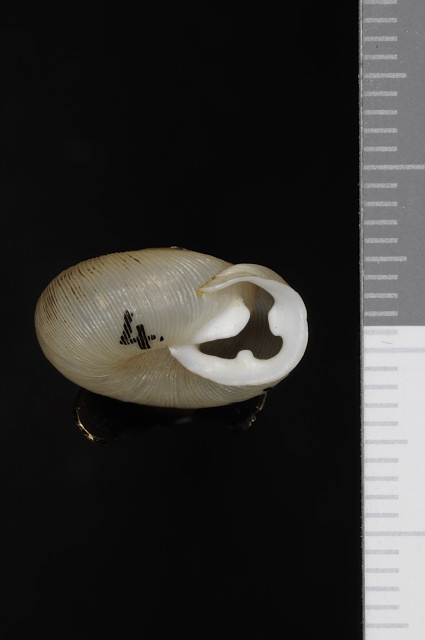
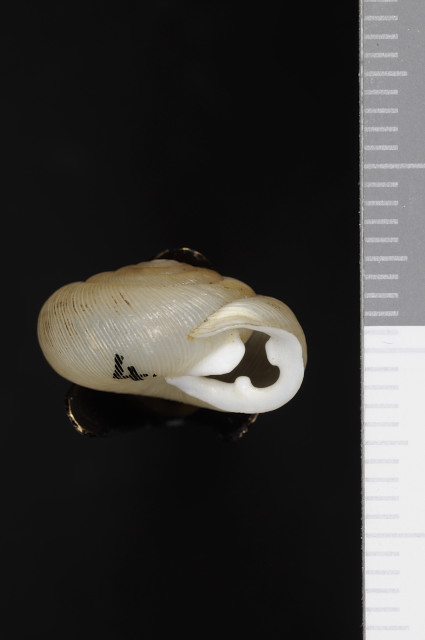
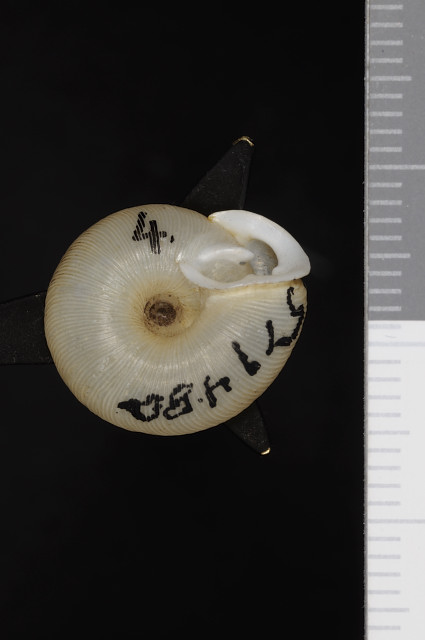
Triodopsis tennesseensis

Image Usage Information

  • The Academy of Natural Sciences of Philadelphia
  • CC BY-NC 4.0 DEED
  • For additional information about this specimen: Gary Rosenberg (rosenberg.ansp@drexel.edu)

Family: Polygyridae

Common name: Budded Threetooth

Discovery: Walker and Pilsbry, 1902

Identification

Width: 19-24 mm
Height: 9-11 mm
Whorls: 5+

This large, depressed-globose shell is covered in regular, thin radial ridges. These ridges are accompanied by microscopic papillae. The aperture is trilobed and the lip is reflected as in Triodopsis tridentata, but the teeth are significantly smaller. The parietal tooth is slightly pointed and the umbilicus is large and open.

Ecology

Triodopsis tennesseensis can be found in leaf litter and under logs on wooded hillsides (Hubricht, 1985).

Taxonomy

Triodopsis tennesseensis has also been known as Polygyra tridentata tennesseensis and Triodopsis tridentata tennesseensis.

Distribution

This animal is native to the southern Appalachians, ranging from West Virginia to Alabama. In Virginia this big threetooth is found in the southwestern counties.

Conservation

NatureServe Global Rank: G4
NatureServe State Rank: S3
Virginia’s wildlife action plan: Tier IV

January 13, 2023 by

Triodopsis rugosa

Image Usage Information

  • Dan Dourson
  • All rights reserved

Family: Polygyridae

Common name: Buttressed threetooth

Discovery: Brooks & MacMillan, 1940

Identification

Width: 18-25 mm
Height: 8 mm
Whorls: 5-5.5

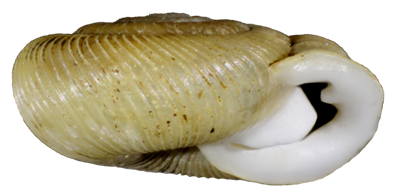
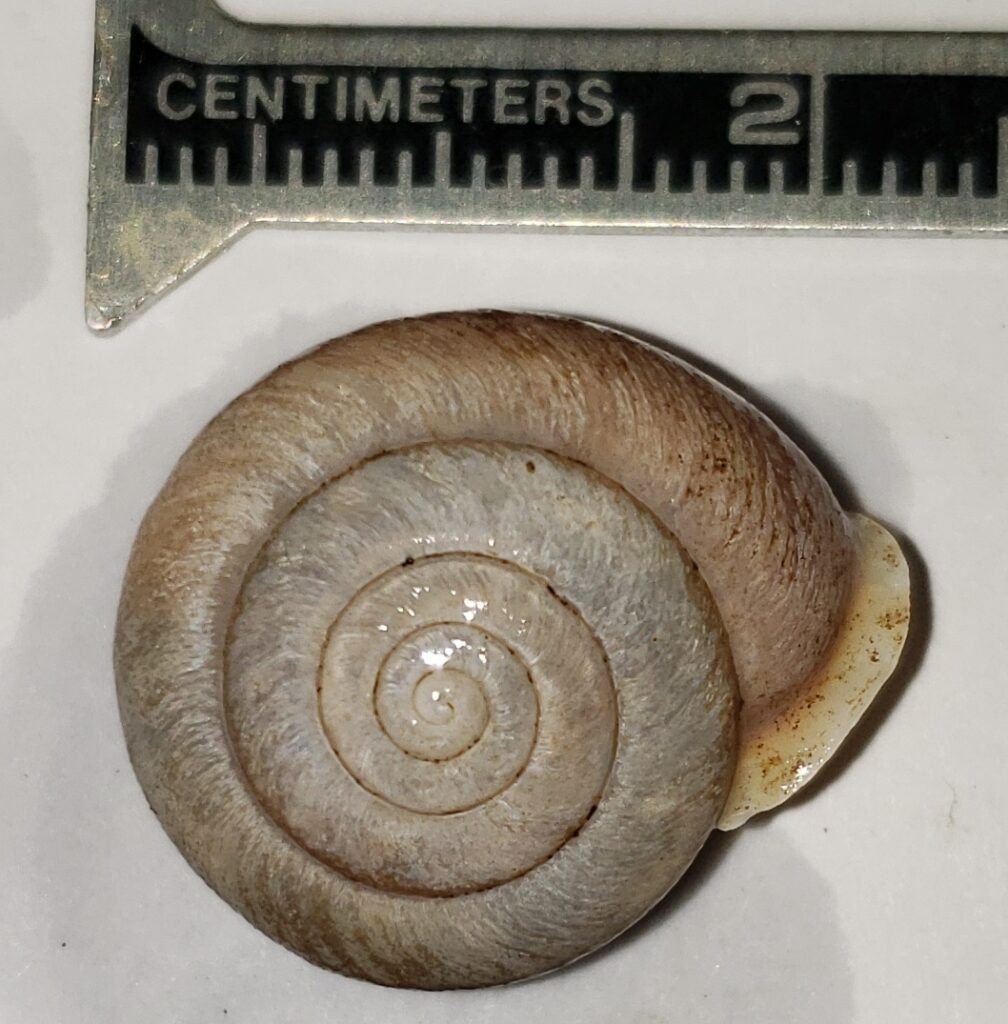
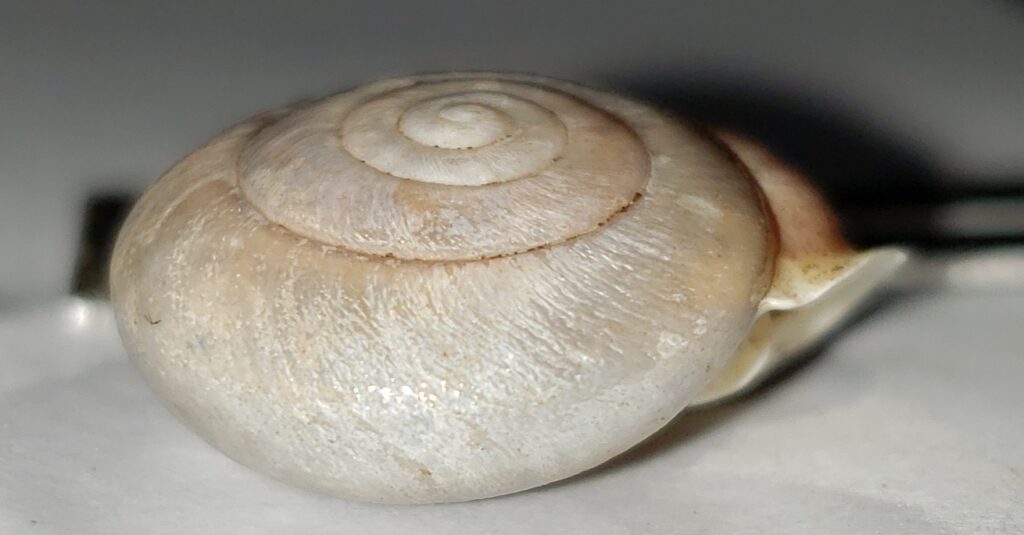
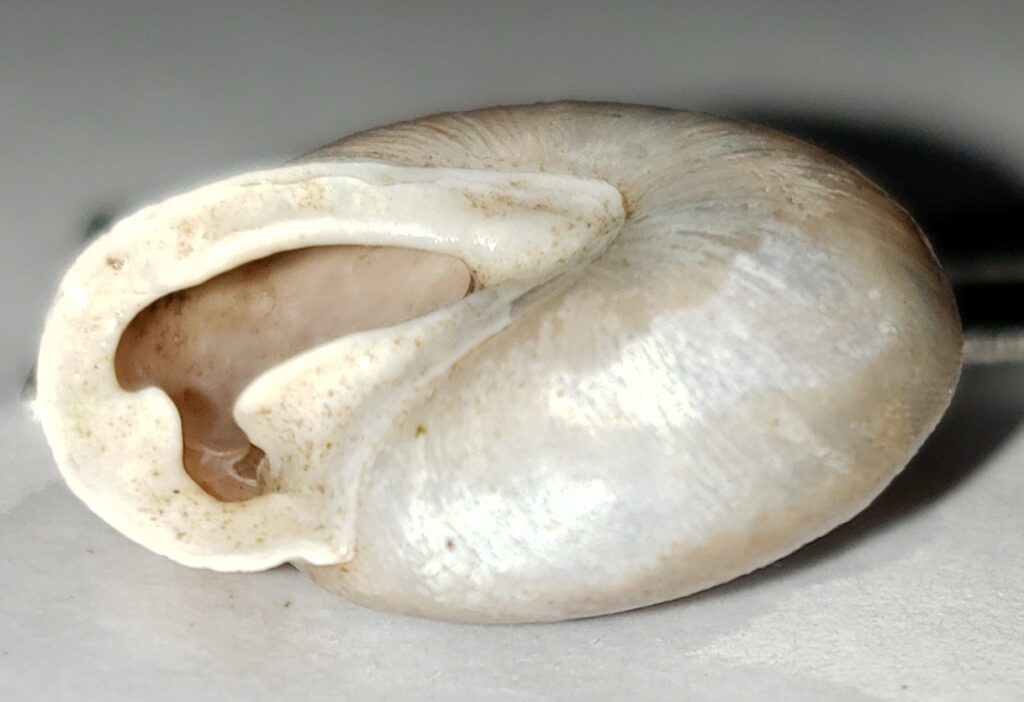
Triodopsis rugosa’s shell is depressed heliciform, its lip is reflected and thickened within, and the shell is umbilicate. With three denticles in the aperture, the large parietal denticle points above the palatal denticle, which on a wide sloping buttress produced from the thickened outer lip. The equally-sized basal and palatal denticles are substantially smaller than the parietal denticle. The sloping buttress, and the well-developed and widely-spaced transverse striae on the top that continue strongly to the base are the best diagnostic features of this species. Scattered papillae are also found on the shell. The periphery is rounded to shouldered. Its close relative Tridopsis anteridon has a larger shell with a slightly wider umbilicus and finer, more closely-spaced transverse striae.

Ecology

Found particularly in ravines and valleys that are narrow and damp.  Also found on cliffs, hillsides, and sandstone bluffs.

Taxonomy

Triodopsis tridentata rugosa is the only known synonym. Originally described as a subspecies, this animal was elevated to species apparently by Pilsbry (1940).

Distribution

An endemic of West Virginia, there is some confusion about the known localities of Triodopsis rugosa. This globally-rare snail is currently confirmed only from Logan County in West Virginia (Dourson, 2015). MacMillan (1948) states the snail was found in Logan County, Nicholas County and Putnam County in West Virginia. However, specimens examined from the Carnegie Museum of Natural History labeled as this species refer to Triodopsis anteridon, and possible specimens from Kentucky are also Triodopsis anteridon.

Conservation

NatureServe Rank: G1.
NatureServe State Rank: West Virginia, S1.
This species is a narrow Appalachian Mountain endemic that is poorly known and may be vulnerable.

  • « Go to Previous Page
  • Page 1
  • Interim pages omitted …
  • Page 6
  • Page 7
  • Page 8
  • Page 9
  • Page 10
  • Interim pages omitted …
  • Page 53
  • Go to Next Page »

sidebar

About

  • Mission & Commitments
  • Directors Team
  • Museum History

Get Involved

  • Volunteer
  • Membership
  • Carnegie Discoverers
  • Donate
  • Employment
  • Events

Bring a Group

  • Groups of 10 or More
  • Birthday Parties at the Museum
  • Field Trips

Powdermill

  • Powdermill Nature Reserve
  • Powdermill Field Trips
  • Powdermill Staff
  • Research at Powdermill

More Information

  • Image Permission Requests
  • Science Stories
  • Accessibility
  • Shopping Cart
  • Contact
  • Visitor Policies
One of the Four Carnegie Museums | © Carnegie Institute | Privacy Policy | Terms of Use | Accessibility
Rad works here logo