• Skip to primary navigation
  • Skip to main content
  • Skip to primary sidebar

Carnegie Museum of Natural History

One of the Four Carnegie Museums of Pittsburgh

  • Visit
    • Buy Tickets
    • Visitor Information
    • Exhibitions
    • Events
    • Dining at the Museum
    • Celebrate at the Museum
    • Powdermill Nature Reserve
    • Event Venue Rental
  • Learn
    • Field Trips
    • Educator Information
    • Programs at the Museum
    • Bring the Museum to You
    • Guided Programs FAQ
    • Programs Online
    • Climate and Rural Systems Partnership
  • Research
    • Scientific Sections
    • Science Stories
    • Science Videos
    • Senior Science & Research Staff
    • Museum Library
    • Science Seminars
    • Scientific Publications
    • Specimen and Artifact Identification
  • About
    • Mission & Commitments
    • Directors Team
    • Museum History
  • Tickets
  • Give
  • Shop

January 13, 2023 by

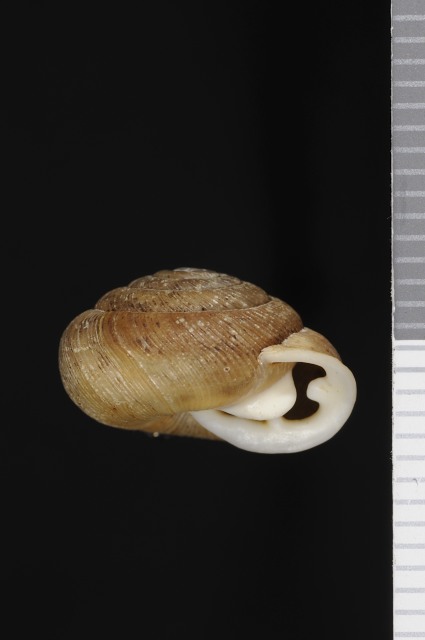
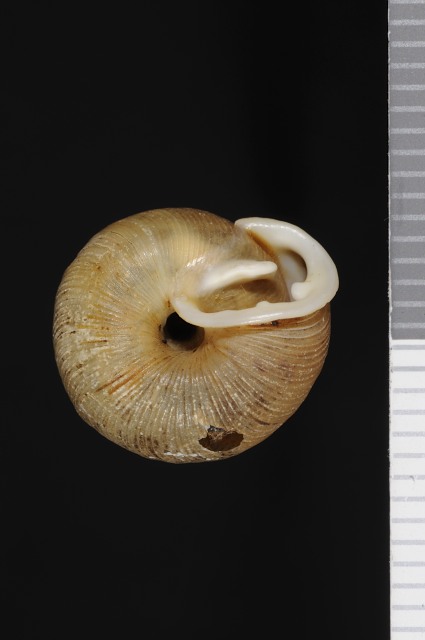
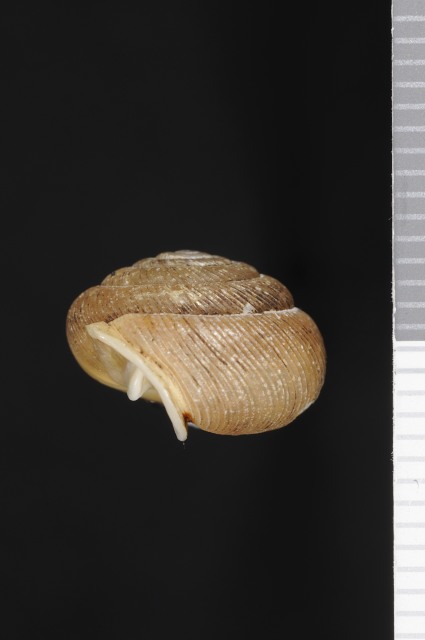
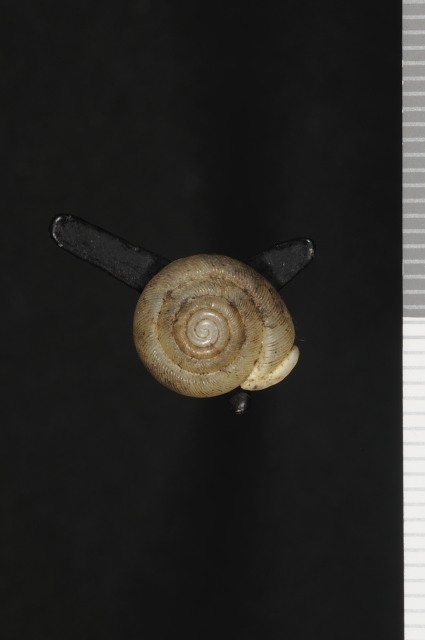
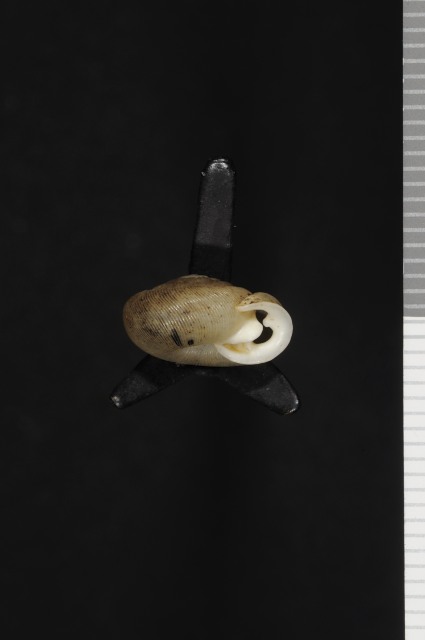
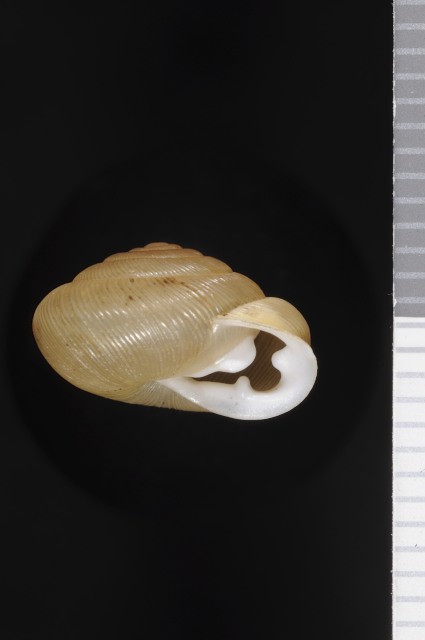
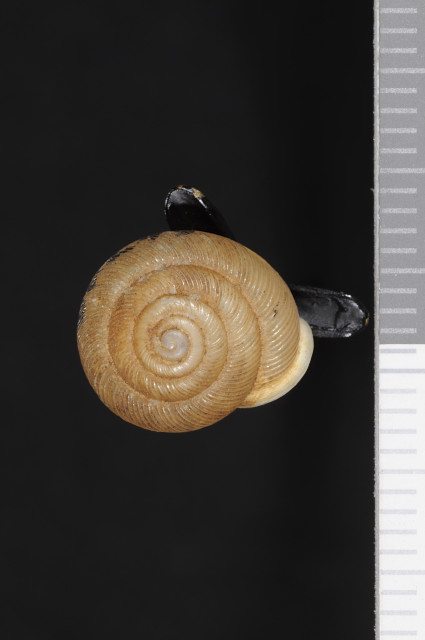
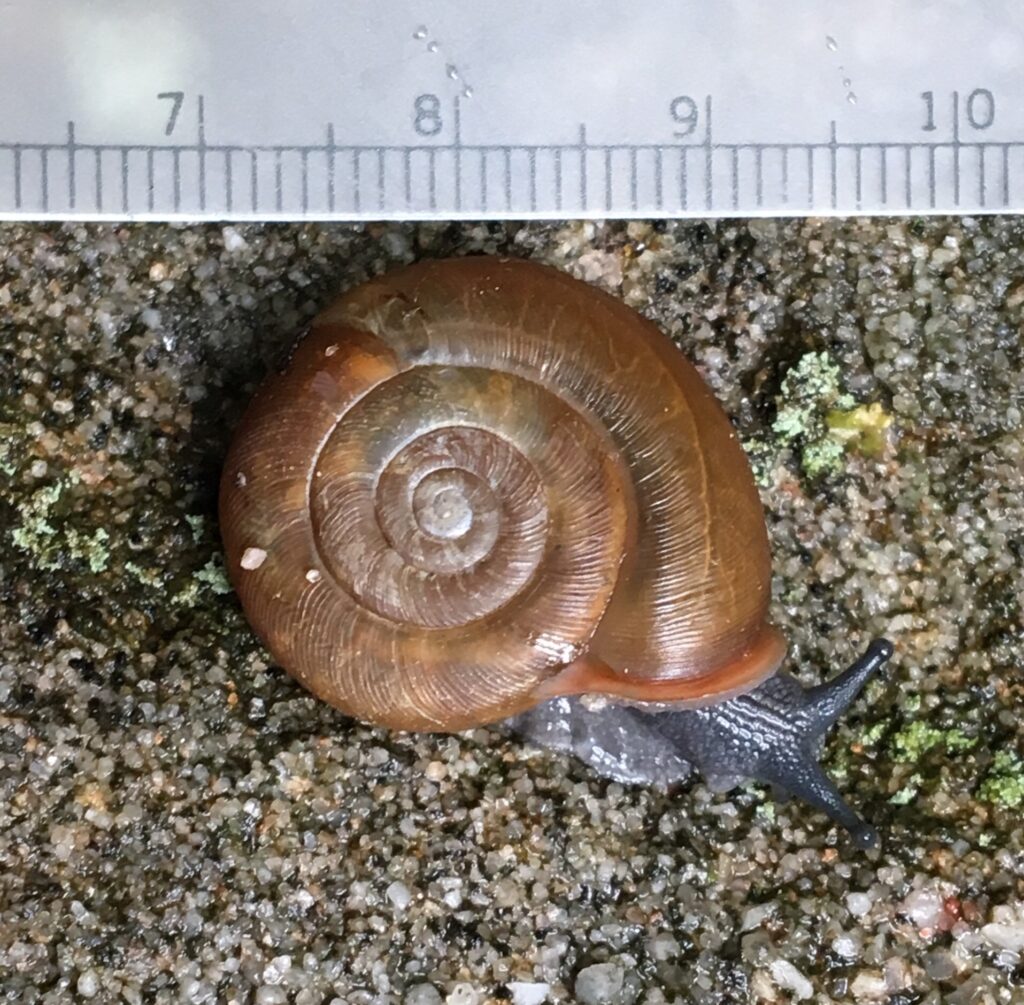
Triodopsis platysayoides

Image Usage Information

  • John Boback
  • CC BY-NC 4.0 DEED
  • Additional information about this specimen

Family: Polygyridae

Common name: Cheat Threetooth

Discovery: Brooks, 1933

Identification

Width: 18-25 mm
Height: 8 mm
Whorls: 5-5.5

The shell of Triodopsis platysayoides is depressed heliciform or discoidal. The five whorls are flattened and only slightly convex, the base is flattened and slightly inflated at the aperture. The shell is thin, translucent but not fragile, and umbilicate. A moderately-sized parietal denticle is found, but basal and palatal denticles are absent or scarcely detectable. Transverse striae are present but not as well-developed as in other species of Triodopsis. The live animal is grayish to light brown above, paler below.

Ecology

Triodopsis platysayoides is a highly specialized land snail, found almost entirely among massive rock features within the Cheat River Canyon in West Virginia. These include sandstone cliffline outcrops and talus as well as limestone caves and outcrops (e.g. Hotopp, 2000). It is often found several meters within crevices well below the ground surface. Talus depth and cool temperatures are critical components of this snail’s habitat (Dourson, unpublished data).

Triodopsis platysayoides consumes a wide variety of foods including decaying rhododendron blossoms, a variety of fungi, dead cave crickets, crustose lichen growing on sandstone, decaying fern fronds, fresh Allegheny Woodrat scat, and mold filaments growing from woodrat scat (Dourson, 2008). The snail is relatively long-lived, reaching adulthood in 2-3 years.

Taxonomy

Polygyra platysayoides is the only known synonym. The snail’s unique identity is confirmed by its reproductive anatomy and allozymes (Emberton, 1988).

Distribution

This species is only known from the two counties in West Virginia on the Cheat River Canyon.

Conservation

NatureServe Rank: G1. NatureServe State Rank: West Virginia, S1. Listed as federally Threatened. Large parts of the Cheat River Canyon are in public or conservation ownership. Habitat fragmentation, non-native species, pesticides, and climate change are possible threats.
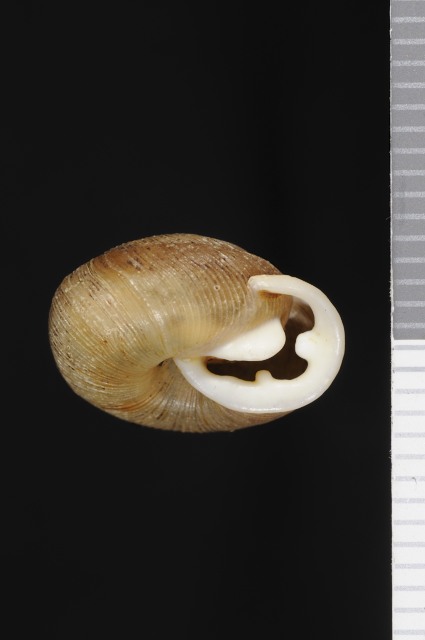
January 13, 2023 by

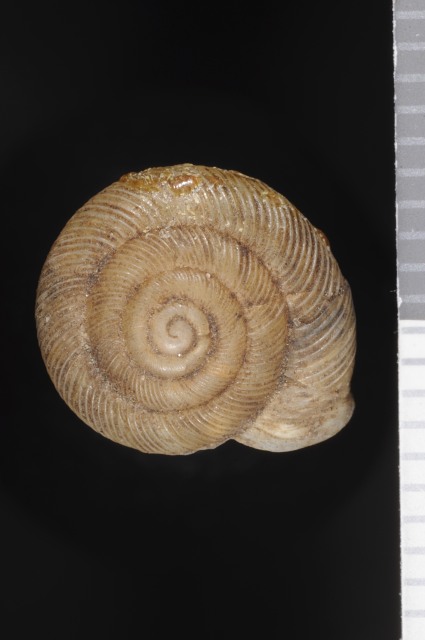
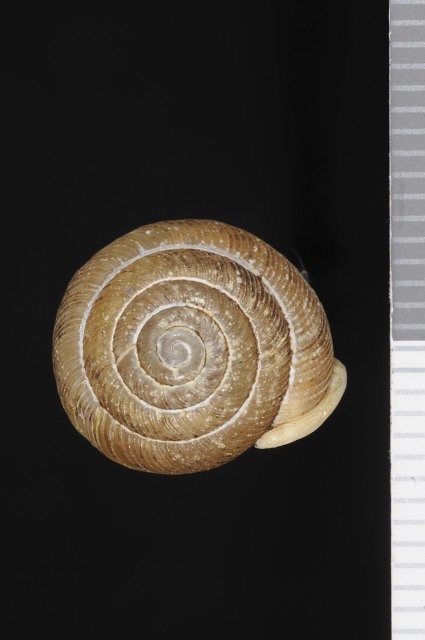
Triodopsis picea

Image Usage Information

  • The Academy of Natural Sciences of Philadelphia
  • CC BY-NC 4.0 DEED
  • For additional information about this specimen: Gary Rosenberg (rosenberg.ansp@drexel.edu)

Family: Polygyridae

Common name: Spruce Knob Threetooth

Discovery: Hubricht, 1958

Identification

Width: 12-15 mm
Height: 7.5-9.5 mm
Whorls: 5

The shell of Triodopsis picea is a depressed-globose shape, with coarse radial striae. The whorls gradually increase in size, and all but the nuclear whorl are covered with papillae. The reflected lip is guttered behind. The umbilicus, as in T. juxtidens, is small and open, and the denticles are smaller than those in T. fraudulenta. The parietal tooth is high, straight, and long; the basal tooth is narrow; and the tooth on the outer lip is broad and blunt.

Ecology

This snail is found in leaf litter and near rocks and logs, at higher elevations in rocky woods, often in mixed conifer and hardwood stands. Its common name is for its type locality on West Virginia’s highest mountain. In western Maryland it lives at low densities on cool hemlock and yellow birch slopes or stream valleys (Hotopp, pers obs).

Taxonomy

There are no known synonyms.

Distribution

The uncommon T. picea is a central Appalachian Mountain endemic, living in southwest Pennsylvania, western Maryland, West Virginia, and Virginia. In Virginia, it is known only from Highland County.

Conservation

NatureServe Global Rank: G3
NatureServe State Rank: S1
Virginia’s wildlife action plan: Tier II

January 13, 2023 by

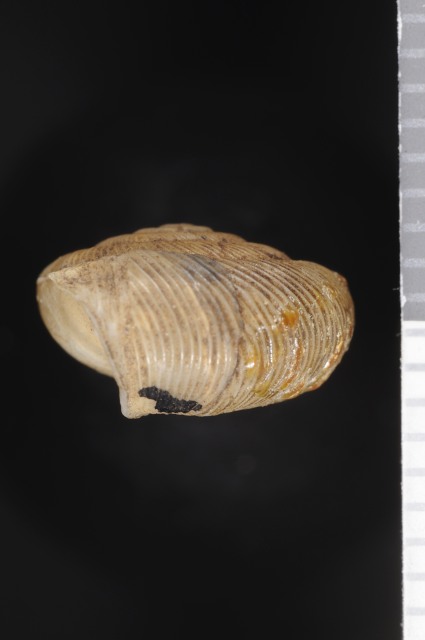
Triodopsis pendula

Image Usage Information

  • The Academy of Natural Sciences of Philadelphia
  • CC BY-NC 4.0 DEED
  • For additional information about this specimen: Gary Rosenberg (rosenberg.ansp@drexel.edu)

Family: Polygyridae

Common name: Hanging Rock Threetooth

Discovery: Hubricht, 1952

Identification

Width: 9.5-13.8 mm
Height: 5.0-7.2 mm
Whorls: 5+

The shell of Triodopsis pendula is a depressed heliciform and covered with radial striae, as are many threetooth snails. The large final whorl is twice the width of the preceding one. A tooth on the outer lip is wide and rounded. The basal tooth is blunt, while the high parietal tooth is curved and connects to the columella. In and around the funnel-shaped umbilicus and behind the reflected lip are strong papillae, seen under magnification. The shell is smaller and more depressed than the shell of Triodopsis vulgata, and the outer lip tooth is smaller and not as inflected.

Ecology

Triodopsis pendula prefers oak woods and can be found in leaf litter and near logs (Hubricht, 1985).

Taxonomy

There are no known synonyms.

Distribution

This rare animal is only known from the foothills east of the Appalachian Mountains, in North Carolina and, possibly, abutting Grayson County, Virginia. This Virginia county appears in range maps by Hubricht (1985), though no museum specimens for this location have been encountered. The species is listed as imperiled in Virginia.

Conservation

NatureServe Global Rank: G3
NatureServe State Rank: S1S3
Virginia’s wildlife action plan: Tier II

January 13, 2023 by

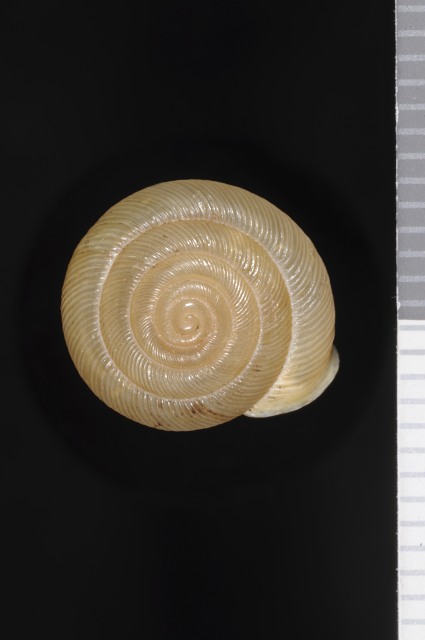
Triodopsis obsoleta

Image Usage Information

  • The Academy of Natural Sciences of Philadelphia
  • CC BY-NC 4.0 DEED
  • For additional information about this specimen: Gary Rosenberg (rosenberg.ansp@drexel.edu)

Family: Polygyridae

Common name: Nubbin Threetooth

Discovery: Pilsbry, 1894

Identification

Width: 10-13 mm
Height: 6-8 mm
Whorls: 4.5-6.0

This small coastal threetooth has a depressed heliciform shell with three barriers in the aperture, like many of its genus, though those three teeth are small and weak – “obsolete.” The open umbilicus of Triodopsis obsoleta is narrow and shallow. Pilsbry (1940) describes this animal only in relation to T. hopetonensis.

Ecology

As currently designated, Triodopsis obsoleta lives on the Coastal plain of the Middle Atlantic. It can be found on low, wet ground, especially in swamps and urban areas (Hubricht 1985).

Taxonomy

Triodopsis obsoleta, like T. messana, is another close relative of T. fallax whose taxonomy is not firmly established. Synonyms for T. obsoleta include: Polygyra fallax obsoleta, P. hopetonensis obsoleta, Triodopsis fallax obsoleta, T. hopetonensis chincoteagensis, T. h. obsoleta, and T. palustris.

Distribution

This species is only known from the Atlantic coasts of Maryland, Virginia and North Carolina. In Virginia it is found in the central and southeastern coast.

Conservation

NatureServe Global Rank: G4
NatureServe State Rank: S3

January 13, 2023 by

Triodopsis messana

Image Usage Information

  • The Academy of Natural Sciences of Philadelphia
  • CC BY-NC 4.0 DEED
  • For additional information about this specimen: Gary Rosenberg (rosenberg.ansp@drexel.edu)

Family: Polygyridae

Common name: Pinhole Threetooth

Discovery: Hubricht, 1952

Identification

Width: 9-14 mm
Height: 6-9 mm
Whorls: 5+

Triodopsis messana’s depressed shell is typically a reddish-brown color. The later whorls are lined with radial striae. The outer lip of the aperture contains a rounded tooth, bent slightly into the aperture, and the parietal tooth is long and curved. A small tubercle can be seen on the basal lip. Its teeth are similar to those of T. fallax but less robust. The shell’s umbilicus is narrower than in T. hopetonensis.

Ecology

This species prefers open terrain, and is rarely found in woods. It occurs in clearings and meadows, along roads and railroad tracks, and occasionally in abandoned urban habitats (Hubricht 1985).

Taxonomy

T. messana has also been known as Triodopsis fallax messana. Triodopsis messana is a close relative of Triodopsis fallax, and its taxonomy as a unique species – not simply a hybrid or ecotype of T. fallax – is not clearly established (Emberton, 1988).

Distribution

This animal as currently recognized is only known from Virginia and the Carolinas, and in Virginia only from Suffolk County (Hubricht, 1985).

Conservation

NatureServe Global Rank: G4
NatureServe State Rank: S1S3
Virginia’s wildlife action plan: Tier IV

January 13, 2023 by

Triodopsis juxtidens

Image Usage Information

  • The Academy of Natural Sciences of Philadelphia
  • CC BY-NC 4.0 DEED
  • For additional information about this specimen: Gary Rosenberg (rosenberg.ansp@drexel.edu)

Family: Polygyridae

Common name: Atlantic Threetooth

Discovery: Pilsbry, 1894

Identification

Width: 12-19 mm
Height: 6.5-10 mm
Whorls: 5+

This snail possesses a typical threetooth shell, with three tooth-like barriers in the aperture. The shell has a microsculpture of fine ridges and an open umbilicus on a depressed heliciform shell. It looks very similar to T. tridentata, but it can be distinguished by a parietal tooth that points at or above its palatal tooth, when viewed from the bottom.

Ecology

Triodopsis juxtidens commonly inhabits hilly, rich forests, sometimes on limestone. It can be found in leaf litter and under logs and rocks. It can also occasionally be seen in meadows, along roadsides, or on abandoned terrain in urban areas (Hubricht, 1985).

Taxonomy

T. juxtidens has also been known as Polygyra tridentata juxtidens, P. t. juxtidens, and Triodopsis tridentata juxtidens.

Distribution

Triodopsis juxtidens occurs in forests to the east of the Appalachian Plateau, but it is found farther west in New York, Pennsylvania, and some Mid-Atlantic states, including Virginia. However, it is not found in Virginia’s southwestern-most counties.

Conservation

NatureServe Global Rank: G5
NatureServe State Rank: S4S5

  • « Go to Previous Page
  • Page 1
  • Interim pages omitted …
  • Page 7
  • Page 8
  • Page 9
  • Page 10
  • Page 11
  • Interim pages omitted …
  • Page 53
  • Go to Next Page »

sidebar

About

  • Mission & Commitments
  • Directors Team
  • Museum History

Get Involved

  • Volunteer
  • Membership
  • Carnegie Discoverers
  • Donate
  • Employment
  • Events

Bring a Group

  • Groups of 10 or More
  • Birthday Parties at the Museum
  • Field Trips

Powdermill

  • Powdermill Nature Reserve
  • Powdermill Field Trips
  • Powdermill Staff
  • Research at Powdermill

More Information

  • Image Permission Requests
  • Science Stories
  • Accessibility
  • Shopping Cart
  • Contact
  • Visitor Policies
One of the Four Carnegie Museums | © Carnegie Institute | Privacy Policy | Terms of Use | Accessibility
Rad works here logo