• Skip to primary navigation
  • Skip to main content
  • Skip to primary sidebar

Carnegie Museum of Natural History

One of the Four Carnegie Museums of Pittsburgh

  • Visit
    • Buy Tickets
    • Visitor Information
    • Exhibitions
    • Events
    • Dining at the Museum
    • Celebrate at the Museum
    • Powdermill Nature Reserve
    • Event Venue Rental
  • Learn
    • Field Trips
    • Educator Information
    • Programs at the Museum
    • Bring the Museum to You
    • Guided Programs FAQ
    • Programs Online
    • Climate and Rural Systems Partnership
  • Research
    • Scientific Sections
    • Science Stories
    • Science Videos
    • Senior Science & Research Staff
    • Museum Library
    • Science Seminars
    • Scientific Publications
    • Specimen and Artifact Identification
  • About
    • Mission & Commitments
    • Directors Team
    • Museum History
  • Tickets
  • Give
  • Shop

February 4, 2020 by

Birthday Parties & Celebrations

Get ready for one of the coolest parties Pittsburgh has to offer!

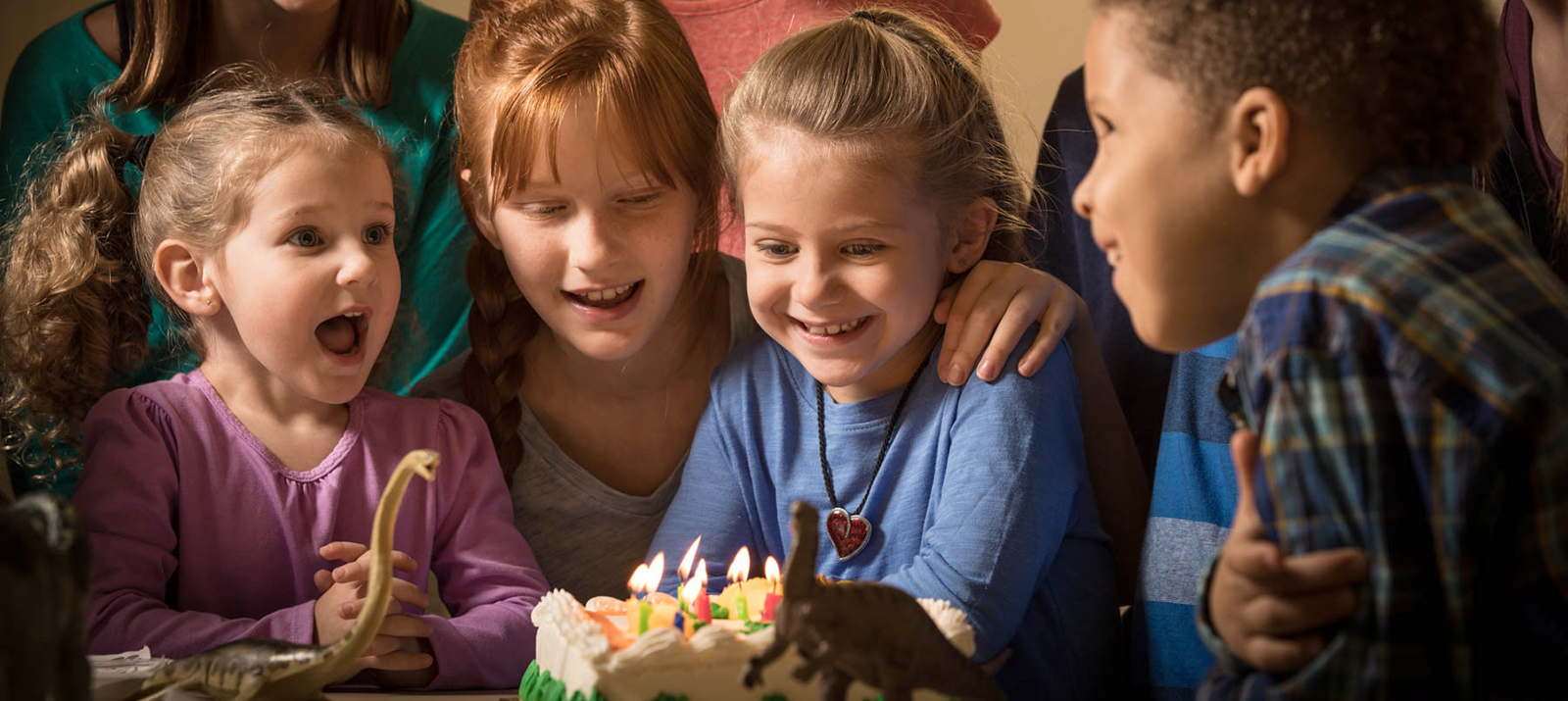
Let’s party! Whatever you are celebrating, Carnegie Museum of Natural History is here to make your day special. Perfect for birthdays, celebrations, family get-togethers, team bonding events, and more! Bring your own snacks or order pizza and cake from our onsite catering provider.

Parties Include

  • Use of the party room for 90 minutes.
  • Same day museum admission for up to 25 guests.
  • Gift (valued at $20) for the guest of honor.
  • Paper products including plates, napkins, cups, cutlery, and Bluetooth speaker
  • Cake cutting utensils and candles/lighter, if needed.
  • A friendly museum educator to support your experience.

Party Cost

Non-Members$450
Members$400

$50 nonrefundable deposit due at the time of reservation

Customize Your Experience

Enhance your party package with add-ons.

  • Additional Guests ($20 per person)
    Up to 10 additional guests can be accommodated.
  • Culinaire Catering
    Food orders must be placed three weeks prior to your party.

Frequently Asked Questions

The party room will open 15 minutes prior to your party start time so that you can set up. All belongings must be removed from the party room 15 minutes after the party ends. We will provide a rolling bin and rolling cart to make transporting your supplies easy.

You are welcome to bring your own decorations. For the safety of our collections, balloons, confetti, and glitter are prohibited. Table-top and free-standing decorations work best. Magnets can be used to hang wall decorations from whiteboards on the walls. Taping, stapling or hanging décor from the walls or ceiling is prohibited.

Catering Menu

Party guests are welcome to bring their own cake and snacks or can choose from Carnegie Museum’s Culinaire catering options. All food orders must be placed three weeks prior to event. Order minimum is $75. A sales tax of 7% and a 21% service charge are additional costs

Please indicate if anyone in your group has food allergies or dietary restrictions when you place your order.

Cheese or Pepperoni

Cut into 10 Slices

$18.00 each

Ceasar, Garden, or Chef Salads

$5.00 per person

Honey Mustard and Ketchup

$7.00 per person

Creamy three cheese sauce

$5.00 per person

$5.00 per person

Ranch Dressing

$5.00 per person

Lemonade Pitcher: $4.00 per person

Pitchers of Soda (Pepsi, Diet Pepsi, Starry): $4.00 per person

Bottled Water: $2.00 each

Milk Cartons (2% or Chocolate): $1.00 each

Iced Sugar Cookies (Assorted Dinosaur Designs): $2.50 each

Cakes
Cakes are decorated with “Happy Birthday”
Batter Flavors: White Vanilla, Yellow Vanilla, Chocolate
Buttercream Flavors: Vanilla, Chocolate, White Chocolate, Almond, Raspberry, Strawberry

10″ Round Cake
Serves 12-15
$30.00

1/4 Sheet Cake
Serves 15
$30.00

Book Your Party

All bookings must be made 4 weeks in advance.

For children’s parties, an adult must be present with each participating child.

Book Your Museum Party!
Questions about Parties? Email Us!
Prefer to call? Call us at 412-578-2553

Carnegie Museum of Natural History welcomes all visitors. We work to assist visitors with disabilities in obtaining reasonable and appropriate accommodations, and in supporting equal access to services, programs, and activities.

Filed Under: Uncategorized

February 4, 2020 by

Sensory Friendly Hours

Families with members who have sensory processing needs are invited to explore the museum galleries with reduced audio and visual elements. Calming spaces with support materials (including single use ear plugs, sunglasses, fidget toys, etc.) will be available.

Museum experts will be on-hand to talk for as little (or as long) as you want about dinosaurs, rocks, gems, animals, bugs, and much more. These are some of our favorite things, too! Every program is designed to welcome all ages and abilities. To provide the most sensory friendly environment possible, advance registration is required for programs that occur outside normal museum hours.

There are no upcoming events.

Sponsors

PA Cyber Charter School
Jack Buncher Foundation

Filed Under: Uncategorized

February 3, 2020 by

Benedum Hall of Geology

  • First Floor

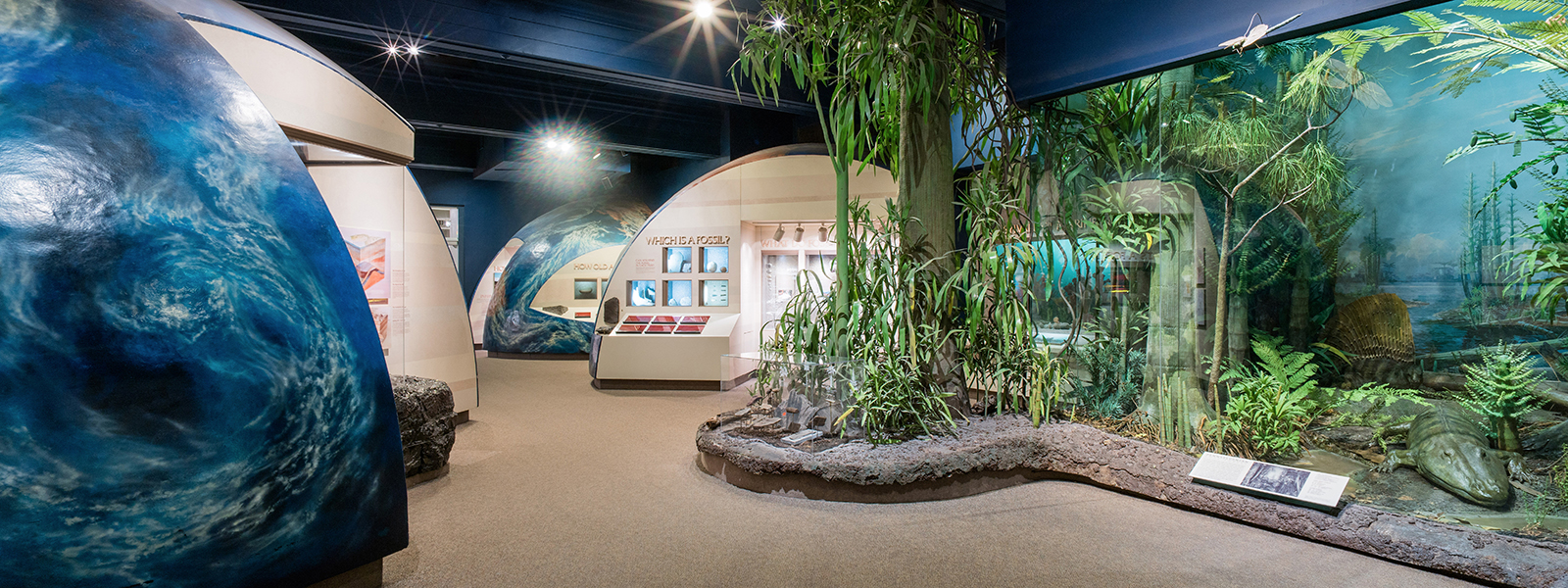
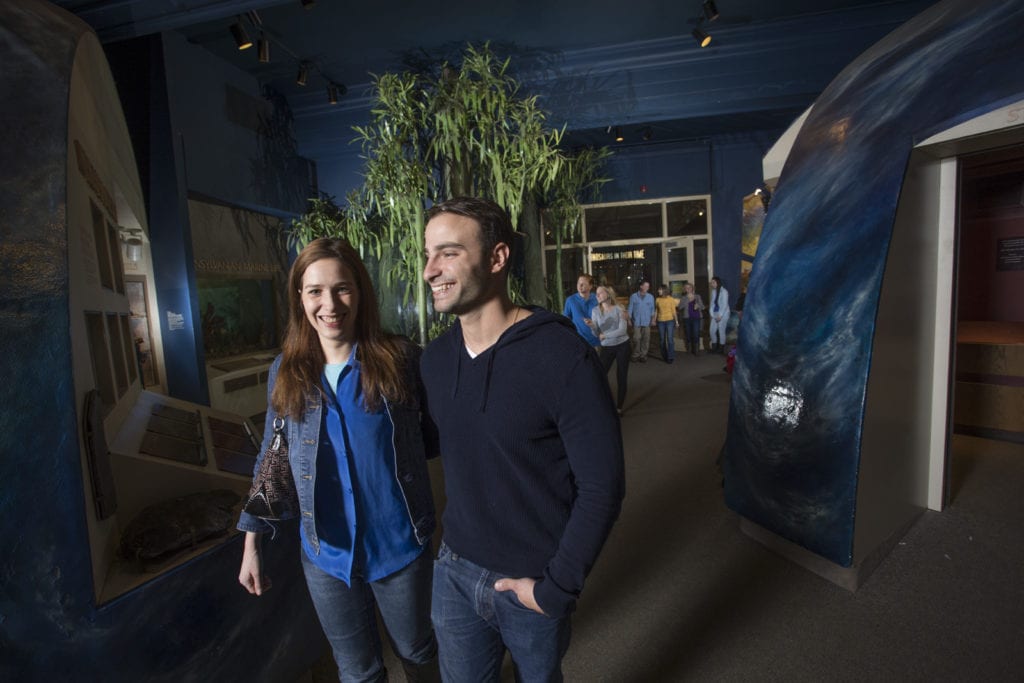
What shaped the Earth’s surface? How are fossils formed? What did western Pennsylvania look like millions of years ago when giant lizards roamed through our once-tropical forests? Learn the answers to these questions and more when you explore the ever-changing nature of our planet in Benedum Hall of Geology.

Three Earth-like domes highlight geological time and dating, fossils, shaping the Earth, and Pittsburgh geology. A fourth dome explores the origin, location, and economic development of coal, oil, and gas. A strong emphasis is placed on the geological processes that shaped Pennsylvania and its neighbors, Ohio and West Virginia. The Stratavator offers a simulated-elevator ride deep into the Earth.

Benedum hall of Geology

Learn about the Invertebrate Paleontology Collection at the Museum

The Section of Invertebrate Paleontology has close to three-quarters of a million fossils in its collection. Because of the special interest in the Paleozoic Era fossils by the section’s four curators and the central location of Carnegie Museum Natural History within the Appalachian Basin, the Paleozoic Era fossils make up almost half the collection.

Learn about the Section of Invertebrate Paleontology

Blogs about Benedum Hall of Geology

  • Exploring the Role of Leaf Litter In Our Forests

    Exploring the Role of Leaf Litter In Our Forests

    by Abby Yancy Leaf litter is the dead plant material that has fallen from trees, shrubs, and other plants. It hangs around …
  • Carnegie’s Cactus: Carnegie gigantea

    Carnegie’s Cactus: Carnegie gigantea

    by Patrick McShea Diplodocus carnegii, a sauropod star of Dinosaurs in Their Time, is not the only large organism exhibited at Carnegie …
  • Collected on this Day 105 years ago

    Collected on this Day 105 years ago

    So long, leaves. Autumn has fallen. This specimen of red maple (Acer rubrum) was collected on November 13, 1915 by Otto Jennings …
  • Collected on this Day in 1966: Santa Clauses

    Collected on this Day in 1966: Santa Clauses

    Christmas in July…”Santa Claus” floating in the air. (Or I guess, technically Boxing Day in July, if that’s a thing.) Make a …

Filed Under: Uncategorized Tagged With: dinos, dinosaurs, dinosaurs in their time

January 31, 2020 by

Hall of Botany

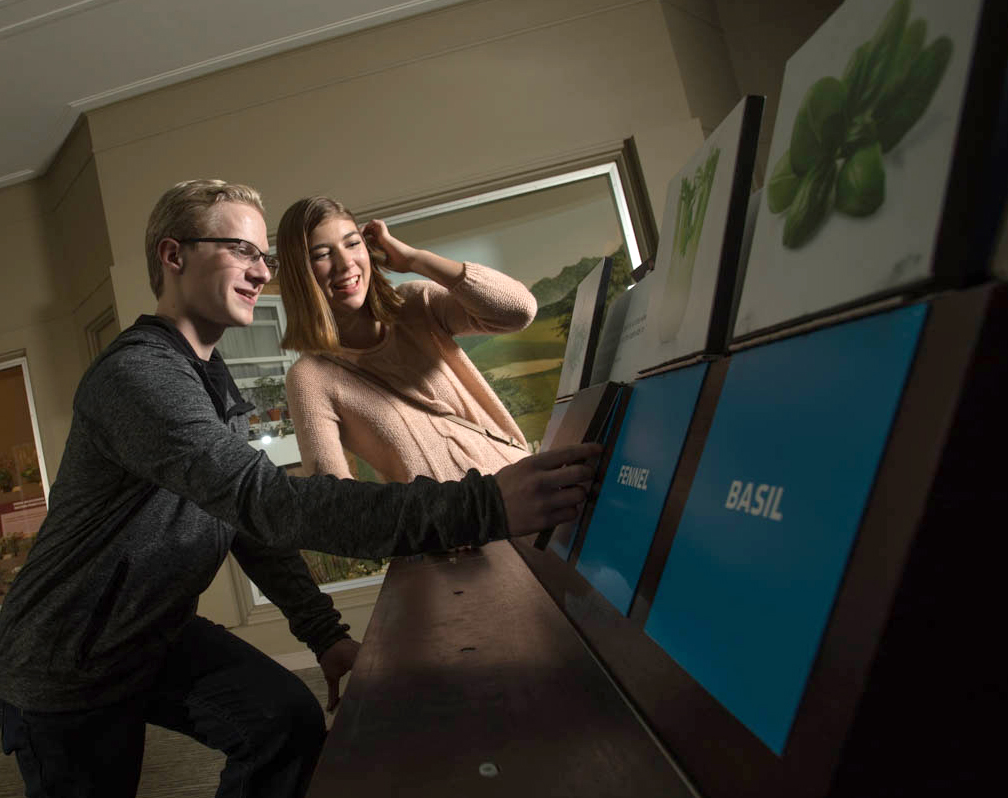
Investigate the incredibly diverse plant life of North America and Western Pennsylvania in Hall of Botany. Get lost in beautiful dioramas that depict wildly different biomes from all four corners of the United States. Learn about how animals and humans depend on plants for foods, shelter, medicine, and clothing. Discover how temperature and water affect plants by comparing a Florida everglade, an Alpine meadow on Mt. Rainier, an Arizona desert, and a wooded Pennsylvania valley. Identify herbs by their smells, and learn about photosynthesis and the food chain.

The hall also has several dioramas to show the plants and diverse habitats present in Western Pennsylvania. Local habitats like Lake Erie’s Presque Isle during the summer, a Warren County bog in the fall, and the Allegheny National Forest in the spring are all represented in Hall of Botany.

A video in the entryway showcases scientists collecting specimens in the field, preserving them, and ultimately digitizing them so the data can be used by researchers all over the world. 

Labels and graphics were created in the museum’s Print Shop using green printing techniques: fiberboard composed of 100% recycled material and a new type of vinyl which contains no Polyvinyl Chlorides (PVCs). 

  • Second Floor

Meet our Botanists

Mason Heberling

Mason Heberling, Ph.D.

Associate Curator of Botany

Learn More
Isaac, Bonnie

Bonnie Isaac, M.S.

Collection Manager of Botany

Learn More

Learn about the Botany Collection at the Museum

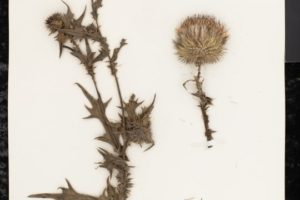
Carnegie Museum’s Herbarium (CM) is the major botanical facility in the Upper Ohio Valley region and ranks among the top 25 herbaria in North America.

Learn about the Section of Plants (Botany)

Blogs about Botany

  • Exploring the Role of Leaf Litter In Our Forests

    Exploring the Role of Leaf Litter In Our Forests

    by Abby Yancy Leaf litter is the dead plant material that has fallen from trees, shrubs, and other plants. It hangs around …
  • Carnegie’s Cactus: Carnegie gigantea

    Carnegie’s Cactus: Carnegie gigantea

    by Patrick McShea Diplodocus carnegii, a sauropod star of Dinosaurs in Their Time, is not the only large organism exhibited at Carnegie …
  • Collected on this Day 105 years ago

    Collected on this Day 105 years ago

    So long, leaves. Autumn has fallen. This specimen of red maple (Acer rubrum) was collected on November 13, 1915 by Otto Jennings …
  • Collected on this Day in 1966: Santa Clauses

    Collected on this Day in 1966: Santa Clauses

    Christmas in July…”Santa Claus” floating in the air. (Or I guess, technically Boxing Day in July, if that’s a thing.) Make a …

Filed Under: Uncategorized Tagged With: dinos, dinosaurs, dinosaurs in their time

January 31, 2020 by

Paleolab

PaleoLab is a working paleontology lab that offers visitors a window into scientific research at Carnegie Museum of Natural History. Watch our paleontologists and scientific preparators unpack, prepare, and analyze fossils and specimens for research or display. View the fossilized bones of prehistoric mammals and fascinating dinosaur species before they’re displayed in museum galleries, or watch brand new specimens unwrapped straight from the field.

There is always something new happening in the PaleoLab. New specimens arrive, bones are chiseled out of rock, and scientist glean new insights from specimens they’re examining. Watch our scientists at work and learn about the tools and methods they use to uncover the past in this working lab.

PaleoLab is sponsored by

Green Mountain Energy logo
  • First Floor

Meet our Vertebrate Paleontologists

Lamanna, Matt

Matt Lamanna, Ph.D.

Curator of Vertebrate Paleontology

Learn More
Henrici, Amy

Amy Henrici, M.S.

Collection Manager of Vertebrate Paleontology

Learn More

Learn about the Fossil VertebrateCollection at the Museum

The Section of Vertebrate Paleontology collection began in 1895 with the sponsorship of Andrew Carnegie. In the early 20th century, the Carnegie Corporation supported the museum’s numerous paleontological expeditions to the American West, building one of the best dinosaur collections in the world. More recent efforts by Vertebrate Paleontology staff have concentrated on collecting mammals, reptiles, and amphibians from the Cenozoic and tetrapods from the Paleozoic and Mesozoic.

Learn about the Section of Vertebrate Paleontology

Blogs about the Dinosaurs

  • Fossil Matrix Under the Microscope

    Fossil Matrix Under the Microscope

    by Pat McShea Museum visitors who approach the broad window of PaleoLab encounter an array of large fossilized bones. If not for …
  • Badwater 20: Not So Bad After All

    Badwater 20: Not So Bad After All

    by Lauren Raysich Although many people are familiar with fossilized bones of dinosaurs and other large extinct creatures, some fossils can be so …
  • Mastodon Restoration

    Mastodon Restoration

    What does a Scientific Preparator do? Part of Dan Pickering’s really cool job is carefully restoring museum specimens. In this photo he’s …
  • Clues

    Clues

    By Amy Henrici Collection Managers often solve fossil mysteries, and sometimes we have only a few clues to assist us. A recent …

Filed Under: Uncategorized Tagged With: dinos, dinosaurs, dinosaurs in their time

January 31, 2020 by

The Age of Mammals: The Cenozoic Era

Discover life on Earth in Age of Mammals: The Cenozoic Era. See fossils from a Columbian mammoth that lived in the Ice Age, or wonder at the size of an Irish Elk’s enormous antlers. Discover the diverse and fascinating creatures that lived in the 66 million years after the extinction of the dinosaurs and learn how they related to today’s mammals!

Age of Mammals: The Cenozoic Era features specimens discovered all over the world, including a large number of Ice Age fossils. Learn about the 55 million-year evolutionary history of the horse or the hunting practices of saber-toothed cats. Exhibits include a dire wolf, giant ground sloth, and specimen groupings that illustrate anatomical changes through time.

  • First Floor
Animals in Cenozoic Hall

Meet our Mammalogists

Wible, John

John Wible, M.S.

Curator of Mammals

Learn More
McLaren, Suzanne

Suzanne McLaren, M.S.

Collection Manager of Mammals

Learn More

Learn about the Mammal Collection at the Museum

The Section of Mammals houses a research collection consisting of more than 118,553 specimens. The main collection is housed at the Edward O’Neil Research Center, about two miles from the main Carnegie Museum of Natural History building.

Learn about the Section of Mammals

Meet our Vertebrate Paleontologists

Lamanna, Matt

Matt Lamanna, Ph.D.

Mary R. Dawson Associate Curator of Vertebrate Paleontology

Learn More
Henrici, Amy

Amy Henrici, M.S.

Collection Manager of Vertebrate Paleontology

Learn More

Learn about the Fossil Vertebrate Collection at the Museum

The Section of Vertebrate Paleontology collection began in 1895 with the sponsorship of Andrew Carnegie. In the early 20th century, the Carnegie Corporation supported the museum’s numerous paleontological expeditions to the American West, building one of the best dinosaur collections in the world. More recent efforts by Vertebrate Paleontology staff have concentrated on collecting mammals, reptiles, and amphibians from the Cenozoic and tetrapods from the Paleozoic and Mesozoic.

Learn about the Section of Vertebrate Paleontology

Blogs about the Cenozoic

  • Clues

    Clues

    By Amy Henrici Collection Managers often solve fossil mysteries, and sometimes we have only a few clues to assist us. A recent …
  • Renovating Age of Mammals: The Cenozoic Era

    Renovating Age of Mammals: The Cenozoic Era

    Carnegie Museum of Natural History’s exhibition team has been working on renovating parts of Age of Mammals: The Cenozoic Era which features fascinating …
  • Did you know?

    Did you know?

    Did you know that Carnegie Museum of Natural History’s Cenozoic Era: Age of Mammals exhibition contains more than 30 mounted real fossil …
  • Age of Mammals: The Cenozoic Era Opens

    Age of Mammals: The Cenozoic Era Opens

    Friends of Carnegie Museum of Natural History celebrated the reopening of a popular exhibition hall this weekend and honored Joe and Kathy …

Filed Under: Uncategorized Tagged With: dinos, dinosaurs, dinosaurs in their time

  • « Go to Previous Page
  • Page 1
  • Interim pages omitted …
  • Page 8
  • Page 9
  • Page 10
  • Page 11
  • Page 12
  • Page 13
  • Go to Next Page »

sidebar

About

  • Mission & Commitments
  • Directors Team
  • Museum History

Get Involved

  • Volunteer
  • Membership
  • Carnegie Discoverers
  • Donate
  • Employment
  • Events

Bring a Group

  • Groups of 10 or More
  • Birthday Parties at the Museum
  • Field Trips

Powdermill

  • Powdermill Nature Reserve
  • Powdermill Field Trips
  • Powdermill Staff
  • Research at Powdermill

More Information

  • Image Permission Requests
  • Science Stories
  • Accessibility
  • Shopping Cart
  • Contact
  • Visitor Policies
One of the Four Carnegie Museums | © Carnegie Institute | Privacy Policy | Terms of Use | Accessibility
Rad works here logo