• Skip to primary navigation
  • Skip to main content
  • Skip to primary sidebar

Carnegie Museum of Natural History

One of the Four Carnegie Museums of Pittsburgh

  • Visit
    • Buy Tickets
    • Visitor Information
    • Exhibitions
    • Events
    • Dining at the Museum
    • Celebrate at the Museum
    • Powdermill Nature Reserve
    • Event Venue Rental
  • Learn
    • Field Trips
    • Educator Information
    • Programs at the Museum
    • Bring the Museum to You
    • Guided Programs FAQ
    • Programs Online
    • Climate and Rural Systems Partnership
  • Research
    • Scientific Sections
    • Science Stories
    • Science Videos
    • Senior Science & Research Staff
    • Museum Library
    • Science Seminars
    • Scientific Publications
    • Specimen and Artifact Identification
  • About
    • Mission & Commitments
    • Directors Team
    • Museum History
  • Tickets
  • Give
  • Shop

ancient egypt

February 28, 2024 by Erin Southerland

Carnegie Museum of Natural History presents The Stories We Keep: Conserving Objects from Ancient Egypt

March 9, 2024-March 9, 2025 

Ancient Egyptian Objects Return to View, Museum Invites Visitors to Step Behind the Scenes and Follow the Conservation of More than 80 Ancient Objects
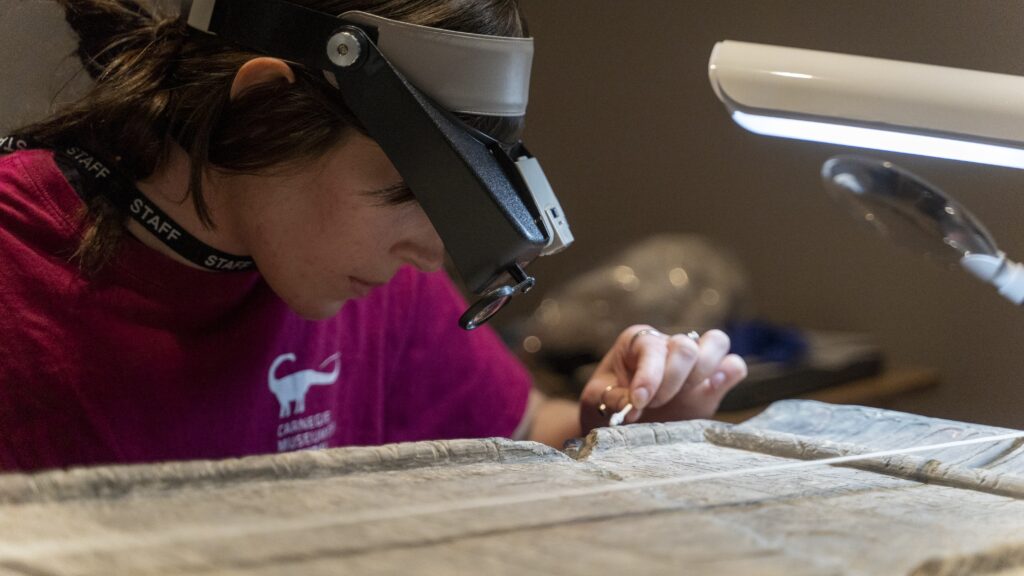
person removing soot from an ancient Egyptian artifact

Carnegie Museum of Natural History presents The Stories We Keep: Conserving Objects from Ancient Egypt. The new exhibition, produced in house, opens the curtain on behind-the-scenes work and puts the art and science of artifact conservation centerstage. It also marks the return to public view of ancient Egyptian objects after the museum closed Walton Hall of Ancient Egypt in 2023 for necessary conservation. Opening March 9th and on view for one year, The Stories We Keep invites visitors to see these objects—cared for by the museum for more than a century—in a new light and to witness the work that will preserve them for future generations. 
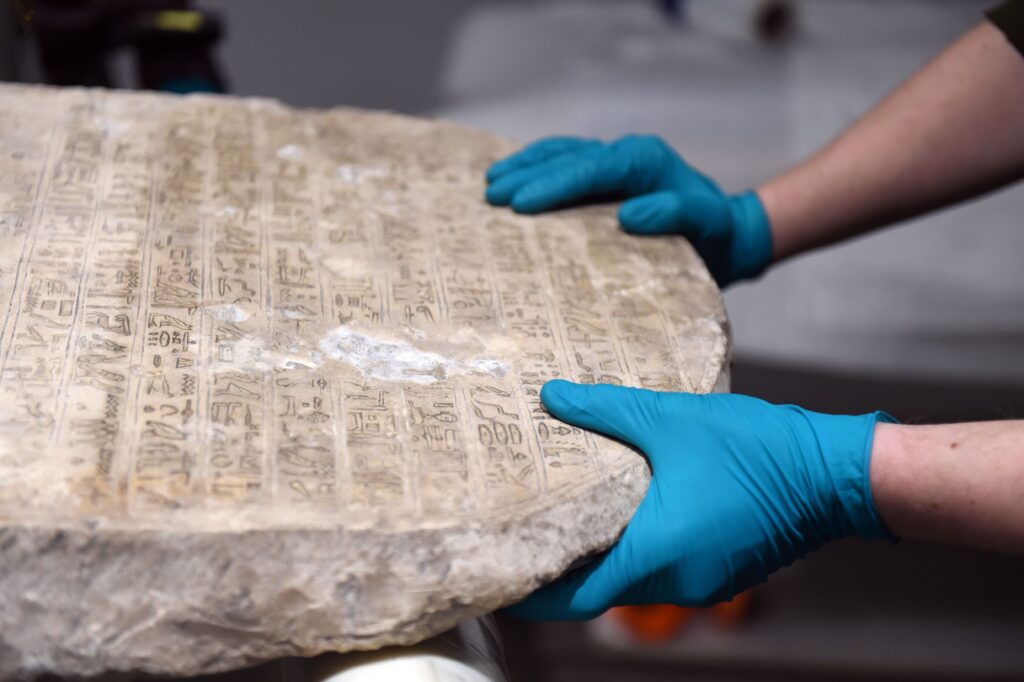
pair of gloved hands holding an artifact

Every object in the museum’s care has stories to tell, about its creation and original use, its journey to Pittsburgh, and about the lives of those in ancient Egypt. The Stories We Keep features more than 80 items from ancient Egypt—including the 4,000-year-old Dahshur boat, one of only four in the world. CMNH invites visitors to engage with these objects like never before, have conversations with museum conservators, observe the care and restoration of objects in real time, and attempt the work themselves by reassembling replicas of ancient objects created with the assistance of 3D scanners.

Museum conservators will hold daily demonstrations and answer visitor questions about the objects and conservation tactics. Visitors can also submit questions by using a QR code, and the conservation team will address select entries in a video series accessible on the museum’s website and social media channels.


“We know how interested visitors are in ancient Egypt,” said Sarah Crawford, Director of Exhibitions and Design. “This exhibition allows visitors to satisfy their curiosity and watch as our Conservation team carries out their vital work caring for these ancient Egyptian items. We hope our fans gain new insights into these beloved objects and an appreciation for the hard work, dedication, and talent of our colleagues who safeguard them.”
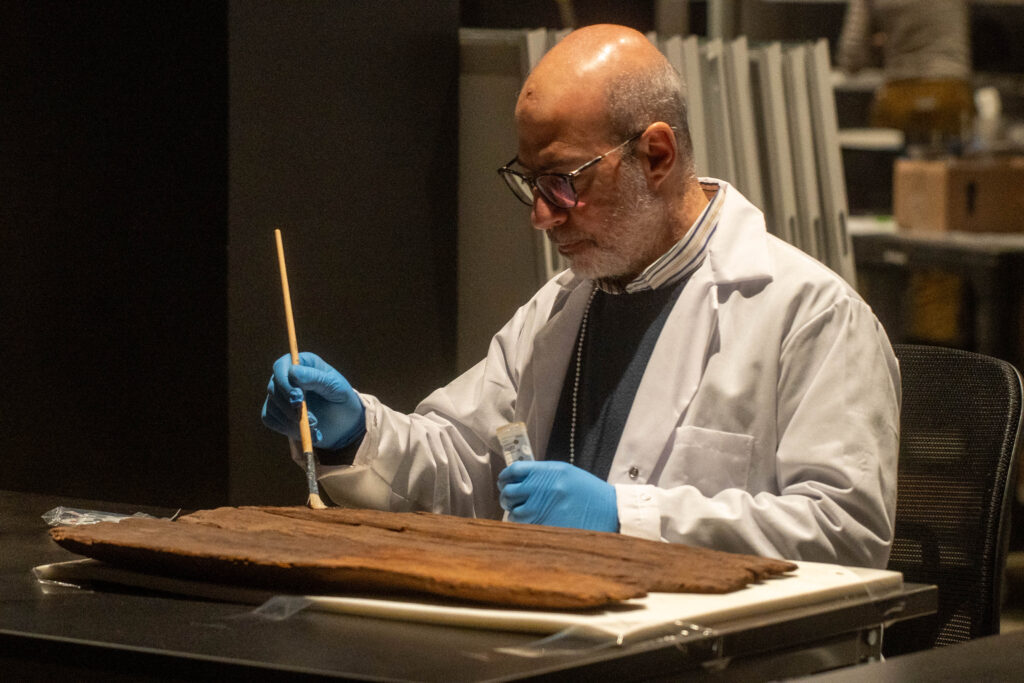
person using a brush on a piece of wood

The exhibition will prominently feature the Dahshur boat, one of four funerary boats still in existence from Egypt’s 12th Dynasty. In 2023, CMNH recruited Egyptian conservator Dr. Mostafa Sherif, an expert on ancient wood restoration, to treat the boat. He joins senior conservator Gretchen Anderson, who oversees the museum’s conservation operations, and project conservator Annick Vuissoz, who arrived at the museum last month to manage the ongoing conservation of 650 ancient Egyptian objects in CMNH’s care.

“This is an entirely new experience for visitors,” said Dr. Lisa Haney, Assistant Curator and Egyptologist. “It connects us to ancient people in a new way, encouraging us to think differently about our own everyday objects and the stories they tell. We hope to create new connections between the past and the present and highlight the science that helps preserve those connecting threads.”

 
The Stories We Keep is free with museum admission and runs until March 9, 2025. General museum admission costs $25 for adults, $20 for adults 65 and older, $15 for children aged 3-18 or students with valid student IDs, and $12 after 3 p.m. on weekdays. Admission is free for members and children aged 2 and younger. More information is available at CarnegieMNH.org.  
Filed Under: Press Release Tagged With: ancient egypt, anthropology, egypt, Science News, The Stories We Keep

June 21, 2021 by wpengine

The Power of the Falcon in Ancient Egypt

by Raina Holt

I have always been super curious about how the natural environment influences people’s beliefs and rituals. As I learned about ancient Egyptian religion, I found elements that fascinated me. My curiosity led me to build a replica of a pyramid in 5th grade with a secret trapdoor inside. In college, I learned about mummification and continued to discover how and why the ancient Egyptians’ belief in an afterlife was so extensive. My recent internship with Carnegie Museum of Natural History gave me the opportunity to dig deep into my interest in Egypt using research to explore the significance of birds in ancient Egyptian religion.

Research involves asking questions and searching for answers by finding facts and information to explain the unknown. My research allowed me to explore how birds, including vultures, ibises, and even owls, were a big part of Egyptian culture and religion. In ancient Egypt, birds were very commonly associated with different gods. For example, the falcon represented the god Horus. In a comprehensive compilation of related essays titled, Between Heaven and Earth: Birds in Ancient Egypt (University of Chicago Press, 2012), the culture-wide association of gods with birds is partially explained as people’s perception that birds could fly and therefore be closer to the gods. Some birds of prey such as falcons, hawks, and owls are particularly skilled flyers, owing to physical adaptations such as long wings, relatively short tails, and powerful chest muscles. These features, when combined with others, including keen eyesight, sharp, curved talons, and sturdy, razor-edged bills, enable them to capture and kill prey. In some predator-prey encounters, speed is also a vital part of the killing equation. Lanner Falcons, for example, a species well-represented in ancient Egyptian art works, can reach diving speeds of up to 90 miles-per-hour in pursuit of smaller flying birds. Their strength, speed, and beauty made them ideal representatives for certain Egyptian gods.

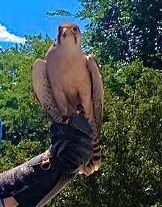
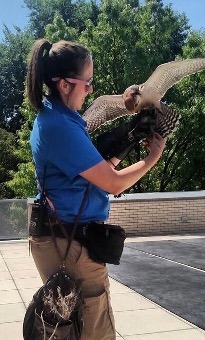
Staff member at the National Aviary training a Lanner Falcon (photo by author).

In the Summer of 2017, I participated in a program called Soar! On Skydeck at the National Aviary on Pittsburgh’s North Side. I signed up, along with a handful of other Aviary visitors, because I knew I could learn at a deeper level through firsthand observation of live birds of prey. The highly skilled trainer, who worked with a Lanner Falcon during the presentation, relied upon a thick leather glove so her left hand could serve as a suitable and talon-proof resting perch for the bird.

The highlight of the presentation was a hunting demonstration. The trainer first let the falcon circle above us for a short while. Then the bird saw a chunk of meat placed for it and dove quickly, spreading its wings at the last moment to slow down and grab the food with its sharp talons. The falcon, as I could see with my own eyes, was fast, fierce, and powerful, which is why it was used to represent a god in ancient Egypt.

The god Horus, represented as a falcon or a human with a falcon head, was a sun god as well as the ancient Egyptian god of kingship, representing the living king of Egypt. Falcons, along with other birds, could have easily been seen by everyone in ancient Egypt. The sight of a falcon soaring overhead near the sun would have been a particularly striking scene. The pharaoh was believed to be not merely a powerful ruler, but to be the embodiment of the god, Horus. The job of Horus was to protect Egyptians in their daily lives, just like the pharaoh. In recognition of Horus’s important role, people would decorate their tombs with falcons. In later periods the ancient Egyptians offered mummified falcons to Horus, gifts which were sometimes placed in a small coffin with a bronze falcon on top.

Lanner falcon
Lanner Falcon at National Aviary (photo by author)

Pittsburgh currently offers several falcon viewing opportunities. You can see Lanner Falcons, as I did at the National Aviary, but you can also watch the livestream of the Peregrine Falcon pair and their offspring in their nest on a high ledge of the Cathedral of Learning in Oakland! Because the feeding territory of these birds extends far beyond this University of Pittsburgh landmark, Peregrine Falcons can also be seen flying high above Schenley Park, and much of the University of Pittsburgh Campus. Occasionally the birds can even be heard screeching loudly near Carnegie Museum of Natural History and Carnegie Museum of Art!

Raina Holt is currently an intern for Carnegie Museum of Natural History’s Section of Anthropology. Museum staff, volunteers, and interns are encouraged to blog about their unique experiences and knowledge gained from working at the museum.

Related Content

Cats: The Archeological Site!

Wooden Sokar Falcon

Weighing She-Ra the American Kestrel

Carnegie Museum of Natural History Blog Citation Information

Blog author: Holt, Raina
Publication date: June 21, 2021

Share this post!

  • Share on Twitter Share on Twitter
  • Share on Facebook Share on Facebook
  • Share on Pinterest Share on Pinterest
  • Share on LinkedIn Share on LinkedIn
  • Share on Reddit Share on Reddit
  • Share via Email Share via Email

Share this post!

  • Share on Twitter Share on Twitter
  • Share on Facebook Share on Facebook
  • Share on Pinterest Share on Pinterest
  • Share on LinkedIn Share on LinkedIn
  • Share on Reddit Share on Reddit
  • Share via Email Share via Email

Filed Under: Blog Tagged With: ancient egypt, anthropology, archaeology, Egypt on the Nile, Raina Holt

March 1, 2021 by wpengine

Archaeological Adventures in Egypt

Hello! I am Dr. Lisa Saladino Haney, Assistant Curator at Carnegie Museum of Natural History and resident Egyptologist. An Egyptologist is someone who studies the history, material culture, architecture, religion, and writing of the ancient Egyptians – one of the ancient cultural groups living in Africa’s Nile Valley. Learning about ancient cultures helps us to better understand the world today and to appreciate the creativity and ingenuity of people who lived thousands of years ago. Archaeology is one technique that allows us to interact with and study the past and there are hundreds of archaeological sites and projects throughout the Nile Valley that constantly add to our understanding of what life was like.

Trying to determine some of my favorite archaeological sites from my travels in Egypt turned out to be an impossible task! Please join me on this photo exploration of a few of the many interesting archaeological sites in Egypt and learn where you can find more information about active archaeological excavations and other projects going on in those areas.

Saqqara

Saqqara is an important cemetery site associated with the ancient Egyptian capital city of Memphis, near modern Cairo. The cemeteries at Saqqara contain a number of tombs, both royal and private, including the famous Step Pyramid of the Third Dynasty Egyptian king, Djoser (ca. 2630-2611 BCE). The earliest burials at the site date to the creation of the ancient Egyptian state and it remained an important site through the Graeco-Roman Period.

Royal Tombs: The Step Pyramid of Djoser

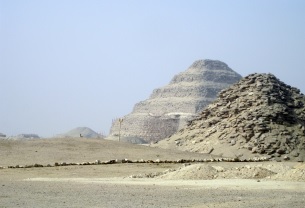
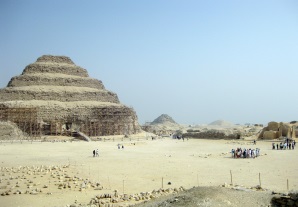
The Step Pyramid of Djoser marks an important step in the development of the pyramid-shaped royal tomb. The complex was designed by the famous royal architect Imhotep, who would later become deified in ancient Egypt. You can see a bronze statue of Imhotep in Walton Hall of Ancient Egypt. A 14-year long restoration project at the site was just completed in 2020 which included strengthening the overall integrity of the structure by filling in gaps in its six rectangular mastabas as well work on the interior burial chamber and passages of the pyramid.

Check out some pictures from my visit to the Step Pyramid in 2011, early on in the restoration process, or, for a gallery of photos and more on the newly completed restoration, click here.

step pyramid

Views of the Step Pyramid at Saqqara showing the scaffolding used for the restoration project (photos by author).

Old Kingdom Mastabas: Tombs of Kagemni and Niankhkhnum and Khnumhotep

The Old Kingdom (ca. 2649-2150 BCE) mastabas at Saqqara are some of the most beautifully preserved and decorated tombs. Here are two of my favorites from my last visit. The tomb of Kagemni is the largest mastaba in the cemetery associated with the reign of the Sixth Dynasty king Teti (ca. 2323-2150 BCE). Kagemni was a Vizier, the highest position in the royal administration.

tomb decorations

tomb decorations

tomb decorations

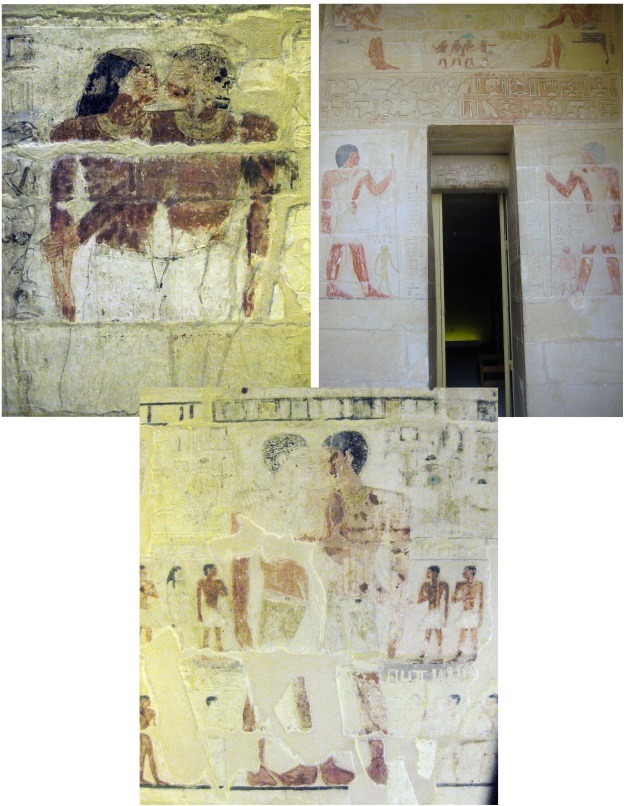
The tomb of Niankhkhnum and Khnumhoptep, also known as the tomb of the two brothers, dates to the late Fifth Dynasty and contains a number of exceptional scenes that underscore the closeness of the two men, both of whom served as overseers of the royal manicurists. Archaeologists uncovered a number of blocks from the tomb’s entrance repurposed in the nearby causeway of the pyramid complex of the late Fifth Dynasty king Unas (ca. 2353-2323 BCE). Thanks to the Egyptian Ministry of Tourism and Antiquities, you can now go on a virtual tour of the tomb!

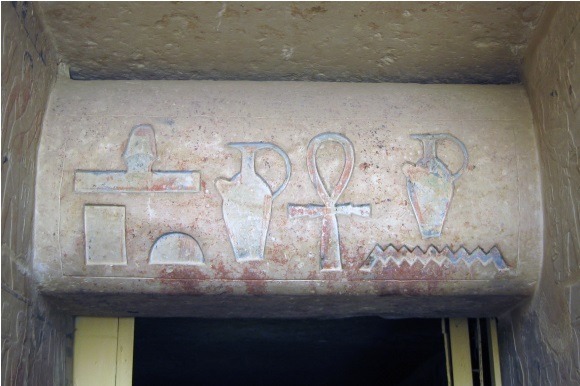
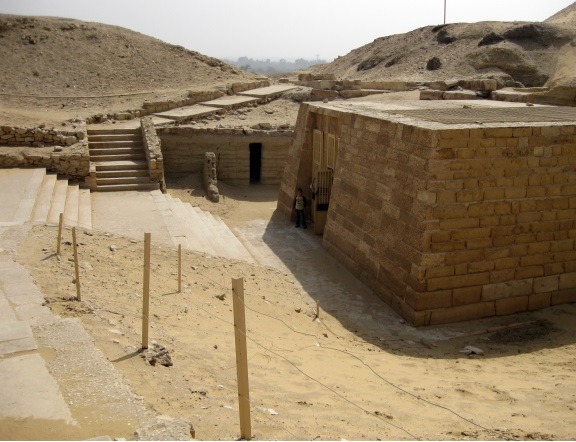
Here you see the names of the two tomb owners, Niankhkhnum and Khnumhotep on a stone doorway inside their tomb as well the exterior of the mastaba (photos by author).
Scenes depicting Niankhkhnum and Khnumhotep inside their tomb (photos by author).
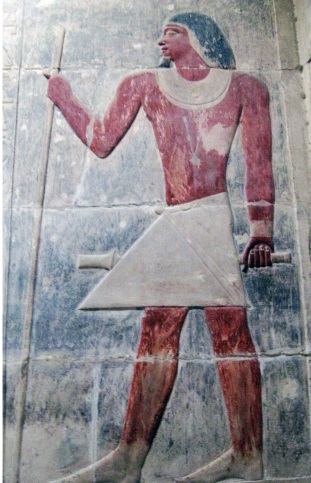
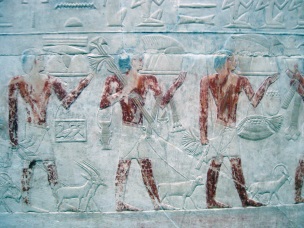
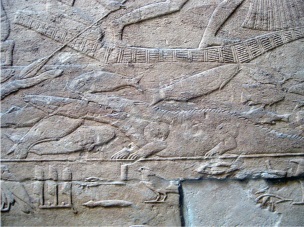
Images from the Tomb of Kagemni at Saqqara depicting the tomb owner himself, a parade of offering bearers bringing animals, plants, food, and other supplies to the deceased, and a scene taking place on the Nile where we get an underwater view of a crocodile eating a fish (photos by author).

Beni Hasan

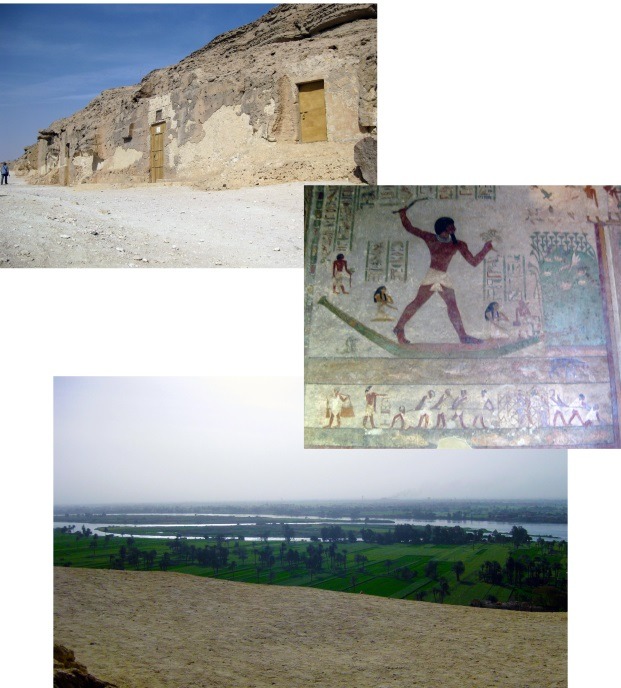
Beni Hasan is a cemetery site located in Middle Egypt, near the modern city of Minya, that was important during Egypt’s Middle Kingdom (ca. 2030-1640 BCE). During that time some of the most elite Egyptians were buried on the escarpment (desert cliff) with one of the most beautiful views of Nile Valley around! For more on excavations at Beni Hasan in the early 1900s visit the Griffith Institute and for a virtual tour of the tomb of Kheti at Beni Hasan visit the Egyptian Ministry of Tourism and Antiquities.

Top: A row of tomb entrances in the cliff face at Beni Hasan (photo by author). Middle: Image of the Nomarch Khnumhotep II fishing and fowling in his tomb (photo by author). Bottom: View of the Nile Valley from the tombs at Beni Hasan (photo by author).

Karnak

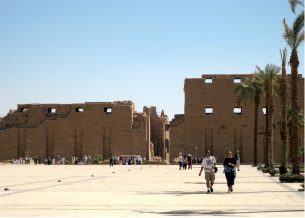
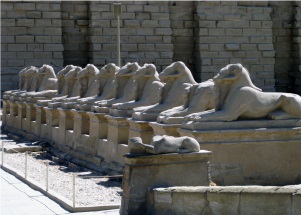
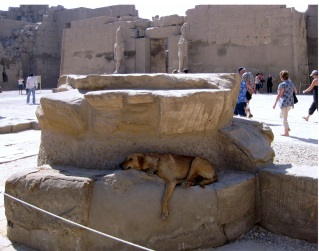
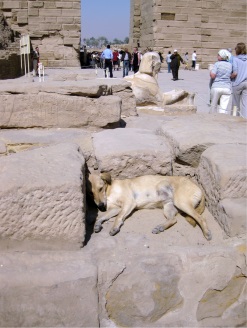
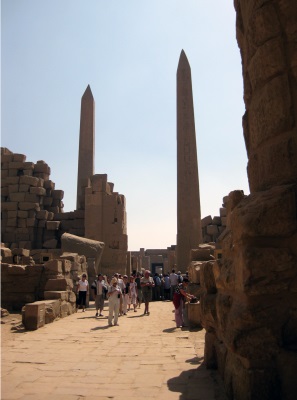
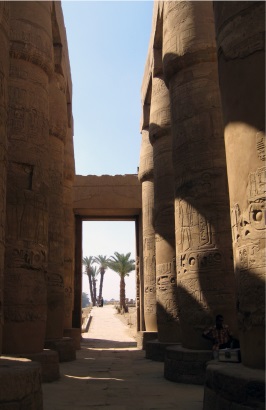
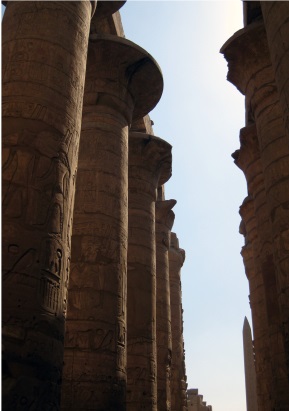
Karnak temple complex is one of the largest religious sites in the world. The first temple at the site was built during the Middle Kingdom (ca. 2030-1640 BCE) and the complex grew in size and complexity over time. The main temple at Karnak is dedicated to the Egyptian god Amun-Re, but there are smaller temples dedicated to Mut, Khonsu, and others. See if you can spot the snoozing pups in the pics below!

There are a number of ongoing excavations at Karnak that you can explore to learn more about the site. Check out this amazing minicourse on the Karnak Mut Precinct available on YouTube with Dr. Betsy Bryan, Alexander Badawy Chair of Egyptian Art and Archaeology and Director of Johns Hopkins’ excavations at the Mut Precinct.

temple ruins and palm trees in Egypt

Approach to Karnak Temple and processional way lined with Ram-headed sphinxes for the god Amun-Re (photos by author).

sleeping dogs in Egyptian ruins

Sleepy Karnak pups (photos by author).

columns, part of ancient Egyptian ruins

obelisks and other ruins in Egypt

view toward a temple exit

columns
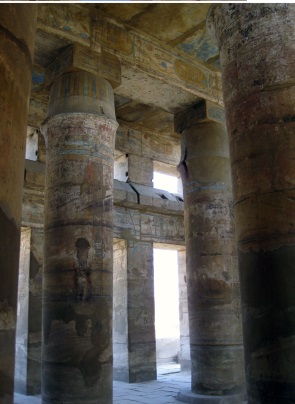
Inside Karnak Temple: Festival Hall of Thutmose III, Obelisks, exit towards the Sacred Lake, columns in the Hypostyle Hall (photos by author).

Lisa Saladino Haney is Postdoctoral Assistant Curator of Egypt on the Nile at Carnegie Museum of Natural History. Museum employees are encouraged to blog about their unique experiences and knowledge gained from working at the museum.

Related Content

Egypt and the Nile

Tuscarora Nu Yah

Ancient Egypt Through its Pottery

Carnegie Museum of Natural History Blog Citation Information

Blog author: Haney, Lisa
Publication date: March 1, 2021

Share this post!

  • Share on Twitter Share on Twitter
  • Share on Facebook Share on Facebook
  • Share on Pinterest Share on Pinterest
  • Share on LinkedIn Share on LinkedIn
  • Share on Reddit Share on Reddit
  • Share via Email Share via Email

Filed Under: Blog Tagged With: ancient egypt, anthropology, archaeology, Archaeology Extravaganza, Lisa Haney, Science News, Super Science Days

September 14, 2020 by wpengine

Egypt and the Nile

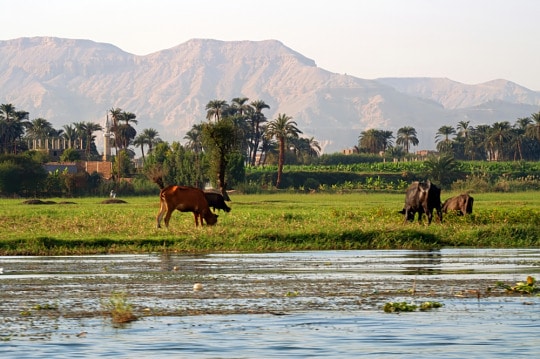
Over the course of some five millennia the ancient Egyptians developed a distinctive material culture shaped in large part by their local geography, natural resources, and relationship with the Nile River. In the 5th Century BCE, the Greek historian Herodotus noted that “any sensible person” could see that Lower Egypt was a “gift of the river” (Herodotus, 2.5). While his comments were limited to the areas in the north and in the Delta, they really ring true for all the Nile River Valley. Every aspect of life in Egypt depended on the river – the Nile provided food and resources, land for agriculture, a means of travel, and was critical in the transportation of materials for building projects and other large-scale endeavors. It was a critical lifeline that literally brought life to the desert.

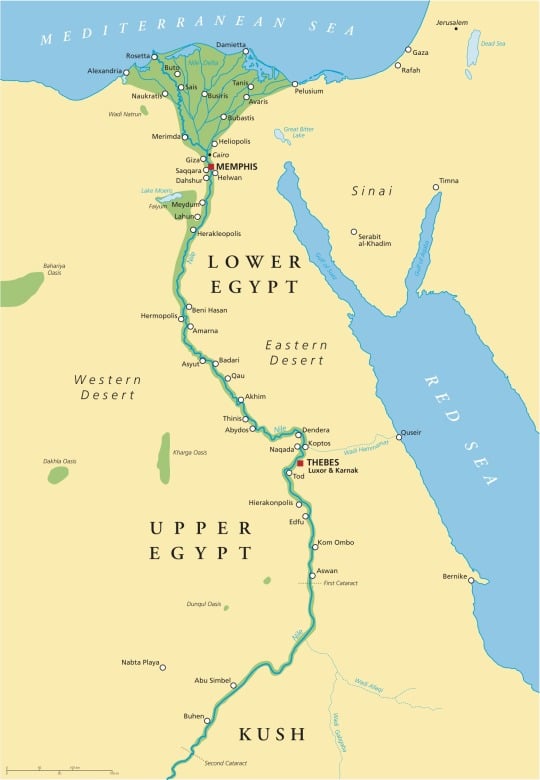
Map of Ancient Egypt (www.shutterstock.com 211163719)

The modern name of the Nile River comes from the Greek Nelios, but the Egyptians called it Iteru or “River.” The Nile is the longest river in the world, measuring some 6,825 km. The Nile River System has three main branches – the White Nile, the Blue Nile, and the Atbara river. The White Nile, the river’s headwaters, flows from Lake Victoria and Lake Albert. The Blue Nile brings about the inundation or annual flood and provides most of the river’s water and silt. The Atbara river has less of an impact, as it flows only occasionally.

In the south, the Nile has a series of six main cataracts, which begin at the site of Aswan. A cataract is a shallow stretch of turbulent waters formed where flowing waters encounter resistant rock layers. In the case of the Nile cataracts, large outcroppings of granite make the flow of the river unpredictable and much more difficult to traverse by boat. The cataract system created a natural boundary at Aswan, separating Egypt from its southern neighbor, Nubia.

Ancient Egypt was located in Northeastern Africa and had four clear geographic zones: the Delta, the Western Desert, the Eastern Desert, and the Nile Valley. Each of these zones had its own natural environment and its own role within the Egyptian State. Cities could only flourish in the Nile Delta, the Nile Valley, or desert oases, where people had access to water, land, and key resources. The ancient Egyptians, who were always keen observers of nature, often associated the Nile Valley with life and abundance and the neighboring deserts with death and chaos.

Kemet or, “black land,” denotes the rich, fertile land of the Nile Valley, while Deshret, or “red land,” refers to the hot, dry desert. The contrast between the red land and the black land was not just visible or geographic, it effected the Egyptians’ everyday lives. The dry climate of the desert, for example, made it an ideal location for cemeteries. There, the annual Nile flood would not disturb people’s graves and the dry climate acted to preserve tombs and their contents. Good preservation and the fact that most people do not live in the desert, are the main reasons that so much of what archaeologists and anthropologists study comes from a funerary context.

View with the Nile River Valley in the foreground and the desert cliffs in the background. (www.shutterstock.com 1082850872)

The landscapes of Upper and Lower Egypt also differ. The Egyptian word Tawy, means “Two Lands” – this refers to the two main regions of ancient Egypt, Upper and Lower Egypt. Lower Egypt is in the north and contains the Nile Delta, while Upper Egypt contains areas to the South. These two designations may seem counterintuitive to their physical locations, but they reflect the flow of the Nile River, from South to North.

The expansive floodplain of the Nile Delta and the very narrow band of fertile land present in the Nile Valley led to different ways of life. In the Nile Delta for example, the Egyptians constructed their towns and cemeteries on turtlebacks; natural highpoints in the landscape that became islands during the inundation. In addition, the location of the Delta along the Mediterranean and at the entry point into the Levant made it an important area for trade and international contacts. The Delta was a very multi-cultural region throughout Egyptian history.

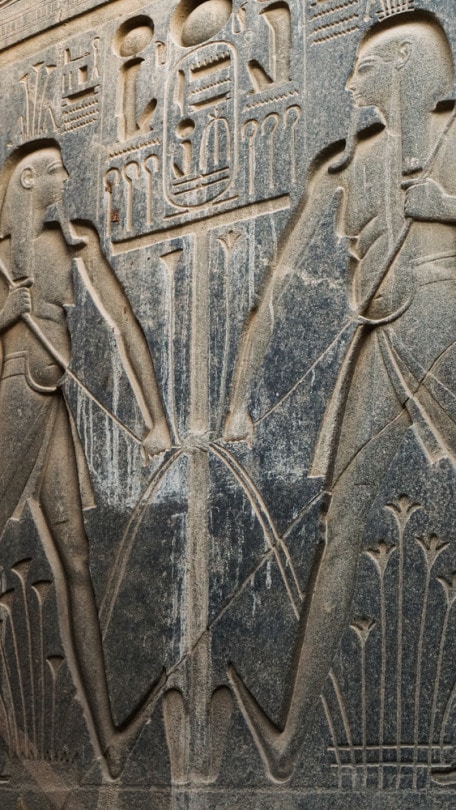
Ancient Egyptian Sema-Tawy – represents the eternal unification of Upper and Lower Egypt (www.shutterstock.com 1778750570).

The Egyptians thought of the king as the unifier of the “Two Lands.” One of the king’s primary roles was to keep Upper and Lower Egypt united; the Egyptians expressed this visually using something we call the sema-tawy motif. Here you can see two Nile gods symbolically uniting the lands of Upper and Lower Egypt – each depicted in the form of their characteristic plant, the papyrus for Lower Egypt and the lotus for Upper.

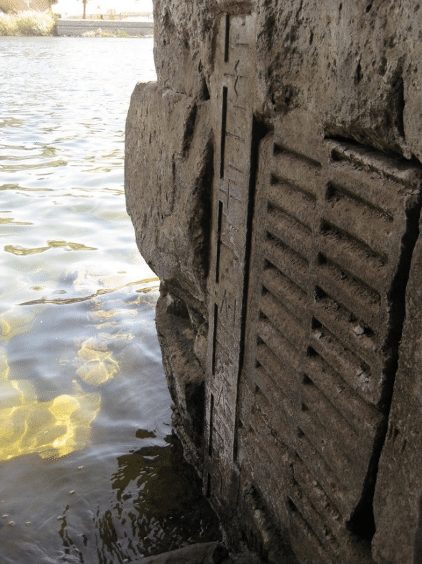
The Egyptians constructed their calendar around the yearly cycle of the Nile. It included three main seasons: Akhet, the period of the Nile’s inundation, Peret, the growing season, and Shemu, harvest season. The Egyptians made Nilometers to measure and track the height of the annual inundation – they used the recorded readings from these Nilometers much like more contemporary farmers would use almanacs. One particularly well-preserved example is located on Elephantine Island at Aswan.

The close connection between the Egyptians the Nile River led them to identify a number of Egyptian gods with aspects of the river, its annual flood, and the fertility and abundance associated with them. Hapi, for example, is the incarnation of the life force that the Nile provides; he also symbolizes the annual inundation of the Nile. His round belly and folds of skin represent abundance. Osiris, who is most often recognized in his role associated with the afterlife, is fundamentally a god of regeneration and rebirth. Artists often depicted him with black skin, linking him to the fertility of the Nile River and its lifegiving silt. The broader natural world was a further source of inspiration for Egyptian religion.

Elephantine Nilometer (Image by author)

The Nile was also an important highway, it was the easiest way to travel and played an essential role in mining expeditions, trade, architectural projects, and general travel. The Egyptians were expert boat builders; images of boats are some of the earliest designs that appear on Egyptian Predynastic Vessels dating to ca. 3500-3300 B.C.E. River access decreased the time and number of individuals needed for the transportation of large objects, like stones, obelisks, and architectural elements. Boats were also common in the funerary religion as well – as a part of the funeral itself and for the afterlife.

Although I’ve only been able to touch on a few key elements here, the natural environment of Egypt and the Nile River impacted every aspect of life in ancient Egypt. The river’s floodplain, water, and silt provided the foundation for civilization and served as a source of inspiration for the people who inhabited northeastern Africa during this pivotal period in history.

Lisa Saladino Haney is Postdoctoral Assistant Curator of Egypt on the Nile at Carnegie Museum of Natural History. Museum employees are encouraged to blog about their unique experiences and knowledge gained from working at the museum.

Related Content

Ancient Egypt Through Its Pottery

Where the Heck Did That Come From?

Snails in the Desert

Carnegie Museum of Natural History Blog Citation Information

Blog author: Haney, Lisa
Publication date: September 14, 2020

Share this post!

  • Share on Twitter Share on Twitter
  • Share on Facebook Share on Facebook
  • Share on Pinterest Share on Pinterest
  • Share on LinkedIn Share on LinkedIn
  • Share on Reddit Share on Reddit
  • Share via Email Share via Email

Filed Under: Blog Tagged With: ancient egypt, Egypt on the Nile, Lisa Haney, Museum from Home, Science News, Walton Hall of Ancient Egypt, We Are Nature 2

February 14, 2019 by wpengine

Looking at Love in Ancient Egypt

With Valentine’s Day here, it’s hard to ignore all of the chocolate displays in stores and the sappy movies on TV – some might say that love had been commercialized for companies to make a quick buck. While they may be right about America in 2019, the same cannot be said about the ancient Egyptians.  The Egyptians are credited with a lot.  They built the pyramids, they mummified bodies and had giant elaborate tombs.  One thing that people might not think about as often is how the Egyptians experienced love, marriage, and even infidelity and divorce.

Our first stop on the love train is the story of Isis and Osiris – two of the most famous gods of ancient Egypt.

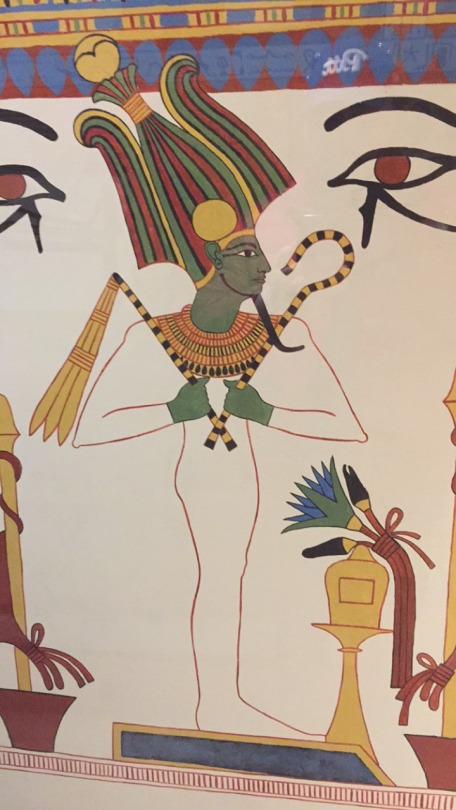
image of Osiris

As seen in this image from the Walton Hall of Ancient Egypt here at the Carnegie Museum of Natural History, Osiris is depicted as green-skinned, and he looks like a mummy! These are attributes unique to Osiris and they come from the story of himself and Isis.  Osiris was reigning as king, and his brother Set was not too happy about it.  So, he killed Osiris, tore his body into a bunch of pieces and strew them all over Egypt.  In her mourning, Osiris’ wife Isis traveled far and wide to gather all of the pieces of her husband to eventually put them all back together and had a child with him.  That child was Horus, who would then go on to avenge his father and kill his uncle.  If that’s not love, then I don’t know what is.

Our second stop is on the topic of marriage in ancient Egypt.  In American culture today, weddings are huge expensive parties that include entire families, huge cakes, and poufy dresses.  This is not anything like marriages in ancient Egypt.  Early marriages consisted of a woman entering a man’s house with whatever goods that they had agreed upon and the husband signing some paperwork.  Often marriages were arranged, but there is evidence that importance was placed on a loving couple, like love poems and songs found at the workers village of Deir el-Medina.  The people living in this area were usually tomb builders or painters, like Sennedjem, the owner of the tomb in Egypt on which our reconstruction is based.

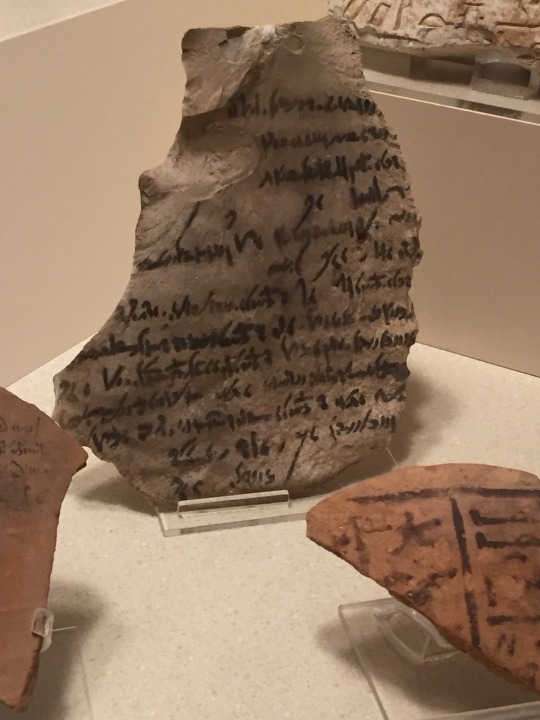
text on pottery shard from ancient Egypt

Love poems from Deir el-Medina could be found on similar surfaces as those on display in Walton Hall, like these shards of stone and ostraca (shards of pottery). Sometimes shards like these were used like “scratch paper” and discarded, leaving them for archaeologists to find.  According to Cameron Walker at National Geographic, these poems turned simple daily tasks such as catching fish into metaphors for their love.

Marriage was supposed to be everlasting for a good pair.  If you were faithful to your spouse and a good spouse overall, you could find them waiting for you in the afterlife.  If you were not good to them, you might not see them, or you might not even get to the afterlife at all.  But, Egyptian society was quite sophisticated, if things didn’t work out in life, there were options for divorce.  If either the husband or wife was dissatisfied, they could initiate a divorce, and the settlement was seemingly as simple as the marriage.  Some paperwork was signed, and assets were divided upon agreements during the marriage.  One important pillar of marriage was fidelity.  If a spouse was found to be unfaithful to their partner it would be seen as grounds for a divorce.

Overall, the Egyptians placed emphasis on being faithful and being a loving spouse.  But at least in the realm of the gods, there were cases of love that transcend our comprehension.  Let’s be honest, who would really go all over and find pieces of their dead spouse…anyone?  So, all in all the ancient Egyptians might seem to be a mysterious people but in the aspects of love and marriage they are really just like everyone else.  We are all just people looking for love and, in the case where we can’t find it, cheap sweets to tide us over.

Anthony Kamler is a volunteer in the Section of Anthropology. Museum employees and volunteers are encouraged to blog about their unique experiences working at the museum! 

Filed Under: Blog Tagged With: ancient egypt, anthropology, egypt, Erin Peters, Walton Hall of Ancient Egypt

October 17, 2018 by wpengine

The Haunted Walton Hall of Ancient Egypt and the Mystery of the Blob

by Erin Peters

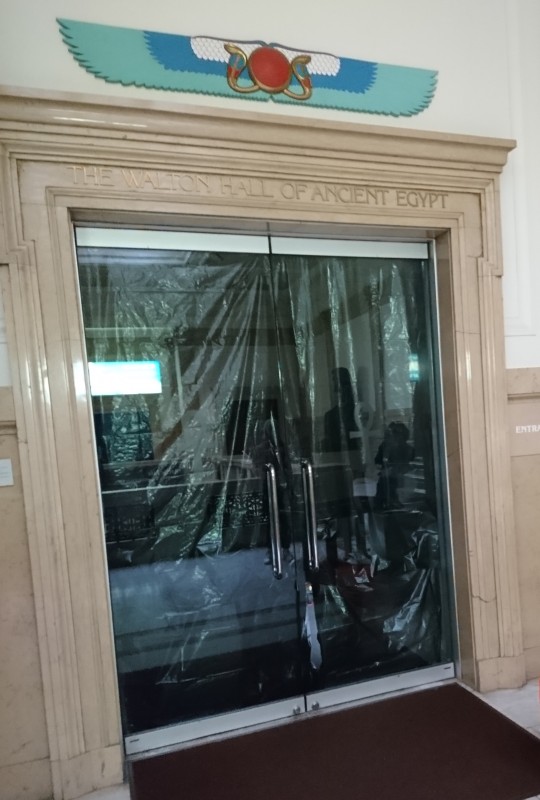
If you visited our Walton Hall of Ancient Egypt in the last few weeks, you may have seen the windows and doors blocked so you couldn’t see inside. With this dramatic drapery, perhaps we were preparing a haunted Walton Hall for our October 26 After Dark? Alas, this is not the year of the mummy, but something mysterious was happening inside!

Walton Hall of Ancient Egypt with door blocked to light

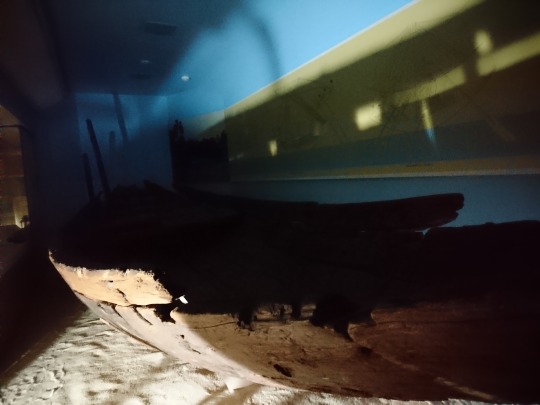
We are on the search for something missing from our Dynasty 12 funerary boat buried at the pyramid complex of Senwosret III. Even from this very spooky photo taken when we had the gallery blocked from light, you can see the boat is made of wood – cedar of Lebanon – a luxury good in the ancient world.

funerary boat in Walton Hall of Ancient Egypt

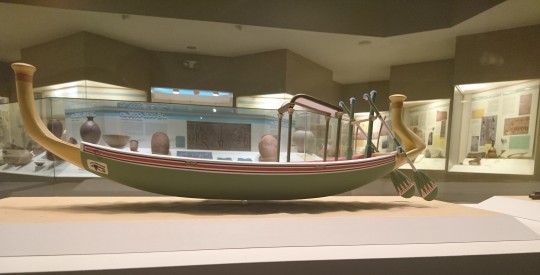
We know the boat was also painted because scholars that studied it in the 1980s noted small fragments of paint remaining on the wood surface. From these notes, they theorized it could have looked something like this model on display in the gallery.

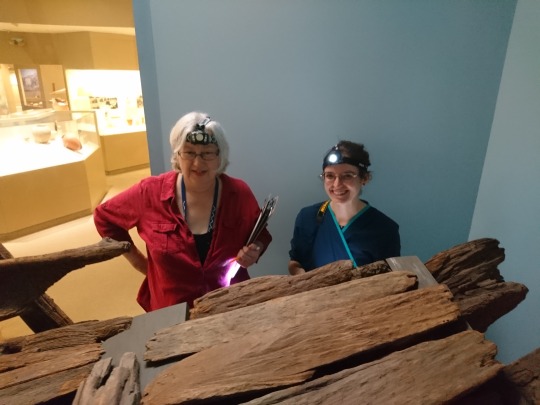
We have new technology in the field of conservation that can reveal trace amounts of pigments that are not visible to the naked eye. To capitalize on this new technology, I invited my conservator colleague, Dawn Kriss, to work with CMNH’s conservator, Gretchen Anderson, to carry out Multi-Band Imaging on the boat.

Gretchen Anderson and Dawn Kriss in Walton Hall of Ancient Egypt

With other sources of light blocked out, Multi-Band Imaging can reveal a number of elements on a surface including pigments, binders, and treatments, even if they aren’t easy to see. I am most excited about the pigment Egyptian blue, which can luminesce through Visible Induced Luminescence Imaging (VIL).

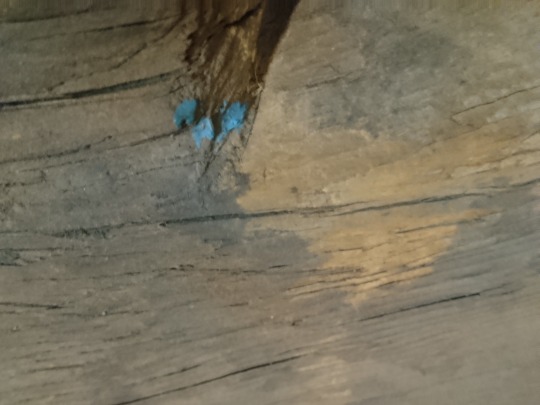
detail of boat with blue pigment

When Dawn found this mysterious blob – we thought we definitely had Egyptian blue!

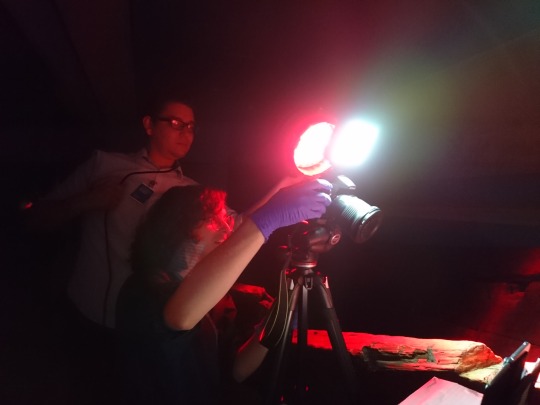
imaging work in progress

In her analysis of the boat, Dawn first looked at the blob (with help from Chase Mendenhall, CMNH’s Assistant Curator of Birds, Ecology, and Conservation – moonlighting as an Egyptologist). Dawn carried out the whole range of Multi-Band Imaging on the blob, including VIL. Surprisingly, it did not luminesce like we all thought it would.

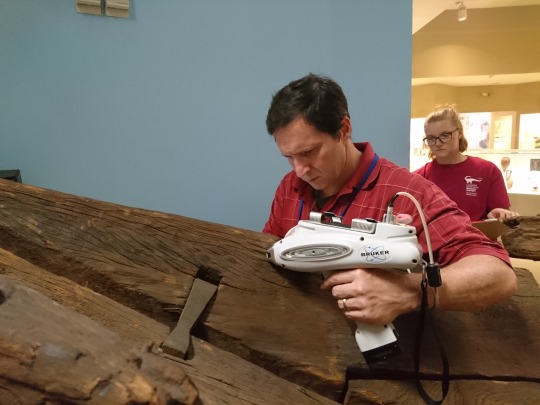
Michael Belman testing the blob with X-ray fluorescence

We invited our colleague, Michael Belman, CMOA’s Object Conservator, to join our hunt for information about pigments, binders, and treatments on the boat. My ultimate priority was the blob! When Michael tested it with XRF (X-Ray Fluorescence) technology, he found what seemed to be trace amounts of copper, which is what we would expect with Egyptian blue. Yet, there didn’t seem to be enough to suggest it was the primary element in the pigment…

This initial analysis has prompted us to continue our study of it, and search for other pigments, binding material, and treatments. Keep tuned for updates on the Carnegie Boat and the mystery of the blob!

Erin Peters is an assistant curator of science and research at Carnegie Museum of Natural History. Museum employees are encouraged to blog about their unique experiences and knowledge gained from working at the museum.

Filed Under: Blog Tagged With: ancient egypt, conservation, Erin Peters, Walton Hall of Ancient Egypt

  • Page 1
  • Page 2
  • Page 3
  • Page 4
  • Go to Next Page »

sidebar

About

  • Mission & Commitments
  • Directors Team
  • Museum History

Get Involved

  • Volunteer
  • Membership
  • Carnegie Discoverers
  • Donate
  • Employment
  • Events

Bring a Group

  • Groups of 10 or More
  • Birthday Parties at the Museum
  • Field Trips

Powdermill

  • Powdermill Nature Reserve
  • Powdermill Field Trips
  • Powdermill Staff
  • Research at Powdermill

More Information

  • Image Permission Requests
  • Science Stories
  • Accessibility
  • Shopping Cart
  • Contact
  • Visitor Policies
One of the Four Carnegie Museums | © Carnegie Institute | Privacy Policy | Terms of Use | Accessibility
Rad works here logo