• Skip to primary navigation
  • Skip to main content
  • Skip to primary sidebar

Carnegie Museum of Natural History

One of the Four Carnegie Museums of Pittsburgh

  • Visit
    • Buy Tickets
    • Visitor Information
    • Exhibitions
    • Events
    • Dining at the Museum
    • Celebrate at the Museum
    • Powdermill Nature Reserve
    • Event Venue Rental
  • Learn
    • Field Trips
    • Educator Information
    • Programs at the Museum
    • Bring the Museum to You
    • Guided Programs FAQ
    • Programs Online
    • Climate and Rural Systems Partnership
  • Research
    • Scientific Sections
    • Science Stories
    • Science Videos
    • Senior Science & Research Staff
    • Museum Library
    • Science Seminars
    • Scientific Publications
    • Specimen and Artifact Identification
  • About
    • Mission & Commitments
    • Directors Team
    • Museum History
  • Tickets
  • Give
  • Shop

ancient egypt

March 15, 2017 by wpengine

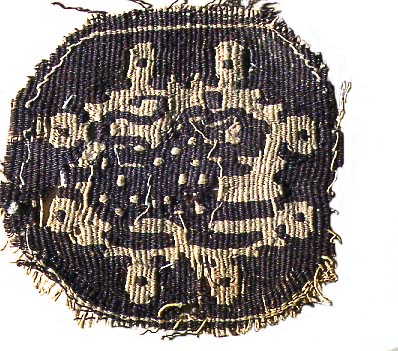
Tunic Decoration from Egypt

woven decoration in dark brown and light brown threadby Deb Harding 

This woven decoration depicting a picture of a leopard is from an Egyptian tunic, possibly from 3–4th
century C.E.

It is part of the museum’s “Coptic textile” collection. “Coptic” is the Greek word for Egyptian, and “Coptic textiles” are not only associated with Coptic Christians, they were made and worn by Egyptians of all faiths in the post-pharaonic period.

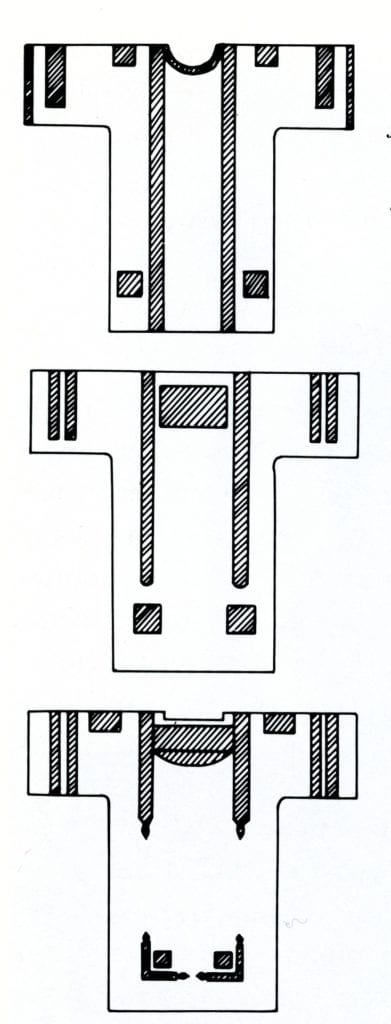
Basic tunic-style shirts were decorated with geometric and figurative patches woven into the otherwise plain linen cloth. There might be a border around the neck with a medallion at the end or bands over the shoulders. Medallions might also appear on the shoulders and near the hems of the shirt. Placement and decoration type changed with fashion, as did the length of hem and sleeves, just like today’s fashions.

The museum purchased this collection in 1934 from the Goebelen-Munchener Manufaktur company. The company said they purchased it in 1929 from the impoverished widow of a Swedish archaeologist.

The illustration of tunic styles below is from Textiles from Medieval Egypt, A.D. 300-1300 by Thelma K. Thomas, published by Carnegie Museum of Natural History in 1990. The leopard medallion is used as
the cover art for the booklet.

Deb Harding is a collection manager in Carnegie Museum of Natural History’s Section of Anthropology. She frequently blogs and shares pieces of the museum’s hidden anthropology collection, which is home
to over 100,000 ethnological and historical specimens and 1.5 million archaeological artifacts.
Filed Under: Blog Tagged With: ancient egypt, anthropology, Deborah Harding

March 2, 2017 by wpengine

Ancient Egyptian Column Shafts

by Erin Peters

Here at Antinoupolis, the Italian mission has been excavating since the 1930s and has a long and productive residence at
the site. There are a number of publications resulting from the mission’s work and two recent volumes that include scientific publications of the team’s work since 2000–for these resources and more, see The Antinoupolis Foundation’s bibliography. For this 2017 season, the mission has three active excavation areas open, and today I write about one that is in the east of the ancient city near what was once a monumental gate facing the Via Hadriana. Hadrian built this impressive road through the desert as a new trade route, which ran through Antinoupolis to the Nile for river transport.

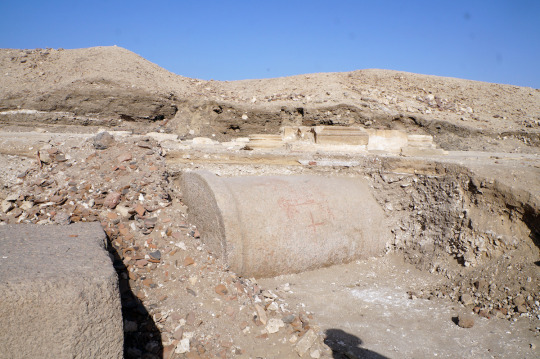
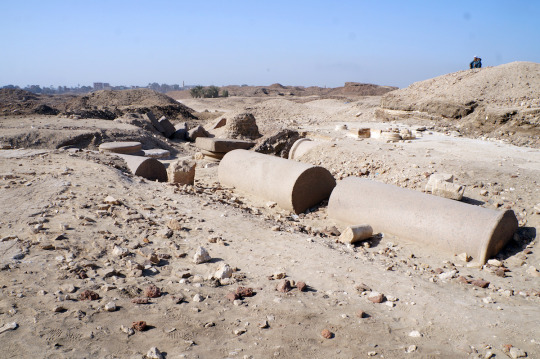
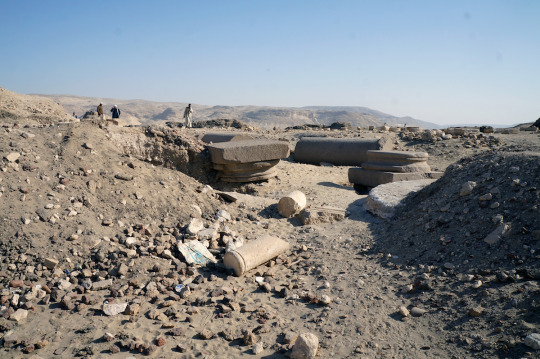
The east gate was monumentalized by huge red granite columns, of which fragments are extant. Two column bases (one upright and one overturned) and three column shaft fragments were known before this season and are an impressive sight to see.

Ancient Egyptian column shafts partially uncovered in an archeology dig
Monumental fragments of red granite column bases and shafts at the east edge of the city


Under supervision of the mission’s architect, Peter Grossman, another section of a column shaft was unearthed this season. This shaft indicates there could be more fragments nearby, possibly under the 4-5th century CE church that Peter’s team is currently excavating, the remains of which you can see above.


Ancient columns being excavated in an archeology dig
View of column shaft fragment excavated this season

Hopefully some of these shafts will be more visible in the near future and draw visitors to the site as recorded in The Antinoupolis Foundation’s February 10 blog post. The mission’s director, Rosario Pintaudi, has put in an application to the Ministry of Antiquities to re-erect the column. If approved, perhaps the column shaft will be soaring at the east edge of the city by the time I return next year!

Partially burried columns in a row
Fallen column shaft fragments that may be re-erected in the near future

Erin Peters is an assistant curator of science and research at Carnegie Museum of Natural History. She recently traveled to Egypt for an archaeological research study. This is a series of blog posts she wrote while in the field. Check back for more!

Filed Under: Blog Tagged With: ancient egypt, anthropology, egypt, Erin Peters, Walton Hall of Ancient Egypt

February 22, 2017 by wpengine

Arriving in Egypt

By Erin Peters

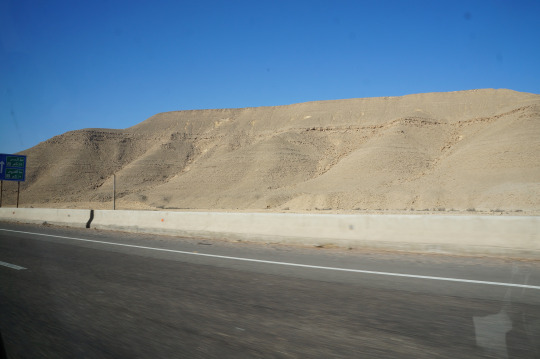
Today I travel for the first time to the famous city established by the emperor Hadrian in Middle Egypt, now next to the small modern village of Sheikh Abada. After meeting the car to drive to the site, we pull into familiar and infamous grid-lock Cairo traffic—it is a quick jolt to returning to Egypt after a period of three years away. The cars and mini-buses with all their decorations look the same, and the horns and shouts in Arabic sound the same and remind me of past visits to the lively city where I spent time in 2011 and 2013. During this trip, however, the aim is to get directly to the site, so after making it through the road block, we emerge on the comparatively quiet desert road for the four-and-a-half-hour drive south.

desert road
On the desert road from Cairo to Sheikh Abada

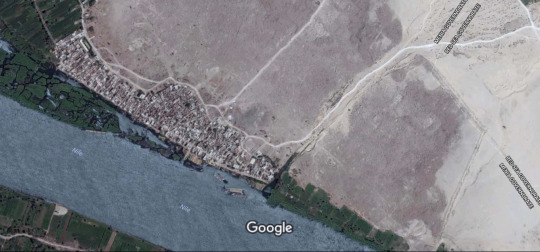
Sheikh Abada is located on the east bank of the Nile River and forms the modern Nile edge of a huge archaeological site you can see sprawling to the east (right) of the strip of buildings at the Nile.

google satellite image of Sheikh Abada
Google satellite image of modern Sheikh Abada and the remains of ancient Antinoupolis

The village is home to approximately seven major families who are primarily farmers. The other main industry of the village is unfortunately the illegal selling of antiquities land for domestic and agricultural reclamation and modern tomb plots. The illegal encroachment of the village makes the mission’s excavation and documentation of the ancient lives of this once resplendent city all the more important.

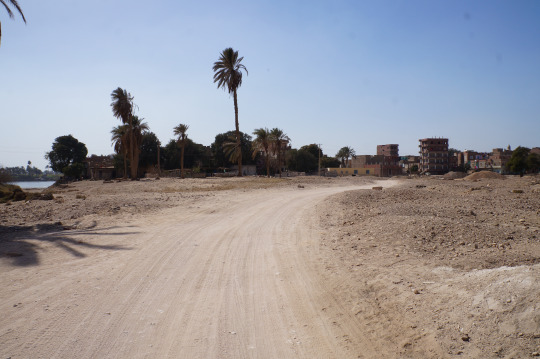
desert road at eastern edge of village
View of the eastern edge of the village from antiquities land


Much about this site is new to me because my past field work was very different. In addition to consulting museum collections in Cairo and Alexandria, I completed three rounds of independent spatial analysis at temple complexes in upper Egypt from 2011­–2014, many of which are major tourist sites. Additionally, a number of these complexes have been removed from their original context because of the 1960s UNESCO Campaign to Save the Monuments of Nubia due to the building of the Aswan High Dam, like the temple complex on the island of Philae.

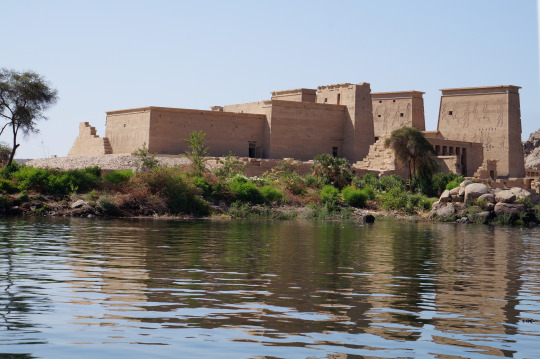
Main temple of Isis at Philae
South side of the main temple of Isis at Philae, relocated to Agilkia Island

The temple complex originally at Philae (and now relocated to a nearby island) is one of the primary sites I research because it was added to after Egypt was annexed as a Roman province in 30 BCE by the first Roman
emperor Augustus. The main “Egyptian” temple of Isis (with its soaring pylons) was carved with relief decoration depicting Augustus as pharaoh and is one of many temples that ushered in a long tradition in which the Roman emperors took on the role of Egyptian pharaoh.

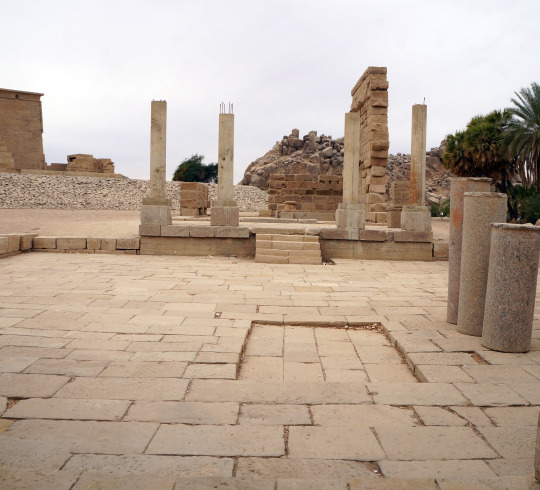
Imperial cult temple of Augustus at Philae
Imperial cult temple of Augustus at Philae, relocated to Agilkia Island

Fascinatingly, at the same complex, a temple to the imperial cult that looks like a “Roman” podium temple was also built under Augustus. My research uses the archaeological method of spatial analysis to demonstrate that
the two seemingly different monuments communicate spatially, combining what we want to separate into different cultures into one functioning sacred landscape.

I was invited to Antinoupolis in part because we have the same thing at Hadrian’s famous city in Egypt. I’m thrilled to get a sense of the site and current work in the ancient city and modern village by joining a large
international team this season.


Erin Peters is an assistant curator of science and research at Carnegie Museum of Natural History and is currently in Egypt for an archaeological research study. This blog is part of a series of blog posts she has written while in the field. Check back for more!

Filed Under: Blog Tagged With: ancient egypt, Erin Peters, Walton Hall of Ancient Egypt

February 16, 2017 by wpengine

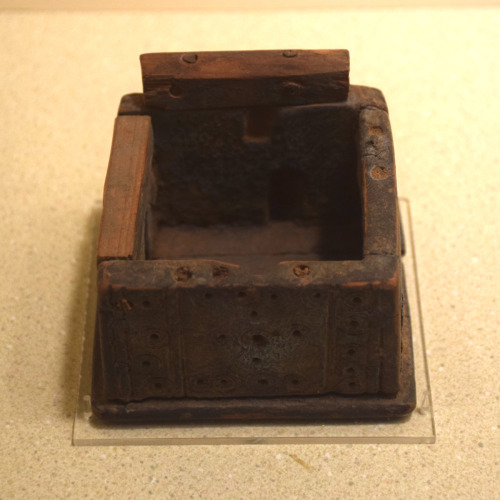
Cosmetic storage

Ancient wooden cosmetic box
Cosmetic storage has come a long way! This cosmetic box was made from wood and paste and is missing its lid. It is on display in Walton Hall of Ancient Egypt.

Filed Under: Blog Tagged With: ancient egypt, anthropology, egypt, Walton Hall of Ancient Egypt

January 30, 2017 by wpengine

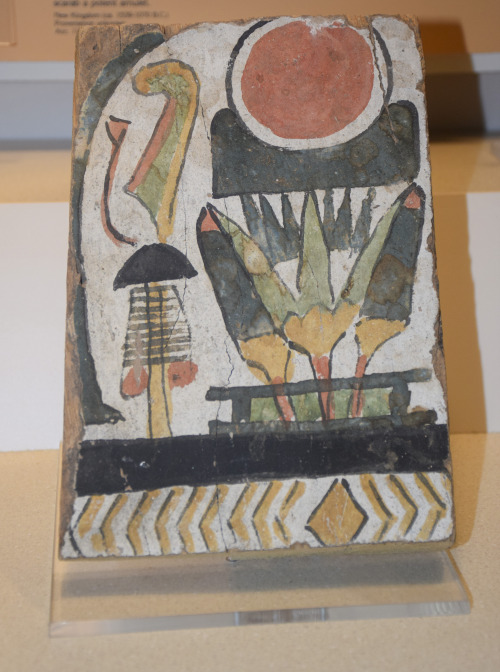
Coffin fragment

This coffin fragment is made of painted gessoed wood and is on display in Walton Hall of Ancient Egypt. (photo by Hayley Pontia)


Filed Under: Blog Tagged With: ancient egypt, anthropology, Walton Hall of Ancient Egypt

September 11, 2016 by wpengine

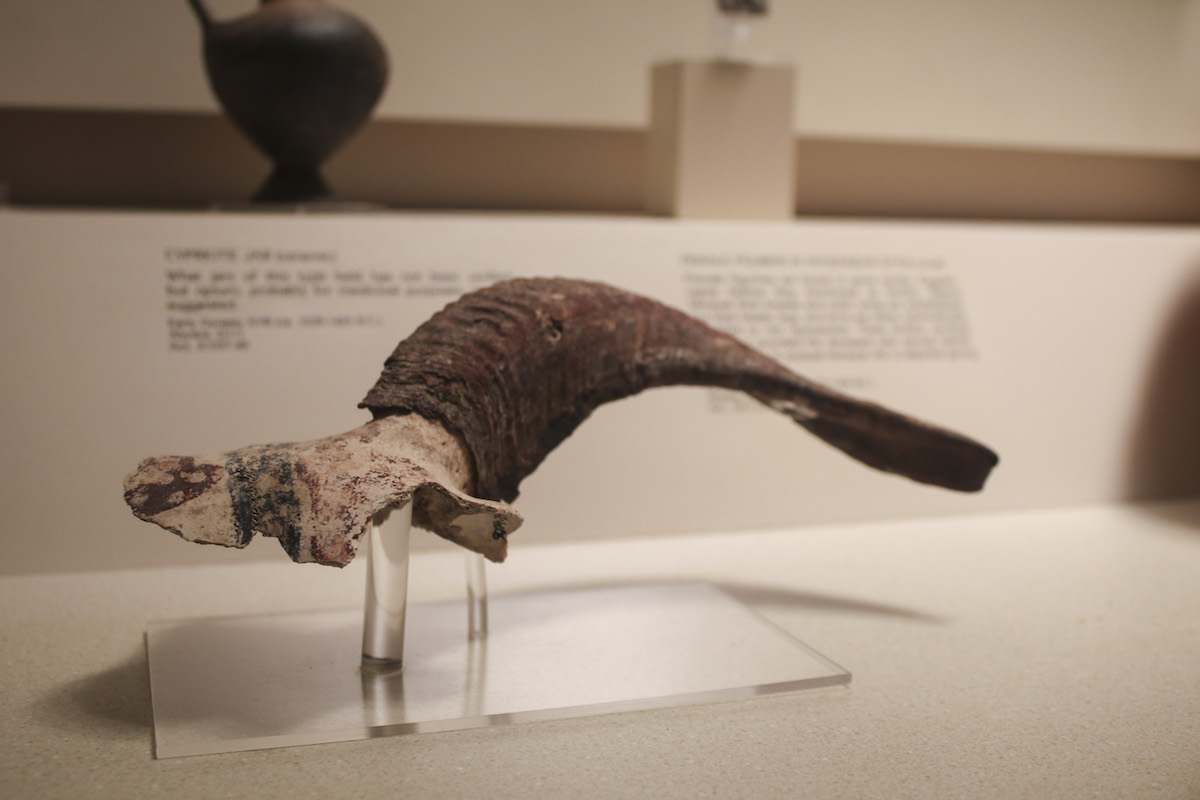
Decorated Horn

Decorated Horn (ca. 1627/1606-1539 B.C.) found in Walton Hall of Ancient Egypt

(Photo by Hayley Pontia)

Filed Under: Blog Tagged With: ancient egypt, anthropology, Pittsburgh, Walton Hall of Ancient Egypt

  • « Go to Previous Page
  • Page 1
  • Page 2
  • Page 3
  • Page 4
  • Go to Next Page »

sidebar

About

  • Mission & Commitments
  • Directors Team
  • Museum History

Get Involved

  • Volunteer
  • Membership
  • Carnegie Discoverers
  • Donate
  • Employment
  • Events

Bring a Group

  • Groups of 10 or More
  • Birthday Parties at the Museum
  • Field Trips

Powdermill

  • Powdermill Nature Reserve
  • Powdermill Field Trips
  • Powdermill Staff
  • Research at Powdermill

More Information

  • Image Permission Requests
  • Science Stories
  • Accessibility
  • Shopping Cart
  • Contact
  • Visitor Policies
One of the Four Carnegie Museums | © Carnegie Institute | Privacy Policy | Terms of Use | Accessibility
Rad works here logo