• Skip to primary navigation
  • Skip to main content
  • Skip to primary sidebar

Carnegie Museum of Natural History

One of the Four Carnegie Museums of Pittsburgh

  • Visit
    • Buy Tickets
    • Visitor Information
    • Exhibitions
    • Events
    • Dining at the Museum
    • Celebrate at the Museum
    • Powdermill Nature Reserve
    • Event Venue Rental
  • Learn
    • Field Trips
    • Educator Information
    • Programs at the Museum
    • Bring the Museum to You
    • Guided Programs FAQ
    • Programs Online
    • Climate and Rural Systems Partnership
  • Research
    • Scientific Sections
    • Science Stories
    • Science Videos
    • Senior Science & Research Staff
    • Museum Library
    • Science Seminars
    • Scientific Publications
    • Specimen and Artifact Identification
  • About
    • Mission & Commitments
    • Directors Team
    • Museum History
  • Tickets
  • Give
  • Shop

anthropology

May 18, 2021 by wpengine

Queer Eye for Lakota Art

by Vuk Vuković

As a queer individual, I am in constant search of such representation in works of art and art institutions. However, Carnegie Museum of Natural History (CMNH) was the last place I expected to find it.

In the last decade, there has been a push for art institutions to acknowledge queer identities within their galleries. From Tate’s Queer Lives and Art to Art 50 Years After Stonewall at Columbus Museum of Art, art institutions are gradually responding to the public outcry for queer visibility. Although it seems like these initiatives are contemporary, queerness has always been around, especially in institutions centering their work around humans. However, due to stigma, their identities were hidden from the public eye, stored away in warehouses, or worse, placed in the galleries with no context.

During my visit to CMNH’s Section of Anthropology at the “Annex” (the informal name for the Edward O’Neill Research Center), I was astounded by the richness of the collection that represents people in places ranging from the Latin American shores to the deserts of the Arab world. However, the work of art that caught my attention was a five-part panel by Thomas Haukaas, a contemporary Lakota artist. As a non-Lakota and non-Native person, I examine Lakota self-representation without claiming to participate in it myself. Instead, I focus on Lakota culture by citing sources created by members of the tribe and their allies. In Eye Candy (2008), the first panel (Figure 1) depicts a human hand situated next to the rainbow color palette. On the left side, eleven boxes are symmetrically distributed on the page and filled with different colors. Five out of eleven colors (red as a focal point) appear on the right side of the image that portrays a hand in a gesture that demands the viewer to stop. I regard the hand as a signal for viewers to pause and immerse themselves with the strikingly diverse pictorial elements, especially as other panels invite the viewer to look closely.
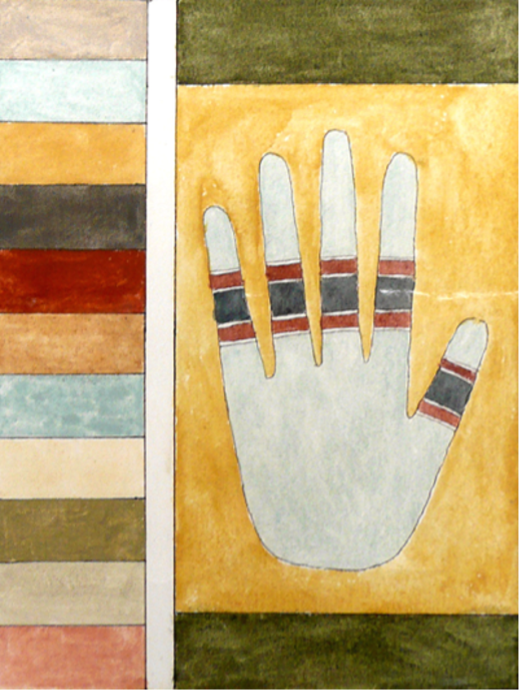
Figure 1. Thomas Haukaas, Eye Candy, 2008 (Photograph © Deborah Harding, provided by Carnegie Museum of Natural History)

The second, third, and fifth panels (Figure 2) portray several patterned horses – an animal that became a symbol of freedom and representation of many Native American cultures.¹ I grew up admiring the relationship horses had with the land through the animated film Spirit: Stallion of the Cimarron (2002). In the film, Spirit is set free from a U.S. army camp by a Native American man called Little Creek, who attempts to lead him back into the Lakota village. To a kid growing up in Montenegro, a small Mediterranean country in Europe, this was a film about the quest for freedom. As I am writing the blog post, I realize the visual elements Haukaas uses are easily interchangeable with the idea of running free as the horses in his work do. In Eye Candy, he uses the horses to express the diversity and inclusive practices of Lakota people. By applying subtle visual elements, Haukaas alludes to winyanktehca or winkte – “a term traditionally applied to male-bodied or biologically male individuals who did not identify as male or men.”² In contemporary Lakota culture, winkte is mostly used to refer to a homosexual man.³ While their status varied in historical records, most accounts treated the winkte as regular community members.⁴
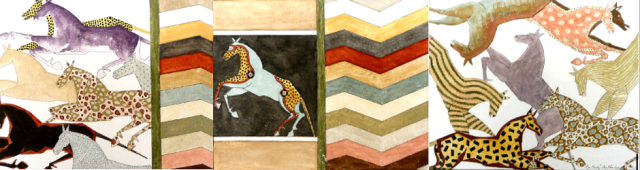
Figure 2. Thomas Haukaas, Eye Candy, 2008 (Photograph © Deborah Harding, provided by Carnegie Museum of Natural History)

The fourth panel (Figure 3) brings the work together as it combines all sections into one abstract form. I find the ambiguity of this panel to be an overarching connection because the queer community is diverse and fluid, but when it comes together, it is as striking as this panel. However, queer art is not always abstract as artists such as Andy Warhol and Keith Haring are explicit about queerness in their works.
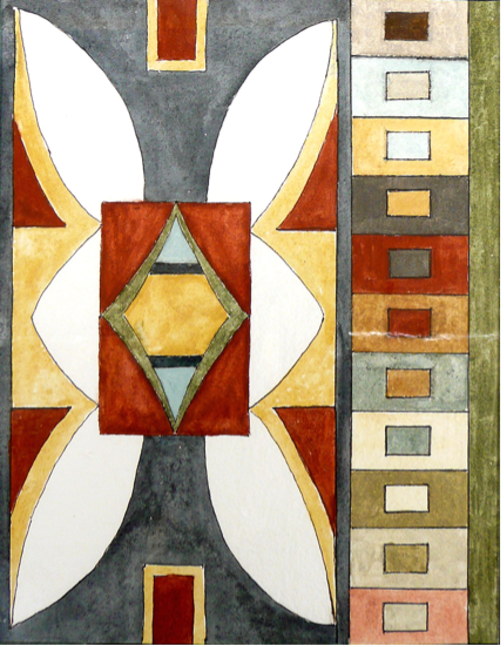
Figure 3. Thomas Haukaas, Eye Candy, 2008 (Photograph © Deborah Harding, provided by Carnegie Museum of Natural History)

As someone who has traveled across four continents and worked in different cultural settings, I am always on the lookout for queer representation, but my favorite encounters are when those representations find me.

Figure 4. Thomas Haukaas, Eye Candy, 2008 (Photograph © Deborah Harding, provided by Carnegie Museum of Natural History)

Vuk Vuković is a PhD student in the History of Art and Architecture at the University of Pittsburgh and an intern in the Section of Anthropology and Archaeology at Carnegie Museum of Natural History. Museum employees and volunteers are encouraged to blog about their unique experiences and knowledge gained from working at the museum.

References

[1]Richard Koepke, Harnessing the Force: A Manual for Weary Seekers (Bloomington: AuthorHouse, 2011), 11.
[2] Robert Allen Warrior, The World of Indigenous North America (New York: Routledge, 2015), 1,442.
[3] Beatrice Medicine, “Directions in Gender Research in American Indian Societies: Two Spirits and Other Categories,” Online Readings in Psychology and Culture, 3 (1), (2002): 4, https://doi.org/10.9707/2307-0919.1024.
[4] Sabine Lang, Men as Women, Women as Men: Changing Gender in Native American Cultures (Austin: University of Texas Press, 2010), 118.

Related Content

Center Court Culture Sharing

How I Became an Archaeologist

Archaeological Adventures in Egypt

Carnegie Museum of Natural History Blog Citation Information

Blog author: Vuković, Vuk
Publication date: May 18, 2021
Share this post!

  • Share on Twitter Share on Twitter
  • Share on Facebook Share on Facebook
  • Share on Pinterest Share on Pinterest
  • Share on LinkedIn Share on LinkedIn
  • Share on Reddit Share on Reddit
  • Share via Email Share via Email

Share this post!

  • Share on Twitter Share on Twitter
  • Share on Facebook Share on Facebook
  • Share on Pinterest Share on Pinterest
  • Share on LinkedIn Share on LinkedIn
  • Share on Reddit Share on Reddit
  • Share via Email Share via Email

Filed Under: Blog Tagged With: anthropology, Native Americans, Science News

March 18, 2021 by wpengine

Center Court Culture Sharing

by Patrick McShea

In the final hour of a Saturday-long visit to the museum by a Kent State University class, a student who played high school basketball volunteered to read aloud to nine college classmates. “With that experience you’ll do a great job,” I explained as I handed her a paper bearing a single long paragraph, and then directed her toward a quiet corner of the exhibit hall to a practice the assignment.

While the majority of the 40-student class opted to spend the unscheduled block of time exploring the exhibits and visiting the museum shop, ten students had accepted my offer to guide them on a tour of the Alcoa Foundation Hall of American Indians.

The now 23-year-old exhibition is divided into quadrants with a different culture presented as a focal point in each, the Tlingit of the Northwest Coast, the Hopi of the Southwest, the Iroquois Nations of the Northeast, and the Lakota and their neighbors of the Great Plains. The twin themes of Native diversity and the continued vibrancy of Native cultures are repeatedly addressed in the hall’s displays. When I paused the group at the Lakota Winter Count display, and recruited the volunteer reader, I hoped to delve a little deeper into both themes.

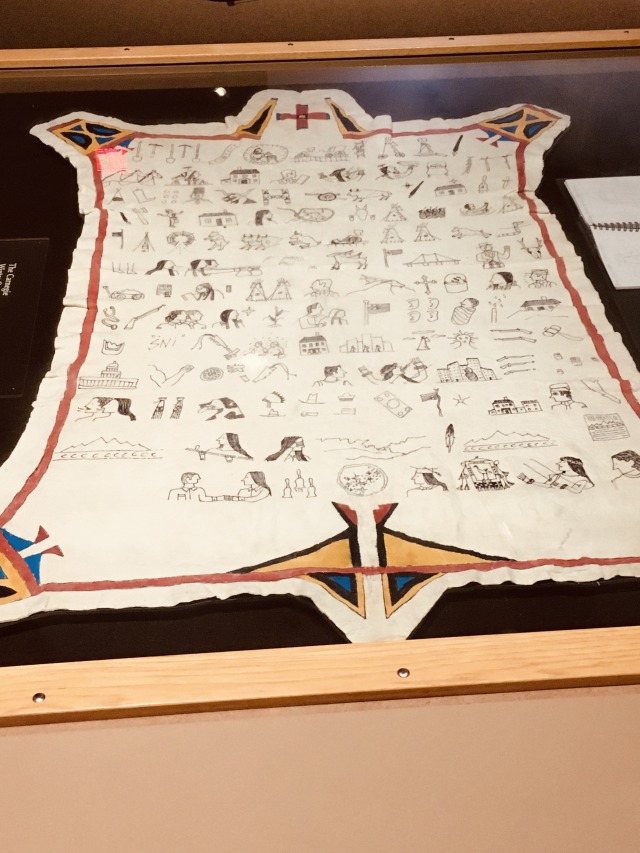
photograph of a winter count on display in the museum

Winter counts are a method by which groups of Lakota People record and remember their history through pictographs on a tanned animal hide or sturdy cloth. Each year, after leaders review important events and agree upon the previous year’s most significant occurrence, a new entry is added to the unique document. A designated count keeper holds the responsibility to annually recite, in sequence, the story behind each pictograph, and thereby orally pass along the group’s history to a listening audience.

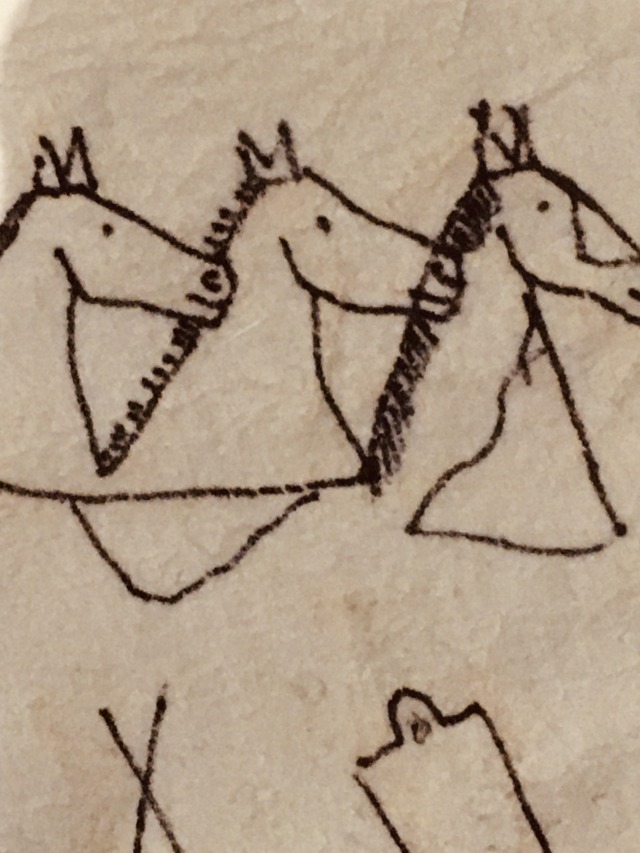
The Winter Count on display, which covers a period of 125 years for the Sicangu Lakota people on the Rosebud Reservation in South Dakota, was created specifically for the exhibit by Dr. Thomas Red Owl Haukaas (Lakota/Creole). After summarizing the importance of winter counts for the students, I read aloud the artist’s explanation of his work from a nearby label: “My winter count is from a contemporary viewpoint. It purposely includes community and national events, men and women, fullbloods, and mixedbloods as an attempt to capture the richness and complexity of our tribe.”

close up of winter count showing animals drawn in black on off-white background

The mention of contemporary viewpoint provided the opportunity to introduce another, albeit non-Native one, author Ian Frazier’s description of high school basketball star SuAnne Big Crow in On the Rez, his 2001 account of life on the Pine Ridge American Indian Reservation.

I called back the volunteer reader and provided background for the description of an event that might be judged worthy of winter count commemoration. “The quote you’re about to hear is pulled from a considerably longer story. It describes how in 1988, SuAnne Big Crow, who was then a 14-year-old basketball player from the Pine Ridge Reservation, transformed the racially charged playoff game atmosphere during pre-game warm-ups at a school in Lead, South Dakota, a white town located outside the reservation. Her actions were brave, clever, defiant, desperate, and heroic – all at the same time.”

“Swish!” by Targuman is licensed under CC BY-NC-ND 2.0.

As someone who experienced the intimidating atmosphere of away basketball games, the volunteer brought an authentic voice to her task, confidently reading Frazier’s account of SuAnne dribbling as she led her team onto the court of the “deafeningly loud” high school gym. Her voice shifted to a slightly higher register, however, when the narrative departed from normal pre-game procedure.

Then she stepped into the jump-ball circle at center court, in front of the Lead fans. She unbuttoned her warm-up jacket, took it off, draped it over her shoulders, and began to do the Lakota shawl dance. SuAnne knew all the traditional dances – she had competed in many powwows as a little girl – and the dance she chose is a young woman’s dance, graceful and modest and show-offy all at the same time.

The reader’s calmer voice returned where the account quoted the impressions of SuAnne’s surprised teammates, then turned higher as the action continued.

SuAnne began to sing in Lakota, swaying back and forth in the jump-ball circle, doing the shawl dance, using her warm-up jacket for a shawl. The crowd went completely silent. ‘All that stuff the Lead fans were yelling – it was like she reversed it somehow,’ a teammate said. In the sudden quiet, all you could hear was her Lakota song. SuAnne stood up, dropped her jacket, took the ball from Doni De Cory, and ran a lap around the court dribbling expertly and fast. The fans began to cheer and applaud. She sprinted to the basket, went up in the air, and laid the ball through the hoop, with the fans cheering loudly now. Of course, Pine Ridge went on to win the game.

The reader earned a sincere round of applause from her classmates for her efforts. I, in turn, felt a rewarding sense of accomplishment when she asked to keep the now deeply creased paper in her hands.

Patrick McShea works in the Education and Visitor Experience department of Carnegie Museum of Natural History. Museum employees are encouraged to blog about their unique experiences and knowledge gained from working at the museum.

Related Content

Museum Conservation: Cleaning the Kayak in Wyckoff Hall

A Steeler Prayer

Winter Wanderers on a Water Tower

Carnegie Museum of Natural History Blog Citation Information

Blog author: McShea, Patrick
Publication date: March 18, 2021

Share this post!

  • Share on Twitter Share on Twitter
  • Share on Facebook Share on Facebook
  • Share on Pinterest Share on Pinterest
  • Share on LinkedIn Share on LinkedIn
  • Share on Reddit Share on Reddit
  • Share via Email Share via Email

Share this post!

  • Share on Twitter Share on Twitter
  • Share on Facebook Share on Facebook
  • Share on Pinterest Share on Pinterest
  • Share on LinkedIn Share on LinkedIn
  • Share on Reddit Share on Reddit
  • Share via Email Share via Email

Filed Under: Blog Tagged With: Alcoa Foundation Hall of American Indians, anthropology, Pat McShea

March 4, 2021 by wpengine

How I Became an Archaeologist


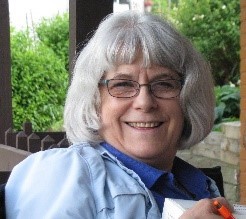
woman with glasses and gray hair sitting outside

If you had told me when I was 15 that I would spend my life as an archaeologist, I probably would have been pretty surprised. I didn’t grow up knowing a great deal about archaeology or even being fascinated by arrowheads. At that time, I might well have asked what an archaeologist really is and what one actually does. I did get to visit the Parthenon and other ruins while on a trip with my aunt when I was sixteen. Even then, I don’t remember having more than a casual interest in what could be learned from these places. I was more interested in the living people and the new food dishes I encountered on that trip, which was my first trip outside the United States.

From talking to other archaeologists, I’ve learned that there are a lot of paths to deciding archaeology is going to be your life’s work. In my case, what led me to archaeology was anthropology, and specifically an elective course I took in the Fall of my senior year in high school that was taught by a Ph.D. student at the University of Massachusetts. Until then I had not been a serious student, although I did well enough in school. Perhaps I was slightly bored by most of my courses, but anthropology was anything but boring! It looked at people elsewhere in the world and over great periods of time. Many of these people lived different lives than my friends and I did, and they sometimes thought very differently about what was important in life than people here in the United States. I was fascinated, and, honestly, I particularly liked the fact that the conventions of American society, which to my teenage self were sometimes a little confining, weren’t after all the only sensible way to approach life. That year, as I chose a college to attend, I specifically looked for anthropology programs. I chose Beloit College in Wisconsin, which to this day has an excellent anthropology program.

Initially, I thought that I was most interested in cultural anthropology, but like most anthropology departments in the United States, Beloit required its anthropology majors to take courses in biological anthropology, linguistic anthropology, and archaeology as well as cultural anthropology. These are what are known as the four fields of American anthropology and together, they give us a more complete picture of humans in both the past and the present. Most people focus their careers in one subfield or another, though we recognize the importance of each one for understanding humans, and in most cases in North America our degrees are in anthropology not one of the subfields. In college, I found all these courses more fascinating than anything I had studied before, and I actually became a good student as I explored anthropology. I was learning so much neat stuff! I also did volunteer work in the Logan Museum at Beloit, which was founded at the end of the nineteenth century and holds some pretty amazing ethnographic and archaeological collections. It was there I first became interested in artifacts and learned to clean and care for them. After a college internship in cultural anthropology convinced me that cultural anthropology was not the most interesting part of anthropology after all, I began to focus on archaeology. I was most intrigued by my courses in Mesoamerican archaeology and North American archaeology, which before college had been completely unknown to me.

When I graduated from college, I still wasn’t sure what I would do with my life. I worked for about two years both in social work and as a tax auditor for the IRS, but decided in 1974 to try graduate school in archaeology because I still found what archaeology had taught me about past people compelling. I lived in Chicago, so I enrolled in the Ph.D. program in North American archaeology at Northwestern University in Evanston, Illinois.

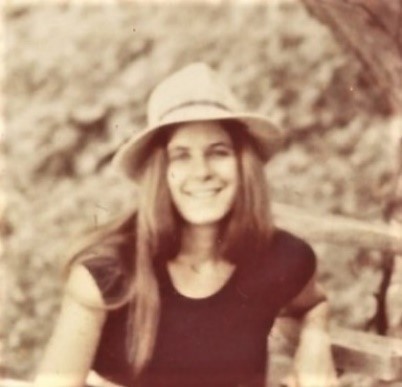
My graduate self in the late 1970s. Photo credit: Phillip Neusius

The biggest shock of graduate school was my professors’ almost immediate insistence that I pick what research I wanted to do. They pushed me to develop an expertise or skill within North American archaeology through my research. It sounds obvious to me now, but I think many beginning graduate students are like I was, lovers of the discipline’s knowledge, but a bit daunted by becoming an independent researcher. Developing an area of focus and specialty skills is part of becoming a professional archaeologist. One reason for this is because contemporary archaeological undertakings rely on teams of researchers, each contributing special skills and knowledge to accomplish the many aspects of excavation, analysis, and interpretation. If you envision archaeology as the solitary pursuit of an elusive artifact or site, you don’t have the picture quite right. Think instead of archaeological fieldwork involving groups of scientists working together to discover and carefully record many different bits of evidence about what the world used to be like and what people did in it. Also think about the many hours these scientists and others will spend not only in the field, but in the laboratory after an excavation is completed cleaning finds, describing artifacts, and analyzing data in order to make meaningful interpretations.

For someone like myself, who loved all aspects of anthropology, not to mention archaeology, and who had only gradually settled on North America as my geographic focus, picking a focus on entering graduate school was a hard task. There was so much that would be interesting to study! However, I did remember especially enjoying a research paper I had done in college on the relatively new interdisciplinary field of zooarchaeology, so under pressure, I told my professors I wanted to pursue this subfield in graduate school. Amazingly, this turned out to be a good choice of specialization for me. I found that I really love to work with collections of animal bone. For me, opening a bag of bone refuse from a site still is exciting. Bone identification work is a little like doing a jigsaw puzzle without all the pieces. It is challenging, and it takes concentration and careful observation to piece together what you can. There is so much to figure out about any single piece of bone! What animal is it? How healthy was the animal? What part of the animal’s body is it? Has it been burned or cut? How was the bone buried and changed after the humans were done with it? Then you have to record this information so it can be combined with other observations on the assemblage of bone you are looking at. After identification, making sense of what a collection of the bones means and correlating these kinds of data with other information from a site and region requires careful analysis, but also insight and creativity. To me it is endlessly fascinating.

Besides finding that I liked the work, choosing zooarchaeology was also serendipitous since my professors were looking for a student to work with them on this aspect of a big project they were undertaking in west-central Illinois centered on the Koster site, which was first inhabited more than 9000 years ago and then reinhabited by people right up into modern times. Most importantly the poorly known Archaic Period levels were numerous, well-preserved, and distinct from each other so we could add a lot of new information through our work. For my dissertation I was able to look at the animal remains from levels of this site dated between approximately 8500 and 6000 years ago, which represent how people used animals at that time.

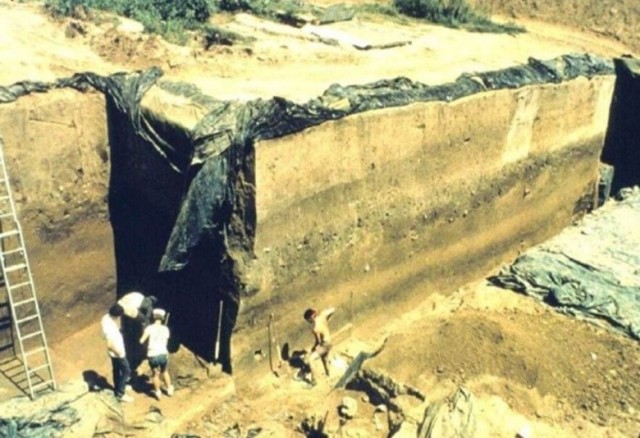
Koster site strata. All those dark layers are from Archaic period camps at the site. Photo credit: Del Bastian, Center for American Archaeology.

Graduate school was intense, but I continued to be fascinated by archaeology’s ability to tell the story of people lost to standard Western history. In those days I was excited to be part of this science that could do so much more than describe and take care of cool artifacts. It was a heady thing to learn that I could contribute to what was known about people who lived thousands of years ago. In later years, I’ve had to think more critically than I did then about what a privilege it is for an archaeologist to learn about the history and lives of other ethnicities. Today’s archaeologists recognize their responsibility to present information about past people for both scholarly and public use in ways that are sensitive to what is considered sacred and private by the descendants of those people. I think this is an important change in perspective, but in the 1970s most archaeologists just wanted to show that people’s stories from the past could be told using the techniques of archaeology. I certainly was happy, if a little naively so, to have found a way to contribute to telling the human story.

If I consider entering graduate school as the start of my professional career as an archaeologist, I have been pursuing this career for more than 45 years! Over the years I have done zooarchaeological and archaeological work in the American Midwest, Southwest, Southeast, and Northeast working on telling the story of people who lived as long as 9000 years ago and as recently as the Sixteenth century. I’ve worked at several universities, in a small museum, and on small and large archaeological projects in the field of Cultural Resource Management (CRM) doing archaeological survey, site excavation, and zooarchaeological identification and analysis. I’ve written scholarly papers and articles as well as a textbook on North American archaeology. However, beginning in the late 1980s, I spent more than 31 years doing research and teaching anthropology and archaeology here in Pennsylvania at Indiana University of Pennsylvania. In this job I taught both undergraduates and graduate students, but, as is typical of university professors, I also spent time doing fieldwork and analysis as part of my research while at IUP. Fortunately, because archaeology is a team undertaking, I’ve been able to involve many students in my research. Working with students in research as they discover what fascinates them has been a highlight of being an archaeologist for me. I’ve now retired from teaching but not archaeology. I’m still working with both physical and digital archaeological collections both through CMNH and elsewhere and writing about archaeology. Who knows what this career still will bring me!

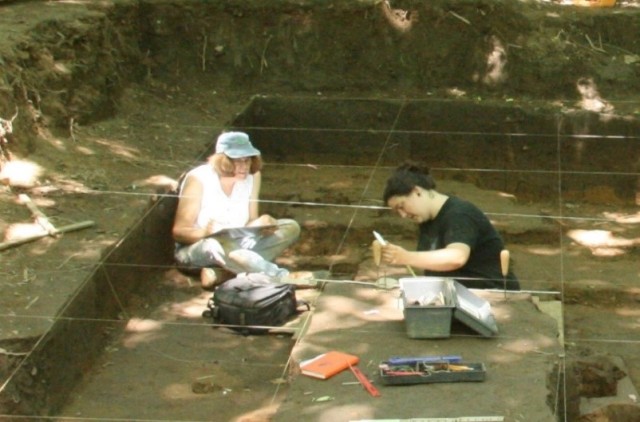
Drawing a profile at the Johnston site with one of my students in 2008. Photo credit: Erica Ausel, IUP Archaeology.
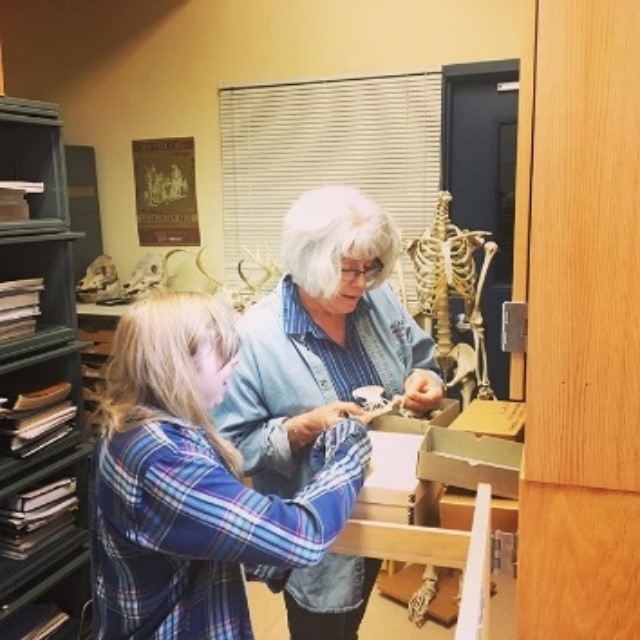
Tracking down a bone identification with one of my students in the Zooarchaeology Lab at IUP. Photo credit: Beverly Chiarulli.

If you are reading this blog because you are thinking about archaeology as either a career or a hobby, I hope you realize that mine is just one story among the many that could be told. Because there are so many aspects of archaeology, people come into it from all sorts of backgrounds and because of all sorts of interests. I think that it is important to remember though that it really is about understanding people and telling their stories through the artifacts and other evidence we find. This is what interested me in archaeology in the first place. Discovering the details of the human story is a giant undertaking. There is no shortage of research problems or work to do, but solving the puzzles presented by sites and collections is both challenging and fun. I’m certainly glad I decided to become an archaeologist and zooarchaeologist so many years ago!

Sarah W. Neusius is a Research Associate in the Section of Anthropology at Carnegie Museum of Natural History and Professor Emeritus, Department of Anthropology, Indiana University of Pennsylvania. Museum employees are encouraged to blog about their unique experiences and knowledge gained from working at the museum.

Definitions of Bolded Terms

anthropology -the study of humans including the physical, cultural and social aspects in the past and present.

cultural anthropology – the study of the cultural aspects of humans especially recent and contemporary social, technological, and ideological behavior observed among living people.

biological anthropology – the study of the biological or physical aspects of humans, including human biological evolution and past and present biological diversity.

linguistic anthropology – the study of the structure , history, and diversity of human languages as well as of the relationship between language and other aspects of culture.

archaeology – the study of past human behavior and culture through the analysis of material remains.

ethnographic – relating to the scientific description of people and cultures especially customs and beliefs.

Mesoamerican archaeology – the archaeology of the area from central Mexico southward through Belize, Guatemala, El Salvador, Honduras, Nicaragua, and northern Costa Rica.

North American archaeology – the archaeology of the area from central Mexico northward throughout the United States and Canada.

zooarchaeology – a subarea of archaeology involves the identification of animal remains from archaeological sites and investigates the ecology and cultural uses of the animals represented.

assemblage -a collection of artifacts from the same archaeological context.

Archaic Period – a time period from approximately 10,000 BP to 3000 BP that is recognized in most of North America.

Cultural Resource Management (CRM) – an applied form of archaeology undertaken in response to laws that require archaeological investigations.

archaeological survey – the systematic process archaeologists use to locate, identify, and record archaeological site distribution on the landscape.

Related Content

Pennsylvania Archaeology and You

Ancient Egypt Through its Pottery

Super Science Coloring Pages

Filed Under: Blog Tagged With: anthropology, Archaeology Extravaganza, Sarah Neusius, Super Science

March 1, 2021 by wpengine

Archaeological Adventures in Egypt

Hello! I am Dr. Lisa Saladino Haney, Assistant Curator at Carnegie Museum of Natural History and resident Egyptologist. An Egyptologist is someone who studies the history, material culture, architecture, religion, and writing of the ancient Egyptians – one of the ancient cultural groups living in Africa’s Nile Valley. Learning about ancient cultures helps us to better understand the world today and to appreciate the creativity and ingenuity of people who lived thousands of years ago. Archaeology is one technique that allows us to interact with and study the past and there are hundreds of archaeological sites and projects throughout the Nile Valley that constantly add to our understanding of what life was like.

Trying to determine some of my favorite archaeological sites from my travels in Egypt turned out to be an impossible task! Please join me on this photo exploration of a few of the many interesting archaeological sites in Egypt and learn where you can find more information about active archaeological excavations and other projects going on in those areas.

Saqqara

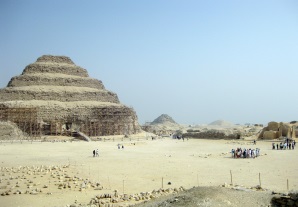
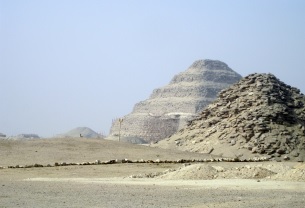
Saqqara is an important cemetery site associated with the ancient Egyptian capital city of Memphis, near modern Cairo. The cemeteries at Saqqara contain a number of tombs, both royal and private, including the famous Step Pyramid of the Third Dynasty Egyptian king, Djoser (ca. 2630-2611 BCE). The earliest burials at the site date to the creation of the ancient Egyptian state and it remained an important site through the Graeco-Roman Period.

Royal Tombs: The Step Pyramid of Djoser

The Step Pyramid of Djoser marks an important step in the development of the pyramid-shaped royal tomb. The complex was designed by the famous royal architect Imhotep, who would later become deified in ancient Egypt. You can see a bronze statue of Imhotep in Walton Hall of Ancient Egypt. A 14-year long restoration project at the site was just completed in 2020 which included strengthening the overall integrity of the structure by filling in gaps in its six rectangular mastabas as well work on the interior burial chamber and passages of the pyramid.

Check out some pictures from my visit to the Step Pyramid in 2011, early on in the restoration process, or, for a gallery of photos and more on the newly completed restoration, click here.

step pyramid

Views of the Step Pyramid at Saqqara showing the scaffolding used for the restoration project (photos by author).

Old Kingdom Mastabas: Tombs of Kagemni and Niankhkhnum and Khnumhotep

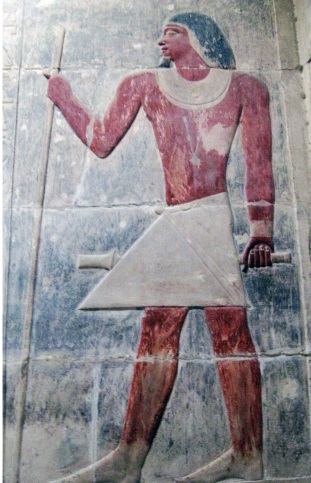
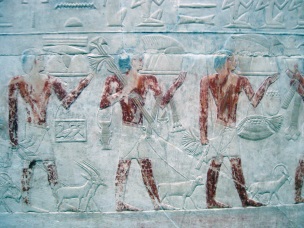
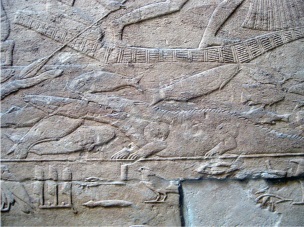
The Old Kingdom (ca. 2649-2150 BCE) mastabas at Saqqara are some of the most beautifully preserved and decorated tombs. Here are two of my favorites from my last visit. The tomb of Kagemni is the largest mastaba in the cemetery associated with the reign of the Sixth Dynasty king Teti (ca. 2323-2150 BCE). Kagemni was a Vizier, the highest position in the royal administration.

tomb decorations

tomb decorations

tomb decorations

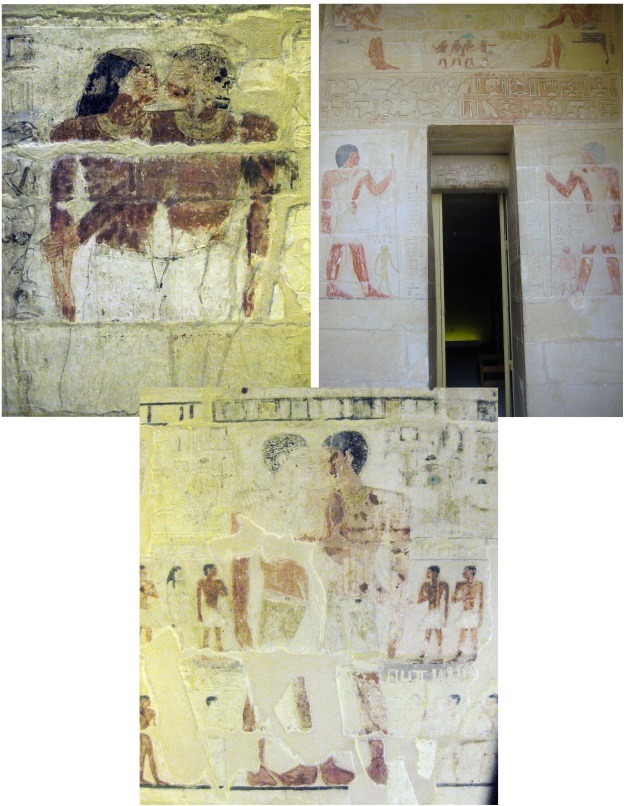
The tomb of Niankhkhnum and Khnumhoptep, also known as the tomb of the two brothers, dates to the late Fifth Dynasty and contains a number of exceptional scenes that underscore the closeness of the two men, both of whom served as overseers of the royal manicurists. Archaeologists uncovered a number of blocks from the tomb’s entrance repurposed in the nearby causeway of the pyramid complex of the late Fifth Dynasty king Unas (ca. 2353-2323 BCE). Thanks to the Egyptian Ministry of Tourism and Antiquities, you can now go on a virtual tour of the tomb!

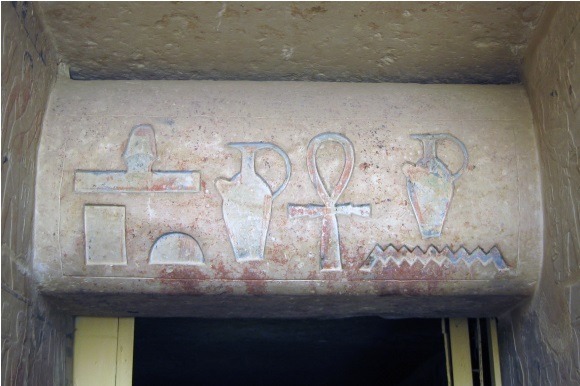
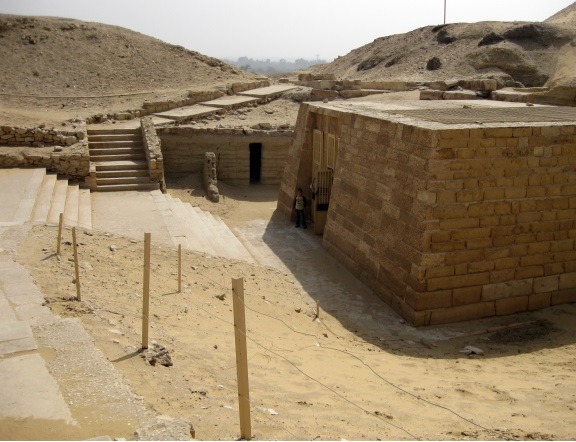
Here you see the names of the two tomb owners, Niankhkhnum and Khnumhotep on a stone doorway inside their tomb as well the exterior of the mastaba (photos by author).
Scenes depicting Niankhkhnum and Khnumhotep inside their tomb (photos by author).
Images from the Tomb of Kagemni at Saqqara depicting the tomb owner himself, a parade of offering bearers bringing animals, plants, food, and other supplies to the deceased, and a scene taking place on the Nile where we get an underwater view of a crocodile eating a fish (photos by author).

Beni Hasan

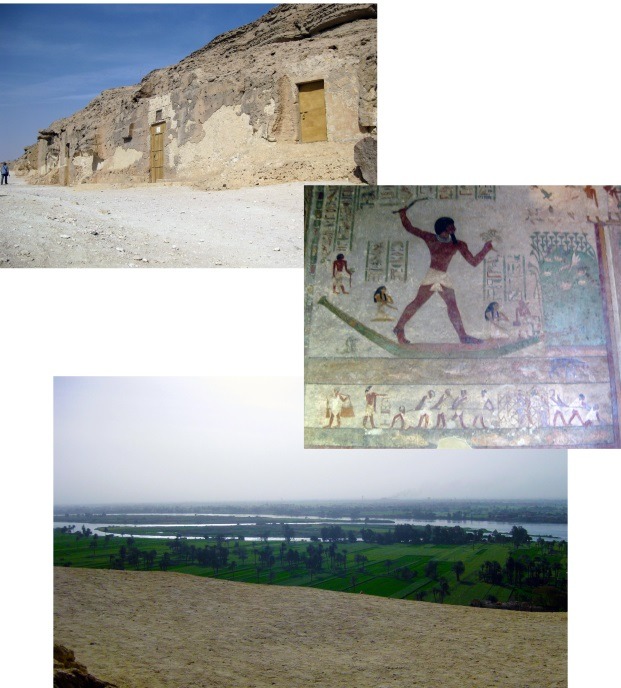
Beni Hasan is a cemetery site located in Middle Egypt, near the modern city of Minya, that was important during Egypt’s Middle Kingdom (ca. 2030-1640 BCE). During that time some of the most elite Egyptians were buried on the escarpment (desert cliff) with one of the most beautiful views of Nile Valley around! For more on excavations at Beni Hasan in the early 1900s visit the Griffith Institute and for a virtual tour of the tomb of Kheti at Beni Hasan visit the Egyptian Ministry of Tourism and Antiquities.

Top: A row of tomb entrances in the cliff face at Beni Hasan (photo by author). Middle: Image of the Nomarch Khnumhotep II fishing and fowling in his tomb (photo by author). Bottom: View of the Nile Valley from the tombs at Beni Hasan (photo by author).

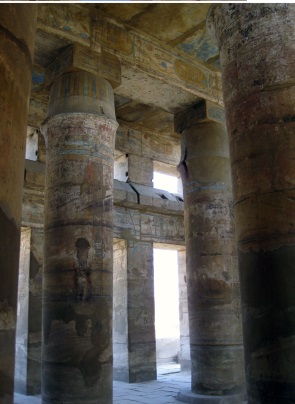
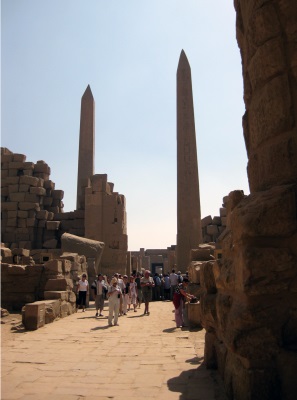
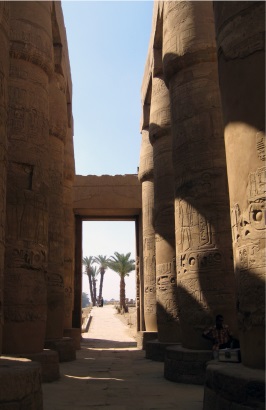
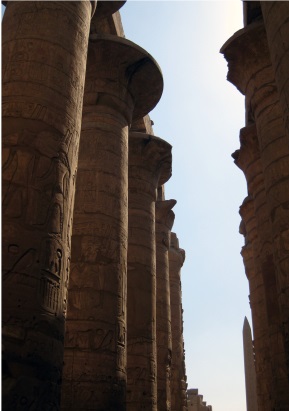
Karnak

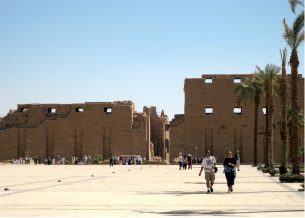
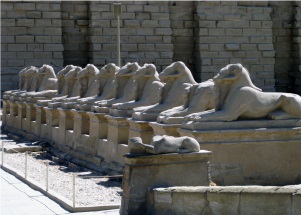
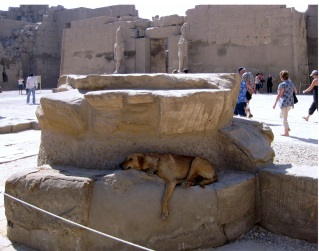
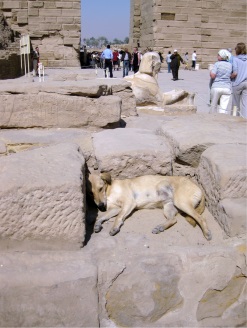
Karnak temple complex is one of the largest religious sites in the world. The first temple at the site was built during the Middle Kingdom (ca. 2030-1640 BCE) and the complex grew in size and complexity over time. The main temple at Karnak is dedicated to the Egyptian god Amun-Re, but there are smaller temples dedicated to Mut, Khonsu, and others. See if you can spot the snoozing pups in the pics below!

There are a number of ongoing excavations at Karnak that you can explore to learn more about the site. Check out this amazing minicourse on the Karnak Mut Precinct available on YouTube with Dr. Betsy Bryan, Alexander Badawy Chair of Egyptian Art and Archaeology and Director of Johns Hopkins’ excavations at the Mut Precinct.

temple ruins and palm trees in Egypt

Approach to Karnak Temple and processional way lined with Ram-headed sphinxes for the god Amun-Re (photos by author).

sleeping dogs in Egyptian ruins

Sleepy Karnak pups (photos by author).

columns, part of ancient Egyptian ruins

obelisks and other ruins in Egypt

view toward a temple exit

columns
Inside Karnak Temple: Festival Hall of Thutmose III, Obelisks, exit towards the Sacred Lake, columns in the Hypostyle Hall (photos by author).

Lisa Saladino Haney is Postdoctoral Assistant Curator of Egypt on the Nile at Carnegie Museum of Natural History. Museum employees are encouraged to blog about their unique experiences and knowledge gained from working at the museum.

Related Content

Egypt and the Nile

Tuscarora Nu Yah

Ancient Egypt Through its Pottery

Carnegie Museum of Natural History Blog Citation Information

Blog author: Haney, Lisa
Publication date: March 1, 2021

Share this post!

  • Share on Twitter Share on Twitter
  • Share on Facebook Share on Facebook
  • Share on Pinterest Share on Pinterest
  • Share on LinkedIn Share on LinkedIn
  • Share on Reddit Share on Reddit
  • Share via Email Share via Email

Filed Under: Blog Tagged With: ancient egypt, anthropology, archaeology, Archaeology Extravaganza, Lisa Haney, Science News, Super Science Days

December 18, 2020 by wpengine

Tuscarora Nu Yah

NU YAH! NU YAH! NU YAH! The sounds of the New Year at Tuscarora Nation in western New York.  For the past one hundred years and longer the Tuscarora have celebrated the New Year in a very unique way.

Three days before the new year our men go out on a hunting competition. Old men versus young men is the battle. It doesn’t matter if you are 60 and have no children you are considered a young man.  Old men are considered anyone with children. Only the reservation boundaries are eligible for the hunt. Rabbits, pheasant, and deer beware this day our men are looking for game to slay for the New Year’s Feast.

The hunt takes place from sunup to sun down. At 8:00 p.m. sharp all game must be at the Old Gym for The Count. There is a young man captain and an old man captain. Each present their group’s game and proceed to count in Tuscarora to see who will win the prize! The prize? The winner gets to watch the loser clean all the game.

The women of the territory will prepare the game for The Feast which will take place at noon on New Year’s Day.

The highlight of our New Year’s festival is the morning of January 1st when Nu Yah takes place. Young and old go door to door calling “Nu Yah! Nu Yah!” at each resident’s door. You must yell loud to be heard. If you don’t yell loud enough adults will prompt you to “say it again.”

Homemade cookies, brownies, rice krispie treats, doughnuts, and sometimes an apple are given from each home very similar to Halloween but adults participate too. Many visitors request a treat for the driver.

In the old days when I still participated in Nu Yah (before my family came along and I had to stay home to watch the door while my husband took our children Nu Yahing) we would often find a store bought cookie or an apple tossed to the side of the road. Homemade goods were the desired treats of the day.

If it was 10 degrees out we bundled up like snowmen and ran from the car to the house and yelled Nu Yah, threw our treats in our bag and headed right back to the warm car that waited. If it was warm out our Ma, Aunt, or Uncle or whoever was our driver would usually come to the door with us and spend some time standing at the door visiting and catching up with friends and family.

While our clan system of bear, deer, wolf, beaver, turtle, eel, and snipe runs through our maternal line, on New Year’s Day we also celebrated our father’s clan. If your father’s clan was a member of the house you visited for Nu Yah you also called out “Uwiire” to receive a special treat sometimes a gingerbread man or a piece of pie. In this way on this special day of the year the men were also recognized and important.

My mother who is 80, and one of 10 children, recalls her father walking with them to Nu Yah and directing them to his family clan homes so they knew which houses to ask for uwiire. I imagine this was also a way of teaching them to know who their family was. Her mother was a beaver just as all her sons and daughters were. Her father was a bear. A household that included a bear was a bonus for them to collect an extra goodie.

In the old days she said people would start coming at 6:00 a.m. and it was custom to yell Nu Yah and just walk in and grab your treat which was usually ready and waiting on a table by the door. Nowadays the first visitors arrive about 8:00 a.m.

While we looked forward with great anticipation to go Nu Yahing, we also looked forward to being old enough to help serve at The Feast. The women cooked for 3 days to prepare for this special day. The rabbits were soaked in water to make rabbit pie. The deer cooked to serve as a side dish.

While the men prepared the cornbread and cornsoup, the women peeled potatoes for mashed potatoes, baked hams and about 150 different pies all while visiting and laughing together. On the day of the feast when we got to be teenagers we would rush home from Nu Yah, change our clothes to something nice and get to the Old Gym to help bring the plates to the guests.

Everyone is welcome to come to The Feast. Many families planned their visits home on this special day so they could see and visit as many family members as possible.

The past few years at our Tuscarora Elementary School, our culture teacher has organized a school wide Nu Yah for our students. They go by grade to different rooms in the school and yell Nu Yah to receive their cookies. The Tuscarora Language teacher bakes cookies with the students for the adults to pass out. In this way each child can participate in Nu Yah and know our tradition even if, for some reason, they don’t get out to take part on New Year’s Day.

The best Nu Yah times that I can remember always involved the adults participating with us, coming in to the homes and taking a few minutes to visit.

To come from a cold, crisp morning into a cozy house with smiling faces and delicious aromas, relatives happy to see us, happy to share their lovely goods, and leave with a Nu Yah! Nu Yah! warmed us better than huddling over my grandparent’s old kerosene heat stove.

We always knew who had the best baked goods, who would be the happiest to see us, who would say every year, “gosh, you look just like your ma!” It was a good feeling to belong to such a loving community where our special New Year’s Festival has happened every year for over a hundred years because of the efforts and dedication of all our Tuscarora people.

Angela Jonathon is a resident of the Tuscarora Nation and affiliated with the Seneca-Iroquois Museum thorough the Tuscarora History Group. She has written this blog at the request of Dr. Joe Stahlman, Director of the Seneca-Iroquois Museum.

Related Content

Dutch Letters: A Sinterklaasavond Treat

The Feast of the Seven Fishes 

Ask a Scientist: What does the motif on this vessel mean?

Filed Under: Blog Tagged With: anthropology, HATW, Museum from Home, Science News, Super Science

December 16, 2020 by wpengine

A Steeler Prayer

carved figure of a Pittsburgh Steelers football player holding a football

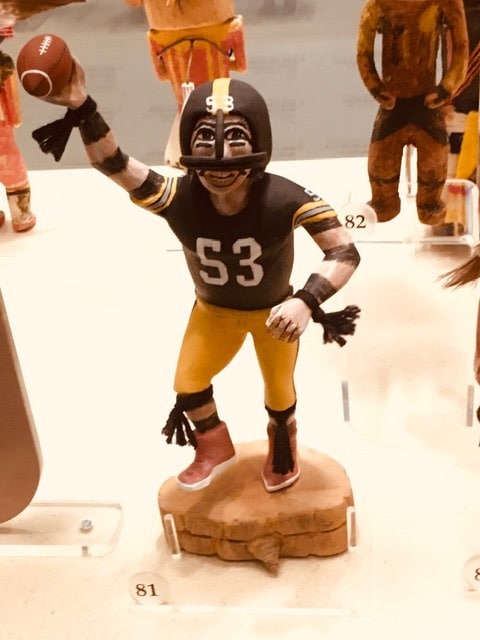
A celebratory touchdown dance in carved cottonwood has been quietly occurring at Carnegie Museum of Natural History for more than 22 years. Within the Alcoa Foundation Hall of American Indians, in the quadrant of the exhibition devoted to conveying information about the Hopi and their culture, a nine-inch high figure of a Pittsburgh Steelers player wearing number 53 holds a football aloft in his right hand. The wide-eyed grinning figure is displayed with plenty of colorful company, and its significance is best understood in terms of this carefully assembled cast.

The carved figures, which are properly called tihus, and more frequently referred to as katsinas, represent the benevolent spirit beings who live among the Hopi on three high mesas of northern Arizona for approximately a six-month period each year. An important role for the carvings is the imparting of knowledge and understanding of these beings or katsinam, and the target audiences for these life lessons are the Hopi themselves.

This aspect of limited cultural sharing was explained to museum educators in the months before the exhibition hall opened in 1998 when Hartman Lomawaima, a Hopi consultant, conducted a training session about the carvings. After a 90-minute presentation that included information about how the katsinas displayed in the hall had not been used in sacred ceremonies, he fielded a particularly pertinent question. “When we take students through the hall we won’t have the time you’ve just shared with us,” explained an experienced interpreter. “What can we tell students about these figures in a minute or two?” “That’s easy,’’ replied Hartman, “just tell them they’re three-dimensional prayers.”

A little more information about the black and gold figure can be gleaned from exhibit text. Here the carving is described as PITTSBURGH STEELER CLOWN KOYAALA, the carver identified as Regina Naha, and the creation date listed as 1992. A reputable reference on katsinas describes the word “Koyaala” as referring to clown figures of the village of Hano on First Mesa, and an internet search under the artist’s name reveals that she is from Hano.

For Steeler fans, and perhaps even for the team’s players, coaches, and administrators, there might be small comfort in knowing a “three-dimensional” prayer clad in their team’s uniform resides under the same roof as Tyrannosaurus rex. For fans of the city itself, the story of how the carving came to be on display offers another example of Pittsburgh Pride. In a font smaller than the rest of the display’s text, the figure is noted to be a “gift of Les and Joan Becker.” Deborah Harding, Collection Manager in the museum’s Section of Anthropology, was able to share some information about the couple. “Les and Joan were long-time and valuable volunteers in this section. During a visit to Arizona they spotted the Steeler carving in the shop at The Heard Museum in Phoenix, and bought it for the museum with the approval of the curator directing the hall’s development. According to the story I heard, Les was able to barter for a lower price by arguing that the figure would be displayed where it belonged, in Pittsburgh.”

Patrick McShea works in the Education and Visitor Experience department of Carnegie Museum of Natural History. Museum employees are encouraged to blog about their unique experiences and knowledge gained from working at the museum.

Related Content

Deeper Dig: Ancient Egypt Through Its Pottery

Carved Wooden Gope Board

Ice and Snow: The effects of temperature

Filed Under: Blog Tagged With: anthropology, Museum from Home, Pat McShea, Science News

  • « Go to Previous Page
  • Page 1
  • Page 2
  • Page 3
  • Page 4
  • Page 5
  • Interim pages omitted …
  • Page 8
  • Go to Next Page »

sidebar

About

  • Mission & Commitments
  • Directors Team
  • Museum History

Get Involved

  • Volunteer
  • Membership
  • Carnegie Discoverers
  • Donate
  • Employment
  • Events

Bring a Group

  • Groups of 10 or More
  • Birthday Parties at the Museum
  • Field Trips

Powdermill

  • Powdermill Nature Reserve
  • Powdermill Field Trips
  • Powdermill Staff
  • Research at Powdermill

More Information

  • Image Permission Requests
  • Science Stories
  • Accessibility
  • Shopping Cart
  • Contact
  • Visitor Policies
One of the Four Carnegie Museums | © Carnegie Institute | Privacy Policy | Terms of Use | Accessibility
Rad works here logo