• Skip to primary navigation
  • Skip to main content
  • Skip to primary sidebar

Carnegie Museum of Natural History

One of the Four Carnegie Museums of Pittsburgh

  • Visit
    • Buy Tickets
    • Visitor Information
    • Exhibitions
    • Events
    • Dining at the Museum
    • Celebrate at the Museum
    • Powdermill Nature Reserve
    • Event Venue Rental
  • Learn
    • Field Trips
    • Educator Information
    • Programs at the Museum
    • Bring the Museum to You
    • Guided Programs FAQ
    • Programs Online
    • Climate and Rural Systems Partnership
  • Research
    • Scientific Sections
    • Science Stories
    • Science Videos
    • Senior Science & Research Staff
    • Museum Library
    • Science Seminars
    • Scientific Publications
    • Specimen and Artifact Identification
  • About
    • Mission & Commitments
    • Directors Team
    • Museum History
  • Tickets
  • Give
  • Shop

anthropology

May 5, 2023 by Erin Southerland

New Vision of Old Rock Art

by Georgia Feild

Carnegie Museum of Natural History has always been a prized resource of knowledge, inspiration, and support for me. From visiting at age six to gaze at dinosaurs while holding my father’s hand, to sketching dinosaurs and mammals as part of Carnegie Mellon University art courses, and researching anthropological collections for college assignments and volunteer historical work, I have always found a home at this museum. When traveling and working around the globe, I realized the only places I wished to relax my mind and body were at Carnegie Museum of Natural History or in the woods.

Retiring at age 55 from a systems design engineering career left me with the time and opportunity to pursue my passions. I started birdwatching after a thirty-year hiatus, and as a result of that activity, 12 years ago I converted my mother’s yard into a five-star Audubon Bird Habitat. While involved with those activities, nature reminded me of the most basic mechanical rule: when a part is missing or broken the entire mechanism will stop working efficiently.  Seeking more information about missing “parts” of our ecosystem brought me to employment and volunteer work at the museum.

While performing educational work at the museum, I realized how instilling knowledge and developing respect for all organisms is vital for our planet’s welfare. Through millennia, Indigenous People’s relationships with the places they lived have improved, conserved, and respected the natural world. For thousands of years people have understood how their existence depends on the environment. Because I wanted to learn more about traditional cultural conservation of ecosystems, about eight years ago I began volunteering at the Edward O’Neal Research Center (Annex) for the Anthropology and Archaeology Department.

My volunteer work introduced me to cultures and traditions I never imagined. This growing awareness led to concentration on human relationships with animals, specifically birds. I was thrilled to discover how deeply people of Paleo (20,000 to 9,000 years ago) and Archaic (8,500 to 1,000 years ago) periods appreciated birds. Across many cultures, artifacts within the museum’ Anthropology and Archaeology collection feature depictions of birds. 
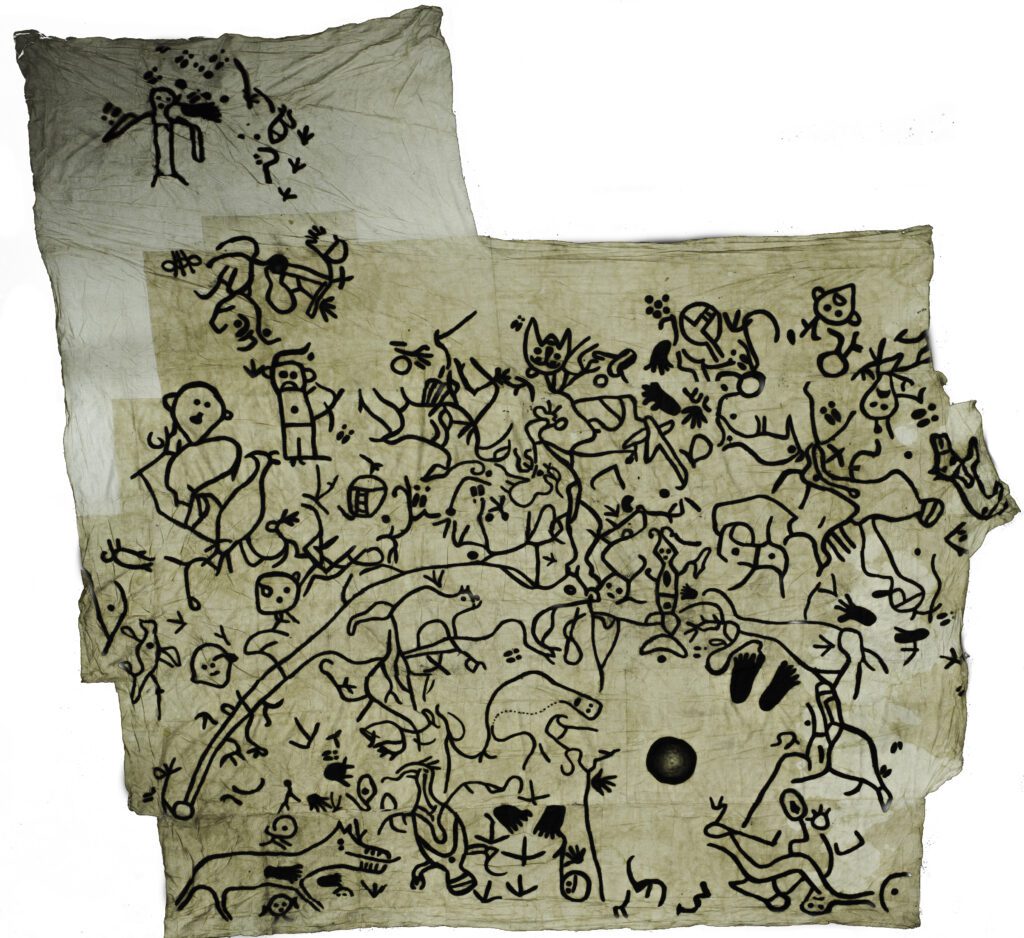
Petroglyph rubbing from Millsboro, Washington County PA. Image credit: Jim Burke, CMNH Research Associate, Anthropology

As a volunteer, my most fascinating learning experience involves the massive Carnegie Museum collection of Western Pennsylvania petroglyph research documents. Digging through numerous file cabinets at the Annex containing petroglyph research from 1950 to 1979, I uncovered depictions of bird species that may still be found in the same areas today. Having traversed many a creek and stream bed attempting to take the “perfect” photo of egrets, herons, warblers, ravens, and ducks, I realized people in the past also wished to capture images of birds! Many petroglyph images carved into stone thousands of years ago resemble bird species currently found in the southwestern corner of the state. 

Petroglyph research started in the upper Ohio River Valley in 1900. At the turn of the 20th Century photography was incapable of accurately capturing rock carvings, leading early petroglyph researchers to chalk outlines of petroglyphs. Today chalk is no longer used because it is thought to be detrimental to the preservation of these important artifacts.  Fortunately, photographic technology has progressed over 123 years so these artifacts may be recorded in a less invasive manner.
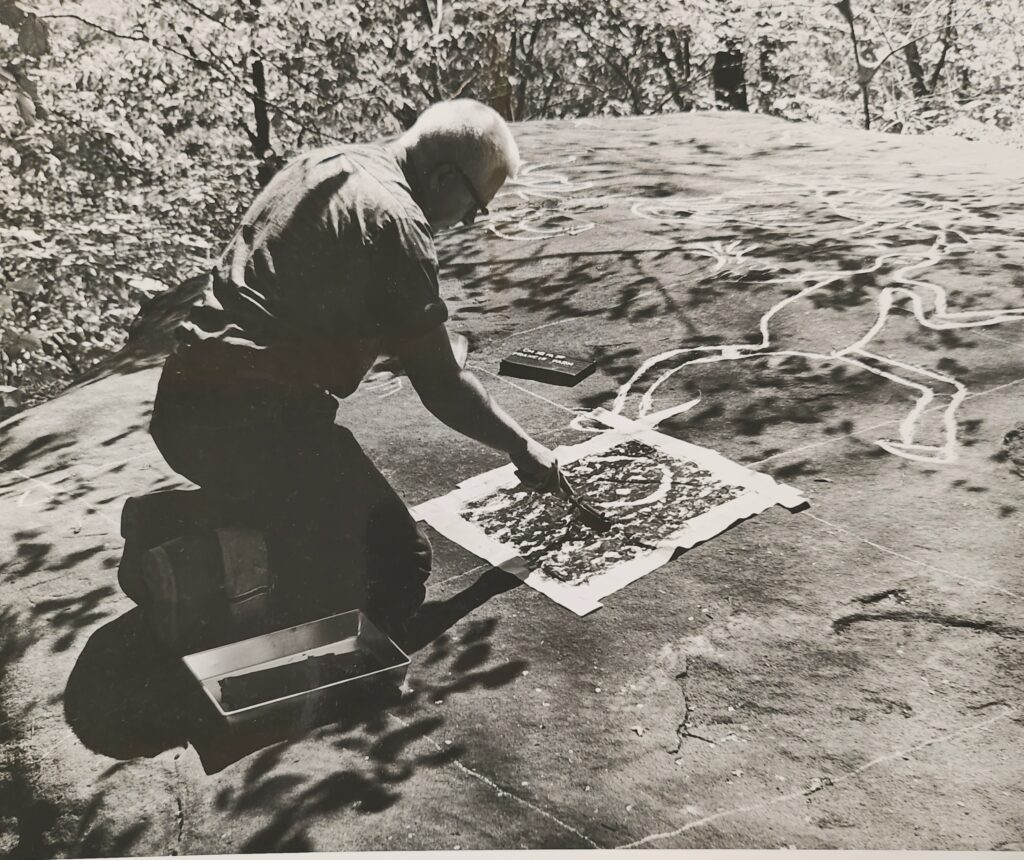
James Swauger chalking. Credit: Anthropology Collection of Carnegie Museum of Natural History.

Between 1950 and 1979, over one hundred Paleo and Archaic sites in Western Pennsylvania were researched by 26 Carnegie Museum Archaeologists and Anthropologists.  Petroglyphs were discovered at several sites, unfortunately some were later lost to dam, road, and channel construction. For example, a site known as the Midland Petroglyph was destroyed in 1910 when Ohio River channels were cleared and deepened for navigation and flood control. The Midland petroglyph was discovered in 1908-9 and thought to represent “power symbols” of the Midewiwin. Unfortunately, we cannot assess that petroglyph now to re-examine the ancient work with modern research technology and re-interpret its symbols in light of current  archaeological research data.  At other sites, Pennsylvania petroglyphs are being eroded by natural elements, making it important to revisit rock art sites before they are lost forever.

The Society of Pennsylvania Archaeology has currently taken an interest in revisiting some of the still accessible petroglyph sites. Using James L. Swauger’s research on the upper Ohio River watershed, (with records located at the Carnegie  Museum  of Natural  History, and referenced in “Rock Art of the Upper Ohio Valley,” a 1974 publication), archaeologists are planning to revisit petroglyphs and update Swauger’s documentation of each site.
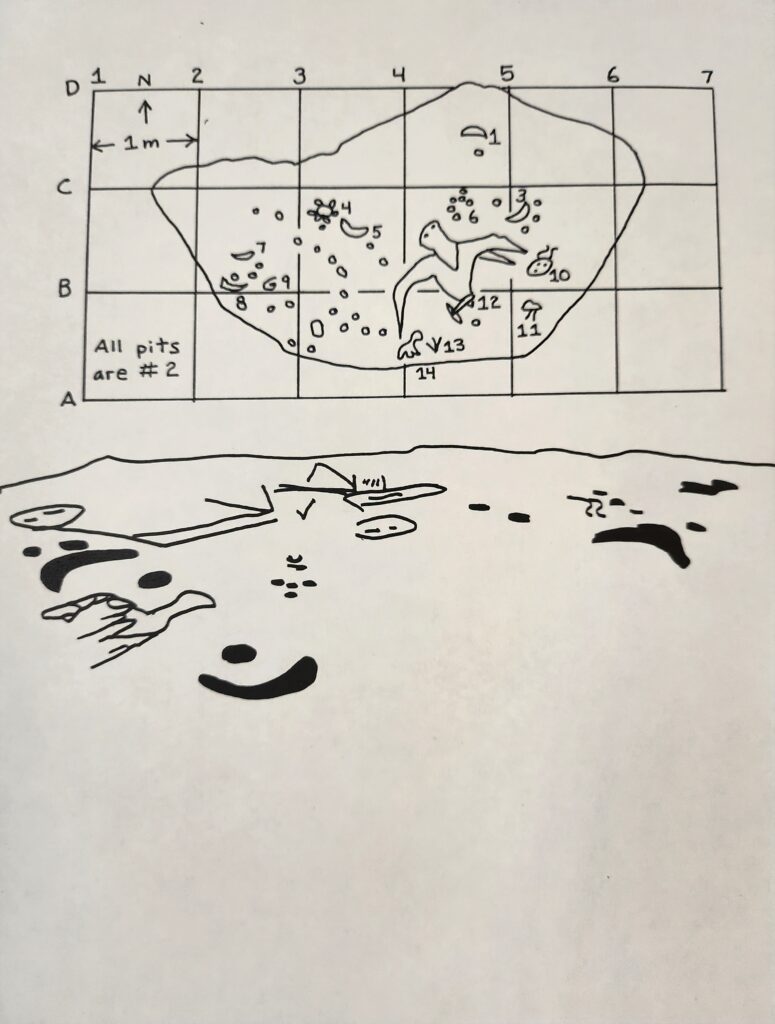
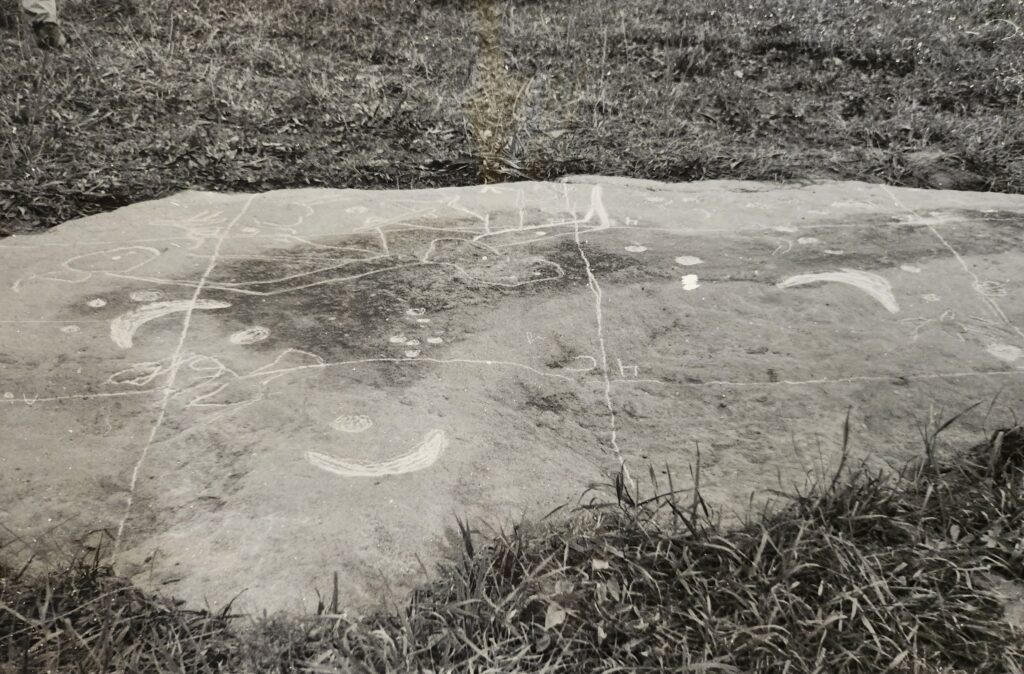
Dunn Farm, Fayette County. Credit: James L. Swauger, Carnegie Museum of Natural History Anthropology Collection.
Dunn petroglyph. Credit: James L. Swauger, Carnegie Museum of Natural History Anthropology Collection.

The Western Pennsylvania Native American Rock Art Survey, which was launched in November 2022, will record new documentation in Pennsylvania State Museum site database. The project is directed by Carnegie Museum Research Associates Ken Burkett and Brian Fritz, who will develop standards for eligibility of rock art sites for inclusion in the National Register of Historic Places.

It will be exciting to learn what scientists discover when revisiting these petroglyph sites. Questions, including when were these petroglyphs carved, why, and by whom all yearn for more informed answers. The locations of petroglyphs, their designs, and patterns within designs may lead to a better understanding of cultures that lived in Pennsylvania a very long time ago.  Cultures survive by utilizing their distinct habitats. Although bird and animal representations may never fully explain the significance of a species to a culture, such images do tell us what animals were present throughout history.

Georgia Feild is a museum educator, Natural History Interpreter, and volunteer for the Archaeology/Anthropology Collections at Carnegie Museum of Natural History.

Related Content

A Trip to Grave Creek Mound

How I Became an Archaeologist

Grass Basket of the Chumash

Carnegie Museum of Natural History Blog Citation Information

Blog author: Feild, Georgia
Publication date: May 5, 2023

Share this post!

  • Share on Twitter Share on Twitter
  • Share on Facebook Share on Facebook
  • Share on Pinterest Share on Pinterest
  • Share on LinkedIn Share on LinkedIn
  • Share on Reddit Share on Reddit
  • Share via Email Share via Email

Filed Under: Blog Tagged With: anthropology, Georgia Feild, Science News

October 7, 2022 by Erin Southerland

Celebrating Indigenous Peoples’ Day 2022

by Amy L. Covell-Murthy

Indigenous Peoples’ Day is observed in the City of Pittsburgh concurrently with Columbus Day, and I would like to suggest some ways to observe the holiday for those who do not claim Indigenous heritage. In a state with no habitable federally recognized Indigenous land, Native people are all too often seen as existing only in the past. Although educating yourself on the Indigenous history of the region is an important part of observing the holiday, it’s also important to recognize that many First Nations people live, work, and play in the Greater Pittsburgh Area. Indigenous Peoples’ Day should not be a memorial, but a recognition of the important history and cultural heritage of those who are the past, present, and future caretakers of this land. Here are some things you can do to respectfully celebrate on October 10, 2022. 

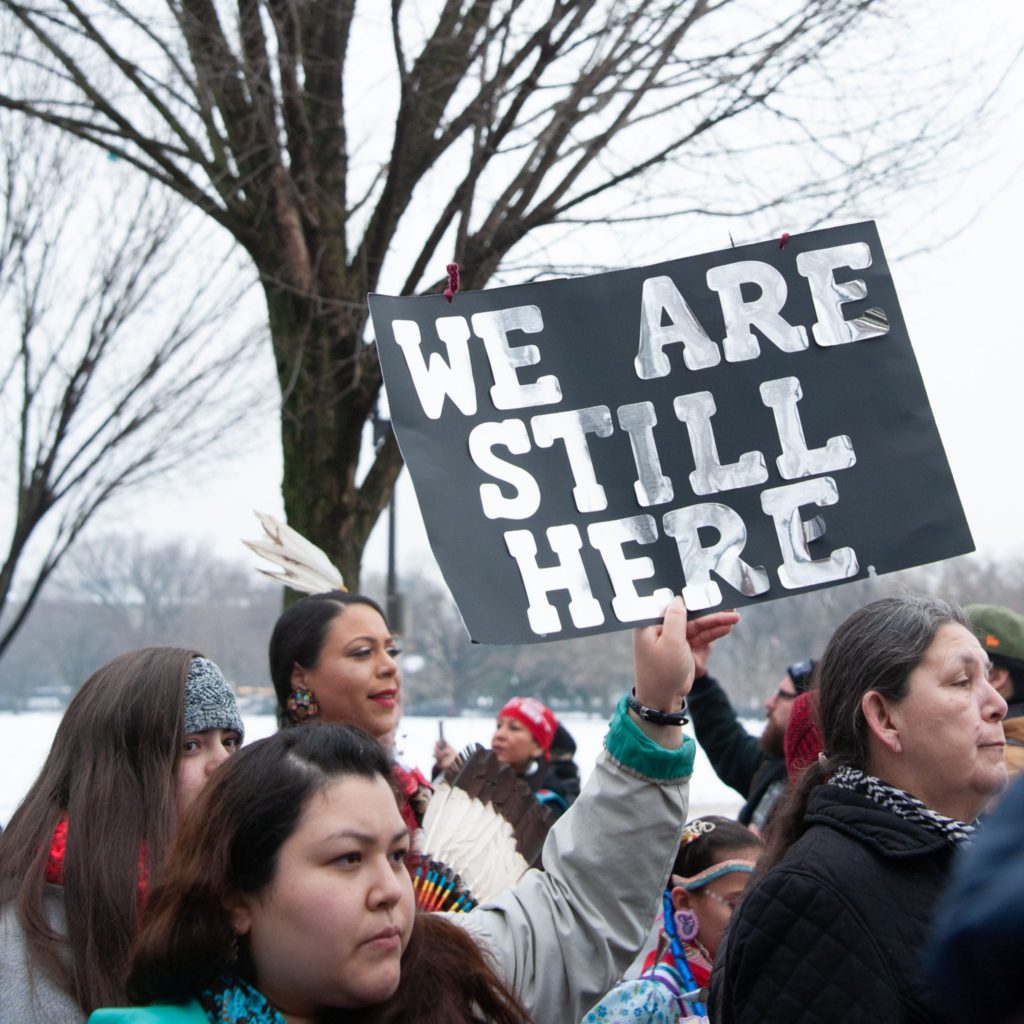
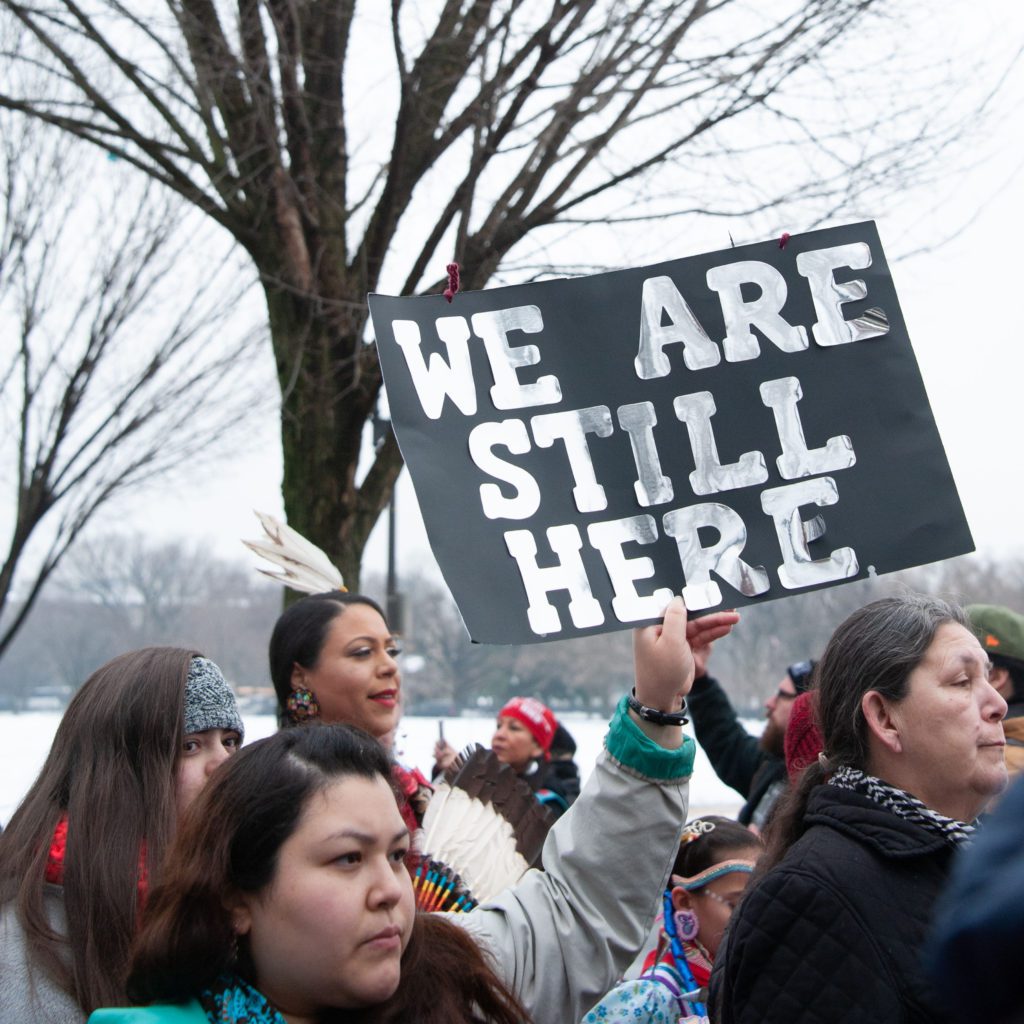
Indigenous person holding a sign that says "We Are Still Here"

Educate Yourself

Learn about the people who have called Pittsburgh home. Many different cultural groups have occupied the Upper Ohio River Valley including but not limited to the Delaware/Lenape, the Haudenosaunee, the Shawnee, and the Wyandotte. The Osage Nation also claims origin in the Ohio River Valley, and you can learn about all these nations on their official websites. I also suggest hitting up your local library to check out books on these groups as well as the cultural traditions and ancestors who came before them. During a more distant time period, this region was home to those who are often referred to as the Adena, Hopewell, and Monongahela. But keep in mind, we have no idea what they called themselves.

Educate Yourself Some More

Learn about the history that may have been left out of your primary and secondary school curriculums. You may be unaware of the atrocities that Indigenous people faced in the State of Pennsylvania. Many First Pennsylvanians were forced from their homelands and infected with unfamiliar diseases by colonizers. Later the first assimilation school was created in Carlisle, PA. The school, which operated between 1879 and 1918, was used as a model for 24 more of these institutions whose primary goal was to force Indigenous children to abandon their Native languages and customs. In the 1960s, the building of the Kinzua Dam  on the upper Allegheny River forced Seneca Nation citizens to move into the State of New York, breaking the 1794 Treaty of Peace and Friendship. Indigenous communities thrive despite these events and institutions, but it is important to recognize and not try to hide these gruesome parts of our shared American history. You can find more information about these examples on the websites listed below.

Kinzua Dam Exhibit at Seneca-Iroquois National Museum

Smallpox information from Native American Heritage Programs

Carlisle Indian School Project

Support Local Indigenous Groups

The Council of Three Rivers American Indian Center is a regional intertribal nonprofit that promotes the socio-economic development of the Native American community and others who experience the same type of economic difficulties in the Greater Pittsburgh metropolitan area. One way to support them is to plan to attend their annual Pow Wow that is held just in Dorseyville, a suburb north of Pittsburgh, in late September. Learn more about the Center’s Early Childhood Education, Native American Elders, Veterans, and Employment programs on their website and Facebook page.

Honor the Land

Planting Native Pennsylvanian plants is a wonderful way to honor our connection to the Earth and to provide food and shelter for the diverse species who live here. You can learn about how Indigenous People use trees, ferns, flowers, vegetables, fruits, and grasses to enhance their quality of life. The Pennsylvania Department of Conservation and Natural Resources and the Audubon Society of Western Pennsylvania offer suggestions for those who are interested.

Attend an Online or In Person Event

Many cities around the United States hold events to celebrate Indigenous Peoples’ Day. A quick Google Search can point you in the right direction. I’m going to be learning about incorporating Indigenous voices into K-12 curriculum from young Indigenous activists at the Smithsonian.  You can register to tune in to the National Museum of the American Indian at 1 p.m. on October 10th to attend this free webinar titled, Youth in Action | Indigenous Peoples’ Day: Transformative Teaching / Juventud en acción | Día de los Pueblos Indígenas: Enseñanza transformativa.

Support Indigenous Artists, Authors, Film Makers, and Musicians

You have so many options! The Sundance Institute has a version of its 2022 Indigenous Short Film Tour available to stream. It’s a 93-minute program featuring 6 short films. The Carnegie Library of Pittsburgh website offers staff picks and lists of Indigenous authors. My favorite is a list of Indigenous Science Fiction from 2020 which is intended for adults, but they also have lists of Indigenous books for children and teens. The CBC  (Canadian Broadcast Corporation) released a list of Indigenous musicians to watch out for in 2022. Vogue featured 15 Indigenous Artists to watch out for from this year’s Santa Fe Indian Market. The list includes fashion designers, painters, beaded and metal jewelry designers, sculptors, and textile artists. You can also support Indigenous artists by purchasing art through the online gift shop of the Seneca Iroquois National Museum/Onöhsagwë:de’ Cultural Center.   

Help Change Derogatory Mascots and Place Names

Sign petitions, attend community forums, and advocate for the changing of harmful stereotypes and offensive signage in our community.  From the Cleveland Guardians to Hemlock Hollow Road, there are many instances of this happening around us. The National Congress of American Indians offers a State tracker of schools with offensive mascots, and Pennsylvania has 45 districts and 113 schools in need of name or mascot change. The list has gone down by 2 schools over the past year!

Also, learn about the Haudenosaunee Nationals Lacrosse Team, who hope to make it to the 2028 Olympics! Learn about how they have recently changed their own name to reflect their collective identity.  

View this post on Instagram

A post shared by World Lacrosse (@worldlacrosse)

Consider Donating Time or Resources

The Seneca Iroquois National Museum/ Onöhsagwë:de’ Cultural Center is only a few hours’ drive from Pittsburgh and occasionally may be looking for volunteers. Check their website and follow their social media accounts for more information.

If you are able, here are just a few organizations who can use your help:

Native American Agriculture Fund

NDN Collective

Association of American Indian Affairs

Advancing Indigenous People In STEM

So, join me in unlearning some Columbus Day myths and celebrating the cultural diversity of Indigenous People throughout the history of our region. Remember that the best places to start educating yourself are the local libraries and museums. Carnegie Museum of Natural History offers guided tours of our cultural halls that strengthen the messages we wish to share with the community. Visit the Alcoa Hall of American Indians to learn more about the Tlingit, Lakota, Hopi, and Haudenosaunee, and keep in mind that there are so many other Indigenous groups, traditions, nations, and organizations for you to explore on your own!

Amy L. Covell-Murthy is Archaeology Collection Manager at Carnegie Museum of Natural History.

Related Content

An Indigenous Presence: Cultural Survivance and Contemporary American Indian Art and Design

A Trip to Grave Creek Mound

Pennsylvania Archaeology and You

Carnegie Museum of Natural History Blog Citation Information

Blog author: Covell-Murthy, Amy
Publication date: October 7, 2022

Share this post!

  • Share on Twitter Share on Twitter
  • Share on Facebook Share on Facebook
  • Share on Pinterest Share on Pinterest
  • Share on LinkedIn Share on LinkedIn
  • Share on Reddit Share on Reddit
  • Share via Email Share via Email

Filed Under: Blog Tagged With: Alcoa Foundation Hall of American Indians, Amy Covell-Murthy, anthropology, Science News

July 14, 2022 by Erin Southerland

A Trip to Grave Creek Mound

by Amy L. Covell-Murthy

It was my pleasure to organize a field trip for Anthropology and Anthropocene staff, students, and friends to the Grave Creek Mound Archaeological Complex in Moundsville, West Virginia. Our gracious host, Dr. Olivia Jones, who is the facility’s lead curator showed us around the complex while explaining the history of the facility and of the mound. She also provided us with plenty to explore on our own.

Maintaining a relationship between Carnegie Museum of Natural History and the Grave Creek Mound Complex has been a highlight of my responsibilities as collection manager over the past five years. Dr. Jones and I work hard to keep each other informed of current research and initiatives in our institutions, while sharing resources that pertain to the history of the region. 

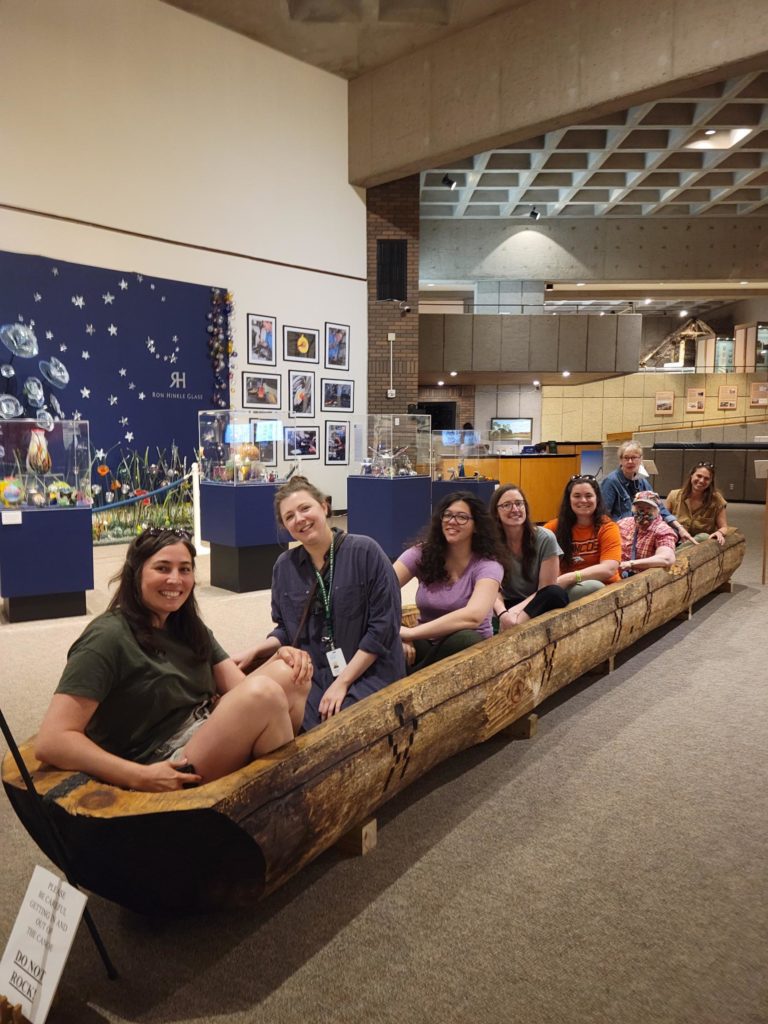
Group of people in a canoe in a museum
This picture shows the Carnegie crew posing in a dugout canoe that was commissioned from artists of the Seneca Nation/Onöhsagwë:de’ Cultural Center.

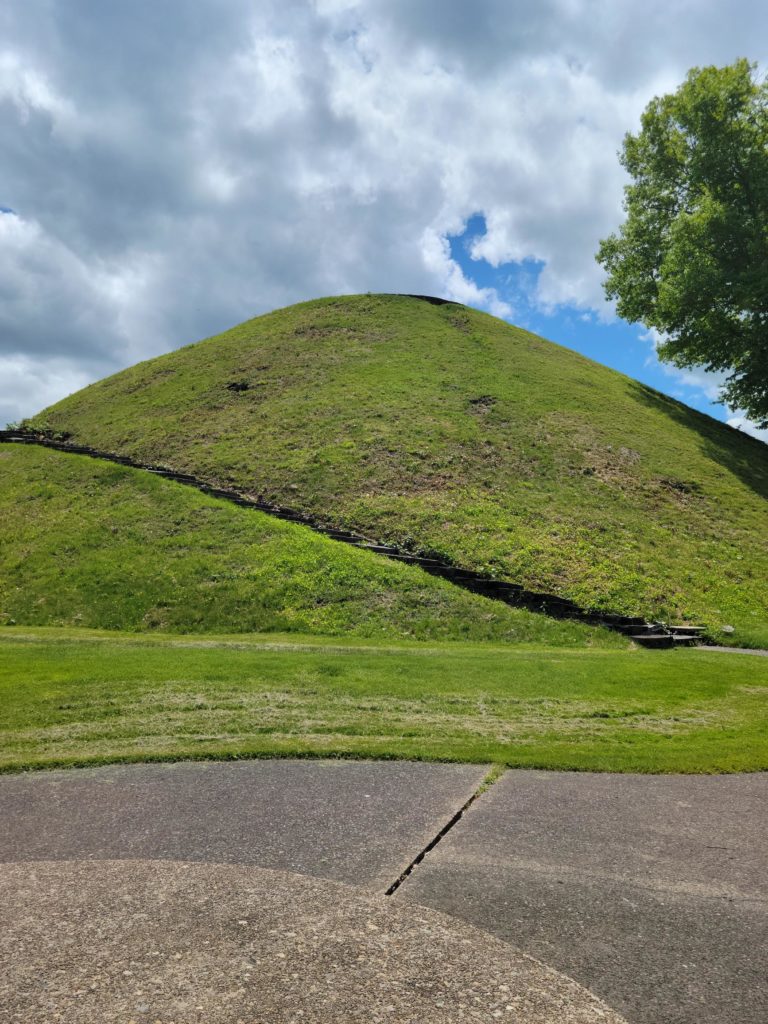
Adena is the name given by archaeologists to the mound building cultural group who developed around 2500 years ago in the Ohio River Valley and many of its major tributaries. The Grave Creek Mound, now located in the center of a town whose name references the structure, is one of the largest of the conical Adena burial mounds. Dr. Jones, curator Hank Lutton, and the staff of the Archaeological Complex work to maintain the integrity of this National Historic Landmark. According to their website, the mound was constructed between 250 and 150 B.C.E. and in 1838 it was measured as being 69 feet tall, and 295 feet in diameter. 

The Grave Creek Mound from a walkway near the base of the 2,000-year-old structure.

In addition to the mound, the complex consists of an archaeological research and collection facility, and the Delf Norona Museum, which interprets lifeways of the Adena people for the public. The museum, named for the author of the mound’s definitive history, opened its doors in 1978, and the research facility was constructed later in 2008. This facility is the repository for all of West Virginia’s State-owned collections and artifacts. 

Although our exhibits do not explain the arrangement, Carnegie Museum of Natural History once served as a repository for the State Museum of Pennsylvania for all cultural material excavated in Western Pennsylvania.  This material remains in our care at our collection facility and is used for research. As we try to reconcile our institutional past and bring equity and inclusion into our storytelling, these collections will help us interpret the pre-contact narratives of the region. 

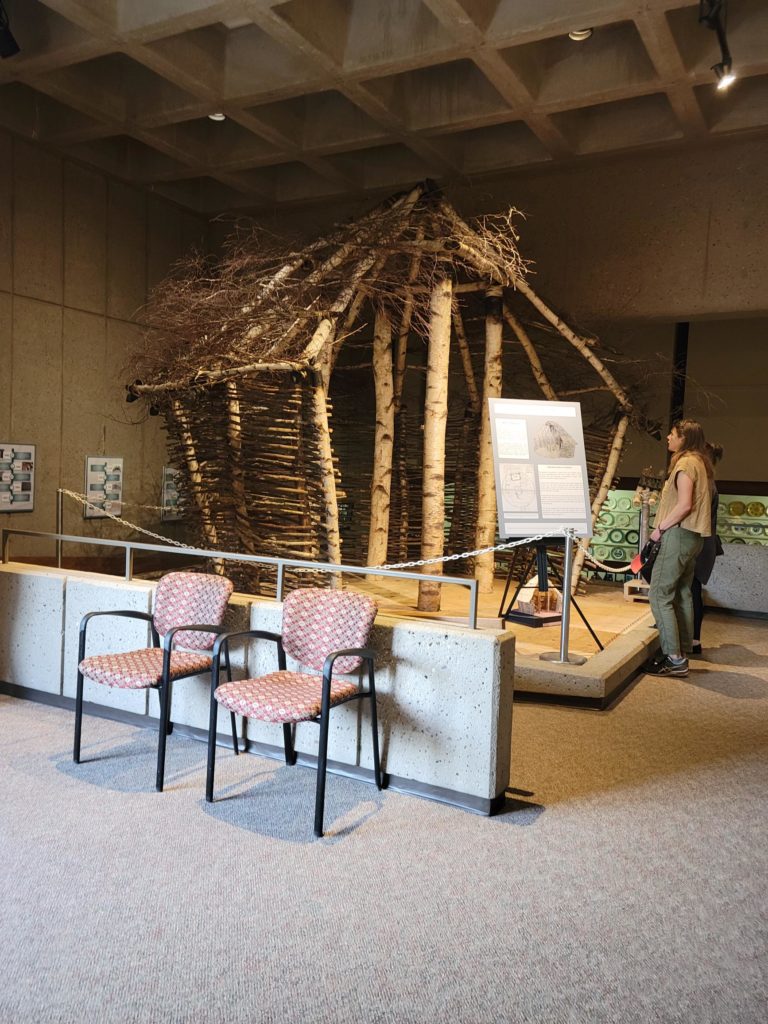
Dr. Nicole Heller viewing the Adena Structure replica in the Delf Norona Museum. 

I am very lucky to be able to offer these educational experiences to my students and volunteers and I encourage those of you who can, to take the 90-minute drive from Pittsburgh to Moundsville, West Virginia to check out the Archaeology Complex. And the next time you find yourself in the North Eastern section of the Alcoa Hall of American Indians at CMNH, take some time to think about the mound builders who were here before the Haudenosaunee, Lenape, and Shawnee in Western Pennsylvania. 

Amy L. Covell-Murthy is the Collection Manager for the Section of Anthropology and Archaeology at Carnegie Museum of Natural History.

Related Content

Celebrating Indigenous Peoples’ Day

Grass Baskets of the Chumash

Queer Eye for Lakota Art

Carnegie Museum of Natural History Blog Citation Information

Blog author: Covell-Murthy, Amy L.
Publication date: July 14, 2022

Share this post!

  • Share on Twitter Share on Twitter
  • Share on Facebook Share on Facebook
  • Share on Pinterest Share on Pinterest
  • Share on LinkedIn Share on LinkedIn
  • Share on Reddit Share on Reddit
  • Share via Email Share via Email

Filed Under: Blog Tagged With: Amy Covell-Murthy, anthropology, archaeology, Science News

October 14, 2021 by Erin Southerland

Grass Baskets of the Chumash

by Phillip Mendenhall

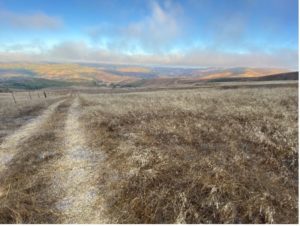
  • field under blue sky with puffy clouds
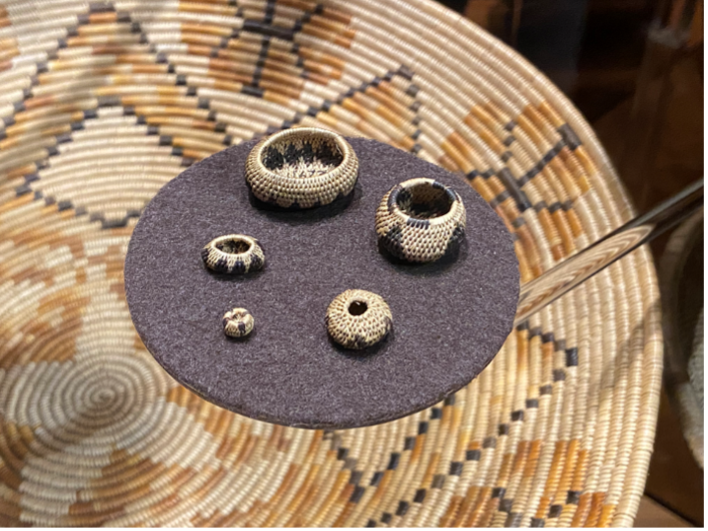
  • woven baskets on a shelf
Left: Chumash archaeological site near Lompoc, CA. Right: Baskets from the Alcoa Hall of American Indians, CMNH.

On archaeological excavations we typically remove overlying vegetation as part of the process of looking for evidence of the past below ground. However, while on an excavation of a prehistoric lithic quarry near the southern California coast this past August, I was reminded of how much knowledge can be observed by orienting oneself in the surrounding landscape. 

Anyone who visits the interior corridors of Alcoa Hall will find themselves confronted by the central displays of grass-weaved baskets obtained from the throughout the US. If someone looks closely enough in the California Basket case, they will see five baskets that measure no larger than a person’s thumbnail. These tiny specimens made sometime before 1938 near Pomo, California, were never meant to be used in any practical way, but were rather meant to display the mastery of the artisan that created them. Without the use of mechanical aids or lenses, the rough, sea-weathered grasses of the central California coast were meticulously threaded with exact precision into a near-microscopic version of their functional counterparts. Motifs that emulate the larger versions are still visible and thoughtfully organized as if they were a hundred times greater than their actual size, a remarkable demonstration of skill that dates back at least 2,000 years in the region.

Baskets, due to their organic components, rarely survive in the archaeological record. We archaeologists are forced underground to look for more tangible artifacts, such as stone tools and pottery to understand past lifeways. This can cause bias in what we believe a group of people used as resources because only a few types of durable artifacts survive from so long ago. However, as many of the Chumash people that I worked with this summer will explain, we who seek to understand better what has happened in the past have only just touched the surface of what lies hidden from our knowledge. 

Phillip Mendenhall is a member of the Cherokee Nation of Oklahoma, a PhD candidate in anthropology at the University of Pittsburgh, and an interpreter at Carnegie Museum of Natural History. His work in North America and southeastern Europe focuses on how native cultures persist in the face of cultural change and colonization. 

Related Content

Celebrating Indigenous Peoples’ Day

An Indigenous Presence: Cultural Survivance and Contemporary American Indian Art and Design

Where the Heck Did That Come From?

Carnegie Museum of Natural History Blog Citation Information

Blog author: Mendenhall, Phillip
Publication date: October 14, 2021

Share this post!

  • Share on Twitter Share on Twitter
  • Share on Facebook Share on Facebook
  • Share on Pinterest Share on Pinterest
  • Share on LinkedIn Share on LinkedIn
  • Share on Reddit Share on Reddit
  • Share via Email Share via Email

Share this post!

  • Share on Twitter Share on Twitter
  • Share on Facebook Share on Facebook
  • Share on Pinterest Share on Pinterest
  • Share on LinkedIn Share on LinkedIn
  • Share on Reddit Share on Reddit
  • Share via Email Share via Email

Filed Under: Blog Tagged With: anthropology, Phillip Mendenhall, Science News

October 11, 2021 by Erin Southerland

Celebrating Indigenous Peoples’ Day

by Amy L. Covell-Murthy

Indigenous Peoples’ Day is observed in the City of Pittsburgh alongside Columbus Day and I would like to suggest some ways to observe the holiday for those who do not claim Indigenous heritage. In a state with no habitable federally recognized Indigenous land, Native people are all too often seen as existing only in the past. While educating yourself on the Indigenous history of the region is an important part of observing the holiday, it’s also important to recognize that many First Nations people live, work, and play in the Greater Pittsburgh Area. Indigenous Peoples’ Day should not be a memorial, but a recognition of the important history and cultural heritage of those who are the past, present, and future caretakers of this land. Here are some things you can do to respectfully celebrate on October 11, 2021. 

Educate Yourself

Learn about the people who have called Pittsburgh home. Many different cultural groups have occupied the Upper Ohio River Valley including but not limited to the Delaware/Lenape, the Haudenosaunee, the Shawnee, and the Wyandotte. The Osage Nation also claims origin in the Ohio River Valley, and you can learn about all these nations on their official websites. I also suggest hitting up your local library to check out books on these groups as well as the cultural traditions and ancestors who came before them. This region was home to those who are often referred to as the Adena, Hopewell, and Monongahela. But keep in mind, we have no idea what they called themselves. Here are some resources:

Haudenosaunee Confederacy

Lenape Nation of Pennsylvania

Eastern Shawnee History

Wyandotte Nation

The Osage Nation

Person in a crowd holding a sign that says "We are still here"
Indigenous Peoples March, January 18, 2019

Educate Yourself Some More

Learn about the history that may have been left out of your primary and secondary school curriculums. You may be unaware of the atrocities that Indigenous people faced in the State of Pennsylvania. Many First Pennsylvanians were forced from their homelands and infected with unfamiliar diseases by colonizers. Later, beginning in 1879, the first assimilation school was created in Carlisle, PA and used as a model for 24 additional institutions whose primary goal was to force Indigenous children to abandon their Native languages and customs. In the 1960s, the building of the Kinzua Dam on the Allegheny River upstream from Warren, PA forced Seneca Nation citizens to move into the State of New York, breaking the 1794 Treaty of Peace and Friendship. Indigenous communities thrive despite these events and institutions, but it is important to recognize and not try to hide these gruesome parts of our shared American history. You can find more information about these examples on these websites: 

Kinzua Dam

Smallpox

Carlisle Indian School Project

Support Local Indigenous Groups

The Council of Three Rivers American Indian Center is a regional intertribal nonprofit that promotes the socio-economic development of the Native American community and others who experience the same type of economic difficulties in the Greater Pittsburgh metropolitan area. One way to support them is to plan to attend their annual Pow Wow that is held just outside of Pittsburgh in Dorseyville in late September. Learn more about their Early Childhood Education, Native American Elders, Veterans, and Employment programs here: 

Council of Three Rivers American Indian Center (website)

Council of Three River American Indian Center (Facebook page)

Honor the Land

gourds, corn, and seeds on a wooden platter on a black counter

Planting Native Pennsylvanian plants is a wonderful way to honor our connection to the Earth and to provide food and shelter for the diverse species who live here. You can learn about how Indigenous People use trees, ferns, flowers, vegetables, fruits, and grasses to enhance their quality of life. The Pennsylvania Department of Conservation and Natural Resources and the Audubon Society of Western Pennsylvania offer suggestions for those who are interested:  

Landscaping with Native Plants

List of Western PA Native Plants

Attend an Online or In Person Event

Many cities around the United States hold events to celebrate Indigenous Peoples’ Day. A quick Google Search can point you in the right direction. I’m going to be learning about the current racial and social landscape from young Black-Indigenous activists at the Smithsonian.  You can tune in to the National Museum of the American Indian at 1 p.m. on October 11th to attend this free webinar titled, Indigenous Peoples’ Day: Black-Indigenous Youth Advancing Social Justice.                        

Support Indigenous Artists, Authors, Film Makers, and Musicians

You have so many options! The Sundance Institute has a version of its 2021 Indigenous Short Film Tour available to stream. It’s an 85-minute program featuring 7 short films. The Carnegie Library of Pittsburgh website offers staff picks and lists of Indigenous authors. My favorite is a list of Indigenous Science Fiction from 2020 which is intended for adults, but they also have lists of Indigenous books for children and teens. Independent Lens presented a list of Indigenous musicians you should know in 2019, which included Raye Zaragoza and Pamyua. You can support Indigenous artists by purchasing art through the online gift shop of the Seneca Iroquois National Museum/Onöhsagwë:de’ Cultural Center.                 

Help Change Derogatory Mascots and Place Names                                                                         

Sign petitions, attend community forums, and advocate for the changing of harmful stereotypes and offensive signage in our community.  From the Cleveland Guardians to Hemlock Hollow Road, there are many instances of this happening around us. The National Congress of American Indians offers a state tracker of schools with offensive mascots, and Pennsylvania has 45 districts and 115 schools who need a change. 

Consider Donating Time or Resources

The Seneca Iroquois National Museum/ Onöhsagwë:de’ Cultural Center is only a few hours’ drive from Pittsburgh and occasionally may be looking for volunteers. Check their website and follow their social media accounts (Instagram and Facebook) for more information.

If you are able, here are just a few organizations who can use your help:

Native American Agriculture Fund

NDN Collective

Honor the Earth

Indigenous Environmental Network

So, join me in unlearning some Columbus Day myths and celebrating the cultural diversity of Indigenous People throughout the history of our region. Remember that the best places to start educating yourself are the local libraries and museums. Carnegie Museum of Natural History offers guided tours of our cultural halls that strengthen the messages we wish to share with the community. Visit the Alcoa Hall of American Indians to learn more about the Tlingit, Lakota, Hopi, and Haudenosaunee, and keep in mind that there are so many other Indigenous groups, traditions, nations, and organizations for you to explore on your own!

Amy L. Covell-Murthy is Archaeology Collection Manager at Carnegie Museum of Natural History. Museum employees are encouraged to blog about their unique experiences and knowledge gained from working at the museum.

Related Content

An Indigenous Presence: Cultural Survivance and Contemporary American Indian Art & Design

Seldom Seen: Archaeological Textiles in the Eastern United States

Queer Eye for Lakota Art

Carnegie Museum of Natural History Blog Citation Information

Blog author: Covell-Murthy, Amy L.
Publication date: October 11, 2021

Share this post!

  • Share on Twitter Share on Twitter
  • Share on Facebook Share on Facebook
  • Share on Pinterest Share on Pinterest
  • Share on LinkedIn Share on LinkedIn
  • Share on Reddit Share on Reddit
  • Share via Email Share via Email

Share this post!

  • Share on Twitter Share on Twitter
  • Share on Facebook Share on Facebook
  • Share on Pinterest Share on Pinterest
  • Share on LinkedIn Share on LinkedIn
  • Share on Reddit Share on Reddit
  • Share via Email Share via Email

Filed Under: Blog Tagged With: Amy Covell-Murthy, anthropology, Science News

June 21, 2021 by wpengine

The Power of the Falcon in Ancient Egypt

by Raina Holt

I have always been super curious about how the natural environment influences people’s beliefs and rituals. As I learned about ancient Egyptian religion, I found elements that fascinated me. My curiosity led me to build a replica of a pyramid in 5th grade with a secret trapdoor inside. In college, I learned about mummification and continued to discover how and why the ancient Egyptians’ belief in an afterlife was so extensive. My recent internship with Carnegie Museum of Natural History gave me the opportunity to dig deep into my interest in Egypt using research to explore the significance of birds in ancient Egyptian religion.

Research involves asking questions and searching for answers by finding facts and information to explain the unknown. My research allowed me to explore how birds, including vultures, ibises, and even owls, were a big part of Egyptian culture and religion. In ancient Egypt, birds were very commonly associated with different gods. For example, the falcon represented the god Horus. In a comprehensive compilation of related essays titled, Between Heaven and Earth: Birds in Ancient Egypt (University of Chicago Press, 2012), the culture-wide association of gods with birds is partially explained as people’s perception that birds could fly and therefore be closer to the gods. Some birds of prey such as falcons, hawks, and owls are particularly skilled flyers, owing to physical adaptations such as long wings, relatively short tails, and powerful chest muscles. These features, when combined with others, including keen eyesight, sharp, curved talons, and sturdy, razor-edged bills, enable them to capture and kill prey. In some predator-prey encounters, speed is also a vital part of the killing equation. Lanner Falcons, for example, a species well-represented in ancient Egyptian art works, can reach diving speeds of up to 90 miles-per-hour in pursuit of smaller flying birds. Their strength, speed, and beauty made them ideal representatives for certain Egyptian gods.

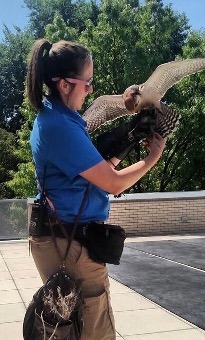
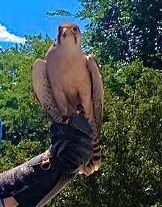
Staff member at the National Aviary training a Lanner Falcon (photo by author).

In the Summer of 2017, I participated in a program called Soar! On Skydeck at the National Aviary on Pittsburgh’s North Side. I signed up, along with a handful of other Aviary visitors, because I knew I could learn at a deeper level through firsthand observation of live birds of prey. The highly skilled trainer, who worked with a Lanner Falcon during the presentation, relied upon a thick leather glove so her left hand could serve as a suitable and talon-proof resting perch for the bird.

The highlight of the presentation was a hunting demonstration. The trainer first let the falcon circle above us for a short while. Then the bird saw a chunk of meat placed for it and dove quickly, spreading its wings at the last moment to slow down and grab the food with its sharp talons. The falcon, as I could see with my own eyes, was fast, fierce, and powerful, which is why it was used to represent a god in ancient Egypt.

The god Horus, represented as a falcon or a human with a falcon head, was a sun god as well as the ancient Egyptian god of kingship, representing the living king of Egypt. Falcons, along with other birds, could have easily been seen by everyone in ancient Egypt. The sight of a falcon soaring overhead near the sun would have been a particularly striking scene. The pharaoh was believed to be not merely a powerful ruler, but to be the embodiment of the god, Horus. The job of Horus was to protect Egyptians in their daily lives, just like the pharaoh. In recognition of Horus’s important role, people would decorate their tombs with falcons. In later periods the ancient Egyptians offered mummified falcons to Horus, gifts which were sometimes placed in a small coffin with a bronze falcon on top.

Lanner falcon
Lanner Falcon at National Aviary (photo by author)

Pittsburgh currently offers several falcon viewing opportunities. You can see Lanner Falcons, as I did at the National Aviary, but you can also watch the livestream of the Peregrine Falcon pair and their offspring in their nest on a high ledge of the Cathedral of Learning in Oakland! Because the feeding territory of these birds extends far beyond this University of Pittsburgh landmark, Peregrine Falcons can also be seen flying high above Schenley Park, and much of the University of Pittsburgh Campus. Occasionally the birds can even be heard screeching loudly near Carnegie Museum of Natural History and Carnegie Museum of Art!

Raina Holt is currently an intern for Carnegie Museum of Natural History’s Section of Anthropology. Museum staff, volunteers, and interns are encouraged to blog about their unique experiences and knowledge gained from working at the museum.

Related Content

Cats: The Archeological Site!

Wooden Sokar Falcon

Weighing She-Ra the American Kestrel

Carnegie Museum of Natural History Blog Citation Information

Blog author: Holt, Raina
Publication date: June 21, 2021

Share this post!

  • Share on Twitter Share on Twitter
  • Share on Facebook Share on Facebook
  • Share on Pinterest Share on Pinterest
  • Share on LinkedIn Share on LinkedIn
  • Share on Reddit Share on Reddit
  • Share via Email Share via Email

Share this post!

  • Share on Twitter Share on Twitter
  • Share on Facebook Share on Facebook
  • Share on Pinterest Share on Pinterest
  • Share on LinkedIn Share on LinkedIn
  • Share on Reddit Share on Reddit
  • Share via Email Share via Email

Filed Under: Blog Tagged With: ancient egypt, anthropology, archaeology, Egypt on the Nile, Raina Holt

  • « Go to Previous Page
  • Page 1
  • Page 2
  • Page 3
  • Page 4
  • Interim pages omitted …
  • Page 8
  • Go to Next Page »

sidebar

About

  • Mission & Commitments
  • Directors Team
  • Museum History

Get Involved

  • Volunteer
  • Membership
  • Carnegie Discoverers
  • Donate
  • Employment
  • Events

Bring a Group

  • Groups of 10 or More
  • Birthday Parties at the Museum
  • Field Trips

Powdermill

  • Powdermill Nature Reserve
  • Powdermill Field Trips
  • Powdermill Staff
  • Research at Powdermill

More Information

  • Image Permission Requests
  • Science Stories
  • Accessibility
  • Shopping Cart
  • Contact
  • Visitor Policies
One of the Four Carnegie Museums | © Carnegie Institute | Privacy Policy | Terms of Use | Accessibility
Rad works here logo