• Skip to primary navigation
  • Skip to main content
  • Skip to primary sidebar

Carnegie Museum of Natural History

One of the Four Carnegie Museums of Pittsburgh

  • Visit
    • Buy Tickets
    • Visitor Information
    • Exhibitions
    • Events
    • Dining at the Museum
    • Celebrate at the Museum
    • Powdermill Nature Reserve
    • Event Venue Rental
  • Learn
    • Field Trips
    • Educator Information
    • Programs at the Museum
    • Bring the Museum to You
    • Guided Programs FAQ
    • Programs Online
    • Climate and Rural Systems Partnership
  • Research
    • Scientific Sections
    • Science Stories
    • Science Videos
    • Senior Science & Research Staff
    • Museum Library
    • Science Seminars
    • Scientific Publications
    • Specimen and Artifact Identification
  • About
    • Mission & Commitments
    • Directors Team
    • Museum History
  • Tickets
  • Give
  • Shop

birding

February 14, 2019 by wpengine

Getting Ready for the Great Backyard Bird Count

So you want to take part in the Great Backyard Bird Count? You’ve got your nature notebook ready and you’ve found the perfect spot to birdwatch.  What do you do next?  The Great Backyard Bird Count website has a lot of resources to help you organize your bird counts and submit your information, so you should check those out before the bird count starts.  This post will give you a basic picture of how to document the birds you see and submit your observations properly.

Make a List, Check it Twice
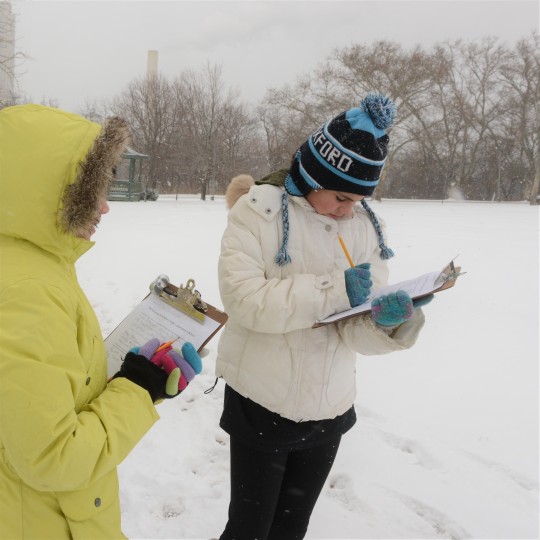
two people taking notes outside in winter
Photo credit: Jim Judkis

Creating a checklist before you start birdwatching will be really helpful in organizing your research.  You can print out this template, enter your location on the count’s website to create a checklist, or create your own guide using a list of birds found in your area.  When you enter your observations online, you will submit a “checklist” for each different session of birdwatching. These lists will document where and when you observed, what species you noticed, and how many individual birds you estimated per species.  A bird guide like the Merlin Bird ID app can help you identify birds you see.

You will want to make a new checklist for each new day, new location, or new time that you look for birds.  For example, you’ll need two checklists if you observe in the same location on two different days, in two different locations on the same day, or in the same location but at two separate times.  When you go to submit your observations, you will be asked to enter the location, date, time, and duration of your expedition.  You will also be asked whether you were walking, standing, sitting, or even riding in a car while you were counting.  Now go forth and count those birds!

Data Ready

Once you have collected your data, all you need to do is go online and enter in the number of birds you saw next to the name of the birds you noticed!  You can also add details about each bird species and if you were able to take pictures of any birds, you can include them as well.
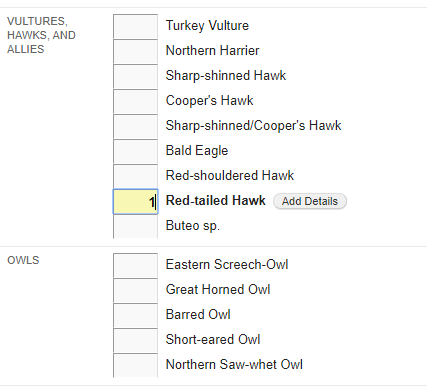
excerpt of data from bird count

Keep in Mind

The submission form will have a question at the end, “Are you submitting a complete checklist of the birds you were able to identify?” which can be confusing to some.  You should only click “no” if you are deliberately excluding a species from your list (for example you counted everything except crows).

Explore nature together. Visit Nature 360 for more activities and information.

Blog post by Melissa Cagan. 
Filed Under: Blog Tagged With: bird banding, bird hall, birding, Birds, Nature 360, Powdermill

February 7, 2019 by wpengine

Bird is the Word

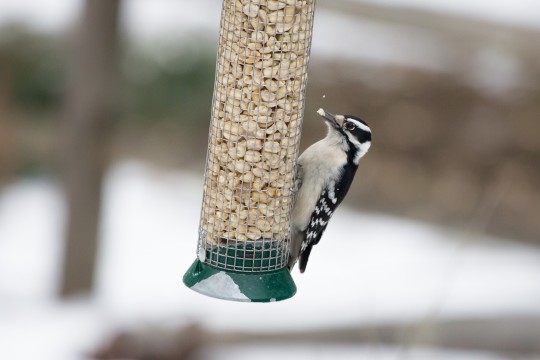
bird at bird feeder

February’s here and you know what that means… it’s time for the Great Backyard Bird Count!  Since 1998, people all over the world have participated annually in the Great Backyard Bird Count to collect information on wild birds by observing areas in their own neighborhoods.  Last year people from over 100 countries participated!  The Great Backyard Bird Count gathers data to help scientists figure out what is happening to bird populations around the globe.  That means YOU can contribute to science just by taking time to look outside your windows.  Scientists can’t be everywhere, and that’s where you come in!

Birds, Birds, Everywhere

The best part about the bird count is… it’s really easy (and free) to join in!  All you need is a way to note your observations (a task perfect for your handy nature notebook), access to the internet, and your enthusiasm!  You can look at a local park, your yard, or anywhere you want to go — data from everywhere is useful!

Ready, Set, Count!

bird on a branch

Before you start looking for birds, you’ll want to set up an online account through the Great Backyard Bird Count’s website.  Once that is ready, all you have to do is spend at least 15 minutes looking outside at any time between February 15th and February 18th.  Count the number of birds and different species you see, and then submit your observations through your online account. Scientists will use the data, and you can use the information to explore what kinds of birds other people have seen nearby.

Some questions you might help scientists answer are:

-“How does weather and climate change affect bird populations?

-“How are diseases that birds can catch, like the West Nile virus, affecting birds in different areas?”

-“Are there bird species that only live in certain locations such as cities or rural areas?”

Lord of the Wings

The Christmas Bird Count, which happens at the end of December, found over 24,000 birds in Pittsburgh in 2018.  There were 71 different species represented in the total count.  Let’s see if we can find even more birds this February!  Follow this link to get ready!

Explore nature together. Visit Nature 360 for more activities and information.

Blog post written by Melissa Cagan and Rachel Carlberg.

Filed Under: Blog Tagged With: Anthropocene, bird hall, birding, Birds, Education, Melissa Cagan, Nature 360, Rachel Carlberg

July 10, 2018 by wpengine

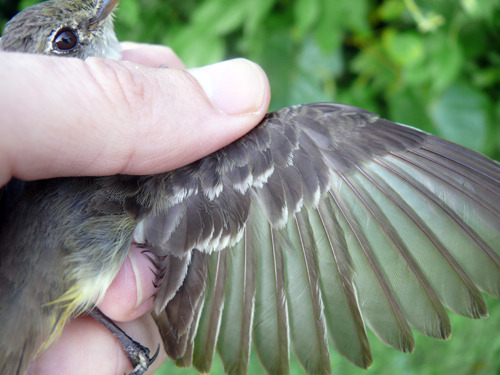
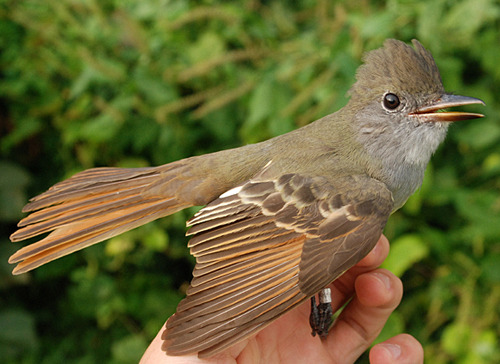
Adult Flycatcher

Adult Flycatcher

This adult Flycatcher undergoes the pre-basic molt of the wintering grounds. These adults can be readily identified by their white bars and wear on the feather tips.


Powdermill Nature Reserve’s avian research center is part of Carnegie Museum of Natural History’s biological research station in Rector, Pennsylvania.  The research center operates a bird banding station, conducts bioacoustical research, and performs flight tunnel analysis with the goal of reducing window collisions.


Filed Under: Blog Tagged With: avian research, bird banding, birding, Birds, nature, parc, Powdermill, Powdermill Nature Reserve, research

July 10, 2018 by wpengine

How Birds Breathe with their Butts

by Chase D. Mendenhall

The avian respiratory system is the most efficient in the animal kingdom, which explains how birds get enough oxygen to power flight, even at high altitudes where oxygen is scarce. A key feature that makes avian respiration special is the fact that they have static lungs and breath unidirectionally by breathing with air sacs throughout their body instead of diaphragms common in other land animals.

When a bird draws in a breath of air, it travels through the nares (or nostrils) down the trachea into a series of posterior air sacs located in the thorax and rump—in their butts. When a bird exhales that same breath, it does not leave the body as it does with mammals but rather moves into the lung where oxygen is absorbed and carbon dioxide expelled. When a bird inhales for the second time, that same breath of air moves from the lungs into the anterior air sacs. The second and last exhalation is when the stale air leaves the bird’s body through the nares.

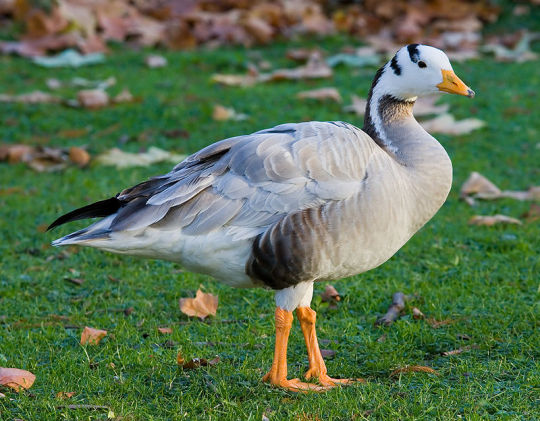
Every breath a bird takes requires two breathing cycles to complete a single breath, making the air passing through the lung unidirectional and always fresh and full of oxygen. Bird lungs are small and rigid, with the gas exchange region of their anatomy organized into a series of parallel tubes that bring deoxygenated blood into the lung at the opposite direction the air is flowing. This “counter-current” gas exchange is efficient and unique to bird lungs and partly enables species, such as the Bar-headed Goose (Anser indicus), to fly over the summit of Mt. Everest without issue. Human explorers, on the other hand, struggle for fresh air at 29,029 feet above sea level because mammalian lungs never expel all the stale air during exhalation, making mammalian explorers long for the ability to use their butts to breath continuous fresh air like the birds.


Chase Mendenhall is Assistant Curator of Birds, Ecology, and Conservation at Carnegie Museum of Natural History. Museum employees are encouraged to blog about their unique experiences and knowledge gained from working at the museum.

Filed Under: Blog Tagged With: birding, Birds, Chase Mendenhall, nature

June 21, 2018 by wpengine

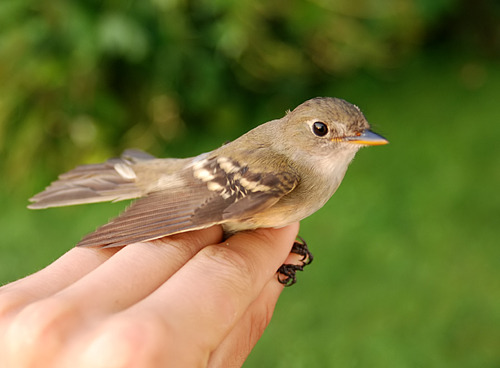
Trail’s Flycatcher

Trail's Flycatcher

This bird has an indistinct eye ring, dark gray legs, lack emargination on primary 6, and has a yellow-orange mouth lining.


Powdermill Nature Reserve’s avian research center is part of Carnegie Museum of Natural History’s biological research station in Rector, Pennsylvania.  The research center operates a bird banding station, conducts bioacoustical research, and performs flight tunnel analysis with the goal of reducing window collisions.


Filed Under: Blog Tagged With: birding, Birds, parc, Powdermill, Powdermill Nature Reserve

June 7, 2018 by wpengine

Great-crested Flycatcher

Great-Crested Flycatcher

This bird can be identified as a HY by the molt limits among the greater coverts (or the limit among the median coverts).  Only one of these was banded at Powdermill in 2011.


Powdermill Nature Reserve’s avian research center is part of Carnegie Museum of Natural History’s biological research station in Rector, Pennsylvania.  The research center operates a bird banding station, conducts bioacoustical research, and performs flight tunnel analysis with the goal of reducing window collisions.


Filed Under: Blog Tagged With: avian research center, birding, Birds, parc, Powdermill, Powdermill Nature Reserve

  • Page 1
  • Page 2
  • Go to Next Page »

sidebar

About

  • Mission & Commitments
  • Directors Team
  • Museum History

Get Involved

  • Volunteer
  • Membership
  • Carnegie Discoverers
  • Donate
  • Employment
  • Events

Bring a Group

  • Groups of 10 or More
  • Birthday Parties at the Museum
  • Field Trips

Powdermill

  • Powdermill Nature Reserve
  • Powdermill Field Trips
  • Powdermill Staff
  • Research at Powdermill

More Information

  • Image Permission Requests
  • Science Stories
  • Accessibility
  • Shopping Cart
  • Contact
  • Visitor Policies
One of the Four Carnegie Museums | © Carnegie Institute | Privacy Policy | Terms of Use | Accessibility
Rad works here logo