• Skip to primary navigation
  • Skip to main content
  • Skip to primary sidebar

Carnegie Museum of Natural History

One of the Four Carnegie Museums of Pittsburgh

  • Visit
    • Buy Tickets
    • Visitor Information
    • Exhibitions
    • Events
    • Dining at the Museum
    • Celebrate at the Museum
    • Powdermill Nature Reserve
    • Event Venue Rental
    • Gift Cards
  • Learn
    • Field Trips
    • Educator Information
    • Programs at the Museum
    • Bring the Museum to You
    • Guided Programs FAQ
    • Programs Online
    • Climate and Rural Systems Partnership
  • Research
    • Scientific Sections
    • Science Stories
    • Science Videos
    • Senior Science & Research Staff
    • Museum Library
    • Science Seminars
    • Scientific Publications
    • Specimen and Artifact Identification
  • About
    • Mission & Commitments
    • Directors Team
    • Museum History
  • Tickets
  • Give
  • Shop

Blogs about Birds

Birds are incredibly important to Carnegie Museum of Natural History. The museum's Section of Birds contains nearly 190,000 specimens of birds. The most important of these are the 555 holotypes and syntypes. The Section of Birds staff also cares for approximately 196 specimens of extinct birds as well as specimens of many rare species collected decades—if not more than a century—ago.

January 24, 2019 by wpengine

“Amazing, just like a dinosaur!”

Exclamations like this are common among bird biologists, especially when face-to-face with a Pileated Woodpecker or a ferocious Chickadee. Decades of Jurassic Park films have caught us in a tautological trap where birds remind us of dinosaurs—because Hollywood models dinosaurs on birds. From the coordinated flock movements of chickens foraging to the reptilian eyes of a Heron, I often catch myself wanting to say, “Amazing, just like a dinosaur!” But, I restrain myself because my source is mostly Stephen Spielberg.

At the Carnegie Museum of Natural History something that makes the Section of Birds special is its proximity to a world-class collection of dinosaur fossils and the paleontologists they attract. PhD students, like Sam Gutherz from Ohio University, use our collections to study the pulmonary tissue and skeleton of birds to address questions regarding the evolution of the respiratory system in a range of archosaurs.
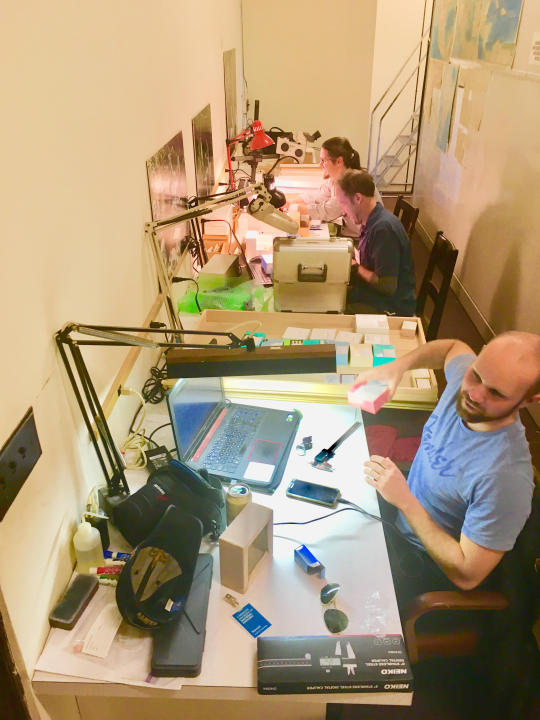
three people working at desks
Sam Gutherz and colleagues from Ohio University measure bird skeletons at the Carnegie Museum of Natural History to better understand the biology of dinosaurs.

Sam visits natural history museums for both the birds and the dinosaurs—systematically measuring bones and testing questions that ultimately support or refute the connection between birds and dinosaurs. Decades of work by scientists like Sam and his colleagues have built a case using multiple lines of evidence that birds evolved from dinosaurs. In fact, paleontologists have been so successful that bird biologists and Hollywood producers stand on their shoulders.

Chase Mendenhall is Assistant Curator of Birds, Ecology, and Conservation at Carnegie Museum of Natural History. Museum employees are encouraged to blog about their unique experiences and knowledge gained from working at the museum.
Filed Under: Blog Tagged With: bird hall, Birds, Chase Mendenhall, dinosaurs, Hall of Birds, paleontology

January 17, 2019 by wpengine

Dial M for a Murder (of crows)

By Melissa Cagan

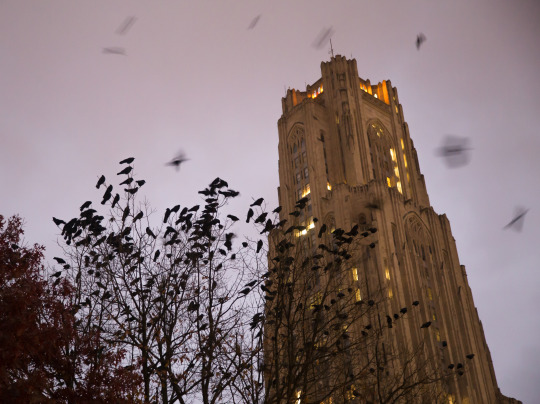
crows with cathedral of learning

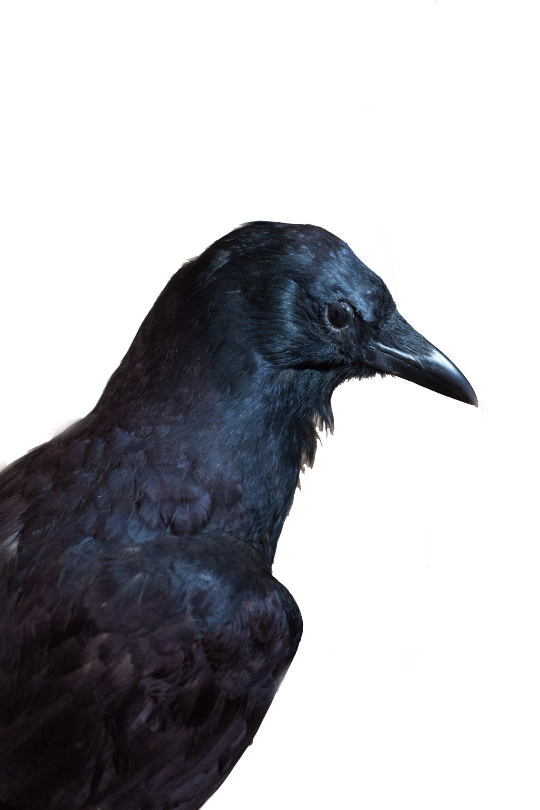
In the city of Pittsburgh, there are many different places you might find a rowdy roost of crows.  Crows gather to spend the night in areas with big trees and some source of light. Most people wouldn’t want to sleep with the lights on, but for crows, lights let them keep an eye out for possible predators like the fearsome great horned owl.

Fun Fact:  They’re not really that vicious, but a group of crows is often referred to as a “murder.”  Spooky, right?  One reason for the term “murder” could be that, as scavengers, crows are often associated with cemeteries or battlefields.

Duck, duck… crow?

Throughout winter, roosts of crows will shift around the city of Pittsburgh.  This means that you could spot a group of crows in one place and then three months later observe the same exact “murder” in another area of the city!

Where can I find crows?

Here are some of the places in Pittsburgh where you might have seen a crow (or a thousand!) in past years:

• Flagstaff Hill

• Homewood Cemetery (in October)

• Allegheny Cemetery (in October)

• By Bigelow Boulevard in the Hill District

• Next to the Cathedral of Learning

In fact, the University of Pittsburgh has started blasting predatory bird calls from the Cathedral to try and scare the crows away. Do you think this is working?  If you’re riding through Oakland keep both your eyes and ears open!

crow

I Spy with My Little Eye…

Next time the sun starts to set, go outside and see what sorts of things you notice.  Do you observe anything unusual happening with the birds in your area? You can even take along a camera or notepad to write down your observations.  Make a note of anything fun or interesting that stands out to you!

Explore nature together. Visit Nature 360  for activities and information.

Filed Under: Blog Tagged With: bird hall, Birds, Melissa Cagan, Nature 360, Pittsburgh

November 9, 2018 by wpengine

Keeping Birds Safe with GIS and Citizen Science

By Jon Rice and James Whitacre

Almost 600 million birds die every year in North America after colliding with buildings. BirdSafe Pittsburgh, which has been a museum program for over four years, has collected over 1,500 birds that collided with windows. These birds have been collected in Downtown and surrounding areas, and through our efforts, we have learned what increases the likelihood of birds colliding with windows.

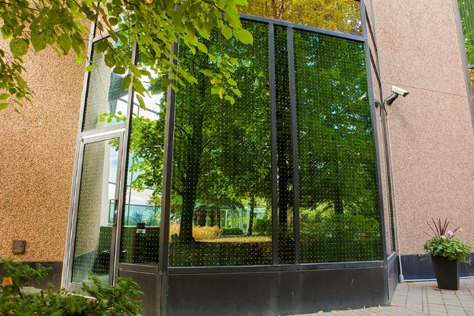
windows modified with a pattern birds can see

Locating and Researching Bird Strikes

Using the power of Geographic Information Systems (GIS), we have been tracking and collecting where birds have collided with windows. This will help us to find collision hotspots and assess the types of buildings that cause the most problems for birds. Our efforts so far have concentrated on downtown Pittsburgh with a crew of dedicated volunteers.

However, we are now inviting you – the public – to help us find bird strikes in your neighborhood. We have developed a form on our website for you to add bird strikes to our database. If you find a bird dead or stunned, you can help us add to our database of bird strikes using the form. It will guide you through how to add pictures of the bird, add the location to the map, and fill out the required data. Any bird added will help us expand our research.

We already know that skyscrapers, low-rise buildings, and residential houses alike threaten birds, albeit unequally. According to a study published in 2014, low-rises account for the majority of building related mortalities at 56%, with residential houses accounting for nearly all the rest at 44%, and high-rises only accounting for less than 1%. But, how do the buildings in downtown Pittsburgh and the surrounding neighborhoods fit into this picture?

By analyzing the precise locations of bird strikes in Pittsburgh using GIS, we hope to assess the types of buildings impacting bird deaths. By collecting fine scale data where birds strike windows, we could identify specific problem windows that birds strike more often than others. This would allow us to focus mitigation efforts to specific areas of concern rather than along an entire building façade. For instance, treating 10 windows on a building side instead of all 100 windows would result in considerable cost-savings while maintaining the same effect on decreasing bird strikes.

How You Can Help Save Birds

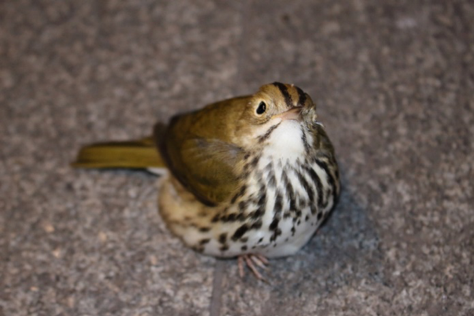
bird sitting on the sidewalk

Birds hit windows because of the reflections caused by sunlight hitting the glass and looking like open sky, trees or habitat. By breaking up the reflections with anything following a “2-inch-by-4-inch rule,” birds are less likely to strike the window. The 2-by-4 rule refers to the space between horizontal elements at no more than 2 inches apart, and the space between vertical elements at no more than 4 inches apart. These simple and cost-effective measures will reduce window collisions while maintaining the aesthetic qualities.

By helping us collect bird strike data and modifying the windows of your home or business, we can decrease the number of bird-window collisions and maintain stronger bird populations.

More information about BirdSafe Pittsburgh can be found at birdsafepgh.org.

Jon Rice is Citizen Science Assistant and James Whitacre is a GIS Research Scientist at Carnegie Museum of Natural History’s Powdermill Nature Reserve. Museum employees are encouraged to blog about their unique experiences and knowledge gained from working at the museum.
Filed Under: Blog Tagged With: Birds, birdsafe pittsburgh, James Whitacre, Jon Rice, Pittsburgh, Powdermill Nature Reserve

November 8, 2018 by wpengine

Ask a Scientist – How Are Birds Like Dinosaurs?

How are birds like dinosaurs? Assistant Curator of Birds, Chase Mendenhall, and Urban Bird Conservation Coordinator, Jonathan Rice, introduce the bird collection in the latest Ask a Scientist. Learn how the Section of Birds works with paleontologists to understand dinosaur behavior.

Ask a Scientist is a video series where we ask our research staff questions about the millions of amazing objects and specimens stored in our museum collection. Tune in on YouTube, and submit your own questions via Twitter @CarnegieMNH!

Filed Under: Blog Tagged With: Ask a Scientist, Birds, Chase Mendenhall, dinosaurs, Section of Birds

November 2, 2018 by wpengine

Doves of Peace

by Chase Mendenhall

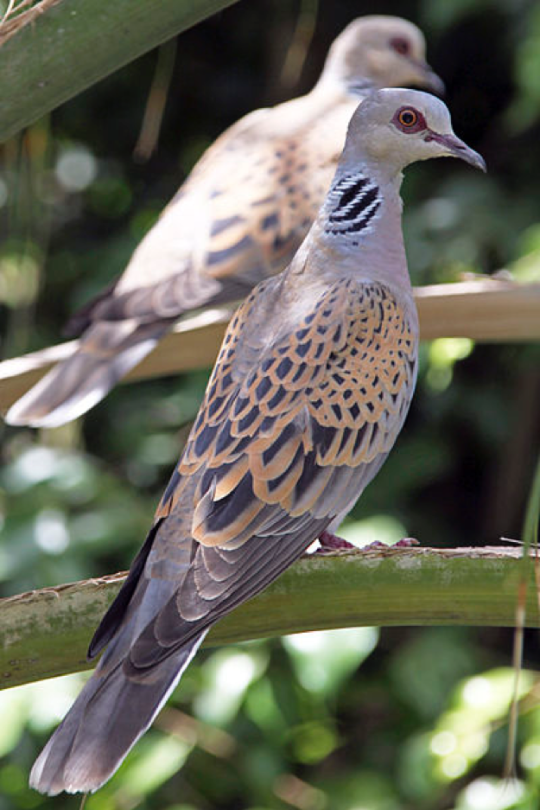
two doves on branches

In the wake of a tragedy that took the lives of 11 people in Pittsburgh, we reflect on the the collections housed at the Carnegie Museum of Natural History and find comfort among the doves — symbols of the people of Israel (Song of Songs Rabbah 2:14). Doves are of immense importance symbolizing human souls, sacrifice, and peace.

From the collection we share the European Turtledove (Streptopelia turtur) because it is listed as a species vulnerable to extinction and frequently written about in cultural texts. In fact, it was the stamina and swiftness of the Turtledove that aided Noah in his search for the holy land after the floods (Genesis 8:11). It is also the Turtledove’s loyalty as a mate that mused William Shakespeare to write poetry of an ideal love between a Turtledove and a Phoenix. But, perhaps the most fitting description and scientific namesake of the Turtledove is its cooing call, or the biblical Hebrew word “turtur,” which is a sound of mourning and a call for universal peace.

Together, we mourn the loss of so many innocent lives in Squirrel Hill and hope for peace alongside loved ones and family.

Chase Mendenhall is Assistant Curator of Birds, Ecology, and Conservation at Carnegie Museum of Natural History. Museum employees are encouraged to blog about their unique experiences and knowledge gained from working at the museum.
Filed Under: Blog Tagged With: bird, Birds, Chase Mendenhall

September 20, 2018 by wpengine

Urban Bird Conservation Coordinator Featured Photographer in Wildlife Newsletter

by Chase Mendenhall

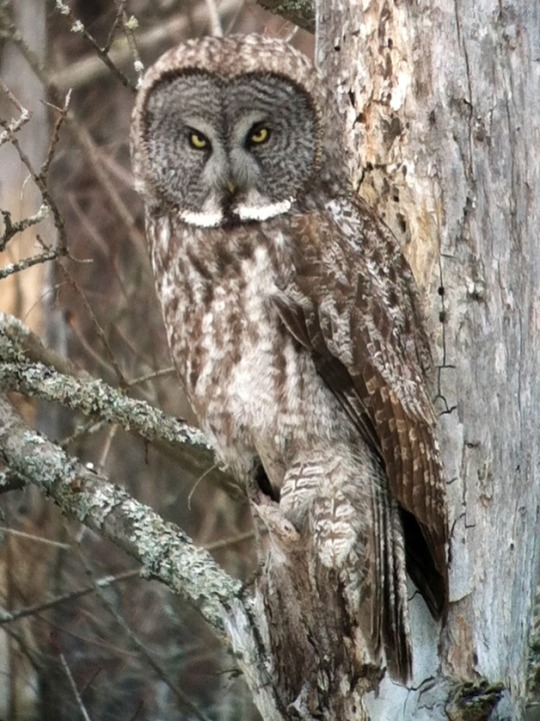
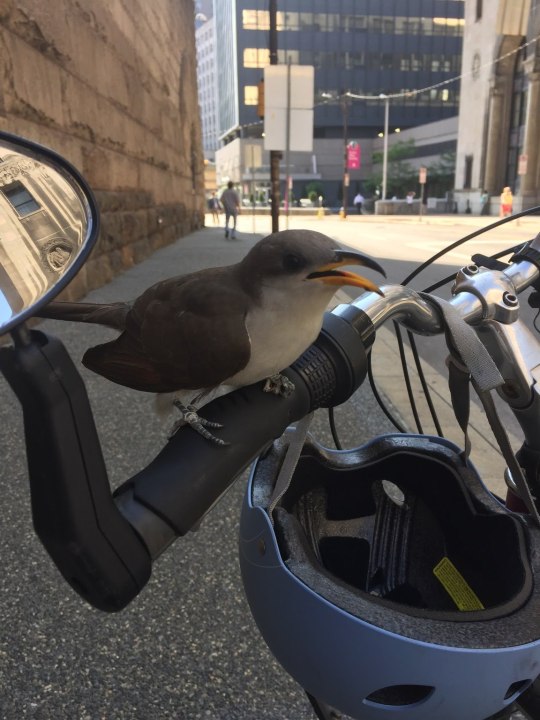
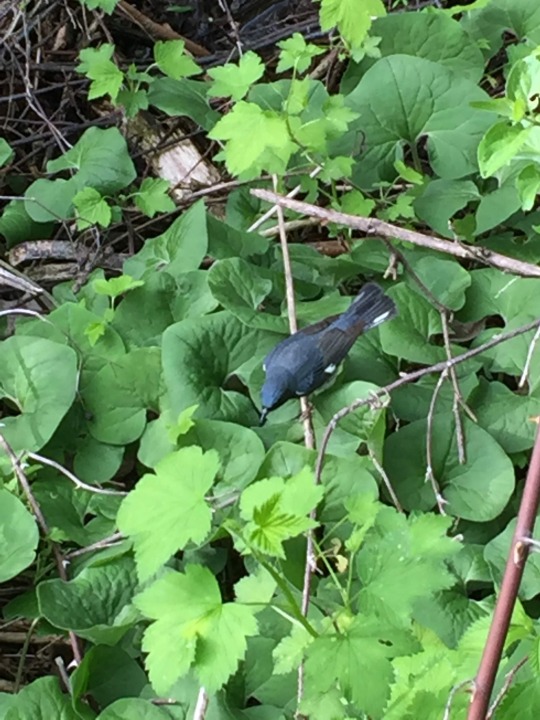
While outside collecting data for BirdSafe Pittsburgh or installing Motus antennas that locate migrating birds—Jonathan Rice, Urban Bird Conservation Coordinator at CMNH, is taking award-winning photos of wildlife. Jon was the featured photographer for the Northeastern Section of the Wildlife Society for summer 2018.

Check out some of his inspiring photographs, and his work at CMNH that prevents birds from colliding with glass and tracks migration using cutting-edge technology.

Great Grey Owl
Great Grey Owl (Strix nebulosa)

Yellow-billed Cuckoo
Yellow-billed Cuckoo (Coccyzus americanus)

Black-throated Blue Warbler
Black-throated Blue Warbler (Setophaga caerulescens)

Jonathan Rice is Urban Bird Conservation Coordinator and Chase Mendenhall is Assistant Curator of Birds, Ecology, and Conservation at Carnegie Museum of Natural History. Museum employees are encouraged to blog about their unique experiences and knowledge gained from working at the museum.
Filed Under: Blog Tagged With: Birds, birdsafe pittsburgh, Chase Mendenhall, photography

  • « Go to Previous Page
  • Page 1
  • Interim pages omitted …
  • Page 8
  • Page 9
  • Page 10
  • Page 11
  • Page 12
  • Interim pages omitted …
  • Page 20
  • Go to Next Page »

sidebar

About

  • Mission & Commitments
  • Directors Team
  • Museum History

Get Involved

  • Volunteer
  • Membership
  • Carnegie Discoverers
  • Donate
  • Employment
  • Events

Bring a Group

  • Groups of 10 or More
  • Birthday Parties at the Museum
  • Field Trips

Powdermill

  • Powdermill Nature Reserve
  • Powdermill Field Trips
  • Powdermill Staff
  • Research at Powdermill

More Information

  • Image Permission Requests
  • Science Stories
  • Accessibility
  • Shopping Cart
  • Contact
  • Visitor Policies
One of the Four Carnegie Museums | © Carnegie Institute | Privacy Policy | Terms of Use | Accessibility
Rad works here logo