• Skip to primary navigation
  • Skip to main content
  • Skip to primary sidebar

Carnegie Museum of Natural History

One of the Four Carnegie Museums of Pittsburgh

  • Visit
    • Buy Tickets
    • Visitor Information
    • Exhibitions
    • Events
    • Dining at the Museum
    • Celebrate at the Museum
    • Powdermill Nature Reserve
    • Event Venue Rental
  • Learn
    • Field Trips
    • Educator Information
    • Programs at the Museum
    • Bring the Museum to You
    • Guided Programs FAQ
    • Programs Online
    • Climate and Rural Systems Partnership
  • Research
    • Scientific Sections
    • Science Stories
    • Science Videos
    • Senior Science & Research Staff
    • Museum Library
    • Science Seminars
    • Scientific Publications
    • Specimen and Artifact Identification
  • About
    • Mission & Commitments
    • Directors Team
    • Museum History
  • Tickets
  • Give
  • Shop

botany hall

May 4, 2022 by Erin Southerland

Exploring the Role of Leaf Litter In Our Forests

by Abby Yancy

Leaf litter is the dead plant material that has fallen from trees, shrubs, and other plants. It hangs around on the ground surface until it decomposes, with some plant species producing leaf litter that takes longer to decompose than others. You may have read about stopping the practice of raking your leaves in the fall because of the important nutrients and habitat for beloved wildlife the fallen material provides in your own backyard. The same goes for our forests, an environment where scientists have studied this critical component for many decades. 
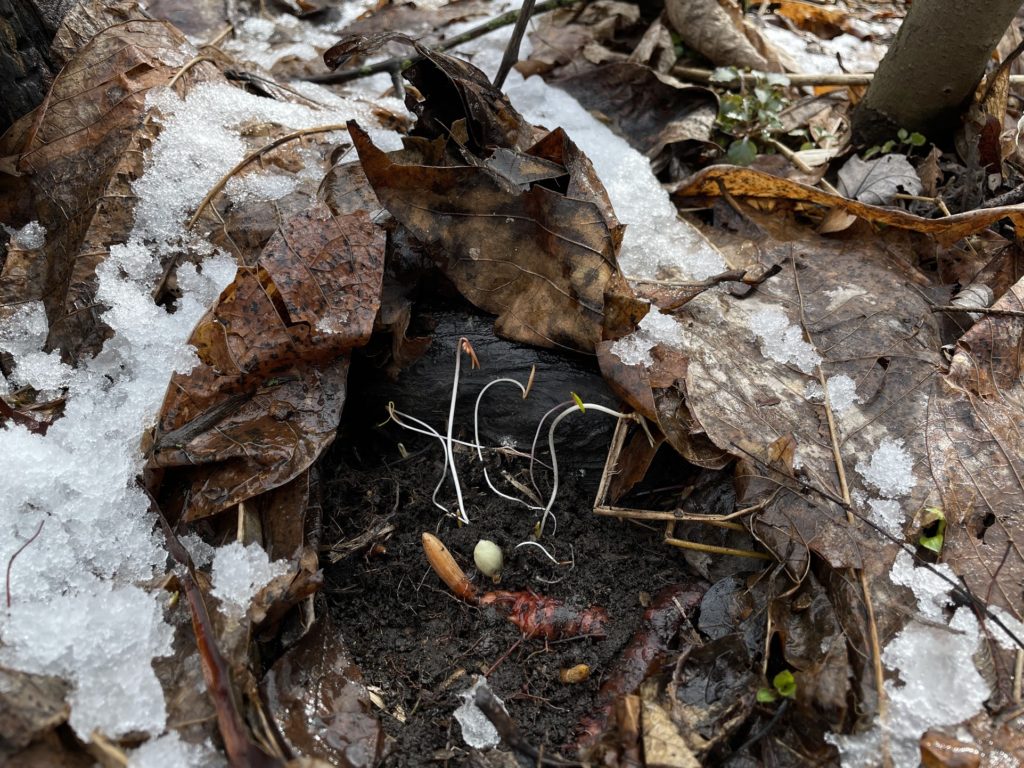
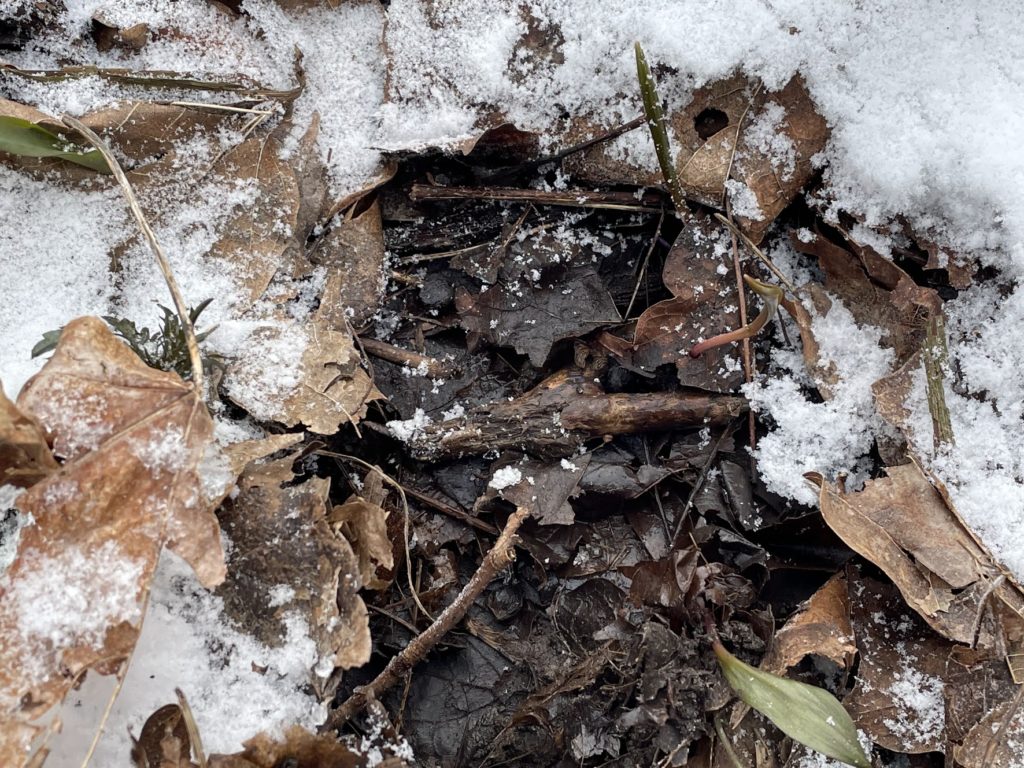
early wildflower growth under leaf litter and snow
Early growth of spring beauty (Claytonia virginica), mayapple (Podophyllum peltatum), and bloodroot (Sanguinaria canadensis) under a layer of pawpaw leaf litter on March 10, 2022. 

The leaf litter in forests acts as a protective layer for soil conditions. It creates a physical barrier between the soil surface and atmosphere that reduces soil drying, responds to atmospheric temperature fluctuations, and reduces erosion from precipitation events. Through decomposition, nutrients stored in the dead material re-enter the system and act as a natural fertilizer for plants throughout the year. The controls and nutrient cycling are especially important for forest wildflowers. 

Many forest wildflowers begin their aboveground life cycles in early spring before the trees have developed their leaves. During this time, light at the forest floor is highest, allowing wildflowers to gain high amounts of energy. However, before they emerge from below ground storage organs or germinate from seeds, the flowers are thought to rely on environmental cues to know when to begin this growth without the risk of frost damage. These environmental cues include soil temperature, which is regulated by the leaf litter layer. Despite many decades of research on the leaf litter component of forests, little is known about the influence of it on the timing of these lifecycle events (or phenology) for wildflowers. Past and ongoing research in the CMNH Section of Botany explores the changing phenology of many plants. One ongoing project is looking at the impact of early tree leaf out and the extended phenology of non-native shrubs on forest wildflower phenology and biological success. 
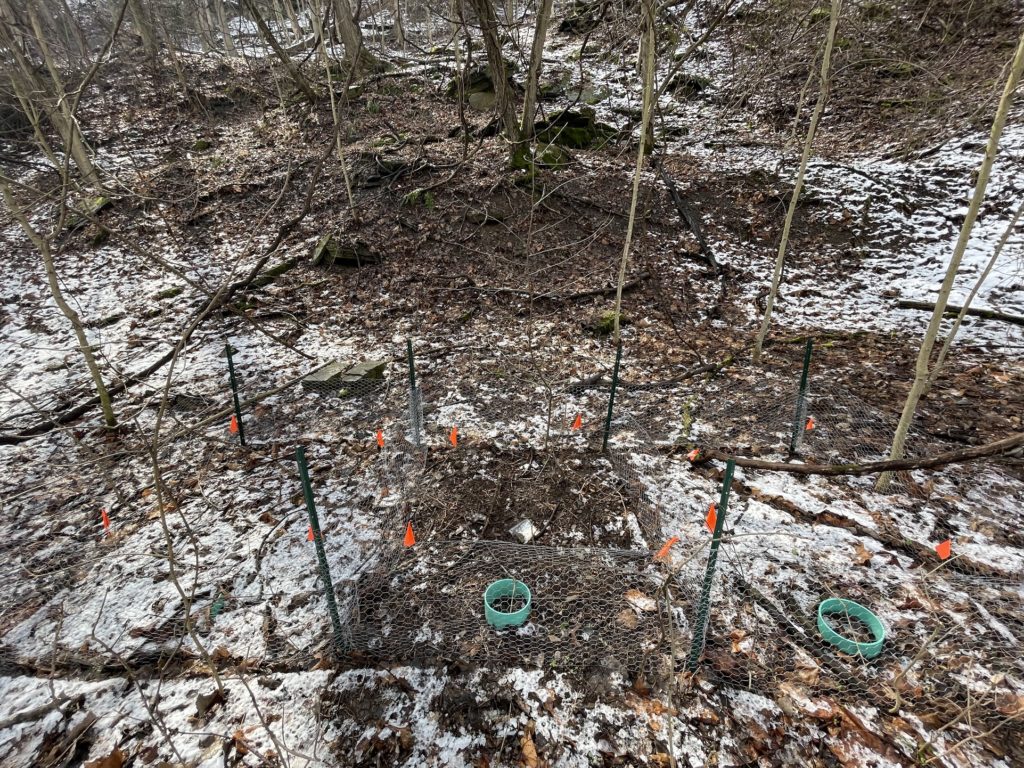
leaf litter research plots
March 10, 2022. An example of a leaf litter manipulation plot. From left to right: litter addition, litter removal, and control. 

The question of the leaf litter’s role in wildflower phenology arose after some simple, but fascinating, natural history observations early last spring—noted variations in phenology within our research site. We struggled to find some tagged individual plants, despite many of the same species being not only present in surrounding areas, but in full bloom. After moving the layer of leaf litter, we found the “missing” plants nearly a week behind in growth compared to their neighbors. These observations were more common than initially thought, and strongly related to the decomposition rate of each leaf litter species. Tree species that produced slower-decaying leaf litter delayed the phenology of plants more than those that produced faster decomposing litter. This underexplored relationship inspired one of the research projects I’m working on this year. 

My project is aimed at understanding how different amounts of leaf litter control the cues for wildflower phenology. Specifically, I want to know how leaf litter regulates the soil temperature and moisture within relatively small areas of our site and how the wildflowers respond. To test this, I have several leaf litter manipulation plots where I removed all leaf litter in some subplots and added it to another of the same size. To measure the changes related to leaf litter, I record soil temperature and moisture and wildflower phenology. 

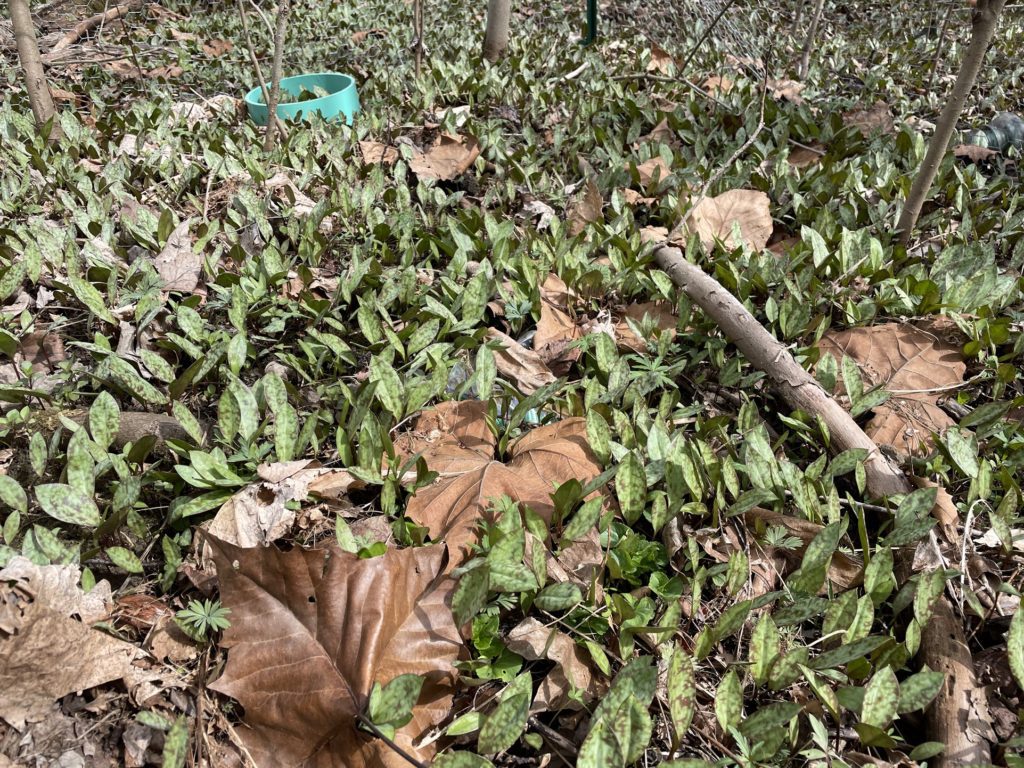
I began collecting this data in early March and have already noticed many differences. Before many of the flowers have started their aboveground lifecycles, they were already present in plots without leaf litter, but still hiding under the leaves in both the litter addition and the control plots. On a few of our random freezing days, the top layer of soil and plants were frozen in litter removal plots, while the same layer of soil was moist and visibly warmer in the litter addition plots. Additionally, one wildflower, trout lily, frequently grew around stray Sycamore leaves, which happen to be one of the slower decomposing species. 
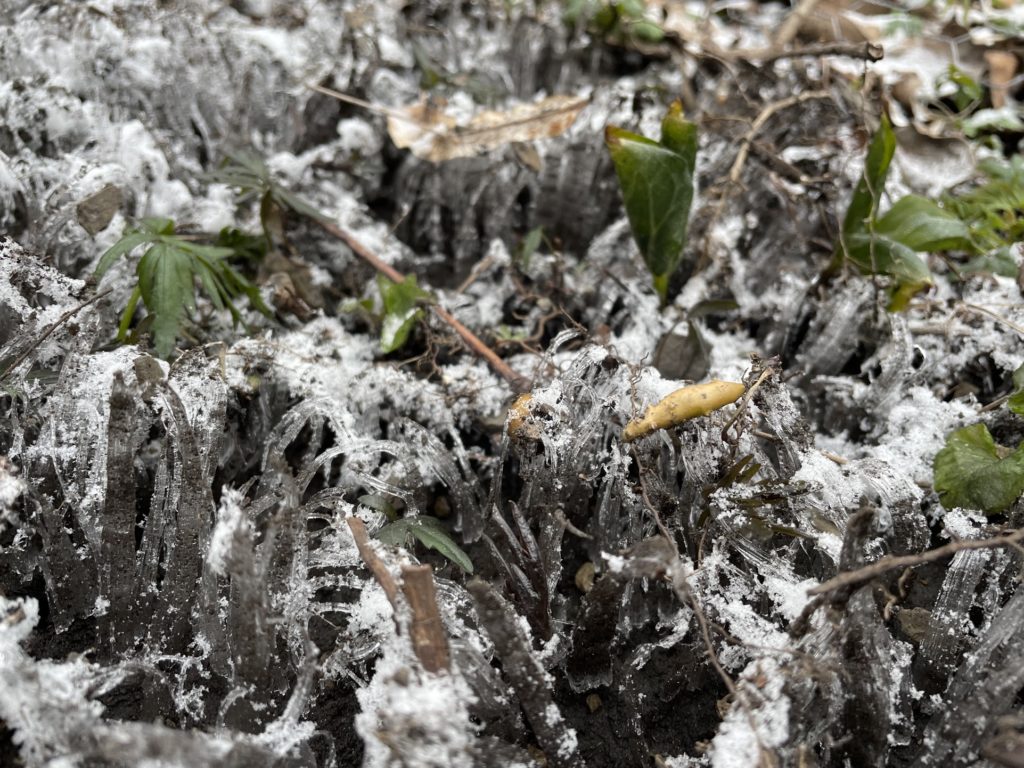
March 28, 2022. Leaf litter removal. Top layer of soil is frozen, leaving early growth on wildflowers at risk of frost damage.
March 28, 2022 (same day and time as above picture). Leaf litter addition. After moving some leaf litter, the soil is not frozen, and wildflowers have extra protection from the freezing temperatures. 
April 1, 2022. Control plot. Trout lily growing around stray Sycamore leaves. 

The findings from this project will not only allow us to gain a better understanding of relationships among species but will also provide a basis for understanding variations in phenology within a site. 

Stay tuned for final results from this project!  

Abby Yancy is a researcher in the Section of Botany. Museum employees blog about their unique experiences and knowledge gained from working at the museum.

Related Content

Beech Drops

Collected On This Day in 1982: One Specimen Isn’t Always Enough!

What Do Botanists Do On Saturday?

Carnegie Museum of Natural History Blog Citation Information

Blog author: Yancy, Abby
Publication date: May 4, 2022

Share this post!

  • Share on Twitter Share on Twitter
  • Share on Facebook Share on Facebook
  • Share on Pinterest Share on Pinterest
  • Share on LinkedIn Share on LinkedIn
  • Share on Reddit Share on Reddit
  • Share via Email Share via Email

Filed Under: Blog Tagged With: Abby Yancy, Botany, botany hall, Carnegie Museum of Natural History, Science News

March 25, 2021 by wpengine

Carnegie’s Cactus: Carnegie gigantea

by Patrick McShea

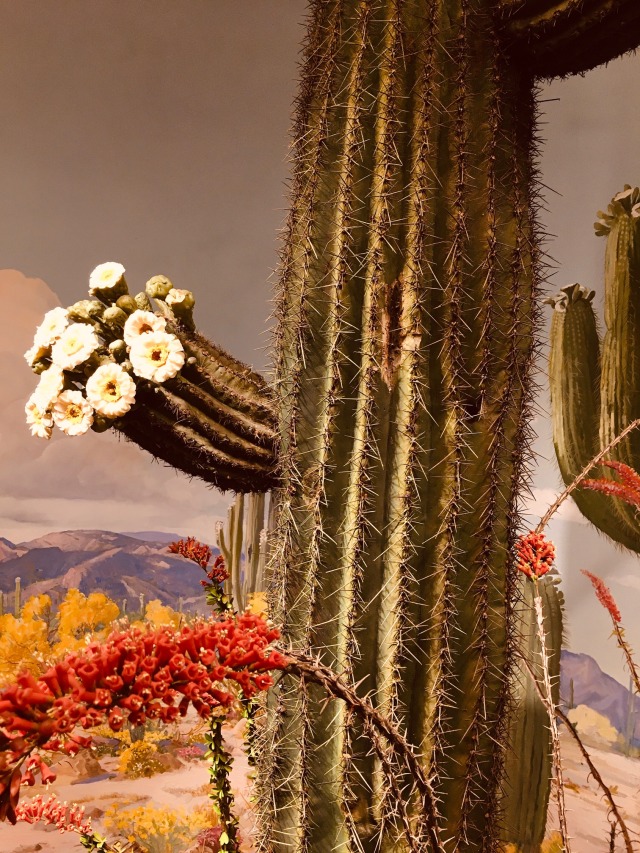
Diplodocus carnegii, a sauropod star of Dinosaurs in Their Time, is not the only large organism exhibited at Carnegie Museum of Natural History that bears the founder’s name. Within the Hall of Botany, the tree-sized saguaro cactus whose prickly form visually anchors the Sonoran Desert diorama is a species know to science as Carnegie gigantea.

Carnegie gigantea
A blooming saguaro in a diorama depicting the Sonoran Desert of southern Arizona.

The name honors Andrew Carnegie’s support, through the Carnegie Institution, for the 1903 establishment of the Desert Botanical Laboratory in Tucson, Arizona. This groundbreaking research facility, which enabled long-term studies of desert plant adaptations, was sold to the U.S. Forest Service in 1940, and later was purchased by the University of Arizona in 1956.

Today the facility is known simply as the Desert Laboratory, and visitors to its website find an immediate reference to its location on Tumamoc Hill, a site of cultural and spiritual significance to the Tohono O’odham and other Native peoples. A mission statement follows, clarifying the expanded scope of the Laboratory’s work:

The role of the Desert Laboratory is to build on the complementary strengths of culture, science, and community rooted at Tumamoc Hill and the larger Sonoran Desert to become an integrative hub of novel research, education, and outreach about how linked human and natural systems face the future of life in the desert.

Ongoing studies of the Desert Laboratory’s 5,800 saguaros fit perfectly into this mission because of the plant’s importance to the region’s Native peoples for thousands of years.

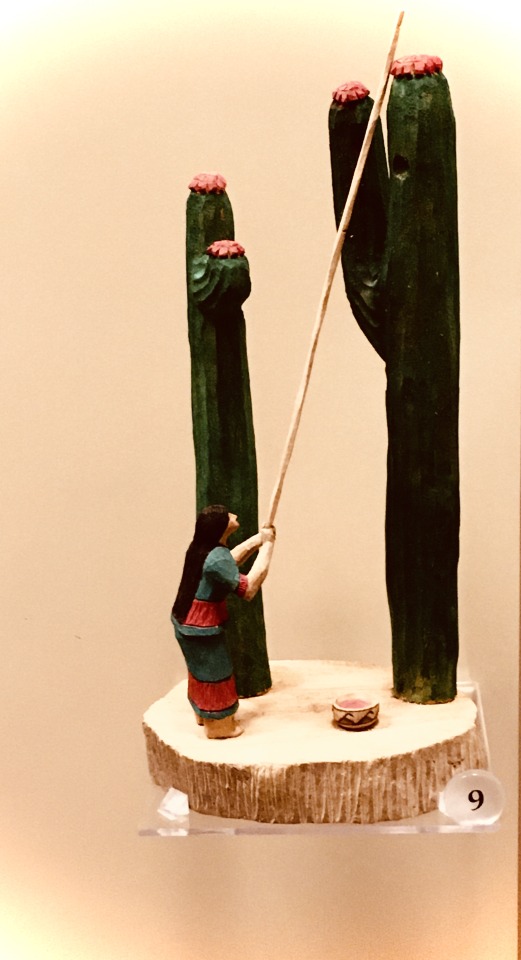
A carving depicting the saguaro harvest.

In Pittsburgh, museum visitors can learn something about the ancient connection between people and the iconic cactus by following a Hall of Botany stop with one in the Alcoa Foundation Hall of American Indians. Here, near the middle of the exhibition’s central corridor, a series of displays exploring use of plants by Native peoples includes a carving by artist Danny Flores (Tohono O’odham) that depicts the traditional harvest of saguaro fruit by Tohono O’odham women.

Consider the walk between the blooming life-sized saguaro in the Sonoran Desert diorama and the tiny carved replica to represent a spring-into-summer transition when white cactus blossoms, pollinated by bird, bat, or insect, transform into ripening red fruit.

A text panel near the model explains how gathered fruit is boiled to create a syrup which is then fermented into wine used in rituals invoking the summer rains to begin. The label also identifies the source of the specialized harvesting tool, an implement as long as a saguaro is tall. The pole is a saguaro rib, a part of the wood skeleton that once helped to hold a massive cactus upright.

Patrick McShea works in the Education and Visitor Experience department of Carnegie Museum of Natural History. Museum employees are encouraged to blog about their unique experiences and knowledge gained from working at the museum.

Related Content

Cactuses, and the Spine of Appalachia

Plant Blindness

Groundhog Architecture

Carnegie Museum of Natural History Blog Citation Information

Blog author: McShea, Patrick
Publication date: March 25, 2021

Share this post!

  • Share on Twitter Share on Twitter
  • Share on Facebook Share on Facebook
  • Share on Pinterest Share on Pinterest
  • Share on LinkedIn Share on LinkedIn
  • Share on Reddit Share on Reddit
  • Share via Email Share via Email

Share this post!

  • Share on Twitter Share on Twitter
  • Share on Facebook Share on Facebook
  • Share on Pinterest Share on Pinterest
  • Share on LinkedIn Share on LinkedIn
  • Share on Reddit Share on Reddit
  • Share via Email Share via Email

Filed Under: Blog Tagged With: Andrew Carnegie, botany hall, Educators, Museum from Home, Pat McShea

November 13, 2020 by wpengine

Collected on this Day 105 years ago

So long, leaves.

Autumn has fallen.

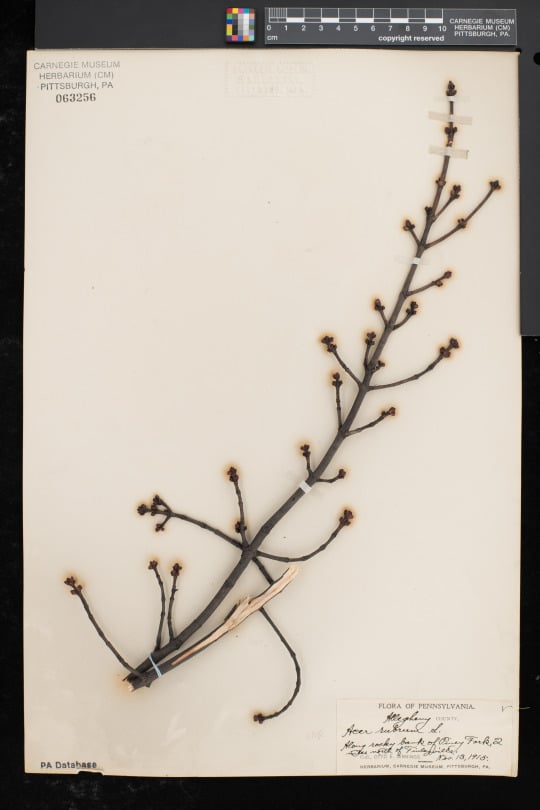
specimen of red maple on herbarium sheet

This specimen of red maple (Acer rubrum) was collected on November 13, 1915 by Otto Jennings near Finleyville, Pennsylvania (about 30 miles south of Pittsburgh).  Jennings was an influential botany curator (and biology professor at University of Pittsburgh and director of Carnegie Museum, among many other roles through his many decades career at the museum).

Just imagine how beautifully red these leaves must have been.   And you’ll have to imagine because this specimen is just twigs!

But upon closer look, the twigs have a lot to admire.  As with other deciduous trees in Pennsylvania, the buds are primed and ready.  In spring (as early as March for red maple!), these buds will swell and flowers will emerge.  Leaves will follow.

But first, we wait it out through winter.

Pay attention to tree buds this winter. They have a lot to say.

Find this red maple specimen here (along with 512 others!).

Check back for more! Botanists at the Carnegie Museum of Natural History share digital specimens from the herbarium on dates they were collected. They are in the midst of a three-year project to digitize nearly 190,000 plant specimens collected in the region, making images and other data publicly available online. This effort is part of the Mid-Atlantic Megalopolis Project (mamdigitization.org), a network of thirteen herbaria spanning the densely populated urban corridor from Washington, D.C. to New York City to achieve a greater understanding of our urban areas, including the unique industrial and environmental history of the greater Pittsburgh region. This project is made possible by the National Science Foundation under grant no. 1801022.

Mason Heberling is Assistant Curator of Botany at Carnegie Museum of Natural History. Museum employees are encouraged to blog about their unique experiences and knowledge gained from working at the museum.

Related Content

Collected On This Day 98 Years Ago (Chestnuts)

Who Likes Teaberry? Collected 56 Years Ago

Ask a Scientist: How do you find rare plants?

Filed Under: Blog Tagged With: Botany, botany hall, collected on this day, Hall of Botany, Mason Heberling, Museum from Home, Science News

July 29, 2020 by wpengine

Collected on this Day in 1966: Santa Clauses

Christmas in July…”Santa Claus” floating in the air.

(Or I guess, technically Boxing Day in July, if that’s a thing.)

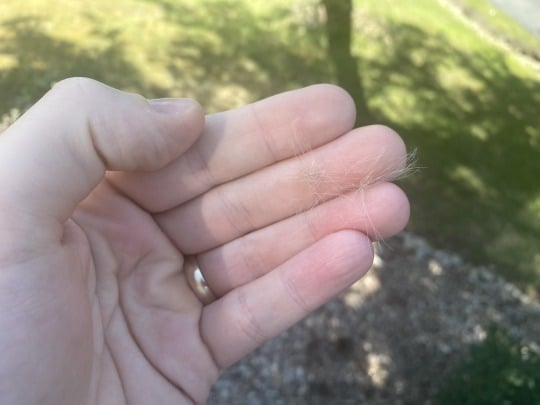
thistle seed fluff "Santa Claus" in hand

Make a wish!

Have you ever seen fluff floating by in the air, especially in late July, early August? Kids love chasing the fluff around, often referring to them as “Santas” or “Santa Clauses.”  You catch it, make a wish, and let them go again, floating away.

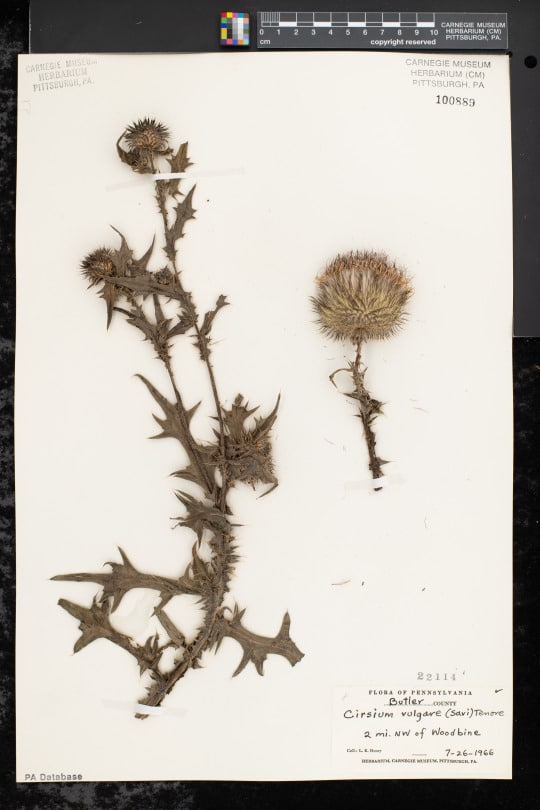
dried thistle specimen on herbarium sheet

These are seeds!  Most likely thistle seeds, like this specimen here.  Or other seeds that have similar “fluff”-like structures.  The botanical term for this “fluff” is pappus.  Pappus is a modified part of flowers in many species in the sunflower family, Asteraceae (think dandelion).  These structures help the seed disperse in the wind, floating away in the breeze, carrying the seed far away.  If you’ve tried to catch them, you know they float away in the air very easily. The seeds are small, and often times have already disconnected from the pappus when you catch them.

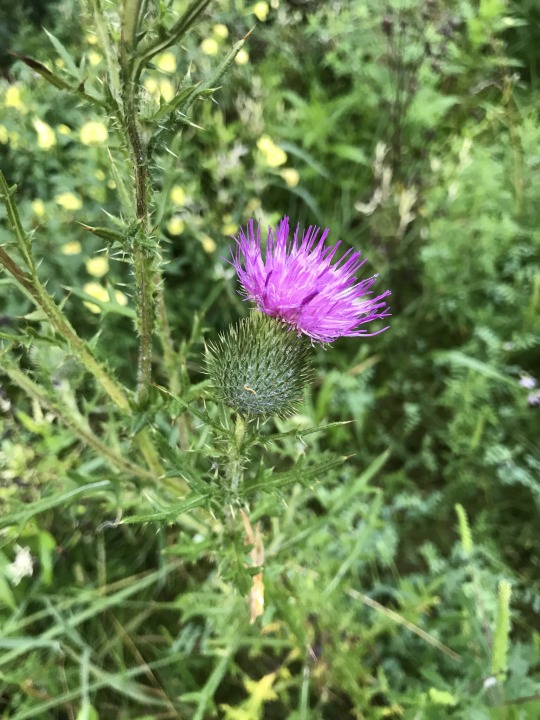
thistle

Check out the “Santa Claus” pappus on this specimen of bull thistle (Cirsium vulgare), collected on July 26, 1966 by Leroy Henry near Woodbine (Butler county), Pennsylvania.  Leroy Henry was a botany curator at the Carnegie Museum.  All species in the genus Cirsium are known as “thistles.”  They have distinctive spiny leaves and stems, with even more distinctive purple flower heads. There are native thistles, but many are introduced. Thistles are common in disturbed areas, and in and around agricultural fields across the country.  Bull thistle is native in Europe and Western Asia, but widely introduced across the world, including North America.  It is the national flower of Scotland, but the species is considered invasive in many places.

Keep an eye out for thistles, and “Santa Clauses.”  Don’t forget to make a wish.

Find this bull thistle specimens here.

Check back for more! Botanists at the Carnegie Museum of Natural History share digital specimens from the herbarium on dates they were collected. They are in the midst of a three-year project to digitize nearly 190,000 plant specimens collected in the region, making images and other data publicly available online. This effort is part of the Mid-Atlantic Megalopolis Project (mamdigitization.org), a network of thirteen herbaria spanning the densely populated urban corridor from Washington, D.C. to New York City to achieve a greater understanding of our urban areas, including the unique industrial and environmental history of the greater Pittsburgh region. This project is made possible by the National Science Foundation under grant no. 1801022.

Mason Heberling is Assistant Curator of Botany at Carnegie Museum of Natural History. Museum employees are encouraged to blog about their unique experiences and knowledge gained from working at the museum.

Related Content

Tulips in June?!

What’s So Special About Poinsettias?

Collected on this Day in 1984: Tobacco

Filed Under: Blog Tagged With: botany hall, collected on this day, Hall of Botany, Mason Heberling, Museum from Home, Science News, Section of Botany

May 19, 2020 by wpengine

Finding Resilience Through Plant Love

Feeling a little extra thankful for spring blooms? Taking extra care of your house plants? Urge to garden a little stronger than usual? People in Pittsburgh and across the US are turning to plants to find solace and a connection to nature this spring of COVID-19. Of course, people have always been drawn to plants, but this spring is different. If you’re not able to garden or are looking for some plant-y inspiration, look no further than PlantLoveStories.com. This is a project started in 2018 by a group of young women conservation scientists–including Dr. Sara Kuebbing, a professor at Pitt and collaborator with CMNH’s Mason Heberling, and me, a science communication fellow in the CMNH Anthropocene Section. At the site you’ll find first-hand stories about how plants have shaped people’s lives along with a sincere invitation for you to share a plant-based story of your own.

logo for Plant Love Stories
The Plant Love Stories logo designed by the author.

In the museum’s Anthropocene Section we believe that storytelling, emotions, and personal connections are keys to connecting with the public, communicating science, and empowering people to act. Plant Love Stories is a great example of these principles. Plant Love Stories was founded on the idea that plants tend to blend into the background and the public pays less attention to them than animals. We thought the public sharing of personal plant connections might lead, down the road, to greater awareness and funding for plant conservation.

The Plant Love Stories website is a blog, a collection of stories submitted by the public about the role of plants in shaping our lives, relationships, and, in a recent post involving swamp milkweed, resilience during the pandemic.

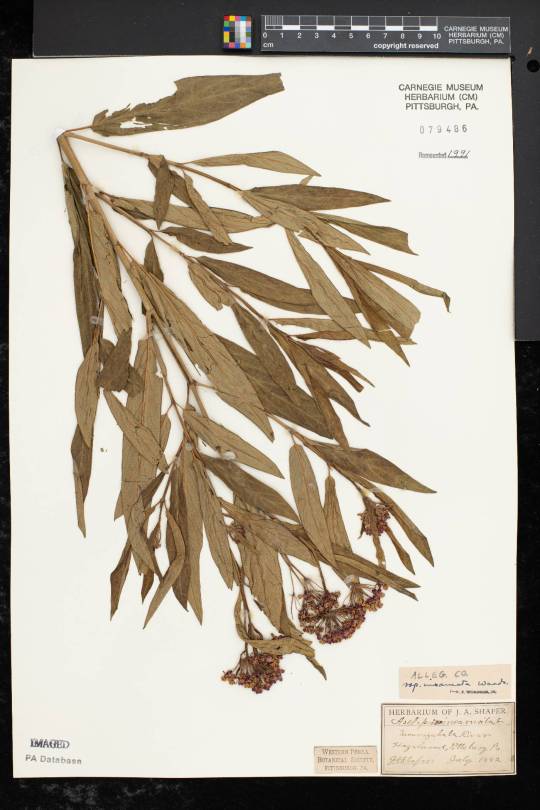
Plant Love Stories in the CMNH Herbarium: A swamp milkweed (Asclepias incarnata) specimen from the CMNH Herbarium collected in Allegheny County in 1882.

A number of Plant Love Stories have western PA roots (pun intended). We have a few stories written by Dr. Kuebbing’s Pitt students, including “Learning to Look Up” by Swapna Subramanian and “Fidel and the Hopeless, No-Good, Super Sad Raspberry Bush” by Fidel Anderson. I have posted two Plant Love Stories linked to Indiana County, where I grew up: one I wrote about how I did not break my brother’s arm (really, it wasn’t my fault), and one my aunt wrote about her grandmother, my great-grandmother, teaching her how to cook pokeweed. We also have a human love story from Butler County featuring flowering maple trees.

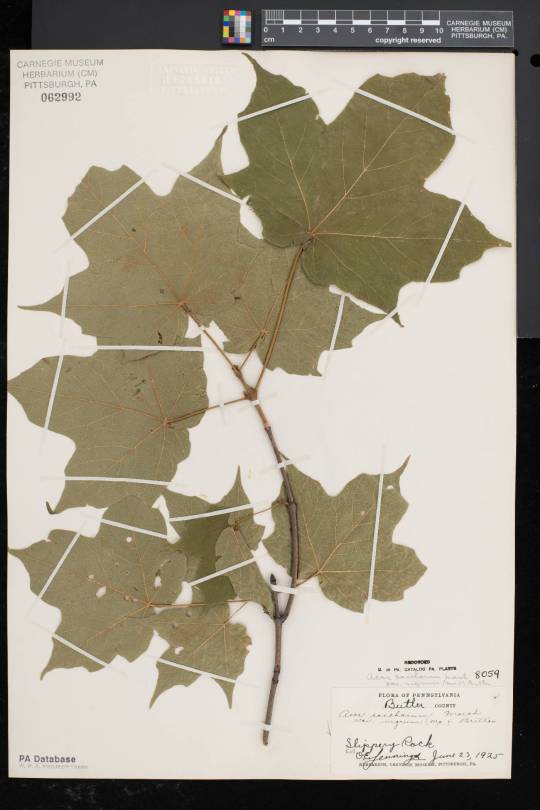
Plant Love Stories at the CMNH Herbarium: A sugar maple (Acer saccharum) specimen from the CMNH Herbarium collected in Butler County in 1925.

Whether you’re planting your biggest ever vegetable garden, tending a single tomato plant, or reading accounts posted on Plant Love Stories, try some plant love to help you get through this difficult time.

Bonnie McGill is a science communication fellow in the CMNH Anthropocene Section. Museum staff, volunteers, and interns are encouraged to blog about their unique experiences and knowledge gained from working at the museum.

Filed Under: Blog Tagged With: Anthropocene, Anthropocene Living Room, Anthropocene Section, Bonnie McGill, botany hall

May 19, 2020 by wpengine

Joining the iNaturalist Team!

Carnegie Museum of Natural History has promoted participation in the Pittsburgh City Nature Challenge for the past three years. Because I live outside the six-county “Challenge” region, I decided to help the best way I know how, by participating, as time permits, in the identification phase of the iNaturalist-based project.

Although publicity about the City Nature Challenge tends to focus on the value of participants documenting the diversity of life around them by taking pictures and submitting them via the iNaturalist app, the proper identification of submitted images is critically important.

My normal carpool commute time to the museum is usually a little over an hour. So, I decided that what would normally be my commute time to work would become my iNaturalist identification time. This process proved to be enlightening in several ways.  First was the digital proof that a lot of people in the Pittsburgh region are interested in the outdoors. That is a good thing! Second, was the ample evidence that people of all ages got involved in a project that can potentially help me and other scientists track what is going on in the outdoors. Also, a good thing. Submitted images can help us track phenology, the timing of recurring events such as plant blooming or fruiting.

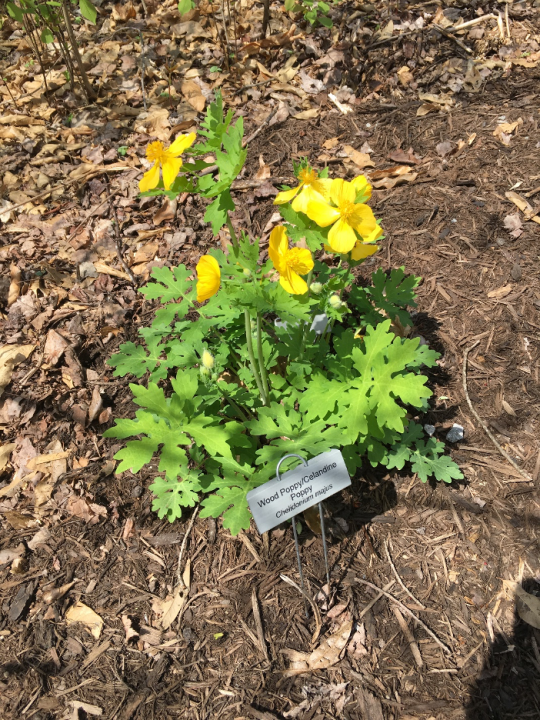
Photo of Stylophorum diphyllum mislabeled as Chelidonium majus in a native plant garden. Credit: BL Isaac

We can also use iNaturalist records for distribution studies. For instance, there is a “native” plant known as the woods-poppy (Stylophorum diphyllum) that we don’t have any records of from natural populations in the Commonwealth of Pennsylvania. There are nine documented Pennsylvania specimens in herbaria that I am aware of. Only one of those is older than I am.  The locality data on it is very vague and suspect as to whether it is really from Pennsylvania. (“Probably near Zelienople” is a far from precise location.) The other eight specimens are all known to be from cultivated populations. These specimens are from only three counties. State botanists have been discussing and debating this plant for several decades. It is native in Ohio and west, but is it native in Pennsylvania? There are now nearly 300 observations of woods-poppy (Stylophorum diphyllum) from across Pennsylvania on iNaturalist.

What is going on here? Have botanists just been overlooking this thing for decades?  Is it escaping from cultivated populations?  I know that it is being sold in native plant nurseries, so are folks just buying it and planting it out and about?  I do know that we need to get out and get some of these populations documented. Maybe by visiting some of the sites we can postulate why this plant that wasn’t seen in Pennsylvania for centuries is now popping up everywhere.

I have also learned that there is plenty of room for educating people on the importance of knowing how to identify plants.  It is almost scary the number of people (it doesn’t take many) who have trouble identifying poison ivy. There are also plenty of problems with identifying common backyard plants.  I have been active the last few years with plant identification workshops, and there is certainly a need for more of these. I’ll continue to learn as I continue to help identifying plants for the City Nature Challenge while I “commute” to work. I’m eager to see what other mysteries may pop up that pique my curiosity about the world around us.

Bonnie Isaac is the Collection Manager in the Section of Botany. Museum staff, volunteers, and interns are encouraged to blog about their unique experiences and knowledge gained from working at the museum.

Related Content

City Nature Challenge

City Nature Challenge Recap

The City Nature Challenge Family Experience

Carnegie Museum of Natural History Blog Citation Information

Blog author: Isaac, Bonnie
Publication date: May 19, 2020

Share this post!

  • Share on Twitter Share on Twitter
  • Share on Facebook Share on Facebook
  • Share on Pinterest Share on Pinterest
  • Share on LinkedIn Share on LinkedIn
  • Share on Reddit Share on Reddit
  • Share via Email Share via Email

Share this post!

  • Share on Twitter Share on Twitter
  • Share on Facebook Share on Facebook
  • Share on Pinterest Share on Pinterest
  • Share on LinkedIn Share on LinkedIn
  • Share on Reddit Share on Reddit
  • Share via Email Share via Email

Filed Under: Blog Tagged With: Bonnie Isaac, botany hall, City Nature Challenge, iNaturalist, Section of Botany

  • Page 1
  • Page 2
  • Page 3
  • Page 4
  • Go to Next Page »

sidebar

About

  • Mission & Commitments
  • Directors Team
  • Museum History

Get Involved

  • Volunteer
  • Membership
  • Carnegie Discoverers
  • Donate
  • Employment
  • Events

Bring a Group

  • Groups of 10 or More
  • Birthday Parties at the Museum
  • Field Trips

Powdermill

  • Powdermill Nature Reserve
  • Powdermill Field Trips
  • Powdermill Staff
  • Research at Powdermill

More Information

  • Image Permission Requests
  • Science Stories
  • Accessibility
  • Shopping Cart
  • Contact
  • Visitor Policies
One of the Four Carnegie Museums | © Carnegie Institute | Privacy Policy | Terms of Use | Accessibility
Rad works here logo