• Skip to primary navigation
  • Skip to main content
  • Skip to primary sidebar

Carnegie Museum of Natural History

One of the Four Carnegie Museums of Pittsburgh

  • Visit
    • Buy Tickets
    • Visitor Information
    • Exhibitions
    • Events
    • Dining at the Museum
    • Celebrate at the Museum
    • Powdermill Nature Reserve
    • Event Venue Rental
  • Learn
    • Field Trips
    • Educator Information
    • Programs at the Museum
    • Bring the Museum to You
    • Guided Programs FAQ
    • Programs Online
    • Climate and Rural Systems Partnership
  • Research
    • Scientific Sections
    • Science Stories
    • Science Videos
    • Senior Science & Research Staff
    • Museum Library
    • Science Seminars
    • Scientific Publications
    • Specimen and Artifact Identification
  • About
    • Mission & Commitments
    • Directors Team
    • Museum History
  • Tickets
  • Give
  • Shop

botany hall

May 15, 2020 by wpengine

Going Digital for Nature

The Section of Botany continues to make progress on our NSF funded Mid-Atlantic Megalopolis digitization project. This massive three-year effort involves the creation of a searchable database of nearly a million herbarium specimens from thirteen institutions within the urban corridor stretching from New York City to Washington, D.C. 

Although the imaging portion of the project has come to a screeching halt with no access to the specimens and the camera, work continues with the processing and posting of existing images. Since 2018, when the Museum became involved in this project, critical work has been masterfully handled by Curatorial Assistant Sarah Williams. Please check out our collection and their images at midatlanticherbaria.org.

Despite all work being performed away from the museum since March 14, great strides have been made in getting specimens georeferenced. This term refers to the electronic pairing of the historic recorded location for each collected plant with an established system of geographic ground coordinates. In an effort to keep this project on schedule, I have spent about half my time working on it, adding over 7000 images to our Symbiota portal and georeferencing over 3800 specimens.
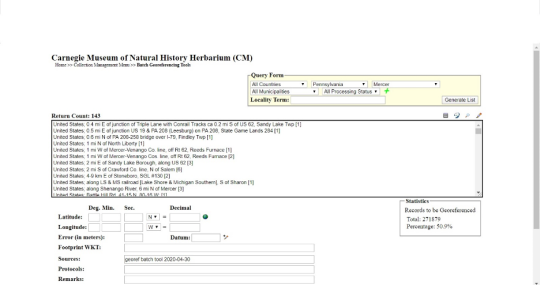
Screenshot of georeferencing portal for CM specimens.

With more images going up almost every day, the georeferencing problems have become easier to find and fix. In addition to being able to see the specimen and its label, it is also possible to query where the collector was on a given day. So not only can we see if the data was possibly mistyped or misread, we can also check to see if the locality is within the known range for each species collected. All this associated information makes for fun sleuthing projects. With almost half of our specimens currently georeferenced, I am also currently working on fixing problems with localities that map outside of the geopolitical unit to which they were assigned.
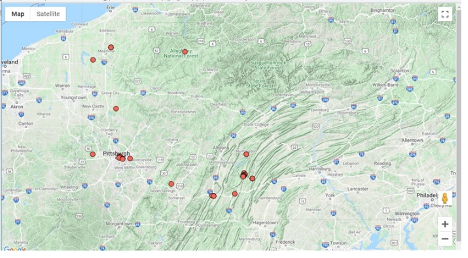
Screenshot of Pennsylvania locations with collections by former Botany Curator, Dr. Dorothy Pearth.

Georeferencing has become a bit of an obsession for a few of our volunteers and me because it combines history, plant collecting, and old maps into one big bundle. I must sometimes watch that I don’t go down some historical wormholes while looking for some very obscure place names. Some sets of georeferenced specimens have also added insights into the habits of some former Carnegie staff and volunteers and the haunts they liked to visit. I now know which collectors were precise in their collecting locality descriptions and which were more likely to stick to roadsides. We had at least one former curator who preferred to make localities vague when they were near parks and another who seemed to favor collecting where roads crossed streams. Fun times were had by all electronic explorers, or at least by me, and I’m learning a lot in the process.

Bonnie Isaac is the Collection Manager in the Section of Botany at Carnegie Museum of Natural History. Museum staff, volunteers, and interns are encouraged to blog about their unique experiences and knowledge gained from working at the museum.
Filed Under: Blog Tagged With: Bonnie Isaac, Botany, botany hall, Section of Botany

April 29, 2020 by wpengine

From cultivation to invasion: a common route

Collected on this Day in 1937

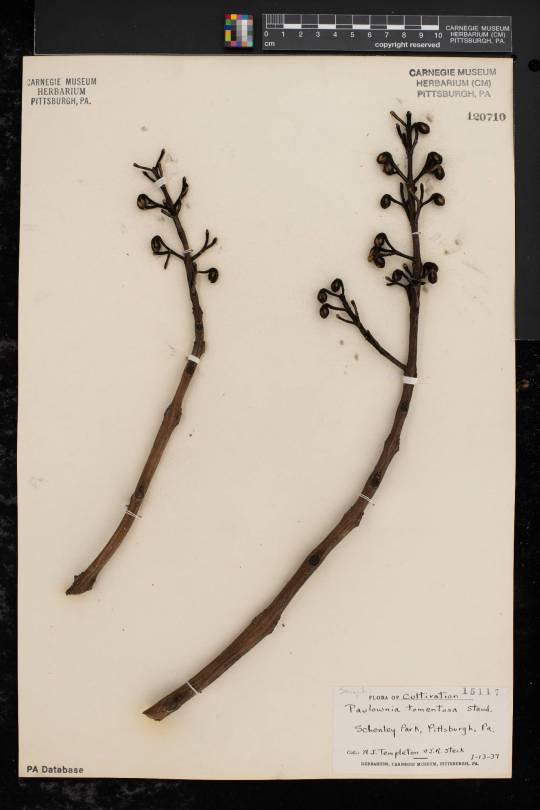
This specimen of princess tree (Paulownia tomentosa) was collected on January 13, 1937 in Schenley Park, Pittsburgh by R.J. Templeton and J.R. Steck.  Though subtle, note the heading on the label “Flora of Cultivation.”  This header suggests that this tree was planted in the park, rather than naturally occurring on its own.

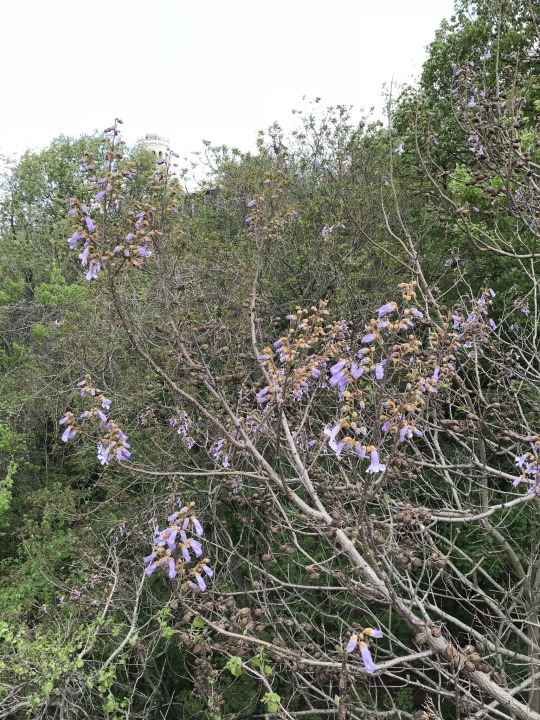
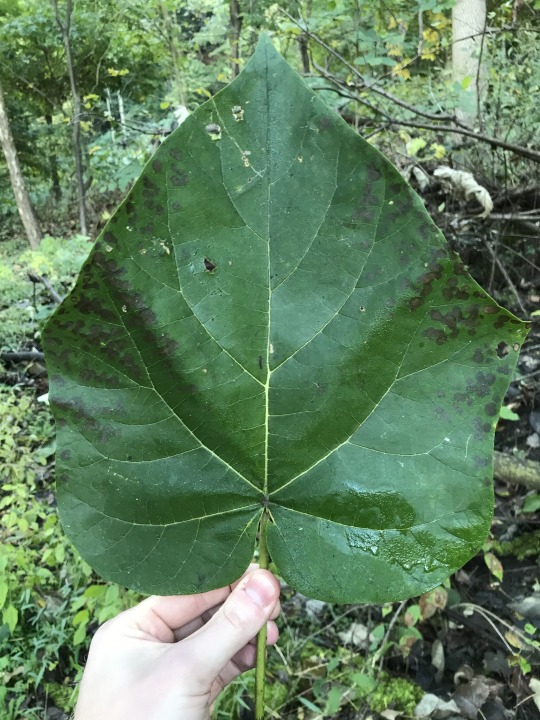
Princess tree has a remarkable presence – large wide leaves larger than your face (though you can’t see that in this winter collected specimen) and very showy, fragrant flowers that burst from large buds in the spring.  Signs of the flowers/fruits remain obvious on the branches year round.

Princess tree is a common urban weedy tree that is not native to Pennsylvania or the United States. Rather, it is native to Central and Western China.  It was brought to Europe in the 1830s (and then to the US) by the Dutch East India Company, with many historical medicinal and ornamental uses, as well as its wood. The tree was named after a Romanov princess, the Grand Duchess Anna Pavlovna.

Princess tree can still be found in Schenley Park.  It is especially noticeable, with its flowers at eye level, as you walk or drive across the bridge from the museum to Phipps Conservatory (Schenley bridge).

Listed as invasive by the state, Princess tree should not be planted in Pennsylvania.  It grows quickly and actively spreads beyond its planting, into roadsides, streams, and disturbed forests with potential to displace native plants.

Find this specimen and more here: http://midatlanticherbaria.org/portal/collections/list.php?db=all&catnum=CM120710&othercatnum=1

Check back for more! Botanists at the Carnegie Museum of Natural History share digital specimens from the herbarium on dates they were collected. They are in the midst of a three-year project to digitize nearly 190,000 plant specimens collected in the region, making images and other data publicly available online. This effort is part of the Mid-Atlantic Megalopolis Project (mamdigitization.org), a network of thirteen herbaria spanning the densely populated urban corridor from Washington, D.C. to New York City to achieve a greater understanding of our urban areas, including the unique industrial and environmental history of the greater Pittsburgh region. This project is made possible by the National Science Foundation under grant no. 1801022.

Mason Heberling is Assistant Curator of Botany at the Carnegie Museum of Natural History. Museum employees are encouraged to blog about their unique experiences and knowledge gained from working at the museum.
Filed Under: Blog Tagged With: Anthropocene, Botany, botany hall, collected on this day, Hall of Botany, Mason Heberling, Museum from Home, Uprooted

February 6, 2019 by wpengine

Red Bird

By Patrick McShea

cardinal diorama

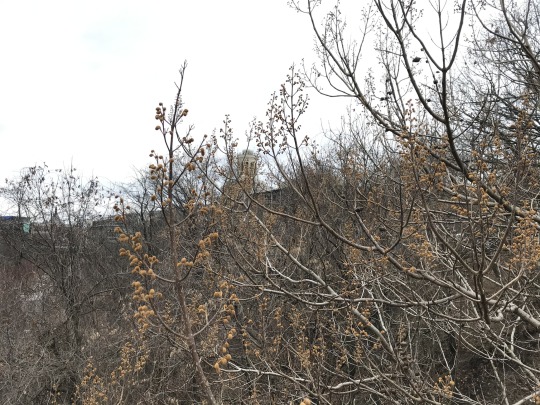
A detail in a Hall of Botany diorama can add much to our understanding of a popular songbird. Pictured above is a male Northern Cardinal, a species widely portrayed on cards and calendars amid snowy scenery.

Cardinals are certainly noticeable under winter conditions. The bright red of the male’s feathers and the reddish-brown plumage of the female stand out in snow covered landscapes. The range for this non-migratory species is enormous, however, and includes tropical regions.

The Hall of Botany bird, for example, adds color to a three-dimensional recreation of a tiny patch of Florida Everglades. Northern Cardinals have also long occupied suitable habitat much further south in Mexico and Guatemala.

The species, which has been deemed the official avian representative for seven U.S. states, was rarely seen anywhere in Pennsylvania until the 1890s. In Birds of Western Pennsylvania, the encyclopedic volume published in 1940 by the museum’s then Curator of Ornithology, W.E. Clyde Todd, growth of the local cardinal population is noted:

In recent years it has invaded the parks and residential sections of Pittsburgh in gradually increasing numbers, and it is seemingly as much at home there as it is in the wooded ravines in the vicinity of the city.”

cardinal diorama
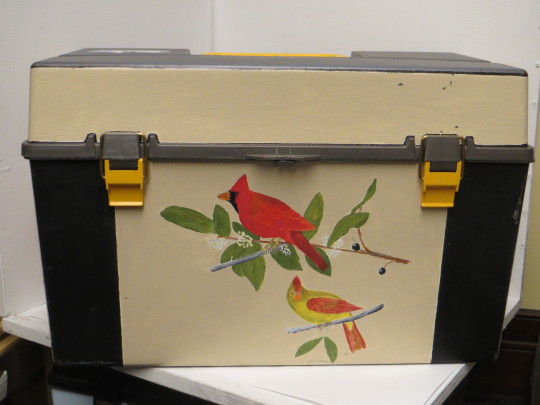
tool box with painted cardinals

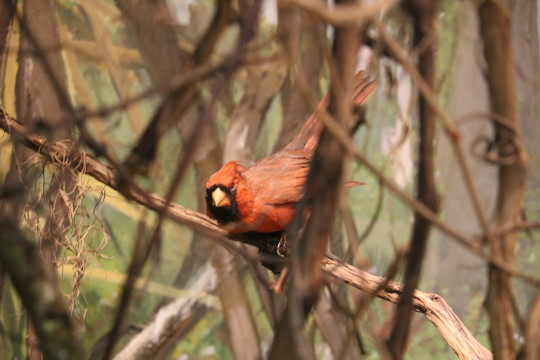
One measure of the Northern Cardinal’s continued popularity is requests by elementary teachers to borrow taxidermy mounts of the species from the museum’s Educator Loan Collection. Pictured above are a taxidermy mount and the “toolbox” it travels in. The illustration on the box is a recreation of John James Audubon’s cardinal portrait by Museum Educator Assistant John Franc.

Patrick McShea works in the Education and Visitor Experience department of Carnegie Museum of Natural History. Museum employees are encouraged to blog about their unique experiences and knowledge gained from working at the museum.
Filed Under: Blog Tagged With: bird hall, Birds, botany hall, Education, Educator Loans, Hall of Botany, Patrick McShea, pennsylvania, western pennsylvania

January 22, 2019 by wpengine

Fruit and Nut Trees Need Chill Time in the Winter

By Bonnie Isaac

It’s cold outside! There is snow on the ground. How could this possibly be good for plants?

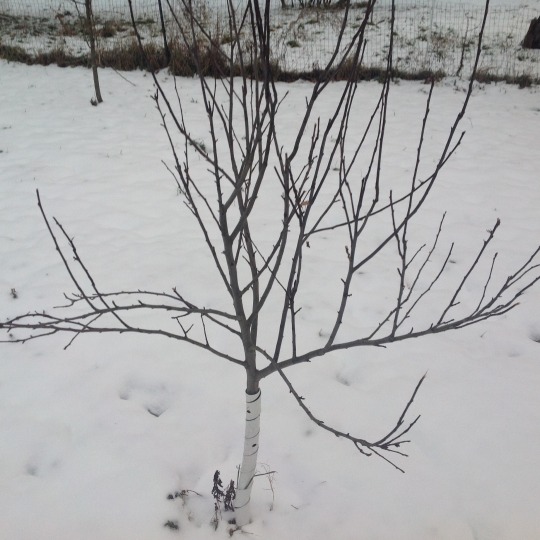
dwarf apple tree in the snow
A dwarf apple tree gettin’ its chill on! Photo credit: Joe Isaac

Many of our fruit and nut trees require a cold period to produce fruit. Without cold this winter, we won’t have fruit this fall.  If our fruit trees don’t get enough cold, then the flower buds may not open in the spring.  If the flower buds don’t open, they can’t get pollinated. If pollination doesn’t occur, then fruit doesn’t set. It’s an important cycle that is necessary for our food supply, especially if you like fruits and nuts. Apples, pears, plums, peaches, cherries, almonds, and walnuts all require varying amounts of chill time to set fruit.

Chill hours are the minimum amount of cold a tree needs before it will break dormancy. These trees then need a warm period to follow the chill. If it gets warm too soon or the chill requirement is met early, plants may break dormancy too soon, adding risk of a freeze or frost damage. The amount of fruit a tree sets will be affected if there is a late frost or an early warm spell. There is a delicate balance in nature which determines whether we get fruit or not. So, let’s not grumble about the cold outside. Enjoy it! I, for one, really like fruits and nuts.  I’ll be nestling all snug in my bed with visions of plums dancing in my head because I know the cold is necessary if I want to enjoy fruit this summer and fall.

Bonnie Isaac is the Collection Manager in the Section of Botany. Museum employees are encouraged to blog about their unique experiences and knowledge gained from working at the museum.
Filed Under: Blog Tagged With: Bonnie Isaac, Botany, botany hall, plants, Winter, wintertide

December 20, 2018 by wpengine

Collected on this Day in 1990: Poinsettia

by Mason Heberling
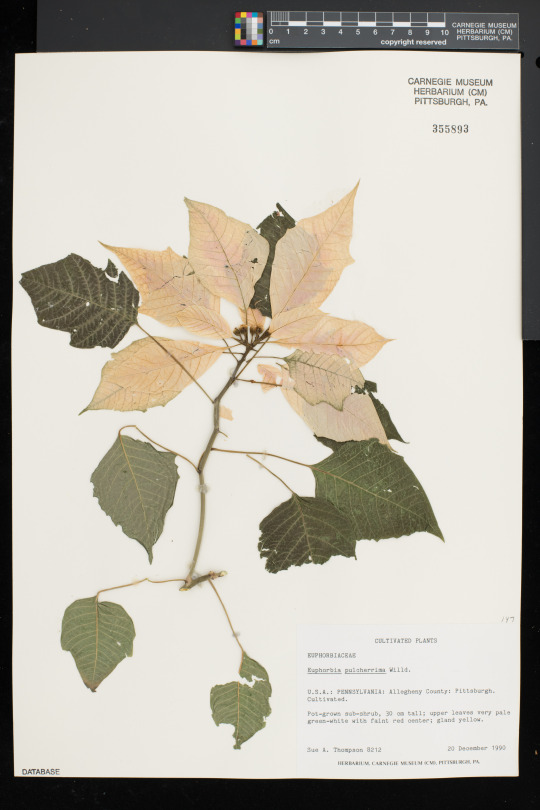
poinsettia specimen

This poinsettia specimen was collected on December 20, 1990 by Sue Thompson from a potted plant in Pittsburgh.  Poinsettia (Euphorbia pulcherrima) are native to Mexico, but now widely cultivated.

Look closely at the colorful “flowers” of poinsettia.  Upon close inspection, you’ll notice that those bright red or white (or otherwise colorful) structures are not flower petals, but specialized leaves called “bracts.”  The actual flowers are yellow and quite tiny.  The brightly colored bracts function to attract pollinators to the flowers.

Poinsettias are an excellent example of a “short-day” plant. (Or, more accurately, a “long-night” plant.)  That means that as the length of darkness at night increases, a complex process begins that signals flowering and the production of pigments in the bracts.

Poinsettias are woody perennials –  meaning you don’t need to throw them away after the holidays!  However, to flower again for next season, it takes some effort. They must experience days with less than 12 hours of daylight for 8-10 weeks straight.  That means you must provide the plant with 13-16 hours of complete darkness (uninterrupted!) in order for it to flower for December.  This may take some commitment to remember to put it in a dark closet each day, but well worth the effort.  Or just enjoy the green foliage year after year as it grows larger.

Check back for more! Botanists at the Carnegie Museum of Natural History share digital specimens from the herbarium on dates they were collected. They have embarked on a three-year project to digitize nearly 190,000 plant specimens collected in the region, making images and other data publicly available online. This effort is part of the Mid-Atlantic Megalopolis Project (mamdigitization.org), a network of thirteen herbaria spanning the densely populated urban corridor from Washington, D.C. to New York City to achieve a greater understanding of our urban areas, including the unique industrial and environmental history of the greater Pittsburgh region. This project is made possible by the National Science Foundation under grant no. 1801022.  

This specimen image is now publicly available online.

Mason Heberling is Assistant Curator of Botany at Carnegie Museum of Natural History. Museum employees are encouraged to blog about their unique experiences and knowledge gained from working at the museum.
Related Content

Collected on This Day in 1934: European larch

Indiana, Pennsylvania: Christmas Tree Capital of the World

Collected on Christmas Eve 1883: Mistletoe

Carnegie Museum of Natural History Blog Citation Information

Blog author: Heberling, Mason
Publication date: December 20, 2018

Share this post!

  • Share on Twitter Share on Twitter
  • Share on Facebook Share on Facebook
  • Share on Pinterest Share on Pinterest
  • Share on LinkedIn Share on LinkedIn
  • Share on Reddit Share on Reddit
  • Share via Email Share via Email

Filed Under: Blog Tagged With: Botany, botany hall, collected on this day, Mason Heberling, plants

April 4, 2017 by wpengine

Collected on this Day in 1983

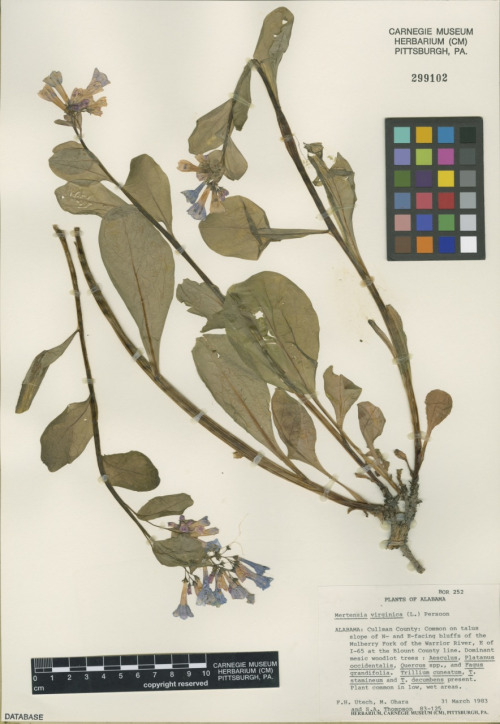
Herbarium specimen of Virginia bluebells (Mertensia virginica)

Collected on March 31, 1983, this specimen was found by Fred Utech and Masashi Ohara in Cullman County, Alabama. Fred was a curator of botany at the museum and studied the biology and evolutionary relationships among understory species of eastern
United States and east Asia. Native to forest understories across the eastern United States, Virginia bluebells (Mertensia
virginica
) are aptly named for their bell-shaped, blue flowers, although it is not just found in Virginia. It is a spring ephemeral species, meaning it emerges with beautiful blooms early in the spring during the short window before trees leaf out, and it disappears underground before summer. Fortunately, you can see this and other spring ephemerals any time of year at the museum in the Hall of Botany!


Botanists at Carnegie Museum of Natural History share pieces of the herbarium’s historical hidden collection on the dates they were discovered or collected. Check back for more!

Filed Under: Blog Tagged With: Botany, botany hall, Mason Heberling

  • « Go to Previous Page
  • Page 1
  • Page 2
  • Page 3
  • Page 4
  • Go to Next Page »

sidebar

About

  • Mission & Commitments
  • Directors Team
  • Museum History

Get Involved

  • Volunteer
  • Membership
  • Carnegie Discoverers
  • Donate
  • Employment
  • Events

Bring a Group

  • Groups of 10 or More
  • Birthday Parties at the Museum
  • Field Trips

Powdermill

  • Powdermill Nature Reserve
  • Powdermill Field Trips
  • Powdermill Staff
  • Research at Powdermill

More Information

  • Image Permission Requests
  • Science Stories
  • Accessibility
  • Shopping Cart
  • Contact
  • Visitor Policies
One of the Four Carnegie Museums | © Carnegie Institute | Privacy Policy | Terms of Use | Accessibility
Rad works here logo